Volatile Acidity in Wine: When Vinegar Notes Go Too Far

By the Sommy Team — AI-assisted, human-edited.
Updated Apr 29, 2026
Contents (14)
- The Bottle That Smells Like Salad Dressing Instead of Fruit
- Volatile Acidity in Wine, in 90 Seconds
- What Is Actually Happening Inside the Bottle
- The Sensory Thresholds You Actually Notice
- The Three Stages of Volatile Acidity
- Volatile Acidity vs Oxidation: The Cousins You Must Separate
- Style or Fault: When VA Belongs in the Glass
- The Four Main Causes of Volatile Acidity
- How VA Feels on the Palate, Not Just the Nose
- A Practical At-Home Test
- What to Do When You Find a Volatile Bottle
- A Quick Sniff Test Before You Pour
- Volatile Acidity and the Natural Wine Question
- Building the Reflex Once, Keep It Forever
TL;DR
Volatile acidity in wine is the sharp, vinegary character that appears when acetic acid bacteria convert ethanol and oxygen into acetic acid and ethyl acetate. Low levels add lift to styles like Amarone and Sherry. Moderate levels read as pickle and salad dressing. High levels smell of nail polish remover and cannot be saved.
The Bottle That Smells Like Salad Dressing Instead of Fruit
Some wine faults are subtle. Volatile acidity wine problems are not. The first sniff of a glass tipped over the line tells you immediately — there is vinegar in the air where the cherry or the lemon should be. The fruit is dulled, the finish prickles, and a faint chemical edge sometimes hovers at the rim. That bottle has crossed a chemical threshold beginners learn to recognize fast, because the same chemistry, in different hands, makes some of the most fascinating wines in the world.
Volatile acidity is bacterial activity producing exactly the kind of acid that defines vinegar. Once it crosses the sensory threshold, no winemaking trick reverses it — and learning to name it cleanly separates a useful sommelier conversation from a fumbled "I think this tastes weird."
Volatile Acidity in Wine, in 90 Seconds
Volatile acidity is the family of acids in wine that evaporate at low temperature, almost entirely acetic acid (the acid that defines vinegar) and a smaller share of ethyl acetate (the ester that smells like nail polish remover). Both are produced when acetic acid bacteria — chiefly Acetobacter — meet ethanol and oxygen in the wine. At low levels, volatile acidity wine character reads as a lift, a soft sourness, or a balsamic shimmer that a winemaker might want in an Amarone or a traditional Sherry. As it climbs, the dominant note becomes pickle juice, salad dressing, and red wine vinegar. Pushed further, ethyl acetate stings the nose like nail polish remover or model glue. Sensory thresholds sit around 0.7 grams per liter for acetic acid and 150 milligrams per liter for ethyl acetate. Most countries cap legal VA between 1.0 and 1.4 g/L. Above that, the bottle cannot be sold. In the glass, you smell it long before any chart matters.
What Is Actually Happening Inside the Bottle
Wine fermentation is a controlled mess of microbes, and microbial spoilage in wine is what happens when the wrong ones take over. Volatile acidity is what happens when one specific microbe — acetic acid bacteria (a family of aerobic bacteria, mostly Acetobacter, that turns ethanol into acetic acid) — gets enough oxygen to do its work.
The pathway is simple. Acetic acid bacteria oxidize ethanol (the alcohol in wine) into acetic acid (the compound that defines vinegar at around 5 percent concentration). If oxygen and ethanol keep meeting the bacteria, the acetic acid eventually combines with more ethanol to form ethyl acetate (an ester that smells like solvent or nail polish remover). The ladder is one-way.
Why Oxygen Is the Trigger
Acetobacter is obligately aerobic (it cannot work without oxygen). Anywhere oxygen reaches a wine that contains ethanol — a leaking barrel, a partially full tank, a weak cork seal, a stuck fermentation that left residual sugar — acetobacter has the runway it needs. Sulfur dioxide knocks the bacteria back, low temperature slows it, and topped-up barrels deny it air. Take any of those defenses away and acetic acid starts climbing.
This is also why volatile acidity often travels with oxidized wine character. The same oxygen exposure that produces acetaldehyde and bruised-apple notes feeds acetobacter at the same time. A bottle can be oxidized without being volatile, or volatile without being heavily oxidized, but heavy doses of one usually carry traces of the other.
The Sensory Thresholds You Actually Notice
Two numbers do most of the work for a beginner:
- Acetic acid threshold — around 0.7 g/L. Below this, most tasters cannot identify VA on the nose. Above it, the vinegar smell becomes obvious.
- Ethyl acetate threshold — around 150 mg/L. Below this, the wine reads as lifted but clean. Above it, the nail polish remover note jumps out.
Thresholds depend on the wine. A high-tannin red hides a little more VA than a delicate white, and a sweet wine masks acetic acid behind sugar.
The Three Stages of Volatile Acidity
Like oxidation, volatile acidity is a progression rather than a single fault. Naming the stage helps you decide whether the wine is intentional, forgivable, or finished.
Stage 1: Low VA — Lift and Stylistic Sourness
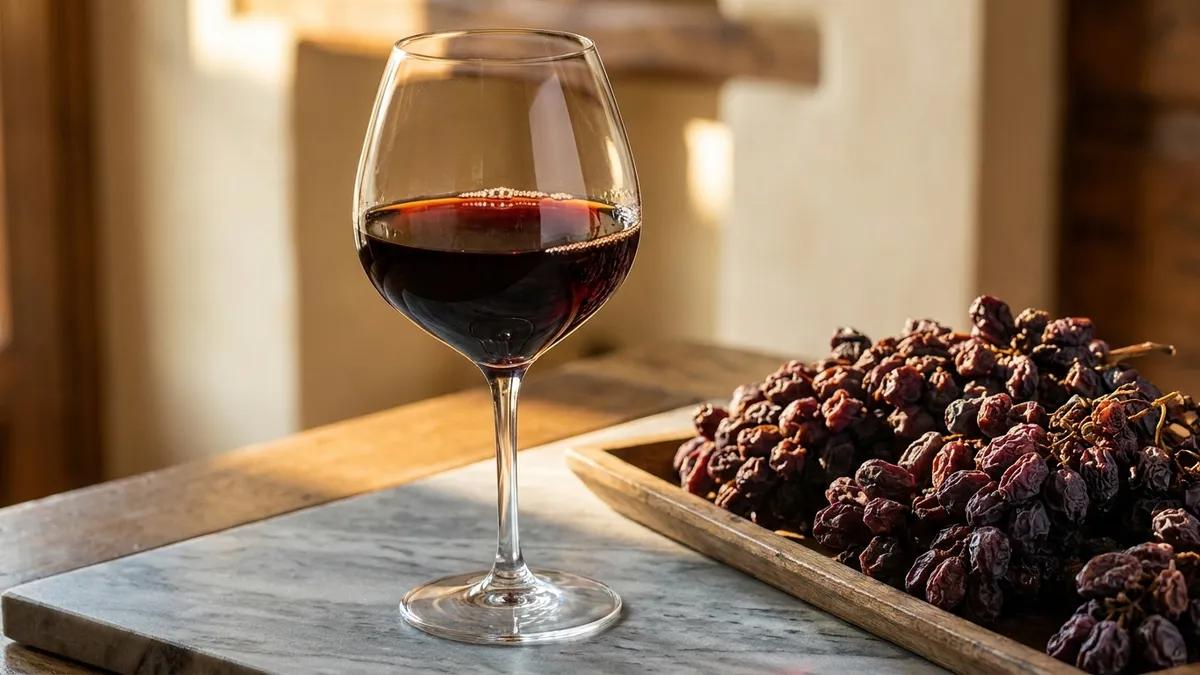
At low levels, volatile acidity adds a subtle sharpness that lifts the fruit and stretches the finish. Tasters describe it as lift, edge, or sometimes balsamic. The wine still tastes like a wine, the fruit is still present, and the vinegar character is suggested rather than declared.
This is the territory where producers of Amarone, Vin Jaune, Tokaj, and traditional Sherry often live on purpose. A modest VA reading sharpens dried-fruit and oxidative character without tipping into faulty territory. The style depends on it.
Stage 2: Moderate VA — Pickle and Salad Dressing
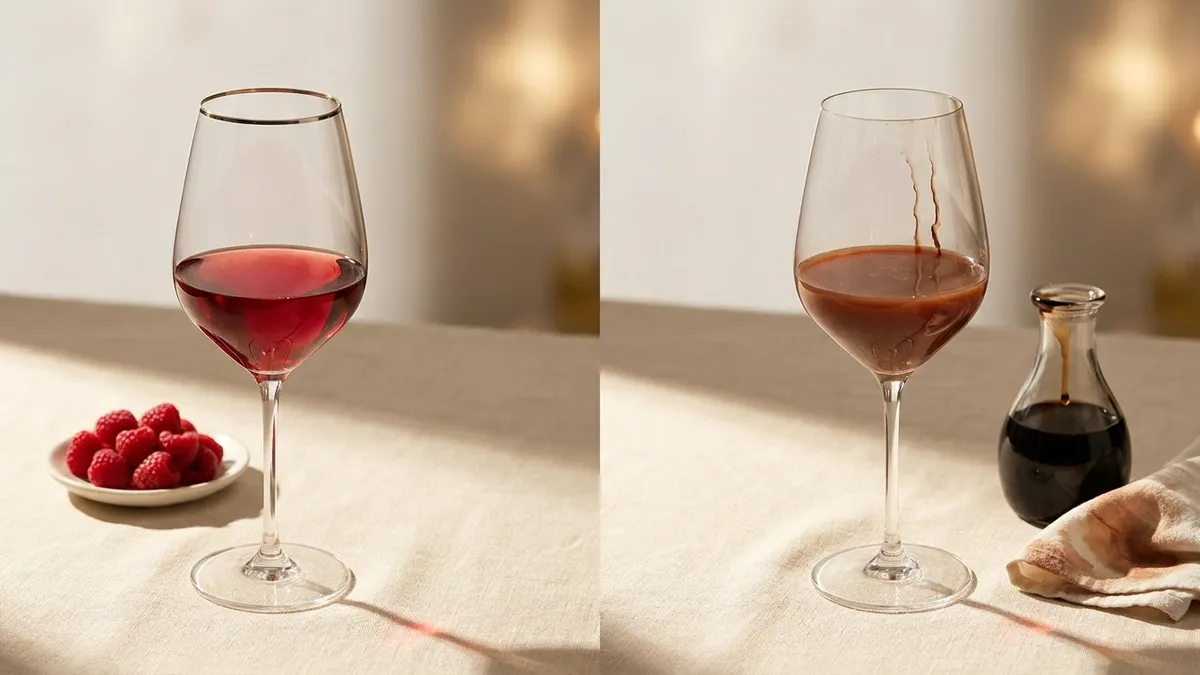
The acetic acid has crossed the sensory threshold. Now the wine smells unambiguously of pickle juice, salad dressing, or red wine vinegar. The fruit is muted, the palate prickles, and a sour finish hangs on the tongue longer than the wine wants you to think about. A modest ethyl acetate note may be starting to appear underneath, like a faint solvent edge in the background.
A wine at this stage is rarely enjoyable, even if you know it is intentional. Most drinkers will reach for water before they reach for a second sip.
Stage 3: High VA — Nail Polish Remover
Ethyl acetate now dominates. The nose hits sharp, chemical, and stinging — model glue, paint thinner, a freshly opened bottle of nail polish remover. The fruit is gone. The palate burns. There is no salvage path. Pour it out. This stage is rare in commercially sealed bottles unless storage has been bad for a long time, but it is common in any wine left open for weeks at room temperature, or in faulty home winemaking.
Volatile Acidity vs Oxidation: The Cousins You Must Separate
Beginners regularly call a volatile wine "oxidized" or call an oxidized wine "vinegary." The two faults share oxygen as a root cause and they often appear together, but the molecules and the smells are different.
- Oxidation produces acetaldehyde — bruised apple, sherry-style nuttiness, dried apricot, candle wax. Cooked and dried.
- Volatile acidity produces acetic acid and ethyl acetate — pickle, salad dressing, vinegar, nail polish remover. Sharp and chemical.
Both shift the color of the wine. Both kill the fresh fruit. The difference is in the descriptor that hits hardest. If the dominant note is bruised apple, the fault is oxidation. If the dominant note is vinegar, the fault is volatile acidity. If the dominant note is solvent, VA has reached its terminal stage.
A useful rule for the glass: oxidation feels cooked, VA feels sour. The companion guide to identifying wine faults by smell walks through every common off-note with this kind of side-by-side framing, and the deeper distinction between wine flaws and faults helps when a sommelier asks whether the bottle should go back.
Style or Fault: When VA Belongs in the Glass
This is where the conversation gets interesting. A handful of revered wine styles are intentionally elevated in volatile acidity. The same descriptor that flags a fault in a fresh Sauvignon Blanc is part of the signature in a great Amarone.
A few markers worth knowing:
- Amarone della Valpolicella — the appassimento drying process concentrates sugars and creates conditions where VA naturally climbs. Italian law allows Amarone up to 1.5 g/L.
- Recioto and other passito sweet wines — same drying logic, the sourness offsets residual sugar.
- Traditional Sherry, especially Oloroso and Amontillado — extended oxidative aging raises VA and adds dried-fruit lift.
- Vin Jaune from the Jura — six years under flor in a barrel that is never topped up.
- Many natural wines — low-sulfite winemaking removes a key acetobacter defense.
These wines do not taste of clean fresh fruit, and they are not meant to. For more on oxidative styles, see oxidative vs reductive winemaking taste and the dessert wine guide.
A wine meant to be fresh and tastes vinegary is faulty. A wine meant to be oxidative and tastes lifted is doing its job. The chemistry is the same. The intent is everything.
The Four Main Causes of Volatile Acidity
Knowing which door VA walked through helps you trace the problem and shop or store more carefully.
1. Stuck or Sluggish Fermentation
If yeast cannot finish the sugar, ethanol production stops mid-way. Without a finished alcohol shield and with sugars still present, acetobacter has the perfect feeding ground. A clean ferment that runs to dryness is the first defense.
2. Inadequate Sulfur Dioxide
Sulfur dioxide (SO2 — the antimicrobial preservative used at almost every step of winemaking) keeps acetobacter and oxidation-driving microbes in check. Low-sulfite natural winemaking leaves the wine more exposed. A small SO2 lapse plus a warm cellar plus an unfilled barrel is a textbook setup for rising VA.
3. Oxygen Exposure in Tank or Barrel
Empty headspace is acetobacter's favorite habitat, and it is also where a whitish film yeast skin forms on neglected wine. Topping up barrels weekly, using inert gas in tanks, and minimizing transfers all keep oxygen contact within safe bounds.
4. Warm Cellar Temperatures
Acetobacter is more active at warmer temperatures. A cellar held at 12 to 15 degrees Celsius slows the bacteria. A cellar pushed to 22 degrees in summer accelerates everything that can go wrong.
How VA Feels on the Palate, Not Just the Nose
The nose tells you fastest, but the palate confirms. A volatile wine often shows three palate signatures:
- A sharp, prickly finish — acetic acid stings the back of the tongue and the inside of the cheek.
- Loss of fruit on the mid-palate — the cherry, plum, or citrus is replaced by a sour edge.
- A solvent burn at the rim of ethyl acetate territory — the highest stage almost numbs the tip of the tongue.
A wine that smells fine but finishes sharp and prickly is sometimes carrying low to moderate VA the nose has not caught yet. The wine finish meaning guide covers what a clean finish should feel like.
A Practical At-Home Test
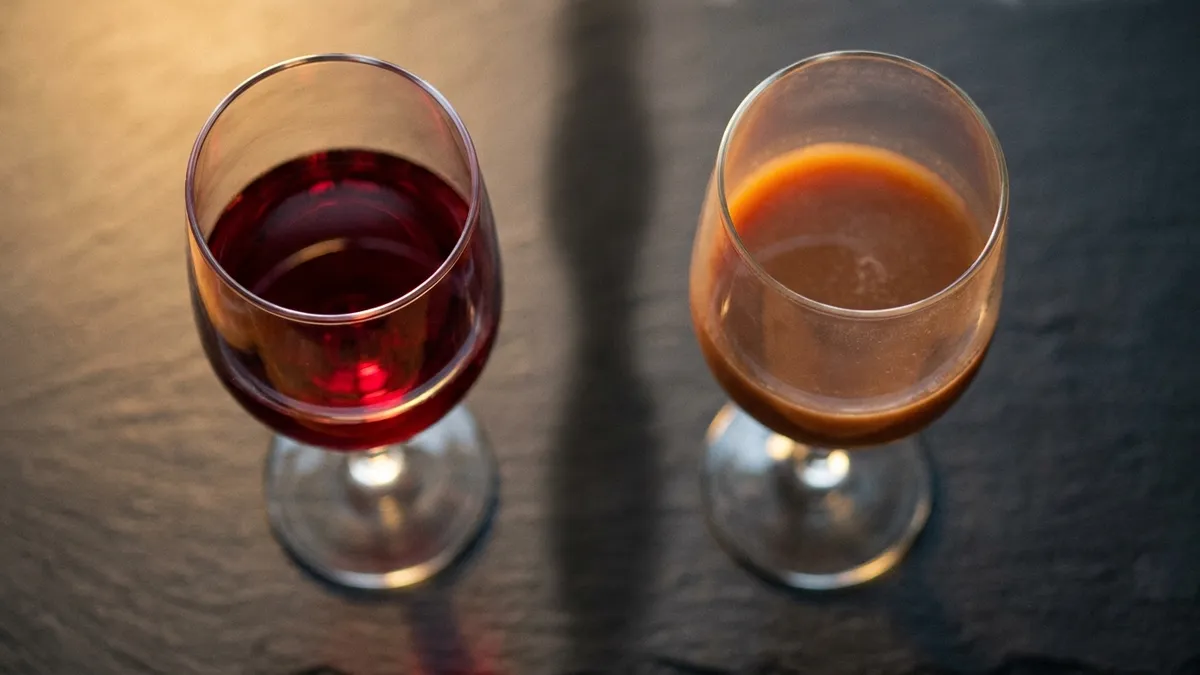
Volatile acidity is one of the easier faults to manufacture deliberately, which makes it ideal for training the nose. Pour a small amount of any clean white wine into a glass and leave it on the counter, uncovered, for five to seven days. Then sniff it next to a fresh pour from the same bottle.
The shift is dramatic. The fresh glass smells of citrus and orchard fruit. The exposed glass has gone sharp, sour, and vinegary, often with a soft solvent edge underneath. To sharpen the technique, walk through how to smell wine, develop your wine palate, and the wine tasting vocabulary cheat sheet so the words are already in your mouth before you sniff.
What to Do When You Find a Volatile Bottle
At Home
If the bottle is fresh from the shop and the vinegar note is unmistakable, return it. Most reputable wine shops will replace a faulty bottle, especially if the cork comes back with you. If the bottle has been open for several days, the VA may simply be the natural consequence of leaving wine on the counter — pour it into a vinaigrette, deglaze a pan with it, or treat the rest as cooking wine. Acetic acid behaves well under heat and gives a stew or sauce a useful brightness.
If the wine has reached the nail polish remover stage, no kitchen application saves it. Ethyl acetate carries through a reduction far enough to make the dish unpleasant. Pour it out.
At a Restaurant
The small taste a sommelier pours exists for exactly this moment. Swirl, sniff, and run through the fault profiles. If the wine smells of vinegar or pickle where it should smell of fresh fruit, name it cleanly:
"This wine smells volatile to me. There is a vinegary edge that is sitting on top of the fruit."
Avoid using "corked" for a volatile wine. The two faults are unrelated, and a sommelier respects a precise diagnosis far more than a generic complaint. How to tell if wine is corked covers the cork taint signature so the line between the two never blurs in your head. The pillar overview of every fault you might meet sits in the faults learning hub, with side-by-side comparisons that make this the kind of distinction you can lock in over a few weeks.
A Quick Sniff Test Before You Pour
A useful pre-pour habit: after you pull the cork, smell the bottle neck for a second or two before any liquid leaves the bottle. Vinegar rising directly out of the neck is the clearest possible VA signal — no tasting-room ambiguity, no "is the cherry off or am I tired today?"
The same trick spots oxidation, brett, and several other faults early, though not mousy taint, which never shows on the nose at all. Building this habit takes one bottle of practice.

Volatile Acidity and the Natural Wine Question
Natural wines are where most beginners first meet borderline VA. Low-sulfite winemaking is a philosophical choice, not an accident, and it invites a slightly more volatile character into the bottle by design. Some natural wines wear that lift well. Others tip into pickle juice and stop being enjoyable.
The line is personal. A taster trained on classical European wines sets the threshold lower than a taster who lives in the natural-wine world. The common wine tasting mistakes guide covers calibration errors in this exact category — too quick to call a borderline wine faulty, or too quick to forgive an obviously broken bottle because the label says natural.
Building the Reflex Once, Keep It Forever
Recognizing volatile acidity feels mysterious the first few times. After two or three encounters, the vinegar note jumps out of the glass before you have finished swirling. Beginners regularly go from "something smells off, I cannot name it" to "this is volatile" within a few months of deliberate practice.
Structured aroma training is the shortcut. The Sommy app walks you through fault recognition with real-time feedback and the specific vocabulary that separates VA from oxidation, brett, and reduction. The nose-first methodology covered in how to describe wine carries directly into fault diagnosis.
Visit sommy.wine to start training your nose for every fault, flavor, and style you will meet in a glass. Vinegar plus prickling palate plus missing fruit is the entire signature of volatile acidity. Once it is in your memory, the next time a sommelier sets a small taste in front of you, the language you reach for will already be there.
Frequently Asked Questions
What does volatile acidity in wine actually smell like?
At low levels, volatile acidity reads as lift, sourness, or a faint balsamic note. As it climbs, the wine smells of pickle juice, salad dressing, and red wine vinegar. At high levels, the dominant character becomes ethyl acetate — sharp nail polish remover, model glue, or solvent. The fruit retreats and a chemical edge takes over the glass.
Is a wine with volatile acidity safe to drink?
Yes. Acetic acid and ethyl acetate are not harmful in the concentrations found in faulty wine. The fault is sensory, not microbial in a way that affects health. A heavily VA-affected wine simply tastes sharp and unpleasant. The reason to pour it out is that it is no longer enjoyable, not because it could make you ill.
Why do some wines have high volatile acidity on purpose?
Amarone della Valpolicella, traditional Sherry, Vin Jaune, Recioto, and many natural wines carry elevated volatile acidity as part of the style. The drying and oxidative aging that defines those wines creates conditions where acetic acid bacteria thrive. Producers manage VA levels carefully so the lift adds complexity rather than tipping into pure vinegar.
What is the difference between volatile acidity and oxidation?
Oxidation produces acetaldehyde — bruised apple, sherry, and roasted nuts. Volatile acidity produces acetic acid and ethyl acetate — vinegar and nail polish remover. Both faults share the same root cause of oxygen exposure, but they create different molecules with different sensory fingerprints. A wine can have one without the other, or both at once.
What causes volatile acidity in winemaking?
Acetic acid bacteria, mostly Acetobacter, need three things to make acetic acid: ethanol, oxygen, and a warm temperature. They convert alcohol into vinegar in any open headspace where sulfur dioxide protection is thin. Stuck fermentations, leaking barrels, low-sulfite natural winemaking, and warm cellars all give acetobacter the runway it needs.
Can volatile acidity be fixed once it appears?
No. Once acetic acid bacteria have produced acetic acid and ethyl acetate, those molecules cannot be removed without damaging the wine. Reverse osmosis and special filtration can lower VA in a winery setting, but the wine usually loses character along with the fault. By the time you smell it in your glass, the bottle is finished.
What are the legal limits for volatile acidity?
Most countries cap volatile acidity at 1.0 to 1.4 grams per liter for table wine. The EU allows up to 1.2 g/L for red and 1.08 g/L for white. Amarone della Valpolicella has a higher legal ceiling around 1.5 g/L because the appassimento drying process inherently raises VA. Above the threshold, a wine cannot legally be sold.
How is volatile acidity measured?
Volatile acidity is measured by steam distillation. The wine is heated until volatile acids — mainly acetic acid — evaporate and condense into a separate flask. The condensate is then titrated against a base to calculate concentration in grams per liter. The result is reported as VA, distinct from the wine's total acidity which is dominated by tartaric and malic acid.
Sommy Team
LinkedInFounder & Wine Educator
The Sommy Team is building the world's most approachable wine education app, helping beginners develop real tasting skills through structured courses and AI-guided practice.