Oxidative vs Reductive Winemaking: How They Change the Taste

By the Sommy Team — AI-assisted, human-edited.
Updated Apr 29, 2026
Contents (9)
- What Oxidative and Reductive Winemaking Actually Mean
- The Two Paths, in One Paragraph
- The Science: Acetaldehyde vs Sulfur Compounds
- Classic Oxidative Styles
- Classic Reductive Styles
- Intentional vs Flawed: The Critical Distinction
- How to Train Your Palate to Recognize the Spectrum
- What This Means When You Are Buying or Ordering Wine
- Where Oxidative and Reductive Sit in the Bigger Picture
TL;DR
Oxidative winemaking lets oxygen shape the wine, producing nutty, salty, dried-fruit notes in flor Sherry, Vin Jaune, Tawny Port, and Madeira. Reductive winemaking blocks oxygen with stainless steel, screw caps, and sulfur, locking in fresh primary fruit and sometimes flinty struck-match notes. Knowing which style a winemaker chose separates intentional brilliance from flaw.
What Oxidative and Reductive Winemaking Actually Mean
The phrase oxidative vs reductive winemaking sounds like a chemistry class, but it describes one of the most practical decisions a winemaker ever makes: how much oxygen the wine gets to meet on its way to the bottle. That single choice changes the color, the aroma, the texture, and the entire personality of the finished wine. A grape variety can taste like fresh lemon and white flowers in one cellar and like roasted hazelnut and bruised apple in another, with the only meaningful difference being how the wine was handled around oxygen.
Understanding oxidative reductive winemaking is also the fastest way to stop confusing intentional style with wine fault. A glass of flor Sherry and a corked-and-flat Sauvignon Blanc share some surface chemistry, yet one is a masterpiece and the other gets sent back to the kitchen. The difference is intent, not molecules.
This guide walks through both approaches — the science, the classic style families, the sensory markers — and gives you a way to tell, glass in hand, whether you are tasting a triumph or a flaw.

The Two Paths, in One Paragraph
Oxidative winemaking embraces oxygen contact during aging. Wines spend long stretches in porous barrels, partially filled casks, or under specific yeasts that allow controlled oxygen exposure. Flor Sherry under its veil of yeast, Vin Jaune from Jura aging under a similar voile, traditional Madeira heated in estufagem tanks, and Tawny Port aging in seasoned barrels all sit on this side of the line. The result is a recognizable family of flavors: walnut, blanched almond, dried apricot, salted caramel, bruised apple, and a savory umami depth. Reductive winemaking, on the other hand, minimizes oxygen at every step — stainless steel tanks, inert gas blanketing, sulfur additions, screw cap closures. The wine keeps its primary fruit, citrus zest, fresh herbs, and bright acidity. Push reduction harder and you also get struck-match, gunflint, smoky notes, especially in modern Burgundy whites where flintiness is a deliberate signature.
The Science: Acetaldehyde vs Sulfur Compounds
Wine chemistry is dense, but two molecules tell most of the story.
When oxygen meets wine, it slowly converts the alcohol (ethanol) into acetaldehyde — the same compound responsible for the smell of bruised apples, sherry-like notes, and that distinct nutty edge of an old white Rioja. Acetaldehyde is the signature of oxidative aging. In small amounts it is complex and savory. In large amounts and the wrong context, it tastes like a wine that was left open on a counter for a week.
Reductive conditions push the chemistry in the opposite direction. With oxygen excluded, volatile sulfur compounds can accumulate — molecules like hydrogen sulfide (rotten egg), methanethiol (boiled cabbage, rubber), and dimethyl sulfide (canned corn). At controlled, low levels, certain sulfur compounds give wine a flinty, struck-match character that many modern winemakers love. Past that threshold, the wine tips into clear fault territory.
The same closure choice can push either way. Cork allows a slow, predictable oxygen drip — gently oxidative over years. Screw caps with tin liners allow almost no oxygen — strongly reductive. Producers now order screw cap liners with specific oxygen transmission rates, almost like dialing a thermostat for how much oxidative development they want over a decade.
Classic Oxidative Styles
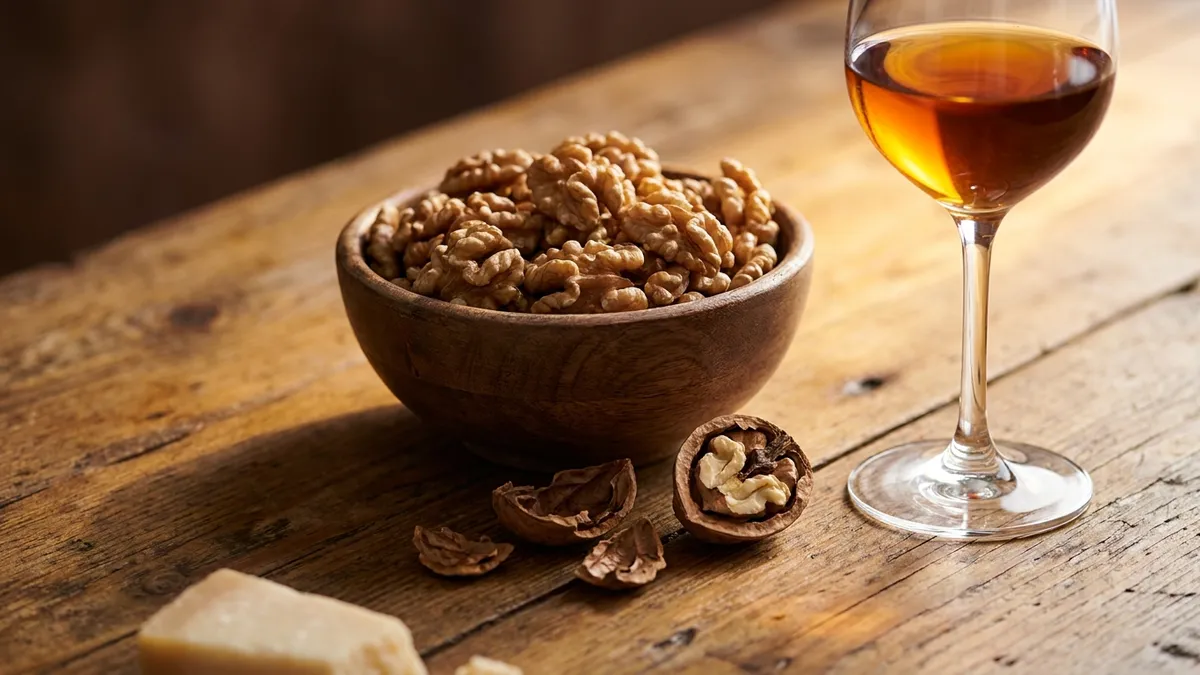
These are the wines that took oxidative aging and made it the entire point. Once you know their flavor signatures, you start hearing oxidative character everywhere.
Flor Sherry (Fino, Manzanilla, Amontillado)
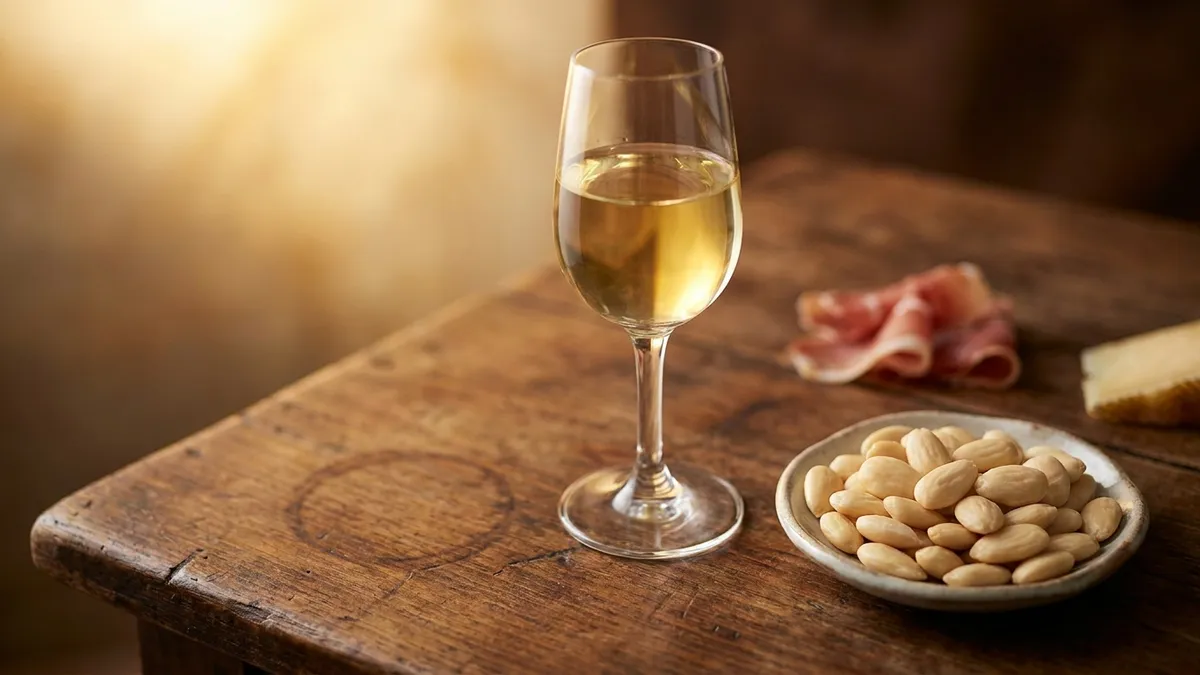
Wines fortified to about 15 to 15.5% alcohol in Jerez develop a thick layer of yeast called flor on the wine's surface inside the barrel. The flor consumes glycerol and alcohol, produces acetaldehyde, and acts as a partial seal — a hybrid of biological and oxidative aging known as biological aging. Pure Fino tastes pale, saline, almond-driven, and bone-dry, with a sourdough-bread yeastiness no other wine has. Amontillado pushes further — it loses the flor partway through aging and finishes oxidatively, layering walnut and caramel on top of the saline base. For the full breakdown of every Sherry style, see our sherry wine guide.
Vin Jaune (Jura, France)
In the Jura region of eastern France, Savagnin grapes are aged in barrel for a minimum of six years and three months under voile — the French version of the flor yeast veil — without topping up the barrels. The wine slowly evaporates and concentrates while developing intense oxidative complexity: walnut, curry, dried apricot, fenugreek, ginger. Vin Jaune is one of the longest-lived white wines in the world and a clinic in what disciplined oxidative aging can produce.
Tawny Port
Where Vintage Port is bottled young to age reductively for decades, Tawny Port spends years (often 10, 20, 30, or 40) in seasoned barrels in the lodges of Vila Nova de Gaia, slowly oxidizing into a paler, brick-orange color with cooked fig, dried date, hazelnut, and salted caramel notes. The longer the cask aging, the more oxidative the profile. For the complete picture of Port styles, see our port wine guide.
Madeira
Madeira from the Atlantic island goes further than any other oxidative style — wines are deliberately heated for months in estufagem tanks or attic-like canteiro rooms, simultaneously oxidizing and caramelizing. The result is one of the most indestructible wines on earth: bottles centuries old can still taste vibrant. Expect roasted nut, dried orange peel, burnt sugar, smoky toffee, and a piercing acidity that holds it all together.
Traditional White Rioja and Some Orange Wines
Old-school white Rioja, aged for years in American oak with intentional oxidation, develops golden color, hazelnut, vanilla, and dried herb notes that taste like nothing else in modern white wine. Many orange wines — whites made with extended skin contact — also lean into oxidative character, picking up nutty, dried-fruit, and sometimes funky notes from the long maceration and air exposure.
Classic Reductive Styles
The reductive side of the line dominates most of the modern white wine world, and increasingly the red wine world too.
Modern Burgundy White (Intentional Reduction)
Many of the most celebrated white Burgundy producers ferment in barrel and age on the lees with deliberately low sulfur and minimal oxygen access, encouraging the formation of low-level reductive sulfur compounds. The result is a flinty, struck-match, gunflint character on top of the wine's natural citrus and stone fruit — a style that became fashionable in the early 2000s and now defines a generation of premium Chardonnay. A young modern Chablis or Chassagne can smell almost smoky on opening; this is reduction working as a feature, not a flaw.
New Zealand Sauvignon Blanc
The Marlborough style of Sauvignon Blanc is the textbook reductive white — fermented cold in stainless steel, sealed under screw cap, protected from oxygen at every step. The aromatic profile is unmistakable: passionfruit, lime, cut grass, gooseberry, jalapeno. There is zero oxidative character anywhere in the wine. The whole point is to bottle the grape's primary fruit chemistry as cleanly as possible.
Modern Riesling
German and Australian Riesling, particularly when bottled under screw cap, leans heavily reductive. Lime zest, green apple, white peach, wet stone, and a kerosene-like petrol note (a positive in aged Riesling) all come from a careful, oxygen-light winemaking approach. Reductive Riesling can age for decades in bottle while keeping bright, primary acidity.
Stainless-Steel Pinot Grigio and Albarino
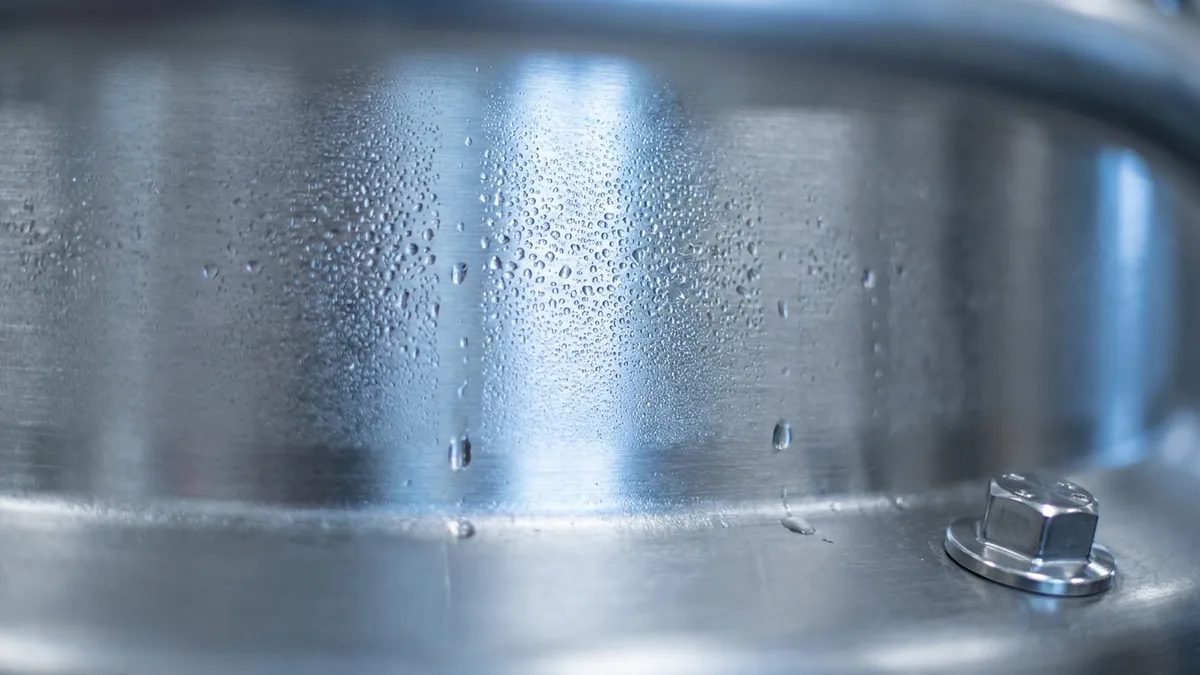
Most commercial Pinot Grigio, Albarino, Verdejo, and similar fresh whites are made aggressively reductively — stainless steel only, neutral yeast, sulfur at every step, screw cap closure. The aim is clean, primary, refreshing wine with no winemaking-derived complexity. Whether you find that thrilling or boring is taste; the technique is reductive winemaking at its most commercial.
Modern Style Reds, Especially Pinot Noir
Reductive winemaking is no longer a white-only conversation. Many modern Pinot Noir producers ferment with whole clusters and minimal sulfur additions but otherwise protect the wine carefully from oxygen, especially during aging. The result is a brighter, more primary, sometimes flinty red wine — quite different from the more traditional, gently oxidative reds of older generations.
Intentional vs Flawed: The Critical Distinction
Here is where most beginners trip up. The same chemistry — acetaldehyde for oxidation, sulfur compounds for reduction — can be the wine's defining feature or its fatal flaw.
When Oxidation Is a Fault
If a wine is not designed to be oxidative — a Sauvignon Blanc, a young Chablis, a modern Pinot Grigio, a fresh rose — then oxidative character is a defect. Signs of unwanted oxidation:
- The color is darker than it should be (a young white that looks deep gold or amber)
- Fresh primary fruit is missing or muted
- A flat, sherry-like, bruised-apple note dominates
- The wine feels tired and short on the finish
The cause is usually a bad cork, sloppy bottling, or extended exposure to air after opening. The wine is not bad ethically — it is just not what it was meant to be. For more on diagnosing wine faults, see our guide to how to identify wine faults by smell.
When Reduction Is a Fault
Light reductive notes — flint, struck match, smoke — are a feature in many premium whites. Heavy reduction is a fault. The line between them:
- Flint, gunflint, struck match: usually a feature
- Rotten egg, burnt rubber, boiled cabbage, struck garlic: clear fault
Most light reduction blows off within a few minutes of swirling or decanting. If the off notes survive 20 minutes in the glass and dominate the wine, the bottle is faulty.
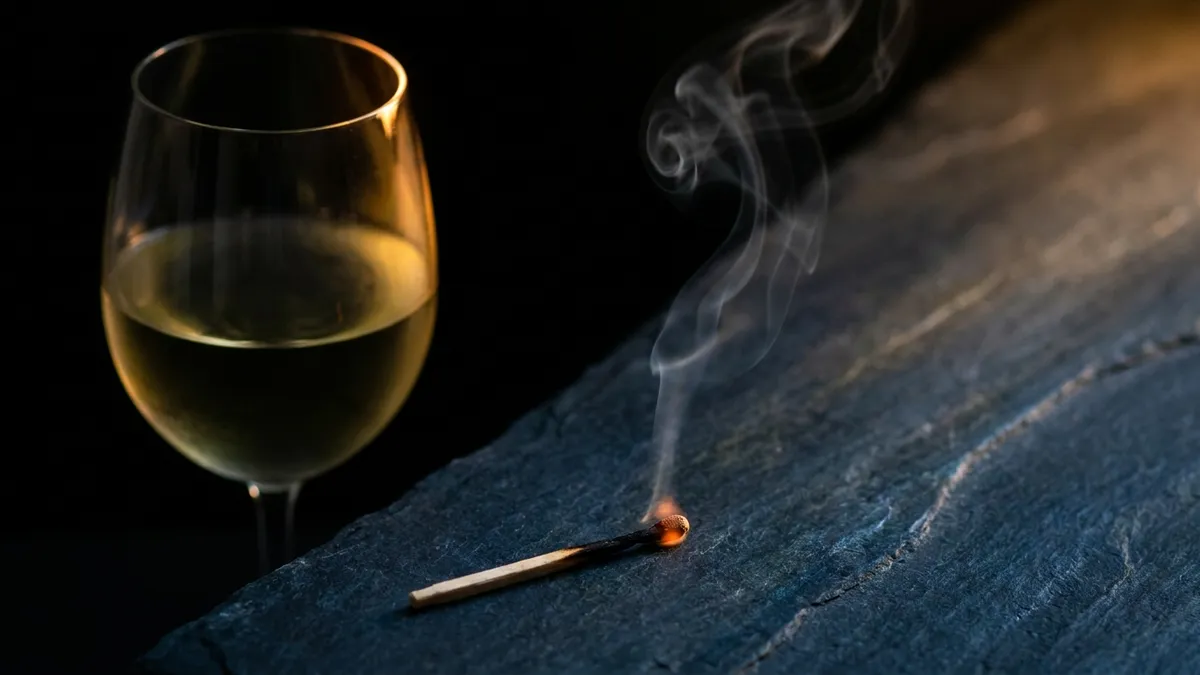
A flinty Chablis and a rotten-egg Chablis are not on a continuum. They are two different things. One is a winemaker's signature; the other is a flaw that slipped past quality control.
When Both Live in the Same Wine
Some of the most exciting wines in the world do both, sequentially. Amontillado Sherry begins reductively under flor (the yeast veil seals the wine) and finishes oxidatively after the flor dies. Some modern white winemakers ferment reductively in stainless and then move part of the blend to old oak for partial oxidative development before bottling. The line between the two paths is more of a ribbon than a wall. Clay amphorae and concrete eggs sit in that middle ground too, letting in a little oxygen without adding wood flavor, as our guide to alternative wine vessels explains.
How to Train Your Palate to Recognize the Spectrum
The fastest way to internalize oxidative reductive winemaking is to taste benchmarks side by side.
- Reductive whites: open a young Marlborough Sauvignon Blanc and a stainless-steel Pinot Grigio. Note the bright primary fruit, total absence of nuttiness, no signs of dried fruit or caramel.
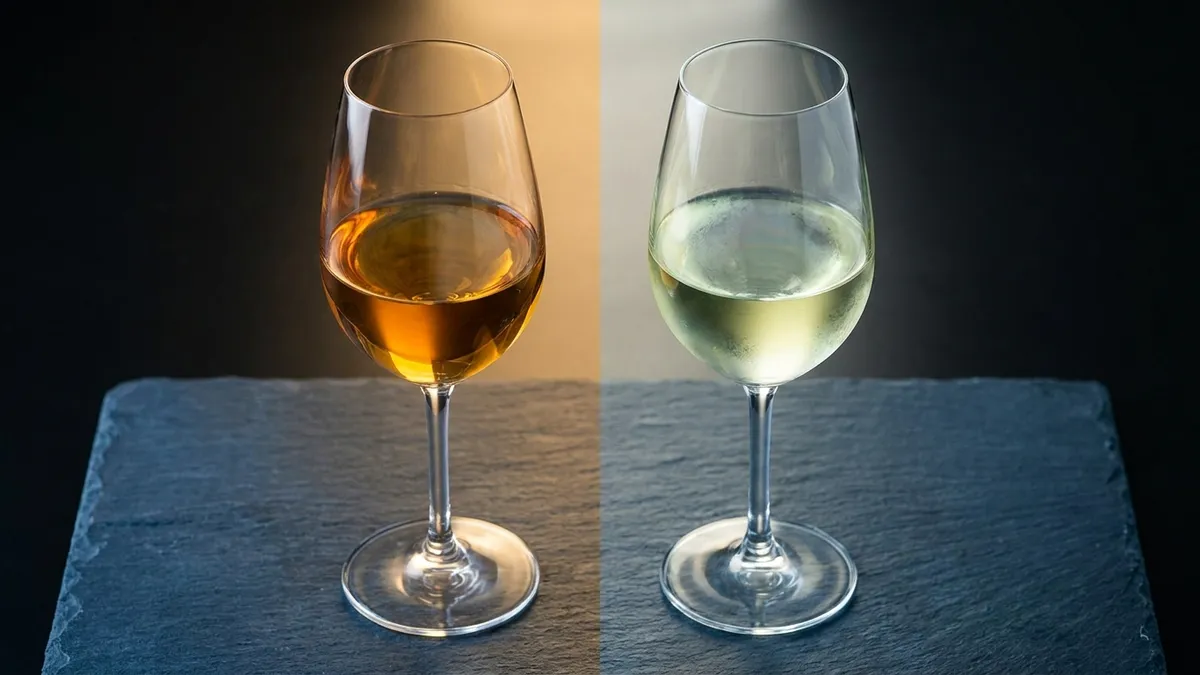
- Oxidative whites: open a Fino Sherry and an aged white Rioja. Note the saline, almond, walnut, dried-apricot character. Same grape family, different planet.
- Reductive reds: a modern, lightly oaked Pinot Noir. Bright cherry and raspberry, no dried fruit, no leather.
- Oxidative reds: a 20-year Tawny Port. Cooked fig, hazelnut, salted caramel, brick-orange color.
Smelling these in pairs builds a mental anchor that no amount of reading can replicate. Your nose remembers in pairs better than in isolation. For a deeper dive into the nose itself, how to smell wine covers the technique that makes side-by-side comparisons actually work, and primary, secondary, tertiary aromas places oxidative and reductive character within the broader aroma framework.
The Sommy app's tasting drills include benchmark exercises designed for exactly this kind of paired-glass training, so you can build the reference library in a few short sessions instead of months of random bottles.
What This Means When You Are Buying or Ordering Wine
Once the framework clicks, certain shopping and ordering decisions get easier.
- If a label says "aged in oak for 24 months" or "matured in seasoned barrels," expect oxidative character.
- If a label emphasizes "stainless steel," "unoaked," or "screw cap," expect reductive freshness.
- Sherry, Vin Jaune, Tawny Port, Madeira, traditional white Rioja, and most orange wines are openly oxidative. If that is not what you want at the table tonight, choose differently.
- Modern Burgundy whites, German Riesling, Marlborough Sauvignon Blanc, and most fresh New World whites lean reductive. Choose them for clean primary fruit and zip.
- A single producer can make both. Many serious estates produce a stainless-fermented entry-level white and a barrel-aged premium cuvee from the same vineyard. The grape is identical; the oxygen exposure is the variable.
For the broader stylistic picture, our take on new world vs old world tasting style and the basics of what does oaked mean sit naturally next to this conversation.
Where Oxidative and Reductive Sit in the Bigger Picture
Oxygen handling is one of three or four winemaking decisions that explain most of the differences between bottles. The others are oak (or no oak), yeast (commercial vs ambient), and time on lees. Understanding all four turns wine from a mystery into a readable text. You start to see the winemaker's intent in every glass, and you stop confusing style with quality.
Both paths produce some of the world's greatest wines. Both also produce plenty of forgettable ones. The point is not that one approach is better — it is that the choice is deliberate, and recognizing it makes you a sharper, more confident drinker.
For structured practice on identifying these and dozens of other wine characteristics, Sommy offers guided tasting courses with real-time feedback on what to look for and how to describe it. The same kind of paired benchmark work that elevates a beginner's palate is built into the lessons, so you can develop a working sense of style — oxidative, reductive, and everything in between — without needing a sommelier looking over your shoulder.
Frequently Asked Questions
What is the difference between oxidative and reductive winemaking?
Oxidative winemaking deliberately exposes wine to oxygen during aging — through porous barrels, partial barrel fills, or extended cask time — to develop nutty, salty, dried-fruit flavors. Reductive winemaking blocks oxygen using stainless steel tanks, inert gas, screw caps, and sulfur additions to preserve fresh primary fruit and bright acidity. Each is a deliberate stylistic choice, not an accident.
Does oxidized wine taste bad?
It depends entirely on intent. A flor Sherry, Vin Jaune, Tawny Port, or Madeira is meant to taste oxidative — walnut, bruised apple, salted caramel, dried fig — and these flavors are prized. Unintentional oxidation in a Sauvignon Blanc or young Burgundy is a fault, producing flat, sherry-like notes where fresh citrus and stone fruit should be. Same chemistry, opposite verdicts.
What are the signs of reductive wine?
Mild reduction smells flinty, smoky, or like a freshly struck match — often considered a feature in modern Burgundy whites and some Rieslings. Heavier reduction smells of rotten egg, rubber, burnt match, or boiled cabbage. Light reduction usually blows off after a few minutes of swirling or decanting. Heavy, persistent reduction is a winemaking flaw.
Why do screw caps make wine more reductive?
Screw caps with tin-lined liners allow almost zero oxygen ingress, which preserves fresh fruit but can let sulfur compounds accumulate and produce reductive notes. Cork lets in a small, predictable amount of oxygen each year, gently pushing wines toward subtle oxidative development. Producers now choose closure liners with different oxygen transmission rates to dial in the style they want.
Which wine styles are intentionally oxidative?
Flor Sherry from Jerez, Vin Jaune from Jura, Tawny Port from the Douro, Madeira from the Atlantic island, traditional white Rioja, and many orange wines are all intentionally oxidative. Each uses a different mechanism — yeast veil, partial barrel fill, heat estufagem, or extended skin contact — but all embrace oxygen rather than fighting it.
Can a wine be both oxidative and reductive?
Sequentially, yes. Amontillado Sherry begins under flor (biological aging, sealed from oxygen by living yeast) and then loses its flor and finishes oxidatively, gaining nutty depth on top of saline freshness. Some modern white winemakers ferment reductively and then move part of the wine to oxidative barrel aging for added complexity. The two paths are not mutually exclusive across a wine's lifetime.
How can I taste the difference between oxidative and reductive wine?
Pour an unoaked Sauvignon Blanc and a Fino Sherry side by side. The Sauvignon Blanc is the reductive benchmark — bright lime, grapefruit, fresh herbs, no nuttiness. The Fino is the oxidative benchmark — even though it ages under flor, it shows yeasty, saline, almond character that no reductively made wine has. Once you have those two reference points, you will recognize the spectrum in everything else you drink.
Sommy Team
LinkedInFounder & Wine Educator
The Sommy Team is building the world's most approachable wine education app, helping beginners develop real tasting skills through structured courses and AI-guided practice.