What Does Oaked Mean? How Oak Aging Changes Wine Flavor

By the Sommy Team — AI-assisted, human-edited.
Updated Apr 16, 2026
Contents (10)
TL;DR
Oaked wine has been aged in oak barrels, which impart vanilla, toast, spice, and caramel flavors while adding tannin and body. Unoaked wine is aged in neutral containers like stainless steel, preserving the grape's pure fruit character. New oak adds more flavor than old oak. French oak adds subtle spice; American oak adds bold vanilla and coconut.
What Oaked Wine Means
When a wine is described as "oaked," it means the wine spent time aging in oak barrels — and those barrels changed the wine's flavor, texture, and character. Oaked wine meaning is straightforward: oak was used, and you can taste it.
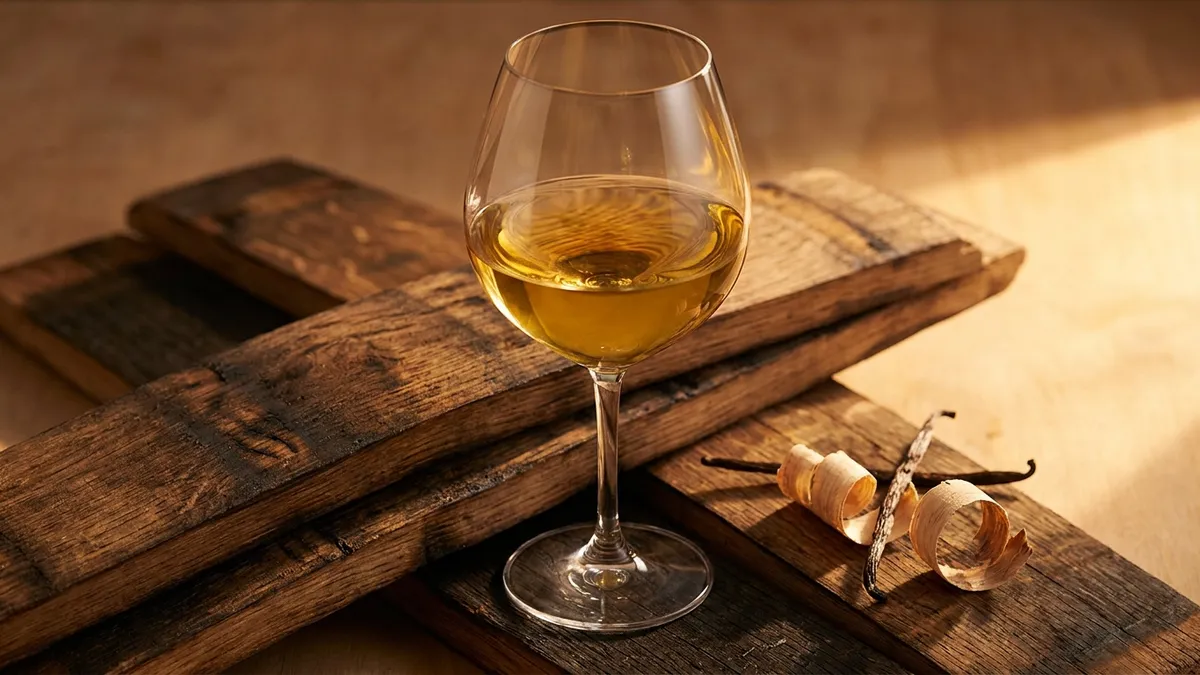
Oak barrels are not just containers. They are ingredients. When wine sits inside an oak barrel, a slow chemical exchange takes place between the wine and the wood. The wine extracts flavor compounds from the oak — vanilla, spice, toast — while the barrel's gentle porosity allows tiny amounts of oxygen to interact with the wine, softening its edges and adding complexity.
This is why the same grape can produce dramatically different wines depending on whether it was aged in oak or stainless steel. Oak is one of several cellar choices laid out in how wine is made. An oaked Chardonnay and an unoaked Chardonnay are essentially different products — same grape, same color, but a completely different drinking experience. Understanding what oak does to wine is one of the most practical pieces of wine knowledge you can have, because it directly affects what you taste in the glass.
How Oak Changes Wine
Flavor Compounds
Oak wood contains hundreds of chemical compounds that dissolve into wine during aging. The most important:
- Vanillin — the same compound found in vanilla beans; responsible for the vanilla note in oaked wines
- Eugenol — a compound also found in cloves; contributes warm baking spice character
- Furfural and related compounds — produced when the barrel's interior is toasted during manufacturing; create butterscotch, caramel, and toasted bread flavors
- Lactones — especially prominent in American oak; produce coconut and dill aromas
- Guaiacol — a smoky compound from the toasting process; adds subtle smokiness
The intensity of these flavors depends on how new the barrel is, how heavily it was toasted, and how long the wine spent inside it.
Tannin
Oak contains its own tannins — different from grape tannins but similarly astringent. Oak tannin tends to feel drier and more tea-like than the grippy, fruit-driven tannin from grape skins. A wine aged in new oak picks up a noticeable layer of structural tannin that adds firmness and aging potential.
For more on how tannins work in wine, our dedicated guide covers the full picture.
Micro-Oxidation
Oak barrels are slightly porous. Tiny amounts of oxygen seep through the wood over months of aging, interacting with the wine in a controlled, gentle way. This micro-oxidation softens harsh tannins, integrates flavors, and gives the wine a rounder, more polished texture.
This slow oxygen exposure is fundamentally different from the rapid oxidation that happens when you leave a bottle open — barrel oxidation is measured and gradual, improving the wine over time rather than degrading it.
Body and Texture
The combined effect of oak flavor compounds, tannin, and micro-oxidation is a wine that feels richer, rounder, and more substantial than its unoaked equivalent. Oak aging adds body — the wine coats your mouth more, lingers longer, and feels heavier on the palate.
This is why many premium red wines and rich white wines are aged in oak — the barrel adds a dimension of texture and complexity that stainless steel simply cannot provide. For a side-by-side of the two vessels, see stainless steel vs oak.
New Oak vs. Old Oak
The age of the barrel is the single biggest factor determining how much oak character the wine picks up.
New Oak (First Fill)
A brand-new barrel — never used before — imparts the maximum amount of flavor and tannin. The wood's inner surface is saturated with extractable compounds, and the first wine to touch it draws out the most. Wines aged in 100% new oak carry pronounced vanilla, toast, and spice character, with noticeable oak tannin.
Some winemakers intentionally use 100% new oak for their flagship wines, viewing the oak as a feature that adds complexity. Others consider heavy new oak overpowering and prefer restraint.
Second and Third Fill
Each subsequent use extracts less from the barrel. By the second fill, roughly half the extractable compounds have been removed. By the third fill, the barrel contributes mainly texture (from micro-oxidation) and gentle structure (from residual tannin) without significant flavor additions.
Neutral Oak (Fourth Fill and Beyond)
After three or four uses, a barrel is considered neutral — it no longer adds meaningful oak flavor to the wine. Neutral oak barrels function primarily as aging vessels, providing the gentle oxidation and evaporation benefits of barrel aging without the flavor overlay.
Many winemakers prefer neutral oak precisely because it allows the grape and terroir to express themselves without a layer of vanilla and toast on top. The barrel contributes texture and refinement without flavor competition.
Sommelier tip: When a winemaker says they use "50% new oak," it means half the wine aged in new barrels and half in previously used barrels. The new oak portion adds vanilla and spice; the older oak portion adds texture without flavor. Blending the two gives the winemaker precise control over the final oak impact.
French Oak vs. American Oak
The species of oak — and where it grows — significantly affects what the barrel contributes to the wine.
French Oak (Quercus Robur / Quercus Petraea)
French oak forests — primarily in Allier, Troncais, Nevers, Vosges, and Limousin — produce wood with a tight grain structure. The tighter grain releases flavors more slowly and subtly, producing wines with:
- Subtle vanilla — present but restrained
- Elegant spice — clove, cinnamon, nutmeg
- Toasted bread and hazelnuts — depending on the toast level
- Silky texture — fine-grained tannin integration
French oak is the standard in Burgundy, Bordeaux, and most premium European wine regions. It is significantly more expensive than American oak — a French oak barrel costs roughly twice as much. Our French oak vs American oak breakdown explains why splitting the wood drives that price gap.
American Oak (Quercus Alba)
American oak has a wider grain that releases compounds more aggressively, producing wines with:
- Bold vanilla — much more pronounced than French oak
- Coconut and dill — from high concentrations of lactone compounds
- Sweet spice — more overt than French oak's subtle spice
- Firmer tannin — coarser grain contributes more structural tannin
American oak is widely used in Rioja (Spain), Barossa Valley (Australia), and many American wineries. It creates a bolder, more assertive oak profile that works well with powerful grape varieties like Tempranillo, Shiraz, and Zinfandel.
Eastern European Oak
Oak from Hungary, Romania, and other Eastern European sources occupies a middle ground — tighter than American but slightly more assertive than French. It is increasingly popular as a value alternative to French oak, offering similar character at a lower price.
The Toast Factor
Before a barrel is assembled, the cooper (barrel maker) toasts the inside by exposing it to controlled flame. The toast level dramatically affects the barrel's flavor contribution:
- Light toast — preserves more of the raw wood character; contributes lighter vanilla, fresh wood, and floral notes
- Medium toast — the most common level; creates the classic vanilla, toast, and baking spice profile
- Heavy toast — caramelizes the wood sugars deeper; produces dark chocolate, coffee, smoky, and espresso-like notes
The winemaker specifies the toast level when ordering barrels, using it as another tool to shape the final wine's character.
Oaked vs. Unoaked: The Chardonnay Test
The starkest demonstration of oak's impact is comparing oaked and unoaked versions of the same grape. Chardonnay is the classic example — our Chardonnay vs. Sauvignon Blanc guide covers this comparison in detail.
Unoaked Chardonnay (Chablis Style)
- Aromas — citrus, green apple, white flowers, wet stone
- Palate — crisp, lean, mineral, bright acidity
- Texture — light to medium body, clean finish
- Food pairings — raw oysters, steamed fish, salads, goat cheese
Oaked Chardonnay (California / Meursault Style)
- Aromas — vanilla, butter, toast, tropical fruit, butterscotch
- Palate — rich, creamy, round, lower perceived acidity
- Texture — medium to full body, lingering buttery finish
- Food pairings — lobster in butter, grilled chicken, cream pasta, aged cheeses
Same grape. Completely different wine. The oak is the variable that changes everything.
Oak Alternatives: Chips, Staves, and Spirals
Traditional barrel aging is expensive — a new French oak barrel costs $800-1,200 and lasts three to four vintages. For affordable wines, this cost is prohibitive. Oak alternatives offer a way to add oak character without the barrel:
- Oak chips — small pieces of oak added to stainless steel tanks; fastest and cheapest method
- Oak staves — planks of oak suspended inside tanks; slower extraction than chips, more consistent
- Oak spirals / cubes — shaped pieces that increase surface area contact; a middle ground
- Oak powder — very fine particles for maximum extraction speed
These alternatives add oak flavor effectively, but they do not provide the micro-oxidation benefits of barrel aging. Winemakers who want that slow oxygen with no wood flavor at all turn to concrete eggs and clay amphorae instead. The wine gets the taste of oak without the textural refinement that slow barrel aging creates. For wines meant to be drunk young, this trade-off is often acceptable.
How to Identify Oak When Tasting
The Sommy app includes exercises that train you to detect oak influence — one of the most useful tasting skills for understanding wine style.
Visual Clues
Oaked white wines tend to be deeper golden-yellow compared to the pale, greenish tint of unoaked whites. The color difference is subtle but noticeable, especially in Chardonnay.
Aromatic Clues
Swirl the wine and smell for:
- Vanilla — the most reliable oak indicator
- Toast or bread — like warm baguette
- Baking spice — clove, cinnamon, nutmeg
- Coconut — especially in American-oaked wines
- Butterscotch or caramel — from heavily toasted barrels
- Smoke — subtle smokiness from the toasting process
If you smell only pure fruit, flowers, and mineral — no vanilla, no toast, no spice — the wine is likely unoaked.
Textural Clues
Oaked wines feel rounder and creamier on the palate. Unoaked wines feel crisper and leaner. The difference is especially clear in white wines, where the absence of grape tannin makes oak's textural contribution more obvious.
For learning how to smell wine systematically, including identifying oak-derived aromatics versus fruit-derived ones, our dedicated guide covers the technique.
When Oak Works and When It Does Not
Oak Works Well With
- Full-bodied grapes — Cabernet Sauvignon, Syrah, Chardonnay, Tempranillo; these grapes have enough fruit intensity to balance oak's assertive flavors
- Wines meant for aging — oak tannin and micro-oxidation improve the wine's longevity
- Rich food pairings — grilled meats, cream sauces, and aged cheeses match oak's warmth and body
Oak Works Poorly With
- Delicate, aromatic grapes — Riesling, Muscat, Gewurztraminer; oak overpowers their fragile floral and citrus aromatics
- Light-bodied reds — Gamay and light Pinot Noir lose their fresh fruit charm under heavy oak
- Wines where terroir expression is the goal — oak flavors can mask the mineral, earthy, and site-specific qualities that make certain wines distinctive
Sommelier tip: If you find yourself saying "this wine tastes like vanilla and not much else," it is probably over-oaked — the barrel has dominated the grape. The best-oaked wines integrate oak seamlessly, so you taste the fruit, the terroir, and the oak as a unified whole rather than as separate layers.
Finding Your Oak Preference
Oak preference is one of the most personal aspects of wine taste. Some drinkers love the richness and warmth of heavily oaked wines. Others find any oak overwhelming and prefer the crisp purity of unoaked styles.
Neither preference is wrong — but knowing where you stand saves you from ordering wines you will not enjoy. If every Chardonnay you have tasted has been too rich and buttery, you do not dislike Chardonnay — you dislike oaked Chardonnay. Try a Chablis or an unoaked Australian version, and you may discover a grape you actually love.
Sommy helps you identify your personal style preferences — including your oak tolerance — through structured tasting exercises that compare oaked and unoaked wines side by side. Understanding this single variable transforms your ability to choose wines from a restaurant list or shop shelf, because oak influence is one of the most consistent predictors of how a wine will taste.
Frequently Asked Questions
What does oaked wine taste like?
Oaked wine carries flavors contributed by the barrel — vanilla, toast, caramel, butterscotch, baking spice (clove, cinnamon, nutmeg), and sometimes coconut or dill. These flavors layer on top of the grape's natural fruit character. The wine also tends to have a rounder, creamier texture than its unoaked equivalent because oak tannin and micro-oxidation soften the wine's acidity.
What is the difference between oaked and unoaked Chardonnay?
Oaked Chardonnay tastes buttery, creamy, and rich with vanilla and toast notes. Unoaked Chardonnay tastes crisp, citrus-driven, and mineral with bright acidity. They are made from the same grape but taste so different that many people do not realize they are the same variety. The oak treatment is the defining difference.
Is oaked wine better than unoaked wine?
Neither is inherently better — they are different styles suited to different contexts. Oaked wines tend to be richer and more complex, while unoaked wines tend to be fresher and more fruit-forward. Some dishes pair better with oaked wine (grilled meats, cream sauces); others pair better with unoaked (salads, raw fish, light preparations).
What is the difference between French oak and American oak?
French oak has a tighter grain that imparts subtler flavors — elegant spice, toasted bread, and light vanilla. American oak has a wider grain that releases bolder flavors — pronounced vanilla, coconut, and dill. French oak is more expensive and generally considered more refined; American oak is more assertive and widely used in Spanish, Australian, and American winemaking.
What does new oak versus old oak mean?
New oak (a barrel being used for the first time) imparts the most flavor and tannin. Each subsequent use extracts less — by the third or fourth fill, the barrel is considered 'neutral' and contributes minimal oak character. Winemakers often blend wine aged in new and old oak to control the level of oak influence.
Can you oak wine without barrels?
Yes. Some winemakers use oak alternatives — staves (planks of oak inserted into steel tanks), chips, or even oak powder — to add oak flavor without the cost of barrels. These methods are common in affordable wines and can produce good results, but they do not replicate the slow, gentle oxidation that barrel aging provides.
How can you tell if a wine is oaked from the label?
Look for terms like 'barrel-aged,' 'barrel-fermented,' 'oak-aged,' 'Reserve' (often implies oak), or 'Crianza/Reserva/Gran Reserva' on Spanish wines. Terms like 'unoaked,' 'stainless steel,' 'tank-fermented,' or 'no oak' indicate the opposite. If the label says nothing, check the back label or producer's website.
Sommy Team
LinkedInFounder & Wine Educator
The Sommy Team is building the world's most approachable wine education app, helping beginners develop real tasting skills through structured courses and AI-guided practice.