Chardonnay vs Sauvignon Blanc: How to Choose
Sommy Team
Founder & Wine Educator
April 10, 2026
10 min read
TL;DR
Chardonnay vs Sauvignon Blanc is the white wine world's defining choice. Chardonnay is the chameleon — it can be lean and mineral or rich and buttery depending on oak and winemaking. Sauvignon Blanc is always crisp, aromatic, and high-acid, with citrus and herbal notes that never hide. One flexes; the other stays true.
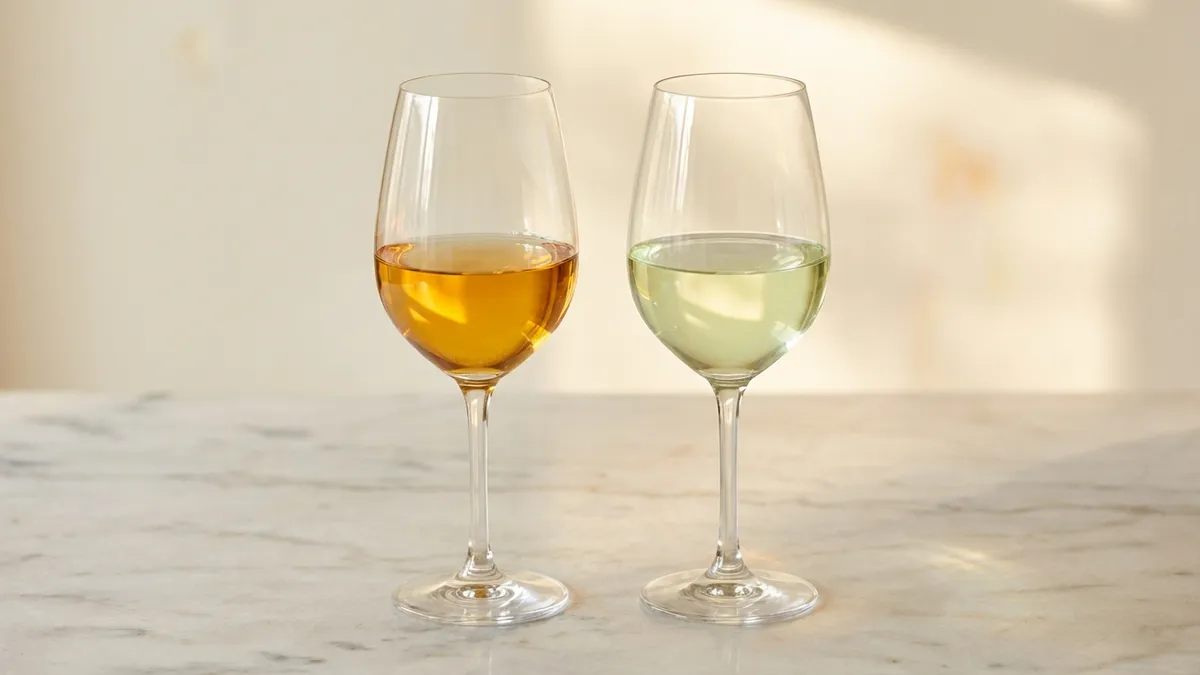
The White Wine World's Defining Choice
If the red wine world has Cabernet vs Merlot, the white wine world has Chardonnay vs Sauvignon Blanc. These two grapes dominate white wine shelves in every country, every wine shop, and every restaurant list on earth. They sit next to each other on the menu, they cost roughly the same at entry level, and they both come in tall green bottles that look almost identical from across the room. From the outside, the choice looks arbitrary.
From the inside of the glass, the two wines could not be more different. Chardonnay is a neutral grape that becomes whatever the winemaker makes it — lean and mineral in Chablis, rich and buttery in Napa, somewhere between the two in Burgundy. Sauvignon Blanc is the opposite: an aromatic powerhouse that always tastes like itself, no matter where it grows or who makes it. Choosing between them is not a question of quality — it is a question of style, mood, and what is on your plate.
This guide walks through exactly how these two grapes differ in structure, flavor, winemaking, food pairing, and regional expression. By the end, you will never stand at a wine shop wondering which one to grab. You will know.
Chardonnay vs Sauvignon Blanc: Structure at a Glance
Structure is where the comparison starts, just as it does with red grapes. The structural gap between Chardonnay and Sauvignon Blanc explains almost every other difference you will notice in the glass.
Body
Chardonnay ranges from medium to full-bodied depending on the winemaking. An unoaked Chablis sits at medium body — crisp, clean, mineral. An oaked Napa Chardonnay pushes into full body — rich, weighty, almost creamy. The grape is a blank canvas, and the winemaker chooses the body.
Sauvignon Blanc is almost always light to medium-bodied. Its naturally high acidity and lean fruit character keep it in the lighter range. Even warm-climate versions from Napa or Stellenbosch rarely feel as heavy as a mid-range Chardonnay. For more on how body is driven by alcohol and extract, see our guide to wine mouthfeel.
Acidity
This is the single biggest structural difference. Sauvignon Blanc has very high natural acidity — among the highest of any white grape. That acidity gives it a sharp, mouth-watering, electric quality that makes your palate feel alert and refreshed.
Chardonnay has moderate to high acidity in cool climates (Chablis, Burgundy) and moderate to low acidity in warm climates (Napa, Australia). Many oaked Chardonnays undergo malolactic fermentation (a secondary fermentation that converts sharp malic acid into softer lactic acid), which further reduces the perception of acidity and gives the wine a buttery, creamy texture.
Oak
Chardonnay is one of the most oak-friendly grapes in the world. It absorbs oak character readily — vanilla, toast, butter, coconut, smoke — and its neutral fruit profile lets the oak shine through rather than compete. Some Chardonnays spend 12 to 18 months in new French oak barrels, and the oak becomes a defining feature of the wine.
Sauvignon Blanc is almost never oaked. Its intense aromatics clash with the vanilla and toast from barrels, and the result usually feels heavy and confused. A few regions (notably Bordeaux, where oaked Sauvignon Blanc is blended with Sémillon) use oak successfully, but those are exceptions. The global default for Sauvignon Blanc is stainless steel tanks, which preserve its bright fruit and herbal character.
Chardonnay is what the winemaker makes it. Sauvignon Blanc is what the grape itself insists on being. That is the fundamental difference.
Flavor Profiles: Two Completely Different Experiences
Chardonnay Flavors
Chardonnay's flavor depends more on winemaking than on the grape itself. Here are the two main styles:
Unoaked (Chablis style):
- Green apple, lemon, pear, white peach
- Chalk, flint, wet stone (mineral notes)
- Crisp, clean, lean finish
Oaked (Napa/Burgundy style):
- Golden apple, tropical fruit, pineapple, mango
- Butter, cream, vanilla, toast, caramel
- Rich, round, full finish with a creamy mid-palate
The gap between these two styles is so large that many beginners do not realize they are the same grape. An unoaked Chablis and a heavily oaked Napa Chardonnay taste like completely different wines — because, in a meaningful sense, they are.
Sauvignon Blanc Flavors
Sauvignon Blanc has a distinctive aromatic signature that shows up consistently regardless of region:
- Citrus: grapefruit, lime, lemon zest, yuzu
- Green/herbal: cut grass, fresh herbs, bell pepper, tomato leaf, asparagus
- Tropical (warm climates): passionfruit, guava, gooseberry
- Floral: elderflower, white blossom
- Mineral: wet stone, flint (especially Loire)
The herbal and citrus notes are driven by a family of aromatic compounds called thiols that are naturally present in Sauvignon Blanc grapes at much higher concentrations than in Chardonnay. Those thiols are why Sauvignon Blanc smells so intensely of grapefruit and grass even before you swirl the glass. For a deeper look at aroma identification, see our guide to how to smell wine.
Where They Grow: The Major Styles
Both grapes are planted globally, but each has a handful of signature regions that define the style most drinkers know.
Chardonnay's Key Regions
- Burgundy, France — the spiritual homeland. From lean, steely Chablis in the north to rich, complex Meursault and Puligny-Montrachet in the Côte de Beaune. Burgundy Chardonnay is the benchmark for the grape worldwide.
- Napa Valley and Sonoma, California — warm-climate, often heavily oaked, tropical-fruited, and full-bodied. The style that defined "ABC" (Anything But Chardonnay) pushback in the 1990s and has since diversified toward more restrained expressions.
- Australia — ranges from lean Adelaide Hills styles to rich, oaked Margaret River and Hunter Valley versions. Australia makes the full spectrum.
- Champagne, France — Chardonnay is one of the three permitted Champagne grapes. A Blanc de Blancs Champagne is 100 percent Chardonnay and shows the grape's minerality at its most extreme.
Sauvignon Blanc's Key Regions
- Marlborough, New Zealand — the region that redefined the grape in the 1980s and 1990s. Explosive passionfruit, lime, and cut-grass aromatics. The most recognizable style of Sauvignon Blanc in the world.
- Loire Valley, France — Sancerre and Pouilly-Fumé produce leaner, more mineral, more restrained Sauvignon Blancs with flint, citrus, and white flower notes. Less fruit bomb, more terroir.
- Bordeaux, France — often blended with Sémillon and sometimes oaked. The dry white Bordeaux style is fuller and more textured than either Loire or Marlborough.
- South Africa (Constantia, Stellenbosch) — a growing reputation for Sauvignon Blancs that split the difference between Marlborough intensity and Loire restraint.
For a broader look at French wine geography, see our guide to French wine regions.
The Malolactic Question: Why Chardonnay Tastes Buttery
One of the most common beginner questions about Chardonnay is: where does the butter come from? The answer is a process called malolactic fermentation (MLF or "malo"), which has nothing to do with butter and everything to do with acid chemistry.
During MLF, a secondary fermentation converts malic acid (the sharp, green-apple acid found in raw grapes) into lactic acid (the softer, creamier acid found in yogurt and milk). The process produces a byproduct called diacetyl, which is literally the same compound that gives movie-theater popcorn its buttery smell. When a Chardonnay undergoes full malolactic fermentation, the diacetyl creates a rich, buttery aroma and a creamy, round mouthfeel.
Not all Chardonnays go through malo. Unoaked styles from Chablis, northern Italy, and parts of Australia deliberately avoid it to preserve the grape's natural acidity and crisp character. The decision to use or skip malo is one of the most consequential choices a Chardonnay winemaker makes.
Sauvignon Blanc almost never undergoes malolactic fermentation. Its high natural acidity is the grape's defining feature, and converting that acidity to creaminess would destroy the crisp, zesty character that makes Sauvignon Blanc what it is.
Food Pairing: Which One Goes With What?
Food pairing is where this comparison becomes most practical. The structural difference between the two grapes maps directly onto different types of food.
Sauvignon Blanc Pairs With
- Goat cheese — the classic match. The high acidity cuts through the tangy creaminess.
- Salads and raw vegetables — the herbal notes echo green ingredients naturally.
- Shellfish and oysters — the minerality and acidity complement briny seafood.
- Sushi and sashimi — light body and clean acid refresh the palate between pieces.
- Asparagus and artichoke — two notoriously wine-unfriendly vegetables that Sauvignon Blanc handles thanks to its matching herbal character.
Oaked Chardonnay Pairs With
- Lobster with butter — a legendary match. Richness meets richness, and the oak-derived vanilla echoes the butter.
- Roast chicken — the medium-to-full body matches the weight of poultry perfectly.
- Creamy pasta — Alfredo, carbonara, and cream sauces want a wine with enough body to stand up to them.
- Mild cheeses — Brie, Camembert, and mild Gruyère work beautifully with the soft tannins from oak.
- Mushroom risotto — the earthiness of the dish meets the richness of the wine.
Unoaked Chardonnay Pairs With
- Grilled fish — cod, halibut, sea bass. The lean body matches delicate proteins.
- Light pasta dishes — lemon, olive oil, and herb-based sauces.
- Vegetable tarts — the apple and pear notes complement savory pastry.
The core rule is the same as for reds: match the weight of the wine to the weight of the food. Sauvignon Blanc is the light partner. Oaked Chardonnay is the heavy partner. Unoaked Chardonnay sits in the middle. For a full framework, see our wine food pairing guide.
A Side-by-Side Tasting You Can Try Tonight
Buy one Sauvignon Blanc and one Chardonnay from any region. Pour them into identical glasses and taste them side by side. Focus on three things:
- Aroma intensity. Bring both glasses to your nose before swirling. The Sauvignon Blanc will hit you immediately with citrus and green notes. The Chardonnay will be quieter — you may need to swirl it to get a clear read.
- Acidity. Take a sip of each and pay attention to how much you salivate. The Sauvignon Blanc will make your mouth water sharply. The Chardonnay will feel softer and rounder.
- Body. Hold each sip in your mouth for three seconds. The Chardonnay (especially if oaked) will feel heavier and more viscous. The Sauvignon Blanc will feel lighter and more refreshing.
After this one comparison, you will have a structural reference point that applies to every white wine you drink from now on. The Sommy app's guided comparison exercises walk you through this kind of side-by-side with real-time feedback, so you can calibrate your palate against professional reference points.
Build Your White Wine Vocabulary
Chardonnay vs Sauvignon Blanc is the white wine equivalent of the structural framework you learned with Cabernet vs Merlot. Together, the two comparisons give you a map of the wine world's most important structural axes: high tannin vs low tannin in reds, high body vs low body in whites. Every other grape variety you encounter will fall somewhere on those same axes.
The Sommy app builds grape-variety recognition into its structured tasting courses, so each comparison adds a new calibrated reference to your palate library. Visit sommy.wine to start working through the varieties one at a time — a few guided tastings is all it takes to go from "which one do I pick?" to "this one, and here is why."
Frequently Asked Questions
What is the main difference between Chardonnay and Sauvignon Blanc?
Body and oak. Chardonnay ranges from lean and unoaked (like Chablis) to rich and buttery (like Napa Chardonnay), and the difference depends heavily on winemaking. Sauvignon Blanc is almost always unoaked, high in acidity, and crisp, with a consistent citrus-herbal signature regardless of where it is grown.
Which is drier — Chardonnay or Sauvignon Blanc?
Both are typically dry, with less than 4 grams of residual sugar per liter. However, Sauvignon Blanc tastes drier because of its higher acidity. Chardonnay, especially oaked versions, can feel rounder and almost creamy even when it is technically just as dry.
Is Chardonnay or Sauvignon Blanc better for beginners?
It depends on what you like. If you prefer crisp, refreshing, easy-to-identify flavors, start with Sauvignon Blanc — its citrus and herbal notes are immediately recognizable. If you prefer richer, softer, more complex wines, start with unoaked Chardonnay and work your way toward oaked styles.
Why does Chardonnay taste so different from one region to another?
Because Chardonnay is a neutral grape that absorbs the character of its winemaking. The grape itself has mild apple and pear flavors. Everything else — butter, vanilla, toast, tropical fruit — comes from oak, malolactic fermentation, and climate. Sauvignon Blanc resists this transformation because its aromatics are so strong.
What does oaked Chardonnay taste like compared to unoaked?
Oaked Chardonnay tastes like butter, vanilla, toast, and sometimes caramel, with a richer, creamier body. Unoaked Chardonnay tastes like green apple, lemon, pear, and sometimes chalk or mineral, with a leaner, crisper body. They are essentially two different wines made from the same grape.
What food pairs better with each grape?
Sauvignon Blanc pairs with light, fresh food — salads, goat cheese, shellfish, sushi, asparagus. Oaked Chardonnay pairs with richer dishes — lobster with butter, roast chicken, creamy pasta, mild cheeses. Match the weight of the wine to the weight of the food.
Which grape is more aromatic?
Sauvignon Blanc, by a wide margin. Its signature aromas — grapefruit, lime, cut grass, elderflower, passionfruit — are among the most intense in the white wine world. Chardonnay is relatively neutral aromatically; most of its perceived aroma comes from winemaking rather than the grape itself.
Can Chardonnay and Sauvignon Blanc be blended?
Rarely, but it happens. The most famous white Bordeaux blend combines Sauvignon Blanc with Sémillon, not Chardonnay. Some New World producers experiment with Chardonnay-Sauvignon Blanc blends, but the combination is uncommon because the two grapes pull in opposite structural directions.
Get the free Wine 101 course
Start learning to taste wine like a pro with structured lessons and AI-guided practice.
Sommy Team
LinkedInFounder & Wine Educator
The Sommy Team is building the world's most approachable wine education app, helping beginners develop real tasting skills through structured courses and AI-guided practice.
Keep Reading
The 6 Noble Grapes Every Wine Lover Should Know
Meet the six grape varieties that form the foundation of the wine world. Learn their flavor profiles, key regions, and food pairings.
Cabernet Sauvignon vs Merlot: What Is the Difference?
Cabernet Sauvignon vs Merlot is the most common wine comparison in the world. Here is how they actually differ in flavor, structure, food pairing, and aging, with a side-by-side comparison you can try at home.
Pinot Noir: The Complete Guide to the World's Most Elusive Red
Pinot Noir is the grape that drives winemakers crazy and wine lovers deeper. Here is a complete guide to its flavor, key regions, food pairings, and why thin skin changes everything.