What Causes Brett in Wine? Smell, Fault and What to Do

By the Sommy Team — AI-assisted, human-edited.
Updated Oct 2, 2026
Contents (7)
TL;DR
Brett is caused by Brettanomyces, a wild yeast that hides in used barrels and unclean cellar equipment. It feeds on leftover sugar when sulfur dioxide runs low and makes barnyard, band-aid, smoke and clove smells. A little reads as savory leather; a lot flattens the fruit. Once it is in the bottle, it stays.
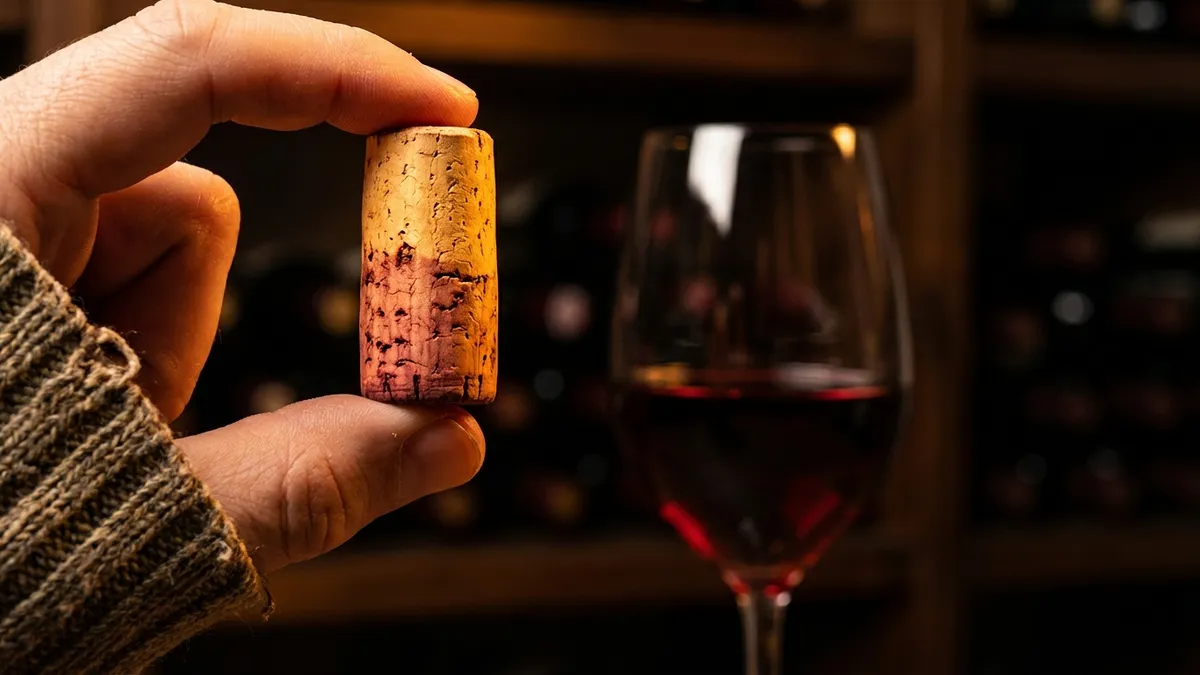
Brett in wine is caused by Brettanomyces, a wild yeast that lives in used oak barrels and on poorly cleaned cellar equipment. When a wine keeps a trace of sugar and too little sulfur dioxide, the yeast turns that sugar into 4-ethylphenol and 4-ethylguaiacol. Those two compounds smell of barnyard, band-aid, smoke and clove.
A little brett reads as savory leather behind the fruit. A lot covers the fruit and makes the wine taste thin. Once those smells are in the bottle, nothing a drinker does will remove them.
What Causes Brett in Wine?
Brett needs four conditions at once: the yeast gets into the wine, finds sugar, meets too little sulfur dioxide and gets months to work. Take away any one and it stays quiet. Reds aged long in older barrels meet all four most often; young wines from steel tanks rarely do.
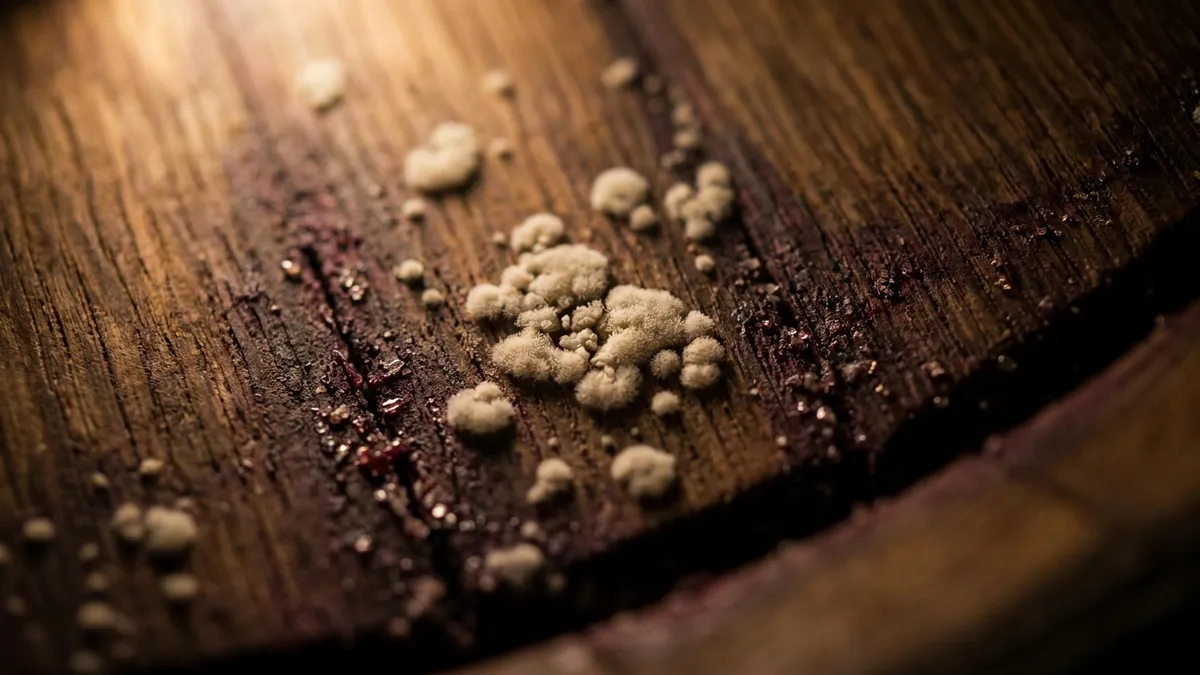
- The yeast arrives. Brettanomyces bruxellensis is the usual species, and it spreads readily on unsanitised hoses, pumps and tanks. Oak barrels suit it best: the yeast feeds on cellobiose, a sugar from the wood, and hides in the rough inner surface.
- It finds food. Brett needs very little sugar. The Australian Wine Research Institute (AWRI) reports that 0.3 g/L is enough to produce 1,000 µg/L of 4-ethylphenol. Wines fermented below 1 g/L of residual sugar are less likely to spoil.
- Sulfur dioxide runs low. Brett is particularly sensitive to sulfur dioxide (SO2), the preservative behind the word "sulfites" on a label. The AWRI says 0.6 mg/L of molecular SO2 prevents growth. Low-sulfite and natural wines give it more room.
- It gets time. Months in barrel let the population build and the smells pile up. Live cells left in the wine at bottling can keep working, so many cellars sterile-filter first.
The same sulfites also hold back the other two families of microbial spoilage in wine: vinegar bacteria and lactic acid bacteria.
What Does Brett Smell Like?
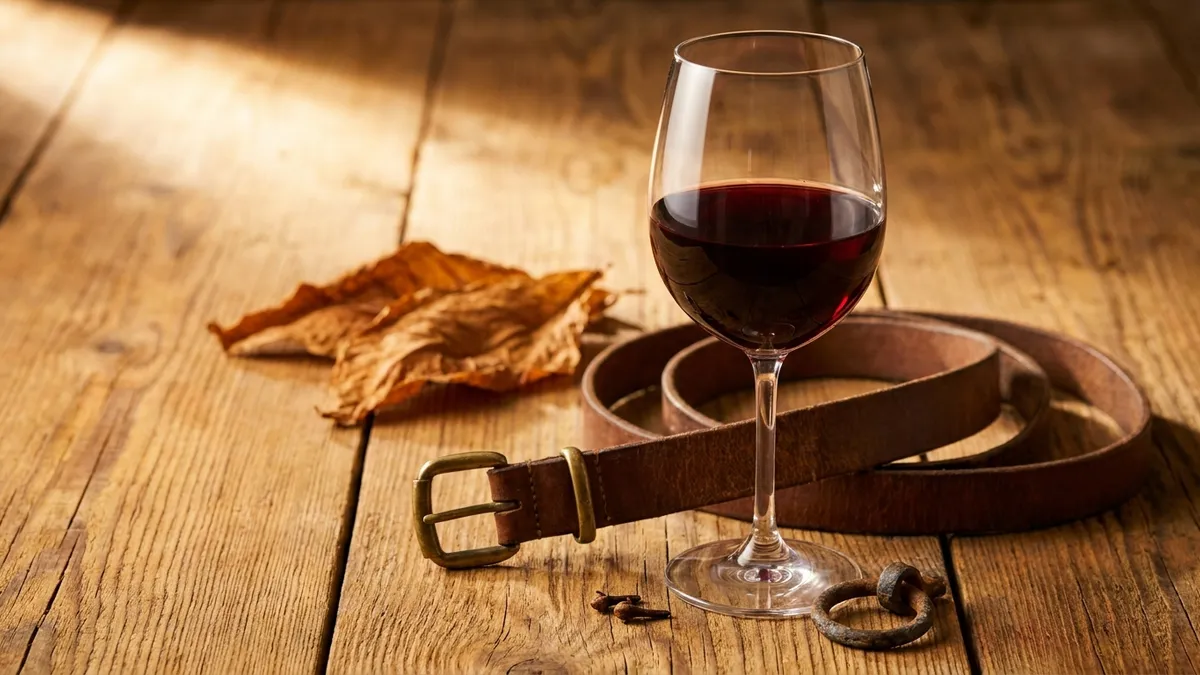
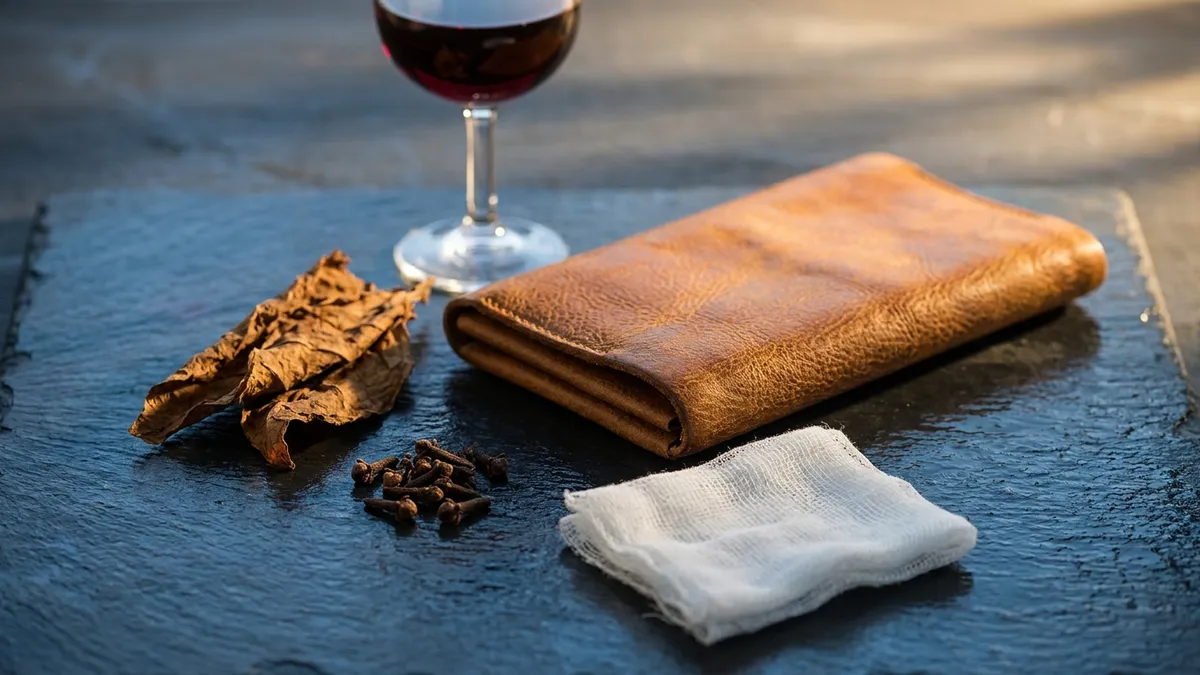
Brett smells of a farmyard: horse stable, sweaty leather and band-aid, with smoke and clove behind them. Three compounds do the work, and each has its own smell. The descriptors below are the ones Wikipedia lists for each compound. The thresholds are the levels the AWRI measured in Cabernet Sauvignon.
| Compound | Smells of | Smell threshold | What you notice |
|---|---|---|---|
| 4-ethylphenol (4-EP) | Band-aid, barnyard, horse stable, antiseptic | 368 µg/L (Australian Cabernet) to 605 µg/L (French Cabernet) | The main brett marker; sharp and medicinal at high levels |
| 4-ethylguaiacol (4-EG) | Smoked bacon, clove, spice, smoke | 110 to 158 µg/L in the same wines | The warm, smoky side of brett |
| Isovaleric acid | Sweaty saddle, cheese, rancid | No single published figure | The sweaty, cheesy edge in heavy cases |
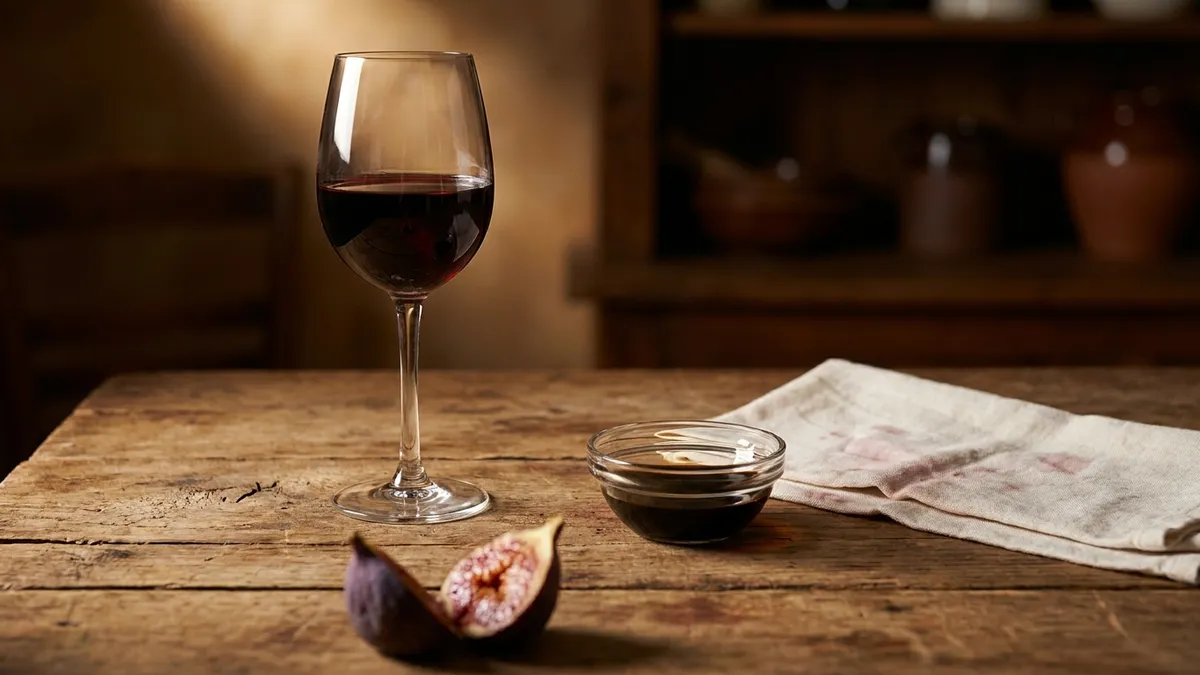
At the friendly end, leather and smoked meat sit behind ripe plum or cherry. At the warning end the wine smells of iodine, antiseptic or even plastic, and the fruit has gone missing.
Naming these smells takes practice. The method in how to smell wine builds the habit, and the wine tasting vocabulary cheat sheet supplies the words.
Is Brett a Wine Fault?
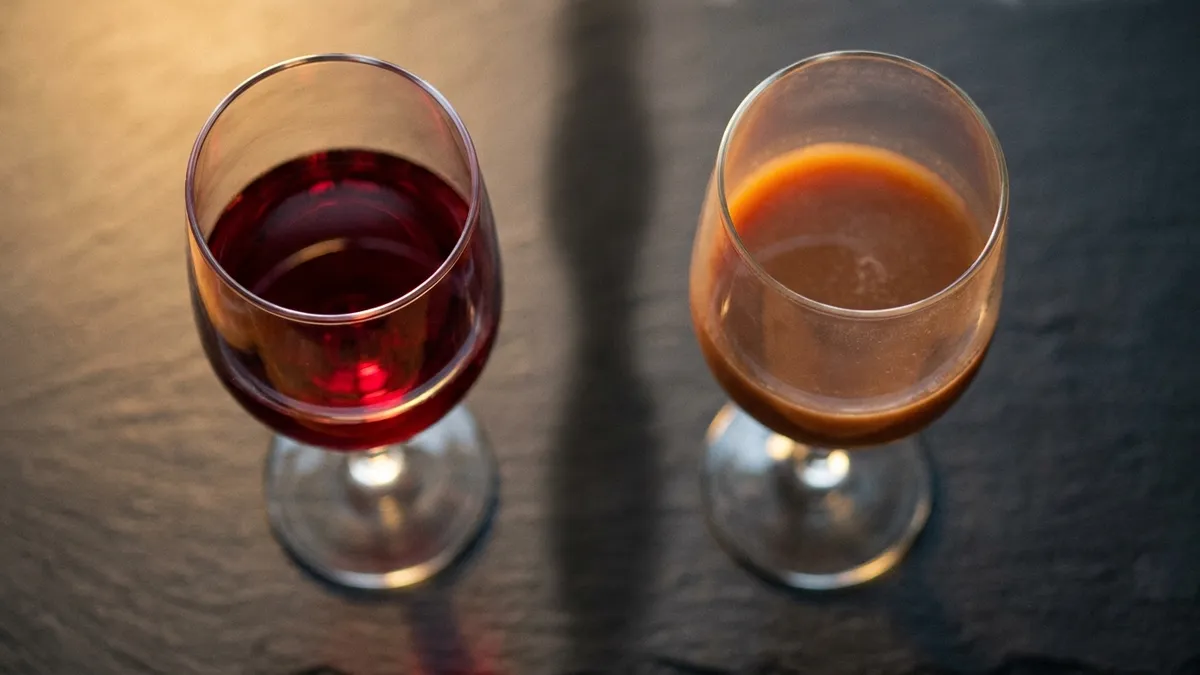
Brett is a fault when it dominates the glass. Below the threshold it adds a leathery, savory layer that some drinkers prize in traditional reds. Above it, the barnyard covers the fruit and the finish turns dry and short. The line moves with the wine, so no single number settles it.
The published figures disagree. Wikipedia's list of wine faults puts the 4-ethylphenol threshold above 140 µg/L. The AWRI measured 368 µg/L in an Australian Cabernet, 569 µg/L in an oaky one and 605 µg/L in a French one. Oak and ripe fruit hide brett, so a big barrel-aged red can carry levels that would swamp a lighter wine. Tasters differ too, and why experts disagree about wine traces those splits to perception research.
The working rule is simple. If the barn arrives before the fruit, or the wine smells like a pharmacy, treat it as a fault. If faint leather sits behind ripe fruit and the finish stays long, treat it as style. The same dose test sorts other borderline smells in wine fault vs style.
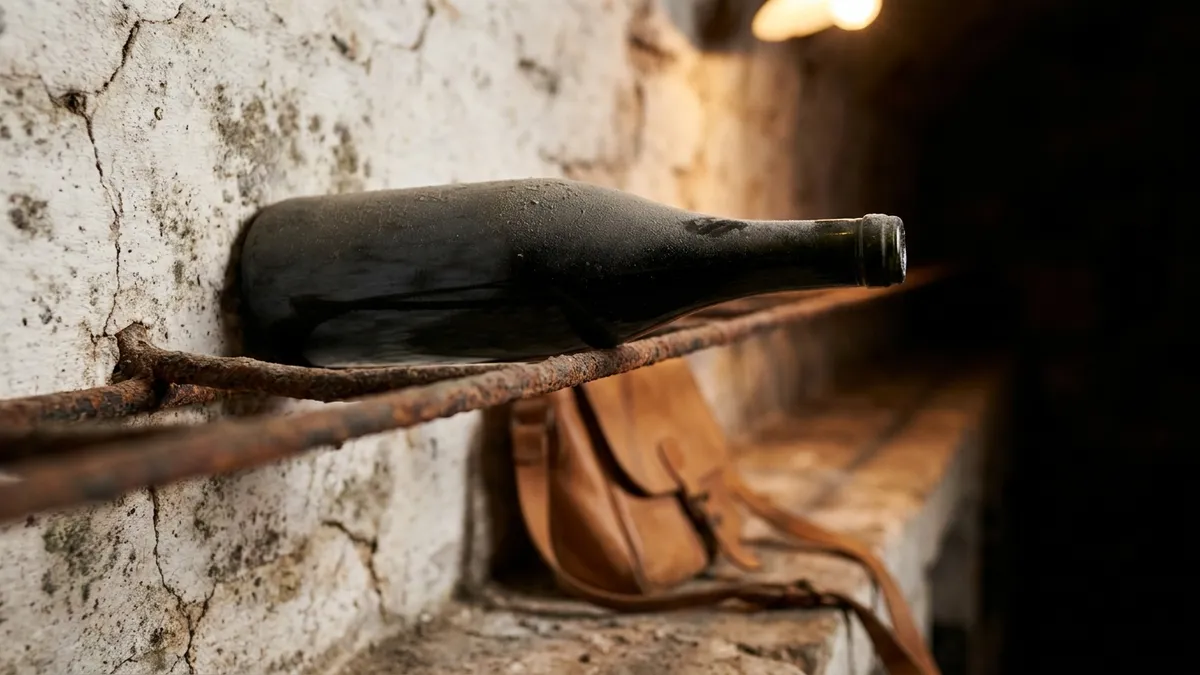
Brett is often associated with styles that came of age before modern cellar hygiene. Traditional southern Rhône reds, older right-bank Bordeaux built on the Bordeaux blend grapes, long-aged Rioja and many low-sulfite natural wines are the usual suspects. Modern bottlings from the same places usually show less. Its leather sits close to the earthy flavors and the tertiary aromas that bottle age brings, which makes brett easy to mistake for age.
How Do You Test Wine for Brett?
Labs test for brett in two ways: they count the yeast, or they measure 4-ethylphenol and 4-ethylguaiacol in µg/L. A drinker cannot get a number. Four checks in the glass still separate brett from fruit, oak and the other faults. Winemakers rely on the lab; at the table, the nose does the job.
An AWRI technical note from 2023 lists the main lab options. Selective plating takes about 10 days and can find one live cell in 50 mL. PCR tests report in about a day and detect 10 cells per mL, though they cannot tell live cells from dead ones. Separate chemical tests measure the smell compounds themselves. A 2019 review by Milheiro and colleagues notes that useful methods need detection limits below the level a nose can smell.
In the glass, run these four checks:
- Barn before fruit. Leather behind ripe plum is brett in the background. If you have to dig for the cherries, the level is likely above threshold.
- A medicinal edge. Band-aid, iodine or plastic signals a level most drinkers find faulty.
- A dried-out finish. The fruit in the middle of the palate is missing, and a leathery aftertaste lingers with nothing behind it.
- The air test. Sniff, wait 30 minutes, sniff again. Brett smells the same or stronger, while reduction, the struck-match smell, fades.
Can You Get Rid of Brett in Wine?
Not from a finished bottle. 4-ethylphenol is stable, so decanting, chilling and waiting leave it in place. Winemakers can stop brett from growing and can remove the live yeast by sterile filtration. The smell already made stays unless the wine goes through a specialist treatment. What works changes with who is holding the wine.
| Who | What works | What does not |
|---|---|---|
| Drinker with a bottle | Open another bottle; return a young, fruity red that smells of a stable | Decanting, chilling, waiting |
| Shop or restaurant guest | Describe the smell precisely and ask for a fruit-led style instead | Calling it corked, which points staff at the wrong fault |
| Winemaker, before bottling | 0.6 mg/L molecular SO2, barrels filled with 85 °C water for 15 minutes, sterile filtration | Filtration alone, which removes cells but not smell |
| Winemaker, after spoilage | Reverse osmosis treatment to reduce 4-EP, or blending low levels below threshold | More sulfur dioxide, which stops growth but removes nothing |
If a traditional Rhône or an older Rioja shows leather and barnyard, it is probably the style the producer intended. If a young, modern, fruit-forward red smells like a stable, that is more likely a cellar slip worth raising with the shop. In a restaurant, name it: "This has a strong barnyard smell covering the fruit, so we would like something fruitier." Label words such as "traditional", "unfiltered" and "no added sulfites" are soft signs of more brett.
Chitosan made from fungi has been authorized since 2009 as a treatment that removes brett yeast from wine. Researchers are also testing UV-C light and polymers that bind the brett compounds, both still lab trials.
Brett vs Other Wine Faults
Brett is the barn among the stinky faults. It holds its smell in the glass, which separates it from reduction, and it smells animal rather than damp, sour or nutty.
| Fault | Smells of | Fades with air? | Extra tell |
|---|---|---|---|
| Brett | Barnyard, leather, band-aid, smoke | No | Dried-out, short finish |
| Reduction | Struck match, rotten egg, burnt rubber | Yes, with swirling | Improves in the glass |
| Volatile acidity | Vinegar, nail polish remover | No | Stings the back of the nose |
| Oxidation | Bruised apple, sherry, walnut | No | Reds turn brick, whites deep gold |
| Cork taint | Wet cardboard, damp basement | No | Fruit muted and flat |
| Mousiness | Stale popcorn, mouse cage | Smelled only after swallowing | Clean on the first sniff |
Mousiness is the trap for natural-wine drinkers, since it hides from a clean sniff, as the mousy wine taint guide explains. Wet cardboard means cork taint, sherry and brick mean oxidation, and vinegar means volatile acidity.
Train Your Nose for Brett
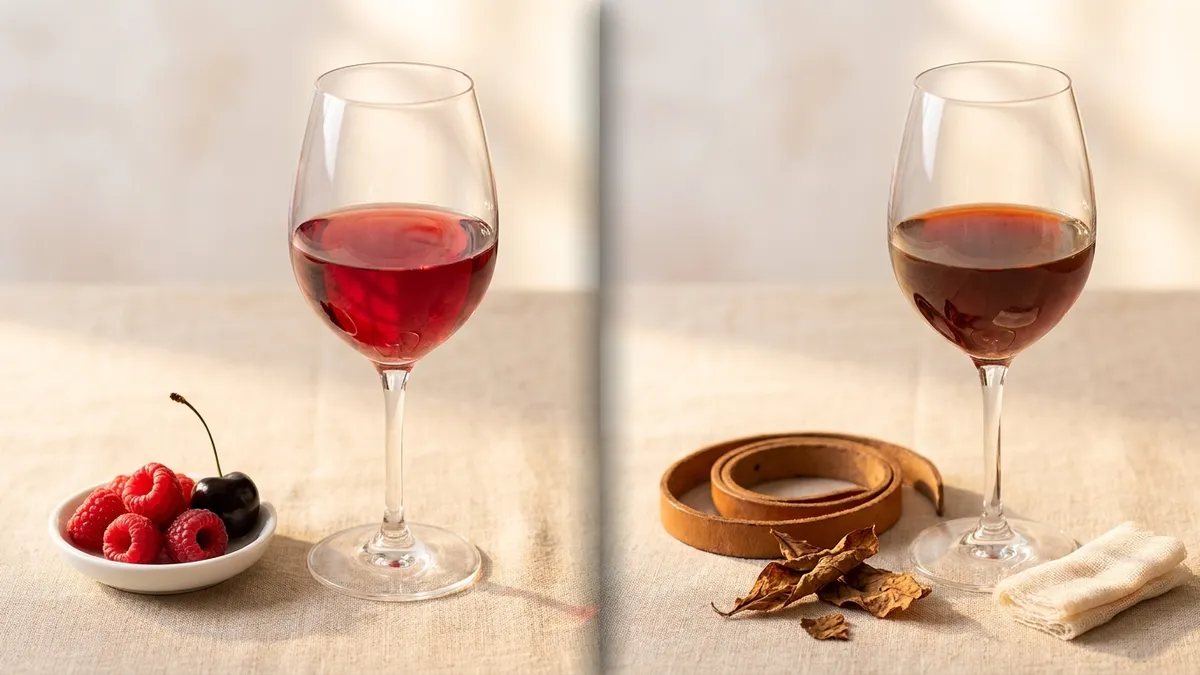
Two household smells teach brett faster than any wine. Sniff a fabric band-aid, then a worn leather wallet. The first is the medicinal end of brett, the second the friendly end. Next, pour a traditional barrel-aged red beside a young, fruit-led one. The Pinot Noir guide lists the red-fruit aromas brett covers first.
The drills in develop your wine palate and the traps in common wine tasting mistakes build the rest. The faults learning hub collects every fault profile in one place.
Sommy is a wine-education app with bite-sized courses and an AI-guided tasting mode, at sommy.wine. Pour one red tonight, smell it twice 30 minutes apart, and note whether a barnyard smell stays put.
Sources
- Australian Wine Research Institute: Brettanomyces FAQ
- Australian Wine Research Institute: Technical Note, Options for detecting Brettanomyces in wine (2023)
- Milheiro et al. (2019), 4-Ethylphenol, 4-ethylguaiacol and 4-ethylcatechol in red wines: microbial formation, prevention, remediation and overview of analytical approaches, Critical Reviews in Food Science and Nutrition
- Wikipedia: Brettanomyces
- Wikipedia: Wine fault
Frequently Asked Questions
What causes brett in wine?
Brettanomyces yeast causes it. The yeast lives in used oak barrels and on poorly cleaned winery equipment. It grows when a wine keeps a little sugar and too little sulfur dioxide, then turns that sugar into 4-ethylphenol and 4-ethylguaiacol. The Australian Wine Research Institute reports that 0.3 g/L of sugar is enough to make 1,000 µg/L of 4-ethylphenol, well above the level most tasters notice.
What does brett smell like in wine?
Brett smells of barnyard, horse stable, band-aid and antiseptic from 4-ethylphenol, and of smoked bacon, clove and spice from 4-ethylguaiacol. A third compound, isovaleric acid, adds sweaty saddle and cheesy smells. At low levels these read as leather behind the fruit. At high levels the wine smells medicinal and the fruit tastes thin and dried out.
Is brett a wine fault?
Brett is a fault when it dominates the glass. Published smell thresholds for 4-ethylphenol run from about 140 µg/L to over 600 µg/L, because the wine around it can mask or expose the smell. If the barn arrives before the fruit, or the wine smells like a pharmacy, call it a fault. If faint leather sits behind ripe fruit, many drinkers treat it as part of the style.
How do you get rid of brett in wine?
In a finished bottle you cannot. Decanting, chilling and time leave 4-ethylphenol in place. Winemakers prevent brett with sulfur dioxide, clean barrels and sterile filtration, which removes the yeast cells but leaves the smell they already made. Several companies offer reverse osmosis treatment to reduce 4-ethylphenol, a specialist cellar process. For a drinker, the fix is a different bottle.
Does brett go away with decanting?
No. Brett compounds are stable and do not blow off with air. A barnyard smell at the first pour is still there two hours later. That makes air a useful test: reduction, the struck-match or rotten-egg smell, fades after vigorous swirling, while brett stays the same or seems stronger as the glass warms.
How is wine tested for brett?
Labs count the yeast or measure its compounds. The Australian Wine Research Institute lists selective plating, which takes about 10 days and can find one live cell in 50 mL, and PCR tests that report in about a day. Chemical tests measure 4-ethylphenol and 4-ethylguaiacol in µg/L. A drinker has only the nose, which can say barnyard but cannot give a number.
Why do some natural wines smell barnyardy?
Brett yeast is particularly sensitive to sulfur dioxide, and many natural wines use little or none. Without that protection, any brett living in the cellar or the barrels can grow and make its barnyard compounds. Some natural-wine drinkers like that savory edge. Others find it covers the grape. A label that says no added sulfites is a fair sign that brett is more likely.
Sommy Team
LinkedInFounder & Wine Educator
The Sommy Team is building the world's most approachable wine education app, helping beginners develop real tasting skills through structured courses and AI-guided practice.