Dessert Wine Types and Examples: Five Ways Wine Gets Sweet

By the Sommy Team — AI-assisted, human-edited.
Updated Oct 2, 2026
Contents (10)
- Dessert Wine Types at a Glance
- What Is Dessert Wine?
- Noble Rot Wines: Sauternes, Tokaji and TBA
- Ice Wine: Grapes Frozen on the Vine
- Dried-Grape Wines: Vin Santo, Recioto and Passito
- Late Harvest Wines and What the Label Words Mean
- Fortified Dessert Wines: Port, Banyuls and PX
- How Do You Pair Dessert Wine?
- How Should You Serve Dessert Wine?
- Taste Three Types Side by Side
TL;DR
Dessert wines come in five types, named for how the grapes keep their sugar: noble rot (Sauternes, Tokaji Aszú), frozen grapes (ice wine), dried grapes (Vin Santo, Recioto), late harvest (Spätlese, Vendange Tardive) and fortified (Port, Banyuls, PX Sherry). Choose by flavour, then pour a wine at least as sweet as the dessert.
Dessert wine is wine sweet enough to drink with dessert or in place of it. There are five main types, named after how the grapes get their sugar. They are noble rot (Sauternes, Tokaji Aszú), frozen grapes (ice wine), dried grapes (Vin Santo, Recioto), late harvest (Spätlese, Vendange Tardive) and fortified (Port, Banyuls, PX Sherry).
Dessert Wine Types at a Glance
| Type | How it gets sweet | Examples | Main grapes | Tastes of | Serve it with |
|---|---|---|---|---|---|
| Noble rot | A fungus shrivels ripe grapes on the vine, concentrating sugar and acid | Sauternes, Tokaji Aszú, Trockenbeerenauslese, Monbazillac | Sémillon, Furmint, Riesling | Honey, dried apricot, marmalade | Crème brûlée, fruit tarts, blue cheese |
| Ice wine | Grapes freeze on the vine and the ice stays behind in the press | Canadian icewine, German and Austrian Eiswein | Vidal, Riesling | Peach, lychee, honey | Stone-fruit desserts, apple tart |
| Dried grape (passito, straw wine) | Picked grapes dry on mats or racks for months | Vin Santo, Recioto della Valpolicella, Passito di Pantelleria, Vin de Paille | Trebbiano, Malvasia, Corvina, Muscat | Raisin, fig, roasted hazelnut | Almond biscotti, nut tarts |
| Late harvest | Healthy grapes stay on the vine weeks past the normal pick | Spätlese, Auslese, Vendange Tardive, late harvest Riesling | Riesling, Gewurztraminer, Pinot Gris | Ripe peach, apricot, citrus peel | Fruit tarts, mild cheese |
| Fortified | Grape spirit stops fermentation and leaves the sugar behind | Port, Banyuls, PX Sherry, Rutherglen Muscat, Muscat de Beaumes-de-Venise | Touriga Nacional, Grenache, Pedro Ximénez, Muscat | Raisin, toffee, cocoa | Chocolate cake, blue cheese |
Two more cellar methods turn up in textbook lists of sweet-wine techniques, but neither makes dessert wine. Chaptalisation adds sugar to the juice before fermentation, and the yeast turns it into alcohol. Süssreserve blends unfermented juice back into finished wine, which usually gives an off-dry white.
Every good dessert wine balances its sugar with high acidity (the tartness that makes your mouth water). Without it, the wine tastes like syrup.
What Is Dessert Wine?
Dessert wine has no single legal meaning. In everyday use it is a wine sweet enough to stand next to a dessert. EU labelling rules call a still wine "sweet" above 45 grams of sugar per litre. Under US federal rules (27 CFR 4.21), "dessert wine" is a class of grape wine over 14% and up to 24% alcohol.
So Port counts in both senses, while a sweet white at 11% misses the US class. Sweet is also not the same as dessert. Moscato d'Asti and off-dry Riesling taste sweet but are light enough for an aperitif or a spicy curry. If a sweet wine is fizzy or only lightly sweet, serve it before or with the meal and keep the dessert slot for the five types above. The wine sweetness scale places each style from bone dry to luscious, and dessert wines sit at the far end of the main wine styles.
Noble Rot Wines: Sauternes, Tokaji and TBA
Noble rot wines are made from grapes shrivelled on the vine by Botrytis cinerea, a fungus that pierces the skin so water evaporates and sugar, acid and flavour concentrate. They taste of honey, dried apricot and marmalade. The noble rot explainer shows why the same fungus becomes destructive grey rot when the weather stays wet.
Sauternes, in Bordeaux, is made mainly from Sémillon with Sauvignon Blanc and Muscadelle. Mist forms where the cool Ciron river meets the warmer Garonne, giving botrytis the damp mornings it needs. Its villages, grapes and harvest are covered in the Sauternes wine guide.
Tokaji Aszú from Hungary is made mainly from Furmint and Hárslevelű. Its label counts puttonyos. Historically that was the number of baskets of botrytised berry paste, about 25 kg each, added to a 136-litre Gönc cask of base wine. Today the number reflects the sugar and sugar-free extract measured in the finished wine. A higher number still means a sweeter, denser wine.
Other noble rot wines to look for:
- Beerenauslese (BA) and Trockenbeerenauslese (TBA): German and Austrian botrytis wines, mostly Riesling; TBA is among the sweetest wines made anywhere
- Sélection de Grains Nobles: Alsace botrytis wines from Gewurztraminer, Riesling, Pinot Gris or Muscat
- Monbazillac: a botrytis white from Bergerac, usually far cheaper than Sauternes
Ice Wine: Grapes Frozen on the Vine
Ice wine (Eiswein in German) is pressed from grapes that freeze naturally on the vine. The water stays in the press as ice, and only a little sugary, acidic juice runs out. German law requires −7 °C or colder at harvest; Canada requires −8 °C or below. Canada makes more icewine than all other countries combined, mostly in Ontario from Vidal and Riesling.
The grapes hang into December or January, exposed to birds, rot and warm spells. Pickers work at night and the fruit is pressed before it thaws, so yields are tiny and whole crops are sometimes lost. German Eiswein must reach the same sugar ripeness as a Beerenauslese, and warmer winters now rule out some vintages.
Expect peach, lychee and honey, with sharp acidity that keeps the finish clean. It is often sold in 375 ml or 200 ml bottles, which is why half bottles suit sweet wine. With fruit desserts, that acidity cuts through a tart apple filling, as wine with pie explains.
Dried-Grape Wines: Vin Santo, Recioto and Passito
Dried-grape wines start from grapes laid on straw mats or racks, or hung in airy lofts, for months before pressing. The berries lose water and turn raisin-like, so the juice is already very sweet when fermentation starts. Italy calls the drying appassimento and the wines passito. The straw wine and passito explainer follows the drying step by step.
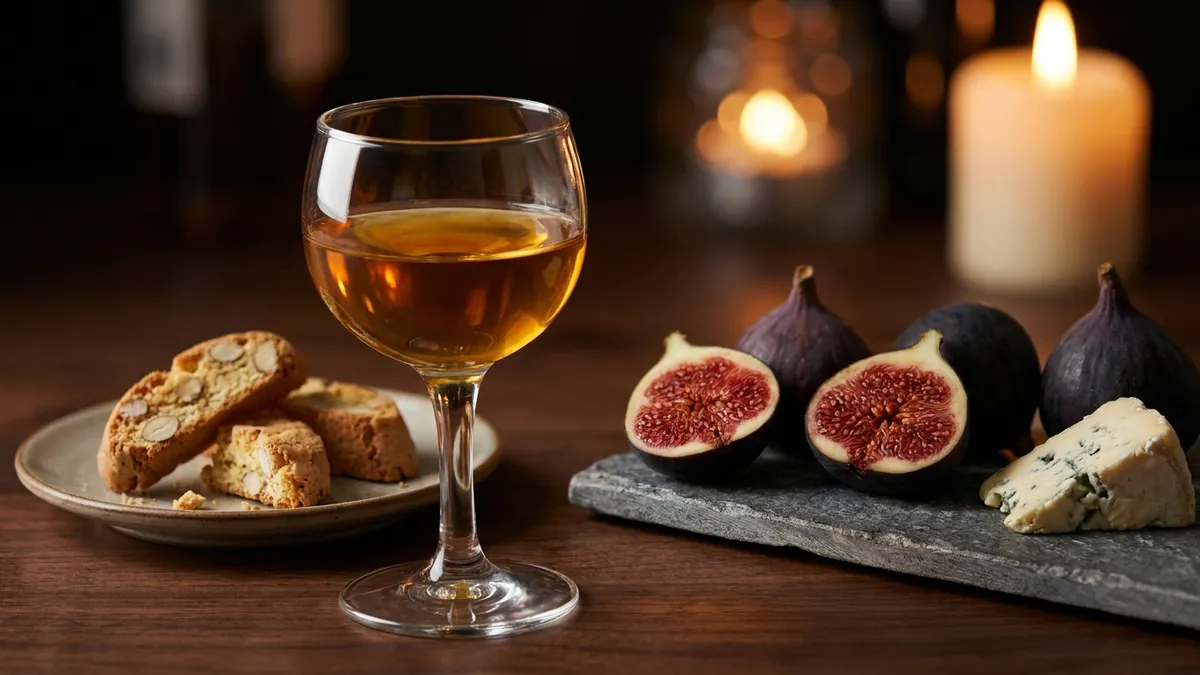
Vin Santo is Tuscany's version, from dried Trebbiano and Malvasia. It usually ages at least three years in small sealed barrels called caratelli. Air in the barrel turns it amber and brings out caramel, roasted hazelnut and dried apricot. Biscotti dipped in Vin Santo is the classic Tuscan end to a meal.
- Recioto della Valpolicella: a sweet red from dried Corvina in the Veneto, tasting of dried cherry, chocolate and spice
- Recioto di Soave: a sweet white from dried Garganega, honeyed with almond
- Passito di Pantelleria: dried Muscat (Zibibbo) from the island between Sicily and Tunisia, smelling of dried fig and orange peel
- Vin de Paille: the Jura's straw wine, a style also made in Austria and Greece
Cyprus sun-dries its grapes for Commandaria, often called the oldest wine name still in production. The Italian passitos above come from the Veneto, Tuscany and Sicily, each mapped in the Italian wine guide.
Late Harvest Wines and What the Label Words Mean
Late harvest wines come from healthy grapes left on the vine past the normal pick, so they gather extra sugar without needing botrytis. They taste of ripe peach, apricot and citrus peel, and feel lighter than noble rot wines. Alsace labels them Vendange Tardive. German wine law grades them by grape ripeness at harvest, measured in degrees Oechsle.
| Label word | Minimum ripeness (Mosel Riesling, °Oechsle) | Usual style | Serve it with |
|---|---|---|---|
| Spätlese | 76, from grapes picked after the main harvest | Off-dry to medium sweet; some are fermented dry (trocken) | Spicy food, or as an aperitif |
| Auslese | 83 | Medium sweet to sweet | Fruit tarts, mild blue cheese |
| Beerenauslese (BA) | 110 | Very sweet, often botrytised | Crème brûlée, apricot desserts |
| Eiswein | 110, from frozen grapes | Very sweet with sharp acidity | Stone-fruit desserts |
| Trockenbeerenauslese (TBA) | 150, from botrytis-shrivelled berries | Intensely sweet | On its own, in small pours |
These words set a minimum ripeness for the grapes at harvest, so a Spätlese can still be fermented dry. Other countries measure differently again. Sauternes must keep at least 45 grams of residual sugar per litre, and Tokaji's puttonyos now track sugar plus extract. If a German label shows only a ripeness word, read Auslese and above as dessert sweet and Spätlese as a maybe.
Fortified Dessert Wines: Port, Banyuls and PX
Fortified dessert wines have grape spirit added during fermentation. The spirit stops the yeast, so the unfermented grape sugar stays in the wine along with the extra alcohol. Port, from Portugal's Douro, is fortified with neutral grape spirit and ends up at 19 to 22% alcohol. Its ruby, tawny and vintage styles all start this way.
- Pedro Ximénez Sherry (PX): made from sun-dried Pedro Ximénez grapes in Andalucía; near-black, tasting of molasses, raisin and fig, and poured over vanilla ice cream as a sauce
- Banyuls and Maury: red vins doux naturels from Grenache in the Roussillon, tasting of dried cherry and cocoa
- Muscat de Beaumes-de-Venise: a fortified Muscat from the southern Rhône, smelling of orange blossom and peach, lighter than most fortified wines
- Rutherglen Muscat: Australian fortified Muscat aged in a solera-like system, tasting of toffee, raisin and marmalade; Rare and Grand are the top grades
- Sweet Marsala: Sicily's fortified wine, aged into caramel and almond flavours and used in zabaglione and tiramisu
South Africa's historic sweet Muscat takes a different route, from grapes shrivelled on the vine without spirit, as the Constantia wine guide explains.
How Do You Pair Dessert Wine?
The wine must be at least as sweet as the food. Sugar in the dessert resets your palate, so a less sweet wine tastes thin and sour beside it. If unsure, choose the sweeter wine. Ice cream is the hardest test of this rule, as wine with ice cream shows.
- If the dessert is a fruit tart of moderate sweetness, pour a late harvest Riesling or an Auslese
- If it is rich chocolate cake, pour Port or Banyuls
- If it is barely sweet, like almond biscotti, pour Vin Santo
- If it has a caramel top, like crème brûlée, pour Sauternes or Tokaji
- If it is blue cheese, pour Sauternes or Port, since the salt sharpens the fruit
- If it is a light dessert, skip the TBA, which will flatten the dish
The wine and chocolate pairing guide works through Port and Banyuls by cacao percentage. For cake-by-cake picks, from carrot cake to wedding cake, see wine with cake. Salt, fat and acid follow the same rules here as in all wine and food pairing.
How Should You Serve Dessert Wine?
Serve white dessert wines somewhat chilled but not ice cold, because heavy chilling hides the aroma. Pour about 60 to 90 ml (2 to 3 oz) per glass. Once open, fortified wines keep longest. If a bottle is unfortified, recork it, keep it in the fridge and finish it within days.
Taste Three Types Side by Side
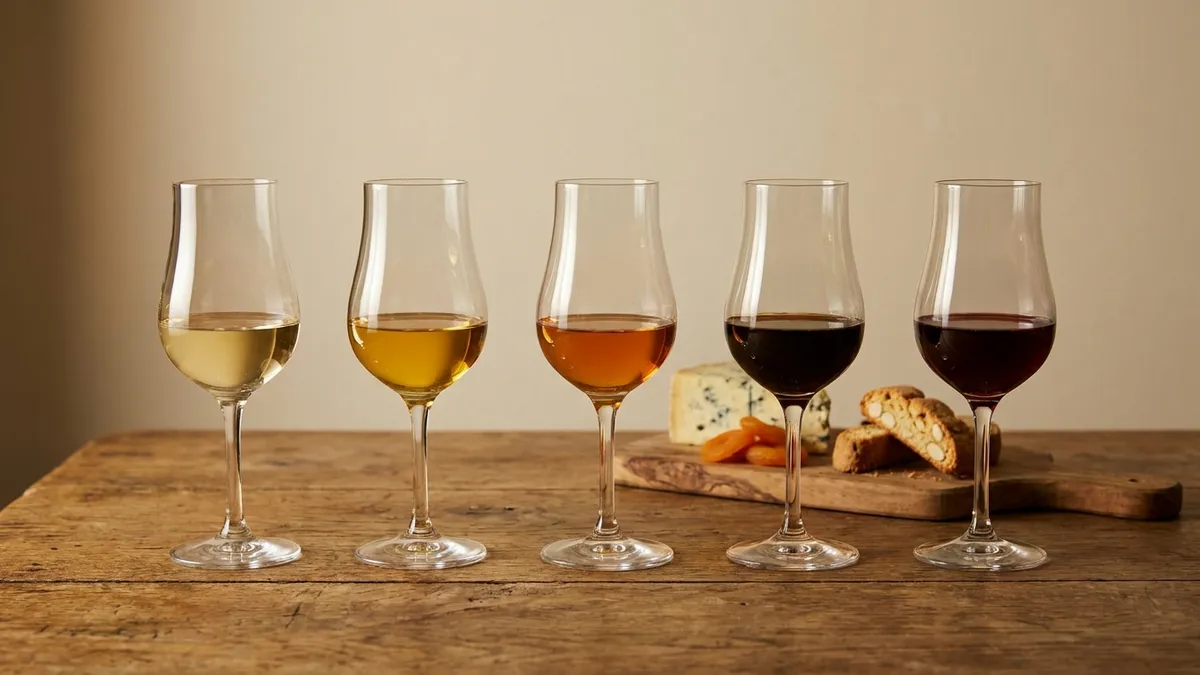
Buy three half bottles from three methods: a late harvest Riesling, a 10-year tawny Port, and a Sauternes or Monbazillac. Pour them lightest first and sip water between glasses. The Riesling tastes of fresh peach, the Port of caramel and walnut, the Sauternes of honey and dried apricot. Photograph each label in Sommy's AI-guided tasting mode, which walks you through look, smell and taste and logs your notes to a tasting journal.
Sources
Frequently Asked Questions
What are the main types of dessert wine?
There are five: noble rot wines (Sauternes, Tokaji Aszú, Trockenbeerenauslese), ice wine (Canadian icewine, German Eiswein), dried-grape wines (Vin Santo, Recioto, passito), late harvest wines (Spätlese, Auslese, Vendange Tardive) and fortified wines (Port, Banyuls, PX Sherry, Rutherglen Muscat). Each is named for how the grape sugar is concentrated or kept, and each tastes different: honeyed, fresh, nutty, fruity or raisined.
What is considered a dessert wine?
In everyday use, any wine sweet enough to serve with or instead of dessert. The law is narrower and differs by country. EU labelling lets a still wine be called sweet above 45 grams of sugar per litre. In the United States, dessert wine is a federal class for grape wine above 14% and up to 24% alcohol, which takes in Port but not every sweet white.
Is dessert wine the same as sweet wine?
No. Every dessert wine is sweet, but many sweet wines are not dessert wines. Moscato d'Asti and off-dry Riesling have noticeable sugar yet are light enough to drink as an aperitif or with spicy food. Dessert wines are sweeter and denser, made by concentrating the grape or stopping fermentation early, so they can stand next to a sweet course.
What are some red dessert wines?
The main red dessert wines are Port from Portugal, Banyuls and Maury from the Roussillon in southern France, and Recioto della Valpolicella from Italy's Veneto. Port, Banyuls and Maury are fortified, so grape spirit stops fermentation and leaves the sugar in. Recioto is made from dried Corvina grapes instead. All four have the weight for dark chocolate desserts.
How should dessert wine be served?
Serve white dessert wines somewhat chilled but not ice cold, because heavy chilling hides the aroma and leaves only the sugar. Pour small glasses of about 60 to 90 ml (2 to 3 oz), since the sweetness and often higher alcohol make a little enough. A smaller wine glass keeps the aroma together. Half bottles of 375 ml are common for the same reason.
How long does dessert wine last after opening?
Longer than most dry table wine, because sugar and, in fortified styles, extra alcohol slow spoilage. Fortified wines such as tawny Port and PX Sherry keep the longest once open. Unfortified styles such as Sauternes, ice wine and late harvest Riesling should be recorked, kept in the fridge and finished sooner. If the wine smells flat or of vinegar, it has gone.
What food goes with dessert wine?
Match sweetness first: the wine must be at least as sweet as the food. Sauternes and Tokaji suit crème brûlée, fruit tarts and blue cheese. Port and Banyuls go with chocolate cake and strong cheese. Vin Santo is for dipping almond biscotti. Ice wine suits stone-fruit desserts. If the dessert is sweeter than the wine, the wine will taste thin and sour.
Sommy Team
LinkedInFounder & Wine Educator
The Sommy Team is building the world's most approachable wine education app, helping beginners develop real tasting skills through structured courses and AI-guided practice.