Wine Sweetness Scale: From Bone Dry to Dessert Sweet
Sommy Team
Founder & Wine Educator
April 10, 2026
11 min read
TL;DR
The wine sweetness scale runs from under 1 gram of residual sugar per liter (bone dry) up to 200 grams per liter (lusciously sweet). EU law splits still wines into dry, off-dry, medium sweet, and sweet. Sparkling wines use a parallel scale from Brut Nature to Doux. Acidity can make a sweet wine taste drier.
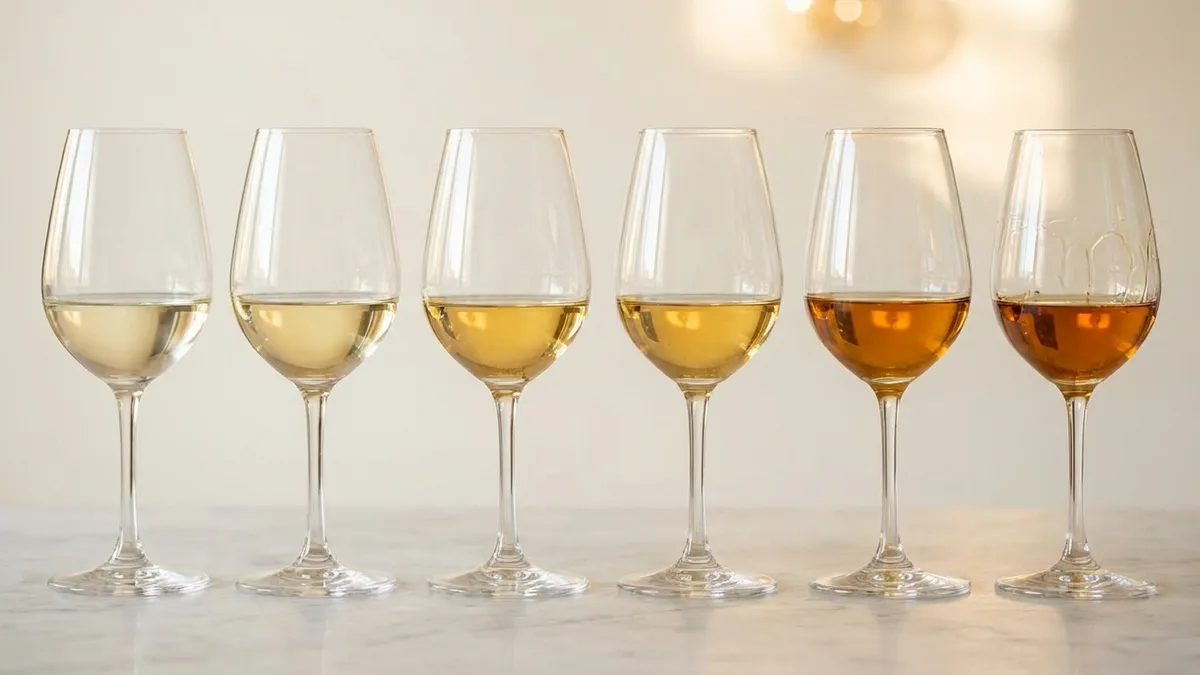
Why Wine Sweetness Is So Confusing
For most beginners, the wine sweetness scale is a black box. You read "Brut Champagne" on a label and assume it means dry — which it technically does, but barely. You grab a bottle labeled "Sec" thinking it will be dry and end up with something noticeably sweet on the palate. You try a Riesling a friend recommends as "off-dry" and cannot figure out whether it is dessert wine or not. The labels are confusing, the numbers are invisible, and your mouth keeps disagreeing with the bottle.
The good news is that the whole system is much cleaner once you see the scale laid out. The wine sweetness scale is a measurable chemical property — grams of residual sugar per liter — and every wine in the world fits somewhere on it. Once you learn the four broad categories for still wines, the seven categories for sparkling wines, and the simple reason acidity can make a sweet wine taste dry, you will never guess wrong at a wine shop again.
This guide walks through the full scale from bone dry to lusciously sweet, with real numbers, label vocabulary, and a few famous examples for each category. By the end, you will be able to glance at any wine label and make an informed guess about what you will taste before you pull the cork.
What Sweetness in Wine Actually Means
Sweetness in wine is a chemistry fact, not a vibe. It is measured as residual sugar — the glucose and fructose that remain in the finished wine after fermentation ends. Those sugars were originally in the grape juice. During fermentation (the process where yeast eats sugar and produces alcohol), most of that sugar gets converted into ethanol and carbon dioxide. Whatever survives the conversion is the residual sugar, often abbreviated as RS.
Residual sugar is measured in grams per liter (g/L). A higher number means a sweeter wine. Winemakers can leave more sugar behind on purpose by stopping fermentation early — chilling the wine, filtering the yeast, or adding alcohol to kill the yeast — or they can let fermentation run to completion for a fully dry wine. For a deeper look at the difference between dry and sweet wines and why "dry" is so often misunderstood, see our guide to what does dry wine mean.
The Cola Comparison That Changes Everything
Here is a useful number for context. A standard can of cola contains roughly 100 grams per liter of sugar. A dry wine contains 1 to 4 g/L. A sweet dessert wine can contain 120 g/L or more.
That means almost every wine you will ever drink has less sugar than a soft drink. Even a medium-sweet Riesling with 30 g/L has about a third of the sugar in the same volume of cola. The perception of sweetness in wine is amplified by aromatic intensity and fruit character — a wine with 5 g/L of sugar and lots of ripe-fruit aromatics can taste sweeter than a wine with 15 g/L and high acidity. Chemistry and perception are not the same thing.
The Wine Sweetness Scale for Still Wines
European Union wine law defines four broad sweetness categories for still wines. Every EU bottle fits into one of these, and the thresholds are used worldwide as a reference:
- Dry (sec, trocken, secco) — under 4 g/L residual sugar (up to 9 g/L if balanced by high acidity)
- Off-dry / Medium dry (demi-sec, halbtrocken, abboccato) — 4 to 12 g/L
- Medium sweet (moelleux, lieblich, amabile) — 12 to 45 g/L
- Sweet (doux, süss, dolce) — more than 45 g/L
Those four buckets cover the entire world of still wine, from a crisp Muscadet to a honeyed Sauternes. Here is what each category actually tastes like and what kinds of wines typically live there.
Bone Dry (under 1 g/L)
Bone dry wines have essentially no perceptible sweetness. Your tongue reads them as fully savory, sometimes almost austere. This is where wines like Muscadet from the Loire, unoaked Chablis from Burgundy, Pinot Grigio from northern Italy, and classic Sauvignon Blanc from Marlborough or Sancerre live. On the red side, most Nebbiolo (Barolo and Barbaresco), many Sangiovese wines (Chianti), and most dry Spanish Tempranillo are bone dry.
A bone dry wine served at its proper temperature — see the wine serving temperature chart — tastes clean, focused, and food-friendly. Nothing lingers sweet.
Dry (1 to 4 g/L)
The majority of red and white wines on any wine list fall into this zone. Cabernet Sauvignon, Merlot, most Chardonnay styles (including oaked), Syrah/Shiraz, and most Bordeaux blends sit here. The wine has a touch of roundness from the tiny amount of residual sugar, but no one would describe it as sweet.
Off-Dry (4 to 12 g/L)
Off-dry is the zone where beginners get tripped up the most. The wine has noticeable sweetness on the palate but is not sweet enough to feel like a dessert. Classic examples include Kabinett and Spätlese Riesling from Germany (the drier ones), many Vouvray wines from the Loire, most rosé wines from warm regions, and some American Chenin Blanc styles.
At 8 to 10 g/L, an off-dry Riesling can still feel surprisingly crisp thanks to its high acidity. This is one of the most underappreciated zones of the wine sweetness scale — off-dry wines are among the most food-friendly and the most refreshing, especially with spicy food.
Medium Sweet (12 to 45 g/L)
Now you are in territory where sweetness is unmistakable. Auslese Riesling, late-harvest whites, many Gewürztraminer styles, and most commercial Moscato wines live here. The sweetness is pronounced but the wine is still designed to be drunk with food or on its own — not strictly as dessert.
Sweet (45 to 120 g/L)
These are wines engineered for dessert or to be drunk in small glasses on their own. Sauternes from Bordeaux, Barsac, late-harvest Sauvignon Blanc, Beerenauslese Riesling, Tokaji Aszú from Hungary, ice wines from Canada and Germany — all of them land here. A typical Sauternes sits around 120 to 150 g/L. For context, that is still only about 50 percent more sugar than a can of cola.
Lusciously Sweet (120 g/L and above)
The very top end of the scale is reserved for the richest dessert wines. Trockenbeerenauslese (TBA) Riesling from Germany can push past 200 g/L. The top tier of Tokaji Essencia has been measured at 400 to 700 g/L of residual sugar — so thick it barely ferments and tastes like liquid honey. These wines are meant to be sipped in tiny amounts and paired with foie gras, blue cheese, or intense desserts.
The Sparkling Wine Sweetness Scale
Sparkling wines use a completely different vocabulary, which is the main reason beginners get confused. A sparkling wine labeled "Sec" is not the same as a still wine labeled "Sec." Here is the full sparkling sweetness scale, from driest to sweetest:
- Brut Nature / Brut Zero — 0 to 3 g/L
- Extra Brut — 0 to 6 g/L
- Brut — up to 12 g/L
- Extra Sec / Extra Dry — 12 to 17 g/L
- Sec / Dry — 17 to 32 g/L
- Demi-Sec — 32 to 50 g/L
- Doux — 50 g/L and above
Notice the trap: "Sec" on a sparkling label means 17 to 32 g/L, which is actually off-dry to medium sweet by still-wine standards. "Extra Dry" is sweeter than "Brut." This ranks as one of the most counterintuitive quirks in wine labeling, and it has been that way for so long that nobody is going to fix it.
A practical rule: if you want a genuinely dry sparkling wine, look for Brut, Extra Brut, or Brut Nature. Anything labeled Sec or Demi-Sec will be off-dry to sweet. Over 90 percent of Champagne sold globally is Brut, which is why most people assume "Brut" is the default — because it basically is.
Brut is dry. Extra Dry is sweeter than Brut. Sec is off-dry. The sparkling sweetness scale makes no sense unless you memorize it.
Why the Same Numbers Can Taste Different
Here is one of the most counterintuitive truths about the wine sweetness scale: two wines with the same residual sugar can taste completely different on the palate. Perception is shaped by three forces that interact with sugar:
Acidity Masks Sweetness
High-acid wines taste drier than their numbers suggest. A Mosel Riesling with 20 g/L of residual sugar and sharp malic acidity can feel crisper than a low-acid Chardonnay with 5 g/L. The tartness of the acid pulls your attention away from the sugar and creates a sensation of balance.
This is why German and Alsatian Rieslings are such an important exception to the sweetness rules. A wine that looks sweet on paper can taste refreshingly off-dry in the glass. Understanding this interaction is one of the biggest jumps beginners make in tasting skill. For a fuller breakdown of how acidity, tannin, and body work together, see our guide to understanding tannins, acidity, and body.
Tannin Dries the Palate
In red wines, tannin creates a drying, gripping sensation that can overwhelm perceived sweetness. A young Cabernet Sauvignon with 3 g/L of residual sugar tastes fully dry not just because the number is low but because the tannin yanks your palate toward astringency. Most people describe young tannic reds as "bone dry" even when they have a small amount of residual sugar.
Alcohol Adds Roundness
High-alcohol wines (14 percent and above) can feel slightly sweet even when they are technically dry. That is because alcohol itself carries a faint sweetness on the palate and adds body that reads as richness. A 15 percent Napa Zinfandel at 3 g/L can feel plush and almost sweet, while a 12 percent Sancerre at the same residual sugar level feels crisp and lean.
How to Read a Wine Label for Sweetness
A quick label-reading protocol for buying wine when you care about sweetness:
- Look for direct sweetness words — dry, off-dry, sweet, late harvest, demi-sec, Spätlese, Auslese. These are the clearest signal.
- Check the alcohol level. Wines above 13.5% ABV are almost always fully dry, because fermentation ran to completion. Wines at 8 to 10% ABV often have significant residual sugar because fermentation was stopped early.
- Read the grape variety. Riesling, Chenin Blanc, Moscato, and Gewürztraminer can be made in any style from bone dry to super sweet. Cabernet, Merlot, and most Italian varieties are almost always dry.
- Look for country and region clues. "Spätlese" (Germany), "Moelleux" (Loire), "Vendanges Tardives" (Alsace), "Late Harvest" (New World), "Passito" (Italy), "Noble Rot" or "Botrytis" all signal sweetness.
- When in doubt, check the back label. Many modern producers print a sweetness scale or the residual sugar number explicitly. This trend is growing, especially in Germany and Australia.
The Sommy app includes a built-in label decoder that helps you predict a wine's sweetness from the clues on the bottle. Guided tasting sessions also pair each wine with a sweetness reading so you can calibrate your palate against real numbers.
A Quick Calibration Exercise
If you want to physically train your palate on the wine sweetness scale, run this simple exercise at home:
- Buy three bottles: a known dry wine (a Sauvignon Blanc), an off-dry wine (a Kabinett Riesling), and a dessert wine (a late-harvest Gewürztraminer or a small bottle of Sauternes).
- Pour a small amount of each into three identical glasses.
- Taste them in order from dry to sweet. Rinse your mouth with water between.
- Focus on the tip of your tongue, where sweetness is first perceived.
- Write down the sensation on a 1-to-10 sweetness scale of your own.
After one evening of this, your mouth will have calibrated itself against three real reference points. You will be able to walk into a wine shop the next day and make much better predictions about what any bottle will taste like.
Build Real Sweetness Intuition
The wine sweetness scale is one of the most fixable gaps in beginner wine knowledge. The vocabulary is small, the numbers are manageable, and the practice is fun because it involves drinking wine. Once you have the scale memorized — bone dry under 1, dry under 4, off-dry under 12, medium sweet under 45, sweet above 45 — you will read wine lists and labels with much more confidence.
The Sommy app builds sweetness awareness into its structured tasting courses so you stop guessing and start recognizing. Visit sommy.wine to start practicing with real reference wines and build the kind of palate intuition that turns a confusing wine shop into a familiar one. A few weeks of deliberate tasting is all it takes.
Frequently Asked Questions
What is the wine sweetness scale?
The wine sweetness scale is a classification system that measures how much sugar remains in a finished wine. It is expressed in grams of residual sugar per liter (g/L) and runs from bone dry (under 1 g/L) to lusciously sweet (over 120 g/L). EU law defines four broad categories for still wines and seven more for sparkling wines.
How is wine sweetness actually measured?
Residual sugar is measured in grams per liter (g/L). A lab analyzer counts the leftover glucose and fructose after fermentation stops. The higher the number, the sweeter the wine. A dry red typically shows 1 to 3 g/L, an off-dry Riesling around 10 g/L, and a classic Sauternes can exceed 120 g/L.
What does bone dry mean on the wine sweetness scale?
Bone dry means a wine with under 1 gram of residual sugar per liter — essentially no perceptible sweetness at all. Examples include most Muscadet, unoaked Chablis, and many Italian whites like Pinot Grigio. Bone dry wines taste fully savory and refreshing with no fruit-sugar impression.
What is considered a sweet wine?
Under EU law, a still wine with more than 45 grams of residual sugar per liter is classified as sweet. Famous examples include Sauternes from Bordeaux, Tokaji Aszú from Hungary, late-harvest Rieslings, and ice wines. Most sweet wines sit between 50 and 200 g/L.
Why does my wine taste less sweet than the label says?
Because acidity, tannin, and alcohol can all mask sweetness on the palate. A high-acid Riesling with 20 g/L of sugar can taste drier than a low-acid Chardonnay with 5 g/L. The wine sweetness scale measures chemistry; perception depends on the full balance of the wine.
Are all red wines dry?
Most red wines on the market today are dry, but not all. Some New World reds like Zinfandel, certain Apothic blends, and many commercial Moscato-style reds carry noticeable residual sugar. Port and other fortified reds are sweet by design.
What do Brut, Sec, and Demi-Sec mean on sparkling wines?
These are sparkling wine sweetness terms. Brut Nature is the driest (0 to 3 g/L), followed by Extra Brut, Brut, Extra Sec, Sec, Demi-Sec, and Doux (over 50 g/L). Confusingly, 'Sec' (French for 'dry') is actually off-dry to medium on the sparkling scale because of how acidity interacts with bubbles.
How can I tell a wine's sweetness before buying?
Read the label carefully. Look for words like dry, off-dry, sweet, or late harvest. Check the alcohol level — wines above 13.5% are usually fully dry because fermentation ran to completion. For sparkling wines, the Brut/Sec/Doux label is reliable. When in doubt, ask the shop staff or check the producer's tasting notes online.
Get the free Wine 101 course
Start learning to taste wine like a pro with structured lessons and AI-guided practice.
Sommy Team
LinkedInFounder & Wine Educator
The Sommy Team is building the world's most approachable wine education app, helping beginners develop real tasting skills through structured courses and AI-guided practice.
Keep Reading
How to Taste Wine: The Complete Beginner's Guide
Learn the four-step method that sommeliers use to evaluate every glass. Master the look, swirl, sniff, and sip technique with this comprehensive guide.
Understanding Tannins, Acidity, and Body in Wine
Learn what tannins, acidity, and body actually are, how to identify them on your palate, and why they matter for food pairing and aging.
How to Smell Wine: A Beginner's Guide to Wine Aromas
Most wine flavor comes from your nose, not your tongue. Here is how to smell wine properly, what to look for, and how to build an aroma vocabulary from scratch.