Wine and Chocolate Pairing: A Sweet Match Made Right
Sommy Team
Founder & Wine Educator
April 16, 2026
11 min read
TL;DR
The golden rule of wine with chocolate is that the wine must be at least as sweet as the chocolate. Dark chocolate pairs with Port, Banyuls, and late-harvest Zinfandel. Milk chocolate suits tawny Port and Moscato. White chocolate works with sparkling Moscato or late-harvest Riesling. Match intensity, not just sweetness.
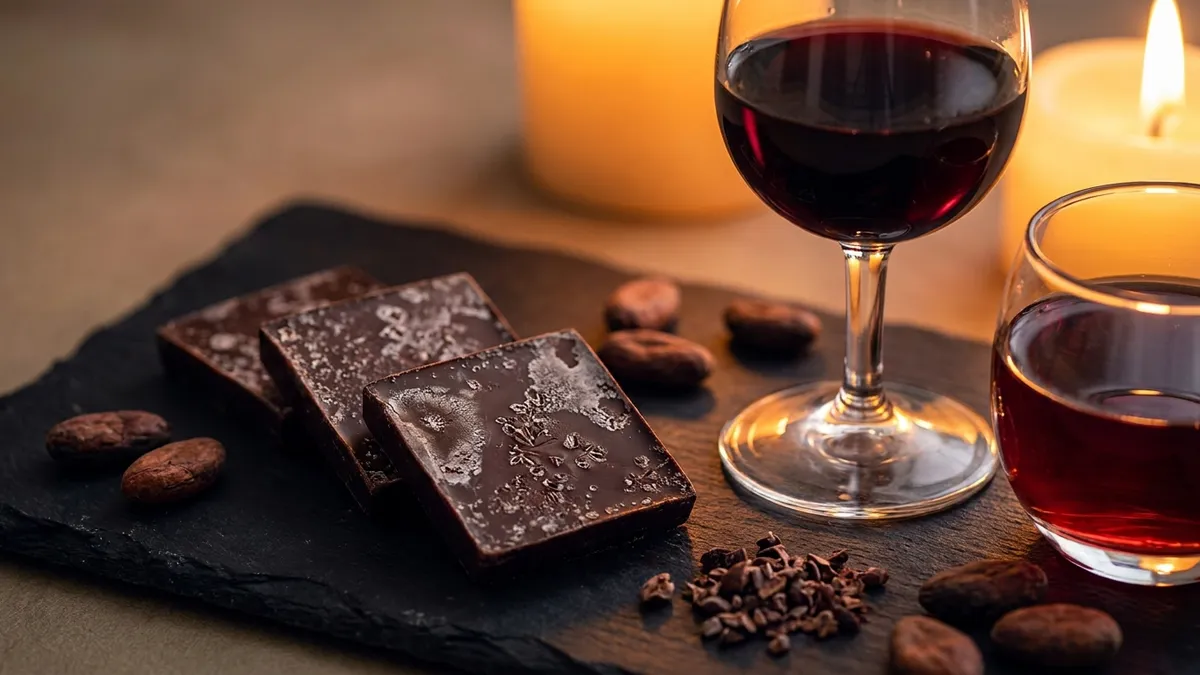
The Golden Rule of Wine with Chocolate
Pairing wine with chocolate is one of the most searched — and most misunderstood — combinations in the food and wine world. The reason so many chocolate and wine pairings fail comes down to a single principle that most people overlook: the wine must be at least as sweet as the chocolate.
When you pair a dry red wine with chocolate, the sugar in the chocolate makes the wine taste harsh, bitter, and stripped of fruit. The tannins that felt smooth on their own suddenly feel aggressive. The chocolate does not taste better either — it just makes everything worse. This is why the classic "red wine and chocolate" pairing disappoints so often.
The fix is simple: reach for sweet wines. Fortified wines (wines with added grape spirit that are higher in alcohol and residual sugar) like Port, late-harvest wines (made from grapes left on the vine to concentrate their sugars), and dessert wines are the natural partners for chocolate. Once you match the sweetness level, the pairing transforms from a clash into something genuinely special.
Why Sweetness Matching Matters
The science behind wine with chocolate pairing is rooted in how our palate perceives sweetness and bitterness in sequence.
When you eat something sweet and then taste something less sweet, the second item tastes noticeably more bitter and acidic than it would on its own. This is called successive contrast — your palate recalibrates after the sweet stimulus, and anything that follows with less sugar gets punished.
This means a Cabernet Sauvignon that tastes balanced and fruity on its own will taste thin, tannic, and sour after a bite of milk chocolate. The chocolate reset your sweetness baseline, and the dry wine cannot compete.
The solution works in reverse too: if the wine is sweeter than the chocolate, the wine dominates and the chocolate tastes flat. The sweet spot — literally — is matching the sweetness levels so neither overwhelms the other.
Sommelier tip: When in doubt, the wine should be slightly sweeter than the chocolate. It is far better to overshoot sweetness slightly than to undershoot it.
Dark Chocolate: Bold Wine for Bold Flavors
Dark chocolate (60-85% cacao) is the most wine-friendly chocolate because it has less sugar and more complex bitter, earthy, and fruity flavors that can interact with wine in interesting ways.
Best Wines for Dark Chocolate
- Ruby Port — the classic pairing; concentrated dark berry fruit, spice, and sweetness that mirrors dark chocolate's intensity
- Banyuls — a French fortified wine from Roussillon made from old-vine Grenache; dark, chocolatey, and rich, often described as "liquid chocolate" itself
- Late-harvest Zinfandel — jammy, spicy, and sweet enough to match bittersweet chocolate
- Maury — another Roussillon fortified wine, similar to Banyuls, with dark fruit and cocoa notes
- Recioto della Valpolicella — a sweet red from northern Italy made from dried Corvina grapes
Matching by Cacao Percentage
The higher the cacao percentage, the less sweet and more bitter the chocolate. This affects the wine pairing:
- 60-65% cacao — still fairly sweet; ruby Port or Banyuls with generous fruit
- 70-75% cacao — the sweet spot for pairing; balanced wines like aged tawny Port or late-harvest Zinfandel
- 80-85% cacao — very bitter, almost savory; try Vin Santo, Oloroso sherry, or even a rich Amarone (one of the rare dry reds that can work with chocolate)
- 90%+ cacao — barely sweet at all; this is not really a wine pairing exercise — these chocolates pair better with espresso or whiskey
Understanding how tannins, acidity, and body interact helps explain why certain wines work with dark chocolate — the chocolate's bitterness and the wine's tannin can either amplify each other (bad) or balance through sweetness (good).
Milk Chocolate: Sweeter, Creamier, Different Wines
Milk chocolate has more sugar, more fat (from milk solids), and a softer, creamier texture than dark chocolate. It needs wines that are sweeter and have flavor profiles that complement caramel, vanilla, and toffee notes rather than dark fruit and spice.
Best Wines for Milk Chocolate
- Tawny Port — aged tawny Port develops caramel, butterscotch, and walnut flavors that are almost eerily harmonious with milk chocolate
- Moscato d'Asti — a lightly sparkling, sweet wine from Piedmont with peach and apricot notes; the bubbles add lightness that prevents the pairing from becoming too heavy
- Pedro Ximenez (PX) sherry — intensely sweet with raisin, fig, and toffee flavors; works with the sweetest milk chocolates
- Rutherglen Muscat — an Australian fortified wine with rich toffee and marmalade character
- Late-harvest Riesling — the acidity cuts through the cream while the sweetness matches
Why Dry Red Wine Fails with Milk Chocolate
Milk chocolate is the worst partner for dry red wine. The combination of high sugar content and dairy fat amplifies every rough edge in the wine — the tannins taste bitter, the acidity tastes sharp, and the fruit disappears entirely. If someone tells you to pair Cabernet Sauvignon with milk chocolate, they are either selling you Cabernet or they have never actually tried it.
White Chocolate: The Aromatic Approach
White chocolate is technically not chocolate at all — it contains cocoa butter but no cocoa solids. Its flavor profile is butter, vanilla, and sugar, with none of the bitterness or complexity of dark or milk chocolate.
Best Wines for White Chocolate
- Moscato d'Asti — floral, sweet, and light enough to match white chocolate's delicacy
- Late-harvest Gewurztraminer — lychee, rose petal, and spice notes add complexity to the simple sweetness
- Demi-sec Champagne — the bubbles cut through the cocoa butter richness, and the dosage provides matching sweetness
- Sauternes — honeyed, apricot-rich Sauternes adds a layer of acidity and complexity
- Ice wine (Eiswein) — intensely sweet with bracing acidity; works with the richest white chocolate preparations
The key with white chocolate is acidity. Without it, the pairing becomes cloying — two sweet things with nothing to refresh the palate between bites. Wines with good natural acidity (Riesling, Champagne, Moscato) prevent this problem.
Chocolate Desserts: Match the Dish, Not Just the Chocolate
When chocolate appears in a composed dessert — mousse, cake, tart, fondue — the pairing becomes more nuanced. You need to account for the other ingredients and the texture of the finished dish.
Chocolate Mousse
Light, airy, and less intensely chocolatey than solid chocolate. Banyuls or Maury are classic choices — their moderate sweetness and silky texture mirror the mousse without overwhelming it.
Flourless Chocolate Cake
Dense, rich, and intensely chocolatey. This needs a wine with enough concentration to stand up to it — vintage or LBV (Late Bottled Vintage) Port, or a rich Recioto della Valpolicella. The wine should feel equally substantial.
Chocolate Truffles
Truffles vary enormously — dark, milk, white, flavored with coffee, chili, or fruit. Match the wine to the truffle's dominant flavor:
- Coffee-flavored truffles — aged tawny Port (the caramel notes bridge to coffee)
- Raspberry truffles — ruby Port or Brachetto d'Acqui (red fruit echoes)
- Chili chocolate truffles — late-harvest Zinfandel (spice meets spice)
- Orange truffles — Muscat de Beaumes-de-Venise (orange blossom notes)
Chocolate Fondue
Fondue involves dipping fruit, marshmallows, and other items into melted chocolate, so the pairing needs to work with multiple flavors. Moscato d'Asti is the safest choice — its light sweetness and effervescence complement the fruit while matching the chocolate's sugar.
The Red Wine Exception
While dry red wine generally fails with chocolate, there are specific circumstances where red-leaning wines can work:
Brachetto d'Acqui — a sweet, lightly sparkling red from Piedmont. It has the sweetness to match chocolate and the low tannin to avoid bitterness. This is the closest you can get to "red wine with chocolate" without reaching for a fortified wine.
Amarone della Valpolicella — technically a dry wine, but made from dried grapes that give it a raisined sweetness and concentration that can stand up to very dark chocolate (80%+). This is an advanced pairing that works because the chocolate is barely sweet.
Lambrusco (sweet style) — the dolce version of this sparkling Italian red has enough sugar and fruit to pair with milk chocolate truffles or chocolate-dipped strawberries.
These exceptions prove the rule: even when "red wine" works with chocolate, it is always a red wine with significant residual sugar or dried-grape concentration — never a standard dry red.
Building Your Chocolate Pairing Repertoire
Start with these three wines to cover the full chocolate spectrum:
- Ruby Port — handles dark chocolate and most chocolate desserts
- Tawny Port (10-year) — perfect for milk chocolate and caramel-chocolate combinations
- Moscato d'Asti — works with white chocolate, light chocolate desserts, and fruit-chocolate pairings
With just these three, you can handle any chocolate situation confidently. As you expand, explore Banyuls for dark chocolate, PX sherry for the sweetest milk chocolates, and late-harvest Riesling for when you want acidity to balance the richness.
The Sommy app helps you develop the palate skills to identify sweetness, body, and flavor intensity in different wines — the exact skills that make chocolate pairing intuitive. Training your ability to assess a wine's sweetness level is the single most useful skill for dessert pairing generally.
For a deeper look at how sweetness, acidity, and weight interact in wine and food pairing, read our comprehensive guide. And if you want to explore the fortified wines that dominate chocolate pairing, Sommy offers structured courses that build your tasting vocabulary from the ground up.
The best chocolate and wine pairing is the one where both the wine and the chocolate taste better together than they do alone. Follow the sweetness rule, match the intensity, and you will find that pairing right every time.
Frequently Asked Questions
What is the best wine to pair with chocolate?
Port is the most reliable wine for chocolate pairing, especially with dark chocolate. Ruby Port matches the intensity of bittersweet chocolate, while tawny Port's caramel and nut notes complement milk chocolate beautifully. The key principle is that the wine should be at least as sweet as the chocolate.
Can you pair dry red wine with chocolate?
Dry red wine with chocolate is a difficult pairing because the chocolate's sugar makes the wine taste bitter and astringent. If you want to try, choose a very fruity, low-tannin red like Brachetto d'Acqui and pair it with dark chocolate that has at least 70% cacao content, which has less sugar.
What wine goes with milk chocolate?
Milk chocolate's sweetness and creaminess pair best with wines that have matching sweetness and complementary flavors. Tawny Port, Moscato d'Asti, Rutherglen Muscat, and Pedro Ximenez sherry all work well. The caramel and toffee notes in aged tawny Port are particularly harmonious with milk chocolate.
Does white chocolate pair with wine?
Yes, though white chocolate needs aromatic, sweet wines that can match its richness without being overwhelmed by its buttery texture. Moscato d'Asti, late-harvest Riesling, and demi-sec Champagne all complement white chocolate. The key is finding wines with enough acidity to cut through the cocoa butter.
Why does Port pair so well with chocolate?
Port works with chocolate because it is a fortified wine with high residual sugar, which matches chocolate's sweetness. Its concentrated dark fruit, spice, and sometimes nutty flavors complement chocolate's complex flavor compounds. The wine's structure is robust enough not to be overwhelmed by chocolate's intense taste.
What wine pairs with chocolate-covered strawberries?
Sparkling rose or demi-sec Champagne pairs beautifully with chocolate-covered strawberries. The bubbles and acidity cleanse the palate between bites, while the wine's berry notes echo the strawberry. Brachetto d'Acqui, a lightly sparkling sweet red from Italy, is another excellent match.
Can I pair wine with a chocolate dessert like mousse or cake?
Yes. Match the wine's sweetness and weight to the dessert's richness. Light chocolate mousse pairs with Banyuls or Maury. Dense chocolate cake needs a full-bodied Port or late-harvest Zinfandel. The wine should feel like a natural extension of the dessert, not a separate experience.
Get the free Wine 101 course
Start learning to taste wine like a pro with structured lessons and AI-guided practice.
Sommy Team
LinkedInFounder & Wine Educator
The Sommy Team is building the world's most approachable wine education app, helping beginners develop real tasting skills through structured courses and AI-guided practice.
Keep Reading
Wine and Food Pairing: The Ultimate Guide
Go beyond the basics of wine and food pairing. Learn the principles that work with every cuisine, including tricky foods like spicy dishes and chocolate.
Wine and Cheese Pairing: The Ultimate Matching Guide
Learn how to pair wine and cheese like a sommelier. Match fresh, soft, hard, washed-rind, and blue cheeses to the right wine styles with confidence.
Best Wine with Steak: How to Match Red Wine to Your Cut
Learn how to pair wine with steak by matching the right red to your cut, cooking method, and sauce. From ribeye to filet mignon, find the perfect match.