How to Reseal a Wine Bottle: Stoppers, Pumps and Gas Sprays

By the Sommy Team — AI-assisted, human-edited.
Updated Sep 24, 2026
Contents (12)
- How to Reseal a Wine Bottle, in One Paragraph
- Which Reseal Fits Your Bottle?
- Why Does an Open Bottle Need Resealing at All?
- Can You Put the Cork Back in the Bottle?
- What If the Bottle Has a Screw Cap?
- Does a Wine Vacuum Pump Actually Work?
- How Do Gas Sprays Keep Wine Fresh?
- Are Needle-and-Argon Systems Worth It at Home?
- How Do You Reseal Sparkling Wine?
- Should You Refrigerate Opened Wine, Even Red?
- How Do You Reseal Wine Without Any Gadgets?
- Reseal Tonight's Bottle
TL;DR
To reseal a wine bottle, close it with the tightest seal it takes, then refrigerate it. Screw caps go straight back on, corked still wine gets its cork or a stopper, and sparkling wine needs a clamp stopper. Pumps help a little, inert gas sprays more, and a smaller bottle filled to the neck works for free.
The best way to reseal a wine bottle is to close it with the tightest seal it will take and put it in the fridge, whatever its colour. That one habit decides most of how the wine tastes tomorrow. The gadgets, from vacuum pumps to gas sprays, only add a little on top of it, and each one fixes a different problem.
How to Reseal a Wine Bottle, in One Paragraph
To reseal a wine bottle, match the closure to the bottle, cut the air, then chill it. A screw cap goes back on, a corked still wine gets its cork or a silicone stopper, and sparkling wine gets a clamp. The enemy is oxidation (oxygen flattening the wine's fruit and colour). A vacuum pump removes some of the air. An inert gas spray covers the wine with argon, which is 38% denser than air. A smaller bottle filled to the neck removes almost all of it for free. Every opened bottle then goes upright into the fridge, because reaction speed in wine roughly doubles with each 10°C of warmth.
Which Reseal Fits Your Bottle?
Match the closure to the bottle you are holding, then send it to the fridge. The space between the wine and the closure is called headspace, and it grows every time a glass is poured, so a half-empty bottle needs more help than a full one.
| Your bottle | Best reseal | What it fixes | Do this tonight |
|---|---|---|---|
| Screw-cap still wine | The original cap | Blocks new air almost as well as at the winery | Screw it tight, stand it in the fridge |
| Corked still wine, over half full | Silicone stopper or the original cork | Blocks new air; the cork seals less tightly | Cork in stained end first, then fridge |
| Corked still wine, under half full | Smaller bottle filled to the neck | Removes the headspace air itself | Pour into a clean half-bottle and close it |
| Still wine you will keep several nights | Stopper plus a gas spray | Covers the surface with heavy inert gas | One short burst, close fast, fridge |
| Sparkling wine | Clamp sparkling stopper | Holds the gas pressure in | Clamp it on and chill it at once |
| Fortified wine (Port, Sherry, Madeira) | Its own cork or stopper | Mostly sturdy; Fino and Manzanilla Sherry fade like white wine | Recork it and keep it cool and upright |
If the bottle has a screw cap, close it; if it has a cork, reinsert it or use a stopper; if it fizzes, clamp it. For how many days each style then holds, how long wine lasts after opening has the style-by-style windows.
Why Does an Open Bottle Need Resealing at All?
Air turns open wine flat because oxygen attacks the compounds behind its colour, aroma and fruit. The first targets are the phenolics, the family of grape compounds that give red wine its colour and grip. The resulting loss of colour, flavour and aroma is sometimes called "flattening", and it continues for as long as air can reach the wine.
A second reaction turns some of the alcohol into acetaldehyde, a compound that smells of bruised apple. Above roughly 100 to 125 milligrams per litre, it tastes sour, green-appley and metallic.
Winemakers slow all of this with sulfur dioxide, a preservative added to protect wine from oxygen and to bind some of the oxidation products. It buys time, and oxidation carries on after bottling anyway, faster once the cork is out. A reseal cannot undo the damage. It can only slow the next round, by cutting the air, the oxygen in it, or the temperature. If a reopened wine already smells of bruised apple, no reseal brings the fruit back, so cook with it. The guide to oxidized wine shows what the end point looks and smells like.
Can You Put the Cork Back in the Bottle?
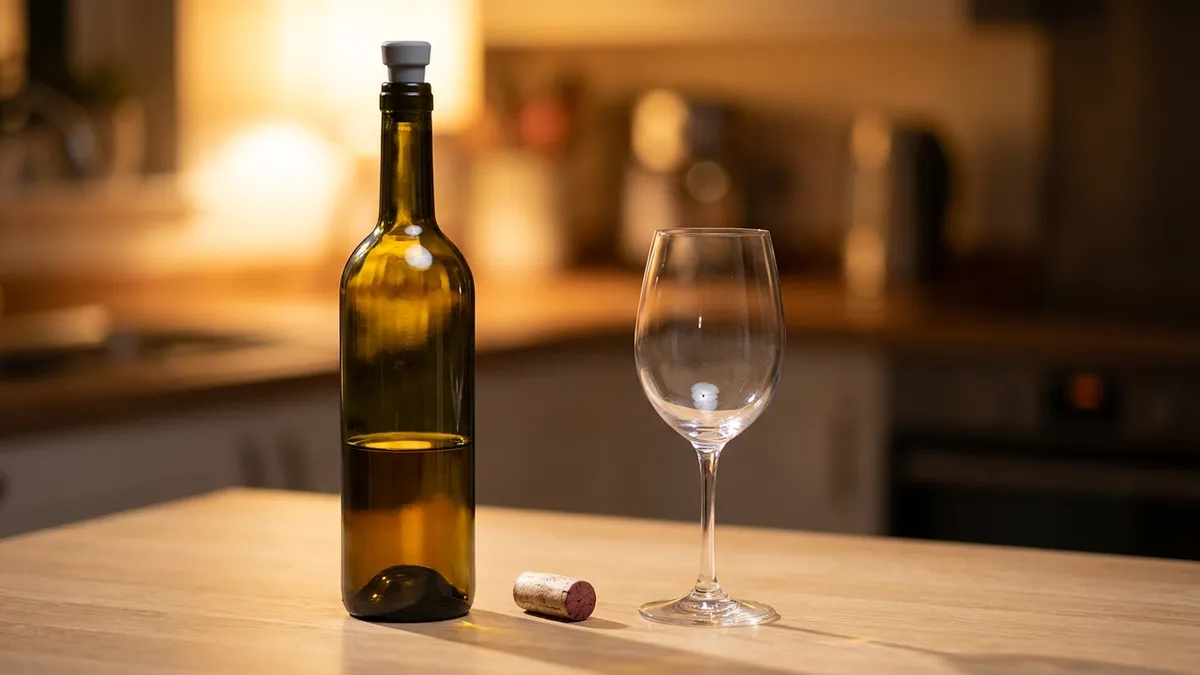
Yes, and it beats leaving the bottle open, but a used cork seals worse than it did at the winery. For a bottle you will finish tomorrow, a well-seated cork plus the fridge is enough.
Cork is a natural material, so each one differs, and a 2005 closure study found that 45% of corks leaked gas under pressure testing, through their sides and through the cork itself.

A corkscrew adds its own damage. The screw leaves a spiral hole, and the end that touched the wine has swollen. Push the cork back in the same way it came out, stained end first. The clean top was outside the bottle, and it should stay that way. Twist gently as you push, and stop once it feels firm.
If the cork will not go past halfway, switch to a stopper. A silicone or rubber wine stopper costs little, fits almost any neck and seals more evenly than a squashed cork. Plastic wrap held tight with a rubber band works for one night when nothing else is in the drawer. The guide to opening wine covers how to pull a cork cleanly, which leaves it in better shape to go back in.
What If the Bottle Has a Screw Cap?
Screw it back on firmly; a screw cap reseals almost as well as it sealed the first time. The metal cap and its liner were never squashed or pierced, so nothing about the seal changed when you opened it. Screw caps are an increasingly common alternative to cork for exactly that kind of reliability.
That makes a screw-cap wine the easiest bottle to keep for a second night. It still needs the fridge, because the air already inside keeps reacting. If you drink wine a glass or two at a time, screw-cap bottles save you the gadget entirely. The screw cap vs cork comparison explains where each closure comes from and which wines use them.
Does a Wine Vacuum Pump Actually Work?
It helps a little with still wine, because it removes some air, but a hand pump cannot empty the bottle. The pump sits on a rubber stopper with a one-way valve. Each stroke pulls out part of the headspace air, so less oxygen is left to react with the wine.
The limits are physical. A household pump makes only a partial vacuum, the wine itself still holds dissolved oxygen, and the rubber seal can let air creep back in over time. Pump until you feel firm resistance. The fridge still does more for the wine than the pump does.
A pump is also the wrong tool for sparkling wine. Lowering the pressure above a fizzy wine pulls its dissolved gas out faster, so the bottle goes flat sooner.
If you will finish the bottle within a night or two, a pump plus the fridge is enough. If the bottle is under half full, a pump leaves too much air behind; move the wine into a smaller bottle instead.
How Do Gas Sprays Keep Wine Fresh?
They lay a layer of heavy inert gas (a gas that does not react with the wine) over the surface, so oxygen cannot reach it. Most sprays use a blend, typically argon and/or nitrogen. Argon is 38% denser than air, so it sinks into the neck and settles on the wine like a lid.
The idea is borrowed from food packaging. Argon is used commercially to push oxygen and moisture out of packages so the contents last longer. A wine spray does the same job in the neck of your bottle.
Technique decides whether it works. Hold the nozzle just inside the neck and spray one short burst. Close the bottle straight away and move it gently, because shaking mixes the gas back into the air. A short burst only blankets the surface, so it works best on bottles that are still at least half full.
If you often keep good whites or lighter reds for several nights, a gas spray is the upgrade worth making. The comparison of wine preservation tools sets pumps, sprays and needle systems side by side by cost.
Are Needle-and-Argon Systems Worth It at Home?
Only if you drink one glass at a time from bottles you would hate to lose. These devices never remove the cork. A hollow needle goes through it, argon fills the bottle to push the wine out through the needle, and the cork closes back up when the needle comes out.
Because no fresh air gets in, the rest of the bottle is left almost as it was. The trade-off is price, since the device and its gas capsules cost far more than any stopper. The classic design also needs a natural cork to pierce.
If you usually finish bottles within two nights, skip it: a stopper and the fridge do that job. If you like one glass of something special across several weeks, a needle system is the only tool that lets you pour without opening the bottle at all.
How Do You Reseal Sparkling Wine?
Clamp a sparkling stopper on the bottle and chill it. With fizz, the aim is to stop gas leaving, not to stop oxygen entering. Carbonation (the carbon dioxide dissolved in the wine that makes the bubbles) escapes through the open surface, so the seal has to hold pressure.
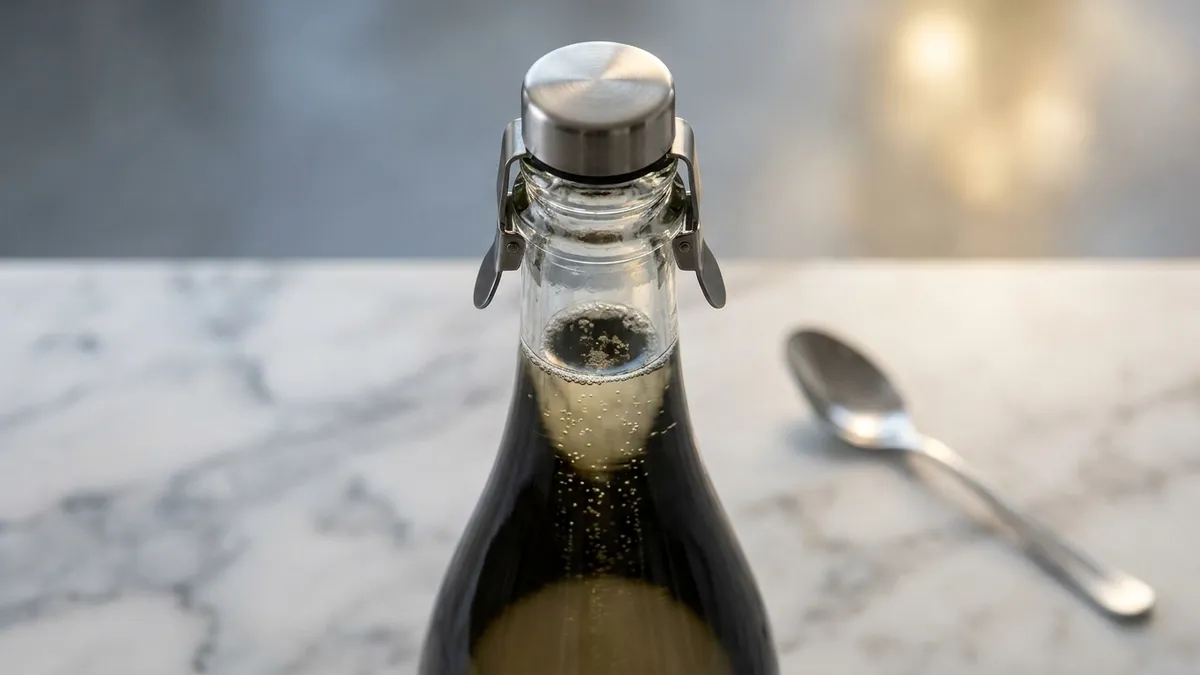
A sparkling stopper has two metal wings that lock under the lip of the bottle, so the pressure inside cannot push it out. A regular cork or rubber stopper cannot do that job. The famous spoon in the neck does nothing, and a proper stopper works far better.
Pour carefully too. A poured glass of sparkling wine loses its gas much faster than the open bottle does, so fill glasses only as they are drunk and clamp the bottle between pours. If you have no clamp stopper, finish the bottle tonight. The guide to sparkling wine types explains how each fizz style is made, and why some bottles hold their bubbles better than others.
Should You Refrigerate Opened Wine, Even Red?
Yes, refrigerate every opened wine, reds included, because cold slows the reactions that flatten it. The rate of chemical reactions in wine roughly doubles with every 10°C rise. A fridge is well over 10°C colder than a warm kitchen, so the oxidation runs at less than half its counter speed.
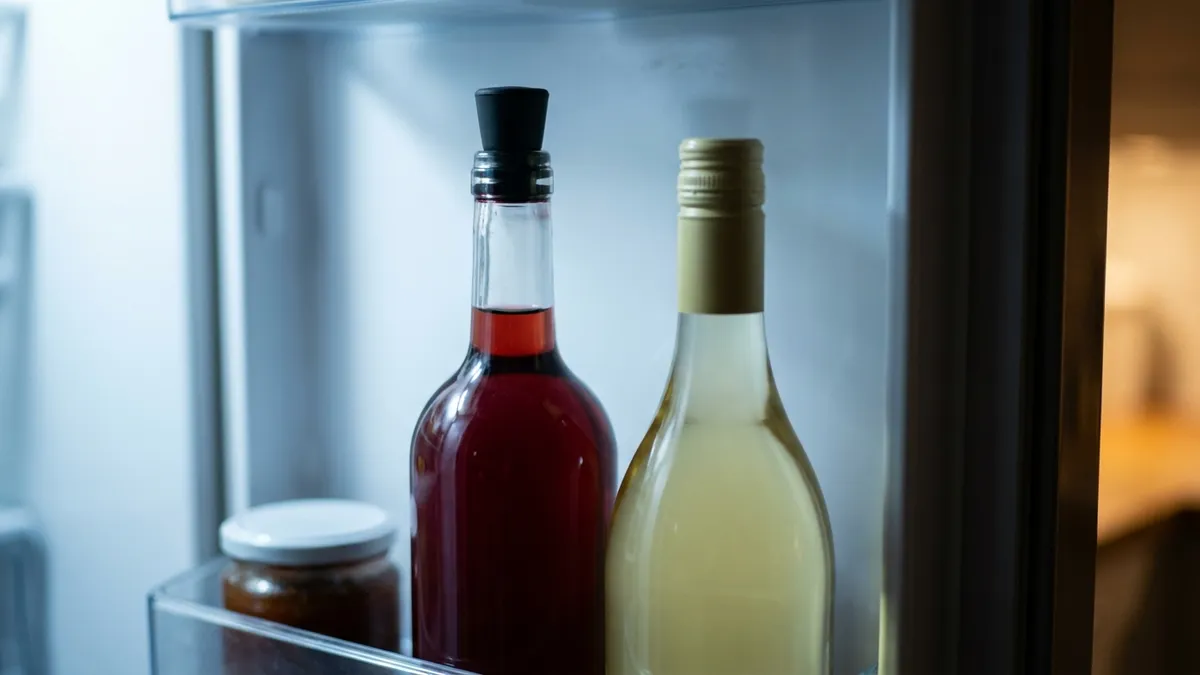
Stand the bottle upright. Lying down, the wine spreads along the side of the bottle and a much larger surface meets the air in the headspace. Upright, only the narrow circle in the neck does.
The old warning about fridges is real but belongs to a different situation. Fridges remove moisture from the air, and over months that can dry out the cork of a sealed bottle. An opened bottle kept for a few days does not face that risk. For long-term storage, see how to store wine at home.
The wine serving temperature chart gives the target range for each style, so a chilled red lands where it should.
How Do You Reseal Wine Without Any Gadgets?
Pour the leftover into a smaller bottle filled to the neck, close it, and chill it. This beats most gadgets because it removes the headspace itself, instead of pumping or covering it. A clean half-bottle with a screw cap is ideal, and a small glass jar with a tight lid works in a pinch.
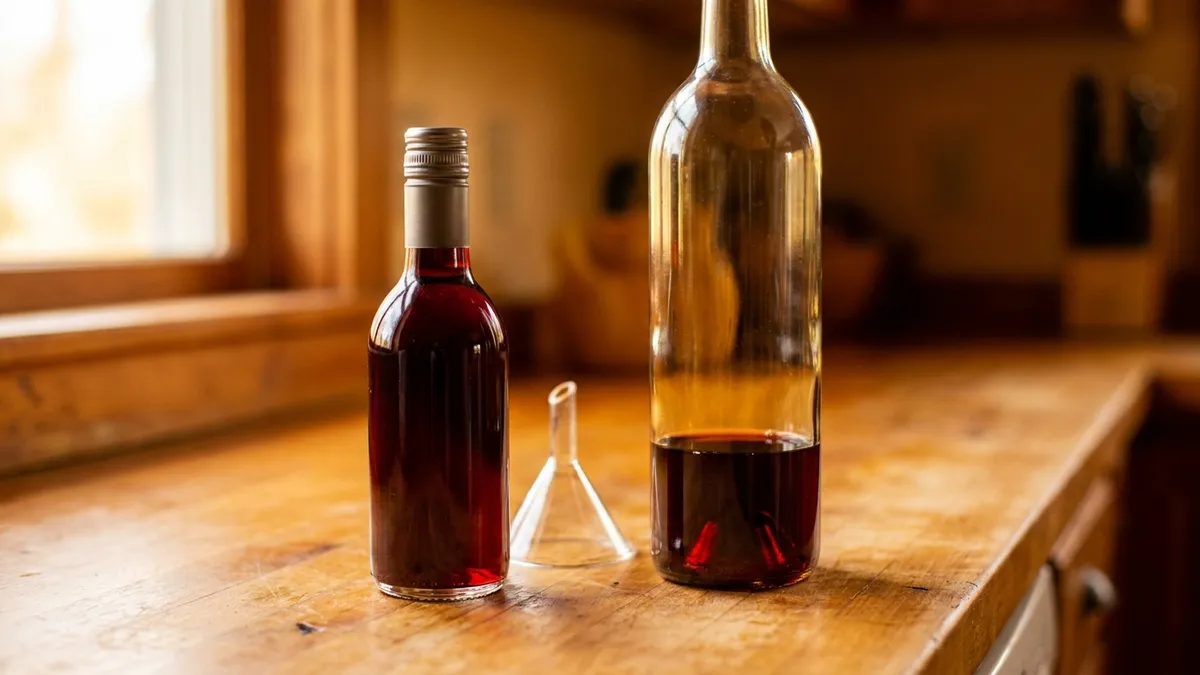
Rinse the smaller bottle with hot water and let it dry first, since any leftover soap or old wine will taint the new one. Use a funnel and pour slowly down the side, because splashing mixes in fresh air. If you have a clean half-bottle, pour into it; if the leftover will not fill a small container, finish the glass or keep it for cooking.
Some wines barely need this care. Most fortified wines (spirit added, about 20% alcohol) keep far longer once open, though pale Fino and Manzanilla Sherry fade as fast as white wine. Fortifying began partly as a way to preserve wine, since alcohol is a natural antiseptic. Madeira has an unusually long life after opening, and a plain cork is all it needs. The guide on how to taste fortified wine covers the styles.
Reseal Tonight's Bottle
Give tonight's bottle the tightest closure in the drawer, stand it upright in the fridge, and write down how the wine tasted. Tomorrow, pour a glass and compare.
The serving and storage hub collects every guide on keeping, chilling and pouring wine. For a structured way to learn the comparison, the Sommy app at sommy.wine has bite-sized courses and an AI-guided tasting mode. Tomorrow, photograph the label, follow the look and smell steps, then taste the glass next to tonight's note.
Sources
Frequently Asked Questions
How do you reseal a wine bottle without a cork?
Use any closure that makes an airtight seal: a silicone or rubber wine stopper, the screw cap from another bottle if it fits, or plastic wrap held tight with a rubber band as a last resort. Then stand the bottle upright in the fridge. If you have a clean smaller bottle, pouring the wine into it and filling it to the neck protects it better than any of those.
Can you put the cork back in a wine bottle?
Yes. Push it back in the same way it came out, stained end first, so the clean top never touches the wine. A used cork has been squashed and has swollen, so it seals less tightly than it did at the winery. If it will not go in past halfway or twists freely once seated, use a silicone stopper instead.
Does a wine vacuum pump really work?
A little, for still wine. A hand pump draws some air out of the bottle, so less oxygen is left to react with the wine. It cannot create a true vacuum, and the stopper can leak slowly, so the benefit is modest. Never pump sparkling wine: lowering the pressure pulls the dissolved carbon dioxide out, which flattens the bubbles faster.
Do wine preservation gas sprays actually work?
Yes, when used well. The sprays release an inert gas, typically argon and/or nitrogen, and argon is 38% denser than air, so it settles over the wine and keeps oxygen off its surface. Spray a short burst, then close the bottle right away without shaking it. They work best on bottles that are still at least half full.
How do you keep Champagne fizzy after opening?
Clamp a proper sparkling wine stopper under the lip of the bottle and put it straight back in the fridge. The metal wings hold against the pressure of the gas inside, which a regular cork or rubber stopper cannot do. The silver spoon in the neck is a myth that does nothing, and a vacuum pump makes the wine go flat faster.
Should you refrigerate red wine after opening?
Yes. Chemical reactions in wine roughly double in speed with every 10°C rise, so the cold of a fridge slows the oxidation that flattens an open red. Take the bottle out a little before you pour so it is not served cold. The warning about fridges drying out corks applies to sealed bottles kept for months, not to an open bottle kept for a few days.
Sommy Team
LinkedInFounder & Wine Educator
The Sommy Team is building the world's most approachable wine education app, helping beginners develop real tasting skills through structured courses and AI-guided practice.