Film Yeast on Wine: What That White Surface Film Means

By the Sommy Team — AI-assisted, human-edited.
Updated Sep 25, 2026
Contents (8)
TL;DR
Film yeast is a thin, whitish-grey skin that grows on wine left in contact with air. It is usually a mix of yeast and acetic acid bacteria, not mold. It is generally harmless but spoils flavour. Keep leftovers in full, sealed, cold containers to stop it, and remember that sherry grows a similar film on purpose.
That white skin on leftover wine is film yeast: a thin layer of air-loving yeast and bacteria that grows only where wine touches air. Any film yeast wine surface growth has one simple cause, the air left above the wine. Remove the air and it cannot form. Grow it on purpose, under tight control, and it becomes the veil that shapes Fino sherry.
Film Yeast on a Wine Surface, in One Paragraph
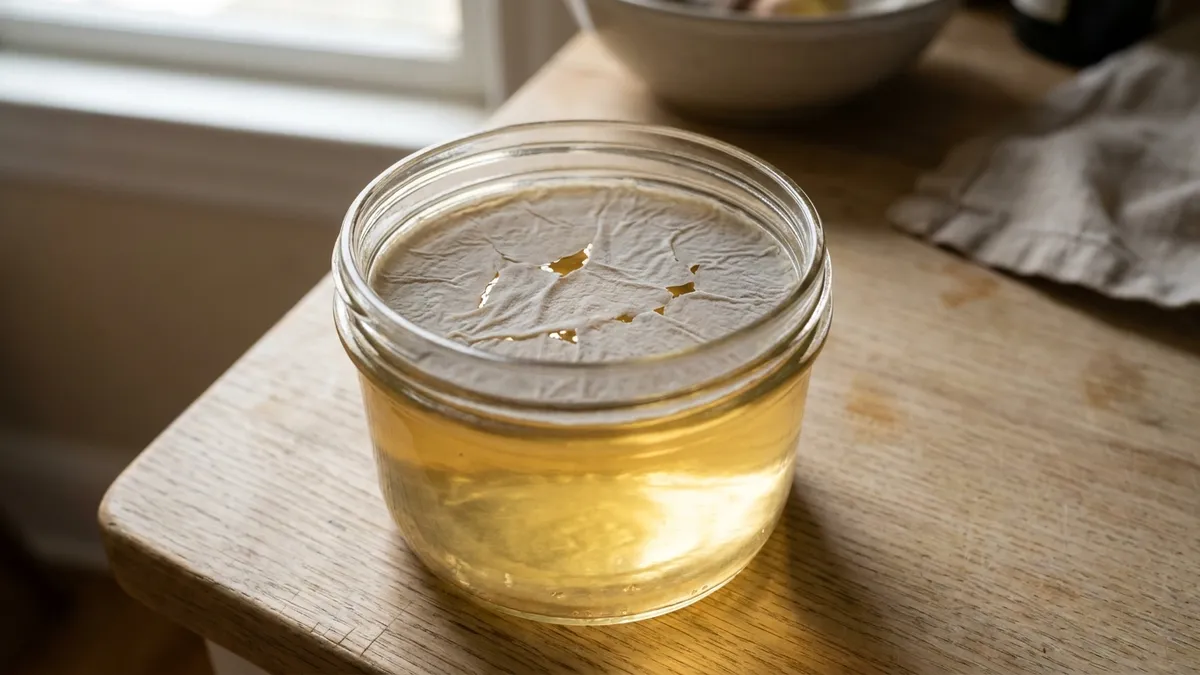
Film yeast on a wine surface is a flat, matte, whitish-grey skin that appears after wine has sat for days with air above it. It is usually a mixed layer of yeasts and acetic acid bacteria rather than one organism. It needs oxygen, so it shows up in half-empty bottles and carboys that were never topped up. It is generally harmless but spoils flavour, adding bruised-apple and vinegar smells. The fix is to pour the wine out from under it and smell it; the prevention is a full, sealed, cold container. Sherry makers grow a similar film, called flor, deliberately.
What Causes a White Film on Top of Wine?
A white film forms when leftover wine sits with air above it long enough for air-loving yeasts and bacteria to settle on the surface and spread. Winemakers call that empty gap ullage (the amount by which a barrel or bottle is unfilled), from the old French ouiller, to fill a barrel to full capacity.
Three conditions have to line up. The film needs oxygen, a supply of nutrients such as the proteins found in wine, and an alcohol level it can tolerate. It also prefers wine with limited acidity, which is why a soft, low-acid white or a thin homemade fruit wine is more exposed than a tart, crisp one.
Oxygen is the one you control. Acetic acid bacteria (the microbes that make vinegar) such as Acetobacter convert alcohol into acetic acid only in the presence of oxygen. Film-forming yeasts work the same way: they live on the surface because that is where the air is. A bottle filled to the cork gives them nowhere to start.
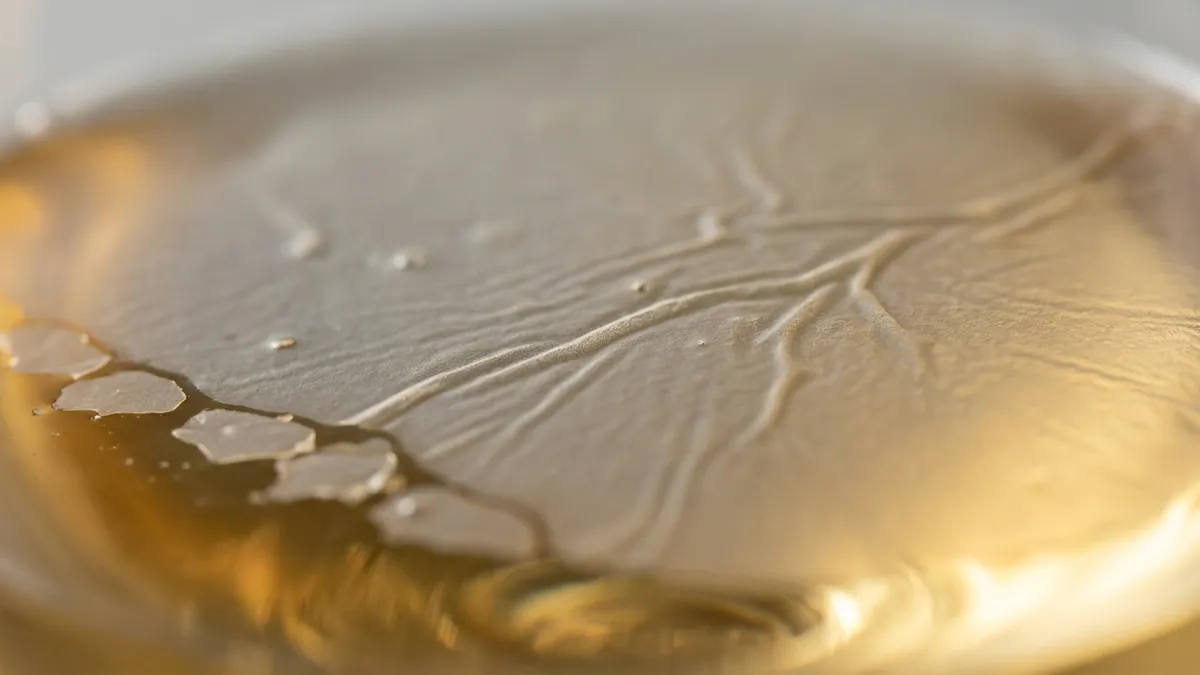
What forms is rarely a single species. Wine's classic surface growth is a biofilm, a mat of microbes held together by a material they produce. This one is made of cellulose, yeast and bacteria together. It can look like a fine grey veil or a thicker skin, depending on conditions. That mix is why old books use one word for the yeast skin and the vinegar skin. In 1822 the botanist Christian Hendrik Persoon named the film Mycoderma, from the Greek for "fungus" and "skin", believing it was a fungus. Louis Pasteur later called the vinegar-making organism Mycoderma aceti in 1861.
Is It Film Yeast or Mold?
Almost always it is film yeast, not mold. Film yeast lies flat as a thin, matte, whitish-grey skin that spreads evenly across the surface. Mold grows in raised, fuzzy spots, often green, blue or black, and usually starts on a cork, a rim or a dry patch of glass before it reaches the wine.
The flat yeast skin has a scientific name: a pellicle (a thin surface film that a microbe grows as it multiplies). The yeast Pichia membranifaciens typically forms one, and some Pichia species are recognised causes of wine faults. A vinegar mother is the thicker, rubbery version, built mostly from bacterial cellulose. In grape-based vinegar mothers the dominant bacterium is Komagataeibacter europaeus.
| What you see | Likely cause | Texture and colour | Smell | What to do |
|---|---|---|---|---|
| Thin flat skin, whole surface | Film yeast (often with bacteria) | Matte, whitish-grey, may wrinkle | Bruised apple, flat, faintly sour | Pour wine out from under it, then smell |
| Thick rubbery disc | Vinegar mother (bacterial cellulose) | Grey-beige, slick, jelly-like | Sharp vinegar | Pour away, or keep it to start vinegar |
| Raised fuzzy spots | Mold | Furry; green, blue, black or white | Musty, damp | Throw the wine away |
| Pale veil on a cask of sherry | Flor, grown on purpose | Creamy, waxy, even | Bread dough, salted almonds | Nothing: it is the style |
The table's first row covers most kitchen finds. A film on a bottle opened a week ago is film yeast; fuzz on a cork is mold, and only the second one ends the discussion.
Is Wine With Film Yeast Safe to Drink?
Film yeast is generally considered harmless, but it damages flavour, so the real question is how the wine smells once the film is gone. The same family of surface yeasts turns up on pickles and fermented vegetables, where it is called kahm yeast. It is described as typically harmless, though its smell and look spoil the food.
The genera behind it include Debaryomyces, Pichia and the old catch-all Mycoderma. Even the word kahm is old: it traces back to the Latin cānus, grey, the colour of the skin itself.
The flavour damage comes from two compounds. Surface film yeasts and bacteria produce acetaldehyde (a compound that smells of bruised apple, sherry and nuts). The acetic acid bacteria in the mix make vinegar, and some spoilage yeasts, such as Pichia anomala, produce ethyl acetate, which smells of nail-polish remover. Together those are the core of volatile acidity, covered in depth in the volatile acidity guide.
If the wine smells of vinegar or nail-polish remover after the film is removed, it has turned; pour it away. If it smells only a little flat, or of bruised apple, drink it today or put it in a stew. Those apple notes are the same ones described in oxidized wine explained, and they will only get stronger overnight.
How Do You Save the Wine Under the Film?
Lift the wine out from under the film without breaking it, then smell and taste a small sip before deciding. The film sits on top, so the wine beneath it is often in better shape than the surface suggests. Breaking the skin mixes flakes and flavour into everything below.
Work in this order:
- Do not stir or shake the bottle. Move it gently to the sink or counter.
- Pour slowly from under the film, tilting the bottle so the wine leaves from the bottom of the neck and the skin stays behind. For a jar or carboy, a clean siphon tube with its tip well below the surface does the same job.
- Stop before the last few centimetres. The film collapses as the level drops, so sacrifice the final layer.
- Strain if flakes got through. A paper coffee filter catches broken pieces of film.
- Smell the result in a clean glass, then taste a small sip.
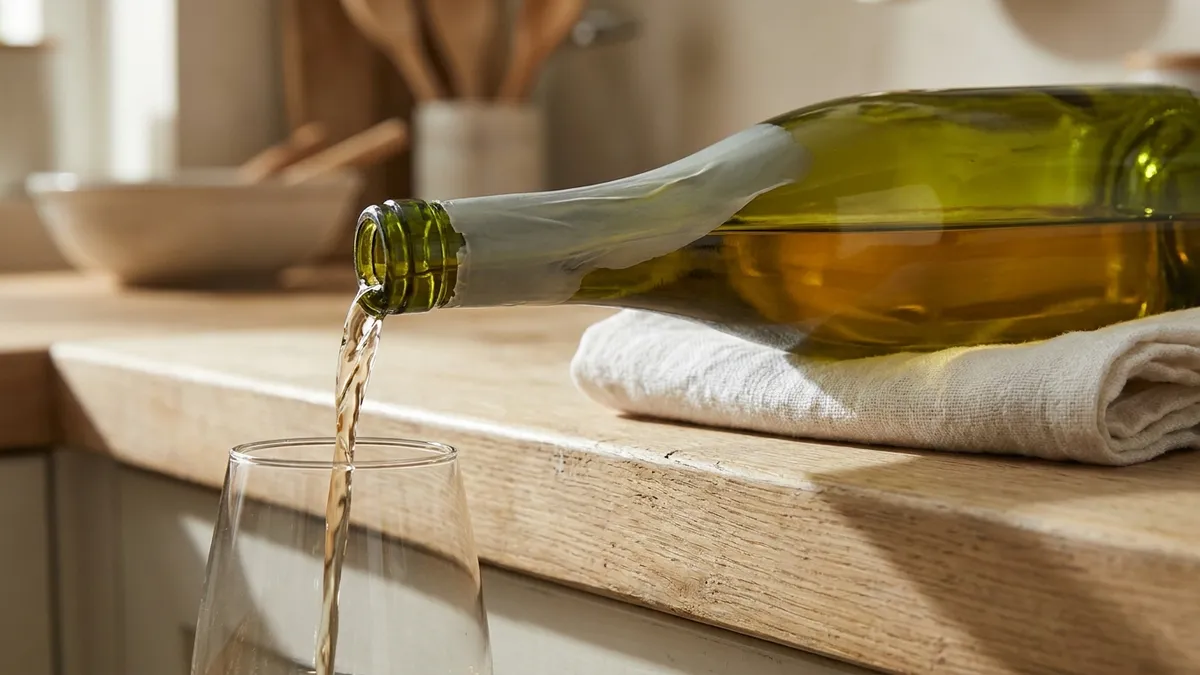
If the film is intact, pour or siphon from under it; if it has broken into flakes through the wine, strain before you smell. A mild, clean result can be drunk the same day or used in cooking. Home winemakers can move a saved batch into a clean vessel filled to the top, so the problem does not start again.
Checking a wine by nose is a skill of its own. The guide to identifying wine faults by smell lists the other common off-notes, and wine flaws vs faults explains where "a bit tired" ends and "spoiled" begins.
How Do You Stop Film Yeast From Forming?
Take the air away: keep wine in a full, sealed container and in the cold, so there is no surface for a film to grow on. Everything else helps only at the margins. The same rule works for a half-drunk bottle of red on the counter and a five-gallon carboy of homemade wine in the garage.
For an opened bottle at home:
- Downsize the container. If a bottle is less than half full and will not be finished tomorrow, pour the rest into a small clean bottle filled to the neck.
- Seal it well. Use the original screw cap, the cork pushed firmly back, or a tight stopper; how to reseal wine compares the options.
- Keep it cold. The fridge slows yeasts and bacteria as well as oxidation, for reds as much as whites.
- Drink it soon. A film needs days of air to show; how long wine lasts after opening gives the realistic window per style.
Vacuum pumps and inert-gas sprays reduce the oxygen in the gap, and wine preservation tools weighs them up. A smaller, full bottle is cheaper and works better than any gadget.
For home winemakers the same rule scales up. Topping up (refilling a barrel or carboy to the very top with similar wine) removes the ullage that invites the film. Fit an airlock, a one-way valve that lets gas out without letting air in, and check it has not dried out. Sanitise every tool that touches the wine, and use sulfite as your kit instructions direct; sulfites in wine explains what it does.
Why Does Sherry Grow a Film on Purpose?
Fino and Manzanilla sherry age under flor, a veil of yeast that winemakers grow deliberately by leaving air in the cask and holding the alcohol in a narrow band. The accident that ruins a table wine is the method that makes these wines.
Flor is formed from indigenous yeasts of Andalucía in southern Spain. Sherry casks are filled only five-sixths full, leaving "the space of two fists" at the top so the veil can form. Studies show flor thrives when the wine stays between 14.5% and 16% alcohol. Wines destined for Fino and Manzanilla are fortified (spirit added to raise the alcohol) to 15.5%, right inside that band.
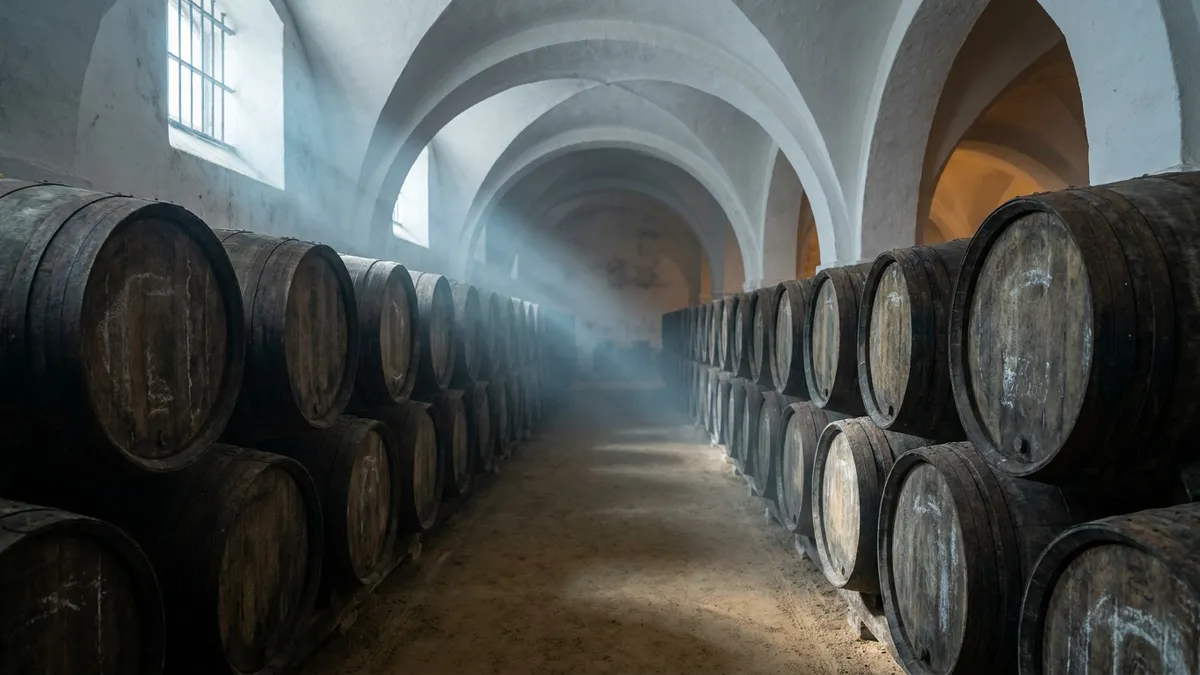
The veil protects the wine beneath it from excessive oxidation, which is why Fino stays pale. The yeast also breaks down acids and produces acetaldehyde, the same bruised-apple compound that marks a spoiled bottle, here held at a level that reads as salted almonds and bread dough. Flor grows thicker in the cooler, more humid coastal towns of Sanlúcar de Barrameda and El Puerto de Santa María.
Oloroso takes the other road. It is fortified to at least 17%, which stops flor from growing, so the wine ages in contact with air and turns darker and nuttier.
If a sherry label says Fino or Manzanilla, the wine aged under flor; if it says Oloroso, it did not. The sherry wine guide walks through every style, and a similar yeast veil shapes vin jaune in the Jura and some wines of Tokaj. The line between an accident and a style is drawn in the wine fault vs style guide, and the rest of the family of faults lives in our faults hub.
Check an Open Bottle Tonight
The fastest way to learn the bruised-apple note is to smell it where it belongs. A chilled glass of Fino carries acetaldehyde on purpose, so it trains your nose to spot the same note in a leftover bottle before any film appears. If a leftover white starts to smell like that Fino, finish it that day; if it smells of vinegar, the bacteria got there first.
The Sommy app at sommy.wine also has bite-sized courses, including Wine 101, that teach how to read a wine's smell step by step. Pour the last of any open bottle into a smaller bottle filled to the neck tonight, then seal it and put it in the fridge.
Sources
- Wikipedia: Mother of vinegar (biofilm composition, Mycoderma naming)
- Wikipedia: Flor (alcohol range, humidity, vin jaune and Tokaj)
- Wikipedia: Sherry (fortification levels, cask filling)
- Wikipedia: Kahm yeast (surface yeasts on fermented foods)
- Wikipedia: Wine fault (acetaldehyde and ethyl acetate from film-forming microbes)
Frequently Asked Questions
What is the white film on top of my wine?
It is almost always film yeast: a thin, flat, whitish-grey skin of air-loving yeasts, often mixed with acetic acid bacteria. It grows when wine sits for days with air above it, such as a half-empty bottle on the counter or a carboy that was never topped up. It needs oxygen, so it only ever forms at the surface, never inside a full, sealed bottle.
Is film yeast on wine dangerous?
Surface yeasts of this kind are generally described as harmless; the problem is what they do to flavour. They turn alcohol into acetaldehyde, which smells of bruised apple, and the bacteria that travel with them make vinegar. Skim or pour the wine out from under the film and smell it. If it smells of vinegar or nail-polish remover, pour it away.
How can you tell film yeast from mold on wine?
Film yeast lies flat. It forms a thin, matte, whitish or grey skin that can wrinkle as it thickens, and it covers the surface fairly evenly. Mold grows in raised, fuzzy spots, often green, blue or black, and usually starts on a cork or a rim before the wine. If you see fuzz or colour, throw the wine away rather than trying to save it.
Can you drink wine after removing film yeast?
Sometimes. Pour or siphon the wine out from under the film without breaking it up, then smell a small glass. If it smells only a little flat or of bruised apple, drink it today or cook with it. If it smells of vinegar or nail-polish remover, it has turned, and no amount of skimming will bring the fruit back.
How do you prevent film yeast in an opened bottle?
Take away the air. Move leftovers into a smaller bottle filled right to the neck, seal it tightly and keep it in the fridge, where the cold slows every microbe down. The film can only grow where wine meets air, so less surface and less oxygen means no film. Plan to finish opened wine within a few days rather than a few weeks.
Is film yeast the same as flor in sherry?
They are close cousins. Flor is a veil of yeast grown on purpose on Fino and Manzanilla sherry, in casks left about one-sixth empty, in wine held at roughly 14.5 to 16% alcohol. Accidental film yeast is an uncontrolled mix of spoilage yeasts and bacteria on a table wine. The look is similar; the result in the glass is very different.
Sommy Team
LinkedInFounder & Wine Educator
The Sommy Team is building the world's most approachable wine education app, helping beginners develop real tasting skills through structured courses and AI-guided practice.