Vin Jaune Wine: France's Unfortified Answer to Fino Sherry

By the Sommy Team — AI-assisted, human-edited.
Updated Sep 24, 2026
Contents (11)
- What Is Vin Jaune Wine, Exactly?
- Vin Jaune vs Fino Sherry, in One Paragraph
- Is Vin Jaune Just French Sherry?
- How Is Vin Jaune Made?
- Why Does Vin Jaune Smell Like Curry and Walnuts?
- How Should You Serve Vin Jaune?
- What Food Goes With Vin Jaune?
- How Do You Spot Real Vin Jaune in a Shop?
- What Grape Is Vin Jaune Made From?
- Where Is Vin Jaune Made?
- How Do You Start Tasting Vin Jaune?
TL;DR
Vin jaune is a dry white from France's Jura, made only from Savagnin and aged at least six years and three months under a yeast film called the voile. It shares that film with fino sherry but is never fortified, gets its curry-and-walnut smell from sotolon, and is served at 13 to 15°C.
What Is Vin Jaune Wine, Exactly?
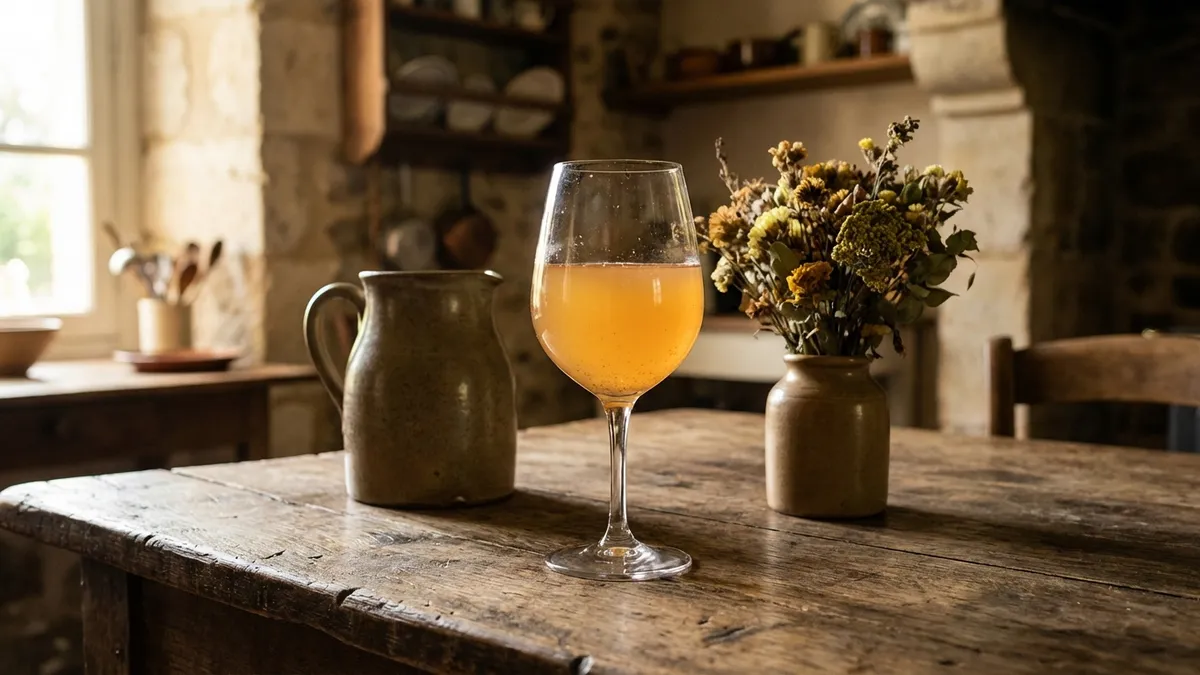
Vin jaune wine is a dry white from the Jura in eastern France, aged over six years under a film of yeast. Fino sherry ages the same way, yet vin jaune gets no added spirit. The name means "yellow wine", for its deep gold colour. It is made only from Savagnin and smells of walnuts and curry spice.
It also comes in a squat bottle that holds less than a standard one, which makes it easy to spot on a shelf.
Vin Jaune vs Fino Sherry, in One Paragraph
Vin jaune and fino sherry both age under a floating layer of yeast that protects the wine from air: the voile (French for veil) in the Jura, the flor in Jerez. The difference starts with alcohol. Fino is fortified (grape spirit added) to 15.5% so its flor can live; vin jaune's voile thrives at lower alcohol, so the wine is never fortified. Vin jaune rests at least six years and three months in one unrefilled barrel, then goes into a 62cl clavelin. Fino is blended across vintages in a solera and sold in normal bottles. Serve vin jaune at 13 to 15°C and fino at 7 to 10°C.
Is Vin Jaune Just French Sherry?
No. Vin jaune is a cousin of fino, not French sherry: the two share a yeast film, but vin jaune is unfortified, unblended and made from a different grape. Each of those three choices changes the colour, strength and smell of what reaches your glass.
Start with the grape. About 90% of the grapes grown for sherry are Palomino, a neutral variety that lets the yeast do the talking. Vin jaune uses Savagnin, which brings high acidity and far more flavour of its own.
Then the alcohol. Fino must be fortified to 15.5% because flor yeast survives only in a narrow alcohol range. The Jura's voile prefers a lower-alcohol home, so vin jaune reaches its strength on grape sugar alone.
Last, the barrel. Sherry ages in a solera, a chain of three to nine barrels where younger wine tops up older wine, so each bottle holds a blend of many years. Vin jaune has no solera. One vintage sits in one barrel, untouched, until it is bottled.
| Vin jaune | Fino sherry | |
|---|---|---|
| Where | Jura, eastern France | Jerez, southern Spain |
| Grape | Savagnin only | Mostly Palomino (about 90%) |
| Yeast film | Voile, happier at lower alcohol | Flor, needs about 15.5% alcohol |
| Fortified? | No | Yes, to 15.5% |
| Ageing | One vintage, one barrel, never topped up, at least 6 years 3 months | Solera: fractional blending across 3 to 9 barrels |
| Bottle | 62cl clavelin | Standard bottle, often halves in Spain |
| Once opened | Holds up well, recorked and kept cool | Fragile: drink soon, like a table wine |
| Serve at | 13–15°C, cellar cool | 7–10°C, fridge cold |
| Pour it with | Aged Comté, chicken in cream and morels | Salted almonds, olives, fried fish |
For the Spanish side of the family, the sherry wine guide explains fino, amontillado and oloroso, and the Jerez sherry region guide shows where the solera lives.
How Is Vin Jaune Made?
Late-picked Savagnin is fermented dry, put into old barrels that are never topped up, and left for at least six years and three months while a yeast film called the voile grows on top. The grapes usually come in during late October, once they are ripe enough for 13 to 15% potential alcohol.
After fermentation the wine goes into old oak barrels. In most cellars, winemakers refill barrels as wine evaporates, because air is the enemy. Jura producers do the opposite. As wine evaporates through the wood, an air gap opens above it, and wild yeast spreads across the surface into a pale, wrinkled skin.
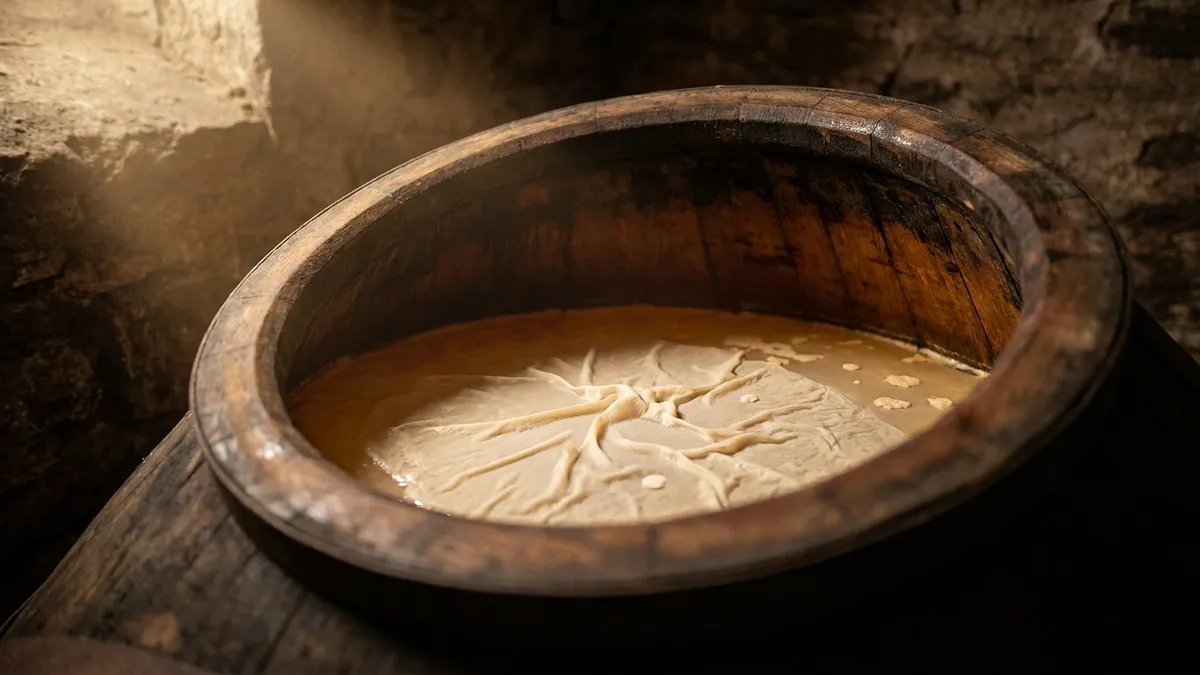
The voile takes two to three years to develop fully. It shields the wine from much of the oxygen, and it feeds on the wine as it grows. That slow half-exposure is why vin jaune tastes aged and nutty yet stays bright instead of turning brown and flat. An accidental air gap in an ordinary barrel gives the fault described in the oxidized wine explainer. In vin jaune, the living yeast layer keeps that fault from taking over.
The law then fixes the clock: six years and three months must pass between harvest and bottling. The wider idea that air can build flavour on purpose is laid out in oxidative vs reductive winemaking.
Why Does Vin Jaune Smell Like Curry and Walnuts?
One molecule does most of the work: sotolon, an aroma compound that forms from alpha-ketobutyric acid as the wine ages under its yeast film. Sotolon is described as the key odorant in vin jaune and a likely marker of its age.
Sotolon changes with strength. At high concentration it smells of fenugreek or curry. At lower concentration it reads as maple syrup, caramel or burnt sugar. So a vin jaune can smell of curry spice on the first sniff and of toffee a moment later without anything being wrong.
The same compound turns up in flor sherry, aged rum, aged sake and fenugreek seed. The curry note is a named chemical shared by several long-aged drinks, not a fault or a mystery. Around it, expect walnut and dried apple, and under everything a streak of acidity (the tartness that makes your mouth water), which keeps the finish long and salty rather than heavy.
How Should You Serve Vin Jaune?
Serve vin jaune at cellar temperature, 13 to 15°C, in a tulip-shaped white wine glass with a small pour. That is warmer than most whites and several degrees warmer than fino, because the nutty, spicy aromas stay muted when the wine is fridge-cold.
If the bottle has spent the day in the fridge, stand it on the counter until the glass no longer fogs when you pour. If you have no cellar, a cool cupboard is close enough. Our wine serving temperature chart puts those numbers next to every other style.
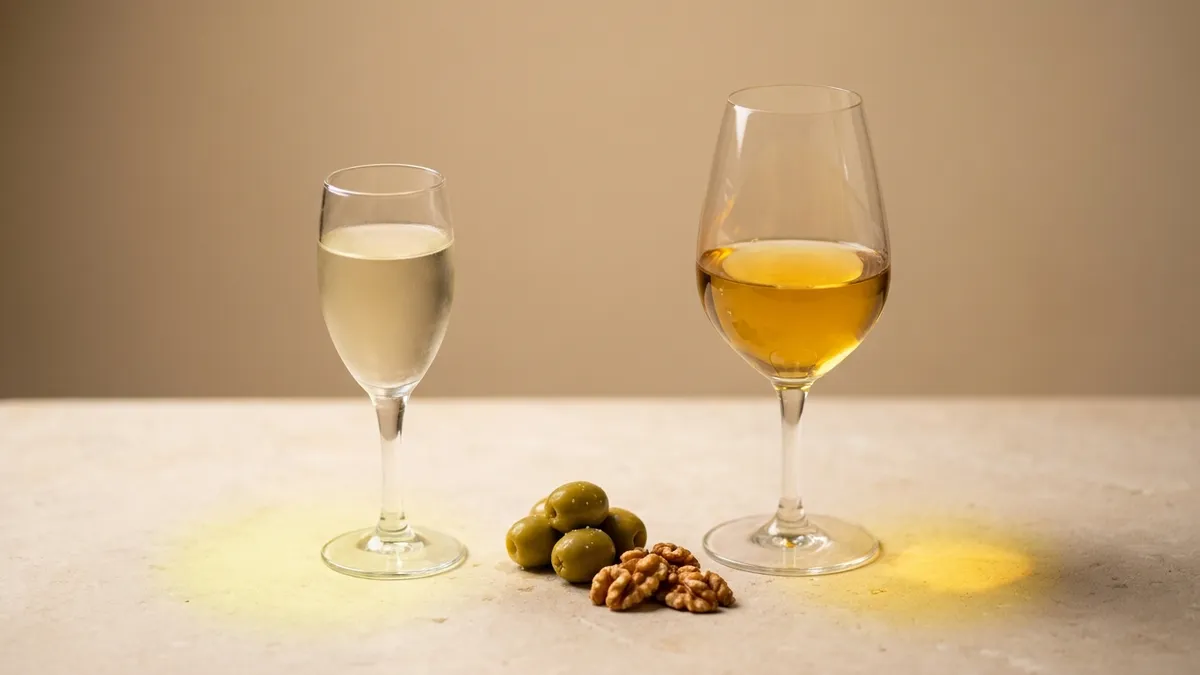
The intensity means small measures go a long way, and the 62cl bottle is built for sharing among several people over a meal. Fino is fragile once open and is best finished soon, the way you would treat an ordinary white. Vin jaune has already lived for years with air above it, so it holds up far better. If you plan to drink it over several evenings, recork it and keep it cool and upright. For how that compares with other bottles, see how long wine lasts after opening.
What Food Goes With Vin Jaune?
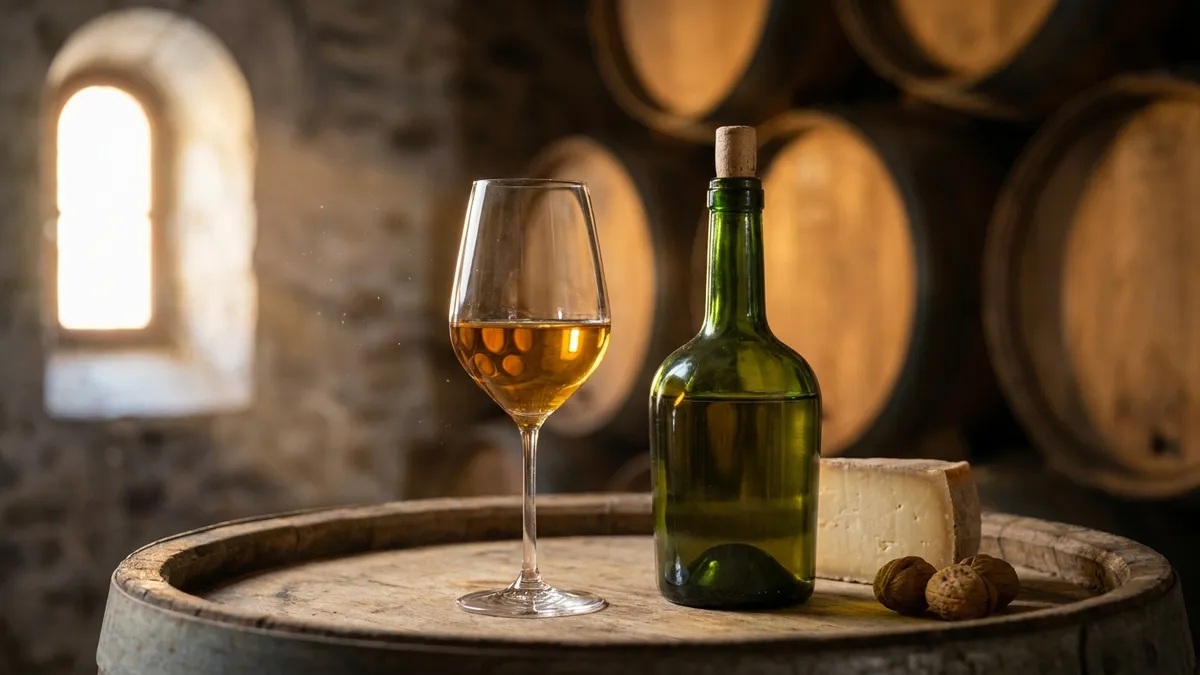
Aged Comté cheese and chicken cooked in vin jaune are the two classic matches, and both come from the Jura itself. The cheese is made in the same mountains. The chicken dish, poulet au vin jaune, cooks the wine into the sauce, usually with cream and morel mushrooms.
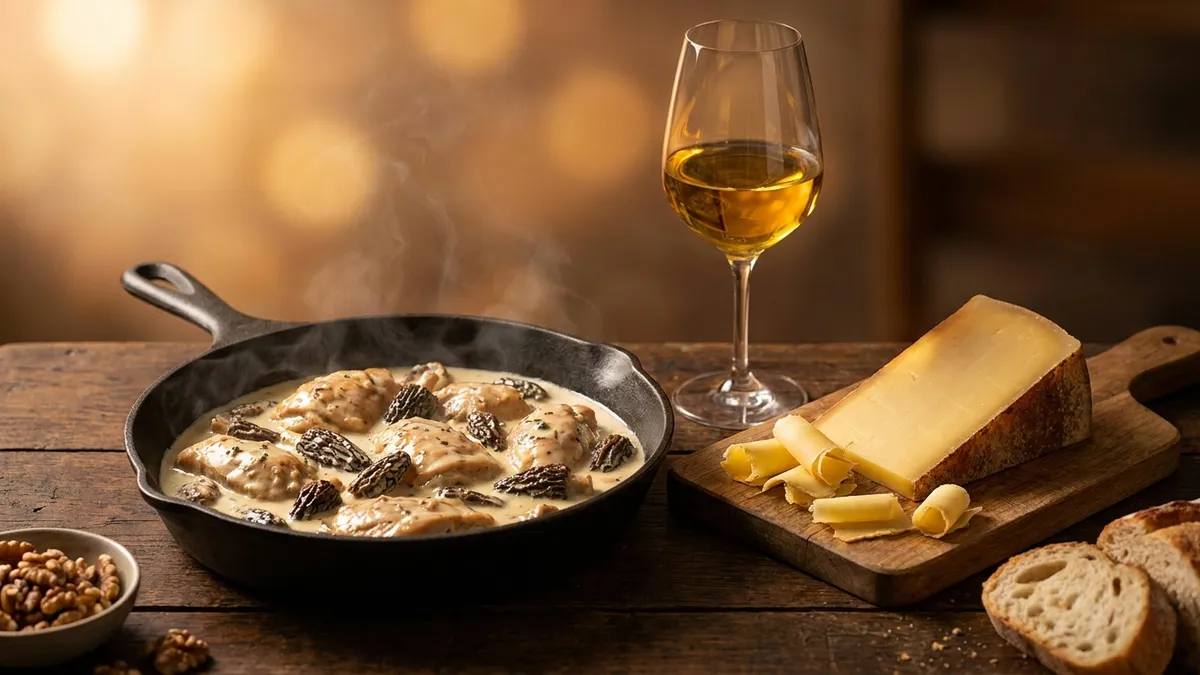
Both work for concrete reasons. Comté's aged, nutty paste mirrors the walnut in the wine, and its salt softens the wine's sharp edge. In the chicken, the cream coats your mouth and the wine's high acidity cuts straight through it, so each bite feels lighter.
If the dish has cream, nuts, mushrooms or aged hard cheese, vin jaune fits. The same logic covers a mildly spiced creamy curry, where the sotolon's curry note meets real spice. If the plate is sweet, or is delicate raw fish, choose something else: sugar makes the dry wine taste sour, and the wine flattens a light fish. More cheese logic sits in the wine and cheese pairing guide, and more poultry options in wine with chicken.
How Do You Spot Real Vin Jaune in a Shop?
Look for the squat 62cl bottle, called a clavelin, and the words "vin jaune" or the name Château-Chalon on the label. The clavelin is the traditional bottle for this wine, so it is the quickest clue on a crowded shelf, and the label word confirms it before you pay.
The bottle size carries a story. Local tradition says 62cl is what is left of a litre after six years and three months of evaporation in a barrel that is never refilled. Treat that as a well-founded legend rather than a lab figure, since every barrel loses a different amount. The idea behind it holds, though, and it explains most of the price. A producer waits over six years, loses a large share of the wine to the air, and bottles less of it than from a normal white.
If a Jura white comes in a standard 75cl bottle, it is not vin jaune, even if it tastes nutty. The Jura also bottles younger Savagnin aged under the voile for a shorter time. Those wines give you the same family of flavours at a lower price, and the Jura wine guide maps them next to the region's sweet straw wine and pale reds.
What Grape Is Vin Jaune Made From?
Savagnin, a late-ripening white grape in the Traminer family, and nothing else. That family link makes it a relative of Gewürztraminer, though in the Jura it tastes savoury and tart rather than perfumed. Its late ripening is why the vin jaune harvest comes so late in the autumn.
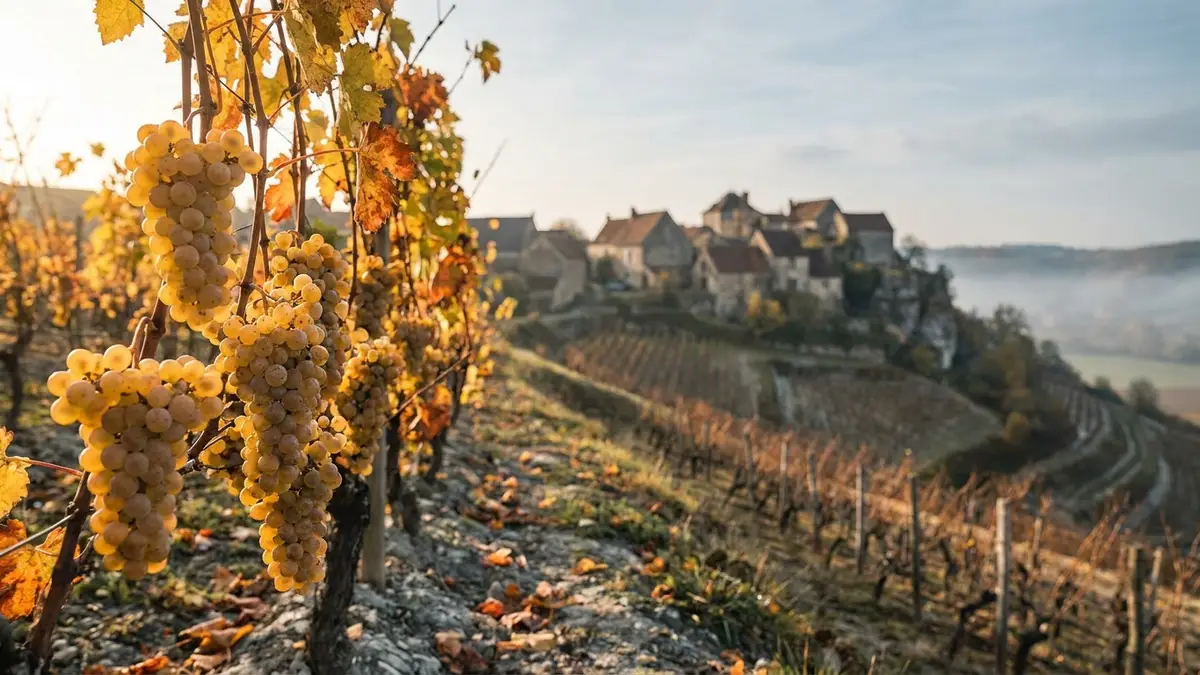
The name trips people up. Savagnin is a different grape from Sauvignon Blanc, the crisp, grassy variety of the Loire and New Zealand, despite the similar spelling. DNA work suggests Sauvignon Blanc may even descend from Savagnin, but the two taste nothing alike. If a label says Savagnin, expect the Jura's tart, nutty style. If it says Sauvignon, expect citrus and cut grass. The Savagnin wine guide covers the grape's fresher, topped-up style as well, and the Gewürztraminer guide shows the aromatic side of the family.
Where Is Vin Jaune Made?
Only in the Jura in eastern France, under four protected appellations (legally protected place names) that date from 1936 and 1937: Château-Chalon, Arbois, Côtes du Jura and L'Étoile. All four follow the same six-year-and-three-month rule and use the same single grape, Savagnin.
Château-Chalon is the most famous and the strictest. Its grapes must reach at least 12% potential alcohol, against 11.5% elsewhere in the Jura, so the wine starts from riper fruit. On a label, "Château-Chalon" alone means vin jaune, while the other three names add the words "vin jaune" after the place.
The region sits between Burgundy and the Swiss border. The French wine regions guide shows where it fits among France's better-known areas, and the wine styles hub places vin jaune among the world's oxidative and fortified wines.
How Do You Start Tasting Vin Jaune?
Start with a small pour at cellar temperature next to a piece of Comté, and taste the wine before and after a bite. On its own the acidity and curry spice feel sharp. After the cheese, the walnut comes forward and the finish turns salty and long.
If you already know fino, pour one of each at its own temperature and compare colour, smell and weight. The fino will look paler, smell of bread and almonds, and feel lighter. For a structured way through the fortified side, how to taste fortified wine gives the method.
Sommy's regional course on France maps the country's wine regions, and the tasting mode in the app at sommy.wine reads your label photo and walks you through each glass. Pour a small glass of vin jaune beside a wedge of Comté tonight, sniff at the rim and deep in the bowl, and note which smell arrives first.
Sources
Frequently Asked Questions
What is vin jaune wine?
Vin jaune, French for yellow wine, is a dry white wine from the Jura in eastern France. It is made only from the Savagnin grape and aged in barrels that are never topped up, so a film of yeast grows on the surface. The law requires at least six years and three months between harvest and bottling, and it is sold in a squat 62cl bottle called a clavelin.
Is vin jaune the same as sherry?
No. Vin jaune and fino sherry are cousins: both age under a floating film of yeast that shields the wine from air. But vin jaune is never fortified, is made from Savagnin rather than Palomino, and ages as a single vintage in one barrel instead of being blended through a solera. It is also served warmer, at 13 to 15°C rather than fridge-cold.
What does vin jaune taste like?
Vin jaune is bone dry, with high acidity and a long, salty-savoury finish. It smells of walnuts, curry spice and dried apple. The curry and walnut notes come mostly from one aroma compound, sotolon, which builds up during the years under the yeast film. The same compound shows up in flor sherry, aged rum and aged sake.
Why is vin jaune sold in a 62cl bottle?
The clavelin holds 62cl instead of the usual 75cl. Local tradition says that is what remains of one litre of wine after six years and three months in a barrel that is never topped up, with the rest lost to evaporation. Treat it as a rule-of-thumb legend, not a precise measurement, but the bottle is the fastest way to spot vin jaune on a shelf.
What food goes with vin jaune?
The two classic matches come from the Jura itself: aged Comté cheese and chicken cooked in vin jaune, usually with cream and morel mushrooms. The wine's nutty smell echoes the cheese, and its high acidity cuts through the cream. Walnuts, mushroom dishes and mildly spiced creamy curries work for the same reasons. Avoid sweet desserts, which make the dry wine taste sour.
What temperature should you serve vin jaune at?
Serve vin jaune at cellar temperature, 13 to 15°C, which is warmer than most white wines and much warmer than fino sherry, which goes in at 7 to 10°C. Straight from the fridge the nutty, spicy aromas stay locked in. Use a tulip-shaped white wine glass and pour small measures, because the flavour is intense.
Sommy Team
LinkedInFounder & Wine Educator
The Sommy Team is building the world's most approachable wine education app, helping beginners develop real tasting skills through structured courses and AI-guided practice.