Jerez: The Sherry Triangle and Its Unique Winemaking

By the Sommy Team — AI-assisted, human-edited.
Updated Jun 17, 2026
Contents (11)
- What Is the Jerez Sherry Region?
- Where Jerez Sits: Climate and the Sherry Triangle
- The Albariza Soil That Holds the Water
- The Three Grapes of Jerez
- Two Roads to a Glass: Biological vs Oxidative Aging
- The Solera System: Fractional Blending Through Time
- The Sherry Style Spectrum, from Bone-Dry to Syrupy
- How Jerez Compares to the Rest of Spanish Wine
- Serving and Pairing Sherry
- How a Beginner Should Start with Jerez
- The Reward of Learning Jerez
TL;DR
The jerez sherry region sits in southern Spain's Andalucía, anchored by the Sherry Triangle of three towns. Chalky albariza soil grows Palomino for dry styles and Pedro Ximénez for sweet ones. Flor yeast and oxidative aging, blended through the solera system, create everything from bone-dry Fino to syrupy PX.
What Is the Jerez Sherry Region?
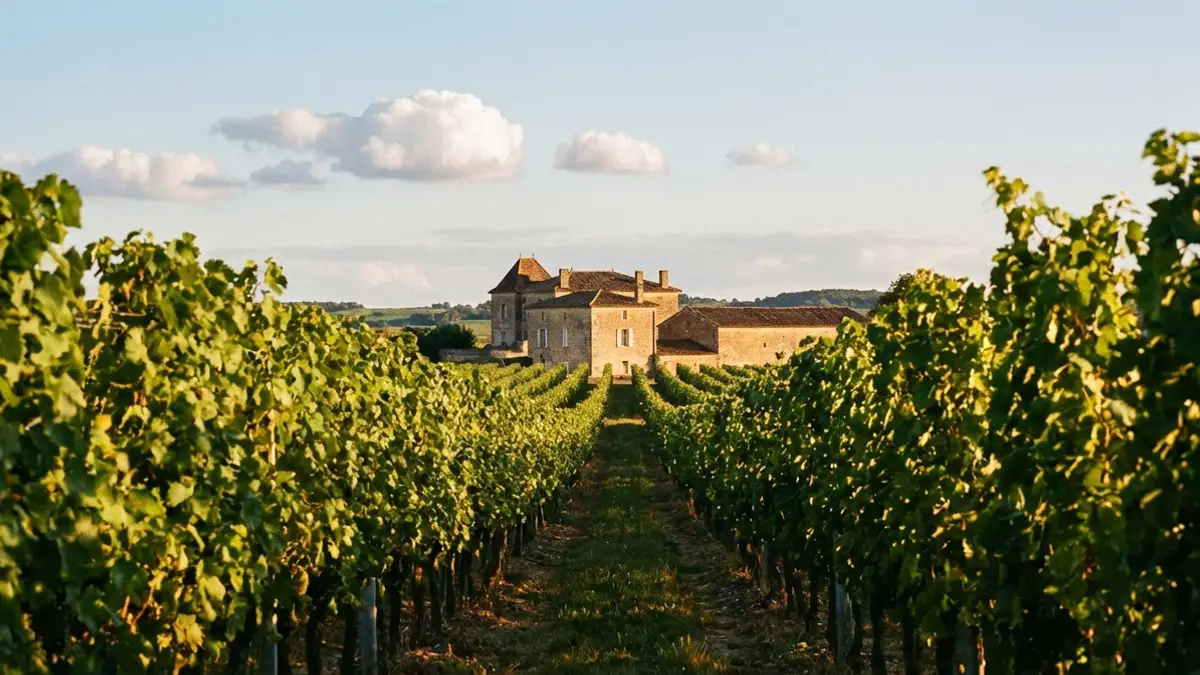
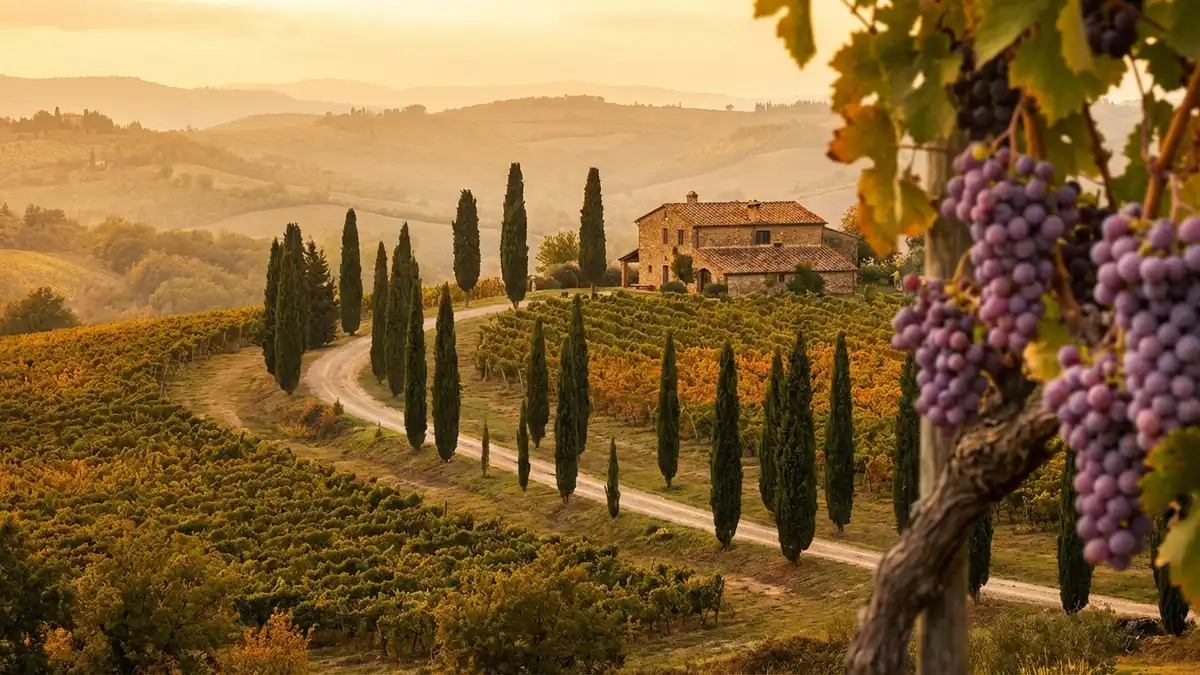
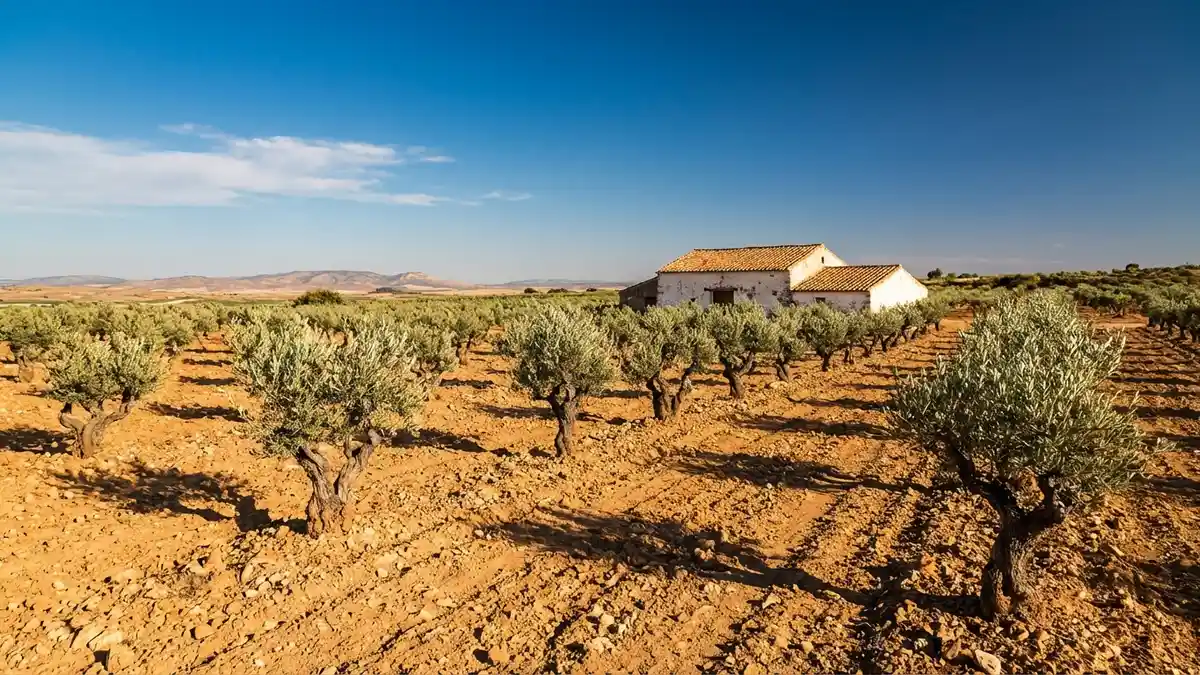
The jerez sherry region is a small, sun-baked corner of Andalucía in southern Spain where one of the world's most distinctive wines is made. Its heart is the Sherry Triangle, formed by three towns near the Atlantic coast in Cádiz province: Jerez de la Frontera, Sanlúcar de Barrameda, and El Puerto de Santa María. Only wine matured inside this triangle may legally carry the name sherry. The wines grow on brilliant white chalk soil called albariza, from the Palomino grape for dry styles and Pedro Ximénez and Moscatel for sweet ones. What sets Jerez apart is not the grape but the aging — under a veil of living yeast, or fully exposed to air, then blended through the solera system.
Where Jerez Sits: Climate and the Sherry Triangle
Jerez lies in the far south of mainland Spain, closer to North Africa than to Madrid, in a warm zone tempered by two opposing winds. The hot, dry levante blows in from inland, while the cool, humid poniente rolls off the Atlantic. That sea breeze is the region's secret: it lifts humidity, moderates the summer heat, and — critically — feeds the yeast that defines the lightest sherries.
The three towns of the Sherry Triangle each lend their own accent. Jerez de la Frontera is the historic center and gives the wine its name. El Puerto de Santa María sits at the mouth of the Guadalete River. And Sanlúcar de Barrameda, perched right on the coast where the river meets the sea, is cool and damp enough to produce a style found nowhere else.
The legal boundary matters here more than in most regions. Grapes may be grown across a wider zone, but the wine must be aged within the triangle to be sherry. The maritime air inside those town walls is part of the recipe.
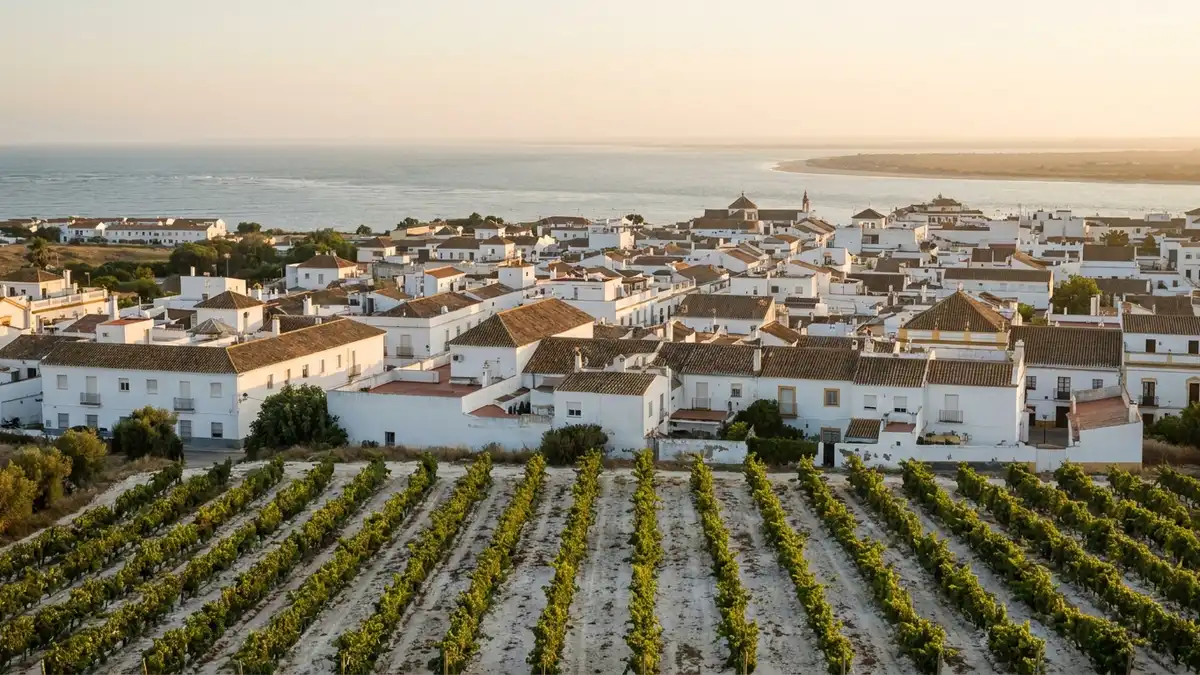
The Albariza Soil That Holds the Water
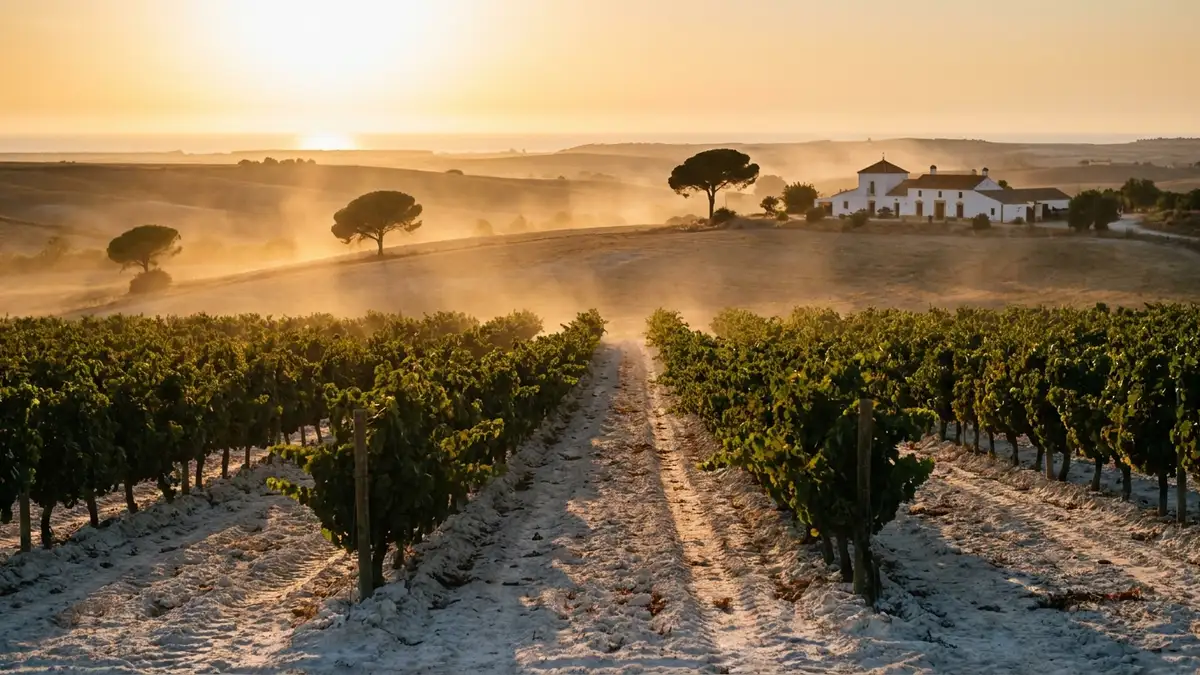
If Burgundy is a story about thousands of plots, Jerez is a story about one remarkable soil. Albariza is a soft, chalky, almost blinding-white earth made largely of fossilized marine deposits laid down when this land lay under the sea. It is the foundation of every great sherry vineyard.
Albariza's gift is water management. The chalk soaks up the winter rains like a sponge, then forms a hard crust in summer that seals the moisture below. As the sun beats down for months, the vines draw on that buried reserve, surviving a dry, hot growing season that would stress most other soils.
The whiteness does a second job: it reflects sunlight back up onto the vines, helping ripen the grapes evenly. This is the terroir — the soil, climate, and place that shape a wine — that makes Jerez possible. Cheaper soils exist in the wider zone, but the finest sherries come almost exclusively from albariza slopes.
White chalk that drinks the winter and feeds it back all summer — albariza is the quiet engine of every glass of sherry.
The Three Grapes of Jerez
Sherry is built on a tiny cast of grapes, and learning them clears up most of the confusion about the region's many styles.
- Palomino: The dominant grape by far, planted across the vast majority of the vineyards. On its own it is fairly neutral and low in acidity — unremarkable as a still white wine. That neutrality is exactly the point. Palomino is a blank canvas that takes its character entirely from the aging method, which is why one grape can become everything from feather-light Fino to brooding Oloroso.
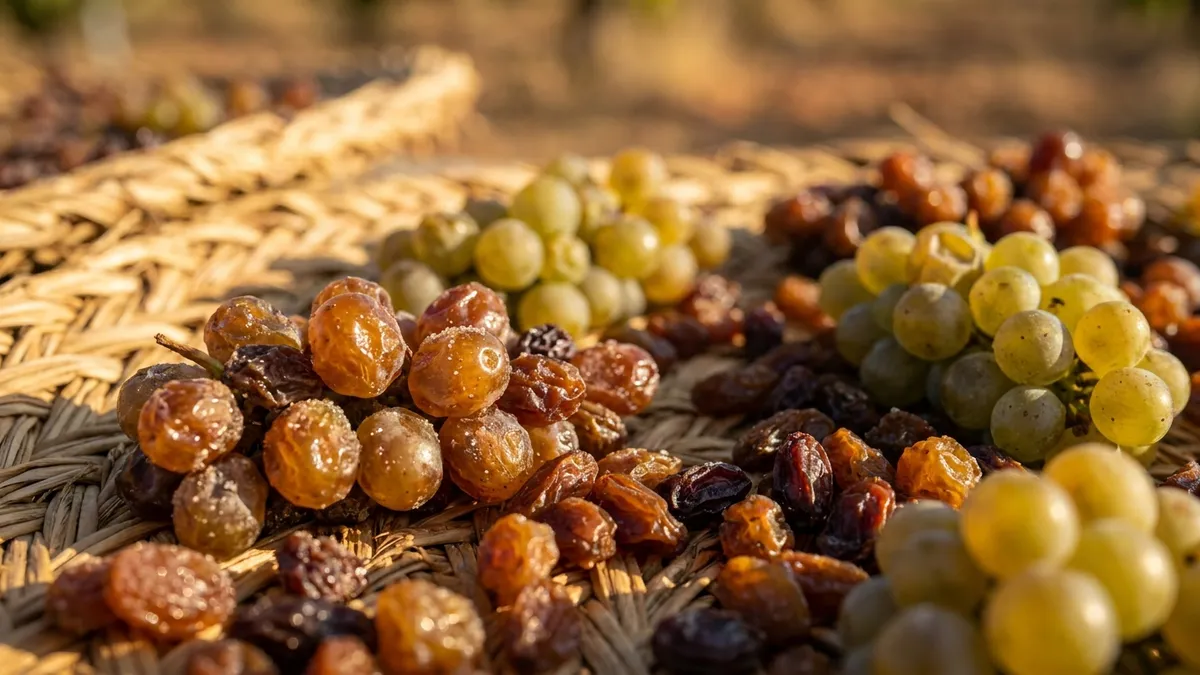
- Pedro Ximénez (PX): The grape behind the sweetest, darkest sherries. The grapes are laid out on mats in the sun to shrivel into raisins, concentrating their sugar dramatically before pressing. The result is an intensely sweet, viscous wine the color of espresso, tasting of figs, dates, and molasses. Our Pedro Ximénez wine guide goes deep on this grape and its sun-drying process.
- Moscatel: A smaller player, grown mainly near the coast. It is also sun-dried for sweet wine, but keeps a floral, orange-blossom and grapey perfume that PX lacks. Moscatel sherries are softer and more aromatic than the dense PX style.
Palomino's flexibility is the heart of the whole system. Because the grape contributes so little flavor of its own, the aging decides everything — and that brings us to the two paths a barrel of Palomino can take.
Two Roads to a Glass: Biological vs Oxidative Aging
Every dry sherry begins the same way — Palomino fermented into a plain dry base wine, then fortified with grape spirit. The fork in the road comes next, and it is the single most important idea in understanding Jerez.
Biological Aging Under Flor
In the lightest styles, the fortified wine is held at a lower alcohol level, around 15%, and aged in barrels left partly empty. On the wine's surface a film of living yeast grows spontaneously, called flor — Spanish for "flower." This veil feeds on alcohol and oxygen and seals the wine off from the air beneath it.
The result is biological aging. Protected from oxygen, the wine stays pale gold, light-bodied, and bone-dry. The flor strips away glycerine and adds a savory, saline, fresh-bread and almond character that is the signature of Fino and Manzanilla. No other major wine relies on a living blanket of yeast in this way.
This same flor phenomenon appears in only a handful of places worldwide. The cellar-aged whites of the Jura in France develop a comparable yeast film — explored in our Savagnin wine guide — which makes Jerez and Jura distant cousins in technique despite being countries apart.
Oxidative Aging Without Flor
In the richer styles, the wine is fortified higher, to around 17% or more — strong enough to kill off any flor. With no protective veil, the wine ages in deliberate contact with air. This is oxidative aging, and it transforms the wine in the opposite direction.
Over years of slow oxidation, the wine darkens to deep amber or mahogany, thickens in body, and develops powerful notes of walnut, hazelnut, toffee, dried fig, and old leather. This is the path to Oloroso. Where flor keeps a wine youthful and crisp, oxygen makes it deep, warm, and concentrated.
The Solera System: Fractional Blending Through Time
Most wine carries a vintage — the wine of a single year. Sherry almost never does, because of an ingenious aging method called the solera system. It is the second pillar of what makes Jerez unique, alongside flor.
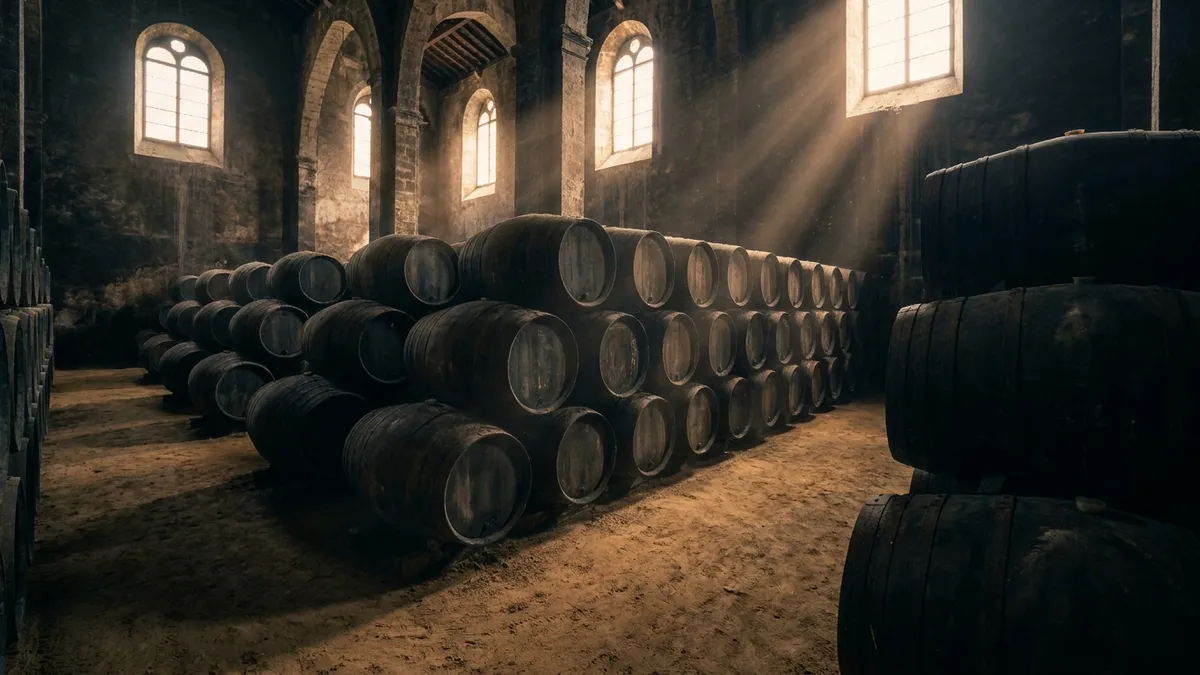
A solera is a set of barrels arranged in tiers, traditionally stacked in rows. The bottom row, nearest the floor, gives the system its name — solera comes from suelo, the Spanish for floor — and holds the oldest wine. The rows above, called criaderas ("nurseries"), hold progressively younger wine. Here is how it works:
- Bottling draws only from the oldest row. When wine is needed, a fraction — never all of it — is drawn off the bottom solera row.
- Each row is topped up from the row above. The gap left in the oldest row is refilled from the next-youngest criadera, which is in turn refilled from the row above it, and so on up the chain.
- Fresh wine enters at the top. The youngest criadera receives the new vintage, and the cascade repeats year after year.
Because no barrel is ever fully emptied, a sip from a long-established solera contains a trace of wine from many years blended together. The system has two great virtues: it smooths out vintage variation, giving a remarkably consistent house style, and it lets the older, characterful wine continuously "teach" the younger wine, speeding its maturity.
The solera is why sherry is a wine of blending and continuity rather than of single great years. It rewards patience on a scale few other wines attempt.
The Sherry Style Spectrum, from Bone-Dry to Syrupy
Put flor, oxidation, and the solera together and you get one of the widest style ranges in all of wine — from the palest, driest aperitif to a wine as thick and dark as treacle. Here is the spectrum, roughly from lightest and driest to richest and sweetest:
- Fino: Pale straw, bone-dry, and light, aged entirely under flor. Aromas: almond · fresh bread · green olive · sea salt. Served well chilled, it is the classic Spanish aperitif.
- Manzanilla: Essentially a Fino aged in coastal Sanlúcar de Barrameda, where the damp Atlantic air feeds an especially thick, year-round flor. Style: even more delicate and saline than Fino, with a tang of sea spray. Origin: Sanlúcar only.
- Amontillado: A Fino that began under flor, then lost its veil and finished by oxidative aging. Result: amber color, dry, with both the freshness of flor and the nutty depth of oxidation — hazelnut, dried herbs, and a long savory finish.
- Oloroso: Aged oxidatively from the start, never under flor. Style: deep mahogany, full-bodied, and powerfully nutty — walnut, toffee, dried fruit, leather. Dry despite its rich texture.
- Palo Cortado: The rare, prized in-betweener. It begins like a Fino but the flor mysteriously fails, so it ages oxidatively. Result: the elegant aroma of an Amontillado with the body of an Oloroso. Hard to make on purpose and treasured by enthusiasts.
- Cream: A sweetened blend, typically a dry Oloroso base softened with sweet PX or Moscatel. Style: medium to fully sweet, smooth, raisiny — historically popular as an after-dinner pour.
- Pedro Ximénez (PX): The sweetest of all, made from sun-dried PX grapes. Style: opaque brown-black, viscous, intensely sweet — fig, date, molasses, and espresso. A dessert in a glass.
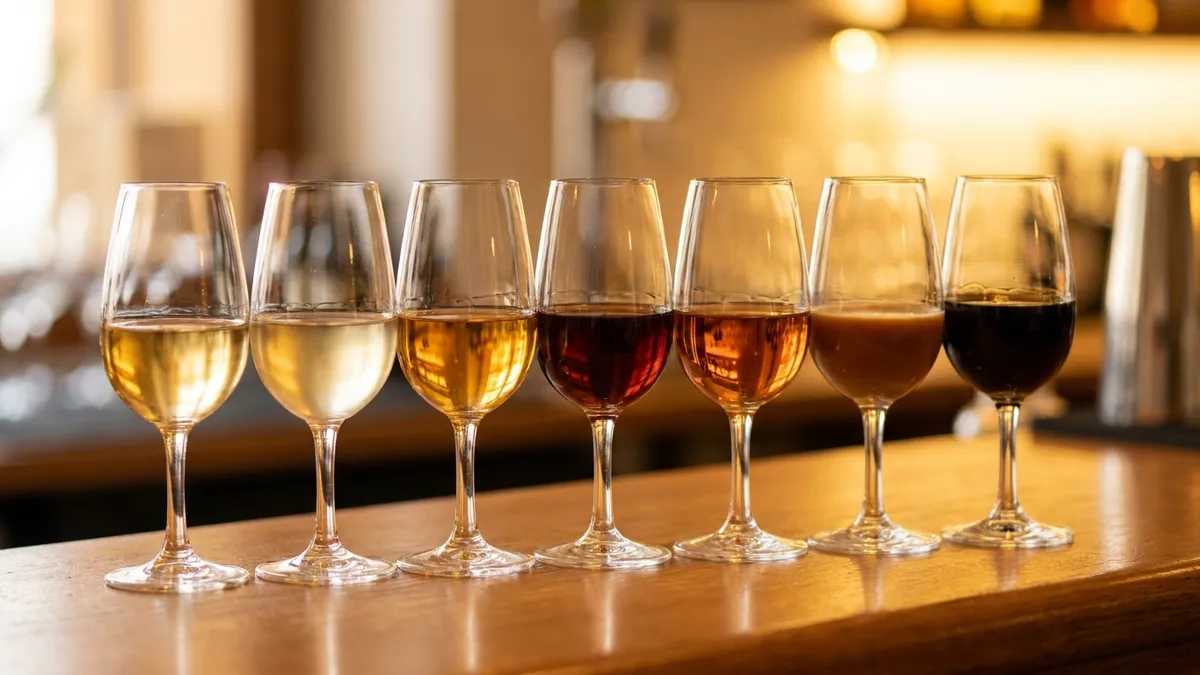
The lesson worth holding on to: a sherry's color is a near-perfect clue to its style. Pale almost always means flor-aged and dry; dark means either oxidative aging or sweetness, or both. The Sommy app turns this kind of color-to-style reading into a guided tasting exercise, so you learn to predict the wine before the first sip.
How Jerez Compares to the Rest of Spanish Wine
Jerez is unmistakably Spanish, yet it stands apart from the country's famous red regions. It helps to place it within the wider picture, covered in our Spanish wine regions guide.
- Jerez (Andalucía): Fortified, mostly bone-dry, aged under flor or by oxidation through the solera. Signature grape: Palomino. Soil: chalky albariza. Climate: hot south, cooled by Atlantic wind.
- Rioja and Ribera del Duero (north): Dry, unfortified red wines aged in oak barrels. Signature grape: Tempranillo. Style: structured reds with vanilla and red-fruit character — a completely different category.
- Rías Baixas (northwest): Crisp, dry, unfortified white wine. Signature grape: Albariño. Style: zesty, coastal, citrus-and-saline — closer to Jerez in salinity but worlds apart in method.
The contrast is the point. Where most of Spain makes still table wine, Jerez built an entire culture around fortification, flor, and time. For a fuller introduction to fortified styles in general, the sherry wine guide breaks the category down style by style for a newcomer.
Serving and Pairing Sherry
Sherry has a reputation as a sticky after-dinner drink, but that misses almost the entire range. The dry styles are some of the most food-friendly wines made, and serving them right transforms the experience.
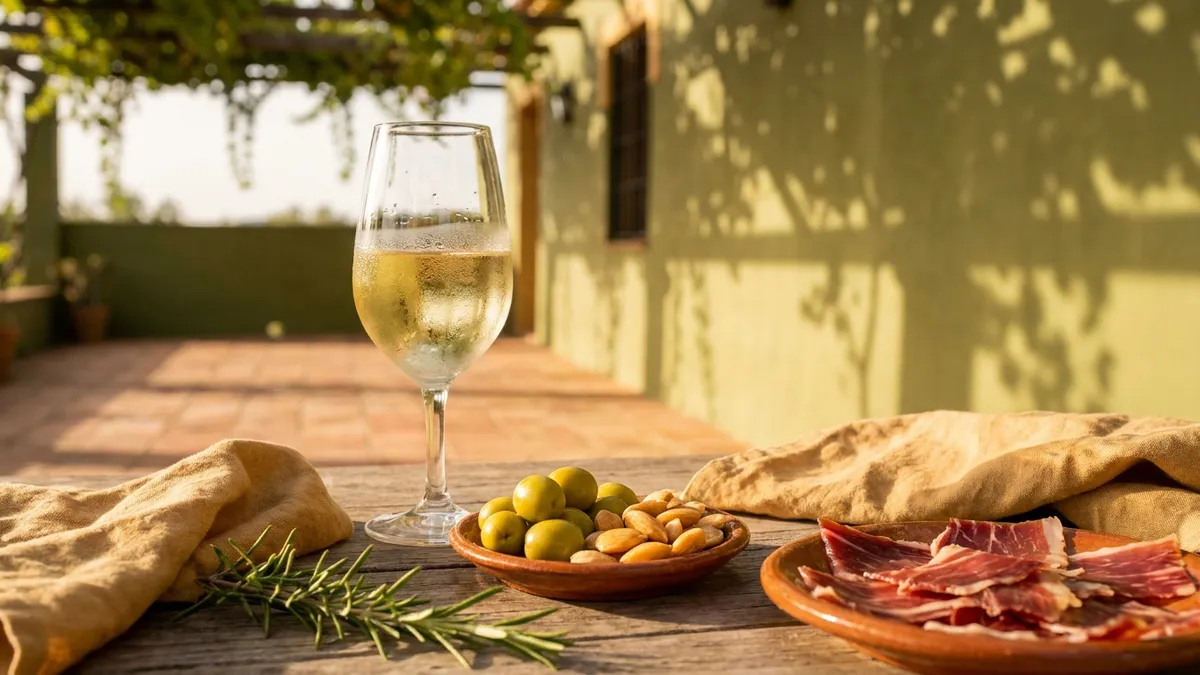
- Serve dry styles cold. Fino and Manzanilla belong in the fridge and in a normal white-wine glass, not a tiny copita filled to the brim. Pour a small amount, drink it fresh, and treat an opened bottle like a white wine — finish it within a few days.
- Match the weight. Light flor styles suit salty tapas — olives, almonds, cured ham, fried fish, and seafood. Their salinity and crispness cut through fat and brine beautifully.
- Lean nutty for savory dishes. Amontillado pairs with mushroom dishes, consommé, hard aged cheese, and roast poultry. Its dry, nutty depth bridges light and rich foods.
- Pour Oloroso with bold plates. Its body and intensity stand up to red meat, game, stews, and oxtail — places where you might reach for a red wine.
- Save the sweet end for dessert. Pedro Ximénez is so rich it works as dessert itself, and it is unbeatable poured over plain vanilla ice cream. Cream sherry suits blue cheese and dried fruit.
Because sherry spans dry to sweet and light to powerful, a single region can carry you from aperitif to dessert. Learning to read its structure — the acidity, the body, the sweetness — is exactly the kind of skill the Sommy app builds through short guided tastings.
How a Beginner Should Start with Jerez
Sherry can feel like a maze of unfamiliar names, but the path in is short and rewarding. Approach it as a tasting journey across the spectrum rather than a single bottle to "get right."
- Begin with a chilled Fino or Manzanilla. Serve it cold with a few salty snacks. This is the freshest, most approachable face of sherry and shows what flor does.
- Compare flor and oxidation side by side. Open an Amontillado next to an Oloroso. Same grape, two aging paths — the difference between them is the clearest lesson the region teaches.
- Finish with a tiny pour of PX. A small glass of Pedro Ximénez over ice cream closes the loop from bone-dry to lavishly sweet, all from the same triangle of towns.
- Build the tasting habit. Note the color first, then the aromas, then where it sits on the dry-to-sweet scale. Our guide to how to taste wine gives you the step-by-step method, and the wider noble grapes overview helps you place Palomino and PX among the world's important varieties.
Jerez also rewards a sense of history. Palomino and Pedro Ximénez are old varieties with deep roots in the Mediterranean wine story — if that thread interests you, our piece on the oldest grape varieties traces how ancient grapes still fill modern glasses.
Sommy turns each of these comparisons into a guided exercise — naming the aromas, scoring the structure, and building the vocabulary to describe what you sense. You can start practicing free at sommy.wine, then bring the method to your next glass of sherry.
The Reward of Learning Jerez
Few regions pack so much into so small a space. One white chalk soil, a handful of grapes, two aging philosophies, and a centuries-old blending system together create a spectrum no other wine region can match. Sherry asks a little patience of a newcomer, and it gives back an enormous range of flavor — from the saline snap of a cold Fino to the dark molasses depth of PX.
Start cold, taste across the styles, and let the flor and the solera reveal themselves one glass at a time. The Sommy app is built to make that habit stick, turning each pour into a short, guided lesson so the next sherry you open is a little clearer than the last.
Sources
Frequently Asked Questions
Where is the Jerez sherry region?
Jerez sits in Andalucía, the southernmost region of mainland Spain, near the Atlantic coast in the province of Cádiz. The heart of production is the Sherry Triangle formed by three towns: Jerez de la Frontera, Sanlúcar de Barrameda, and El Puerto de Santa María. Only wine aged within this triangle can legally be called sherry.
What grapes are used to make sherry?
Three grapes make sherry. Palomino is the workhorse behind almost all dry styles, from Fino to Oloroso. Pedro Ximénez, usually shortened to PX, is sun-dried into raisins to make the darkest, sweetest sherries. Moscatel makes a smaller volume of floral, sweet wine. Palomino dominates the vineyards by a wide margin.
What is the difference between Fino and Oloroso sherry?
Fino ages biologically under a layer of living yeast called flor, which protects the wine from air and keeps it pale, light, and bone-dry with a saline, almond character. Oloroso ages oxidatively without flor, exposed to air, growing dark, rich, and nutty with notes of walnut and dried fruit. Both start as dry Palomino.
What is the solera system?
The solera is a fractional-blending method that ages sherry in stacked rows of barrels. Wine for bottling is drawn only from the oldest row, which is topped up from the next-youngest row, and so on up the chain. Fresh wine enters the top. This continuous blending keeps a consistent house style and averages many vintages together.
Is all sherry sweet?
No. Most traditional sherry is bone-dry. Fino, Manzanilla, Amontillado, Oloroso, and Palo Cortado are all made dry from Palomino. The famously sweet styles, such as Pedro Ximénez and Cream, get their sweetness from sun-dried PX grapes or from blending sweet wine into a dry base. Dry sherry is the region's true heartland.
What is flor in sherry making?
Flor is a film of living yeast that grows on the surface of wine in partly filled barrels. It feeds on alcohol and oxygen, forming a protective veil that shields the wine from air. This biological aging keeps the wine pale and fresh while adding a distinctive saline, bready, almond character. Styles like Fino and Manzanilla depend on it.
How should a beginner start drinking sherry?
Start with a chilled glass of Fino or Manzanilla served as an aperitif with olives, almonds, or cured ham. These dry styles are crisp, light, and food-friendly. From there, taste an Amontillado and an Oloroso side by side to feel how oxidative aging changes the wine, then finish with a tiny pour of sweet Pedro Ximénez.
What foods pair with sherry?
Sherry is one of the most food-flexible wines made. Dry Fino and Manzanilla suit salty tapas, seafood, and fried fish. Nutty Amontillado loves soups, mushrooms, and hard cheese. Rich Oloroso stands up to roast meat and stews. Sweet Pedro Ximénez is a dessert on its own, especially poured over vanilla ice cream.
Sommy Team
LinkedInFounder & Wine Educator
The Sommy Team is building the world's most approachable wine education app, helping beginners develop real tasting skills through structured courses and AI-guided practice.