Savagnin: The Grape Behind Vin Jaune

By the Sommy Team — AI-assisted, human-edited.
Updated Jun 17, 2026
Contents (9)
- What Is Savagnin Wine and Vin Jaune?
- Savagnin Tasting Notes and Flavor Profile
- How Vin Jaune Is Made: Aging Sous Voile
- Savagnin Compared to Fino Sherry
- The Jura: Savagnin's Home Region
- How to Pair Savagnin and Vin Jaune with Food
- Where Savagnin Fits Among White Grapes
- Serving Savagnin and Vin Jaune
- Building Your Savagnin Tasting Skills
TL;DR
Savagnin is the white grape behind Vin Jaune, the Jura's signature wine. Aged at least six years under a veil of flor yeast without topping up, it develops nutty, curry, and walnut flavors and arrives in the 620ml clavelin bottle. A fresher topped-up ouille style also exists.
What Is Savagnin Wine and Vin Jaune?
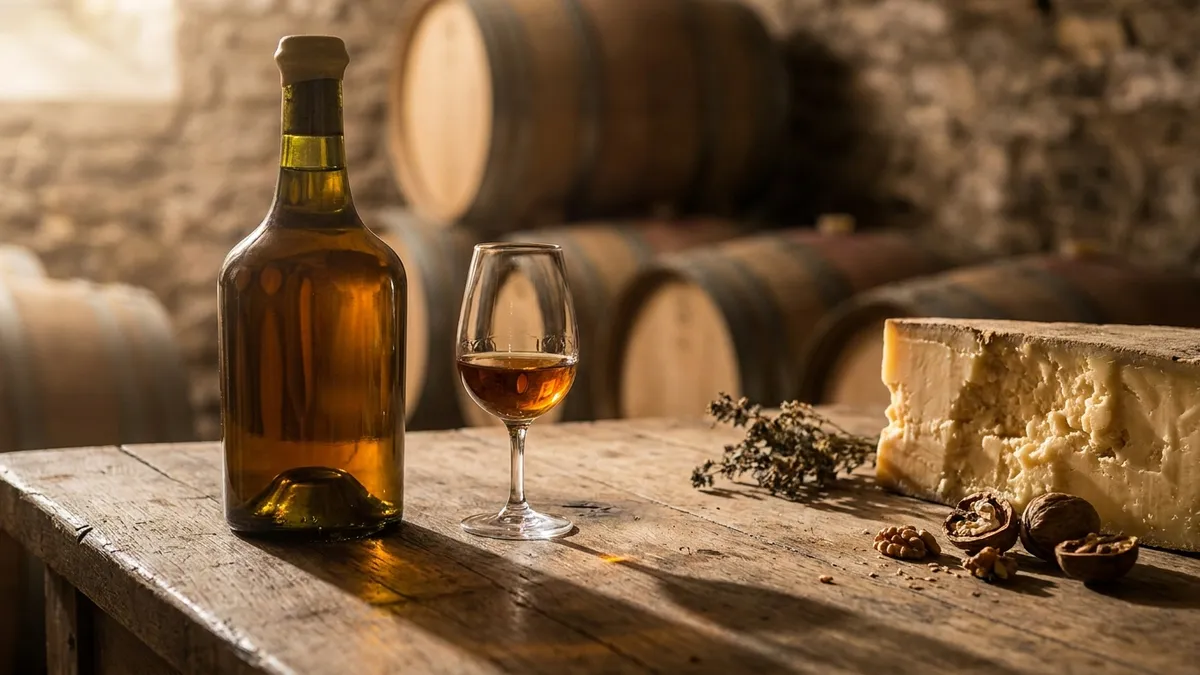
Savagnin is the white grape behind Vin Jaune, the most distinctive wine of the Jura, a small region in eastern France between Burgundy and the Swiss border. The story of savagnin wine vin jaune is the story of one grape and one unusual aging method: the barrel is left unfilled so a film of yeast, the voile, grows across the surface, and the wine matures sous voile (under the veil) for at least six years and three months. The result is bone-dry, high in acidity, and packed with walnut, curry, and dried-apple flavors. Vin Jaune arrives in its own squat 620ml clavelin bottle, and a fresher topped-up style called ouille shows what the same grape does without oxidation.
Savagnin Tasting Notes and Flavor Profile
Savagnin makes two very different wines depending on how the winemaker treats the barrel. The grape itself is a relative of Gewurztraminer and Traminer, but in the Jura it sheds its aromatic cousin's perfume and becomes something far more savory.
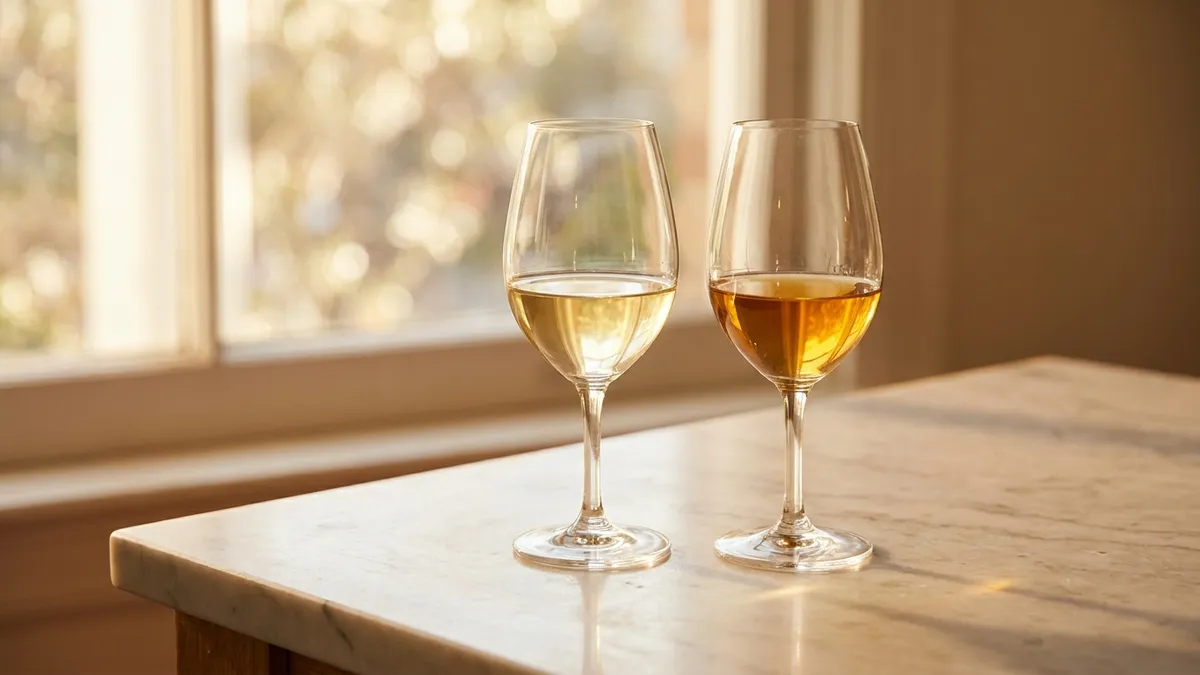
The Oxidative Style (Vin Jaune and Sous Voile)
This is Savagnin at its most famous. Under the flor veil, the wine takes on an intense nutty character that has no real equivalent in mainstream white wine.
- Typical aromas: walnut, dried apple, bruised pear, curry spice, roasted hazelnut, saline sea breeze
- Palate: bone-dry, high acidity, intense nutty umami, long mineral finish
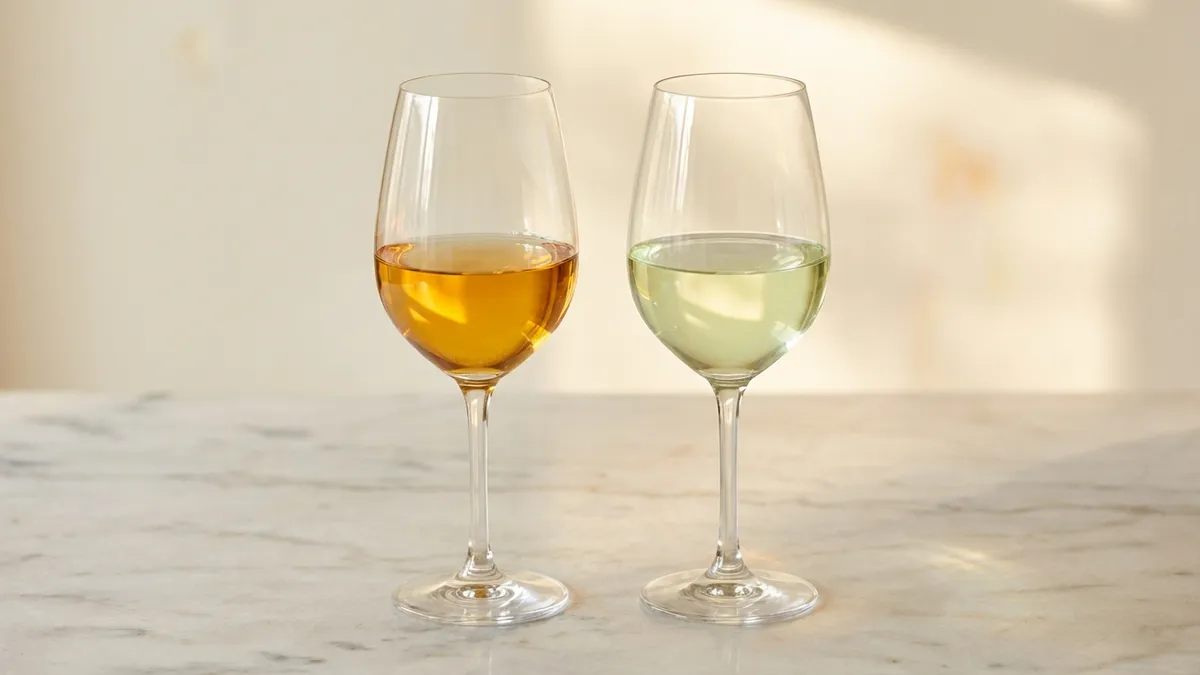
- Color: deep golden to amber, hence the name vin jaune, meaning yellow wine
- Body: medium (3/5) · Acidity: high (4/5) · Sweetness: bone-dry (1/5)
The curry note surprises first-time tasters, but it is the classic descriptor for aged sous voile Savagnin. It comes from compounds the flor yeast produces, the same family of aromas you find in fenugreek, the spice that gives curry powder its savory backbone.
The Fresh Style (Ouille)
Not all Savagnin goes under the veil. When the barrel is topped up regularly to keep oxygen out, the grape shows a completely different face.
- Typical aromas: green apple, lemon zest, white flowers, crushed stone, a hint of ginger
- Palate: lean, racy, citrus-driven, with a stony minerality
- Body: light to medium (2/5) · Acidity: high (5/5) · Sweetness: bone-dry (1/5)
The word ouille comes from ouiller, the French verb for topping up a barrel. These wines feel closer to a high-acid Alpine white and make a useful reference point for understanding just how much the oxidative process changes the grape. If you are still building a sense of how acidity and body shape a wine, the guide to tannins, acidity, and body lays out the framework Savagnin tests so well.
How Vin Jaune Is Made: Aging Sous Voile
The magic of Vin Jaune is not in the grape alone but in what happens after fermentation. Understanding the method makes the strange flavors click into place.
The Veil of Flor Yeast
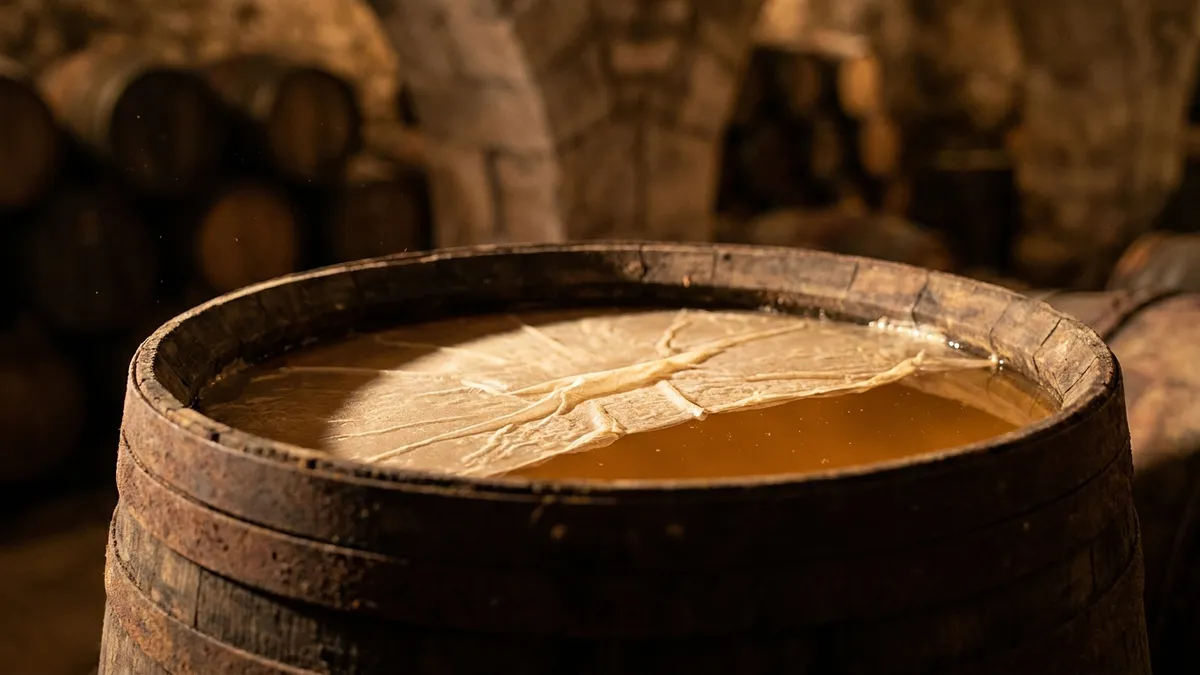
Once Savagnin finishes fermenting, the wine goes into old oak barrels that are deliberately not filled to the top. A pocket of air sits above the wine. In a normal cellar this would be a fault waiting to happen, because oxygen spoils most wines. In the Jura it is the whole point.
Within months, a film of native flor yeast (the same kind of yeast veil found in Sherry country) grows across the surface. This living layer is the voile. It protects the wine from turning to vinegar while slowly feeding on it, producing the nutty, savory compounds that define the style.
Sommelier tip: The voile is a slow chemistry set. It consumes the wine's glycerol and produces acetaldehyde and sotolon, the compounds responsible for the walnut and curry notes. Patience, not intervention, makes Vin Jaune.
Six Years Under the Veil
By law, Vin Jaune ages sous voile for a minimum of six years and three months, with no topping up. The wine evaporates steadily through the porous barrel the entire time. The flor protects what remains while the concentration intensifies year after year.
This is one of the longest mandatory aging requirements for any dry wine in the world. The Sommy app's tasting courses use Vin Jaune as a case study in how time and controlled oxidation rewrite a grape's character, the kind of before-and-after comparison that sharpens your palate fast.
The 620ml Clavelin
When the wine is finally bottled, it goes into the clavelin, a squat, broad-shouldered bottle that holds exactly 620 millilitres rather than the standard 750. The math is the romance: roughly 620ml is what is left of one original liter after more than six years of evaporation under the veil. The missing portion, about 38 percent, is the Jura's version of the "angel's share." No other still wine has its own legally protected bottle size.
Savagnin Compared to Fino Sherry
Vin Jaune is often described as France's answer to Sherry, and the comparison is fair because both wines age under a film of flor yeast. But the differences matter, and lining them up side by side is the fastest way to understand each one.
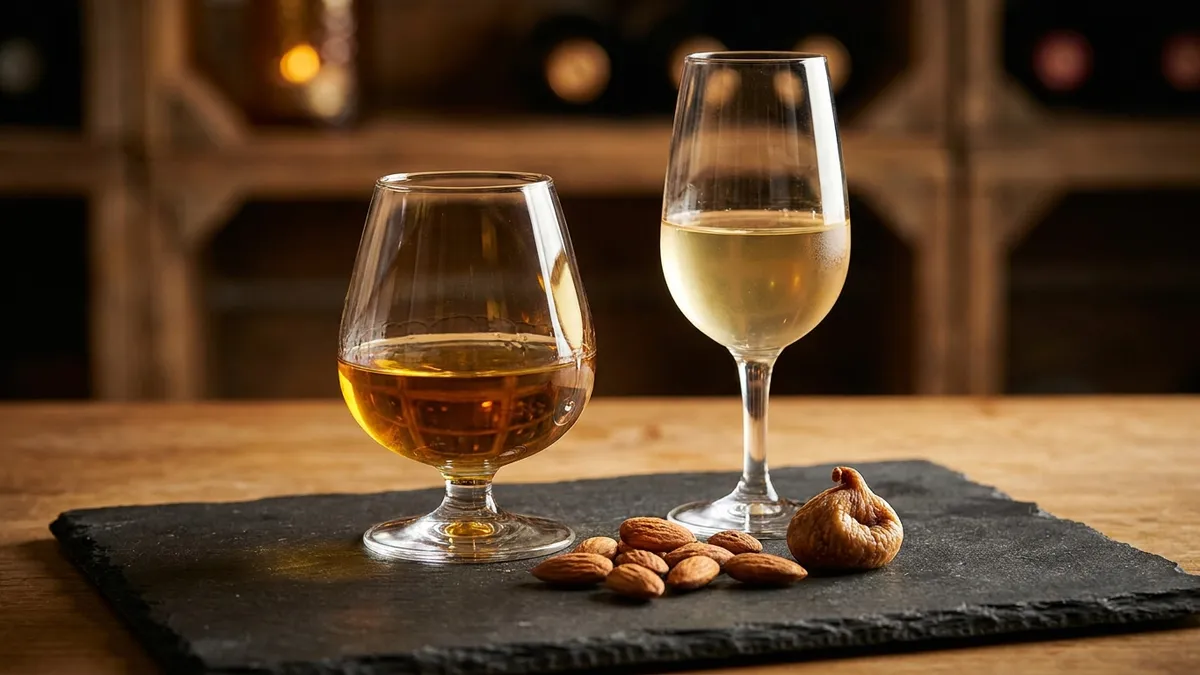
- Grape: Vin Jaune is made only from Savagnin · Fino Sherry is made from Palomino
- Fortification: Vin Jaune is unfortified, finishing around 13 to 15 percent natural alcohol · Fino is fortified with grape spirit to roughly 15 percent
- Aging system: Vin Jaune ages in a single sealed barrel for a fixed minimum of six years · Fino moves through a solera, a fractional blending system where younger and older wines mix across many barrels
- Flor behavior: Vin Jaune's veil works at full strength · Fino's flor is kept alive by periodic refreshment of the solera
- Flavor: Both share walnut, almond, and saline notes · Vin Jaune adds curry and dried apple, while Fino leans toward bruised apple, chamomile, and a sharper saltiness
- Sweetness: Both are bone-dry
For a deeper look at how the solera and flor work in the Spanish tradition, the Sherry wine guide covers fino, manzanilla, and the oxidative styles in detail. Reading the two side by side is one of the best ways to understand flor yeast as a winemaking tool rather than a regional quirk.
The Jura: Savagnin's Home Region
The Jura is one of France's smallest and least-known wine regions, which is part of why Savagnin stays under the radar. It sits east of Burgundy in a cool, hilly corner of the country, and its limestone and clay soils suit the grape's love of acidity.
Key Appellations
- Chateau-Chalon — the most prestigious source of Vin Jaune, an appellation that produces only Vin Jaune and nothing else
- Cotes du Jura — the regional appellation covering Savagnin in both oxidative and ouille styles
- Arbois — the largest Jura appellation, home to Savagnin alongside the region's red grapes
- L'Etoile — a tiny appellation named for its star-shaped fossils, prized for elegant whites
Savagnin grows alongside Chardonnay and the local reds in the Jura, and the region's commitment to indigenous grapes makes it a treasure for curious drinkers. If hunting down forgotten varieties appeals to you, the roundups of indigenous grapes worth trying and the oldest grape varieties both feature Jura specialties. For the wider geography, the French wine regions guide places the Jura on the map relative to its better-known neighbors.
How to Pair Savagnin and Vin Jaune with Food
Oxidative Savagnin is one of the great food wines precisely because its nutty, savory profile mirrors so many cooked and aged flavors. The high acidity also keeps it lively against rich dishes.
Classic Jura Pairings
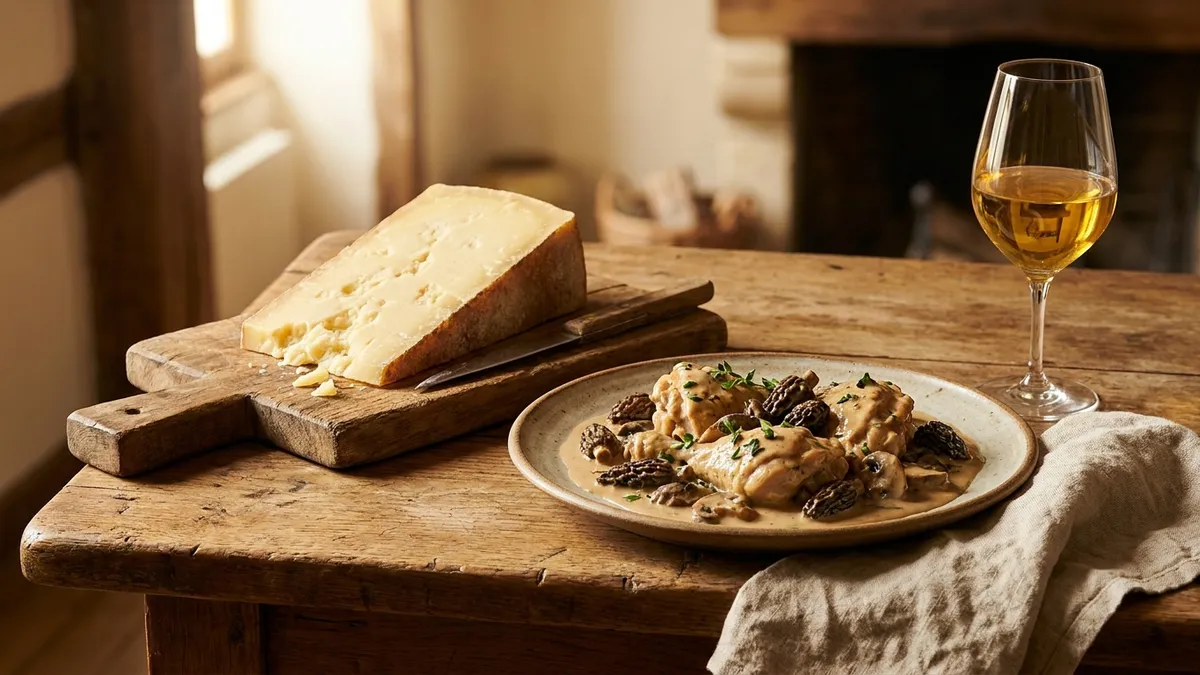
- Aged Comte — the textbook match. This nutty Alpine cheese is made a short drive from the vineyards, and its caramel-walnut depth echoes the wine note for note.
- Poulet au vin jaune — chicken braised in a cream and morel mushroom sauce, often finished with a splash of the wine itself. It is the regional dish, and nothing pairs better.
- Morel mushrooms — earthy, meaty, and umami-rich, morels and oxidative Savagnin amplify each other.
- Roasted nuts — walnuts and almonds bridge straight to the wine's own character.
Beyond the Region
- Curry and mild spice — the wine's natural curry note makes it a rare match for lightly spiced dishes that defeat most whites
- Rich poultry and game birds — roast capon, guinea fowl, and pheasant suit the wine's body and savory length
- Hard, aged cheeses — Parmesan, aged Gouda, and Gruyere all find a partner in the wine's nuttiness
Pairing the Fresh Style
The leaner ouille Savagnin behaves like a high-acid Alpine white. It shines with seafood, trout, fresh goat cheese, and dishes where you want the acidity to cut rather than the nuttiness to echo. For the underlying logic of why acidity cuts fat and salt, the lesson on how to taste wine walks through building those instincts step by step.
Where Savagnin Fits Among White Grapes
Savagnin is not a noble grape in the global sense, but it earns its place in any serious tasting education because it does something almost no other white can. Its closest aromatic relative, Gewurztraminer, goes the perfumed, lychee-and-rose route, as the Gewurztraminer wine guide explains. Savagnin takes the same Traminer lineage and turns it savory and saline instead.
Set against the broader field of white varieties, Savagnin is the specialist's specialist: low yields, a tiny home region, and a flavor profile that rewards patience over crowd appeal. The overview of white grapes places it in context with the more familiar names, and the look at the noble grapes shows why a variety can matter enormously without ever joining that famous six.
Serving Savagnin and Vin Jaune
Temperature
Serve oxidative Savagnin and Vin Jaune cool but not cold, around 14 to 16°C (57 to 61°F). Too cold and the nutty aromatics shut down. Fresh ouille Savagnin can go cooler, around 10 to 12°C (50 to 54°F), to keep its citrus snap bright.
Decanting and Opening
Vin Jaune is famously robust once opened. Because it has already spent six years in contact with air, an open bottle can hold its character for a week or more in the fridge, sometimes longer. There is no need to rush it. A wide glass helps the savory aromas expand.
Aging Potential
- Vin Jaune — released at six-plus years, then ages fifty years or more in the clavelin, often improving for decades
- Oxidative Cotes du Jura Savagnin — typically drinks well for ten to twenty years
- Ouille Savagnin — built for earlier enjoyment, usually within five to ten years
Building Your Savagnin Tasting Skills
Savagnin is a perfect grape for training your palate on the effect of oxidation, the same way Tempranillo teaches oak and Riesling teaches sweetness. The clearest exercise is to taste a fresh ouille bottling next to an oxidative one and name the differences out loud: the citrus that becomes walnut, the green apple that becomes dried apple, the stony finish that becomes saline umami.
Pay attention to the curry note in the oxidative wine. Once you can identify it, you will recognize the signature of flor-aged wines everywhere, from Vin Jaune to fino Sherry. That kind of cross-wine pattern recognition is exactly what turns a casual drinker into a confident taster.
The Sommy app includes guided tasting exercises that walk you through naming aromas like these one glass at a time, building the vocabulary that makes a wine like Vin Jaune feel less mysterious and more like an old friend. Savagnin rewards the curious, and learning to read its veil-aged depth is one of the most satisfying skills a wine lover can pick up.
Sources
- Comite Interprofessionnel des Vins du Jura — Vin Jaune
- Jancis Robinson, Wine Grapes — Savagnin
- WSET — Understanding the Wines of the Jura
Frequently Asked Questions
What does Savagnin wine taste like?
Oxidative Savagnin, the style used for Vin Jaune, tastes of walnut, dried apple, bruised pear, curry spice, and saline umami, with an intense nutty depth. The fresher topped-up ouille style is leaner and citrusy with green apple and a stony minerality. Both are bone-dry and high in acidity.
What is Vin Jaune and how is it made?
Vin Jaune is a dry white wine from the Jura in eastern France, made entirely from Savagnin. The barrel is deliberately left unfilled, so a film of flor yeast called the voile forms on the surface. The wine ages under this veil for at least six years and three months before bottling.
Why is Vin Jaune sold in a 620ml clavelin bottle?
The clavelin is a squat 620ml bottle unique to Vin Jaune. The volume reflects how much wine remains from one original liter after more than six years of evaporation under the flor veil. The roughly 38 percent lost is known poetically as the part the angels take.
Is Savagnin the same as Sauvignon Blanc?
No. Despite the similar spelling, Savagnin and Sauvignon Blanc are different grapes. Savagnin is a relative of Gewurztraminer and Traminer, grown mainly in the Jura. Sauvignon Blanc is an unrelated variety from the Loire and Bordeaux known for crisp citrus and herbaceous notes.
How is Vin Jaune different from Sherry?
Both age under a film of flor yeast, giving nutty, saline character. But Vin Jaune is unfortified, made only from Savagnin, and uses no solera blending system. Fino Sherry is fortified to about 15 percent alcohol, made from Palomino, and blended through a fractional solera over many years.
What food pairs well with Savagnin and Vin Jaune?
Aged Comte cheese is the classic partner, echoing the wine's nutty depth. Chicken in a cream and morel mushroom sauce, known as poulet au vin jaune, is the regional dish. Curry, roasted nuts, and rich poultry all suit the oxidative style. Fresh ouille Savagnin pairs with seafood.
How long does Savagnin and Vin Jaune age?
Vin Jaune is famous for longevity. It spends at least six years in barrel before release and can then age for fifty years or more in the clavelin bottle, often improving for decades. Fresh ouille Savagnin is built for earlier drinking, usually within its first five to ten years.
Sommy Team
LinkedInFounder & Wine Educator
The Sommy Team is building the world's most approachable wine education app, helping beginners develop real tasting skills through structured courses and AI-guided practice.