White Wine Grapes: 20 Varieties to Know, Grouped by Style

By the Sommy Team — AI-assisted, human-edited.
Updated Sep 10, 2026
Contents (12)
- What This White Wine Grapes Guide Covers, in 80 Words
- What Are 10 Common White Wine Grape Names?
- Are White Grapes the Same as White Wine Grapes?
- How to Read a White Wine Grape
- Crisp, Light White Grapes
- Aromatic White Grapes
- What Are the Sweetest-Smelling White Wine Grapes?
- Full-Bodied and Textured White Grapes
- Off-Dry and Sweet-Capable White Grapes
- Types of White Wine Grapes at a Glance
- How to Build Your White Wine Palate
- Where White Grapes Sit in the Bigger Picture
TL;DR
White wine grapes are the varieties pressed off their skins to make white wine. The five main ones are Chardonnay, Sauvignon Blanc, Riesling, Pinot Grigio, and Chenin Blanc. This guide groups 20 varieties into four styles (crisp, aromatic, full-bodied, off-dry) and names the sweetest-smelling white grapes: Muscat, Gewürztraminer, and Torrontés.
What This White Wine Grapes Guide Covers, in 80 Words
This white wine grapes guide maps 20 varieties into four practical groups: crisp and light (Pinot Grigio, Albariño, Assyrtiko, Verdejo, Vermentino, Trebbiano), aromatic (Sauvignon Blanc, Gewürztraminer, Muscat, Torrontés, Grüner Veltliner), full-bodied and textured (Chardonnay, Viognier, Marsanne, Roussanne, Godello, Garganega), and off-dry or sweet-capable (Riesling, Chenin Blanc, Sémillon). For each grape you get a flavor signature and a home region, plus a 10-name starter list, the sweetest-smelling white grapes, and a comparison table. Learn these 20 and you can read almost any white wine list with confidence.
What Are 10 Common White Wine Grape Names?
The ten white wine grape names to learn first are Chardonnay, Sauvignon Blanc, Riesling, Pinot Grigio, Chenin Blanc, Gewürztraminer, Viognier, Albariño, Grüner Veltliner, and Muscat. Together they cover every white wine style, from crisp and neutral to rich and oaked to intensely floral, and they appear on more wine lists than the other 10 in this guide combined.
Each comes with a home region and a one-line flavor note:
- Chardonnay — Burgundy, France. Apple and citrus when unoaked; butter, toast, and baked apple when oaked.
- Sauvignon Blanc — Loire Valley, France, and Marlborough, New Zealand. Grapefruit, gooseberry, and cut grass on high acidity.
- Riesling — Mosel, Germany. Lime, peach, and a petrol note with age, made at every sweetness level.
- Pinot Grigio / Pinot Gris — Veneto, Italy, and Alsace, France. Pear and lemon in the light Italian style; peach and honey in the richer French one.
- Chenin Blanc — Loire Valley, France, and South Africa. Quince, apple, and chamomile, from bone-dry to dessert-sweet.
- Gewürztraminer — Alsace, France. Lychee, rose petal, and ginger with full body and low acidity.
- Viognier — Condrieu, Rhône Valley, France. Apricot and honeysuckle with a rich, oily texture.
- Albariño — Rías Baixas, Spain. Lime, white peach, and a saline sea-spray finish.
- Grüner Veltliner — Wachau, Austria. Green apple, citrus, and white pepper.
- Muscat — Asti, Italy, and southern France. The one grape whose wine smells of fresh grapes and orange blossom.
Are White Grapes the Same as White Wine Grapes?
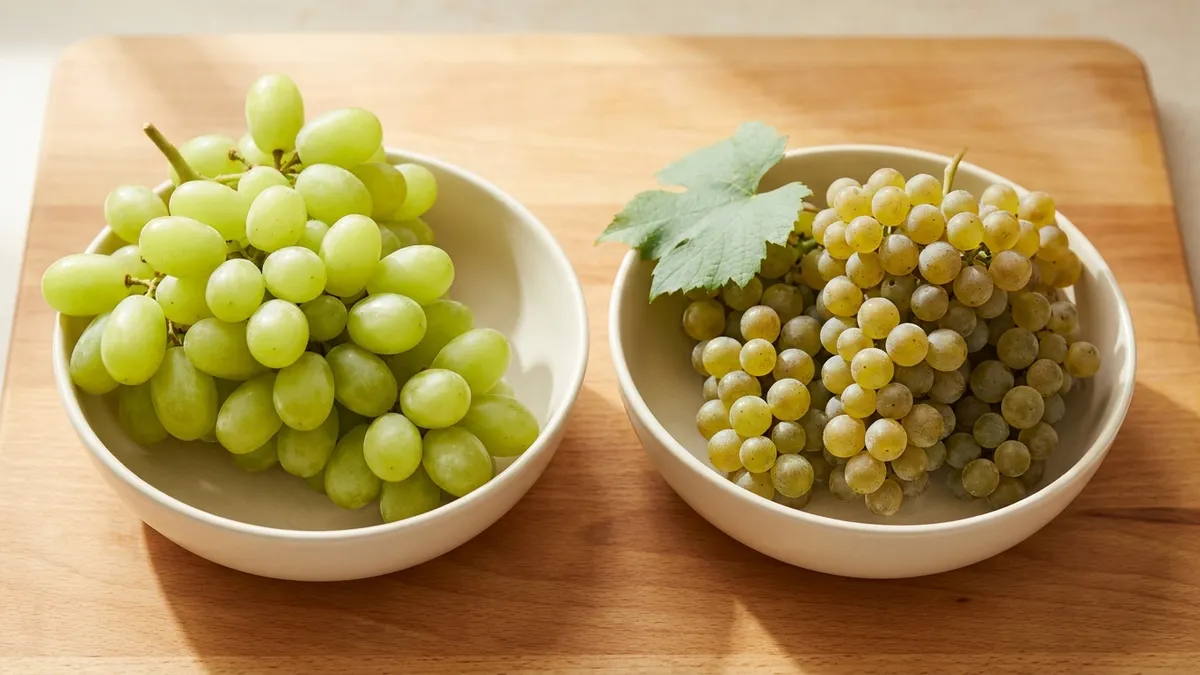
Not quite. "White grapes" is the wine world's word for any pale-skinned grape, green, yellow, or grayish-pink, so green grapes and white grapes mean the same thing. But the green grapes in a supermarket are table grapes, bred for eating fresh, while white wine grapes are smaller, sweeter, more acidic varieties bred to be pressed and fermented.
The differences show up in the berry. Table grapes are large, crunchy, thin-skinned, and usually seedless; wine grapes are small and dense, with thick aromatic skins, seeds, more sugar at harvest (typically 22 to 26 Brix, against 15 to 18 for a table grape), and enough acidity to keep the finished wine fresh.
According to the OIV's Statistical Brief on 2024, the world's vineyards cover about 7.1 million hectares and produced 77.7 million tonnes of fresh grapes that year, spread across wine, table, and dried-grape use. Of that, about 33 million tonnes (47%) were pressed for wine, must, and juice, almost exactly the same amount as went to the table, with 7% dried. For the full head-to-head, see table grapes vs wine grapes.
How to Read a White Wine Grape
Before the 20 varieties, three measurements explain almost everything about how a white wine tastes. Getting comfortable with them turns a long list of grape names into a usable map. They are the same three things the WSET Systematic Approach to Tasting, the note-taking method taught in Wine & Spirit Education Trust courses, asks you to rate in every glass. For the full mechanics, see how tannins, acidity, and body shape any wine.
- Acidity — the mouth-watering, tart sensation that makes a wine feel fresh and crisp. High-acid whites (Albariño, Riesling) feel zippy and lively; lower-acid whites (oaked Chardonnay, Viognier) feel rounder and softer.
- Body — the weight and texture of the wine in your mouth, from light and watery to rich and creamy. Body comes from alcohol, ripeness, oak, and lees aging.
- Aromatics — how loudly the wine smells. Aromatic grapes (Gewürztraminer, Muscat) announce themselves with floral and spicy perfume; neutral grapes (Pinot Grigio, Trebbiano) are quieter and let winemaking and place speak instead.
One more distinction worth bolding: off-dry means a wine has a noticeable touch of sweetness, while dry means the sugar has fermented away. A grape like Riesling can be made bone-dry or lusciously sweet, so the grape name alone never tells you the sweetness level — the region and label do.
A reassuring number before the list: according to the OIV's Focus 2017 report on grapevine distribution, the world has around 10,000 known grapevine varieties, yet just 13 of them cover more than one-third of the world's vineyard area, and 33 cover half. Learning 20 white grapes is not a drop in the ocean. It is most of the white wine you will ever be poured.
Crisp, Light White Grapes
These are the refreshers — high in acidity, light to medium in body, and built for warm afternoons, seafood, and salads. They reward serving cold and drinking young.
Pinot Grigio / Pinot Gris
The same grape, two personalities. As Pinot Grigio in northern Italy, it makes light, crisp, neutral wine with green apple, pear, and lemon — easy and clean. As Pinot Gris in Alsace, France, it turns richer and rounder, with ripe peach, honey, and a touch of spice. The grape has grayish-pink skins despite making white wine. Home regions: Veneto and Trentino (Italy), Alsace (France), Oregon (USA). The two names are untangled in Pinot Grigio vs Pinot Gris.
Albariño
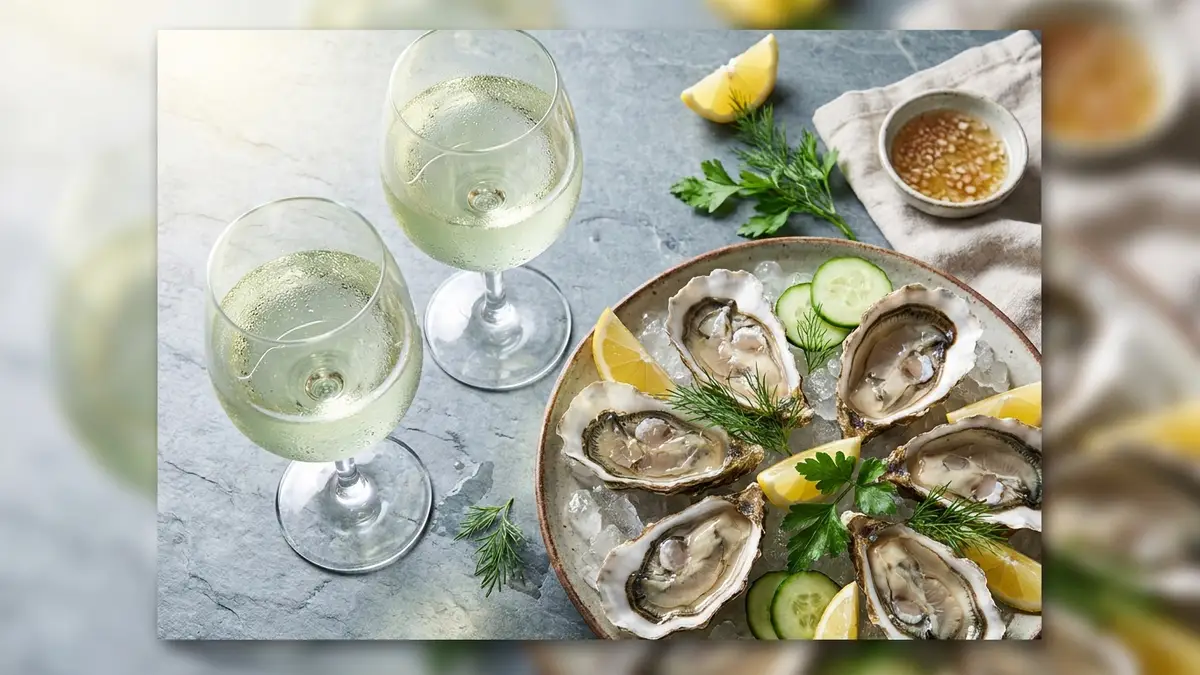
Spain's brightest coastal white. Albariño delivers zesty lime, white peach, grapefruit, and a saline, almost sea-spray quality, all carried on high acidity. It is the perfect shellfish wine. Home region: Rías Baixas in green, rainy Galicia, north-west Spain. For a deeper look, see the Albariño wine guide.
Assyrtiko
The volcanic powerhouse of Greece. Assyrtiko grows in the ash-rich soils of Santorini and produces searingly high-acid, mineral, citrus-and-saline wines with surprising body and real aging potential. It is one of the few crisp whites that can cellar for a decade. Home region: Santorini and wider Greece. The Assyrtiko wine guide explains the island's basket-trained vines.
Verdejo
Spain's herbal, nutty white from the high plateau of Castile. Verdejo shows green apple, fennel, citrus pith, and a distinctive bitter-almond twist on the finish, with bracing acidity. Home region: Rueda, central Spain.
Vermentino
The Mediterranean coastal grape with a salty, herbal edge. Vermentino tastes of citrus, green apple, crushed herbs, and a faint bitterness like grapefruit pith, finishing with a sea-breeze salinity. Home regions: Sardinia and Liguria (Italy), Corsica (France), and increasingly southern France.
Trebbiano
The workhorse. Trebbiano (called Ugni Blanc in France) is one of the world's most planted white grapes: 111,000 hectares in 2015, according to the OIV. It is neutral, high in acid, and light-bodied. On its own it makes simple, lemony everyday wine; in France it is grown mainly to be distilled into Cognac and Armagnac. Home regions: central Italy and south-west France.
Aromatic White Grapes
Aromatic grapes are the show-offs. Their perfume jumps out of the glass — flowers, spice, tropical fruit — and they are some of the most fun whites to learn because their scent is so recognizable. To understand why some grapes smell loud and others stay quiet, see the difference between aromatic and neutral grapes.
Sauvignon Blanc
The zesty, unmistakable one. Sauvignon Blanc combines high acidity with pronounced grapefruit, lime, gooseberry, and a green, herbaceous streak of cut grass, bell pepper, or passion fruit depending on climate. Home regions: Loire Valley (Sancerre, Pouilly-Fumé) in France for a flinty style, and Marlborough in New Zealand for an exuberant tropical style. The Sauvignon Blanc wine guide goes region by region.
Gewürztraminer
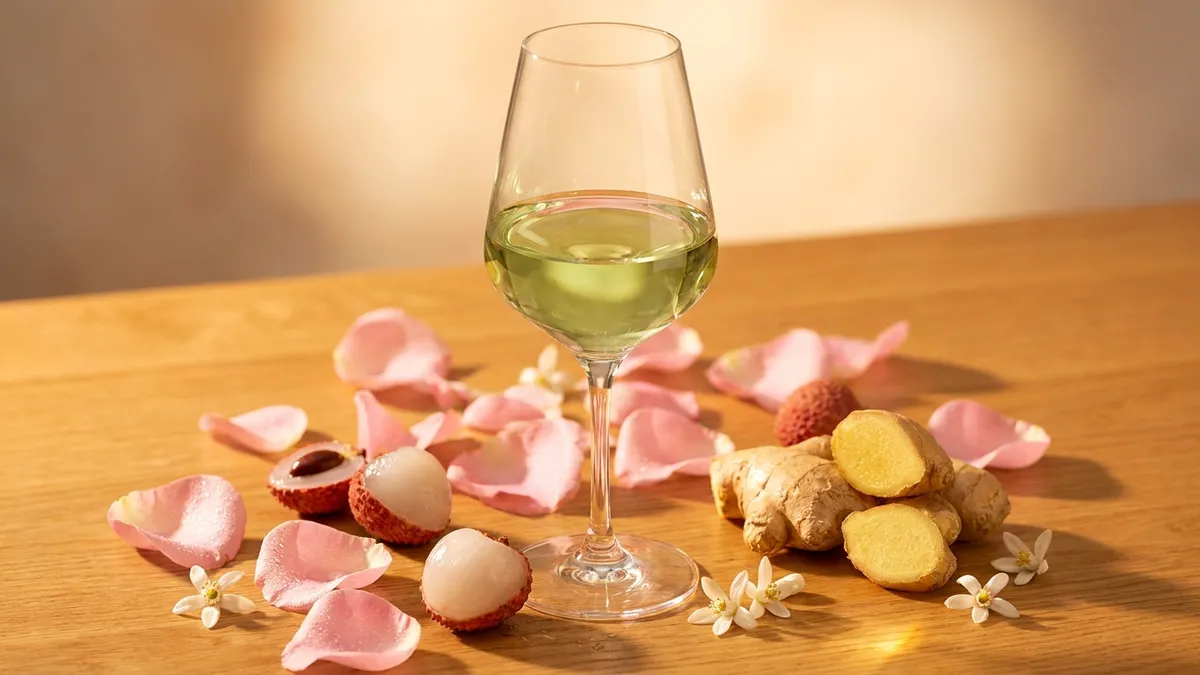
The most flamboyant white in the glass. Gewürztraminer (the name means "spiced Traminer") explodes with lychee, rose petal, ginger, and Turkish-delight perfume. Its body is full and its acidity low, so it often reads off-dry even when made fully dry. Home region: Alsace, France. See the Gewürztraminer wine guide for serving and pairing.
Muscat
The grape that smells like grapes. Muscat is one of the few varieties whose wine actually tastes of fresh table grapes, alongside orange blossom and honeysuckle. It spans bone-dry whites, lightly fizzy Moscato d'Asti, and rich fortified dessert wines. Home regions: widespread — Italy (Asti), France (the south and Alsace), Greece, and Australia. The Muscat wine guide sorts out the family's many names.
Torrontés
Argentina's signature white and a tasting-class trickster. Torrontés smells intensely floral and sweet — rose, jasmine, peach, orange blossom — yet tastes crisp and dry on the palate. Home region: Salta and the high-altitude north of Argentina. There is a full Torrontés wine guide for its regional styles.
Grüner Veltliner
Austria's flagship white, somewhere between crisp and aromatic. Grüner Veltliner offers green apple, citrus, and white pepper with a distinctive savory, sometimes vegetal note often described as "peppery." It ranges from light and zippy to rich and age-worthy. Home region: Austria, especially the Wachau, Kremstal, and Kamptal along the Danube.
What Are the Sweetest-Smelling White Wine Grapes?
The sweetest-smelling white wine grapes are Muscat, Gewürztraminer, Torrontés, and Viognier, with Riesling close behind. Muscat smells of fresh grapes and orange blossom, Gewürztraminer of lychee and rose, Torrontés of jasmine and peach, and Viognier of apricot and honeysuckle. All four can be fermented completely dry, so a sweet smell never guarantees a sweet taste.
What makes these grapes smell sweet is chemistry, not sugar. Their skins are rich in terpenes, the same family of aroma compounds that gives rose petals, citrus peel, and orange blossom their scent, while sweetness on the tongue comes from residual sugar, the grape sugar left over after fermentation stops. Muscat is the extreme case, which is why its wines smell of the fruit itself; Gewürztraminer, Torrontés, and Viognier carry the same compounds in floral and stone-fruit form. Neutral grapes such as Pinot Grigio and Trebbiano have far less of them, which is why they smell quiet.
Two quick checks in the glass:
- Read the region and the label. Moscato d'Asti is always lightly sweet. Dry Torrontés from Argentina and dry Gewürztraminer from Alsace are the norm. Alsace bottles labelled Vendanges Tardives or Sélection de Grains Nobles are sweet.
- Compare against a known dry wine. Taste the perfumed grape right after a Sauvignon Blanc. If the acidity feels similar, the sweetness you thought you tasted was aroma.
The sweet vs dry wine explainer goes deeper on how residual sugar is measured.
Full-Bodied and Textured White Grapes
These are the rich whites — fuller in body, often touched by oak or extended lees contact, and built to pair with substantial food. They feel weighty and round rather than crisp and light.
Chardonnay
The chameleon and the most international fine-wine white on earth. According to the OIV's Focus 2017 report, Chardonnay covered 210,000 hectares across 41 countries in 2015. It has no single flavor — it mirrors where it grows and how it is made. Unoaked, it is lean and citrusy (Chablis); oaked, it turns buttery and toasty with vanilla and baked apple (much of California and Burgundy's Côte d'Or). Home regions: Burgundy and Champagne (France), California (USA), and across the wine world. The Chardonnay wine guide covers the oaked-to-unoaked spectrum in full.
Viognier
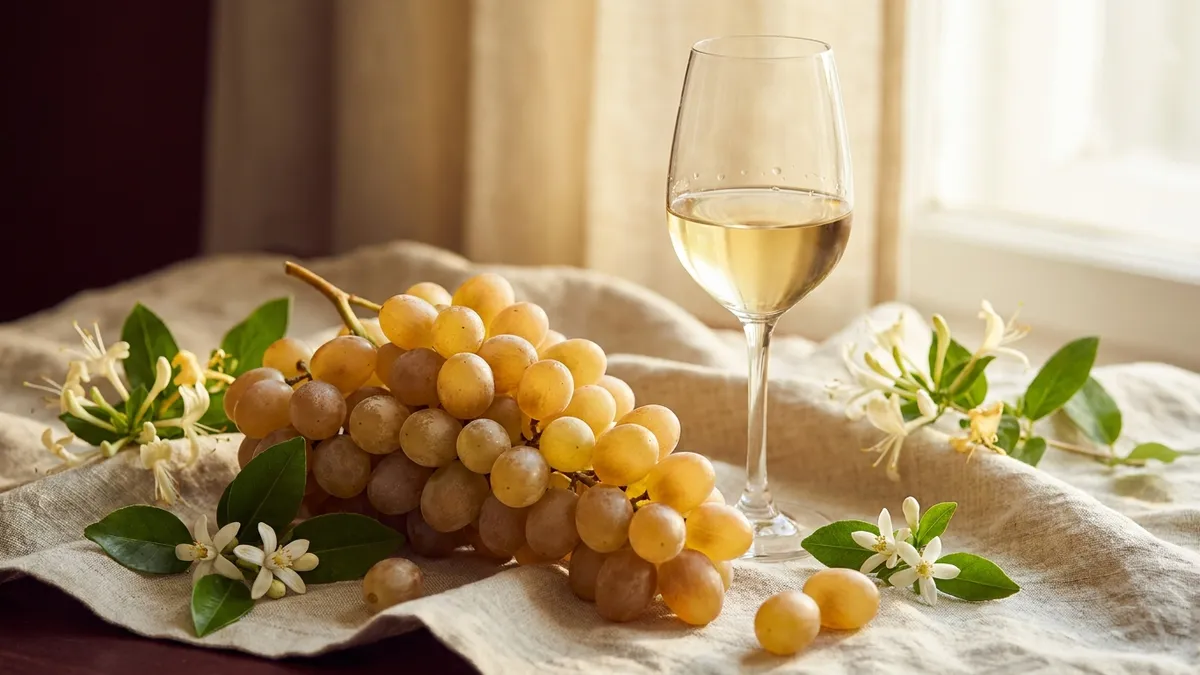
The lush, perfumed full-bodied white. Viognier combines a heady aroma of apricot, peach, and honeysuckle with a rich, oily, low-acid texture. Home region: Condrieu in the northern Rhône, France, with strong plantings now in California and Australia. The Viognier wine guide covers its quirks.
Marsanne
The weighty backbone of white Rhône blends. Marsanne gives almond, marzipan, pear, and honeysuckle with a full body and waxy texture, gaining honeyed depth with age. It is often blended with Roussanne for balance. Home region: northern Rhône (Hermitage, Crozes-Hermitage), France.
Roussanne
Marsanne's more elegant, aromatic partner. Roussanne brings floral, herbal-tea, and pear aromatics with slightly higher acidity and finesse, lifting the richness of a Rhône white blend. Home region: northern and southern Rhône, France, plus California and Australia.
Godello
Spain's elegant, mineral full-bodied white, rediscovered in recent decades. Godello balances ripe orchard fruit and a creamy texture with stony minerality and good acidity, often compared to fine white Burgundy. Home region: Valdeorras and Bierzo in north-west Spain. There is a dedicated Godello wine guide for more.
Garganega
The grape behind Soave. Garganega produces medium to full-bodied wines with white peach, almond, citrus, and a gentle bitter-almond finish, capable of real complexity from old vines and volcanic soils. Home region: Veneto, Italy.
Off-Dry and Sweet-Capable White Grapes
Some white grapes are defined by their range of sweetness. The same variety can be bone-dry, gently off-dry, or a luscious dessert wine, all thanks to one shared trait: high acidity that keeps even sweet versions balanced and fresh.
Riesling
The high-acid royalty of white wine. Riesling delivers lime, green apple, peach, and a petrol note with age, all held by piercing acidity that keeps it food-friendly and long-lived. It spans every sweetness level, from bone-dry Trocken (German for dry) to intensely sweet Trockenbeerenauslese (the highest German sweet classification). Home regions: Germany (Mosel, Rheingau), Alsace, Austria, and Australia's Clare Valley. The Riesling wine guide breaks down the sweetness labels.
Chenin Blanc
The most versatile white grape in the world. Chenin Blanc can be bone-dry, off-dry, sparkling, or a honeyed dessert wine — and it does all of them well, thanks to naturally high acidity and flavors of quince, apple, chamomile, and wet wool. Home regions: the Loire Valley (Vouvray, Savennières) in France and South Africa, where it is the most planted grape. The Chenin Blanc wine guide walks through every style.
Sémillon
The quiet grape that becomes great with age and noble rot (a beneficial fungus that shrivels grapes and concentrates their sugar). Sémillon is low in acid and waxy in texture, with lemon, fig, and lanolin notes. Blended with Sauvignon Blanc it makes dry white Bordeaux; touched by noble rot, it makes the legendary sweet wines of Sauternes. Home regions: Bordeaux (France) and the Hunter Valley (Australia), where dry Sémillon ages for decades.
Types of White Wine Grapes at a Glance
This table compares ten of the most useful white wine grapes across body, aromatics, signature flavor, and classic region. Use it as a quick reference next time you are facing a wine list.
| Grape | Style group | Body | Aromatics | Signature flavors | Classic region |
|---|---|---|---|---|---|
| Chardonnay | Full-bodied | Medium to full | Low to medium | Apple, butter, citrus | Burgundy, France |
| Sauvignon Blanc | Aromatic | Light to medium | High | Grapefruit, cut grass | Loire, France |
| Riesling | Off-dry capable | Light | High | Lime, peach, petrol | Mosel, Germany |
| Pinot Grigio / Gris | Crisp | Light to medium | Low to medium | Pear, apple, honey | Veneto, Italy / Alsace, France |
| Chenin Blanc | Off-dry capable | Light to medium | Medium | Quince, chamomile | Loire, France |
| Gewürztraminer | Aromatic | Full | Very high | Lychee, rose, ginger | Alsace, France |
| Viognier | Full-bodied | Full | High | Apricot, honeysuckle | Condrieu, France |
| Albariño | Crisp | Light to medium | Medium | Lime, peach, saline | Rías Baixas, Spain |
| Grüner Veltliner | Aromatic | Medium | Medium | Green apple, white pepper | Wachau, Austria |
| Assyrtiko | Crisp | Medium to full | Medium | Citrus, mineral, salt | Santorini, Greece |
How to Build Your White Wine Palate
Tasting is the only way to make these names stick. The most effective method is comparison — pour two contrasting grapes side by side and let the differences teach you. It helps to taste wine systematically, and the how to taste white wine walkthrough adapts that method to whites specifically.
A four-step practice plan:
- Crisp vs rich. Pour an Albariño or Pinot Grigio next to an oaked Chardonnay. Notice how acidity and body diverge — one zings, the other coats.
- Aromatic vs neutral. Set a Gewürztraminer or Torrontés beside a Pinot Grigio. The difference in how loudly each smells is the clearest lesson in aromatics you can give yourself.
- One grape, many sweetness levels. Try a dry Riesling next to an off-dry one. Same grape, and yet the residual sugar transforms the wine while the acidity holds it together.
- One grape, two regions. A Loire Sauvignon Blanc next to a New Zealand one shows how place reshapes a single variety — flinty restraint versus tropical exuberance.
Keep short notes each time; over a handful of sessions they become a personal reference for what each grape tastes like to you, which is how professionals calibrate their palates.
Where White Grapes Sit in the Bigger Picture
The 20 grapes here are the practical core of white wine, but they are part of a larger story. Three of them — Chardonnay, Sauvignon Blanc, and Riesling — sit among the noble grapes that anchor wine education worldwide. Others rank high by sheer volume: Spain's Airén covered 218,000 hectares and 22% of Spanish vineyards in 2015 according to the OIV, which puts it alongside Trebbiano among the most planted grapes in the world.
White wine is only half the picture, of course. When you are ready to map the reds, the companion guide to black wine grapes covers the dark-skinned varieties with the same style-first approach. And if dessert wine pulls you in, the great sweet whites lead naturally toward fortified specialties like Pedro Ximénez.
The fastest way to make the framework real is to taste a crisp grape, an aromatic one, and a full-bodied one in the same sitting and put words to what changes; that is the difference between memorizing a list and reading a wine list. Guided tastings in Sommy walk you through aroma, acidity, body, and sweetness for each glass you log and keep every grape in a journal, so after a few sessions the 20 names in this guide turn into 20 flavors you recognize.
Sources
- Focus OIV 2017: Distribution of the World's Grapevine Varieties — International Organisation of Vine and Wine (OIV), 2017
- OIV Statistical Brief: Wine, Table Grapes and Dried Grapes in 2024 — International Organisation of Vine and Wine (OIV), 2025
- WSET Level 2 Award in Wines: Looking Behind the Label — Wine & Spirit Education Trust, 2023
Frequently Asked Questions
What are the 5 main white wine grapes?
Chardonnay, Sauvignon Blanc, Riesling, Pinot Grigio (Pinot Gris), and Chenin Blanc are the five white wine grapes most worth learning first. Between them they cover the whole category: rich and oaked (Chardonnay), zesty and herbal (Sauvignon Blanc), high-acid across every sweetness level (Riesling), light and neutral (Pinot Grigio), and endlessly versatile (Chenin Blanc).
What is the most widely planted white wine grape in the world?
By vineyard area, Spain's Airén leads the white wine grapes at 218,000 hectares, followed closely by Chardonnay at 210,000 hectares, according to OIV's 2017 report on grapevine distribution. Airén is planted almost only in Spain and a large share of it has traditionally been distilled into brandy, so Chardonnay, grown in 41 countries, is the most widely planted white grape you will actually meet in a glass.
What is the sweetest-smelling white grape variety?
Muscat is the sweetest-smelling white grape: its wines smell of fresh grapes, orange blossom, and honeysuckle. Gewürztraminer (lychee and rose), Torrontés (jasmine and peach), and Viognier (apricot and honeysuckle) are close behind. Smelling sweet is not the same as tasting sweet, though. All four can be fermented fully dry while keeping that perfume.
Is Gewürztraminer sweet or dry?
Gewürztraminer is made in both styles, and most bottles are dry or just off-dry. Its heady lychee-and-rose perfume, full body, and soft acidity make even a dry version read as slightly sweet. Late-harvest Alsace versions, labelled Vendanges Tardives or Sélection de Grains Nobles, are genuinely sweet dessert wines.
What grape is used for dry white wine?
Almost any white grape can make dry white wine, because dryness comes from fermenting the sugar away, not from the grape. The classic dry white grapes are Sauvignon Blanc, Chardonnay, Pinot Grigio, Albariño, Assyrtiko, Verdejo, Vermentino, and Grüner Veltliner. Riesling and Chenin Blanc are also often dry, but check the label, since both are made sweet too.
Is Chardonnay a white or red grape?
Chardonnay is a white grape with green-gold skins, and it makes white wine, from lean, unoaked Chablis to rich, buttery oaked styles. It is also a key grape in Champagne, where it is pressed gently and fermented without skin contact. A Champagne labelled Blanc de Blancs is usually made entirely from Chardonnay.
What grape makes Pinot Grigio?
Pinot Grigio is made from the Pinot Gris grape; the two names refer to the same variety. Pinot Grigio is the Italian name and usually signals a light, crisp, neutral style from northern Italy. Pinot Gris is the French name and typically means a richer, rounder, spicier wine, especially from Alsace. The grape has grayish-pink skins yet makes white wine.
What is the difference between white grapes and green grapes?
There is no difference: green grapes and white grapes are the same fruit, and wine people simply say white for any pale-skinned variety, whether the skin looks green, yellow, or pinkish-gray like Pinot Gris. The distinction that actually matters is table grapes versus wine grapes. Supermarket green grapes are bred for eating; white wine grapes are smaller, sweeter, and higher in acid, and are bred to be fermented.
Sommy Team
LinkedInFounder & Wine Educator
The Sommy Team is building the world's most approachable wine education app, helping beginners develop real tasting skills through structured courses and AI-guided practice.