Sauvignon Blanc: The Complete Guide to the World's Most Crisp White

By the Sommy Team — AI-assisted, human-edited.
Updated Apr 29, 2026
Contents (12)
- A Sauvignon Blanc Guide for People Who Want to Actually Get It
- What Is Sauvignon Blanc, in 100 Words
- A Brief History of the Grape
- Sauvignon Blanc Tasting Profile
- Sauvignon Blanc Structure
- Where Sauvignon Blanc Grows: The Five Regional Styles
- Pyrazines and Thiols: The Chemistry of the Aroma
- Oaked vs Unoaked Sauvignon Blanc
- How to Pair Sauvignon Blanc with Food
- When to Drink — Aging Sauvignon Blanc
- Sauvignon Blanc vs Other White Grapes
- Building Your Sauvignon Blanc Palate
TL;DR
Sauvignon Blanc is a high-acid aromatic white grape with a signature profile of cut grass, green pepper, grapefruit, passionfruit, and flinty mineral notes. Styles range from laser-cool Loire Sancerre and explosive New Zealand Marlborough to oaked Bordeaux Blanc blends. At twelve to thirteen percent alcohol, drink most bottles young — within three years.
A Sauvignon Blanc Guide for People Who Want to Actually Get It
If white wine had a defining personality test, Sauvignon Blanc would be the answer for everyone who likes their drinks crisp, electric, and unmistakable. This is the grape that smells like a freshly cut lawn, tastes like a squeeze of grapefruit, and finishes with the tang of a lime peel. You either love it on the first sip or you spend a decade pretending it is too aromatic for you, then quietly come back.
This sauvignon blanc guide walks through what the grape actually is, why two glasses from two countries can taste like different wines, and how to pair it with food without overthinking it. By the end, you will know exactly what you are reaching for when the menu says "Sauv Blanc" and exactly why some bottles cost ten dollars and others cost ninety.
What Is Sauvignon Blanc, in 100 Words
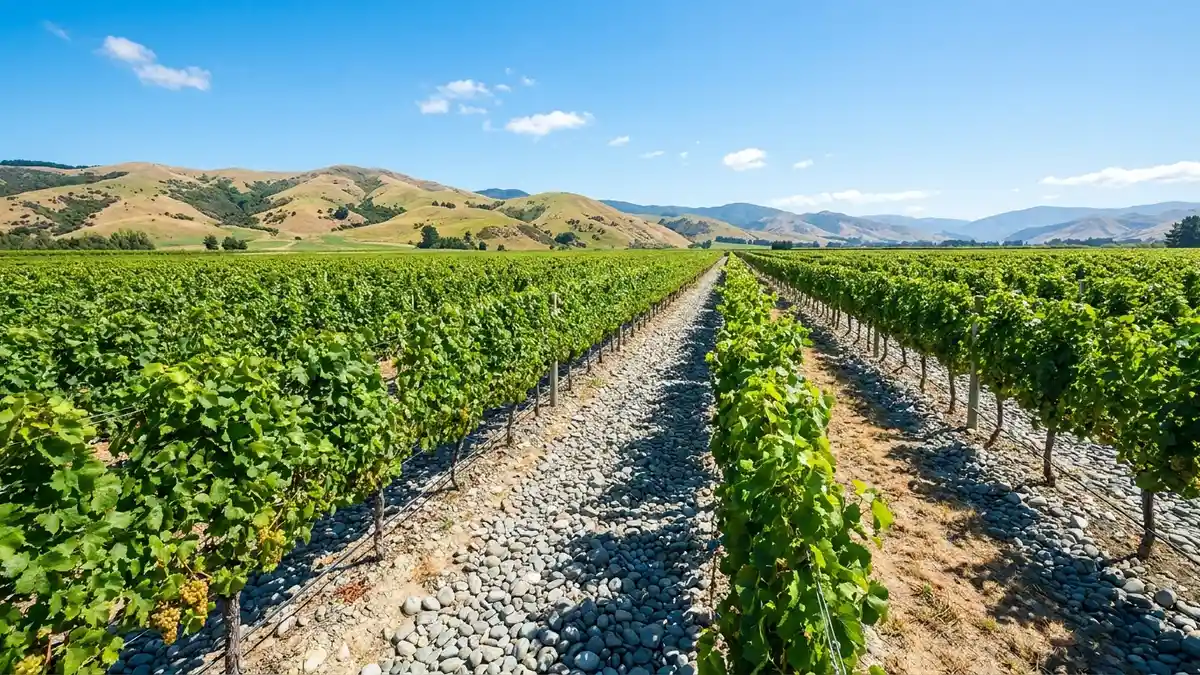
Sauvignon Blanc is a high-acid aromatic white grape with a distinctive profile of cut grass, green pepper, grapefruit, passionfruit, and flinty mineral notes. Style ranges from laser-cool Loire (Sancerre, Pouilly-Fumé — flinty, mineral) to explosive New Zealand Marlborough (passionfruit and grass bomb), Bordeaux Blanc co-blender with Sémillon (often oaked, especially Pessac-Léognan), Chile (lighter, citrus-led), and South Africa Stellenbosch (fresh and structured). Alcohol lands at twelve to thirteen and a half percent. Pyrazine compounds give the grass and pepper signature; thiols deliver the tropical lift. Drink young, one to three years, except for oaked Bordeaux Blanc.
A Brief History of the Grape
Sauvignon Blanc was born in France, almost certainly in the Loire Valley, where it has been cultivated since the sixteenth century at least. The name comes from the French sauvage, meaning "wild" — a nod to how vigorously the vine grows when left alone. By the seventeenth century it had migrated south to Bordeaux, where it became one of the two grapes (alongside Sémillon) behind both dry white Bordeaux and the legendary sweet wines of Sauternes.
The next big chapter came on the other side of the world. In 1973, a New Zealand winemaker planted Sauvignon Blanc in Marlborough's Wairau Valley as an experiment. Within fifteen years, Marlborough Sauvignon Blanc had become a global category of its own — louder, more tropical, more punchy than anything Europe had ever produced from the same grape. The world drinks more of that style today than the original.
In a DNA twist, Sauvignon Blanc is also a parent of Cabernet Sauvignon — a natural cross with Cabernet Franc that happened in seventeenth-century Bordeaux. The two grapes are genetically half-siblings to red Bordeaux's most famous variety.
Sauvignon Blanc Tasting Profile
The classic Sauvignon Blanc note set is one of the most consistent in the wine world. Whether you are drinking a ten-dollar Marlborough bottle or a ninety-dollar Pouilly-Fumé, certain markers show up almost every time.
Citrus: grapefruit, lime, lemon zest, sometimes yuzu.
Green and herbal: cut grass, fresh herbs, green bell pepper, tomato leaf, jalapeño, asparagus.
Tropical (warm-climate versions): passionfruit, gooseberry, guava, mango skin.
Floral: elderflower, white blossom.
Mineral: wet stone, flint, gunsmoke (especially in Pouilly-Fumé and Sancerre).
The herbal and grassy notes come from a family of compounds called pyrazines (also responsible for the green character in Cabernet Sauvignon and Cabernet Franc). The tropical lift comes from thiols, which are released during fermentation when yeast cleaves precursor compounds in the grape. Cool-climate vineyards build more pyrazines; sun-soaked sites build more thiols. Climate is the dial that decides whether your bottle leans grassy or tropical.
For a deeper dive into how aromatic compounds shape what you smell, see the guide to primary, secondary, and tertiary aromas.
Sauvignon Blanc Structure
Body: light to medium. Sauvignon Blanc almost never feels heavy.
Acidity: high to very high. This is the structural backbone of the grape — the reason your mouth waters mid-sip.
Tannins: minimal (white grape).
Alcohol: typically twelve to thirteen and a half percent. Cool sites sit at the lower end.
Sweetness: almost always dry. Less than four grams per liter of residual sugar.
This combination — light body plus high acidity plus low alcohol — is exactly what makes Sauvignon Blanc such a refreshing, food-friendly wine. For more on how these elements interact, see the breakdown of tannins, acidity, and body.
Where Sauvignon Blanc Grows: The Five Regional Styles
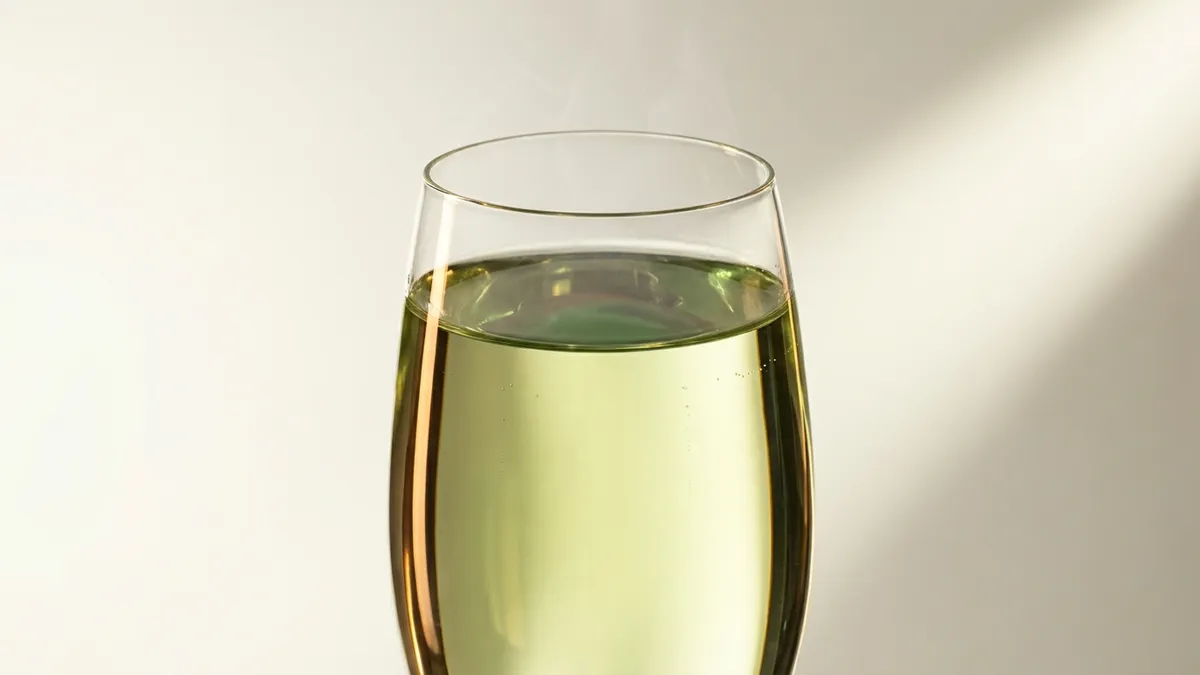
Sauvignon Blanc is planted on every wine-producing continent, but five regions define the styles you will actually meet on a wine list. Each one expresses the grape differently.
Loire Valley, France — The Mineral Original
The Loire Valley's eastern end is Sauvignon Blanc's spiritual home. Two appellations dominate.
Sancerre sits on a chalky-limestone plateau on the left bank of the Loire River. The wines are precise, mineral, and citrus-driven, with subtle herbal notes rather than tropical ones. Acidity is laser-bright. The classic descriptor is "flinty," and that is not just poetry — the soils contribute a savory, smoke-and-stone quality that becomes more pronounced with bottle age.
Pouilly-Fumé sits across the river on flint-rich soils. The "fumé" means smoky, and these wines lean even more toward gunflint, with slightly fuller body than Sancerre. Beginners often find Pouilly-Fumé and Sancerre indistinguishable; experienced tasters argue the difference for hours.
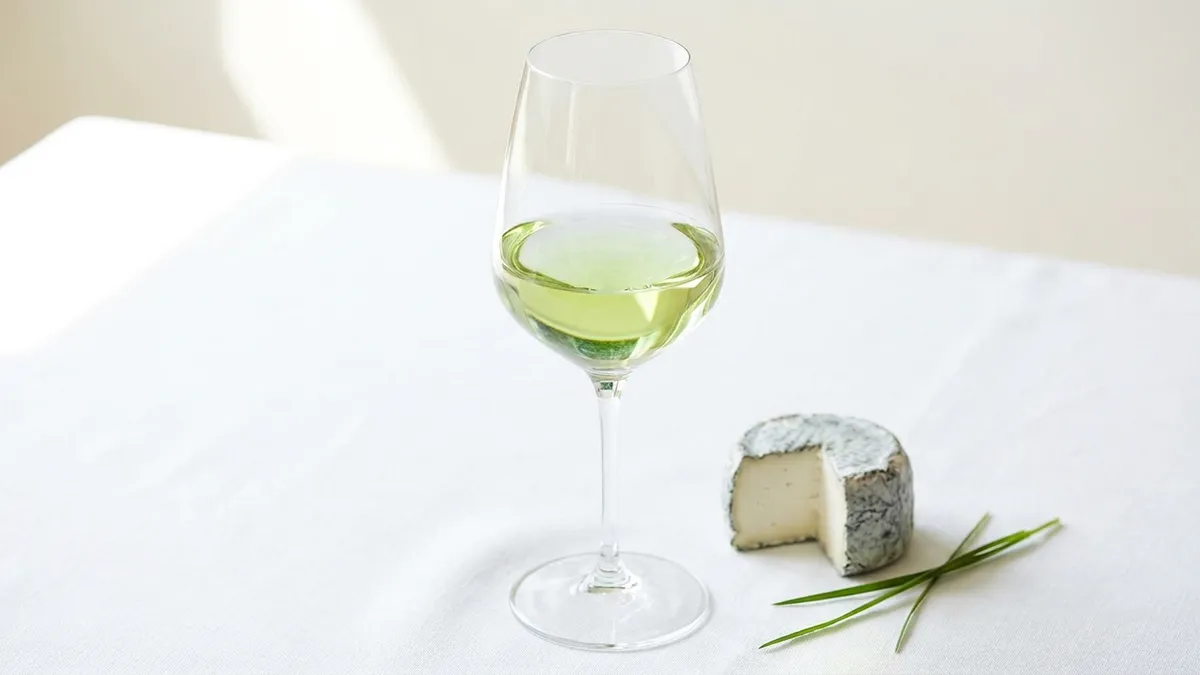
Both wines pair iconically with the local goat cheese, crottin de Chavignol — small, chalky, tangy disks that taste like they were designed for the wine.
Marlborough, New Zealand — The Aromatic Bomb
Marlborough redefined the grape globally. The combination of long sunshine hours, cool nights, and free-draining river-stone soils produces a Sauvignon Blanc that is dialed to eleven on aromatic intensity. Expect passionfruit, lime, gooseberry, cut grass, and a distinctive jalapeño herbaceousness that some tasters love and others find polarizing.
These wines are bone dry, high in acidity, and refreshingly crisp despite their fruit volume. For a deeper regional view, see the New Zealand wine guide.
Bordeaux, France — Co-Blender with Sémillon
In Bordeaux, Sauvignon Blanc is rarely bottled alone. The dry white Bordeaux style — especially from Pessac-Léognan and Graves — blends Sauvignon Blanc with Sémillon and ages the wine in oak barrels. The Sauvignon Blanc brings citrus and herbal lift; the Sémillon brings body, beeswax, and lanolin. The oak adds vanilla, toast, and a savory texture. These wines are more textured, more age-worthy, and structurally closer to white Burgundy than to Loire Sauvignon Blanc.
The same blend, harvested late and affected by noble rot (a beneficial fungus that concentrates sugars), produces Sauternes — one of the world's great sweet wines. See the dessert wine guide for more on that side of the grape.
Chile — Lighter, Citrus-Led
Chilean Sauvignon Blanc, especially from the cool coastal valleys of Casablanca, Leyda, and San Antonio, sits stylistically between Loire restraint and Marlborough explosiveness. Expect lime, grapefruit, fresh herb notes, and a chalky mineral edge. The Pacific influence keeps acidity bright and alcohol moderate. These wines are excellent value — high quality at lower prices than Sancerre or even Marlborough.
South Africa — Fresh and Structured
South African Sauvignon Blanc, particularly from Stellenbosch, Constantia, and Elgin, splits the difference between Marlborough's aromatic intensity and Loire's structural restraint. The wines have ripe fruit but firmer mineral backbone, with a savory edge that makes them food-friendly. Constantia historically produced sweet Muscat-based wines that Napoleon loved on Saint Helena, and the modern Sauvignon Blancs trace back to that same hillside terroir.
For the broader regional view, see the South African wine guide.
Pyrazines and Thiols: The Chemistry of the Aroma
The two compound families that drive Sauvignon Blanc's aromatic signature deserve a closer look, because understanding them tells you which bottles will smell like what.
Pyrazines — the green-pepper engine
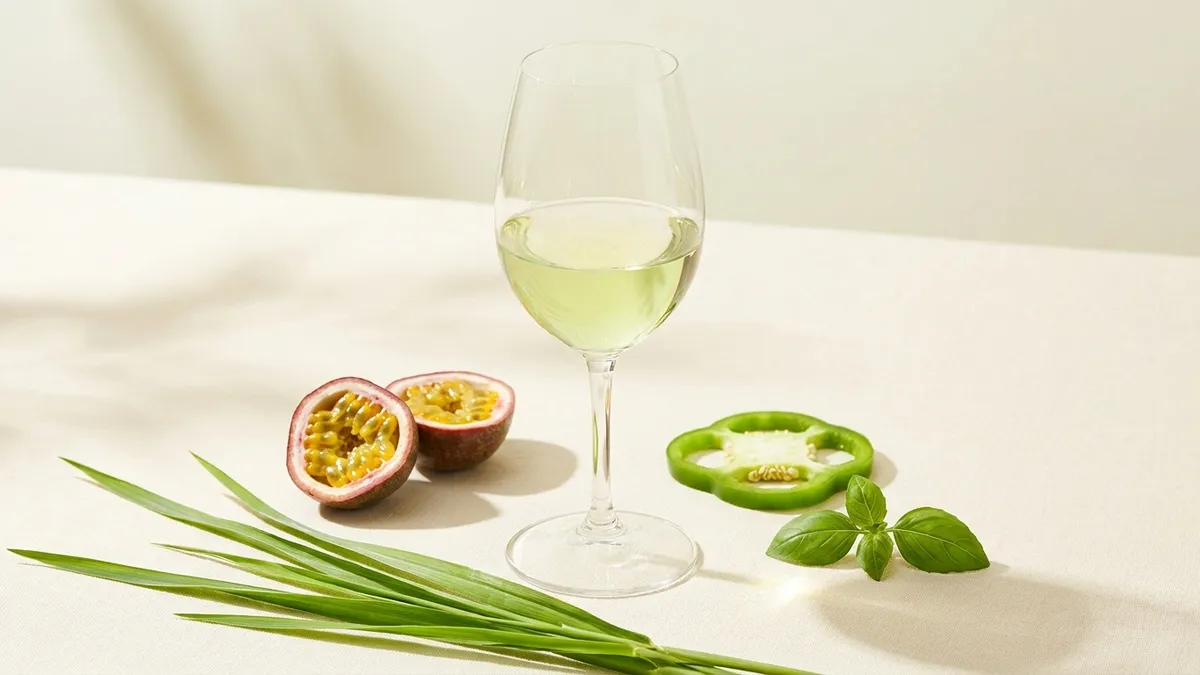
Pyrazines (specifically methoxypyrazines) are nitrogen-containing compounds that smell like green bell pepper, cut grass, asparagus, and tomato leaf. They form in the grape skin during the early growing season and break down with sunlight as the grapes ripen. Cooler climates, shaded canopies, and earlier harvests preserve more pyrazines — which is why Loire Sauvignon Blanc tastes more herbaceous than Chilean. Pyrazines are also responsible for the green note in unripe Cabernet Sauvignon and Cabernet Franc.
Thiols — the tropical-fruit booster
Thiols (specifically 3-mercaptohexanol and 4-methyl-4-mercaptopentanone) smell like passionfruit, grapefruit, gooseberry, and boxwood. They are not present in the grape itself; they exist as odorless precursor compounds that yeast cleaves during fermentation, releasing the aromatic form. Riper grapes carry more precursors, and certain yeast strains release more of them. This is why Marlborough Sauvignon Blanc, with its long sunshine hours and modern winemaking, smells like a tropical fruit basket compared to a more restrained Loire.
If you want to train your nose to identify these compounds in real time, the Sommy app walks you through aroma exercises that build a calibrated reference library — including the exact pyrazine and thiol notes that define Sauvignon Blanc.
Oaked vs Unoaked Sauvignon Blanc
Most Sauvignon Blanc spends its life in stainless steel tanks. Oak would compete with the grape's natural aromatics and usually flatten the freshness that makes Sauvignon Blanc what it is.
The two big exceptions:
Bordeaux Blanc (Pessac-Léognan, Graves) — the classic Sauvignon Blanc–Sémillon blend, oak-aged. Body and texture come up; primary fruit comes down. The wines age beautifully for ten to twenty years.
Fumé Blanc — a marketing term coined in California in the 1960s for oaked Sauvignon Blanc, inspired by Pouilly-Fumé. Some California producers continue the style today.
For more on what oak actually does to a wine, see oak flavors in wine tasting and what does oaked mean.
How to Pair Sauvignon Blanc with Food
Sauvignon Blanc is one of the most food-friendly white wines in the world. Its high acidity cuts through fat, its herbal notes echo green ingredients, and its lightness keeps it from overpowering delicate dishes.
The Iconic Pairings
- Goat cheese, especially crottin de Chavignol — the legendary Sancerre match.
- Oysters and shellfish — minerality plus acidity equals a perfect bridge to briny seafood.
- Asparagus and artichoke — two notoriously wine-unfriendly vegetables that Sauvignon Blanc handles thanks to its matching herbal compounds.
- Sushi and ceviche — the lime-citrus core mirrors the dish.
- Salads with vinaigrette — most wines fight vinegar, but Sauvignon Blanc's acidity meets it head-on.
The Surprisingly Strong Matches
- Thai and Vietnamese cuisine — passionfruit and lime notes complement lemongrass, fish sauce, and chili.
- Goat cheese pizza — light enough to handle the dough, sharp enough to cut the cheese.
- Herb-roasted chicken — choose a slightly fuller Sauvignon Blanc (oaked Bordeaux Blanc or warm-climate New Zealand) for richer poultry preparations.
For the broader pairing framework, see the wine and food pairing guide and the wine and cheese pairing guide.
When to Drink — Aging Sauvignon Blanc
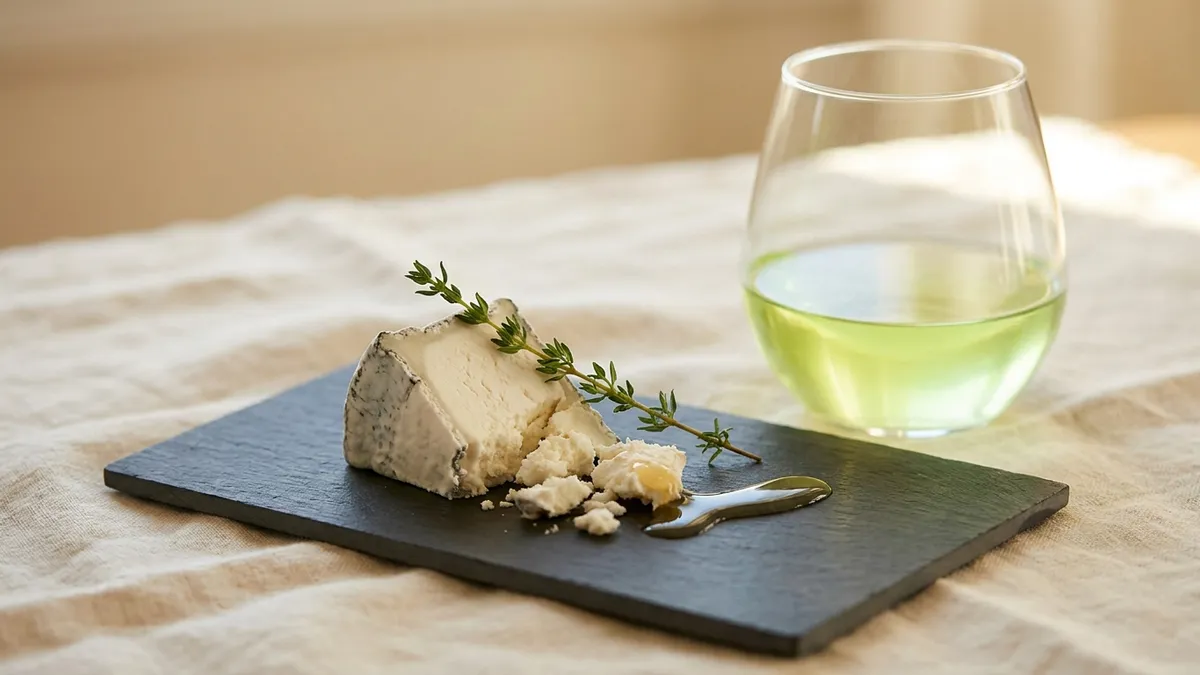
Most Sauvignon Blanc is meant to be drunk young, ideally within one to three years of the vintage. The grape's appeal lives in primary aromatics — fresh fruit, herbs, citrus — and these fade with bottle age. A five-year-old Marlborough Sauvignon Blanc usually loses the passionfruit punch that made it special.
The exceptions:
- Pessac-Léognan and oaked Bordeaux Blanc — the Sémillon component and oak structure allow these wines to age fifteen to twenty-five years. Tertiary notes of honey, beeswax, and toasted nuts develop with time.
- Top Sancerre and Pouilly-Fumé — single-vineyard, low-yield bottlings can age five to ten years, evolving into smokier, more savory expressions.
For unoaked Sauvignon Blanc from anywhere else, drink it within three years and do not feel guilty about it. The wine was built for that window.
Sauvignon Blanc vs Other White Grapes
Sauvignon Blanc sits in a specific corner of the white wine map: aromatic, high-acid, light-bodied, almost always unoaked. To place it among neighbors:
- vs Chardonnay — Chardonnay is a chameleon shaped by winemaking; Sauvignon Blanc always tastes like itself. See Chardonnay vs Sauvignon Blanc for the deep comparison.
- vs Riesling — Riesling is also high-acid and aromatic, but with stone fruit and floral notes rather than herbal. See the Riesling guide.
- vs Pinot Grigio — Pinot Grigio is gentler, less aromatic, with apple and pear rather than grapefruit. See Pinot Grigio vs Pinot Gris.
- vs Albariño — both are crisp and seafood-friendly, but Albariño leans more saline and stone-fruited. See the Albariño wine guide.
Building Your Sauvignon Blanc Palate
A side-by-side tasting is the fastest way to lock in what Sauvignon Blanc actually does. Buy one Sancerre and one Marlborough Sauvignon Blanc. Pour them into identical glasses. Smell each before swirling, then sip both with eyes closed.
Pay attention to three things:
- Aromatic volume. Marlborough will hit your nose before the glass reaches your face. Sancerre will be quieter — citrus and stone, but not a fruit bomb.
- Mineral character. Sancerre will leave a flinty, savory, almost gun-smoke impression on the finish. Marlborough will finish on tropical fruit and lime.
- Acidity. Both will make your mouth water, but the Sancerre will feel sharper and more linear; the Marlborough will feel rounder despite being just as acidic, because the fruit fills out the perceived body.
After this one comparison, every Sauvignon Blanc you drink afterward will fall somewhere on the line between those two anchors. The Sommy app's guided tasting exercises walk you through this kind of structured comparison with real-time feedback, so you can calibrate your palate against professional reference points. Visit sommy.wine to start working through the white grapes one at a time — a few guided tastings is all it takes to go from "I think I like Sauvignon Blanc" to "I prefer the Loire style, and here is why."
Frequently Asked Questions
What does Sauvignon Blanc taste like?
Sauvignon Blanc tastes crisp, dry, and intensely aromatic. The signature flavors are grapefruit, lime, gooseberry, passionfruit, cut grass, green bell pepper, elderflower, and a flinty mineral edge. Acidity is high, body is light to medium, and alcohol typically lands between twelve and thirteen and a half percent. Most versions are unoaked, which keeps the fruit and herbal notes sharp.
What is the difference between Sancerre and Marlborough Sauvignon Blanc?
Both are pure Sauvignon Blanc, but the styles diverge sharply. Sancerre, from the Loire Valley, leans flinty, mineral, restrained, and citrus-driven, with subtle herbal notes. Marlborough, from New Zealand, is far more explosive — passionfruit, gooseberry, and cut grass at full volume. The grape is the same, but the climate, soil, and winemaking choices push the wines to opposite ends of the aromatic spectrum.
Should Sauvignon Blanc be aged or drunk young?
Drink most Sauvignon Blanc young, ideally within one to three years of the vintage. Its appeal lives in fresh, primary aromatics — citrus, herbs, tropical fruit — which fade with bottle age. The exception is oaked Sauvignon Blanc from Bordeaux, especially Pessac-Léognan blends with Sémillon, which can age beautifully for ten to twenty years.
Why does Sauvignon Blanc smell like cut grass and bell pepper?
The grassy, green, and bell pepper aromas come from a class of compounds called pyrazines, which are naturally concentrated in Sauvignon Blanc grapes. Cooler climates and shaded canopies produce more pyrazines, which is why Loire and cool New Zealand sites smell more herbaceous than warmer Chilean or South African examples. Tropical thiols add the passionfruit and grapefruit layer on top.
What food pairs best with Sauvignon Blanc?
The classic pairing is goat cheese, especially the chalky, tangy crottin de Chavignol from the Loire Valley. Beyond that, Sauvignon Blanc shines with green vegetables (asparagus, snap peas, salads), shellfish, oysters, sushi, ceviche, herb-driven dishes, Thai and Vietnamese cuisine, and anything with a squeeze of lime. Its high acidity and herbal notes echo green ingredients perfectly.
Is Sauvignon Blanc a sweet or dry wine?
Sauvignon Blanc is almost always dry, with less than four grams per liter of residual sugar. Its bright fruit aromas can trick beginners into thinking it tastes sweet, but the high acidity keeps the finish clean and dry. The only exception is late-harvest or noble-rot Sauvignon Blanc from Sauternes, where it is blended with Sémillon to produce an iconic dessert wine.
Does Sauvignon Blanc come in oaked styles?
Most Sauvignon Blanc is unoaked to preserve its fresh aromatics, but oaked styles do exist. The most important is white Bordeaux from Pessac-Léognan and Graves, where Sauvignon Blanc is blended with Sémillon and aged in oak barrels. The result is fuller, more textured, with notes of beeswax, lanolin, vanilla, and a savory complexity that ages remarkably well.
What is the alcohol content of Sauvignon Blanc?
Most Sauvignon Blanc lands between twelve and thirteen and a half percent alcohol. Cool-climate examples from Sancerre or coastal New Zealand sit at the lower end, around twelve to twelve and a half percent, preserving freshness. Warmer regions like Chile, California, or parts of South Africa can push toward thirteen and a half percent, with a slightly fuller body and riper fruit profile.
Sommy Team
LinkedInFounder & Wine Educator
The Sommy Team is building the world's most approachable wine education app, helping beginners develop real tasting skills through structured courses and AI-guided practice.