The 10 Most Planted Wine Grapes in the World

By the Sommy Team — AI-assisted, human-edited.
Updated Jun 16, 2026
Contents (11)
- What Are the Most Planted Wine Grapes in the World?
- Most Planted Wine Grapes World Ranking, in 120 Words
- How Grape Planting Is Measured (and Why Numbers Move)
- The Top 10 Most Planted Wine Grapes, Ranked
- The Red Workhorses That Lead the List
- The White Surprises: Airén and Chardonnay
- The Rhône and Loire Stalwarts
- The Famous Names With Modest Footprints
- Why "Most Planted" Never Means "Most Famous"
- How to Use This Ranking as a Beginner
- The Bottom Line on the World's Most Planted Grapes
TL;DR
The most planted wine grapes in the world, by vineyard area, are led by Cabernet Sauvignon and Merlot among reds and Airén and Chardonnay among whites. Rankings shift yearly as plantings change, and several giants like Airén and Trebbiano are far more planted than famous, proving area does not equal fame.
What Are the Most Planted Wine Grapes in the World?
The most planted wine grapes world ranking is led by red varieties — Cabernet Sauvignon at roughly 340,000 hectares and Merlot just behind — alongside two surprising whites: Airén, a high-volume Spanish grape covering well over 200,000 hectares, and Chardonnay, the most planted white that is also famous. Other giants include Tempranillo, Syrah, Grenache, Sauvignon Blanc, Pinot Noir, and Trebbiano (called Ugni Blanc in France). These figures come from organizations like the OIV and shift every year as vineyards are planted, pulled, or replanted, so treat the order as approximate rather than exact.
Most Planted Wine Grapes World Ranking, in 120 Words
By total vineyard area, the most planted wine grapes world order usually runs: Cabernet Sauvignon (about 340,000 hectares), Merlot (around 260,000), Tempranillo and Airén (each well over 200,000), Chardonnay (about 210,000), Syrah, Grenache, Sauvignon Blanc, Pinot Noir, and Trebbiano/Ugni Blanc. Reds dominate the top: roughly two-thirds of the world's top plantings are dark-skinned grapes. The standout surprises are Airén and Trebbiano — two whites planted on hundreds of thousands of hectares that rarely appear on a restaurant list because much of their fruit goes into brandy or bulk blends. Spain, France, China, Italy, and the United States account for most of this area. The numbers move every year, so read the ranking as a snapshot.
How Grape Planting Is Measured (and Why Numbers Move)
Before ranking the grapes, it helps to understand what the numbers count. The headline source is the OIV (the International Organisation of Vine and Wine — an intergovernmental body that tracks vineyards and wine production globally). National agencies in Spain, France, Italy, and elsewhere also survey their own vineyards on separate schedules.
That patchwork is why rankings disagree. A few things to keep in mind:
- Hectares, not bottles. Planting area measures land, not how much wine reaches a shelf. A high-yielding grape can outproduce a sparsely planted one even on less land.
- Wine grapes vs. table and raisin grapes. Some surveys lump in grapes grown for eating or drying. This especially affects countries like China and Turkey, where a large share of vines never become wine.
- Survey timing. A figure published this year may reflect a census taken several years ago. Different grapes are counted in different years.
- Vineyards change constantly. Growers pull out unfashionable grapes and replant in-demand ones. Over a decade, a variety can climb or fall several places.
The practical takeaway: use these figures as a well-informed map, not a precise odometer. Round numbers and approximate order are trustworthy; an exact hectare count to the digit is not. Learning to hold facts with the right level of confidence is part of building real wine knowledge, the same calibrated judgment the Sommy app helps you develop one tasting at a time.
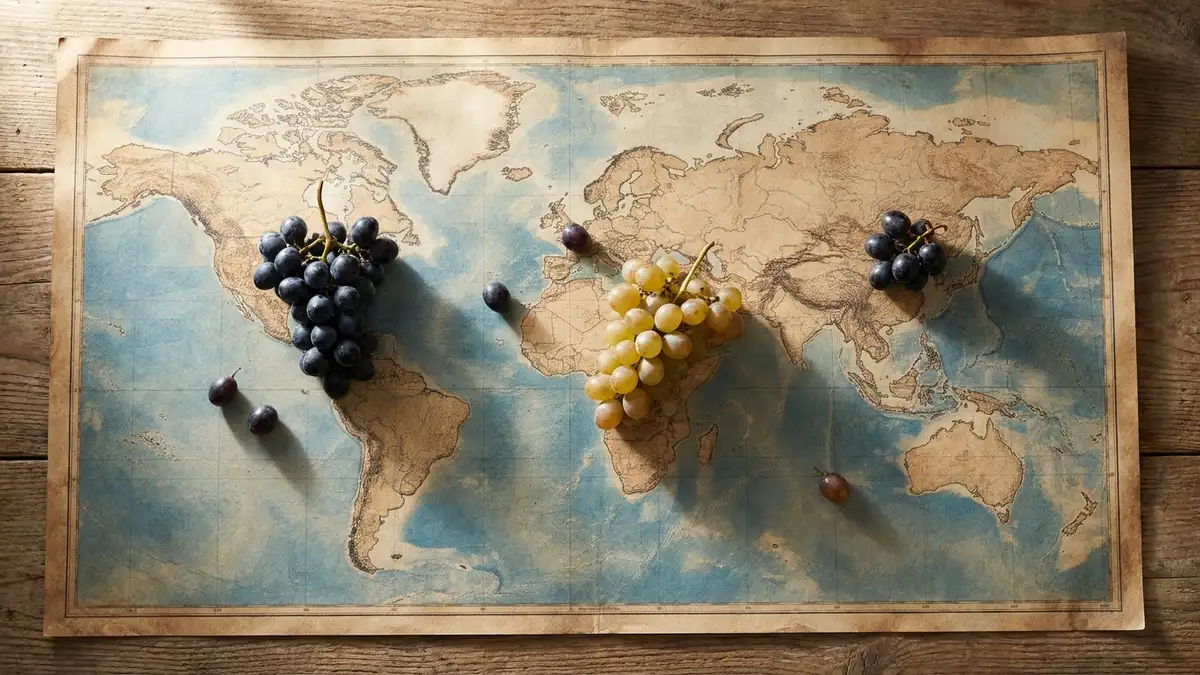
The Top 10 Most Planted Wine Grapes, Ranked
Here is the broad consensus order by vineyard area, drawing on OIV-style figures. Where a grape is grown for purposes beyond bottled varietal wine — brandy, bulk blends, table fruit — the note flags it.
Approximate global ranking by vineyard area. Figures from OIV-style surveys; order shifts year to year.
- 1. Cabernet Sauvignon — Color: red · Main countries: France, Chile, USA, China · The world's most planted grape — ~340,000 ha
- 2. Merlot — Color: red · Main countries: France, Italy, USA, Chile · Cabernet's softer partner; vast in Bordeaux
- 3. Tempranillo — Color: red · Main countries: Spain, Portugal · Spain's flagship red; huge home plantings
- 4. Airén — Color: white · Main countries: Spain · Surprise giant — much of it distilled, not bottled
- 5. Chardonnay — Color: white · Main countries: France, USA, Australia · Most planted famous white; global chameleon
- 6. Syrah / Shiraz — Color: red · Main countries: France, Australia, Spain · Peppery, dark-fruited; two names, one grape
- 7. Grenache / Garnacha — Color: red · Main countries: Spain, France, Italy · Warm-climate red; backbone of Rhône and Rioja blends
- 8. Sauvignon Blanc — Color: white · Main countries: France, New Zealand, Chile · Aromatic, racy; fast-growing plantings worldwide
- 9. Pinot Noir — Color: red · Main countries: France, USA, Germany · Famous but modest in area; cool-climate specialist
- 10. Trebbiano / Ugni Blanc — Color: white · Main countries: Italy, France · Surprise giant — much goes to Cognac and Armagnac
The rest of this guide walks through these ten grapes in order, with what each tastes like and where it grows.
The Red Workhorses That Lead the List
Red grapes occupy most of the top spots, partly because the world's biggest wine markets favor red wine and partly because a handful of reds travel well across climates.
1. Cabernet Sauvignon — The Most Planted Grape
Cabernet Sauvignon is the most planted wine grape on earth, covering roughly 340,000 hectares. It produces deeply colored, full-bodied reds with firm tannins (the drying, gripping sensation on your gums and cheeks) and flavors of blackcurrant, black cherry, cedar, and graphite.
Its success comes from reliability. The grape ripens well in warm climates, resists rot thanks to thick skins, and tastes recognizably like itself almost anywhere — from Bordeaux to Napa to China's Ningxia region. That consistency made it the default planting for ambitious new vineyards worldwide. For a full profile, see the Cabernet Sauvignon wine guide.
2. Merlot — Cabernet's Global Partner
Merlot ranks a close second at around 260,000 hectares. It gives softer, rounder reds than Cabernet, with ripe plum, black cherry, and chocolate, and gentler tannins that make it approachable for newcomers.
Much of Merlot's area sits in Bordeaux, where it dominates the Right Bank and softens Cabernet-led blends on the Left Bank. It also grows widely in Italy, the United States, and Chile. The detailed Merlot wine guide covers how the same grape ranges from plush and fruity to structured and serious.
3. Tempranillo — Spain's Heavyweight
Tempranillo is Spain's most planted red and ranks among the top globally, with well over 200,000 hectares — about 88% of it in Spain. It anchors Rioja and Ribera del Duero, offering cherry and strawberry in youth that turn to leather, tobacco, and dried fig with oak aging.
Its high ranking is almost entirely a Spanish story: the country's sheer vineyard area carries the grape up the global list. The Tempranillo wine guide explains its aging classifications and savory, food-friendly character.
The White Surprises: Airén and Chardonnay
Whites are outnumbered in the top ten, but they hold two of its most surprising entries.
4. Airén — The Giant Few Have Tasted
Airén is the entry that confounds people. This hardy white grape covers a huge area — historically the single most planted variety in the world before Cabernet overtook it — almost all of it on the hot, dry central plains of Spain (La Mancha).
So why has almost no one tasted it? Airén tolerates drought, produces high yields, and was traditionally distilled into Spanish brandy rather than bottled. Modern winemaking can coax a clean, neutral, citrusy white from it, but its global role has been quiet bulk production. Airén is the clearest proof that vineyard area and fame are different things entirely.
5. Chardonnay — The Most Planted Famous White
Chardonnay covers around 210,000 hectares and is the most planted white grape that is also a household name. It is wine's great chameleon: lean and citrusy when made in stainless steel (think Chablis), or rich and buttery when fermented in oak with malolactic conversion (a secondary fermentation that softens sharp acidity into a creamier texture).
Chardonnay grows on every wine continent because it adapts to so many climates and styles. The Chardonnay wine guide breaks down the unoaked-to-oaked spectrum that explains why one drinker's "I don't like Chardonnay" is usually just the wrong style.
The Rhône and Loire Stalwarts
The middle of the ranking is held by grapes that built their reputations in southern France and now grow worldwide.
6. Syrah / Shiraz
Syrah — called Shiraz in Australia and South Africa — produces dark, peppery, full-bodied reds with blackberry, plum, and a savory smoky edge. The two names are the same grape, but they often signal style: "Syrah" tends toward a more restrained, peppery French expression, "Shiraz" toward a riper, bolder New World one.
It ranks high thanks to extensive plantings across France's Rhône Valley, Australia, and Spain. Its peppery signature makes it one of the easier reds to recognize once you learn the cue.
7. Grenache / Garnacha
Grenache (Spanish: Garnacha) is a warm-climate red giving generous red-berry fruit, higher alcohol, and softer tannins. It rarely stands alone in fame, but it is a blending workhorse — the backbone of southern Rhône blends and a major partner in Rioja.
Its large area reflects how widely it is planted across Spain, southern France, and Italy (where it is called Cannonau in Sardinia). Volume, not solo stardom, earns its ranking.
8. Sauvignon Blanc
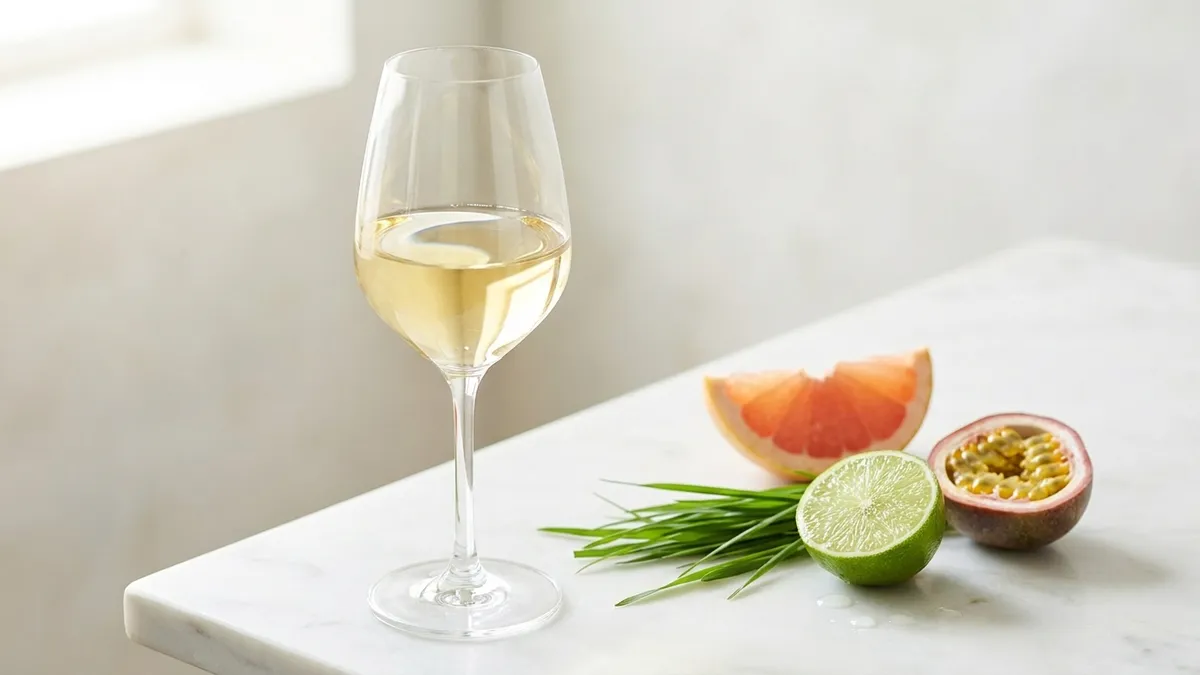
Sauvignon Blanc is an aromatic white with racy, mouth-watering acidity and flavors of grapefruit, lime, fresh-cut grass, and passion fruit. Its plantings have grown fast over recent decades, driven largely by the runaway popularity of the zesty New Zealand style.
It thrives from the Loire Valley to Marlborough to Chile, and its unmistakable aromatic punch makes it a favorite for building beginner recognition skills.
The Famous Names With Modest Footprints
The bottom of the top ten holds a lesson: two of the wine world's most talked-about grapes either cover little ground or hide in plain sight.
9. Pinot Noir — Famous, but Not Vast
Pinot Noir is one of the most revered red grapes, yet its global area is modest compared with the workhorses above. The thin-skinned, cool-climate grape is famously hard to grow, which keeps plantings concentrated in places like Burgundy, Oregon, and Germany.
Its pale, delicate wines of red cherry, raspberry, and forest floor command attention and high prices, but reputation outstrips acreage. It is the inverse of Airén: enormous fame, comparatively small footprint. The Pinot Noir guide explains why this grape rewards careful tasting more than most.
10. Trebbiano / Ugni Blanc — The Other Hidden Giant
Trebbiano — called Ugni Blanc in France — closes the list as the second great "surprise" white. It is one of the most planted white grapes in the world, yet most drinkers have never knowingly tasted it.
The reason mirrors Airén: huge volumes go into distillation rather than bottled wine. In France, Ugni Blanc is the dominant base for Cognac and Armagnac (brandies distilled from acidic white wine). In Italy, Trebbiano appears in everyday whites and in balsamic vinegar production. High-acid, high-yield, and neutral, it is a workhorse built for transformation, not for varietal glory.
Why "Most Planted" Never Means "Most Famous"
The single biggest insight from this ranking is the gap between area and reputation.
Airén and Trebbiano cover hundreds of thousands of hectares, yet most wine drinkers have never knowingly tasted either one.
A grape can rank near the top of the world's vineyards for reasons that have nothing to do with how its wine tastes:
- It is distilled, not bottled. Airén feeds Spanish brandy; Ugni Blanc feeds Cognac and Armagnac. The wine itself is a means to an end.
- It is a blending or bulk grape. Grenache and Merlot fill out blends rather than always standing alone on a label.
- It survives where little else will. Airén's drought tolerance keeps it planted across central Spain regardless of its modest aromatic profile.
- A whole country's area lifts it. Tempranillo ranks globally largely because Spain has so much vineyard land devoted to it.
Meanwhile, a grape like Pinot Noir punches far above its acreage because it makes profound wine in small, prized quantities. Area answers "where is land planted?" — not "what should I seek out?" Those are two genuinely different questions, and good wine learning keeps them separate.
If you want to go deeper on which grapes are worth your tasting attention rather than just your trivia knowledge, the six noble grapes guide covers the varieties that wine education programs treat as the essential foundation.
How to Use This Ranking as a Beginner
A list of hectares is trivia until you turn it into a tasting plan. Here is how to make it useful:
-
Start with the famous reds. Cabernet Sauvignon and Merlot are everywhere and easy to find, making them the ideal first reference points. Taste them side by side to feel the difference between firm and soft tannins.
-
Add one cool-climate red. Pinot Noir's lightness and high acidity contrast sharply with Cabernet, teaching you the full red-wine range in two glasses.
-
Compare two whites across the style spectrum. A crisp Sauvignon Blanc next to an oaked Chardonnay shows how grape and winemaking together shape a wine.
-
Track structure, not just flavor. As you taste, notice the building blocks — tannins, acidity, and body — because these are what let you compare any two wines on equal terms.
-
Taste systematically. Following a repeatable method for tasting wine turns random sipping into real skill, glass by glass.
The Sommy app guides you through these comparisons with interactive tasting exercises, helping you put precise words to what you smell and sense. Knowing that Cabernet leads the world's vineyards is a fun fact; being able to recognize it blind is a skill — and the second one is the one worth building.
Sommelier tip: When a wine label names a region but not a grape, the ranking above is a useful cheat sheet. A red Rioja is almost certainly Tempranillo-led; a white Burgundy is Chardonnay; a southern Rhône red leans on Grenache and Syrah.
The Bottom Line on the World's Most Planted Grapes
The most planted wine grapes in the world are a mix of the famous and the invisible. Cabernet Sauvignon and Merlot lead, exactly as their reputations suggest. But Airén and Trebbiano remind us that vineyard area rewards practicality — drought tolerance, high yields, distillation demand — as much as deliciousness.
Treat the ranking as a living snapshot. Plantings shift every year, China keeps reshaping the totals, and surveys count grapes on different schedules. Round figures and approximate order will serve you far better than any single precise number. Most of all, remember the lesson buried in the list: the grapes covering the most ground are not always the ones worth seeking out — and learning to tell the difference is exactly what turns a wine drinker into a wine taster.
Sources
- State of the World Vine and Wine Sector — International Organisation of Vine and Wine (OIV), 2024
- Wine Grapes: A Complete Guide to 1,368 Vine Varieties — Jancis Robinson, Julia Harding, José Vouillamoz, 2012
- Distribution of the World's Grapevine Varieties — OIV Focus Report, 2017
Frequently Asked Questions
What is the most planted wine grape in the world?
Cabernet Sauvignon is generally cited as the most planted wine grape by vineyard area, covering roughly 340,000 hectares worldwide. Merlot follows closely. Rankings shift year to year as plantings change and as vines are pulled or replaced, so exact figures vary between sources like the OIV and individual country surveys.
Why is Airén planted so widely if few people know it?
Airén is a hardy white grape suited to the hot, dry plains of central Spain, where it survives drought and produces high yields with little water. Historically much of it was distilled into brandy rather than bottled as wine. That practical, high-volume role explains why it covers vast area while staying nearly invisible on wine lists.
Does 'most planted' mean 'most produced' or 'most famous'?
No. Most planted measures vineyard hectares, not bottles or reputation. Some widely planted grapes give low yields or go into brandy and bulk blends, so they make less recognizable wine. Famous grapes like Pinot Noir cover far less ground than workhorses like Airén or Trebbiano, which most drinkers have never heard of.
How accurate are global grape planting rankings?
They are best treated as well-informed estimates. The OIV and national agencies survey vineyard area on different schedules, sometimes count table and raisin grapes alongside wine grapes, and report years apart. A grape's rank can move several places between studies, so round figures and approximate order are more reliable than precise hectare counts.
What is the most planted white wine grape?
Airén, grown across central Spain, is often ranked the most planted white grape by area, though much of it is distilled rather than bottled. Chardonnay is the most planted white grape that is famous as a varietal wine. Trebbiano, called Ugni Blanc in France, is another huge white planting used heavily for Cognac and Armagnac.
Which red grapes are planted most around the world?
Cabernet Sauvignon leads, followed by Merlot, with Tempranillo, Syrah, and Grenache also among the top reds by area. Spain, France, the United States, China, and Italy hold large shares of these plantings. The same grape can taste very different across these regions because climate and winemaking shape the final wine.
Has China changed the global grape planting picture?
Yes. China has rapidly expanded vineyard area and now ranks among the largest countries by total hectares, with Cabernet Sauvignon especially widely planted there. A meaningful share of Chinese vineyards grows table grapes rather than wine grapes, which is one reason global rankings can shift depending on whether table and raisin grapes are included.
Sommy Team
LinkedInFounder & Wine Educator
The Sommy Team is building the world's most approachable wine education app, helping beginners develop real tasting skills through structured courses and AI-guided practice.