Merlot Wine Guide: The Smooth Red That Deserves More Respect

By the Sommy Team — AI-assisted, human-edited.
Updated Apr 29, 2026
Contents (12)
- A Plummy Red With a Bruised Reputation
- What Is Merlot, in 100 Words
- The Origins and DNA of Merlot
- Merlot's Sensory Profile
- The Great Merlot Regions
- Merlot vs Cabernet Sauvignon: A Quick Reference
- The Sideways Effect, Twenty Years On
- Food Pairings for Merlot
- How Long Does Merlot Age?
- Buying and Serving Merlot
- Building Merlot Into Your Tasting Practice
- Why Merlot Deserves a Second Look
TL;DR
Merlot is the world's second-most-planted red grape and a smooth, plummy, medium-full-bodied wine. It dominates Bordeaux's Right Bank, blends with Cabernet on the Left Bank, and shines in California, Tuscany, Chile, and Washington. Top merlot rivals top Cabernet — the 'Sideways' backlash was about cheap bottles, not the grape.
A Plummy Red With a Bruised Reputation
Walk past the red wine shelf in any shop and you will find merlot stocked everywhere — and often dismissed unfairly. This merlot wine guide sets the record straight on the world's second-most-planted red grape. Merlot is soft, plummy, immediately drinkable, and at its peak rivals the most prestigious Cabernet Sauvignon on earth. The 2004 film "Sideways" spawned a decade of jokes at merlot's expense, but the backlash was about thin supermarket bottles, not the grape itself. Bordeaux's Right Bank has known the truth for centuries.
If you have ever tried a red wine that tasted like ripe plum, dark cherry, and a whisper of cocoa, with a texture that felt like velvet rather than sandpaper, there is a strong chance you were drinking merlot. This guide walks through what merlot actually is, where the great examples come from, how it differs from Cabernet, what to eat with it, and how long it can age in your cellar.
What Is Merlot, in 100 Words
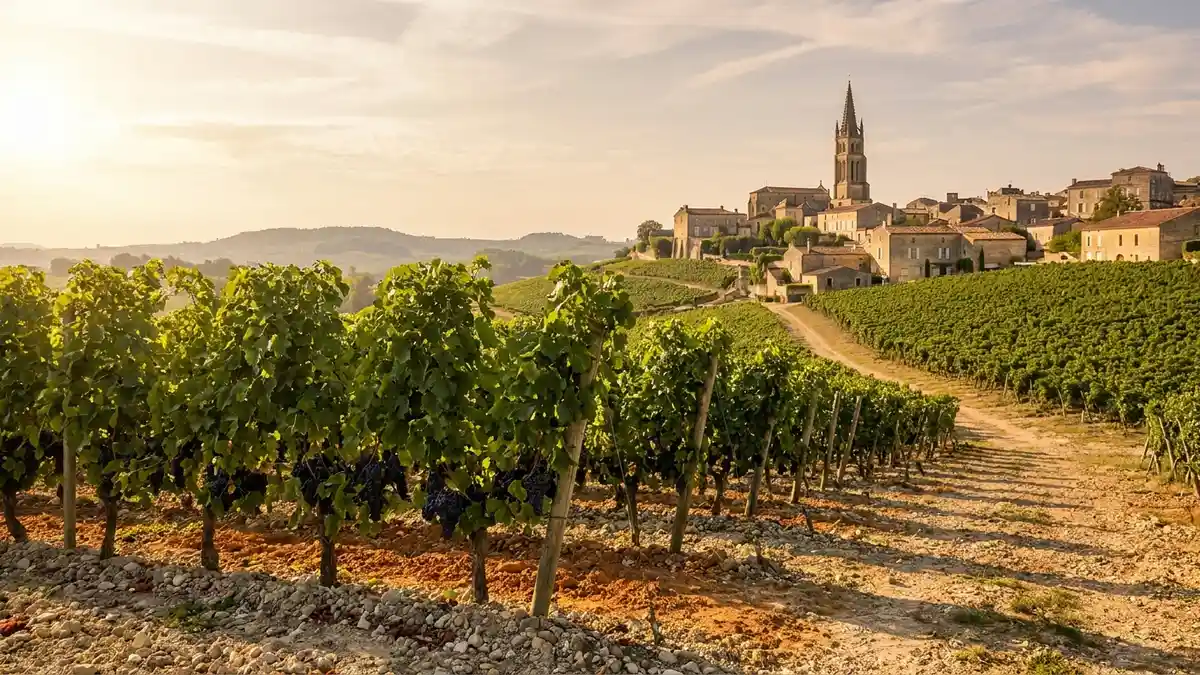
Merlot is a French black grape variety that produces medium ruby-colored red wines with soft round tannin, ripe black plum and cherry fruit, chocolate and herb undertones, medium-full body, and 13 to 14 percent alcohol. It is the world's second-most-planted wine grape, dominating Bordeaux's Right Bank — Saint-Emilion and Pomerol — and shining in California, Tuscany's Super Tuscan blends, Chile, and Washington State. Top merlot equals top Cabernet in quality, often selling for thousands of dollars a bottle. It pairs with hearty stews, roast meats, and mushroom dishes, and drinks beautifully from five to fifteen years.
The Origins and DNA of Merlot
Merlot's name likely comes from the French word "merle," meaning blackbird — possibly because the grape's deep blue-black color resembled the bird, or because blackbirds loved feeding on the ripe berries. The variety has been recorded in Bordeaux since at least the late 1700s and was already considered a noble grape by the time the 1855 classification was drawn up.
DNA testing in the 2000s revealed merlot's surprising parentage. The grape is a natural cross between Cabernet Franc (a structured, herbaceous Bordeaux red) and Magdeleine Noire des Charentes, a long-forgotten variety from southwestern France. That makes merlot a half-sibling to Cabernet Sauvignon, which also descends from Cabernet Franc. The two most planted red grapes in the world are family — and the family resemblance shows up every time you pour a Bordeaux blend.
For more on grape genetics and how grape variety shapes flavor, see our noble grapes overview.
Merlot's Sensory Profile
Merlot has a remarkably consistent fingerprint across regions and price points. Once you learn the signature, the grape becomes recognizable almost from the first sniff.
Color
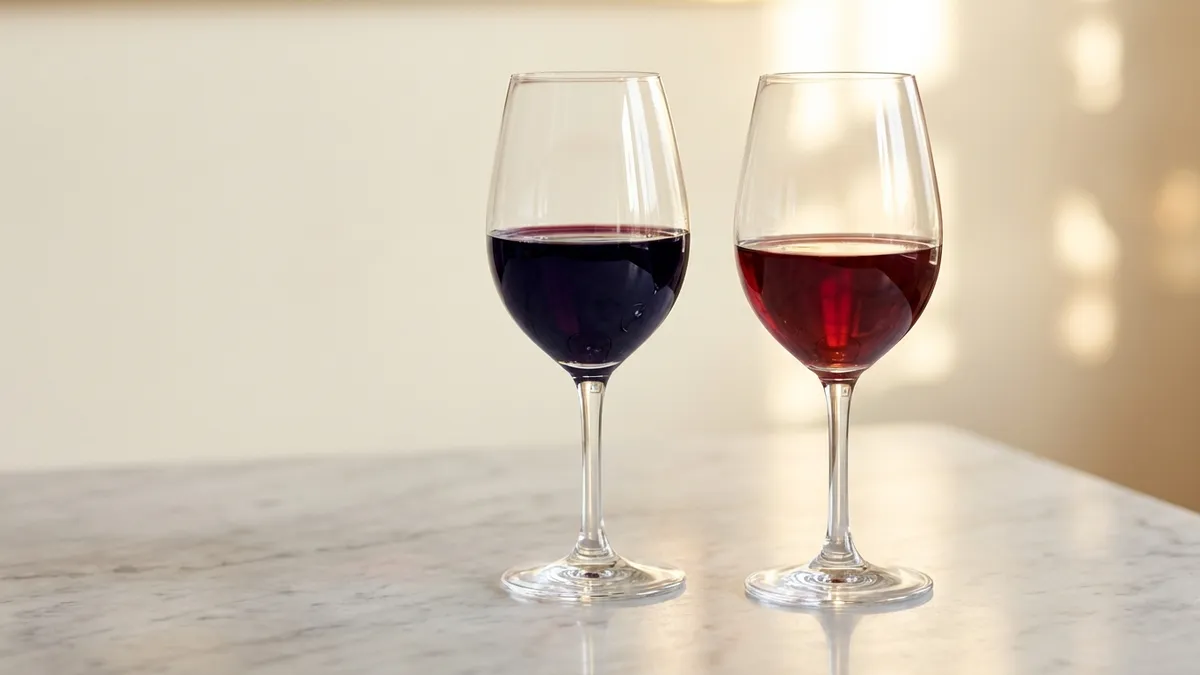
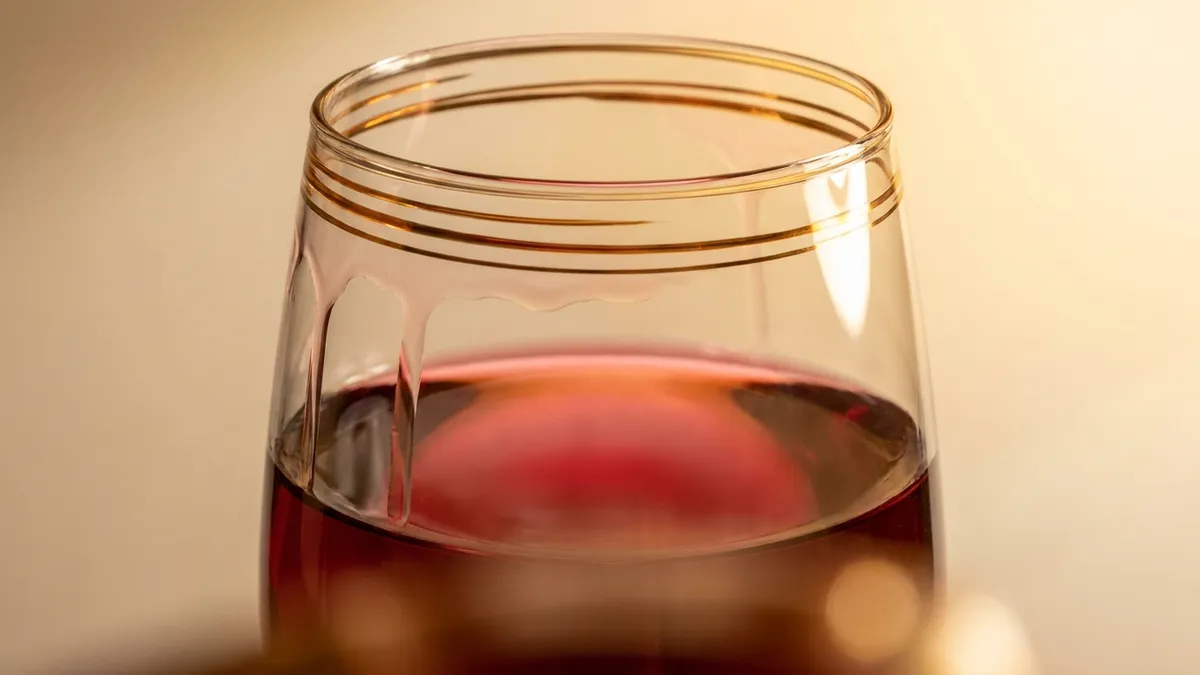
Merlot pours a medium ruby in the glass — slightly lighter and more translucent than Cabernet Sauvignon. Young merlot can show a hint of purple at the rim. As the wine ages, the color shifts toward garnet and brick. The lighter hue compared to Cabernet is one of the easiest visual clues in side-by-side tasting. Learn more about reading the glass in our wine color meaning guide.
Aromas
The classic merlot bouquet centers on:
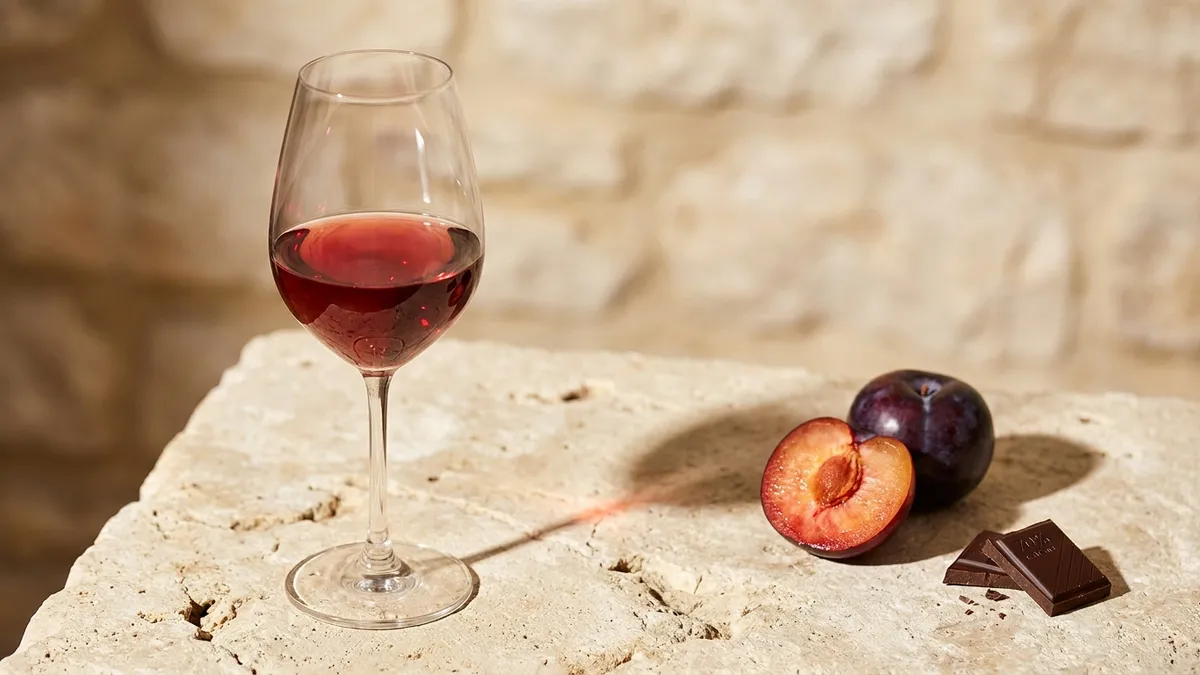
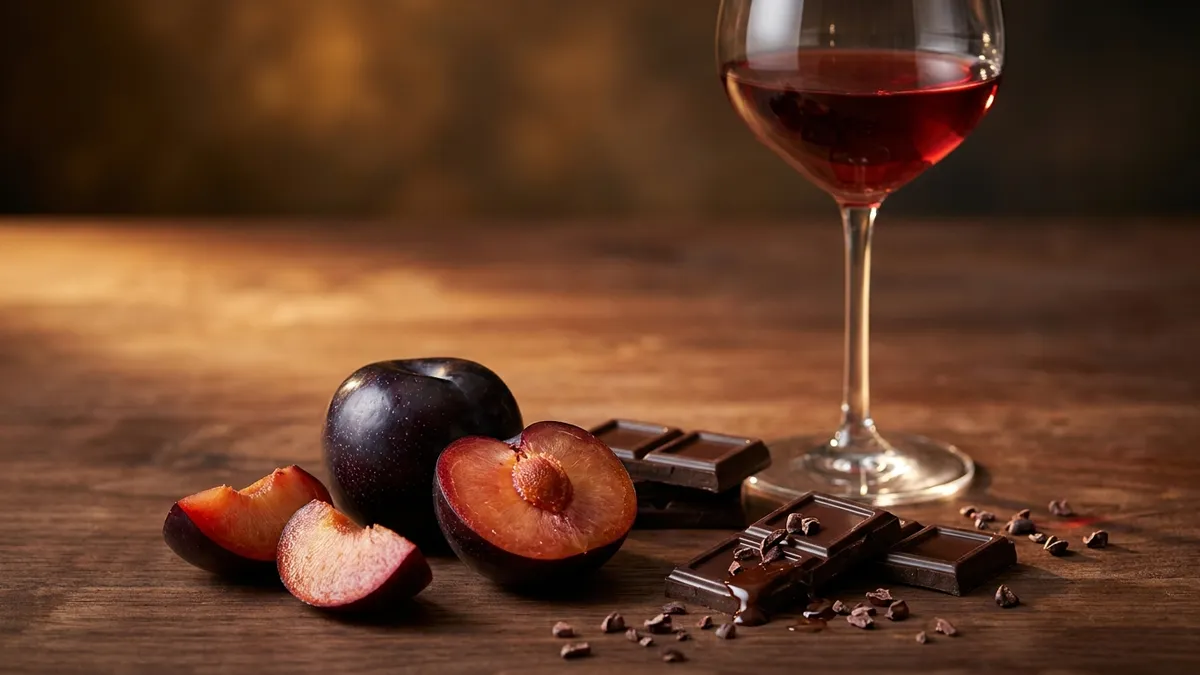
- Black plum — the single most diagnostic aroma. Ripe, juicy, generous.
- Black cherry and black raspberry — soft red and black berry character.
- Chocolate and cocoa — especially in oak-aged or warm-climate examples.
- Dried herbs — bay leaf, sage, thyme, sometimes a green tobacco lift.
- Vanilla and toast — from oak barrel aging.
- Mocha and cedar — secondary notes that develop with age.
- Truffle, leather, and fig — tertiary notes in mature bottles.
If you smell ripe plum first and chocolate second, you are almost certainly looking at merlot. Practicing aroma identification is one of the highest-leverage skills a beginner can build, and our how to smell wine guide breaks the technique down step by step.
Palate Structure
Merlot's structure is what separates it from Cabernet:
- Sweetness: dry, with ripe fruit that can taste slightly sweet
- Acidity: medium — fresh enough to keep the wine lively, soft enough to feel round
- Tannin: soft, silky, ripe — never aggressive
- Body: medium-full
- Alcohol: typically 13 to 14 percent, occasionally higher in warm-climate versions
The hallmark of merlot is its mouthfeel — that round, velvety, almost plush texture that makes the wine feel comforting rather than challenging. For more on how mouthfeel works mechanically, see our wine mouthfeel guide.
The Great Merlot Regions
Merlot is grown in essentially every wine-producing country on earth, but a handful of regions have shaped its global identity. Each one expresses the grape differently.
Bordeaux Right Bank — The Spiritual Home
The Right Bank of Bordeaux's Gironde estuary is where merlot reaches its highest expression. The cool clay-and-limestone soils of Saint-Emilion and Pomerol suit merlot perfectly — the grape ripens earlier than Cabernet, and the cooler clay holds moisture during dry summers.
Right Bank wines are merlot-dominant blends, typically 70 to 90 percent merlot with Cabernet Franc and sometimes Cabernet Sauvignon as supporting structure. The style is rich, plush, plummy, and surprisingly long-lived. The most famous estate in Pomerol — Chateau Petrus — produces wines that are 95 to 100 percent merlot and routinely sell for several thousand dollars a bottle, often more than the most expensive Left Bank Cabernet blends. Petrus is the proof, sealed in a bottle, that great merlot is one of the world's greatest wines.
For a wider tour of the country, see our French wine regions guide.
Bordeaux Left Bank — The Blending Partner
On the Left Bank — Medoc, Pauillac, Margaux, Saint-Julien — merlot plays the supporting role in Cabernet-dominant blends. Typical Left Bank wines are 60 to 70 percent Cabernet Sauvignon with merlot adding flesh, fruit, and roundness to soften Cabernet's firm tannin. Without merlot, classic Bordeaux would be far more austere and far less age-worthy in its youth.
California — Boom, Bust, and Recovery
Merlot exploded in California in the 1980s and 1990s as the friendly, accessible alternative to Cabernet Sauvignon. Plantings in Napa and Sonoma surged. Then the 2004 film "Sideways" arrived, and a single line of dialogue — a character refusing to drink "any [expletive] merlot" — triggered a sales crash. Inexpensive merlot was hit hardest. The brief decline became known as the Sideways effect.
The recovery has been quiet but complete. Top Napa merlot — full-bodied, rich, with ripe blackberry and chocolate — now commands prices comparable to high-end Cabernet. The grape has returned to the conversation among serious drinkers, even if it never fully won back the casual market.
Tuscany — Super Tuscan Blends
In central Italy, merlot found a second home in the Super Tuscan movement of the 1970s and 1980s. Producers in Bolgheri and the Maremma blended merlot with Cabernet Sauvignon and sometimes Sangiovese to create powerful, internationally styled reds outside the strict Chianti rules. The warm Tuscan sun ripens merlot to deep, sun-drenched fruit with herbal Mediterranean accents.
For more on Italian regional styles, see our italian wine guide and the sangiovese wine guide.
Chile — Value at Scale
Chile produces enormous volumes of merlot, much of it grown in the Central Valley, Colchagua, and Maipo. The combination of warm days, cool nights, and protected geography produces ripe, fruit-forward merlot at remarkably accessible prices. A Chilean merlot in the ten-to-twenty-dollar range is one of the most reliable everyday red wines on earth.
A historical footnote: until DNA testing in the 1990s, much of what Chile labeled as merlot turned out to be Carmenere, a long-lost Bordeaux variety that had been mistaken for merlot for over a century. Today the two are clearly separated, and both thrive in Chile. Read more in the carmenere wine guide.
Washington State — Cool-Climate Precision
Washington's Columbia Valley produces some of the most balanced merlot outside Bordeaux. The cool nights preserve acidity while the warm days ripen the fruit fully. Walla Walla merlot, in particular, has built a reputation for elegance — black cherry, herb, and a fine-grained tannin grip closer to Right Bank Bordeaux than to warm-climate California.
Other Notable Regions
Merlot also performs well in northeast Italy (Friuli and the Veneto), South Africa's Stellenbosch, Argentina's Mendoza, southwest France outside Bordeaux, and parts of Eastern Europe. Hungarian and Bulgarian merlot offers serious value for adventurous drinkers.
Merlot vs Cabernet Sauvignon: A Quick Reference
The two grapes are constantly compared because they grow side by side in Bordeaux and dominate the global red wine market together.
- Skin and berry: Cabernet has thick skins, small berries, more tannin. Merlot has thinner skins, larger berries, less tannin.
- Acidity: Cabernet higher. Merlot moderate.
- Body: Cabernet feels heavier. Merlot feels rounder.
- Fruit signature: Cabernet leads with blackcurrant and cedar. Merlot leads with plum and chocolate.
- Aging: Cabernet builds for decades. Merlot peaks earlier.
- Approachability: Cabernet rewards patience. Merlot delivers pleasure immediately.
For a deeper head-to-head with structural breakdowns and a side-by-side tasting protocol, see our full Cabernet Sauvignon vs Merlot comparison.
The Sideways Effect, Twenty Years On
The cultural episode is worth understanding because it shaped a generation of wine drinkers. In 2004, the indie film "Sideways" followed two friends through California wine country. The protagonist, a Pinot Noir obsessive, spent the film mocking merlot. Within a year, US sales of inexpensive merlot fell measurably, while Pinot Noir sales surged.
What the film actually said, between the lines, was that mass-produced merlot in the early 2000s had become bland and overripe. The character was right about cheap bottles. He was wrong about the grape itself — and the irony of the script is that the bottle the protagonist treasures most in the film is a 1961 Cheval Blanc, which is roughly two-thirds merlot.
The post-Sideways years pushed merlot producers to focus on quality. Twenty years on, the best New World merlot is better than ever, the Right Bank's reputation is untouched, and curious drinkers who skipped past merlot for a decade have plenty to rediscover. The lesson is simple: judge the bottle, not the grape.
Food Pairings for Merlot
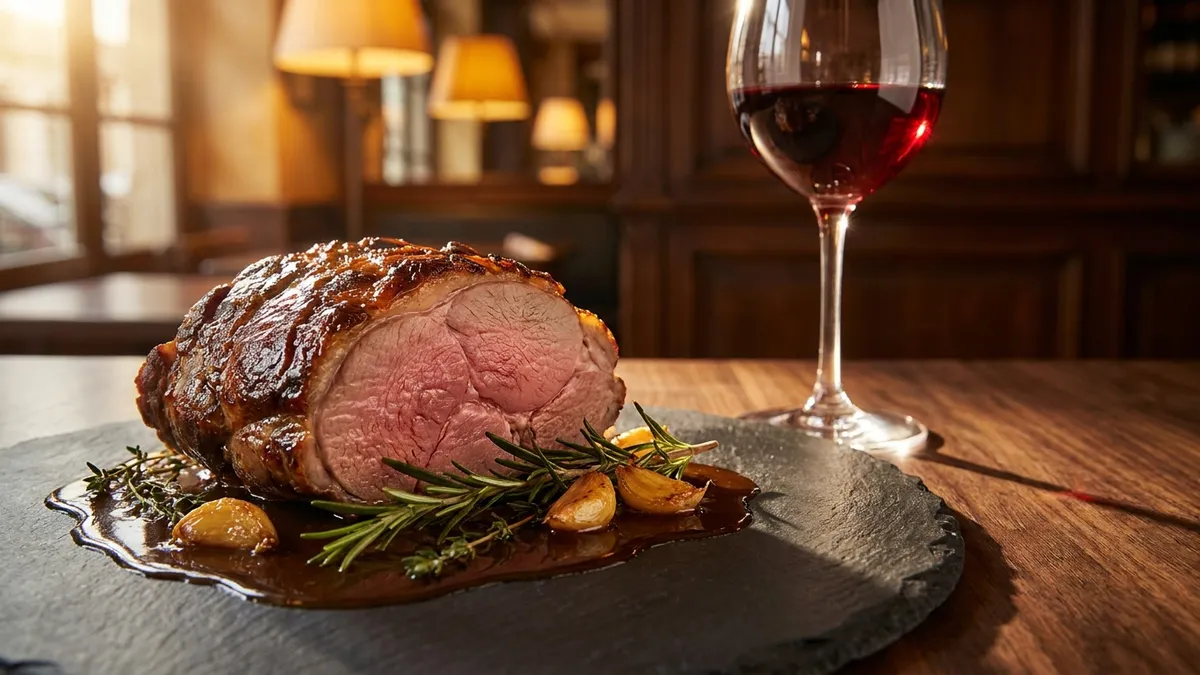
Merlot is one of the most food-friendly red wines on the planet. Its medium-full body and soft tannin let it handle hearty dishes without overpowering them, and its plummy fruit complements a wide range of flavors.
What to Eat With Merlot
- Roast chicken and turkey — softer tannin does not bully lighter meats
- Pork tenderloin and pork loin — plummy fruit complements pork's natural sweetness
- Beef bourguignon and braised short ribs — body and depth match the richness
- Lamb stew and shepherd's pie — herbal notes echo the rosemary and thyme
- Mushroom risotto and pasta with earthy sauces — savory umami meets supple fruit
- Charcuterie boards — versatile across cured meats and pates
- Medium-aged cheeses — Gruyere, Gouda, aged Manchego, mild blue cheeses
- Roasted root vegetables and grilled portobello — for vegetarian pairings
For a complete framework on matching food to wine, see our wine food pairing guide.
What to Avoid
- Raw seafood and delicate white fish — the wine's weight flattens the fish
- Light salads and citrus dressings — acidity clashes
- Very spicy chili-based dishes — the heat amplifies tannin and alcohol
If you are matching merlot to a holiday spread, our wine with thanksgiving guide covers turkey, sides, and the awkward sweet potato question. For weeknight dinners, the wine with chicken and wine with pasta guides cover the most common pairings.
How Long Does Merlot Age?
Aging potential depends entirely on the bottle. The general rule: the higher the quality, the longer the wine.
- Everyday merlot (under $20): drink within five to eight years, ideally within four
- Mid-tier New World merlot (Napa, Washington, top Chilean estates): eight to fifteen years
- Right Bank Bordeaux Cru Classe and top Super Tuscans: fifteen to thirty years, sometimes longer
As merlot ages, the fruit moves from fresh plum to dried prune and fig. Chocolate notes deepen into mocha. New tertiary aromas emerge — leather, truffle, dried tobacco, forest floor. The tannin softens further, and the wine takes on a silken, almost weightless texture.
For most beginners, the practical answer is to drink merlot within five to ten years of the vintage on the label. Long-term cellaring is a project for serious bottles. For more on how aged wine differs from young, see our tasting young vs aged wine guide.
Buying and Serving Merlot
A few practical notes:
- Serve at 60 to 65 degrees Fahrenheit (15 to 18 degrees Celsius) — slightly cooler than typical "room temperature." See wine serving temperature chart for full guidance.
- Decant younger merlot for thirty to sixty minutes to open up the aromatics. Older bottles may benefit from a careful decant to separate sediment.
- Use a Bordeaux glass with a tall bowl — the shape directs aromatics toward your nose. The does wine glass shape affect taste guide breaks down why glassware matters.
- Look for vintage variation — a cool, rainy Bordeaux year produces lean, herbal merlot, while a warm year produces ripe, plush merlot. Both styles have champions.
Building Merlot Into Your Tasting Practice
The fastest way to recognize merlot blind is to taste it deliberately, side by side with a contrasting grape. Pour a merlot next to a Cabernet Sauvignon from the same region and price point, and follow a structured tasting protocol. Watch the color, smell the difference between plum and blackcurrant, and feel the tannin contrast on your gums. The Sommy app guides this kind of comparative tasting with real-time feedback at each step, making the differences click faster than reading about them ever can.
Once merlot's signature is locked in, you will start hearing it across blends. Right Bank Bordeaux, Super Tuscan, Bordeaux-style California red — the plummy mid-palate softness is merlot's calling card.
Visit sommy.wine to start working through grape varieties one at a time, building a real reference library in your palate. The Sommy app's structured tasting courses cover merlot in the context of Bordeaux blends, single-varietal tasting, and side-by-side comparison exercises that make the concepts in this guide muscle memory.
Why Merlot Deserves a Second Look
Merlot lives at every price point. The same grape that fills supermarket shelves for ten dollars also produces some of the most coveted wines in the world. The difference between a forgettable merlot and a transcendent one comes down to producer, region, and vintage — not the grape.
If "Sideways" pushed you away from merlot, this is the moment to come back. Pour a proper bottle into a proper glass, give it a few minutes to open, and let the plum, chocolate, and silken tannin do their work.
Frequently Asked Questions
What does merlot taste like?
Merlot tastes like ripe black plum and black cherry layered with chocolate, vanilla, and a soft herbal lift. The texture is round and supple, with medium-full body, moderate acidity, and silky tannin. Oak-aged versions add cocoa and toasted spice. Compared to Cabernet Sauvignon, merlot feels softer, juicier, and more immediately approachable in the glass.
Is merlot a sweet wine?
No. Most merlot is fully dry, meaning fermentation converts nearly all the grape sugar into alcohol. The fruit is so ripe and the tannin so soft that the wine can taste fruit-forward and almost sweet, but residual sugar is typically below two grams per liter. If you want truly sweet red wine, look at fortified styles like Port instead.
What food pairs best with merlot?
Merlot pairs beautifully with roast chicken, pork tenderloin, lamb stew, beef bourguignon, mushroom risotto, and medium-aged cheeses like Gruyere or Gouda. Its medium-full body and softer tannin handle hearty dishes without overpowering them. Avoid raw seafood and very delicate fish — the wine's weight will flatten lighter flavors.
Where is the best merlot from?
Bordeaux's Right Bank — Saint-Emilion and Pomerol — produces the world's most respected merlot, often blended with Cabernet Franc. California, Tuscany's Super Tuscan blends, Washington State's Columbia Valley, and Chile's Colchagua and Maipo valleys all make excellent merlot. The grape adapts to many climates, so quality depends on the producer more than the country.
How long can merlot age?
Most everyday merlot drinks best within five to eight years of the vintage, when fruit is still vibrant and tannin has softened. Top Right Bank Bordeaux, premium Napa merlot, and serious Tuscan blends can age fifteen to twenty-five years and beyond. As merlot ages, plum becomes prune, chocolate deepens, and earthy, leathery, truffle notes emerge.
Why did 'Sideways' hurt merlot's reputation?
The 2004 film featured a character ranting against merlot, and US sales of inexpensive merlot dropped noticeably for several years afterward. The backlash hit cheap bulk merlot hardest — wines that were already thin and overproduced. Quality merlot, especially from Bordeaux's Right Bank and serious New World producers, kept its reputation intact and has now fully recovered.
What is the difference between merlot and Cabernet Sauvignon?
Merlot has thinner skins, larger berries, lower tannin, lower acidity, and softer body than Cabernet Sauvignon. Cabernet leads with blackcurrant and cedar. Merlot leads with plum and chocolate. Cabernet builds for long aging. Merlot drinks well young. The two grapes are family — merlot is a grandparent of Cabernet Sauvignon — and they blend together in Bordeaux.
Is merlot a good wine for beginners?
Yes. Merlot's softer tannin, ripe fruit, and round texture make it one of the most approachable red wines for new drinkers. It does not require food to taste pleasant, it does not need years of bottle age, and it carries fewer aggressive sensations like bitter grip or sharp acidity. Start with a mid-priced merlot from Chile, Washington, or California.
Sommy Team
LinkedInFounder & Wine Educator
The Sommy Team is building the world's most approachable wine education app, helping beginners develop real tasting skills through structured courses and AI-guided practice.