Aromatic vs Neutral Grapes: What the Nose Tells You

By the Sommy Team — AI-assisted, human-edited.
Updated Jun 16, 2026
Contents (8)
- Aromatic vs Neutral Wine Grapes, in One Paragraph
- What Makes a Grape Aromatic vs Neutral
- The Chemistry: Terpenes, Thiols, and Pyrazines
- Aromatic vs Neutral Grapes: A Side-by-Side Comparison
- Why Aromatic Grapes Are Often Off-Dry
- How This Changes Food Pairing
- How Oak Treats Aromatic and Neutral Grapes Differently
- How to Train Your Nose to Tell Them Apart
TL;DR
Aromatic grapes such as Muscat, Gewürztraminer, Riesling, Torrontés, and Viognier carry intense floral, lychee, and grape scents you can smell before sipping, driven by terpenes. Neutral grapes like Chardonnay, Pinot Blanc, and Trebbiano are blank canvases whose flavor comes mostly from oak, lees, and fermentation choices rather than the grape itself.
Aromatic vs Neutral Wine Grapes, in One Paragraph
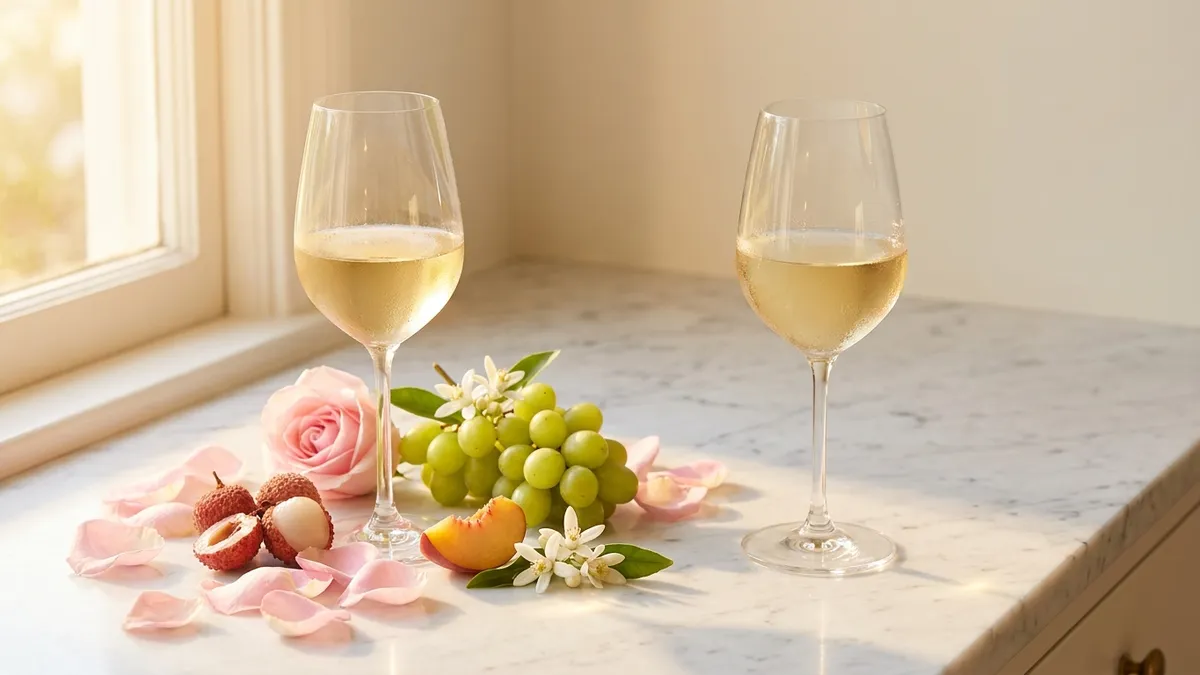
The difference between aromatic vs neutral wine grapes is where the smell comes from. Aromatic grapes — Muscat, Gewürztraminer, Riesling, Torrontés, and Viognier — pack intense floral, lychee, rose, and grape scent into the fruit itself, mostly through compounds called terpenes. You can smell them across a room before the first sip. Neutral grapes — Chardonnay, Pinot Blanc, Trebbiano, Airén, Sémillon, and Macabeo — carry almost no scent of their own. They are blank canvases that take their flavor from winemaking: oak, lees aging, and malolactic fermentation. One grape arrives with its perfume built in; the other borrows its character from the cellar. Smelling the difference is one of the fastest skills a beginner can build.
What Makes a Grape Aromatic vs Neutral
Every grape contains some flavor compounds, but they fall into two camps. In aromatic grapes, those compounds are intense, distinctive, and present in the fruit before fermentation even begins. In neutral grapes, the grape contributes very little scent, leaving the winemaker to build flavor through technique.
This is not a matter of one grape being better than another. It is a fork in how the wine gets its personality. An aromatic grape walks into the room already dressed; a neutral grape shows up as a blank canvas waiting for the cellar to paint it.
The practical payoff is simple: if you learn to smell the difference, you can often guess the grape — or at least the family of grapes — before tasting. That is one of the most satisfying early wins in wine, and it is exactly the skill that turns a confusing wine list into a readable one.
The Aromatic Grapes
These grapes announce themselves on the nose. Even a beginner can pick them out because the scent is loud and specific:
- Muscat — the most aromatic grape of all, smelling unmistakably of fresh table grape, orange blossom, and honeysuckle. It is the only common grape whose wine actually smells like grapes.
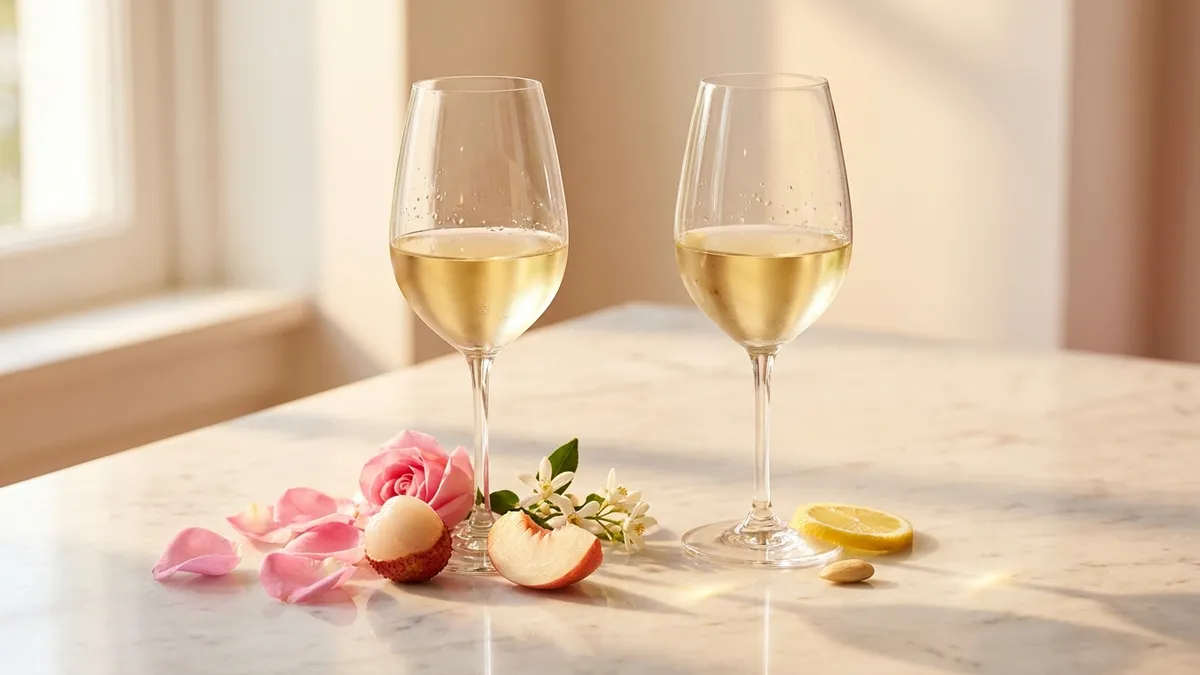
- Gewürztraminer — exotic and unmistakable, all lychee, rose petal, and warm spice. The German name even means "spiced Traminer."
- Riesling — high-acid and intensely floral, with lime, green apple, peach, and a famous petrol note (a kerosene-like aroma that develops with age and that Riesling lovers prize).
- Torrontés — Argentina's signature white, perfumed with jasmine, rose, and peach, often deceptively floral for a dry wine.
- Viognier — lush and full-bodied, scented with apricot, peach, honeysuckle, and ginger.
A useful mental shortcut: if a white wine smells like a flower shop or a bowl of stone fruit from arm's length, it is almost certainly one of these. For a deeper look at the perfumed grapes, our guides to Gewürztraminer, Riesling, and Viognier break each one down in detail.
The Neutral and Semi-Aromatic Grapes
These grapes hold back. Smelled blind, they offer faint apple, citrus, or nothing much at all — which is precisely why winemakers love them:
- Chardonnay — the world's great blank canvas, with only faint green apple and citrus of its own. Everything else comes from the cellar.
- Pinot Blanc — clean and quiet, with subtle apple and almond.
- Trebbiano — Italy's workhorse white (also called Ugni Blanc in France), high in acid and low in scent.
- Airén — Spain's most-planted white grape, mild and neutral, the base of many everyday wines.
- Sémillon — soft and waxy, with faint lanolin and fig; it gains complexity with age and blending.
- Macabeo — also called Viura, a backbone grape of Spanish whites and Cava with a gentle, restrained profile.
Sommelier tip: A "boring" smell in the glass is not a flaw in a neutral grape — it is the starting point. The skill is reading what the winemaker did next: oak, lees, or malolactic fermentation.
The Chemistry: Terpenes, Thiols, and Pyrazines
The split between aromatic and neutral grapes comes down to chemistry, and you do not need a lab coat to grasp it. Three families of compounds do most of the work.
Terpenes — The Floral Engine
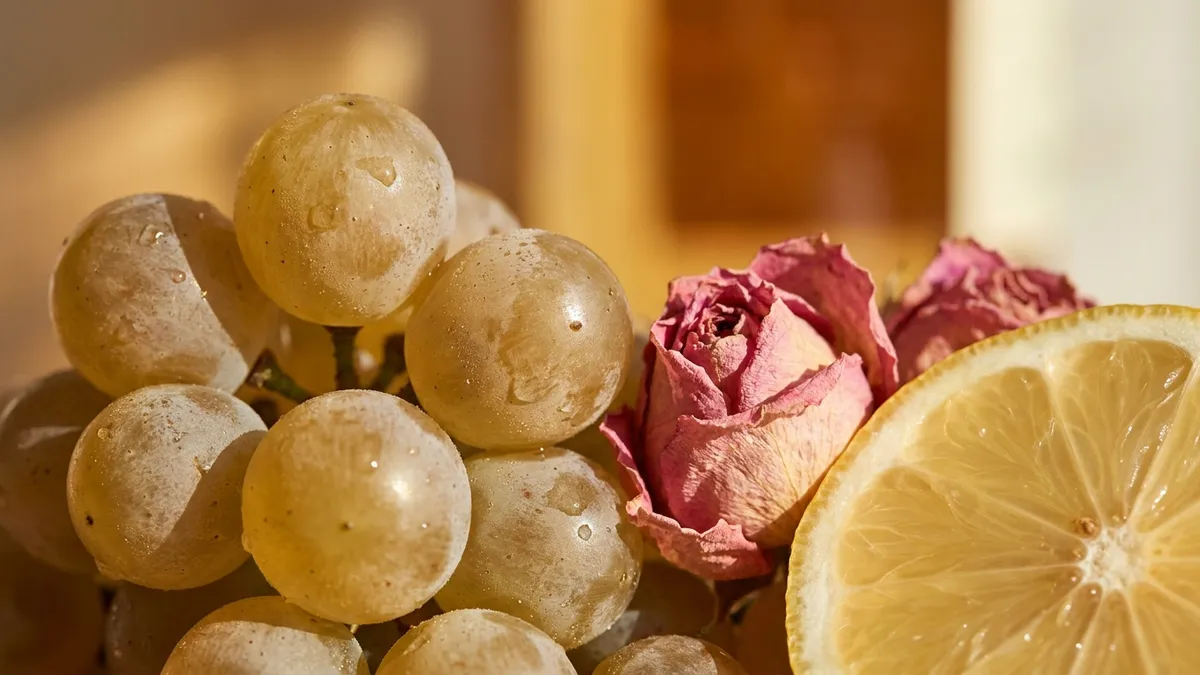
Terpenes are aromatic compounds concentrated in grape skins, the same molecular family responsible for the smell of roses, citrus peel, lavender, and pine. Two terpenes in particular — linalool and geraniol — give Muscat, Riesling, Gewürztraminer, and Viognier their floral, grapey, lychee perfume.
Aromatic grapes are simply loaded with terpenes; neutral grapes have very few. That single fact explains most of why you can smell a Muscat from across the table and barely smell a young, unoaked Chardonnay at all.
Thiols and Pyrazines — Sauvignon Blanc's Different Path
Sauvignon Blanc is aromatic too, but it gets there by a different chemical route. Its scent comes from thiols (sulfur compounds that smell of passionfruit, grapefruit, and gooseberry) and pyrazines (compounds that smell green — bell pepper, fresh-cut grass, and asparagus).
This is why Sauvignon Blanc sits slightly apart from the terpene-driven floral crowd. It is unmistakably aromatic, yet it smells grassy and tropical rather than perfumed and grapey. Same outcome — a loud nose — by a different molecule.
Why Neutral Grapes Stay Quiet
Neutral grapes contain low levels of all three compound families. What they do carry are precursors — flavorless building blocks that winemaking can coax into character. Oak contributes vanilla and toast. Lees (the spent yeast cells left after fermentation) add a creamy, bready texture when the wine rests on them. Malolactic fermentation (a secondary fermentation that converts sharp malic acid into softer lactic acid) brings buttery richness. None of that comes from the grape itself.
If you want to practice naming these aromas instead of guessing, the Sommy app walks you through floral, fruity, and savory scent families with side-by-side guided tastings — the exact skill that separates a terpene from a thiol in real time.
Aromatic vs Neutral Grapes: A Side-by-Side Comparison
The fastest way to internalize the difference is to see the grapes lined up with their key aroma driver and signature scent. Notice how the aromatic grapes each have a vivid, namable smell, while the neutral grapes share a quiet, winemaking-led profile.
Aromatic grapes carry their scent in the fruit; neutral grapes borrow it from the cellar.
- Muscat — Aromatic · Key aroma driver: terpenes (linalool, geraniol) · Fresh grape, orange blossom
- Gewürztraminer — Aromatic · Key aroma driver: terpenes · Lychee, rose petal, spice
- Riesling — Aromatic · Key aroma driver: terpenes · Lime, peach, floral, petrol
- Torrontés — Aromatic · Key aroma driver: terpenes · Jasmine, rose, peach
- Viognier — Aromatic · Key aroma driver: terpenes · Apricot, honeysuckle, ginger
- Sauvignon Blanc — Aromatic · Key aroma driver: thiols and pyrazines · Passionfruit, grass, bell pepper
- Chardonnay — Neutral · Key aroma driver: winemaking (oak, lees, MLF) · Faint apple; butter and toast if oaked
- Pinot Blanc — Neutral · Key aroma driver: winemaking · Subtle apple, almond
- Trebbiano — Neutral · Key aroma driver: winemaking · Light citrus, high acid, little scent
- Airén — Neutral · Key aroma driver: winemaking · Mild, neutral, gentle apple
- Sémillon — Neutral / semi-aromatic · Key aroma driver: winemaking and age · Lanolin, fig, waxy with age
- Macabeo — Neutral · Key aroma driver: winemaking · Restrained apple, floral hints
This table is also a quick orientation to white grapes generally — for the bigger picture of how varieties relate to one another, our overview of the noble grapes sets the foundation that aromatic and neutral grapes both build on.
Why Aromatic Grapes Are Often Off-Dry
Walk into a wine shop and you will notice a pattern: aromatic wines are far more likely to carry a touch of sweetness than neutral ones. There are three concrete reasons, and none of them is accident.
First, aroma reads as sweetness. The intense floral and grapey perfume of Muscat or Gewürztraminer signals "sweet" to your brain even when the wine is technically dry. Winemakers often lean into that impression by leaving a little residual sugar (unfermented grape sugar that remains in the finished wine).
Second, sweetness balances acidity. Many aromatic grapes — Riesling above all — keep piercing natural acidity. A small amount of residual sugar smooths that sharpness without making the wine taste like dessert. The two pull against each other and land in balance.
Third, a little sugar tames bitterness and pungency. Highly aromatic grapes can show a faintly bitter or oily edge, especially Gewürztraminer. An off-dry finish (just barely sweet) rounds that off and makes the wine more flattering, particularly alongside spicy or pungent food.
Neutral grapes rarely need any of this. Without an intense perfume to balance and without the same bitterness risk, they are usually finished bone dry and shaped by oak and lees instead.
How This Changes Food Pairing
The aromatic-versus-neutral split is one of the most useful pairing tools a beginner can learn, because the two camps want completely different things on the plate.
Pairing Aromatic Wines
Aromatic, often off-dry whites are the secret weapon for foods that defeat most wine:
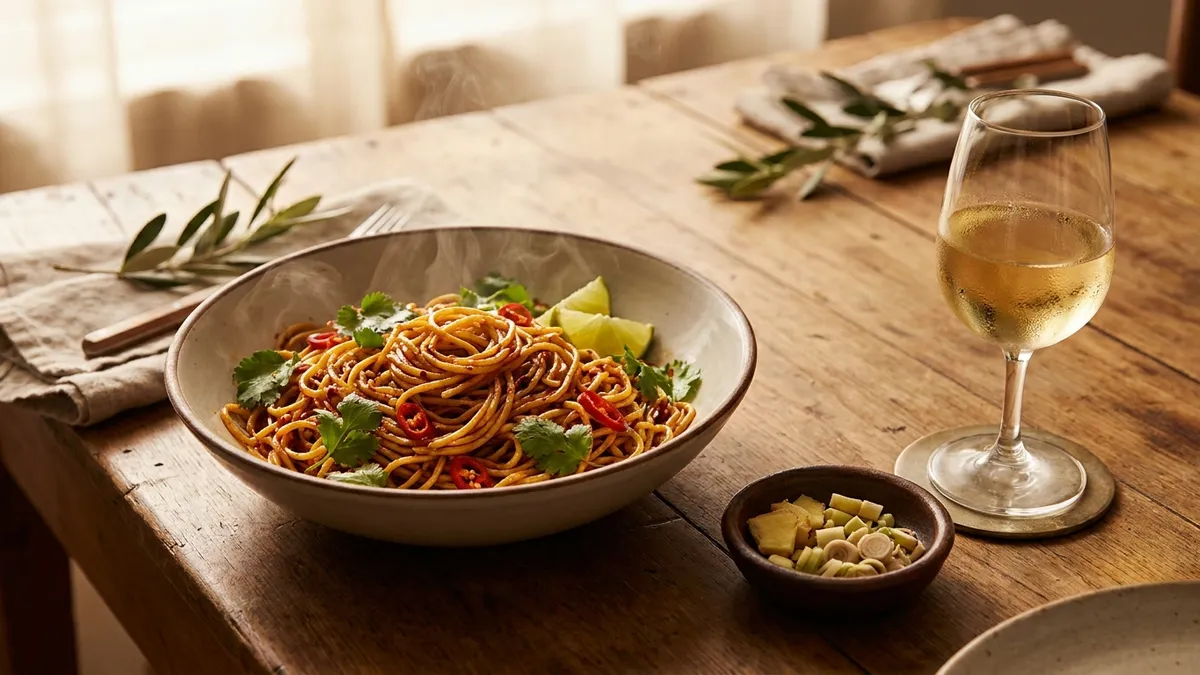
- Spicy food — Thai, Indian, Sichuan, and Korean dishes. The touch of sweetness cools chili heat while the floral fruit echoes the aromatics in the cooking.
- Pungent and fragrant dishes — ginger, lemongrass, coriander, and curry spices meet their match in a perfumed Gewürztraminer or Riesling.
- Rich, fatty starters — Gewürztraminer with foie gras or a ripe washed-rind cheese is a classic for a reason.
The principle is that an expressive wine can stand beside an expressive plate without being flattened. A loud nose pairs with loud food.
Pairing Neutral Wines
Neutral whites are the diplomats of the table — they adapt to the dish rather than competing with it. The pairing depends on how the wine was made, not on the grape:
- Unoaked, steel-fermented neutral white — crisp and mineral, ideal for oysters, raw shellfish, ceviche, and goat cheese.
- Lees-aged or lightly oaked neutral white — rounder and creamier, good for roast chicken, creamy pasta, and richer fish.
- Full oaked-and-buttery Chardonnay — matches lobster with drawn butter, cream sauces, and roast pork.
This flexibility is exactly why Chardonnay is the most-planted white wine grape on earth: the winemaker can aim it at almost any dish. To understand the structural side of pairing — acidity, body, and how they interact with food — see our primer on tannins, acidity, and body.
How Oak Treats Aromatic and Neutral Grapes Differently
Oak is where the two camps diverge most dramatically in the cellar, and understanding why explains a lot about how white wine is made.
Oak Masks Aromatic Grapes
For aromatic grapes, oak is usually a mistake. The delicate floral and fruity terpenes that make Muscat or Riesling special are easily buried under vanilla and toast. Put a Gewürztraminer in a new oak barrel and you lose the lychee and rose that were the whole point. That is why the vast majority of aromatic whites are fermented in stainless steel, which adds nothing and lets the grape's own scent shine.
Viognier is the partial exception: its fuller body can carry a light, careful touch of oak. But even there, restraint is the rule.
Oak Completes Neutral Grapes
For neutral grapes, oak is a gift rather than a threat. With little inherent scent to overwhelm, a neutral grape welcomes the vanilla, spice, and toast that barrels provide. This is the entire reason an oaked Chardonnay tastes so different from an unoaked one made from the same fruit — the flavor is the barrel's, not the grape's.
The same logic applies to lees aging and malolactic fermentation: neutral grapes gain texture and richness they could never produce alone. A grape like Godello shows this beautifully, shifting from lean and mineral to creamy and white-Burgundy-like depending purely on whether it sees lees and oak.
How to Train Your Nose to Tell Them Apart
You do not need years of practice to start sorting aromatic from neutral grapes. You need a method and one good comparison.
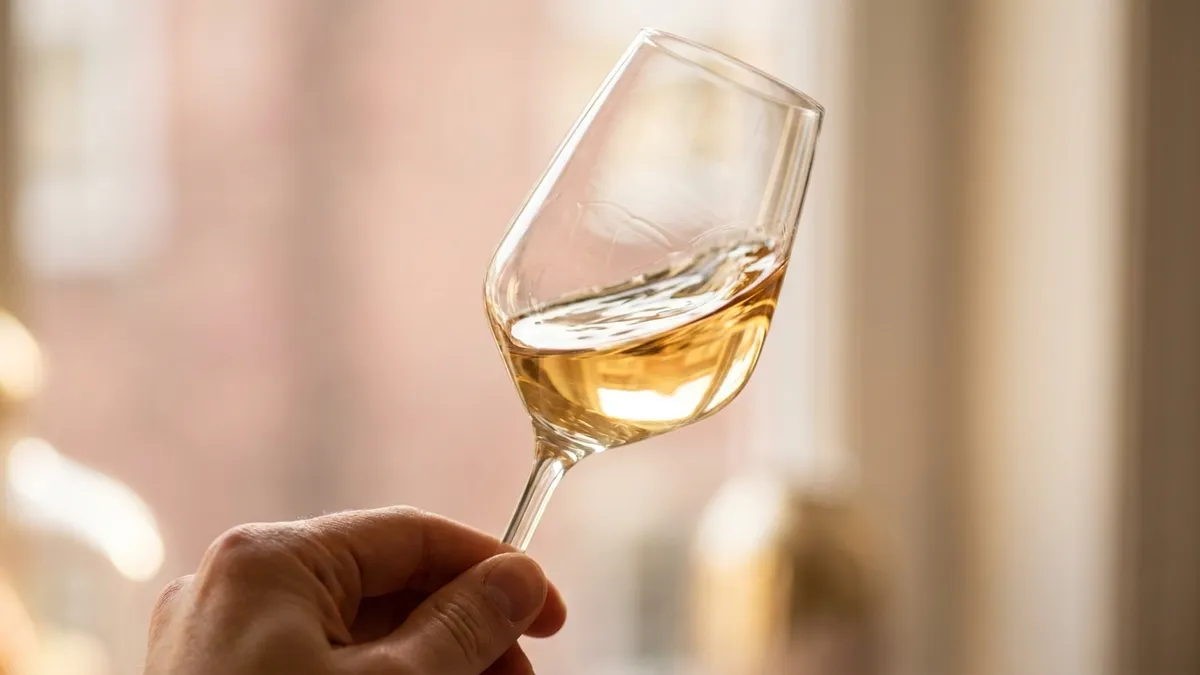
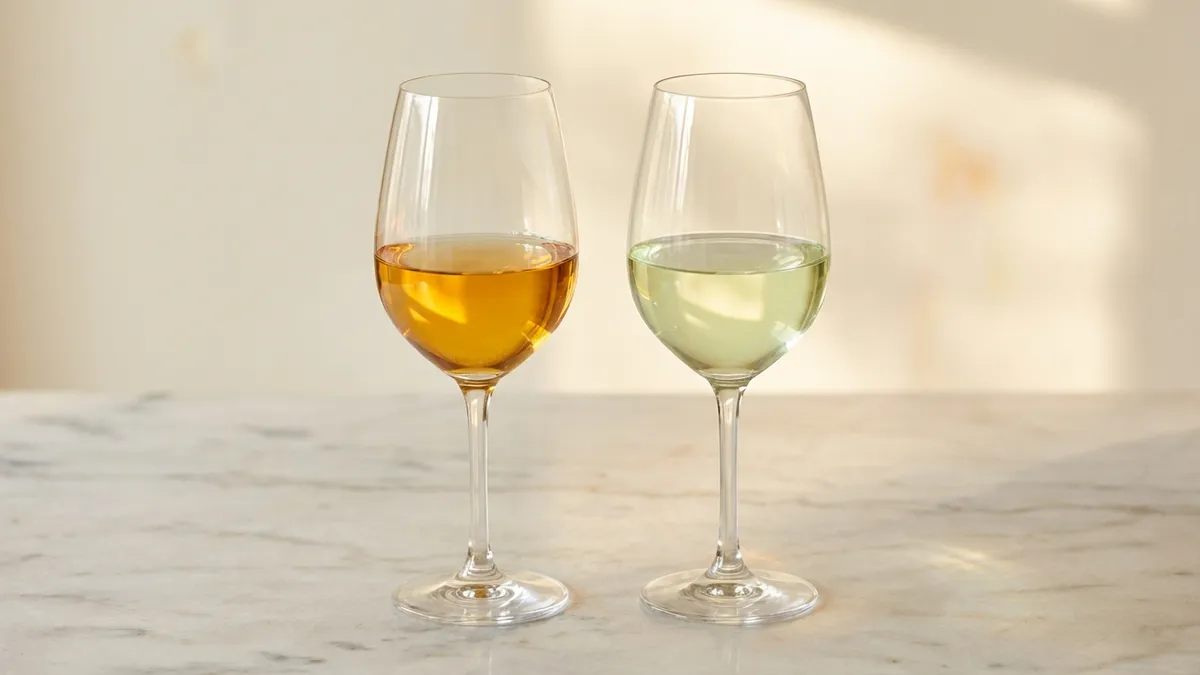
The fastest way to learn is a deliberate side-by-side. Pour two wines and compare them directly:
- Pour an obvious aromatic wine next to an obvious neutral one. A dry Muscat or Gewürztraminer beside an unoaked Chardonnay or Pinot Blanc makes the gap impossible to miss.
- Smell both before tasting either. Note which glass leaps out and which stays quiet. That contrast is the lesson.
- Name what you smell. Flowers, lychee, fresh grape, peach for the aromatic; faint apple, citrus, or nothing for the neutral. Putting words to it locks the memory in.
- Then taste, and notice the second contrast. The aromatic wine often shows a hint of sweetness; the neutral wine is usually bone dry, with its character coming from texture rather than scent.
This one-variable-at-a-time approach is the backbone of how the Sommy app teaches tasting, and it is far more effective than smelling wines in isolation. For the underlying technique, our guides to how to smell wine and how to taste wine walk through the full method step by step.
Once the aromatic-versus-neutral split clicks, the rest of wine starts to fall into place. You stop asking "what does this taste like?" and start asking the more useful question: where did this flavor come from — the grape, or the cellar? That single shift is what turns guessing into reading, and it is available to anyone willing to smell first and sip second.
Sources
Frequently Asked Questions
What is the difference between aromatic and neutral wine grapes?
Aromatic grapes carry intense varietal scent built into the fruit itself, so you smell flowers, lychee, or grape before you sip. Neutral grapes carry little inherent aroma and act as blank canvases, taking their character from winemaking choices like oak, lees aging, and malolactic fermentation rather than from the grape variety alone.
Which grapes are the most aromatic?
The most aromatic grapes are Muscat, Gewürztraminer, and Torrontés, followed closely by Riesling and Viognier. Sauvignon Blanc is aromatic too, though its scent comes from thiols and pyrazines rather than the terpenes that drive the floral, grapey, lychee character of the Muscat family. All of these announce themselves clearly on the nose.
Is Chardonnay an aromatic grape?
No. Chardonnay is the classic neutral grape, a blank canvas with only faint apple and citrus of its own. Its familiar flavors of butter, toast, vanilla, and cream come from winemaking: oak barrels, lees contact, and malolactic fermentation. The same grape can taste lean and steely or rich and buttery depending entirely on those choices.
Why are aromatic wines often off-dry?
Many aromatic grapes are left with a little residual sugar because their intense floral, grapey perfume reads as sweet even when dry, and a touch of sugar balances their high acidity. Off-dry styles also tame the bitterness that pungent grapes like Gewürztraminer can show, and the sweetness flatters spicy and pungent foods these wines often pair with.
What are terpenes in wine?
Terpenes are aromatic compounds found in grape skins that create floral and fruity scents, the same family of molecules behind the smell of roses, citrus peel, and pine. Aromatic grapes like Muscat and Riesling are loaded with terpenes such as linalool and geraniol, which is why they smell so strongly of flowers, grape, and lychee straight from the glass.
Do aromatic grapes need oak aging?
Usually not. Aromatic grapes already carry plenty of flavor, so oak tends to mask their delicate floral and fruity terpenes rather than add to them. Most Muscat, Gewürztraminer, and Riesling are fermented in stainless steel to preserve that scent. Neutral grapes benefit far more from oak, lees, and malolactic fermentation, which give them the flavor they lack on their own.
How can a beginner tell aromatic and neutral wines apart?
Smell the wine before you taste it. If a glass bursts with flowers, lychee, peach, or fresh grape from a distance, it is almost certainly an aromatic grape. If the nose is quiet and you notice toast, butter, nuts, or cream instead of bright fruit, you are likely smelling a neutral grape shaped by oak and lees. Side-by-side comparison makes the gap obvious.
Are aromatic wines better than neutral wines?
Neither is better; they offer different experiences. Aromatic wines are expressive and immediate, ideal for spicy food and easy enjoyment. Neutral wines are flexible and food-friendly, capable of everything from crisp and mineral to rich and creamy depending on winemaking. The best approach is learning to recognize each style so you can choose the right bottle for the moment.
Sommy Team
LinkedInFounder & Wine Educator
The Sommy Team is building the world's most approachable wine education app, helping beginners develop real tasting skills through structured courses and AI-guided practice.