Gewürztraminer Wine Guide: Love It or Hate It

By the Sommy Team — AI-assisted, human-edited.
Updated Apr 29, 2026
Contents (10)
- What Is Gewürztraminer Wine, in 100 Words
- Why Gewürztraminer Is So Distinctive
- A Quick History: From Tramin to the World
- Why Gewürztraminer Polarizes Drinkers
- Key Gewürztraminer Wine Regions
- The Sweetness Spectrum: From Dry to Lusciously Sweet
- Food Pairing: The Spicy Food Specialist
- How to Taste Gewürztraminer Like a Pro
- Aging Potential
- Getting Started with Gewürztraminer
TL;DR
Gewürztraminer is the most polarizing aromatic white grape in wine. It produces deeply golden, full-bodied, low-acid wines with explosive lychee, rose petal, and ginger perfume. Star regions are Alsace, South Tyrol, Pfalz, and the Pacific Northwest. The grape pairs phenomenally with spicy Asian food, foie gras, and pungent Munster cheese.
Gewürztraminer wine is the loudest, most unmistakable white grape on the planet. While Chardonnay whispers and Sauvignon Blanc chatters, Gewürztraminer arrives like a perfumed entrance — lychee, rose petal, ginger, and Turkish delight pouring out of the glass before the bottle even hits the table. There is no other variety quite like it, which is exactly why it splits drinkers into two camps. People either love it or they actively avoid it. There is rarely a middle ground.
The name itself tells half the story. Gewürz is the German word for spice, and Traminer refers to the grape's homeland village of Tramin in South Tyrol, northern Italy. So Gewürztraminer literally translates to "spice grape from Tramin" — and the name fits. Few wines smell more spiced, more floral, or more outright theatrical. Whether that excites you or overwhelms you is a question only your palate can answer.
What Is Gewürztraminer Wine, in 100 Words
Gewürztraminer is a polarizing aromatic white grape known for explosive lychee, rose petal, ginger, and Turkish-delight perfume. The "Gewürz" in its name means spice in German. Profile: deep golden color (the deepest of any white grape), low acid, full body, often slightly off-dry, around 13 to 14 percent alcohol, with a typical bitter finish. Star regions are Alsace France, South Tyrol Italy (Termeno-Tramin, the original homeland), Pfalz Germany, and increasingly the Pacific Northwest in the USA. Distinctive enough to be the easiest white grape to identify blind. Pairs phenomenally with spicy food, pungent cheese, and foie gras.
Why Gewürztraminer Is So Distinctive
Three traits set Gewürztraminer apart from every other white grape, and together they explain why both its fans and its critics feel so strongly about it.
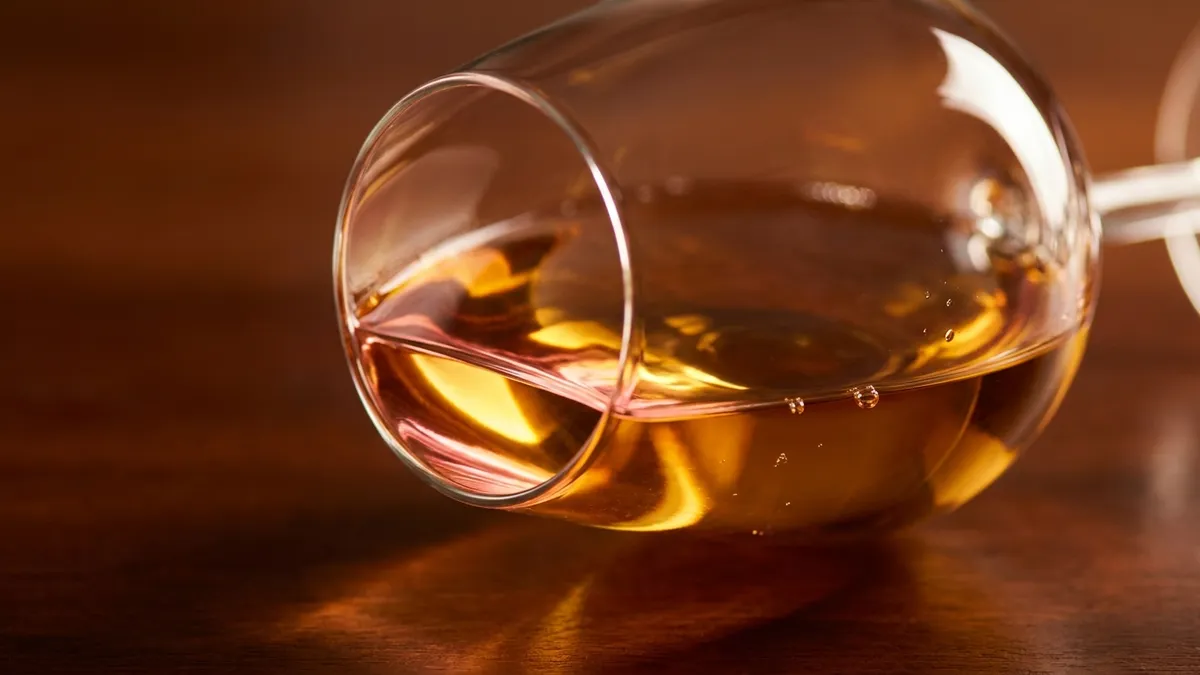
Pink-skinned berries are the first oddity. Gewürztraminer is technically a white wine, but its grapes are not green — they range from coppery pink to dusty rose at full ripeness. That extra pigment translates into the deepest golden color of any white wine, sometimes pushing toward amber even in young, fresh bottles.
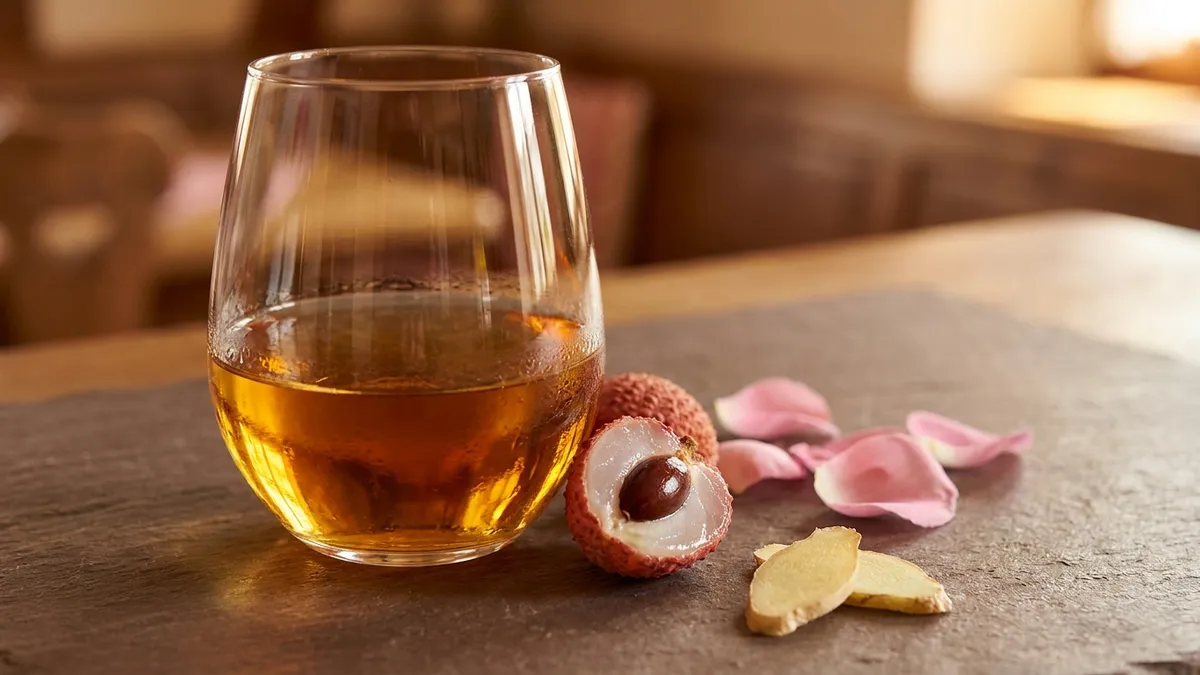
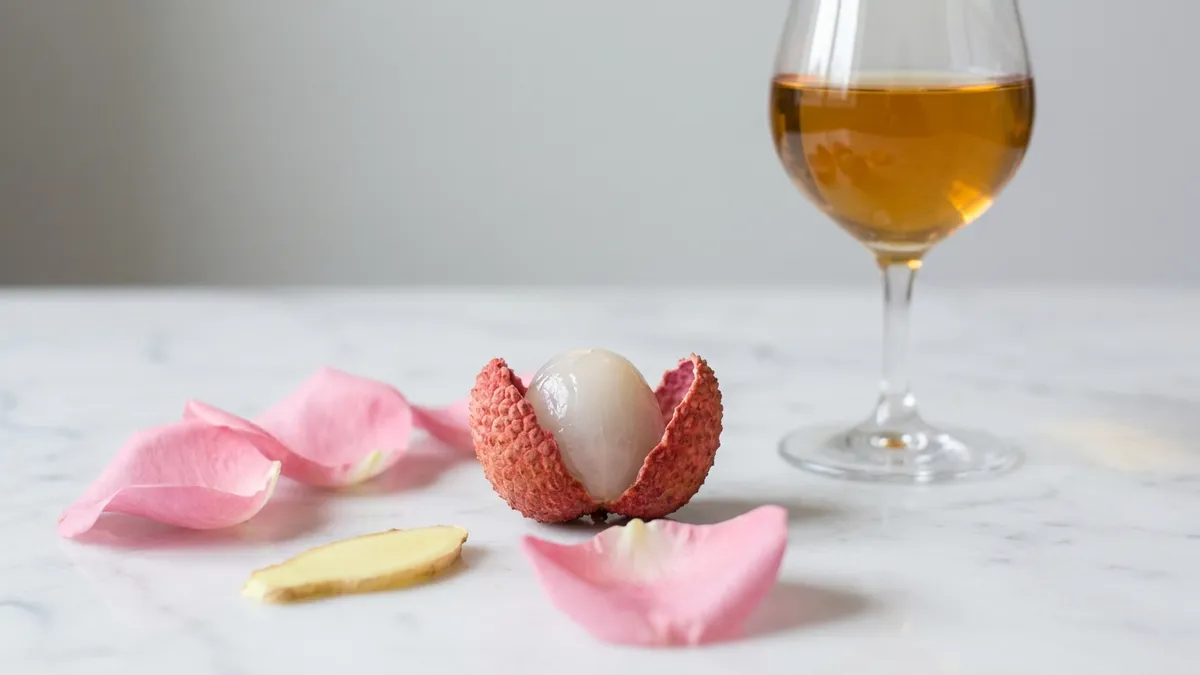
Explosive aromatic intensity is the defining trait. Gewürztraminer contains exceptionally high levels of monoterpenes (a family of aroma compounds also found in roses, lychee, ginger, and citrus oils). These compounds are what create the wine's signature lychee-rose-ginger perfume. Even a small pour fills the room. For sniffing practice, Gewürztraminer is one of the best teaching wines in the world — there is simply nothing subtle about it.
Low natural acidity is the third defining feature, and the one that drives most of the criticism. Where Riesling crackles with vivid citrus acid, Gewürztraminer pours out heavy and oily. Combined with high alcohol (often 13.5 to 14.5 percent) and a faintly bitter, almost grapefruit-pith finish, the result feels rich, weighty, and warming rather than refreshing. Some drinkers love that lush mouthfeel. Others find it cloying.
If you want to compare these traits against Gewürztraminer's closest aromatic-white cousin, the Riesling wine guide covers Riesling's high-acid, mineral-driven profile in detail.
A Quick History: From Tramin to the World
Gewürztraminer's origin story runs through one small alpine village. Tramin (called Termeno in Italian) sits in South Tyrol, the German-speaking region of northern Italy near the Austrian border. References to a grape called Traminer here date back to at least the 11th century.
The original Traminer was relatively neutral. The intensely aromatic, pink-skinned mutation that gave us today's Gewürztraminer emerged later — most likely in Alsace and southwest Germany in the 1800s. Today, the variety is grown across more than 20 countries with total plantings around 12,000 to 15,000 hectares. France alone, mostly Alsace, accounts for roughly 3,000 hectares.
Why Gewürztraminer Polarizes Drinkers
Few grapes generate such strong opinions. The case against centers on three complaints: the perfume can feel overpowering (some critics call it soapy or cosmetic), the low acidity makes the wine feel heavy and unrefreshing, and the faintly bitter finish — from the grape's high phenolic content — can feel coarse to people used to clean, neutral whites.
The case for Gewürztraminer is just as strong. Fans love the immediate sensory hit, the oily full body that pairs magnificently with rich foods, and the aromatic complexity that offers a teaching laboratory for anyone learning to identify wine aromas.
The honest answer: try a glass before you buy a bottle. Most drinkers form a firm opinion within the first sniff. To train your nose for grapes like this, structured smell-training exercises speed up the process dramatically.
Key Gewürztraminer Wine Regions
Alsace, France
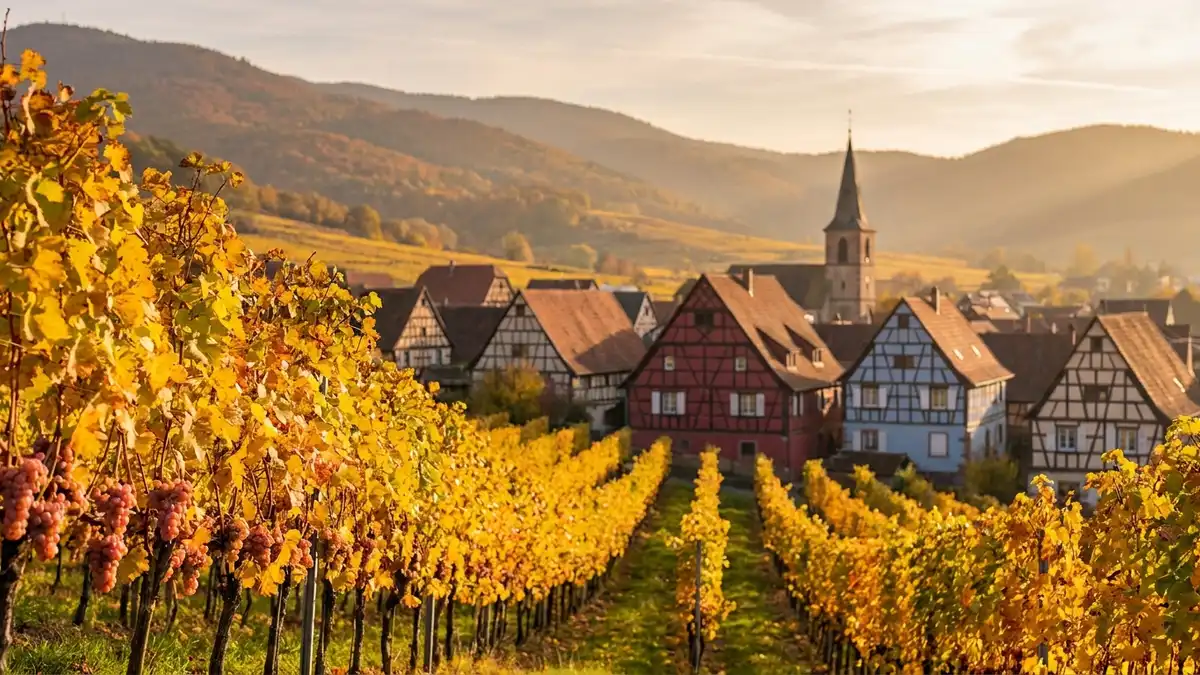
Alsace produces the most famous and powerful expression of Gewürztraminer in the world. The region sits on the French side of the Rhine, sheltered from rain by the Vosges mountains, which gives it a warm, dry growing season ideal for fully ripening this late-budding grape. Roughly 3,000 hectares of Gewürztraminer grow here, accounting for about 18 percent of Alsace's total vineyard area.
Alsace Gewürztraminer is full-bodied, perfumed, and almost always at least 13.5 percent alcohol. Most bottlings are dry or barely off-dry, though the wines often taste sweeter than they technically are because of the grape's intense fruit perfume. The 51 Alsace Grand Cru vineyards produce especially powerful, age-worthy versions, with sites like Goldert, Hengst, and Zinnkoepflé producing some of the most concentrated dry Gewürztraminers ever made.
South Tyrol, Italy
The grape's ancestral homeland still produces excellent Gewürztraminer under the Termeno (or Tramin) appellation. Italian versions tend to be lighter, fresher, and more food-friendly than their Alsace counterparts — usually around 13 percent alcohol with a cleaner, less oily texture. The dual labeling can be confusing: bottles are sold as Traminer Aromatico, Gewürztraminer, or Termeno depending on the producer.
This is the place to drink Gewürztraminer with food rather than as a sit-down sipper. The Italian wine guide covers the broader context of Alto Adige and South Tyrol's wine culture.
Pfalz, Germany
Germany's Pfalz region (and to a lesser extent Baden and Rheinhessen) produces a quietly excellent style of Gewürztraminer that sits between the powerful Alsace expression and the lighter Italian one. German versions are often bottled with noticeable residual sugar, labeled halbtrocken (off-dry) or lieblich (medium-sweet). The German wine regions guide covers the Pfalz in more depth.
Pacific Northwest, USA
Washington State, Oregon, and the cooler corners of California's Anderson Valley produce a small but growing volume of Gewürztraminer. Cooler climates suit the grape — warmer regions tend to push it past ripeness, dropping acidity to flabby levels and pushing alcohol above 14.5 percent. The best New World versions show varietal lychee and rose-petal character with crisper acidity than typical Alsace bottles.
Other Regions to Know
- Hungary (Tokaj region) — small plantings, often blended into sweet wines
- Australia (Adelaide Hills, Tasmania) — fresh, lighter cool-climate styles
- New Zealand (Gisborne, Hawke's Bay) — aromatic, off-dry, food-friendly
- Canada (Niagara, Okanagan) — Icewine versions are a regional specialty
The Sweetness Spectrum: From Dry to Lusciously Sweet
Like Riesling, Gewürztraminer can be made across a wide sweetness range, though the spectrum is narrower in practice. Understanding where a bottle sits is essential for matching it to food.
Dry Gewürztraminer (under 8 grams per liter of residual sugar, the unfermented grape sugar remaining after fermentation) is the dominant style in Alsace and most of Italy. Despite the technical dryness, the explosive fruit perfume makes these wines taste fuller and faintly sweeter than the numbers suggest. Alcohol typically runs 13.5 to 14 percent.
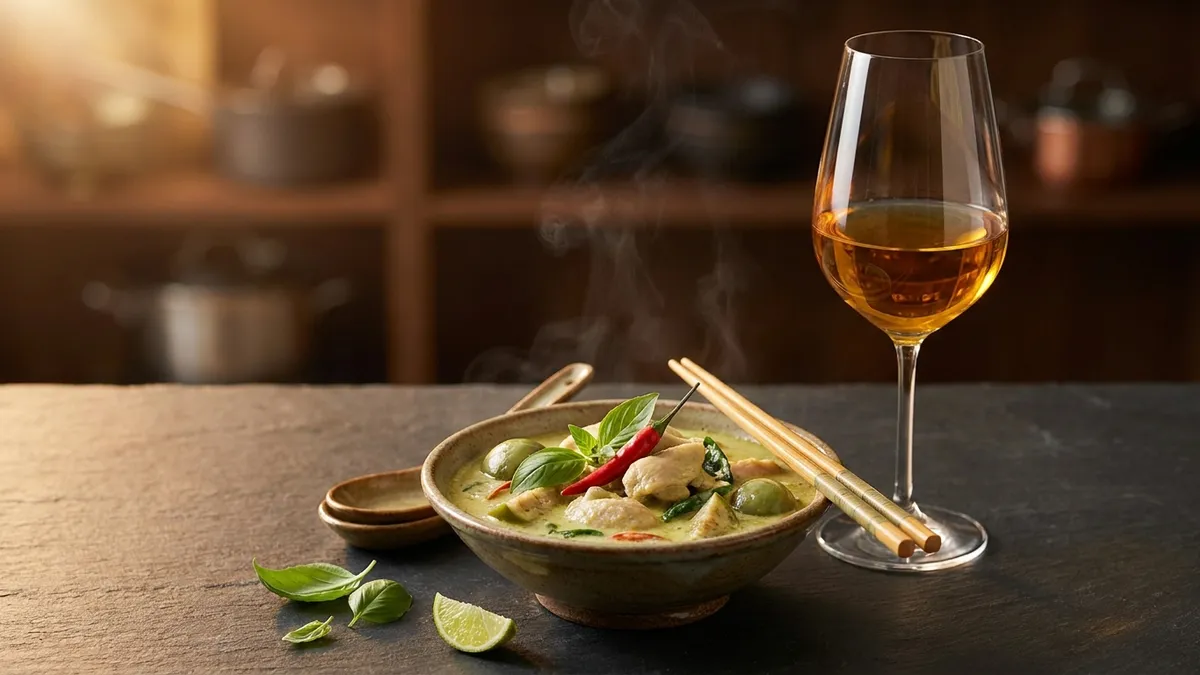
Off-dry Gewürztraminer (roughly 8 to 25 grams per liter) appears across many Alsace producers, in much of Pfalz Germany, and in most New World versions. The slight sweetness amplifies the floral and tropical character and helps the wine match spicy and sweet-savory foods like Thai green curry or Moroccan tagine.
Vendanges Tardives (literally "late harvest") is a regulated Alsace category for wines made from grapes left on the vine well past normal ripeness. Vendanges Tardives Gewürztraminer is genuinely sweet — typically 40 to 100 grams per liter of residual sugar — with concentrated honeyed apricot, ginger preserve, and dried rose-petal flavors.
Sélection de Grains Nobles (SGN) is the apex sweet category. Made from individually selected berries shriveled by noble rot (the beneficial Botrytis cinerea fungus that concentrates sugar and adds honey-apricot complexity), SGN Gewürztraminer is intensely sweet, unctuous, and rare. Bottles often spend 10 to 20 years aging beautifully. The dessert wine guide covers SGN alongside other late-harvest styles.
For more on how residual sugar shows up on the palate, the wine sweetness scale walks through the perception side of the same numbers.
Food Pairing: The Spicy Food Specialist
This is where Gewürztraminer earns its reputation, and where even skeptics often change their minds. The grape pairs better with strongly spiced and aromatic Asian cuisines than almost any other variety in the world.
The reason is partly chemical. The same monoterpene compounds that give Gewürztraminer its lychee and ginger perfume also appear in many of the herbs and spices used in Thai, Vietnamese, Sichuan, and Indian cooking — lemongrass, galangal, ginger, cardamom, star anise. The wine and the food share aromatic vocabulary, creating bridges that lift both.
The bigger reason is structural. Gewürztraminer's low acid, full body, and optional residual sugar are exactly what spicy food needs. Capsaicin (the heat compound in chili peppers) binds to pain receptors that high-alcohol, high-tannin wines amplify. Off-dry Gewürztraminer's sugar physically coats and cools the palate, while its weight matches the richness of coconut milk, ghee, and other spice-carrying fats. The full guide on pairing wine with spicy food explains the science in more detail.
Specific pairing recommendations:
- Thai green curry — off-dry Gewürztraminer (the coconut cream and lemongrass match perfectly)
- Vietnamese pho — dry Alsace Gewürztraminer (the wine's spice notes echo star anise and cinnamon)
- Sichuan mapo tofu — off-dry Gewürztraminer (the wine soothes Sichuan peppercorn's tingle)
- Indian biryani or korma — off-dry to medium-sweet Gewürztraminer (see the full wine with Indian food guide for a dish-by-dish breakdown)
- Moroccan tagine — Vendanges Tardives Gewürztraminer (sweet wine for sweet-savory dishes built on apricot and cinnamon)
Beyond Spicy Food
Gewürztraminer also handles several pairings where most whites struggle:
- Munster cheese — the pungent washed-rind cheese from Alsace is the regional pairing locals have made for centuries
- Foie gras — Vendanges Tardives or SGN Gewürztraminer with seared foie gras and fruit chutney is one of wine's great pairings
- Smoked salmon — the wine's exotic perfume bridges to the smoke
- Roast pork with apple or quince
- Blue cheese — sweet styles balance the salt and funk
- Carrot, butternut squash, and ginger soups — the aromatic match is uncanny
What does not work: lean fish, leafy salads, and any dish built on bright citrus acidity. For those, the wine's low acid leaves the food tasting flat. The wine and food pairing guide covers the broader principles of matching wine structure to dishes.
How to Taste Gewürztraminer Like a Pro
Few wines are easier to identify blind than Gewürztraminer, but only if you know what to look for. Here is the systematic approach.
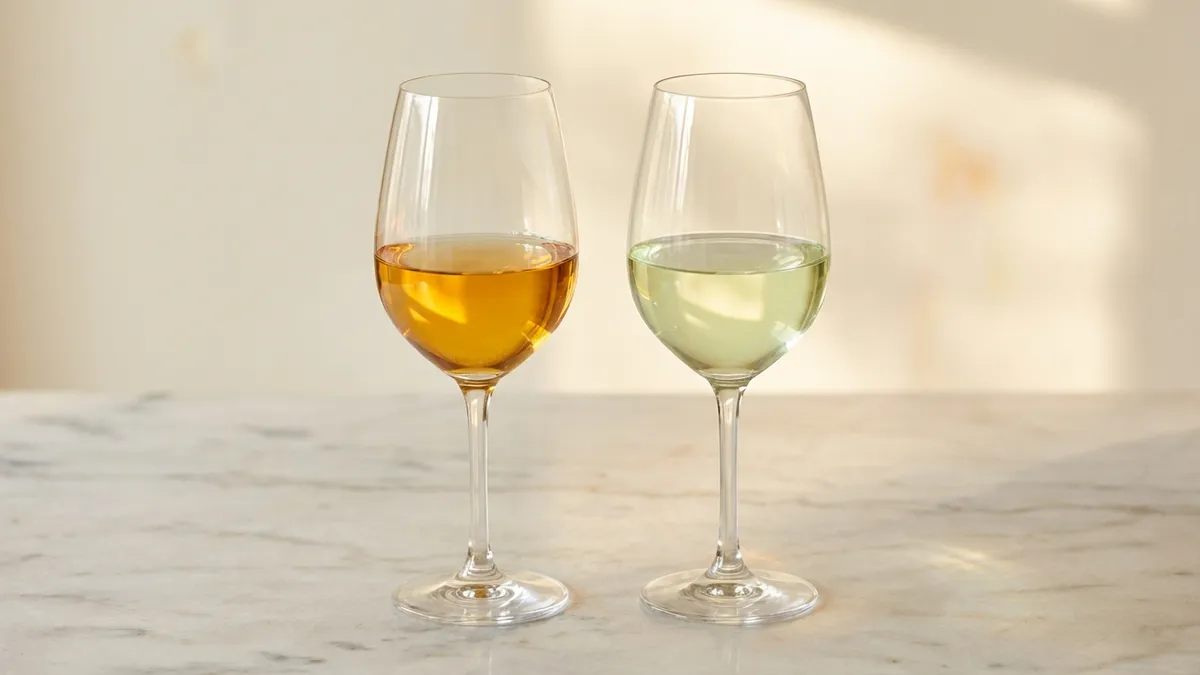
Sight: Pour a small amount and tilt the glass against a white surface. Gewürztraminer is the deepest-colored white grape — even young examples show full gold, often with a slight pink tint that hints at the pink skins. If a young white wine looks more amber than lemon, Gewürztraminer is the leading suspect. The wine appearance guide covers what color tells you about a wine.
Smell: Stick your nose deep into the glass. Lychee is the calling card — once you have smelled it in Gewürztraminer, you will recognize it instantly thereafter. Look for layered notes of rose petal, ginger, Turkish delight, passionfruit, grapefruit pith, and warm spices like cinnamon and clove. The intensity is unmistakable. Tasters describe a fully ripe Alsace Gewürztraminer as smelling like a perfume counter or a tropical fruit market.
Palate: Note the full, oily texture. The wine should feel weighty in the mouth, with low to moderate acidity (this is not a refreshing wine in the Sancerre sense). Alcohol is typically 13.5 to 14.5 percent. The finish often shows a faint bitter edge — like grapefruit pith or quinine — which is varietally correct, not a fault.
The Sommy app includes a guided aroma library that walks through the specific compounds in Gewürztraminer (lychee, rose, ginger) so you can build a sensory anchor for each one. Aromatic grapes like this are the ideal training wines because the notes are present in unmistakable concentration.
Aging Potential
Gewürztraminer ages less gracefully than Riesling. Most dry bottles are best drunk within 3 to 5 years of vintage while the primary lychee and rose perfume is at its peak. Top Alsace Grand Cru dry bottlings can develop over 10 to 15 years, with the tropical perfume giving way to honeyed apricot and dried orange peel. Vendanges Tardives wines age beautifully for 15 to 25 years, and Sélection de Grains Nobles can last 30 years or more.
Serve older bottles slightly warmer than young ones (around 12 to 13°C) so the developed aromas open up. The wine serving temperature chart covers ideal temperatures across styles.
Getting Started with Gewürztraminer
For anyone new to the grape, the easiest entry point is a dry to off-dry Alsace Gewürztraminer at the village level (not Grand Cru). These bottles typically cost 20 to 35 dollars and show the full varietal personality without the price tag of a top single-vineyard wine.
From there, branch out by region. A South Tyrol Termeno bottling will show a leaner, food-friendlier face. A Pacific Northwest version will offer brighter acidity. A German Pfalz example will lean off-dry. Trying these side by side is one of the most informative single-grape tasting exercises a beginner can run, and it builds the kind of regional pattern recognition that makes tasting like a sommelier feel achievable rather than mysterious.
If you want a structured path to learn aromatic whites systematically, the Sommy app walks through the lychee-rose-ginger trio that makes Gewürztraminer unmistakable, alongside the aromatic vocabulary for every other major white grape. Building a mental aroma library is the single biggest unlock for confident wine tasting, and Gewürztraminer is one of the best teaching wines in the world for it — precisely because nothing else smells quite like it.
Whether you end up loving Gewürztraminer or politely setting it down after one sniff, you will know which camp you are in. That clarity is itself useful palate knowledge.
Frequently Asked Questions
How do you pronounce Gewürztraminer?
Gewürztraminer is pronounced geh-VERTS-trah-mee-ner, with the stress on the second syllable. The umlaut over the u softens the vowel toward an ee sound. The word means spice-Traminer in German, where Traminer refers to the grape's homeland village of Tramin in South Tyrol. Many shops drop the umlaut and label bottles simply Gewurztraminer.
What does Gewürztraminer taste like?
Gewürztraminer is one of the easiest wines to identify blind. It shows explosive lychee, rose petal, ginger, and Turkish-delight aromas, often with passionfruit, grapefruit pith, and warm baking spice. The palate is full-bodied and oily in texture with low acidity, moderate to high alcohol around 13 to 14 percent, and a slightly bitter finish. Even a small sniff is unmistakable.
Is Gewürztraminer always sweet?
No. The grape produces wines from fully dry to lusciously sweet. Most Alsace Gewürztraminer is technically dry or just off-dry, though the intense fruit perfume can make even dry versions taste sweeter than they are. Vendanges Tardives and Sélection de Grains Nobles bottlings from Alsace are genuinely sweet dessert wines made from late-harvested or botrytis-affected grapes.
Where is Gewürztraminer originally from?
Gewürztraminer descends from the Traminer grape, which traces back to the village of Tramin (Termeno in Italian) in South Tyrol, northern Italy. The aromatic, pink-skinned mutation that produces today's Gewürztraminer wines emerged in Alsace and southwest Germany in the late 1800s. South Tyrol still produces Gewürztraminer under the Termeno appellation, often labeled Traminer Aromatico.
What is the difference between Riesling and Gewürztraminer?
Riesling is high-acid with citrus, stone fruit, and mineral notes, ranging from bone dry to lusciously sweet. Gewürztraminer is lower in acid with intense lychee, rose petal, and ginger aromas and a fuller, oilier texture. Riesling is more versatile at the table and ages much longer. Gewürztraminer is more of a specialty pairing wine, especially for spicy and fragrant Asian cuisines.
What food pairs best with Gewürztraminer?
Gewürztraminer's signature pairing is spicy Asian cuisine — Thai green curry, Vietnamese pho, Sichuan dishes, and Indian curries. Its low acidity and aromatic intensity match the ginger, lemongrass, and warm spice in these foods. It also handles pungent washed-rind cheese like Alsace Munster, smoked meats, foie gras with sweet chutney, and Moroccan tagines built on cinnamon and apricot.
Why do some people hate Gewürztraminer?
Gewürztraminer's perfume is so intense that many drinkers find it overwhelming or perfumy in a soapy, cosmetic sense. The low acidity makes the wine feel heavy on the palate, and the slightly bitter finish is divisive. People used to lean, mineral whites like Sancerre or Chablis often find Gewürztraminer too lush, while fans love precisely those qualities. It is genuinely a love-or-hate grape.
How long does Gewürztraminer age?
Most dry Gewürztraminer is best drunk within 3 to 5 years of vintage, while it still shows fresh primary aromatics. Top Alsace Grand Cru bottlings can develop over 10 to 15 years, gaining honeyed, dried-apricot complexity. Sweet Vendanges Tardives wines age 15 to 25 years, and Sélection de Grains Nobles bottlings — made from individually selected botrytised berries — can last 30 years or more.
Sommy Team
LinkedInFounder & Wine Educator
The Sommy Team is building the world's most approachable wine education app, helping beginners develop real tasting skills through structured courses and AI-guided practice.