A Guide to Red Wine Grapes: 20 Varieties Worth Knowing

By the Sommy Team — AI-assisted, human-edited.
Updated Jun 16, 2026
Contents (8)
- What This Red Wine Grapes Guide Covers, in 60 Words
- Why Group Red Wine Grapes by Structure
- Quick Reference: 10 Key Red Wine Grapes at a Glance
- The Bold, Full-Bodied Reds
- The Medium-Bodied, Elegant Reds
- The Light, Juicy Reds
- The Rustic, Regional Specialists
- How to Use This Red Wine Grapes Guide to Build Your Palate
TL;DR
This red wine grapes guide covers 20 varieties grouped by structure: bold full-bodied reds like Cabernet Sauvignon and Syrah, medium elegant reds like Sangiovese and Tempranillo, light juicy reds like Gamay and Pinot Noir, and rustic regional grapes like Barbera and Blaufränkisch. Each entry gives a flavor signature and home region.
What This Red Wine Grapes Guide Covers, in 60 Words
This red wine grapes guide sorts 20 of the world's key dark-skinned grapes into four practical groups by body and tannin: the bold full-bodied reds (Cabernet Sauvignon, Syrah, Malbec), the medium and elegant reds (Merlot, Tempranillo, Sangiovese, Nebbiolo), the light and juicy reds (Pinot Noir, Gamay, Zweigelt), and the rustic regional grapes (Barbera, Carmenère, Blaufränkisch). Each entry gives a flavor signature and a home region.
Why Group Red Wine Grapes by Structure
There are thousands of red grape varieties grown for wine, and trying to memorize them one by one is a slow road. A faster path is to organize them by structure — the combination of tannin, acidity, and body that gives every red its shape on the palate.
Two terms do most of the work here. Tannins are the drying, gripping sensation you feel on your gums and the sides of your tongue, drawn from grape skins, seeds, and oak. Body is the overall weight and richness of the wine — how light or heavy it feels, like the difference between skim milk and cream.
Once you can place a grape on those two scales, you can predict roughly how a bottle will taste before you open it. A full-bodied, high-tannin grape will feel powerful and want rich food. A light-bodied, lower-tannin grape will feel refreshing and pair with almost anything.
The four groups below are not official categories — they are a teaching tool. The same grape can shift between groups depending on where it grows, but these buckets give beginners a reliable map. For the broader foundation, the six noble grapes are the best place to start before exploring the wider field.
Quick Reference: 10 Key Red Wine Grapes at a Glance
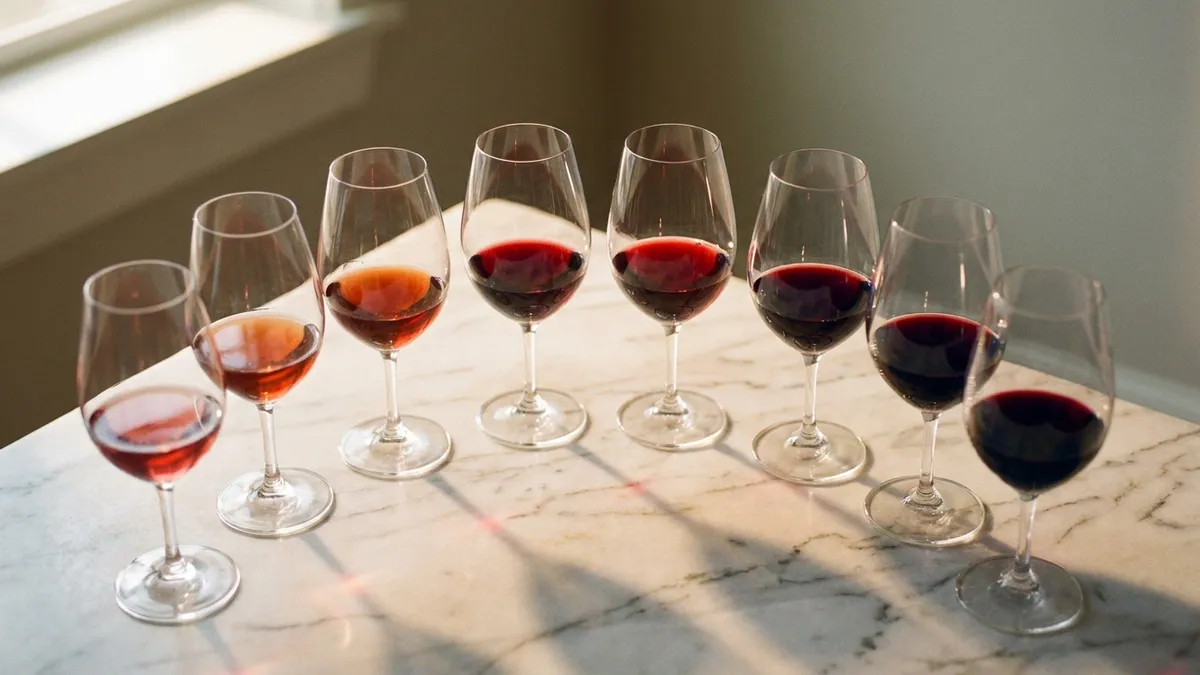
Before the detailed profiles, here is a fast comparison of the most important red wine grapes across body, tannin, signature flavor, and classic region. Use it as a cheat sheet when you are scanning a wine list or shop shelf.
A quick-reference comparison of 10 widely available red wine grapes.
- Cabernet Sauvignon — Body: full · Tannin: high · Blackcurrant, cedar · Bordeaux, France
- Merlot — Body: medium-full · Tannin: medium · Plum, chocolate · Bordeaux, France
- Pinot Noir — Body: light-medium · Tannin: low-medium · Red cherry, forest floor · Burgundy, France
- Syrah / Shiraz — Body: full · Tannin: medium-high · Black pepper, blackberry · Rhône, France
- Grenache — Body: medium-full · Tannin: low-medium · Strawberry, white pepper · Rhône, France
- Tempranillo — Body: medium-full · Tannin: medium · Cherry, leather, tobacco · Rioja, Spain
- Sangiovese — Body: medium · Tannin: medium-high · Sour cherry, tomato leaf · Tuscany, Italy
- Nebbiolo — Body: medium · Tannin: high · Rose, tar, dried cherry · Piedmont, Italy
- Malbec — Body: full · Tannin: medium · Blackberry, cocoa · Mendoza, Argentina
- Zinfandel — Body: full · Tannin: low-medium · Jammy berry, sweet spice · California, USA
The Bold, Full-Bodied Reds
These are the heavyweights — deeply colored, rich, and built for steak nights. Most carry firm tannin and reward a few years in the cellar.
Cabernet Sauvignon
The most planted red grape on earth and the benchmark for full-bodied wine. Cabernet Sauvignon delivers blackcurrant (cassis), black cherry, cedar, and graphite, with firm tannins and serious aging potential. Its home is Bordeaux's Left Bank in France, though Napa Valley, Coonawarra in Australia, and Chile all make superb versions. For a deeper look, see the full Cabernet Sauvignon wine guide.
Syrah / Shiraz
One grape, two personalities. As Syrah in France's Northern Rhône, it is savory and medium-to-full, all black pepper, blackberry, smoked meat, and violet. As Shiraz in Australia (Barossa Valley), it turns riper and fuller, with jammy dark fruit and sweet spice. The label name tells you which style to expect.
Malbec
Once a blending grape in Bordeaux, Malbec found its true home in Mendoza, Argentina, where high-altitude vineyards produce inky, full-bodied wines bursting with blackberry, plum, and cocoa, framed by smooth, velvety tannins. It is one of the most approachable big reds for newcomers. The Malbec wine guide covers it in full.
Petite Sirah
Despite the name, Petite Sirah is not a small Syrah — it is a separate, deeply pigmented grape (a Syrah crossing) that makes some of the darkest, most tannic wine in California. Expect blueberry, black pepper, dark chocolate, and a chewy, mouth-coating grip. It is often blended with Zinfandel to add backbone.
Touriga Nacional
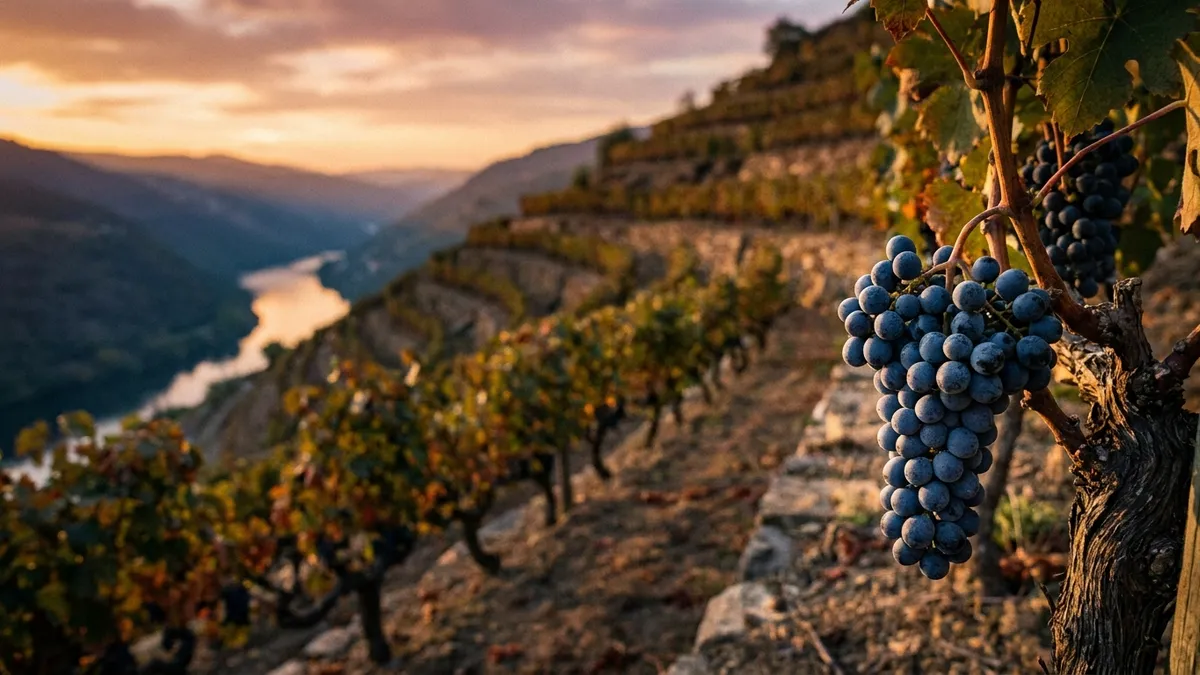
Portugal's flagship red grape and the heart of Port from the Douro Valley. Touriga Nacional is intensely aromatic, with violet, blueberry, black plum, and a floral, mineral lift over firm tannins. Increasingly bottled as a dry table wine, it offers power with surprising elegance and is well worth seeking out.
The Medium-Bodied, Elegant Reds
Here structure meets finesse. These grapes balance fruit, acidity, and savory complexity, making them some of the most food-friendly reds in the world.
Merlot
Cabernet's softer sibling, with ripe plum, black cherry, raspberry, and chocolate over rounder, gentler tannins. Merlot anchors Bordeaux's Right Bank (Saint-Émilion, Pomerol) and makes excellent wine in Washington State and Chile. Its plushness makes it a reliable choice for anyone easing into red wine. The Merlot wine guide digs deeper.
Tempranillo
Spain's great grape and the soul of Rioja. Tempranillo shows cherry and strawberry when young, evolving into leather, tobacco, and dried fig with oak aging. Its savory profile makes it exceptionally food-friendly. The Tempranillo wine guide covers Rioja versus Ribera del Duero and Spain's aging classifications.
Sangiovese
The backbone of Chianti and Brunello di Montalcino in Tuscany, Italy. Sangiovese is defined by high acidity and medium-high tannin, with sour red cherry, dried herbs, tomato leaf, and a savory, earthy edge. That mouth-watering acidity is exactly why it sings alongside tomato-based Italian food. See the Sangiovese wine guide for more.
Nebbiolo
The noble grape of Piedmont, behind the legendary Barolo and Barbaresco. Nebbiolo is a paradox: pale garnet in the glass yet ferociously tannic, with high acidity and haunting aromas of rose, tar, dried cherry, and leather. It demands patience and food, but rewards both. The Nebbiolo wine guide explains why it is a connoisseur's grape.
Cabernet Franc
The parent grape of both Cabernet Sauvignon and Merlot, with a lighter, more aromatic character. Cabernet Franc brings red fruit, graphite, crushed gravel, and a distinctive leafy, bell-pepper note. It stars in France's Loire Valley (Chinon, Bourgueil) and adds perfume to Bordeaux blends. The Cabernet Franc wine guide has the details.
Carmenère
Long mistaken for Merlot, Carmenère is now Chile's signature red. It offers ripe black fruit, dark chocolate, and a trademark green-peppercorn, herbal note that comes through when the grape is not fully ripe. Medium-bodied with soft tannins, it is plush, distinctive, and excellent value.
The Light, Juicy Reds
Lower in tannin, higher in refreshing acidity, and best served slightly cool, these reds are the most versatile at the table — and the gateway for anyone who thinks they only like white wine.
Pinot Noir
The thin-skinned grape that obsesses collectors. Pinot Noir is pale, silky, and high in acidity, with red cherry, strawberry, rose petal, and a savory forest-floor note that deepens with age. Its spiritual home is Burgundy, France, with superb versions from Oregon and New Zealand. It is the rare red that pairs with salmon. The Pinot Noir guide covers its many faces.
Gamay
The grape behind Beaujolais in France — and proof that light reds can be seriously delicious. Gamay is low in tannin, high in juicy acidity, and full of bright cherry, raspberry, and banana-like aromas, with a peppery lift in the better cru bottlings. Serve it with a slight chill and it pairs with nearly anything.
Grenache
Generous, warm, and fruit-forward. Grenache (Garnacha in Spain) leads with strawberry, raspberry, white pepper, and dried herbs, with low-to-medium tannin and high alcohol. It anchors the blends of France's Southern Rhône (including Châteauneuf-du-Pape) and shines in Spain's Priorat. The Grenache wine guide explains its blending magic.
Zweigelt
Austria's most planted red, a crossing of Blaufränkisch and St. Laurent. Zweigelt is juicy, medium-light, and low in tannin, with sour cherry, raspberry, and a peppery spice. Approachable and food-friendly, it is the easygoing everyday red of Austria and a great introduction to the country's reds.
The Rustic, Regional Specialists
These grapes are tied to a place and a tradition. They may be less famous globally, but each delivers a distinctive character that the big international varieties cannot copy.
Barbera
Piedmont's everyday hero, often overshadowed by Nebbiolo but beloved at the Italian table. Barbera is striking for its very high acidity, low tannin, and juicy black-cherry and plum fruit. That bright acidity makes it endlessly food-friendly. The Barbera wine guide covers the grape in depth.
Montepulciano
The workhorse red of central and southern Italy, especially Montepulciano d'Abruzzo. The grape Montepulciano (not to be confused with the Tuscan town) makes deeply colored, medium-to-full wines with plump black cherry, plum, dried herbs, and soft, smooth tannins — rich yet gentle, and famously good value. The Montepulciano grape guide clears up the name confusion.
Mourvèdre
A late-ripening, sun-loving grape known as Monastrell in Spain and Mataro in Australia. Mourvèdre brings dark, brooding fruit, black pepper, leather, and gamey, meaty notes over firm tannins. It is a key partner to Grenache and Syrah in southern France (Bandol) and makes powerful solo wines in Spain's Jumilla.
Blaufränkisch
Central Europe's most exciting red, grown across Austria, Hungary (as Kékfrankos), and Germany (as Lemberger). Blaufränkisch combines dark cherry and blackberry fruit with a peppery spice, brisk acidity, and firm but fine-grained tannins. It is structured enough to age yet bright enough to drink young — a grape gaining serious international attention.
Zinfandel
California's signature grape, genetically identical to Italy's Primitivo and Croatia's Tribidrag. Zinfandel is full-bodied yet soft, with jammy blackberry and raspberry, sweet baking spice, and high alcohol. Despite the heft, its low-to-medium tannin makes it immediately drinkable. (Note: pink "White Zinfandel" is a sweet rosé, a different style entirely.)
How to Use This Red Wine Grapes Guide to Build Your Palate
Reading about grapes is a start, but the skill of tasting comes from doing. The systematic tasting method — look, smell, taste, conclude — turns vague impressions into a vocabulary you can actually use. Here is a practical plan built around the four groups above.
-
Taste within a group first. Pour a Cabernet Sauvignon beside a Malbec. Both are full-bodied, but you will quickly feel Malbec's softer tannins and plumper fruit. Comparing two similar grapes sharpens the differences.
-
Then taste across groups. Set a light Gamay next to a full Syrah. The gap in body and tannin is so wide it makes both scales obvious. This is the single fastest way to internalize what "full-bodied" and "high tannin" really mean.
-
Try one grape across two regions. A Northern Rhône Syrah beside an Australian Shiraz, or a Burgundian Pinot Noir beside an Oregon one. Same grape, different place — the clearest lesson in how climate shapes flavor.
-
Rate tannin and body separately. Resist the urge to file every grape as "bold" or "light." A grape can be light in body but high in tannin, like Nebbiolo. Scoring each scale on its own builds a far more accurate map.
The Sommy app structures this practice for you, guiding you through each grape one tasting at a time and tracking how your palate develops. If you want a step-by-step path through the world's red grapes and beyond, Sommy builds your knowledge grape by grape, region by region.
Twenty grapes is plenty to begin with, but it is a doorway, not the whole house. Hundreds more await — each with its own flavor signature and home region. Learn these well, and every wine list becomes a map you can read.
Sources
- Wine Grapes: A Complete Guide to 1,368 Vine Varieties — Jancis Robinson, Julia Harding, José Vouillamoz, Allen Lane, 2012
- WSET Level 2 Award in Wines: Looking Behind the Label — Wine & Spirit Education Trust, 2023
- The Oxford Companion to Wine, 4th Edition — Jancis Robinson, Julia Harding, Oxford University Press, 2015
Frequently Asked Questions
What are the most important red wine grapes for beginners?
Start with Cabernet Sauvignon, Merlot, and Pinot Noir — the three red noble grapes. They cover the spectrum from bold and tannic to light and elegant, so they give you reference points for almost any other red. Once those feel familiar, add Syrah, Tempranillo, and Sangiovese to round out the core.
What is the difference between Syrah and Shiraz?
They are the same grape. Syrah is the French name, used for the peppery, savory, medium-to-full reds of the Northern Rhône. Shiraz is the Australian name, used for riper, jammier, fuller-bodied wines with sweet dark fruit and spice. The label name signals the intended style, not a different variety.
Which red wine grapes have the most tannin?
Nebbiolo and Cabernet Sauvignon top the list, with firm, mouth-drying tannins that need food or age to soften. Tannat, Petite Sirah, and Sagrantino are even more tannic but less common. At the other end, Gamay, Pinot Noir, and Zweigelt are low to medium in tannin and feel softer and juicier.
What red grape is the lightest and most food-friendly?
Pinot Noir and Gamay are the lightest of the widely planted reds. Both have high acidity, low to medium tannin, and bright red-fruit flavors that pair with a huge range of food, including dishes that usually call for white wine — salmon, roast chicken, mushroom dishes, and charcuterie.
Are black grapes and red grapes the same thing?
Yes. Most red wine is made from dark-skinned grapes that range from deep blue to near black, which is why they are called black grapes. The skins give the wine its color and tannin. The terms black grape and red grape are used interchangeably when talking about wine varieties.
What is the most planted red wine grape in the world?
Cabernet Sauvignon is the most planted red wine grape globally, followed by Merlot and Tempranillo. Cabernet's success comes from its reliability, its firm structure, and its ability to make recognizable, age-worthy wine across many warm climates, from Bordeaux to Napa to Chile.
Can the same red grape taste different in different regions?
Yes, dramatically. Grenache from the Southern Rhône tastes spicy and earthy, while Australian Grenache is riper and jammier. Climate, soil, altitude, and winemaking all shape the result, which is why tasting one grape across two regions side by side is one of the fastest ways to learn.
Sommy Team
LinkedInFounder & Wine Educator
The Sommy Team is building the world's most approachable wine education app, helping beginners develop real tasting skills through structured courses and AI-guided practice.