Cabernet Franc: The Elegant Parent of Cabernet Sauvignon

By the Sommy Team — AI-assisted, human-edited.
Updated Apr 29, 2026
Contents (12)
- The Most Underrated Red Grape in the World
- What Is Cabernet Franc, in 100 Words
- A Genetic Trivia That Changes Everything
- The Sensory Profile: How to Recognize It
- Why the Bell Pepper Note? The Pyrazine Story
- Where Cabernet Franc Grows: The Star Regions
- Cabernet Franc vs Cabernet Sauvignon: Head to Head
- Food Pairings: Why Cabernet Franc Works With Almost Anything
- Aging: How Long Does Cabernet Franc Last?
- How to Taste Cabernet Franc Like a Pro
- Why Cabernet Franc Is Having a Moment
- The Bottom Line
TL;DR
Cabernet Franc is the genetic parent of Cabernet Sauvignon and Merlot. It is lighter, more aromatic, and less tannic than Cabernet Sauvignon, with red cherry, raspberry, bell pepper, violet, and graphite. Stars in Loire Valley reds, supports Right Bank Bordeaux blends, and ripens earlier — making it ideal for cool-climate sites worldwide.
The Most Underrated Red Grape in the World
Cabernet Franc is the quiet genius of the wine world — the grape that gave us both Cabernet Sauvignon and Merlot but rarely gets a headline of its own. Most beginners taste it for years without realizing it, hidden inside Bordeaux blends or labeled simply as "Loire red." Once you learn to recognize cabernet franc wine, a whole layer of the wine world clicks into place. The graphite-pencil edge in your Saint-Emilion. The bright raspberry lift in a Chinon. The violet aroma in a New York red. All Cabernet Franc.
This guide walks through what Cabernet Franc actually tastes like, where it grows, why it sometimes smells like bell pepper, how it differs from its more famous offspring, and which foods bring out its best. By the end, you will be able to spot it in a glass — and you will probably start seeking it out.
What Is Cabernet Franc, in 100 Words
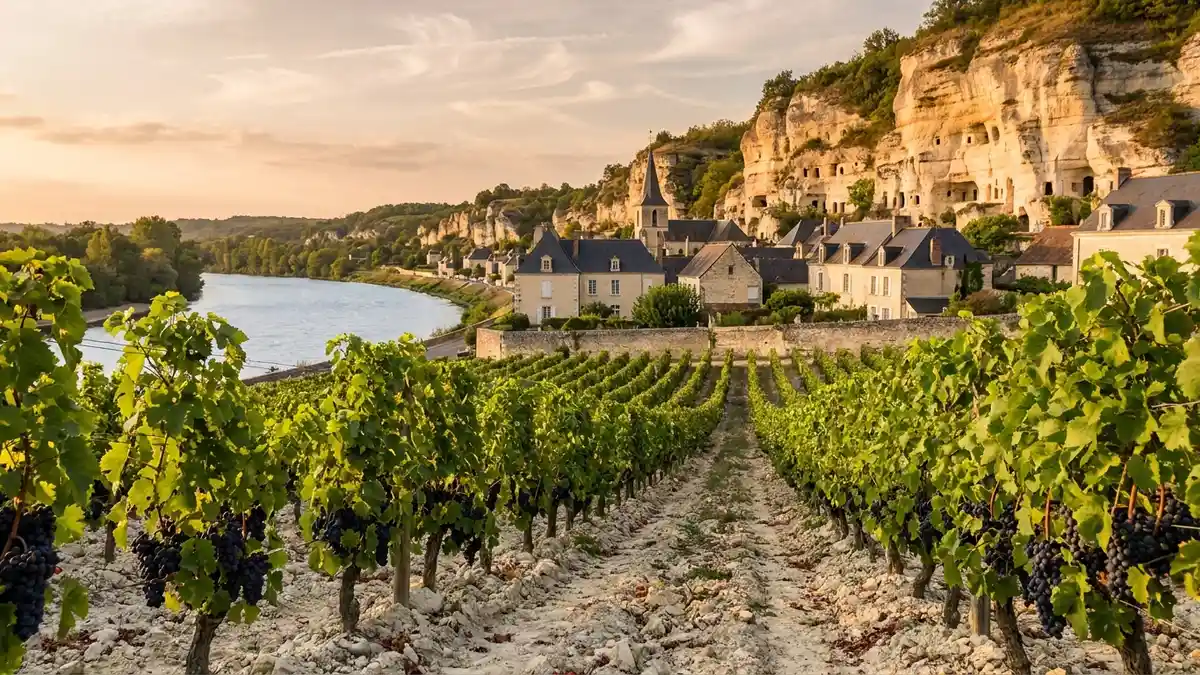
Cabernet Franc is the genetic parent of Cabernet Sauvignon (crossed with Sauvignon Blanc) and Merlot, making it one of the most influential grapes on earth. It is lighter in body, lower in tannin, and brighter in acidity than Cabernet Sauvignon, with a recognizable profile of red cherry, raspberry, bell pepper from compounds called pyrazines, violet florals, and a graphite-pencil mineral edge. Its star regions are the Loire Valley (Chinon, Bourgueil, Saumur-Champigny — 100 percent Cabernet Franc), the Right Bank of Bordeaux (Saint-Emilion and Pomerol, often 30 to 40 percent of the blend), Friuli, Niagara, and Long Island. It ripens earlier, handles cool climates well, and is one of the most food-friendly reds you can buy.
A Genetic Trivia That Changes Everything
Before the tasting notes, the family tree. Cabernet Franc is older than both of its famous children. DNA testing by Carole Meredith and her team at UC Davis in 1996 proved two things that rewrote wine textbooks:
- Cabernet Sauvignon is a natural cross between Cabernet Franc and Sauvignon Blanc, almost certainly hybridized spontaneously in southwestern France in the 17th century.
- Merlot also has Cabernet Franc as a parent, on its mother's side.
So Cabernet Franc is the grape that gave the wine world both of its most planted red varieties. It is also a parent of Carmenere, the signature grape of Chile. For a deeper look at how its most famous child compares head-to-head with Merlot, see our Cabernet Sauvignon vs Merlot guide.
The historical implication matters at the table: when you taste Cabernet Franc, you are tasting the ancestral DNA of half the world's red wine. The cassis, cedar, and graphite of a Pauillac, the plum and chocolate of a Pomerol — both flow from this grape.
The Sensory Profile: How to Recognize It
Once you know what to look for, Cabernet Franc has one of the most distinctive signatures of any red grape. The fingerprint is consistent enough that experienced tasters can usually identify it blind within a few seconds.
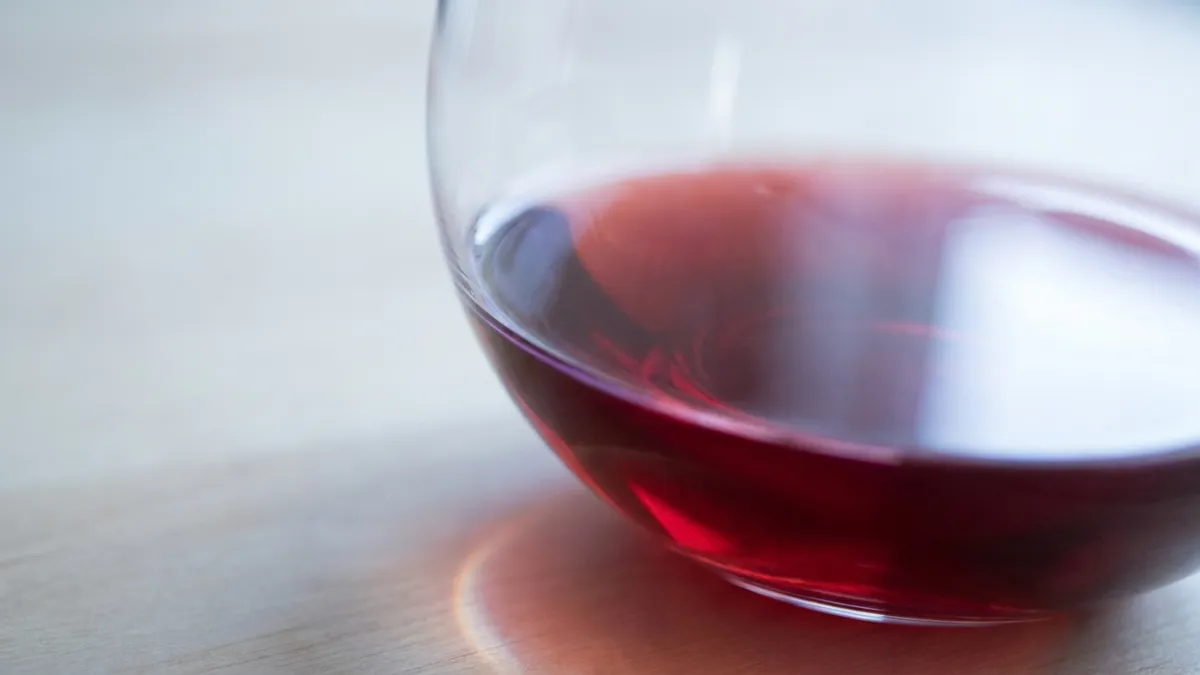
Color
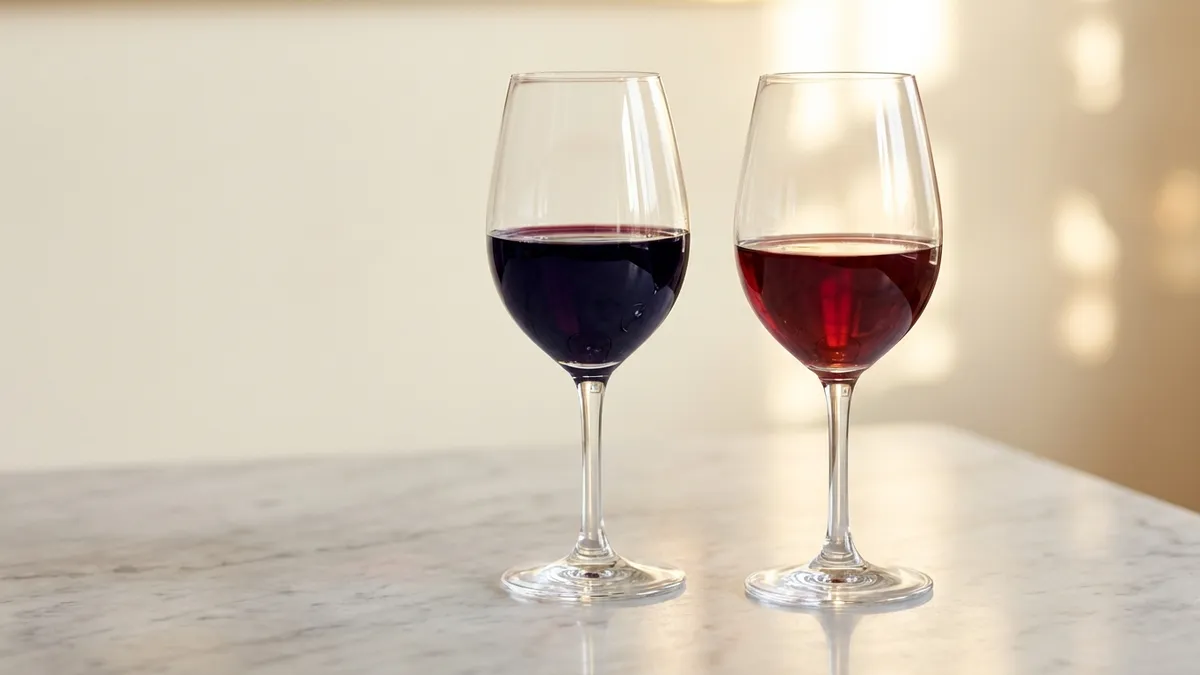
Medium ruby with a slightly translucent rim. Cabernet Franc is noticeably lighter in color than Cabernet Sauvignon — you can often see through the edge of the glass when held against light. Young examples lean magenta-ruby; older ones develop garnet and brick tones. For more on what color reveals about a wine, see our wine color and age guide.
Aroma
This is where Cabernet Franc shows its hand. The signature notes:
- Red cherry and raspberry — the dominant fruit, brighter and more red-fruited than Cabernet Sauvignon's blackcurrant
- Green bell pepper — from pyrazines, more pronounced in cool climates or unripe vintages
- Violet floral lift — perfumed and pretty, especially in the Loire
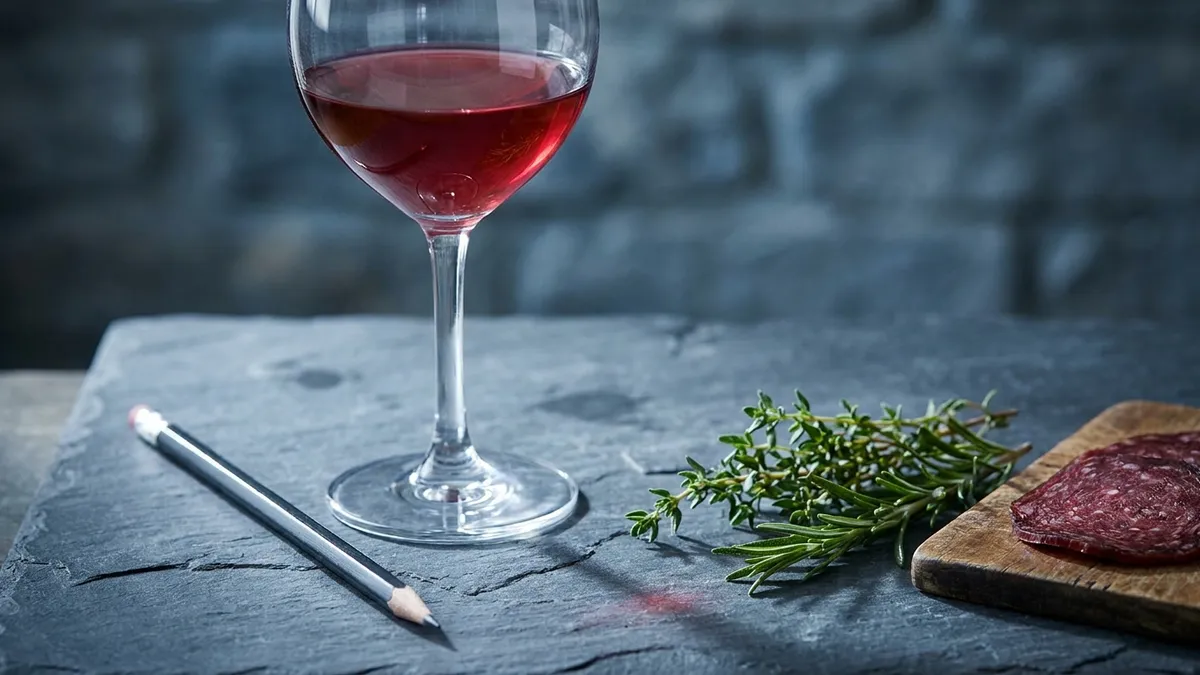
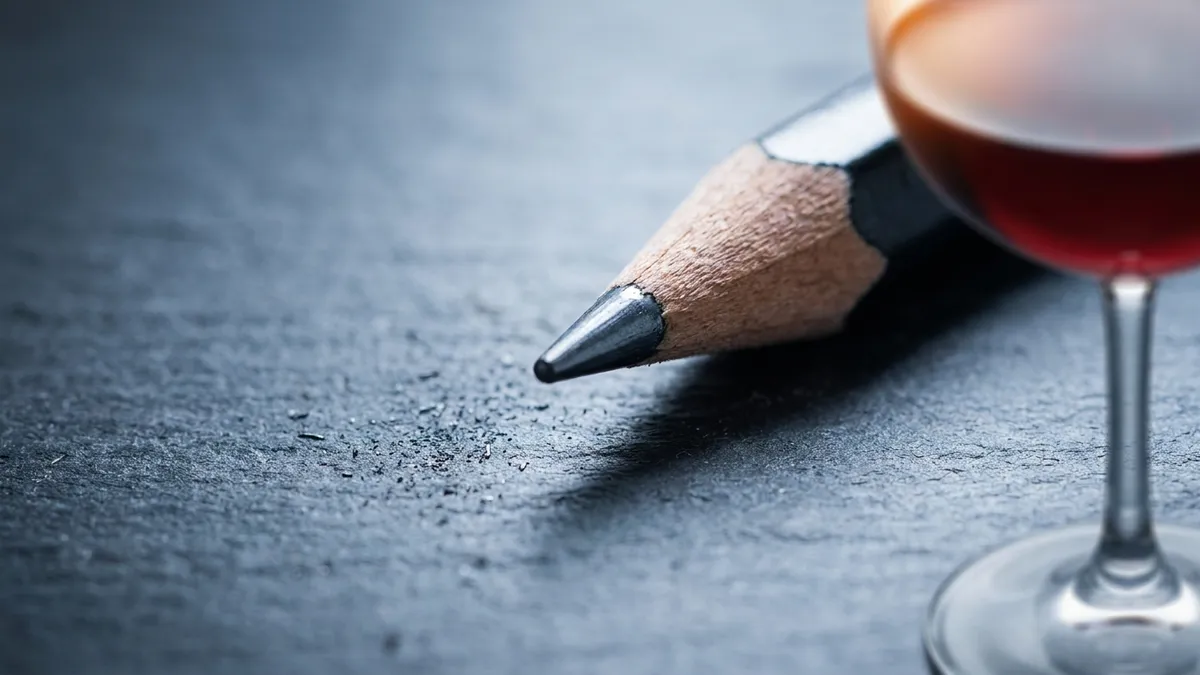
- Graphite or pencil shavings — the unmistakable mineral signature, often called "pencil lead"
- Crushed leaves, tobacco, and dried herbs — a savory undertow that distinguishes it from softer reds
The graphite note is the single most diagnostic aroma. If you sniff a medium-bodied red and immediately think "freshly sharpened pencil," there is a strong chance you are smelling Cabernet Franc. Our guide to how to smell wine breaks down how to train this kind of pattern recognition.
Palate
Medium body, bright acidity, moderate tannin. The mouthfeel is closer to elegant Pinot Noir than to muscular Cabernet Sauvignon — refreshing, lifted, and food-friendly rather than dense and chewy. The finish is savory and herbaceous, often with a graphite or stony minerality lingering after the fruit fades.
Why the Bell Pepper Note? The Pyrazine Story
The herbaceous bell pepper aroma in cabernet franc wine is the most discussed and most misunderstood thing about the grape. The compound responsible is called methoxypyrazine (often shortened to pyrazine) — an organic molecule present in unripe grapes that breaks down as the fruit ripens in sunlight.
Cabernet Franc is naturally high in pyrazines. In cool climates or cool vintages where the grapes do not reach full physiological ripeness, pyrazine levels stay elevated and the wine smells distinctly green — bell pepper, jalapeno, dried oregano, sometimes even asparagus.
When is this a virtue? In Loire Valley Chinon or Bourgueil, a touch of bell pepper is part of the regional signature — it lifts the wine, gives it savory complexity, and pairs gorgeously with herb-roasted dishes. The same note in a top Saint-Emilion adds aromatic depth to the blend.
When is it a fault? When the green note is aggressive enough to dominate the fruit, the wine reads as underripe and harsh. Modern viticulture has gotten dramatically better at managing this — careful canopy work, lower yields, and warmer growing seasons have reduced excessive pyrazine in most premium wines. For a broader explanation of how growing conditions shape what you taste, see our climate and wine flavor and how soil affects wine taste guides.
A subtle herbal lift in Cabernet Franc is a varietal signature. Aggressive vegetal aromas are usually a sign of underripe fruit.
Where Cabernet Franc Grows: The Star Regions
Loire Valley, France — The Spiritual Home
The middle Loire is where Cabernet Franc speaks loudest. Three appellations make 100 percent Cabernet Franc reds and define the global benchmark for the grape:
- Chinon — the most famous. Medium-bodied, bright, with cherry, raspberry, violet, and graphite. Wines from limestone-rich tuffeau soils age beautifully.
- Bourgueil — slightly fuller and more structured than Chinon. Wines from gravel and sand soils tend to be lighter and earlier-drinking.
- Saumur-Champigny — a touch warmer and more fruit-forward, often the most approachable for beginners.
For the broader regional picture, see our French wine regions guide. Loire Cabernet Franc is also one of the great food wines on earth — unintimidating, versatile, and almost always under 13.5 percent alcohol.
Right Bank Bordeaux — The Supporting Star
On the Right Bank of the Gironde, Cabernet Franc plays the role of structural and aromatic spine. Saint-Emilion and Pomerol blends are typically Merlot-dominant, but Cabernet Franc often makes up 30 to 40 percent of the wine — sometimes more in top estates. The grape brings acidity, perfume, graphite mineral lift, and aging potential to what would otherwise be plush, fruit-forward Merlot.
The legendary Right Bank wines from clay-limestone plateau sites lean heavily on Cabernet Franc for their structure and longevity. When you taste a great Saint-Emilion and notice graphite and violets behind the plum and chocolate, that is Cabernet Franc speaking.
Friuli, Italy
Northeast Italy makes some of the most distinctive pure Cabernet Franc outside the Loire — savory, herbal, mineral-driven, with brisk acidity. Friuli's cool climate brings the grape's herbaceous side forward, sometimes labeled simply "Cabernet" on Italian wine lists. Pair our broader Italian wine guide with this section if you want to map out Friuli's place in Italy's red-wine map.
New World Pioneers
- Niagara, Canada — cool-climate Cabernet Franc thrives along Lake Ontario, producing bright, food-friendly reds with classic Loire-like profiles.
- Long Island, New York — possibly the New World region most committed to the grape, with several producers making world-class single-varietal wines.
- Virginia — emerging as a serious Cabernet Franc region, with the cool, humid climate suiting the grape's earlier ripening.
- Washington State — warmer expressions with riper red fruit and softer herbal notes.
Cabernet Franc vs Cabernet Sauvignon: Head to Head
The two grapes are family — but they drink like different generations.
| Trait | Cabernet Franc | Cabernet Sauvignon | |-------|---------------|-------------------| | Color | Medium ruby, translucent | Deep ruby to opaque | | Body | Medium | Medium-full to full | | Tannin | Moderate, silkier | High, gripping | | Acidity | Bright, lifted | Firm but lower than Franc | | Primary fruit | Red cherry, raspberry | Blackcurrant, black cherry | | Signature notes | Bell pepper, violet, graphite | Cassis, cedar, tobacco, graphite | | Ripening | Earlier | Later | | Climate | Cool to moderate | Moderate to warm | | Aging | 3 to 15 years (top wines) | 5 to 30+ years |
The simplest way to remember it: Cabernet Franc is the more aromatic, more elegant, more cool-climate-friendly version of its more famous offspring. Where Cabernet Sauvignon is dense and structural, Cabernet Franc is lifted and perfumed. Both share that signature graphite mineral note — proof of the genetic link.
For a structured framework on tasting two related wines side by side, see our how to compare two wines guide.
Food Pairings: Why Cabernet Franc Works With Almost Anything
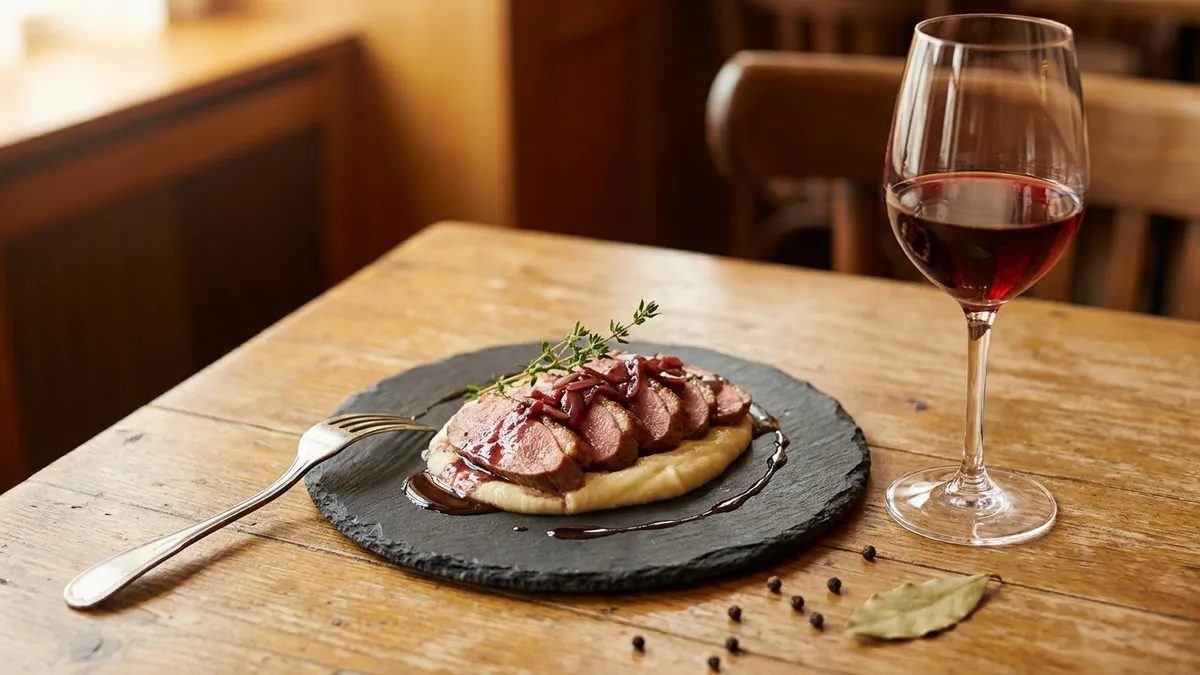
The combination of medium body, bright acidity, herbal complexity, and moderate tannin makes Cabernet Franc one of the most flexible reds at the table. It works where many fuller reds fail — with vegetables, white meat, and herb-driven dishes — and still has enough structure for game and lamb.
What to Pair With Cabernet Franc
- Roast lamb with rosemary — the herbal note in the wine echoes the herbs on the meat
- Duck and other game birds — bright acidity cuts through the rich fat
- Mushroom risotto and pasta with earthy sauces — the savory undertow matches umami
- Charcuterie boards — versatile enough for cured meats, hard cheeses, and pickles
- Herb-roasted chicken — Loire Cabernet Franc is one of the great chicken wines
- Grilled vegetables and ratatouille — the bell pepper note is a feature, not a bug
- Pork tenderloin with Dijon and herbs — the acidity refreshes between bites
What to Avoid
Cabernet Franc struggles with very sweet sauces, fragile fish, and cream-based dishes that need a softer wine. It also clashes with dishes that are aggressively spicy in the chili-heat sense — the green pepper note can magnify the heat unpleasantly.
For a broader pairing framework, see our wine food pairing guide and wine pairing rules.
Aging: How Long Does Cabernet Franc Last?
Cabernet Franc has more aging potential than most beginners assume. The grape's combination of bright acidity, moderate tannin, and graphite-driven mineral structure gives it real staying power, especially from limestone-rich sites.
- Everyday Loire Cabernet Franc: drink within 3 to 5 years of the vintage. Bright, fresh, fruit-forward.
- Top village Chinon and Bourgueil: age 10 to 15 years gracefully. Develops cedar, leather, and dried-herb complexity.
- Right Bank Bordeaux blends with significant Cabernet Franc: can evolve for 20 to 30 years, especially from clay-limestone plateau sites.
- New World pure varietals: typically peak at 5 to 10 years, depending on producer.
As Cabernet Franc ages, the bright red fruit transitions toward dried cherry, tobacco, leather, and forest floor. The bell pepper note softens or disappears entirely. The graphite stays. For more on how wines evolve in the bottle, see our guide to tasting young vs aged wine.
How to Taste Cabernet Franc Like a Pro
The grape rewards careful, methodical tasting more than most. To get the most out of a glass:
- Serve slightly cool — 60 to 64 degrees Fahrenheit (15 to 18 degrees Celsius). Too warm and the alcohol dominates; too cold and the aromas close down. See our wine serving temperature chart for full guidance.
- Use a Bordeaux or universal glass, not a Burgundy bowl — the narrower rim concentrates the floral and graphite notes.
- Swirl and sniff first for the violet and red fruit, then go back for the graphite and pepper. Our how to swirl wine guide breaks down the technique.
- Pay attention to the finish — Cabernet Franc's hallmark is a long, savory, mineral-driven aftertaste that can outlast the fruit by a full minute.
- Compare two regions side by side — a Chinon next to a Friuli or a Niagara reveals how dramatically climate shapes the same grape.
The Sommy app has a guided Cabernet Franc tasting walkthrough that flags the violet and graphite notes in real time as you taste — useful when you are still learning to spot the varietal signature.
Why Cabernet Franc Is Having a Moment
Two trends are pushing Cabernet Franc into the spotlight after decades as a supporting actor:
- Climate change is making cool-climate, earlier-ripening grapes more valuable. Cabernet Franc handles temperature swings better than its offspring.
- Sommelier preferences are shifting toward lighter, fresher, more food-friendly reds. Cabernet Franc fits the brief perfectly.
The result is more pure Cabernet Franc on wine lists than at any point in the last 50 years. Producers in Long Island, Niagara, Virginia, Friuli, and the Loire are making genuinely world-class wines from the grape — and they are finally getting the attention they deserve.
If you want to build a structured tasting vocabulary for grape varieties like this one, the Sommy app's grape-variety modules walk you through each major variety with guided sensory exercises and reference profiles. Visit sommy.wine to start working through the noble grapes one at a time.
The Bottom Line
Cabernet Franc is the grape that quietly shaped half the wine world. Lighter, brighter, and more aromatic than its famous offspring, it deserves a place in every wine drinker's regular rotation — especially for anyone learning to spot regional and varietal patterns.
The next time you see Chinon, Bourgueil, or Saumur-Champigny on a wine list, order it. The next time you taste a Saint-Emilion, look for the graphite and violet behind the plum. And when someone asks you what your "underrated grape" is, you will have the answer ready.
Frequently Asked Questions
What does cabernet franc wine taste like?
Medium-bodied red cherry and raspberry fruit, lifted by violet florals, with a signature green bell pepper note from compounds called pyrazines and a graphite or pencil-shaving mineral edge. Tannins are softer than Cabernet Sauvignon, acidity is bright, and the finish is more savory than sweet. Cool-climate examples lean herbaceous; warm-climate ones lean ripe and red-fruited.
Is Cabernet Franc the parent of Cabernet Sauvignon?
Yes. DNA testing in 1996 proved Cabernet Sauvignon is a natural cross between Cabernet Franc and Sauvignon Blanc, hybridized spontaneously in southwestern France around the 17th century. Cabernet Franc is also a parent of Merlot and Carmenere. That makes it one of the most genetically influential grapes in the wine world, even though it is less famous than its offspring.
Where is Cabernet Franc grown?
Its heartland is the Loire Valley in France — Chinon, Bourgueil, and Saumur-Champigny make 100 percent Cabernet Franc reds. It also plays a major supporting role in Right Bank Bordeaux blends from Saint-Emilion and Pomerol, often 30 to 40 percent of the blend. New World pure expressions thrive in Friuli (Italy), Niagara (Canada), Long Island (New York), Virginia, and parts of Washington State.
Why does Cabernet Franc smell like bell pepper?
The herbaceous bell pepper aroma comes from compounds called pyrazines, which are present in unripe Cabernet grapes and break down as the fruit ripens. In cool climates or vintages where the grapes do not fully ripen, pyrazines stay elevated and the wine smells distinctly green. A subtle herbal lift is a virtue and a varietal marker. An aggressive vegetal note is usually a fault from underripe fruit.
Cabernet Franc vs Cabernet Sauvignon — what is the difference?
Cabernet Franc is lighter in body, color, and tannin, with brighter acidity and a more aromatic, floral profile. Cabernet Sauvignon is darker, fuller, more tannic, and more dominated by blackcurrant and cedar. Cabernet Franc ripens earlier and handles cool climates better. The two grapes share a parent-child relationship, which is why they blend so naturally in Bordeaux.
What food pairs best with Cabernet Franc?
The herbal lift and medium body make Cabernet Franc one of the most food-flexible reds. It pairs beautifully with roast lamb, duck, game birds, mushroom risotto, charcuterie, and herbed roast chicken. The bell pepper note works with grilled vegetables and ratatouille. Avoid dishes that are too sweet or too delicate — Cabernet Franc wants savory food with herbs, earth, or umami depth.
How long does Cabernet Franc age?
Everyday Loire Cabernet Franc is best within 3 to 5 years of the vintage, while top village wines from Chinon or Bourgueil can age 10 to 15 years gracefully. Right Bank Bordeaux blends with significant Cabernet Franc content can evolve for 20 to 30 years. The grape's high acidity and moderate tannin give it real aging potential, especially when sourced from limestone or clay-limestone soils.
Is Cabernet Franc good for beginners?
Yes. Cabernet Franc is one of the friendliest red wines for new tasters because its softer tannins and bright fruit do not overwhelm the palate, while its aromatic complexity gives plenty to discover. A young Loire Cabernet Franc served slightly cool is approachable, food-friendly, and an excellent gateway to red-wine structure without the grip of full-throttle Cabernet Sauvignon.
Sommy Team
LinkedInFounder & Wine Educator
The Sommy Team is building the world's most approachable wine education app, helping beginners develop real tasting skills through structured courses and AI-guided practice.