Montepulciano Grape Guide: Not the Town, the Grape

By the Sommy Team — AI-assisted, human-edited.
Updated Apr 29, 2026
Contents (11)
- What Is the Montepulciano Grape?
- Montepulciano d'Abruzzo, in 100 Words
- The Name Confusion: Town vs Grape
- Where Montepulciano Grows
- Tasting Notes and Sensory Profile
- The Value Proposition: Why It Punches Above Its Price
- Pairing Montepulciano with Food
- Serving Montepulciano
- Comparison: Montepulciano vs Sangiovese vs Barbera
- Building Your Tasting Skills with Montepulciano
- The Takeaway
TL;DR
Montepulciano is a deep ruby-purple Italian red grape grown mostly in Abruzzo and Marche, not the Tuscan town of the same name. It produces ripe black cherry, plum, chocolate, and smoke flavors with medium-high tannins and bright acidity. Quality Montepulciano d'Abruzzo costs ten to twenty dollars and pairs naturally with pizza, pasta, lamb, and aged cheese.
What Is the Montepulciano Grape?
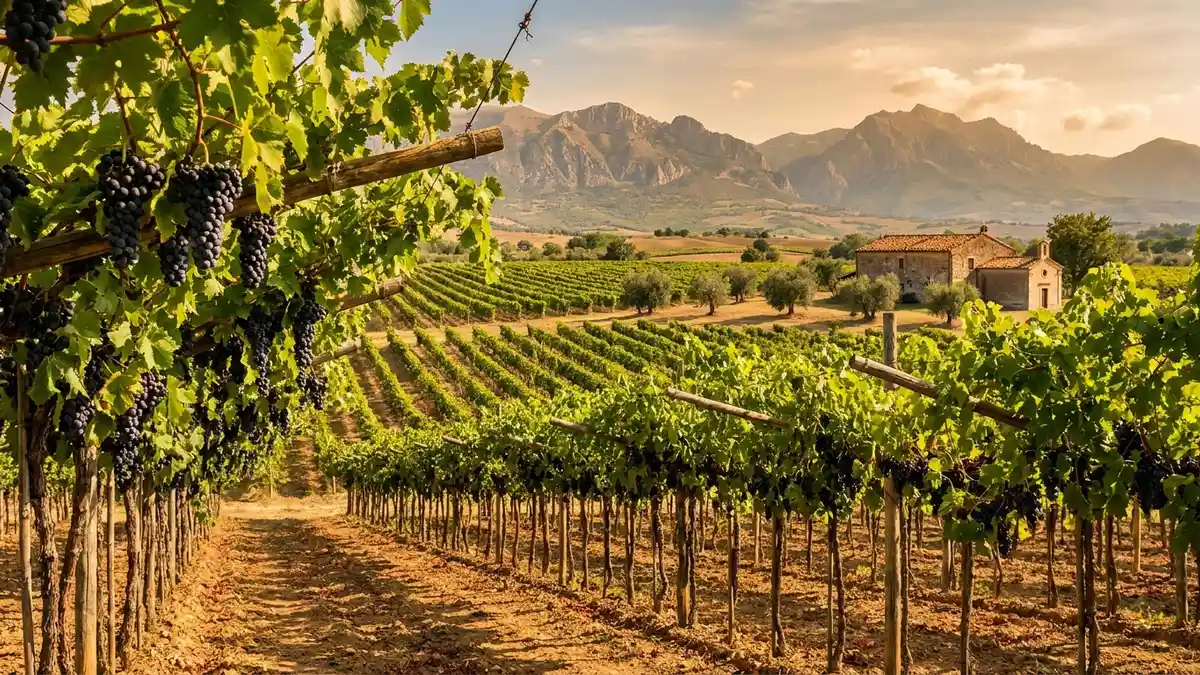
The Montepulciano grape is one of Italy's most widely planted red varieties, grown primarily in the Abruzzo and Marche regions on the central Adriatic coast. With over 30,000 hectares planted, it is the second-most planted red grape in Italy after Sangiovese, and the engine behind some of the country's best-value reds.
Despite its scale, Montepulciano remains underrated outside Italy — partly because of a naming problem that has tripped up wine drinkers for generations. Montepulciano d'Abruzzo is the wine made from this grape. Vino Nobile di Montepulciano is a completely different wine, made from a completely different grape, in a completely different region. We will untangle that knot in a moment.
What you should know up front: this is a grape that produces deep ruby-purple wines with ripe black fruit, smooth tannins, and a friendly price tag. If your bottom-shelf Italian dinner wine has ever quietly impressed you, there is a good chance Montepulciano was in the glass.
Montepulciano d'Abruzzo, in 100 Words
Montepulciano d'Abruzzo is a confusing name for a confusing-naming situation. The grape is Montepulciano, grown primarily in Abruzzo and Marche in central-east Italy. It is not to be confused with Vino Nobile di Montepulciano, which is a Tuscan town's Sangiovese-based wine. Grape profile: deep ruby-purple, medium-high tannin, ripe black cherry plus plum plus chocolate plus smoke plus dried herb, 13 to 14 percent alcohol. Excellent value — quality Montepulciano d'Abruzzo often runs $10 to $20. The star DOC is Montepulciano d'Abruzzo Colline Teramane DOCG. Pairs with hearty Italian food, pizza, lamb, and hard cheese.
The Name Confusion: Town vs Grape
This is the single most-asked question about the grape, so we will handle it head-on.
There are two unrelated things sharing the name "Montepulciano" in Italian wine:
- Montepulciano the grape — a red variety grown mostly in Abruzzo and Marche on the Adriatic side of central Italy. Wines made from it are usually called Montepulciano d'Abruzzo, Rosso Conero, or Rosso Piceno.
- Montepulciano the town — a hilltop village in southern Tuscany that has made wine since Etruscan times. Its flagship wine, Vino Nobile di Montepulciano, is made from Sangiovese (locally called Prugnolo Gentile), not from the Montepulciano grape.
So a bottle of Vino Nobile di Montepulciano contains zero Montepulciano grapes. A bottle of Montepulciano d'Abruzzo contains zero grapes from the town of Montepulciano. The only thing the two wines share is six syllables on the label.
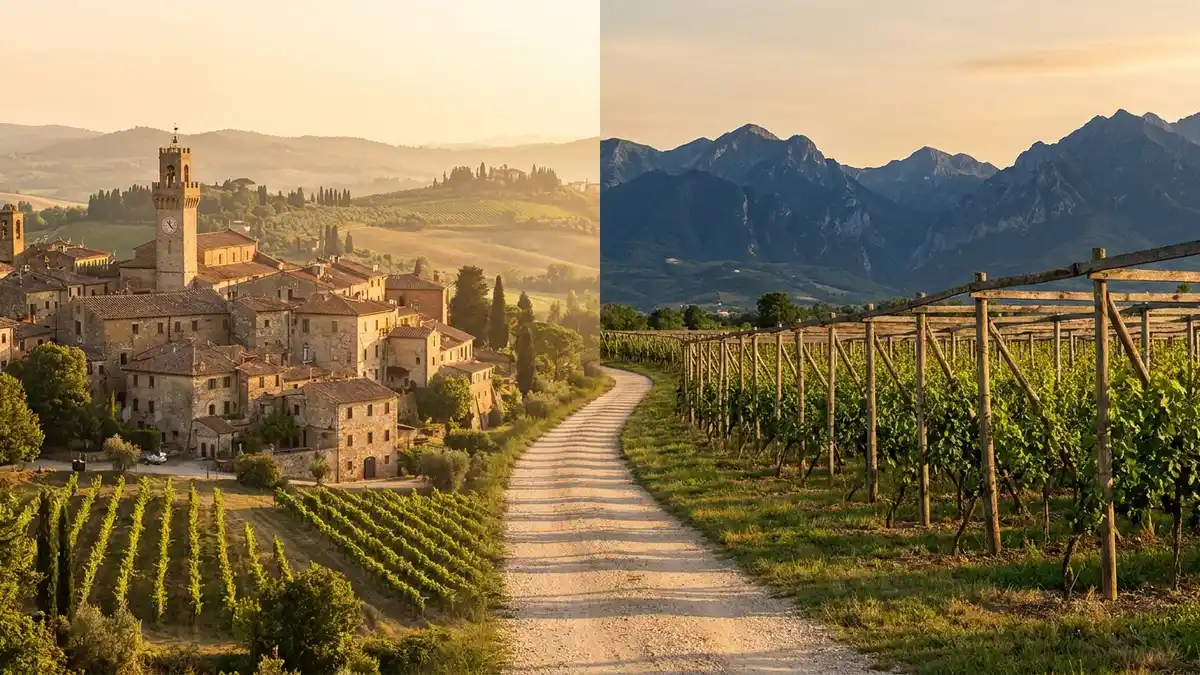
A quick way to remember it:
- If the label says d'Abruzzo — it is the grape.
- If the label says Vino Nobile di Montepulciano — it is the Tuscan town, made from Sangiovese.
That single rule will save you most of the confusion.
Where Montepulciano Grows
The grape thrives in the warm, sun-drenched hillsides of Italy's central Adriatic coast. The Apennine mountains protect vineyards from inland weather while the sea moderates summer heat — a combination that lets Montepulciano ripen fully without losing acidity.
Abruzzo
The grape's spiritual home. Abruzzo sits east of Rome, between the mountains and the sea, and Montepulciano accounts for roughly half of all the region's red wine production. The basic Montepulciano d'Abruzzo DOC covers the entire region and produces everything from cheap-and-cheerful weeknight reds to surprisingly serious Riservas.
The hilly inland zones — particularly around the province of Teramo — produce the most ambitious wines.
Colline Teramane DOCG
Montepulciano d'Abruzzo Colline Teramane DOCG is the grape's top tier. The hills (colline) around Teramo, in northern Abruzzo, were promoted to DOCG status in 2003 — the highest classification in Italian wine.
- Minimum Montepulciano: 90% (the rest can be Sangiovese)
- Aging: minimum 2 years, including 1 year in oak; 3 years for Riserva
- Style: more concentrated, structured, and age-worthy than basic Montepulciano d'Abruzzo
These wines show what the grape is capable of when farming, yields, and oak are taken seriously.
Marche
Move just north of Abruzzo into Marche, and Montepulciano takes on a slightly different role. Here it is usually blended with Sangiovese to produce two well-known wines:
- Rosso Conero — Montepulciano-dominant, rich, and built for aging
- Rosso Piceno — a Sangiovese-Montepulciano blend that is lighter and more approachable
Beyond Italy
A small amount of Montepulciano is planted in Argentina, Australia, and California, often by producers experimenting with warm-climate Italian varieties. So far, none of these have produced wines that rival the originals from Abruzzo — but the global plantings are slowly growing.
Tasting Notes and Sensory Profile
Once you taste a few bottles, Montepulciano develops a recognizable signature.
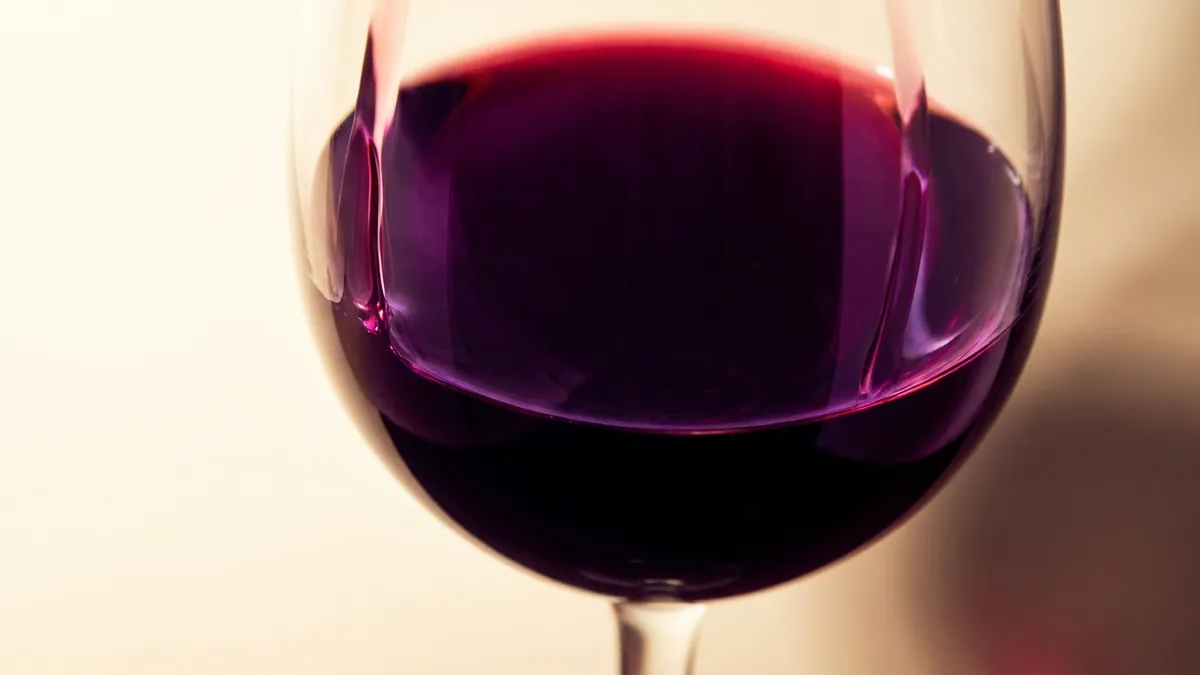
What to Expect
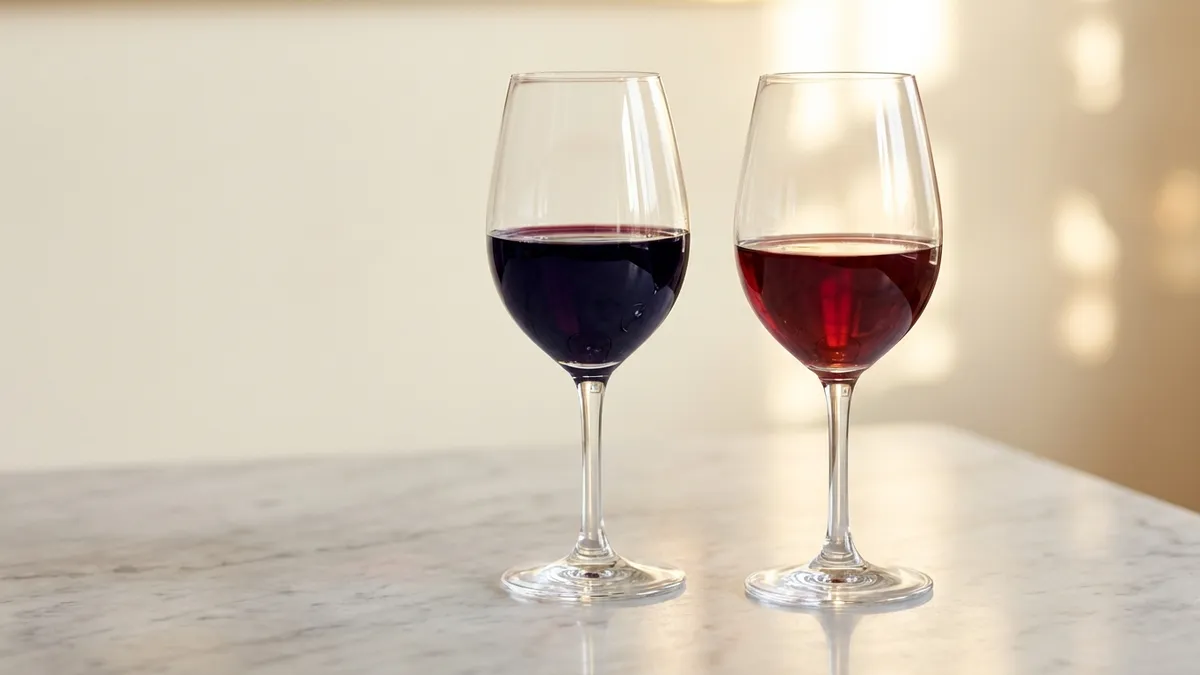
- Color — deep ruby-purple, often opaque in the center; one of the darkest Italian reds in the glass
- Fruit — ripe black cherry, blackberry, blueberry, plum, prune in riper examples
- Spice and herb — cocoa, dark chocolate, smoke, dried oregano, black pepper, sweet baking spice
- Earth — leather, dried tobacco, brick dust, balsamic
- Structure — medium-high tannins, medium acidity, full body
- Alcohol — typically 13 to 14 percent
The grape's tannins are a defining feature. They are firm but rounded — gripping enough to give the wine structure, but rarely the rasping astringency you sometimes find in young Nebbiolo or Cabernet Sauvignon. If you want to brush up on what those tannins are doing on your palate, the tannins, acidity, and body guide is a useful refresher.
How It Differs from Other Italian Reds
Montepulciano sits in a sweet spot between two Italian giants:
- More fruit-forward and softer than Sangiovese, with less tomato-leaf herbaceousness
- Less acidic and less linear than Barbera
- Less floral and less tannic than Nebbiolo
- More accessible than all three for beginners drinking it without food
The closest mental shortcut: think of Montepulciano as the Italian red that drinks most like a value Cabernet — dark fruit, real structure, very little jagged-edge acidity — but with a savory Italian backbone underneath.
The Value Proposition: Why It Punches Above Its Price
Here is the practical reality that wine merchants will quietly tell you: dollar for dollar, Montepulciano d'Abruzzo is one of the best red wine values in the world.
A few reasons:
- High yields done well — Abruzzo's coastal climate is reliably warm and sunny, producing plenty of fruit at low cost without quality collapse.
- A workhorse identity — for decades the grape has been Italy's everyday red, which kept retail prices anchored.
- Modernizing producers — over the last 25 years, a generation of quality-focused producers has lifted standards across the region while prices stayed flat.
In practice:
- Sub-$10 bottles — drinkable, fruit-forward weeknight reds
- $10 to $20 — the sweet spot, where you find genuinely interesting Montepulciano d'Abruzzo with structure and depth
- $20 to $40 — Colline Teramane DOCG, single-vineyard bottlings, and serious Riservas
You almost never need to spend more than $30 to drink a great Montepulciano. That is hard to say about most other "serious" Italian reds.
Pairing Montepulciano with Food
Montepulciano was shaped by Italian home cooking, so the pairings come naturally.
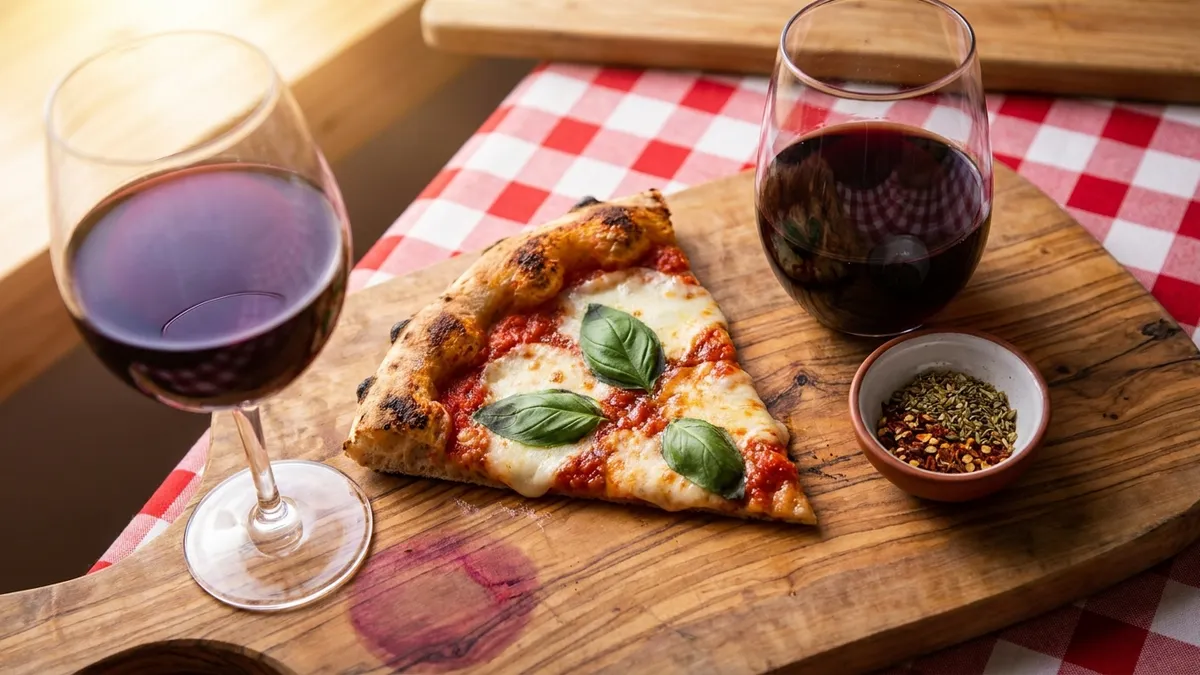
Everyday Italian Classics
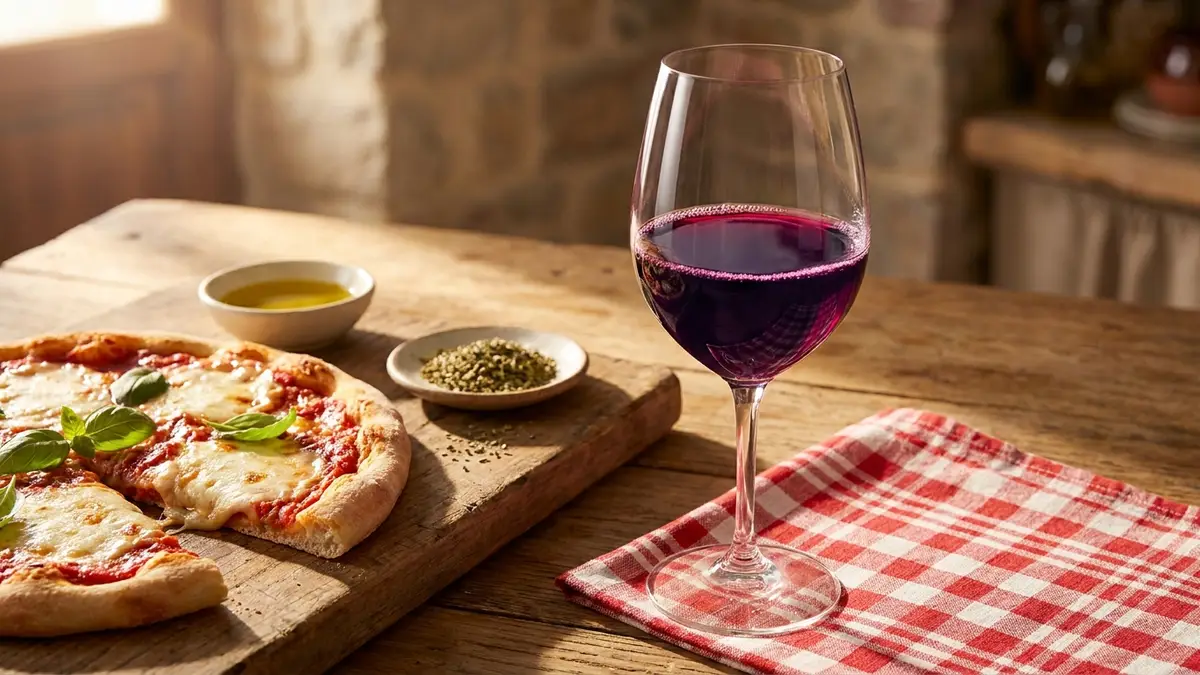
- Pizza — Margherita, Diavola, sausage, four cheese. The grape handles tomato sauce, salty cured meats, and bubbling cheese without breaking a sweat. See the wine with pizza guide for more on that pairing.
- Tomato-based pasta — pasta arrabbiata, lasagna, ragu alla bolognese, baked ziti
- Pasta with meat sauce or sausage — the dark fruit and soft tannin echo slow-cooked pork and beef
- Risotto — especially mushroom or sausage versions
Beyond the Pasta Plate
- Lamb — roast leg, grilled chops, slow-braised shanks. Lamb's gamy richness and Montepulciano's dark fruit and herb notes were made for each other.
- Pork ribs and shoulder — slow-cooked, barbecued, or in a winter stew
- Hard aged cheese — Pecorino, aged Provolone, Parmigiano-Reggiano. The umami depth of these cheeses amplifies the grape's earthy, smoky side.
- Roast chicken with herbs — surprisingly happy here, especially with rosemary and garlic
For more detail on the underlying logic of food pairings, the wine and food pairing guide walks through it step by step.
What to Avoid
- Delicate seafood — Montepulciano is too dark and tannic for white fish or oysters
- Light salads — the wine will steamroll them
- Very spicy dishes — the higher alcohol and tannin can amplify chili heat
Serving Montepulciano
A few small choices make a noticeable difference.
Temperature
Serve Montepulciano at 16 to 18°C (60 to 65°F). Standard supermarket Montepulciano d'Abruzzo can go slightly cooler, around 15°C, to keep its freshness lifted. A Riserva or Colline Teramane DOCG benefits from the warmer end so the chocolate, leather, and spice notes can express themselves fully. The serving temperature chart covers this in more detail.
Decanting
- Basic Montepulciano d'Abruzzo — no decanting needed, just open and pour
- Riserva — 20 to 30 minutes in a decanter softens the tannin
- Colline Teramane DOCG — 30 to 60 minutes opens it up beautifully; older bottles should be decanted gently and tasted early
Glassware
A standard medium-bowl red wine glass works well. The grape does not need an oversized Burgundy bowl — its aromatics are bold enough to come through without help.
Comparison: Montepulciano vs Sangiovese vs Barbera
These three grapes form the backbone of central and northern Italian red wine. Knowing how they differ on the palate is one of the fastest ways to level up your Italian-wine fluency.
| Feature | Montepulciano | Sangiovese | Barbera |
|---|---|---|---|
| Body | Full | Medium | Medium-full |
| Tannins | Medium-high, rounded | Moderate-firm | Low |
| Acidity | Medium | High | Very high |
| Color | Deep ruby-purple | Translucent ruby | Deep ruby |
| Key flavors | Black cherry, chocolate, smoke | Tart cherry, herbs, leather | Dark cherry, plum, sour edge |
| Where | Abruzzo, Marche | Tuscany | Piedmont |
| Best with | Pizza, lamb, ribs | Tomato pasta, T-bone | Rich pasta, salami |
| Typical price | $10 to $25 | $15 to $40 | $12 to $25 |
The shorthand: Montepulciano is the rounded, dark-fruited one. Sangiovese is the high-acid, savory one. Barbera is the bright, electric one. All three are dry, all three love food, and all three are excellent ways to start exploring Italian reds without spending much.
Building Your Tasting Skills with Montepulciano
Because it is widely available and inexpensive, Montepulciano is a great grape to use for practicing real tasting technique.
A useful exercise: pour a $12 supermarket Montepulciano d'Abruzzo next to a $25 Colline Teramane DOCG. Same grape, different ambition. You will feel the difference in mouthfeel immediately — the basic bottle is more straightforward and fruity, the DOCG is denser, more layered, and longer on the finish.
A second useful exercise: taste a Montepulciano against a Sangiovese-based Chianti. Same general price, completely different personalities. The Montepulciano will feel rounder and darker; the Chianti will feel brighter and more savory. Practicing this side-by-side trains your palate to read structure, not just flavor.
The Sommy app walks you through structured tasting comparisons exactly like these, with guided prompts that help you put names to what you are sensing in the glass. Building your tasting vocabulary around an everyday grape like Montepulciano makes the whole rest of the wine world easier to read.
The Takeaway
Montepulciano is the workhorse of central-east Italian wine — and one of the best-kept secrets in everyday red. Forget the Tuscan town. Look for d'Abruzzo on the label, find a bottle between $10 and $20, pour it with pizza or roast lamb, and you have one of the most reliable food-and-wine pairings in the world for the price of a takeaway dinner. To explore the wider world of Italian wine, the Italian wine guide is the natural next stop.
Frequently Asked Questions
Is Montepulciano a grape or a place?
Both — and that is the source of the confusion. Montepulciano is a red grape variety grown mainly in Abruzzo and Marche on Italy's central-east coast. Montepulciano is also a Tuscan hilltop town that produces a Sangiovese-based wine called Vino Nobile di Montepulciano. The two have nothing to do with each other beyond a shared name.
What does Montepulciano d'Abruzzo taste like?
Montepulciano d'Abruzzo tastes of ripe black cherry, plum, blackberry, and dried fig, layered with notes of cocoa, dark chocolate, smoke, sweet spice, and dried herbs like oregano. It has medium-high tannins, medium acidity, a full-bodied feel, and alcohol typically around 13 to 14 percent. The wine drinks rich and rustic without the sharp edges of leaner Italian reds.
Is Montepulciano a good cheap wine?
Yes — it is one of the best value categories in Italian wine. Solid Montepulciano d'Abruzzo is widely available between ten and twenty dollars and over-delivers for the price. The DOCG tier from Colline Teramane is more ambitious but still rarely crosses thirty dollars. For the structure and depth on offer, few Italian reds compete on price-to-quality.
What is the difference between Montepulciano and Vino Nobile di Montepulciano?
Montepulciano d'Abruzzo is made from the Montepulciano grape in Abruzzo. Vino Nobile di Montepulciano is made from the Sangiovese grape (locally called Prugnolo Gentile) in the Tuscan town of Montepulciano. Different grapes, different regions, different styles. The shared name is a quirk of geography and Italian wine history, not a reflection of any actual link between the wines.
What food pairs well with Montepulciano?
Montepulciano was built for the Italian table. Pizza, tomato-based pasta, lasagna, and pizza al taglio are natural matches. It excels with grilled and roasted lamb, sausages, pork ribs, and hearty stews. Aged sheep's cheeses like Pecorino, mushroom risotto, and slow-cooked beef ragu also work beautifully. The wine's tannin and dark fruit handle bold, savory, lightly spicy food without flinching.
Is Montepulciano dry or sweet?
Montepulciano is a dry red wine. It has no significant residual sugar, though its ripe black-fruit profile and rounded tannins can give it a fruity, almost lush impression on the palate. That perceived ripeness sometimes leads beginners to call it sweet, but technically it sits firmly in the dry category alongside Sangiovese and Cabernet Sauvignon.
How long should you age Montepulciano?
Most Montepulciano d'Abruzzo is built for early drinking — within three to five years of the vintage. Riserva-level wines and Colline Teramane DOCG bottles can age gracefully for eight to fifteen years, developing leather, dried fig, and tobacco notes as the fruit fades. Standard supermarket bottles are best opened young while the dark cherry and chocolate are still vibrant.
Sommy Team
LinkedInFounder & Wine Educator
The Sommy Team is building the world's most approachable wine education app, helping beginners develop real tasting skills through structured courses and AI-guided practice.