Best Wine for Pizza (Margherita, Pepperoni, and More)

By the Sommy Team — AI-assisted, human-edited.
Updated Sep 10, 2026
Contents (15)
- What Is the Best Wine for Pizza?
- Pizza Wine Pairing Chart: Every Style at a Glance
- What Wine Goes with Pizza: Red, White, or Sparkling?
- Why Italian Reds Dominate Pizza Pairing
- What Each Topping Does to the Wine in Your Glass
- Best Wine for Margherita and Classic Tomato-Based Pizza
- What Is the Best Red Wine with Pizza?
- Best Wine for Pepperoni and Meat-Topped Pizza
- Best Wine for White Pizza (Pizza Bianca)
- Best Wine for Mushroom and Vegetable Pizza
- Sparkling Wine: The Universal Pizza Pairing
- Pairing by Crust: Neapolitan, New York, and Deep Dish
- Should Pizza Wine Be Chilled? Serving Tips for Pizza Night
- What to Avoid with Pizza
- Building Your Pizza Wine Shelf
TL;DR
What wine goes with pizza? For any tomato-based pie, a high-acid, moderate-tannin Italian red such as Sangiovese (Chianti) or Barbera. Pepperoni wants Barbera or Montepulciano d'Abruzzo, white pizza wants Pinot Grigio or Vermentino, and a dry sparkling wine like Prosecco Brut or Lambrusco secco works with nearly every slice. Skip big, oaky, tannic reds.
What Is the Best Wine for Pizza?
The best wine for pizza is a high-acid, moderate-tannin red such as Sangiovese (the Chianti grape) or Barbera for anything with tomato sauce. White pizza goes better with a crisp white such as Pinot Grigio. A dry sparkling wine like Prosecco or Lambrusco secco works with nearly every style. Match the sauce first and the toppings second.
Pizza Wine Pairing Chart: Every Style at a Glance
If the pie has tomato sauce, match its acidity first, then let the toppings set the body. The same rule runs through wine with tomato sauce for pasta and stews.
| Pizza style | Pour this wine style | Why it works |
|---|---|---|
| Margherita | Sangiovese (Chianti) or dry Lambrusco | Matching acidity mirrors the tomato; light tannin spares the mozzarella |
| Pepperoni | Barbera or Montepulciano d'Abruzzo | Juicy fruit and acid cut the fat; soft tannins stay out of the spice's way |
| White pizza | Pinot Grigio, Vermentino, or Fiano | Crisp, unoaked whites lift garlic, olive oil, and cheese |
| Veggie | Gamay (Beaujolais) or Vermentino | A light red or herbal white flatters green toppings without burying them |
| Mushroom | Pinot Noir | An earthy, low-tannin red echoes the mushrooms' umami |
| Hawaiian | Off-dry Riesling or fruity Barbera | A touch of sweetness meets the pineapple halfway |
| BBQ chicken | Primitivo (Zinfandel) or Grenache | Jammy fruit echoes the smoky-sweet sauce |
| Any slice | Dry Prosecco or Lambrusco secco | Bubbles and acidity refresh the palate between bites |
What Wine Goes with Pizza: Red, White, or Sparkling?
Red wine goes with pizza whenever there is tomato sauce on it. White wine goes with pizza bianca and seafood or vegetable pies. Dry sparkling wine goes with all of them and has no tannin to clash with any topping, so open it when the order is mixed.
| Your choice | Best on | Why it works | Grape styles to look for |
|---|---|---|---|
| Red | Margherita, pepperoni, sausage, meat-loaded, deep dish | High acidity mirrors the tomato; fat and salt from cheese and cured meat soften the tannin | Sangiovese (Chianti), Barbera, Montepulciano d'Abruzzo, Primitivo |
| White | Pizza bianca, seafood, artichoke, ricotta and garlic | No tomato means no need for red-wine acidity; crisp, unoaked whites cut olive oil and cheese | Pinot Grigio, Vermentino, Fiano |
| Sparkling | Any slice, mixed orders, fried or extra-cheesy pies | Acidity for the sauce, bubbles for the fat, zero tannin to clash with anything | Prosecco Brut, Lambrusco secco, Crémant |
The tannin, acidity and body differences behind each row are explained in red versus white wine.
Why Italian Reds Dominate Pizza Pairing
The reason is acidity. Ripe tomatoes measure roughly pH 4.3 to 4.9 on Clemson Extension's pH table of common foods. Most finished wines sit between roughly pH 3 and 4. With sauce and wine that close, a tart red tastes balanced. If the red is low in acid and oaky, such as a warm-climate Merlot, the tomato makes it taste flat. Our guide to wine acidity shows how to feel it.
Tannins, the drying grip on your gums, are the other factor. Heavy tannins clash with tomato acidity and taste metallic. WSET's food-and-wine guidance adds that salt and fat tame tannin, so a firmer red works on a pepperoni pie but feels harsh on a plain Margherita. Our explainer on what tannins are covers where that grip comes from.
What Each Topping Does to the Wine in Your Glass
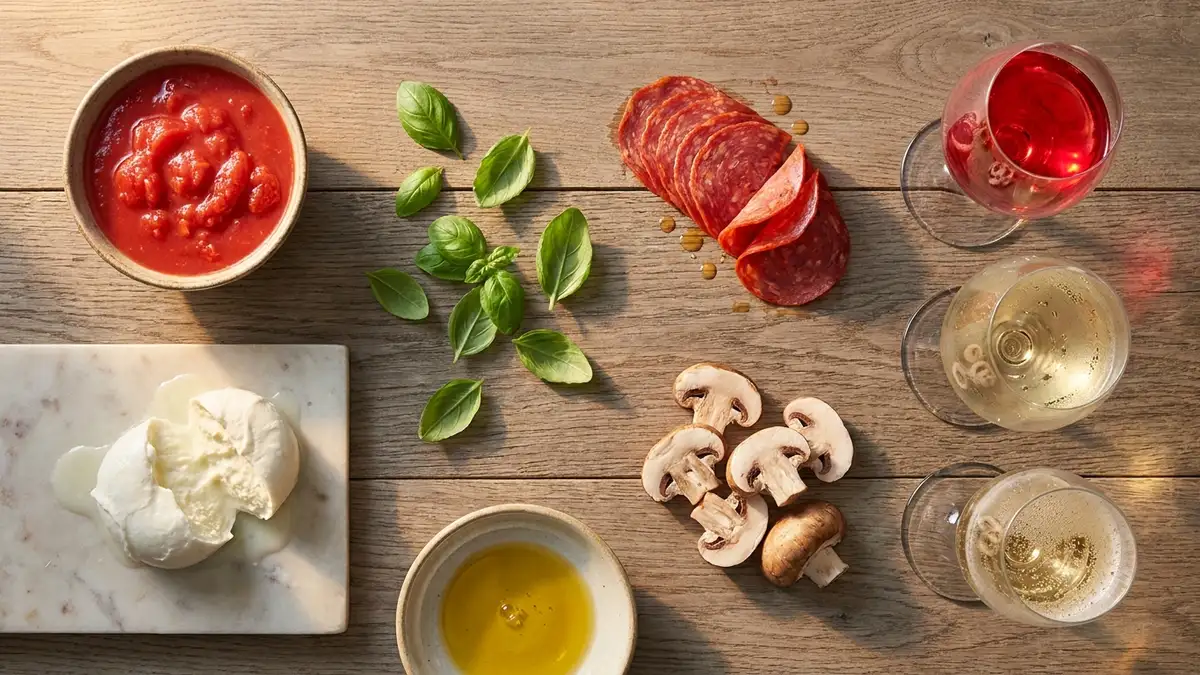
| On the slice | What it does to a wine | What the wine needs | Grape styles that deliver |
|---|---|---|---|
| Tomato sauce (pH roughly 4.3 to 4.9 per Clemson Extension) | Makes a low-acid wine taste flat and dull; makes heavy tannin feel metallic | Acidity as bright as the sauce; moderate tannin | Sangiovese, Barbera, Lambrusco secco |
| Mozzarella and other melted cheese (fat and salt) | Coats the palate; fat and salt soften the perception of tannin (WSET) | Acidity or bubbles to cut the fat; can carry a little more tannin than sauce alone | Chianti Classico, Prosecco Brut, Pinot Grigio |
| Pepperoni, sausage, cured meats (fat, salt, chili heat) | Fat and salt soften tannin further; chili heat amplifies the burn of alcohol and the grip of tannin | Juicy fruit, moderate alcohol, soft tannin | Barbera, Montepulciano d'Abruzzo, Primitivo |
| Wood-fired char on the crust (AVPN: 430 to 480°C for 60 to 90 seconds) | Adds gentle bitterness that stacks with tannin and reads harsh | Fruit and fizz rather than grip | Lambrusco secco, light Barbera, Gamay |
| Mushrooms and aged cheese (umami) | Umami makes tannic, oaky wines taste bitter and metallic | Low tannin, earthy or savory character | Pinot Noir, Gamay |
| Pineapple, BBQ sauce, hot honey (sweetness) | Sweet food makes a dry wine taste drier, thinner, and more acidic | Ripe, jammy fruit or a touch of residual sugar | Off-dry Riesling, Primitivo, Grenache |
If the slice carries anchovies, mushrooms or aged cheese, pick a lower-tannin red. Umami, the savory taste in those toppings, makes even a good Chianti taste harder. Our guide to umami and savory flavors in wine explains how to taste for it.
Best Wine for Margherita and Classic Tomato-Based Pizza
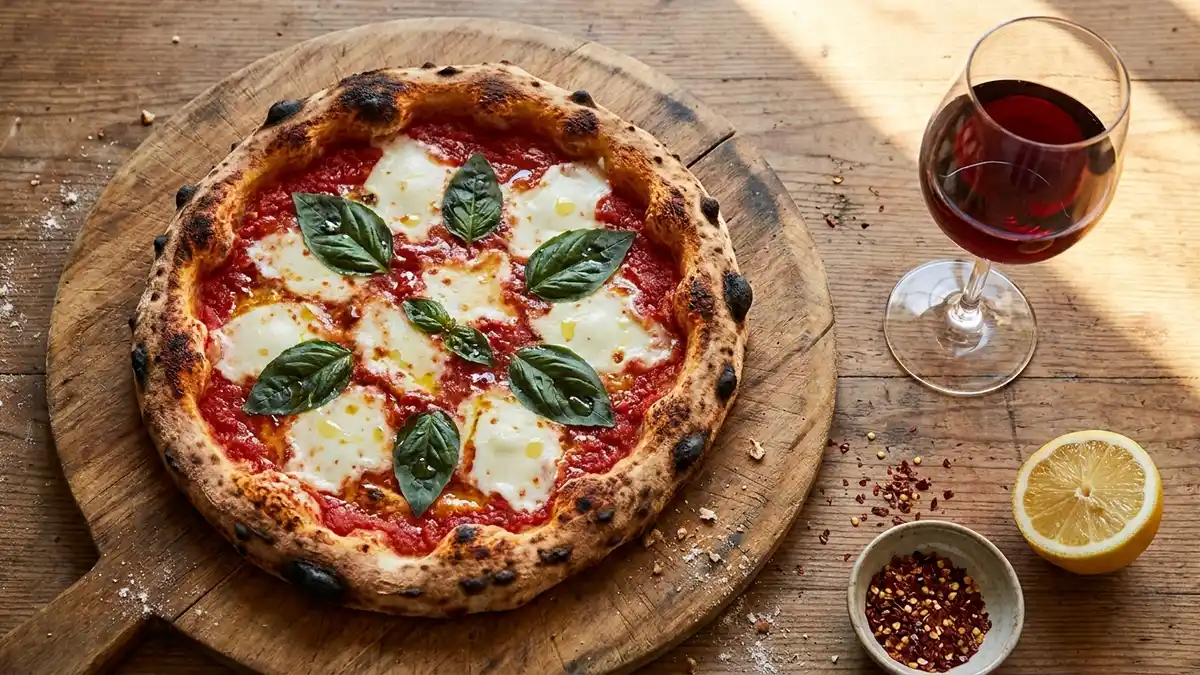
For a Margherita, pour a Sangiovese (Chianti) or a dry Lambrusco. The Associazione Verace Pizza Napoletana (AVPN) sets the Neapolitan Margherita as hand-crushed peeled tomato, buffalo mozzarella or fior di latte, fresh basil and extra-virgin olive oil. Nothing on it is heavy, so keep the wine light too.
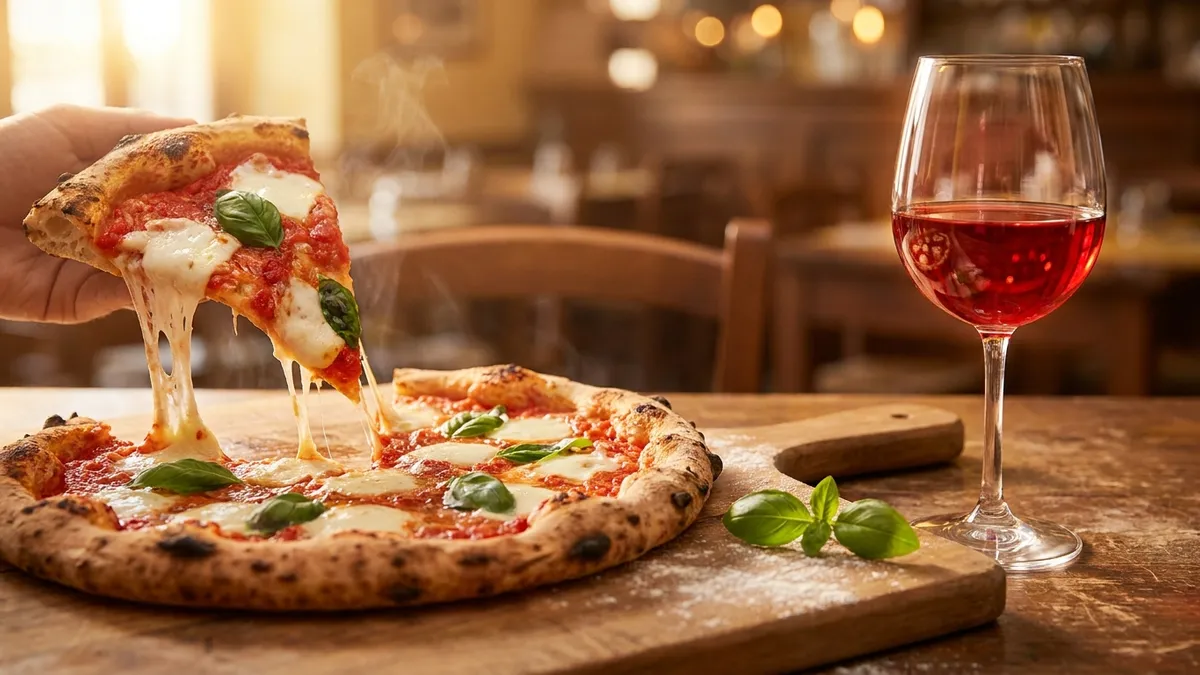
Sangiovese (Chianti)
Sangiovese is the grape of Chianti, in Tuscany. It tastes of fresh red cherry, with high acidity and firm but not heavy tannins.
Plain Chianti DOCG is the everyday version; Chianti Classico has more depth. The Consorzio Vino Chianti Classico requires at least 80% Sangiovese, which keeps the acidity high enough for tomato. Our Sangiovese guide covers the grape's range, and our Italian wine guide shows how it changes across the country.
Barbera d'Asti or Barbera d'Alba
Barbera, from Piedmont, has even higher acidity than Sangiovese, softer tannins, and ripe dark cherry and plum fruit. If Chianti feels too firm for a casual pizza night, pick Barbera d'Asti. Our Barbera guide explains how to read the label.
Lambrusco (Sparkling Red)
Lambrusco is a lightly sparkling red from Emilia-Romagna. Choose bottles labeled secco (dry): tart, slightly fizzy and light. Serve it lightly chilled. The Lambrusco wine guide shows which zone and sweetness word to look for.
What Is the Best Red Wine with Pizza?
The best red wine with pizza is Sangiovese, with Barbera a close second. Both carry the high acidity and moderate tannin that tomato sauce demands. For meat-heavy pies, step up to Montepulciano d'Abruzzo or Primitivo. Save big, oaky reds like Cabernet Sauvignon for steak night.
- Margherita or plain cheese: Chianti (Sangiovese) or dry Lambrusco
- Pepperoni or sausage: Barbera or Montepulciano d'Abruzzo
- Meat-loaded or deep dish: Nero d'Avola or Primitivo
Each step up adds fruit and body, never a big jump in tannin.
Best Wine for Pepperoni and Meat-Topped Pizza
For pepperoni, pour a juicy, medium-bodied Italian red with soft tannins and moderate alcohol: Barbera d'Asti or Montepulciano d'Abruzzo, or Primitivo if the pie is smoky or spicy. The fat and salt soften tannin, so the wine can carry more body than a Margherita red. The chili heat punishes high alcohol.
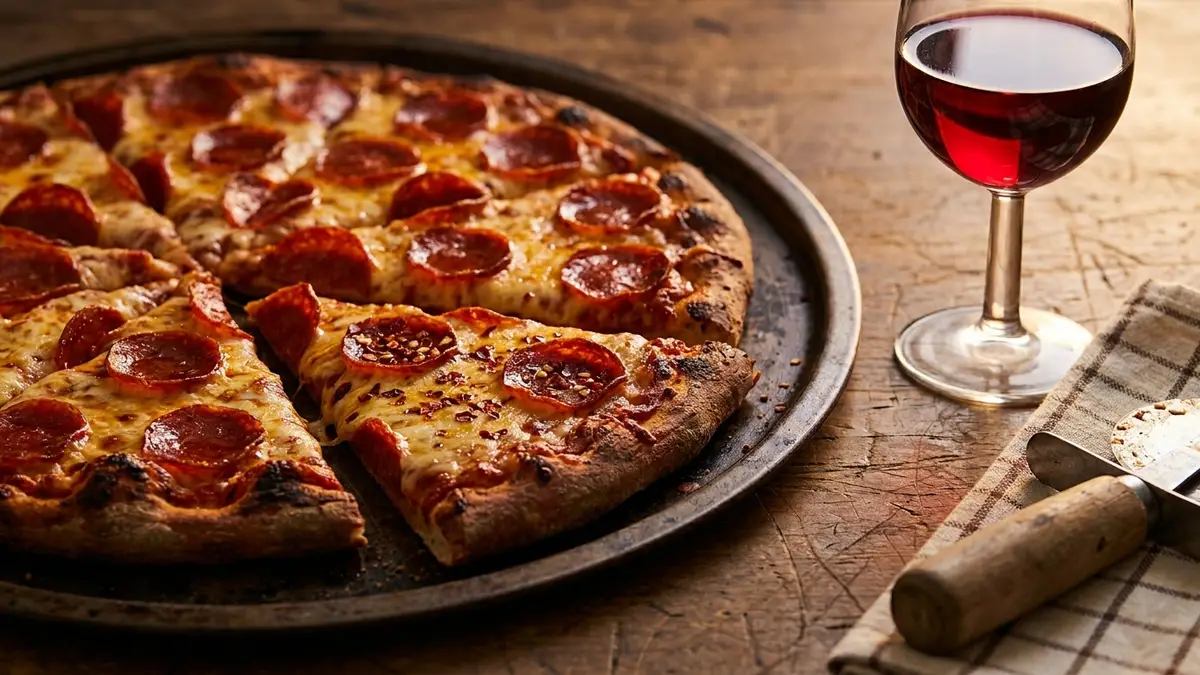
Montepulciano d'Abruzzo
Montepulciano d'Abruzzo is a dark-fruited red from Italy's Adriatic coast. It has the body for pepperoni, with good acidity and softer tannins than a Cabernet. Our Montepulciano grape guide untangles the grape from the Tuscan town that shares its name.
Nero d'Avola
Nero d'Avola is Sicily's main red grape. It tastes of black cherry and licorice. The ripe fruit handles meat toppings, and Sicilian reds tend to keep enough acidity for tomato sauce.
Primitivo
Primitivo is Zinfandel grown in Puglia: ripe, jammy and peppery, so it echoes the pepperoni. Its alcohol often runs high. On a hot-honey or extra-chili pie, pick a lighter, fresher bottle, as in wine for spicy food. Our Primitivo guide explains how to spot it.
Best Wine for White Pizza (Pizza Bianca)
For white pizza, pour a crisp, unoaked white: Pinot Grigio, Vermentino or Fiano. With no tomato sauce, the wine no longer needs a red's acidity to match it.
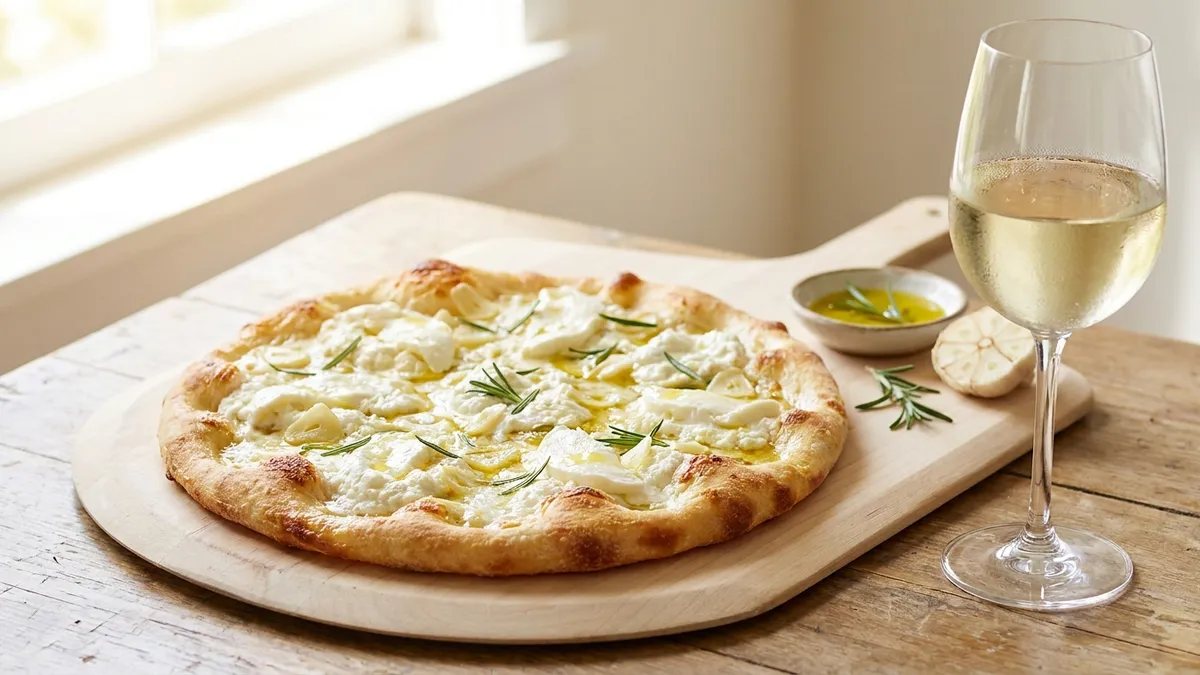
Pinot Grigio
Pinot Grigio from northern Italy (Trentino-Alto Adige, Friuli) is the default. It is light and neutral, so the toppings lead, and its slightly bitter finish suits olive oil and garlic.
Vermentino
Vermentino, from Sardinia and coastal Tuscany, smells more of herbs than Pinot Grigio. Pour it with white pizzas topped with artichokes or olives.
Fiano
Fiano is a white grape from Campania, where Neapolitan pizza began. It has more body than Pinot Grigio and tastes of hazelnut and ripe white peach. Pour it with ricotta and roasted vegetables. Our Campania wine guide covers the region's other pizza-friendly grapes.
Best Wine for Mushroom and Vegetable Pizza
Pour a light, low-tannin red such as Pinot Noir or Gamay. Mushrooms are umami, which makes tannic wines taste metallic.
Pinot Noir
Pinot Noir smells of damp leaves and, in aged bottles, truffle, which echoes the mushrooms. Its soft tannins leave the pizza's flavors intact.
Gamay (Beaujolais)
Gamay, the Beaujolais grape, is as light as Pinot Noir but fresher and juicier. On a vegetable pie, a Beaujolais-Villages or a cru such as Fleurie or Morgon keeps the green toppings in focus.
Sparkling Wine: The Universal Pizza Pairing
If the order mixes Margherita, pepperoni and white pizza, open a sparkling wine. Its bubbles and acidity reset your palate between bites.
Prosecco is made from the Glera grape in Veneto. The Consorzio di Tutela della DOC Prosecco reports that Prosecco DOC closed 2025 with 667 million bottles, up 1.1% on 2024. By the DOC's rules, other permitted varieties may make up no more than 15% of the blend. A Prosecco labeled Brut or Extra Brut has the acidity for every pizza style at a low price.
Watch one label trap: Extra Dry Prosecco is sweeter than Brut. Under EU labeling rules (Regulation 2019/33, Annex III), Brut means under 12 grams of sugar per litre while Extra Dry means 12 to 17. That suits a Hawaiian more than a Margherita. Our guide to Prosecco and the Glera grape decodes the rest of the label.
For a special occasion, Champagne or a Crémant (French sparkling wine made outside Champagne) adds toasty flavors. Our Champagne vs Prosecco vs Cava comparison lays out price, method and flavor.
Pairing by Crust: Neapolitan, New York, and Deep Dish
Neapolitan Pizza
Neapolitan pizza is thin, wet in the center and baked in 60 to 90 seconds. The AVPN specification calls for a puffed, blistered edge, the cornicione, of 1 to 2 centimeters. If the crust is this thin and quick-baked, match it with Chianti, a light Barbera or dry Lambrusco.
New York-Style Pizza
A New York slice has less char and more cheese per bite, so more fat softens tannin. Pour a Montepulciano d'Abruzzo or a medium-bodied Primitivo with a pepperoni slice.
Detroit and Deep Dish Pizza
Thick, cheese-heavy deep dish needs more structure: a lightly oaked Barbera, a Dolcetto or a Nero d'Avola. The cheese does most of the work, and as in wine and cheese pairing, fat lets a firmer red pass.
Should Pizza Wine Be Chilled? Serving Tips for Pizza Night
Yes. Give light reds such as Chianti, Barbera and Montepulciano 15 to 20 minutes in the fridge to bring them to cellar temperature. None of these wines need decanting.
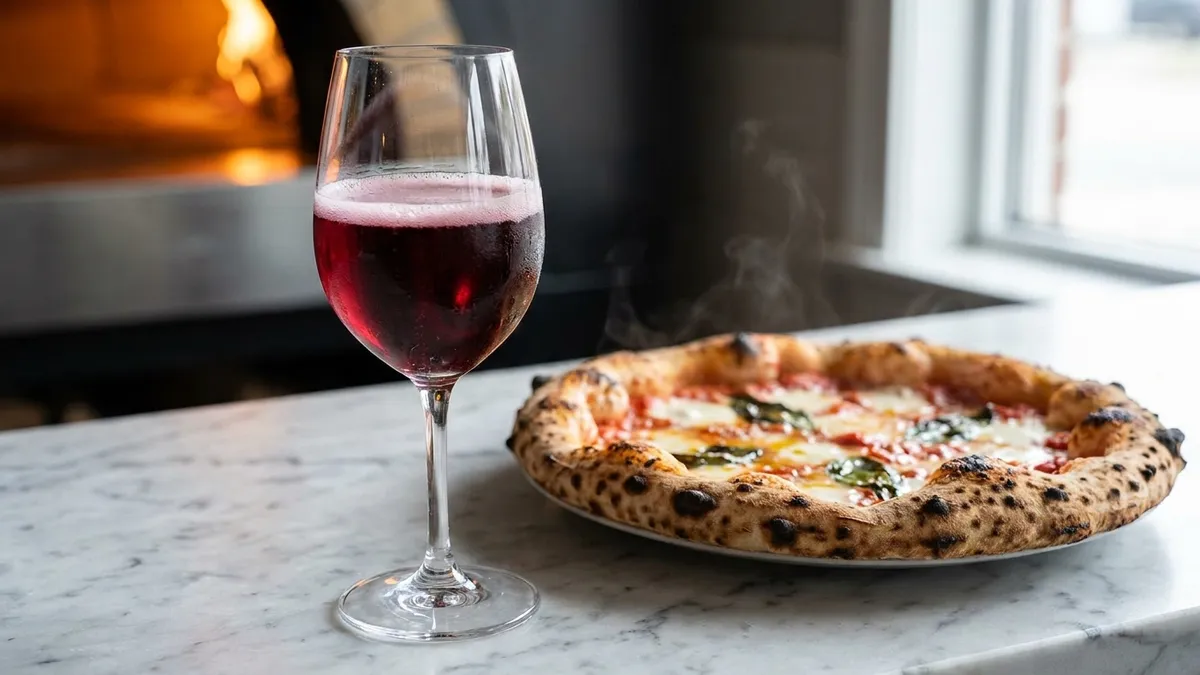
- Reds: if they sit longer in the fridge, the fruit goes mute. Lambrusco and Gamay can go colder.
- Whites: Pinot Grigio, Vermentino and Fiano go fully chilled.
- Sparkling: Prosecco, Crémant and Champagne go well chilled; open the bottle last so the bubbles are lively when the pizza arrives.
- Glassware: any stemmed glass works.
Our wine serving temperature chart gives the exact ranges.
What to Avoid with Pizza
- Heavily tannic, full-bodied reds such as aged Cabernet Sauvignon, Barolo or Amarone fight tomato sauce.
- Heavily oaked whites such as oaky Chardonnay compete with olive oil and cheese.
- Sweet wines add to the richness of the cheese, unless the pizza is a dessert pizza.
- High-alcohol reds on spicy pies: chili and 'nduja make alcohol burn, so stay at the lighter end of any style.
Building Your Pizza Wine Shelf
Three wines cover most pizza nights:
- Chianti Classico: for tomato-based pizzas
- Pinot Grigio (labeled Trentino or Friuli): for white pizzas and lighter pies
- Prosecco Brut: for everything else
Then add a Barbera for pepperoni nights and a Lambrusco secco for a change. Most of these grapes are covered in the best wines for beginners. The same shelf works when pasta comes out instead, and the wine pairing rules behind each match apply to wine food pairing in any cuisine.
Sommy guides short side-by-side tastings like this one. Pour a Chianti and a Pinot Grigio next to the same slice tonight, and notice which wine the tomato flatters and which the cheese flatters.
Sources
- Clemson University Extension, Food2Market — pH Values of Common Foods and Ingredients (archived PDF)
- WSET — Food and Wine Pairing Guidance
- Associazione Verace Pizza Napoletana — The True Neapolitan Pizza Specification
- Consorzio Vino Chianti Classico — Wine Characteristics
- Consorzio di Tutela della DOC Prosecco — Prosecco DOC 2025 Bottling Figures
- EU Delegated Regulation 2019/33, Annex III — Sparkling Wine Sugar Content Terms
Frequently Asked Questions
What is the best wine to drink with pizza?
For most pizzas, an Italian red with high acidity works best. Sangiovese (Chianti) or Barbera go with tomato-based pies because their acidity matches the sauce. Sparkling wine is the most versatile option and works with nearly every pizza style.
What red wine goes best with pizza?
Sangiovese, the grape behind Chianti, is the best red wine for pizza, with Barbera a close second. Both have the high acidity and moderate tannins that tomato sauce demands. For meat-heavy pies, step up to Montepulciano d'Abruzzo or Primitivo. Avoid big, oaky reds like Cabernet Sauvignon.
What wine goes with pepperoni pizza?
Pepperoni's fat and spice call for a medium-bodied red with good fruit and moderate tannins. Barbera d'Asti or a Montepulciano d'Abruzzo handle the richness without clashing with the spice. Avoid heavily tannic reds.
What wine goes with Margherita pizza?
A classic Chianti, made from Sangiovese, is the textbook answer. Its bright acidity mirrors the tomato sauce while its light tannins don't overpower the mozzarella. A dry Lambrusco also works well.
What wine pairs with white pizza?
White pizza (pizza bianca) has no tomato sauce, so you have more flexibility. A crisp Pinot Grigio or Vermentino complements garlic and olive oil bases. For mushroom or truffle white pizzas, try a light Pinot Noir.
Should you drink red or white wine with pizza?
Red for anything with tomato sauce: Sangiovese or Barbera match the sauce's acidity. White for pizza bianca, seafood, or vegetable pies, where Pinot Grigio, Vermentino, or Fiano lift the garlic and olive oil. When the table is ordering a mix of both, a dry sparkling wine such as Prosecco Brut covers every slice.
What wine goes with Hawaiian pizza?
The sweetness of pineapple needs a wine with a touch of fruit-forward character or even a hint of residual sweetness. An off-dry Riesling or a fruity Barbera handles the sweet-savory combination well.
Can you drink Champagne or sparkling wine with pizza?
Yes. Sparkling wine is one of the best pizza pairings there is. The bubbles and acidity cut through cheese and fat, and the fizz refreshes the palate between bites. Prosecco Brut with a Margherita is a reliable combination.
Sommy Team
LinkedInFounder & Wine Educator
The Sommy Team is building the world's most approachable wine education app, helping beginners develop real tasting skills through structured courses and AI-guided practice.