Wine with Tomato Sauce: Why the Acidity Has to Match

By the Sommy Team — AI-assisted, human-edited.
Updated Oct 1, 2026
Contents (8)
- Wine with Tomato Sauce, in One Paragraph
- Why Does Wine Taste Thin Next to Tomato Sauce?
- Which Wine Goes with Each Tomato Sauce?
- Why Does Sangiovese Work So Well with Tomato?
- Can You Drink White or Rosé with Tomato Sauce?
- What Happens with Cabernet and Other Tannic Reds?
- How Do Sweet and Spicy Tomato Sauces Change the Wine?
- What to Pour with Tomato Sauce Tonight
TL;DR
Tomato sauce is tart, so pick a wine at least as tart, or it tastes thin and weak. Sangiovese and Barbera are the safe reds. Meat sauces can take more tannin, cream softens the need for acid, chilli wants lower alcohol, and a sweet jarred sauce needs a riper, fruitier wine.
Wine with tomato sauce has one job: be at least as tart as the sauce. Tomato is acidic, and a wine with less acidity than the plate tastes thin and weak next to it. Choose a high-acid wine first, then adjust for what else is in the pot: meat, cream, chilli or sugar.
Wine with Tomato Sauce, in One Paragraph
Pour a dry red with high acidity (the tartness that makes your mouth water) and moderate tannin (the drying grip on your gums). Sangiovese, the grape of Chianti, is the classic match: high acid, medium-plus tannin and a savoury, sometimes tomato-like streak. Barbera is the softer option, with high acid and low tannin. A long-cooked meat ragù can take a fuller red with more tannin, and cream sauces want a softer, fruitier wine.
Chilli calls for alcohol around 13% or below. A sweet jarred sauce needs a riper red, because sugar in the food makes a dry wine taste sour. Crisp dry rosé and sharp whites work with fresh, light tomato sauces.
Why Does Wine Taste Thin Next to Tomato Sauce?
A wine that is less tart than the dish tastes thin and weak. Tomato sauce floods your mouth with acid, your palate adjusts to it, and a soft wine's own tartness stops registering. What is left is alcohol and a little fruit with nothing holding them up.
Wine is acidic too. Most wines sit between pH 2.9 and 3.9, and the main acids in grapes are tartaric, malic and citric. The goal is a wine whose acidity holds level with the sauce, like two children of the same weight on a seesaw.
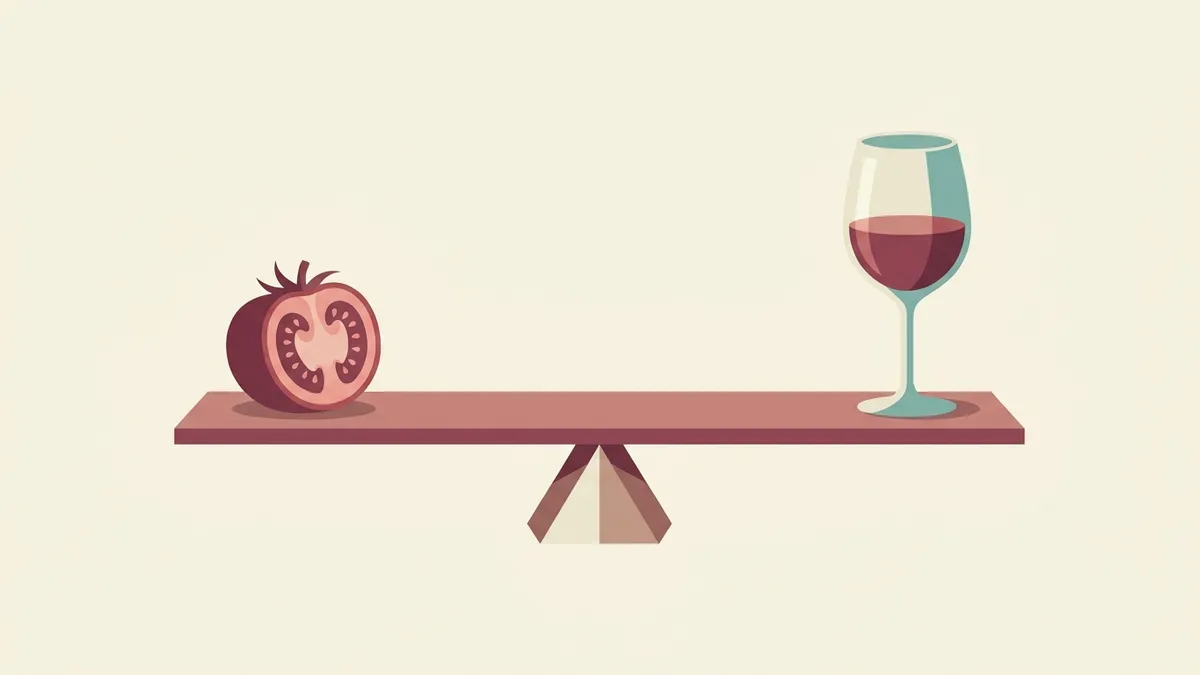
Tomato brings a second thing: umami (the savoury, brothy taste of glutamate). Ripe tomatoes are one of the classic umami-rich foods. Savoury food can make fruity wines seem less fruity, which is another reason earthy, savoury reds sit more easily beside a slow-cooked sauce than jammy ones. The umami flavours in wine explainer covers that taste on the wine side.
Which Wine Goes with Each Tomato Sauce?
Match the wine to what the sauce adds on top of the tomato. Meat wants more body (the weight of the wine, like skimmed versus whole milk) and can take tannin. Cream lowers the need for acid. Chilli wants lower alcohol. Sugar wants riper fruit.
| Sauce | What it adds | Wine trait to pick | Pour |
|---|---|---|---|
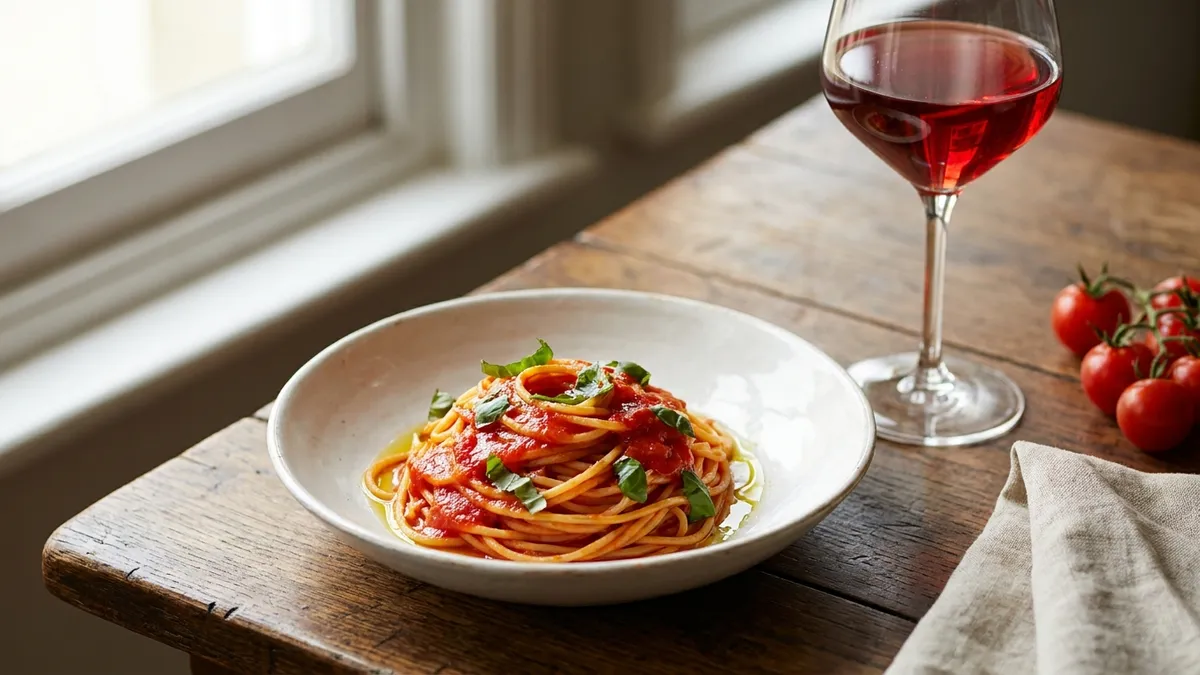
| Fresh marinara or pomodoro | Bright acid, garlic, basil | High acid, light to medium body, low tannin | Young Sangiovese, Barbera, dry rosé |
| Pizza sauce with mozzarella | Acid plus salt and melted fat | High acid, moderate tannin | Chianti, Barbera |
| Meat ragù or bolognese | Protein, fat, long-cooked umami | High acid, medium-plus body, firmer tannin | Chianti Classico, Montepulciano d'Abruzzo |
| Creamy tomato or vodka sauce | Fat that softens the acid | Medium acid, ripe fruit, soft tannin | Dry rosé, Barbera, a fruity Grenache |
| Spicy arrabbiata | Chilli heat | High acid, low tannin, 13% alcohol or less | Barbera, dry rosé |
| Sweet jarred sauce | Added sugar | Ripe, fruit-forward, soft tannin | Primitivo or Zinfandel, Grenache |
| Tomato with seafood | Brine, delicate flesh | Crisp, dry, no tannin | Vermentino, Sauvignon Blanc, dry rosé |
The fat in a ragù or on a pizza is where acidity earns its place twice. In fatty, oily or salty dishes, acidity in wine cuts through the heaviness and refreshes the palate between bites. On a pizza, salty cheese and cured meat add a second reason to pour something tart.
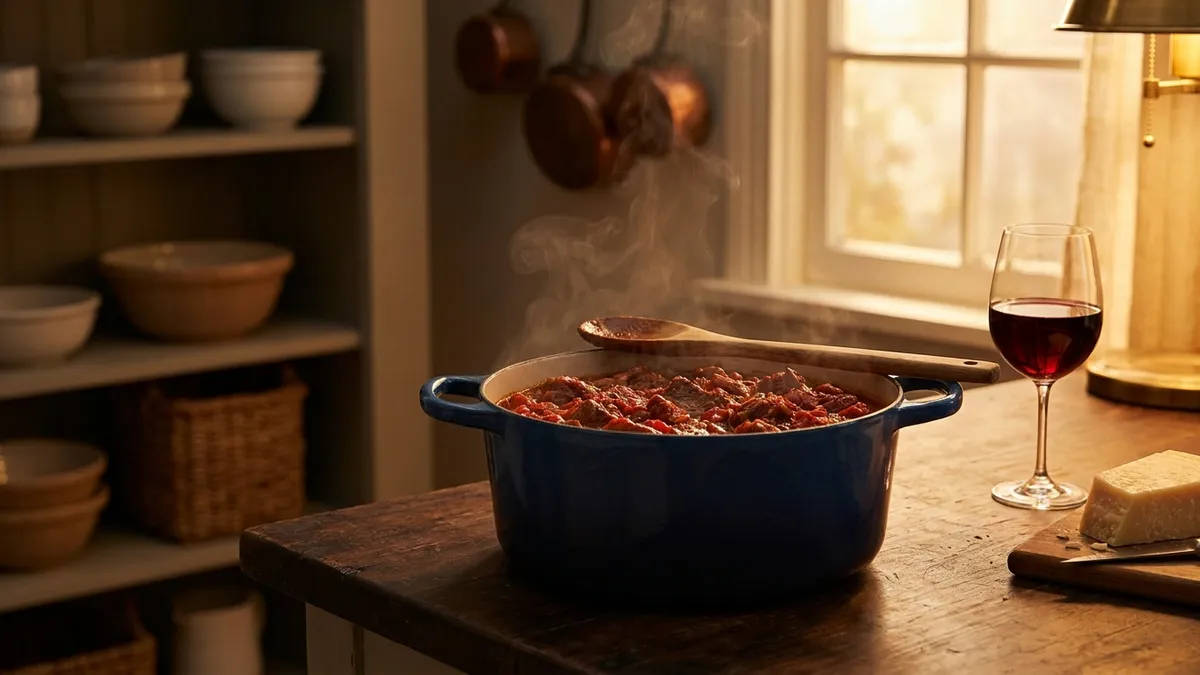
If the sauce has meat in it, step up to a fuller red with some tannin. If it has cream, step down to a softer, fruitier wine. For the noodle side of the question, from carbonara to pesto, see the wine with pasta guide, and for pies, wine with pizza.
Why Does Sangiovese Work So Well with Tomato?
Sangiovese has high acidity, medium-plus tannin and a savoury streak, so it meets a tomato sauce on both tartness and flavour, which few other red grapes manage. Tomato-based pasta and pizza sauces with a Sangiovese-based Chianti is one of the classic pairings of Italian cooking.
The flavour helps as much as the acid. Sangiovese tastes of sour red cherries with earthy aromas and a smell of dried tea leaf. In their youth, Tuscan Sangiovese wines can even carry a tomato-like savouriness that brings out their herbal side. Next to a sauce of tomato, garlic and oregano, those notes overlap instead of clashing. The grape's regions and styles are covered in the Sangiovese wine guide.
Chianti is a protected place name in Tuscany, and the rules require at least 60% Sangiovese in the blend (80% for Chianti Classico). If the label says Chianti, the main grape is Sangiovese.
Barbera, from Piedmont in northern Italy, is the other reliable pick. It has deep colour, low tannin and high acidity, so it handles tomato as well as Sangiovese does with a gentler grip. If plain Chianti feels too drying for you, pick Barbera. The Barbera wine guide explains how its styles differ.
Italian wine with Italian food is a reason here, not a law. Any red with the same high acid and moderate tannin will do the same job.
Can You Drink White or Rosé with Tomato Sauce?
Yes, if the white or rosé is crisp and dry (no sugar you can taste). The rule is acidity, not colour, so a sharp white beats a soft red with a fresh tomato sauce. The trouble comes from soft, oaky whites, which taste flat beside tomato for the same reason a soft red does.
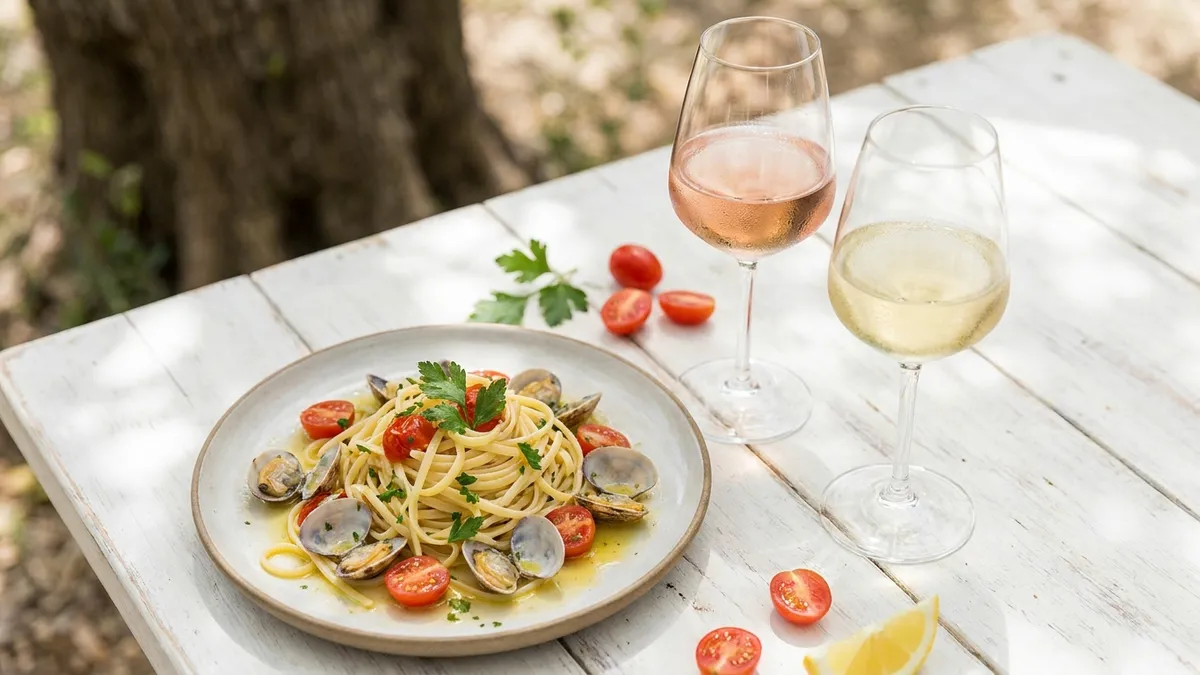
Good whites for tomato sauce are the high-acid, unoaked ones: Sauvignon Blanc, Vermentino and Verdicchio. They work best when the tomato is fresh and quick-cooked, and when the sauce carries seafood, vegetables or lots of herbs. Dry rosé has a red wine's red-fruit flavour with a white wine's crispness, so it covers more sauces than either; the rosé wine guide explains how it gets its colour.
If the sauce is fresh, light or full of seafood, pick a crisp dry white or rosé. If it has simmered for hours with meat, go back to red.
What Happens with Cabernet and Other Tannic Reds?
A big, tannic red works only when the sauce has plenty of meat in it. Tannins bind to protein and fat and come across as softer, so a slow-cooked beef ragù can tame a Cabernet Sauvignon or a young Nebbiolo. A meatless marinara gives the tannin nothing to grab.
Without protein, high tannin and a tart sauce pile up in your mouth: the wine feels rough and drying, and the sauce tastes sharper. Ripe, oaky reds have a second problem. Many are lower in acid than Sangiovese, so the tomato strips their fruit and leaves alcohol and wood behind. What are tannins explains why that drying grip changes with food.
If the sauce is meatless, leave the Cabernet closed and open something tart and light. If the ragù is rich with beef or pork, a firmer red earns its place.
How Do Sweet and Spicy Tomato Sauces Change the Wine?
A sweet sauce makes a dry wine taste tart and thin, and a hot sauce makes a strong wine burn. Both follow one pairing logic: the food sets the baseline in your mouth, and the wine is tasted against whatever the sauce left behind.
Sweetness first. Sweet wines need to be sweeter than the dish they are served with, and the reverse holds too: a dish sweeter than the wine makes the wine taste tart and weak. Many jarred sauces add sugar, and caramelised onions or long-roasted tomatoes push the same way. A ripe, fruit-forward red such as Primitivo or Zinfandel, or a sun-ripened Grenache, brings enough fruit to stand next to that sweetness. The Zinfandel wine guide covers its riper styles.
Then heat. Higher-alcohol wines magnify the heat of spicy food, and chilli makes alcohol feel hotter in turn. With arrabbiata or a chilli-laced puttanesca, choose a fresh red or rosé around 13% alcohol or below, and skip anything above 14%. The wine with spicy food guide covers chilli pairing beyond tomato.
If the sauce tastes sweet, pick a riper, fruitier red. If it burns, pick a lighter wine with lower alcohol.
What to Pour with Tomato Sauce Tonight
Start with a dry red that makes your mouth water: Sangiovese, Chianti or Barbera. Then adjust for the pot. Fuller and firmer for meat, softer for cream, lower alcohol for chilli, riper for a sweet sauce, and crisp white or rosé for seafood. To judge tartness in the glass before the food arrives, use the mouth-watering test from what is wine acidity; the wider rules are in the food pairing hub.
The Sommy app at sommy.wine has bite-sized courses, including Wine 101 and a course on Italy. Its AI-guided tasting mode walks you through look, smell and taste and saves your notes to a tasting journal. Pour tonight's wine, photograph its label, and taste it once before the sauce and once after.
Sources
Frequently Asked Questions
What wine goes best with tomato sauce?
A dry red with high acidity and moderate tannin. Sangiovese, the grape behind Chianti, is the classic choice: it is high in acid, has medium-plus tannin and a savoury streak that echoes the tomato. Barbera is the softer alternative, with high acidity and low tannin. Crisp dry rosé and sharp whites work with lighter, fresher tomato sauces.
Why does my wine taste sour or flat with spaghetti?
Flat usually means the wine has less acidity than the sauce. A wine less tart than the dish tastes thin and weak, because the tomato's own tartness resets your palate. Sour usually means the sauce was sweet: a dish sweeter than the wine makes the wine taste tart. Fix the first with a higher-acid wine and the second with a riper, fruitier one.
Can you drink white wine with tomato sauce?
Yes, as long as it is dry and crisp. Sauvignon Blanc, Vermentino and Verdicchio all carry enough acidity for fresh tomato sauces, especially with seafood or vegetables. Avoid soft, oaky whites, which taste dull beside tomato. Dry rosé sits between the two colours and is one of the easiest wines to pour with a tomato dish.
Does Cabernet Sauvignon go with tomato sauce?
Only when the sauce contains plenty of meat. Cabernet's firm tannin feels softer when it meets protein and fat, so a long-cooked beef ragù can handle it. With a plain marinara there is nothing to soften the tannin, and the tartness of the sauce makes the wine feel rough and drying. Choose Sangiovese or Barbera for meatless sauces.
What wine goes with spicy arrabbiata sauce?
A fresh, low-tannin red or a dry rosé at about 13% alcohol or less. Chilli heat and alcohol amplify each other, so a strong wine makes the sauce burn harder and the wine taste hotter. Barbera, a young Sangiovese or a crisp dry rosé keep the acidity the tomato needs without adding fuel to the chilli.
Is Chianti good with spaghetti and tomato sauce?
Yes. Tomato-based pasta and pizza sauces with a Sangiovese-based Chianti is one of the classic pairings of Italian cooking. By law Chianti is mostly Sangiovese (at least 80% for Chianti Classico), so the label tells you the main grape. Its high acidity matches the sauce, and its sour cherry and earthy notes sit comfortably next to tomato, garlic and basil.
Sommy Team
LinkedInFounder & Wine Educator
The Sommy Team is building the world's most approachable wine education app, helping beginners develop real tasting skills through structured courses and AI-guided practice.