Savory and Umami Flavors in Wine: What to Look For

By the Sommy Team — AI-assisted, human-edited.
Updated Apr 29, 2026
Contents (10)
- What Umami in Wine Actually Means
- Umami in Wine, in 100 Words
- The Chemistry Behind Savory Wine Flavors
- A Vocabulary for Savory Wine Flavors
- Where to Find Umami in Wine, by Style
- How to Taste for Umami in Wine
- Pairing Savory Wine with Food
- Common Mistakes When Tasting for Umami
- Building Your Savory Palate Over Time
- The Bottom Line
TL;DR
Umami in wine is the savory, broth-driven taste that lives alongside fruit. It shows up as mushroom, miso, soy, leather, smoke, and cured meat through lees aging, bottle age, oxidative styles like Sherry, indigenous Italian grapes, and whole-cluster fermentation. Spotting it sharpens your palate and unlocks better food matches.
What Umami in Wine Actually Means
Umami in wine is the fifth basic taste — savory, glutamate-driven, broth-like — showing up alongside sweet, sour, salty, and bitter. It is what makes a sip feel meaty, mouth-filling, and faintly salivating, even when the wine has zero residual sugar and no obvious fruit.
For decades, wine writing focused almost entirely on fruit aromas. But experienced tasters know that the most memorable wines often lean savory rather than sweet. Savory wine flavors include mushroom, soy, miso, beef broth, leather, smoke, olive, brine, cured meat, dried tomato, and parmesan rind — a quadrant of the aroma map that rewards attention.
This guide walks through what creates umami in wine, where to find it, and how to taste it with confidence in any glass.
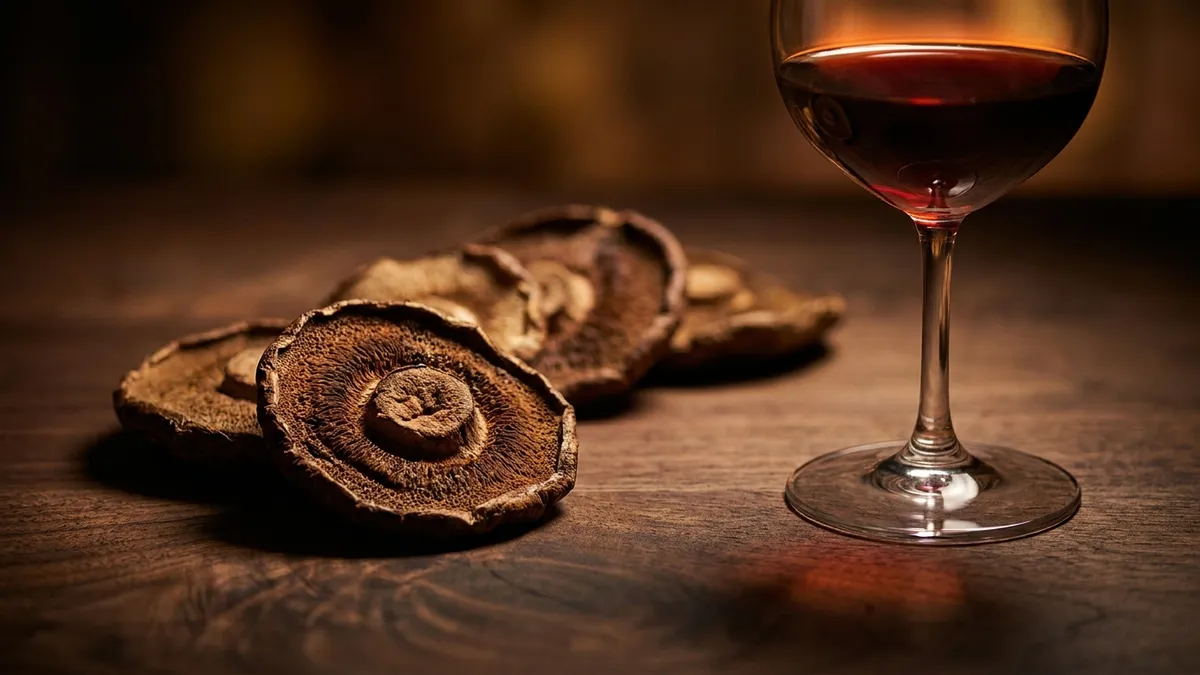
Umami in Wine, in 100 Words
Umami in wine is the savory, broth-driven taste created by glutamate and amino acid compounds. It appears via four main routes: lees aging (yeast autolysis releases bread, biscuit, and miso notes — think Champagne or Muscadet sur lie); bottle age (proteins break down into peptides that read as meat and forest floor); oxidative styles (Sherry's flor yeast layer produces broth, salt, and walnut character); and stem-inclusion fermentation (whole-cluster Pinot Noir or Syrah brings olive, twig, and herbal savor). Italian indigenous grapes — Sagrantino, Aglianico, Nebbiolo — show meaty umami naturally. The result feels old-world, layered, and genuinely savory rather than sweet-fruited.
The Chemistry Behind Savory Wine Flavors
You do not need a chemistry degree to taste umami, but a basic mental model helps explain why some wines feel savory and others taste only of fruit.
Glutamates and amino acids
Umami in food comes from free glutamate — the amino acid concentrated in parmesan, soy sauce, dashi, ripe tomatoes, and aged meat. Wine builds glutamate-like compounds slowly, primarily through yeast and time. Our guide to wine with Japanese food goes deeper on the glutamate-inosinate synergy behind dashi and miso, and why it often favors sake over wine.
When yeast cells finish fermenting and start to die, they undergo autolysis — the cell walls break down and release proteins, amino acids, and mannoproteins into the wine. Champagne aged on its lees for years gains its bread-and-biscuit savor this way. Muscadet sur lie does the same on a smaller scale.
Bottle age and protein fragmentation
Once a wine is bottled, slow chemical reactions continue. Proteins fragment into shorter peptides. Volatile compounds from fermentation rearrange. Tannins polymerize and soften. The cumulative effect: less primary fruit, more tertiary character — dried fruit, leather, truffle, miso, and forest floor.
This is why a Burgundy at 15 years old smells profoundly different from one at 3 years old. The fruit has not vanished — it has been overlaid with savor.
Oxidative handling
Some wines are deliberately exposed to air during winemaking. Flor, the layer of yeast that grows on top of fino Sherry in barrel, metabolizes alcohol and glycerol and leaves behind a savory, salty, almond-broth profile that no fruit-forward wine can match. Tawny Port, Vin Jaune, and Madeira use other oxidative paths to similar effect.
The natural-wine movement has reintroduced controlled oxidation to a wider audience. Read more about orange wine for one of the cleanest entry points to oxidative savor.
A Vocabulary for Savory Wine Flavors
When you taste a savory wine, your nose and palate often outrun your vocabulary. The descriptors below give names to what umami actually feels like in the glass.
Earthy and mushroom
- Forest floor — damp leaves, wet bark, the smell of woodland after rain. Classic in mature Pinot Noir and Nebbiolo.
- Dried mushroom — porcini, shiitake, dried chanterelle. Common in aged Burgundy and Barolo.
- Truffle — pungent, earthy, slightly sulfurous. A signature of old Nebbiolo and aged red Burgundy.
- Wet stone — minerality plus earth, often appearing in cool-climate whites with bottle age.
Meat and broth
- Beef bouillon — concentrated meaty broth, often appearing in mature Syrah and aged Bordeaux.
- Cured meat — prosciutto, salami, jamón. Frequent in Côte-Rôtie, Hermitage, and aged Spanish reds.
- Bacon fat — smoky, fatty meatiness, especially in northern Rhône Syrah.
- Game — pheasant, venison, that "wild" note in old Burgundy and aged Pinot.
Fermented and aged
- Soy sauce — umami concentrated, slightly salty, slightly sweet. Old Bordeaux and aged Brunello can flash this.
- Miso — fermented and yeasty, common in vintage Champagne and lees-aged Chardonnay.
- Dashi — sea-stock savor, sometimes appearing in very old white Burgundy.
- Marmite — yeast extract; a polarizing but real descriptor for aged Champagne.
Smoke, leather, and tobacco
- Leather — saddle, old book, aged Bordeaux at maturity.
- Tobacco — cigar box, pipe tobacco, common in Tuscan reds and aged Cabernet Franc.
- Smoke — wood fire, often in Syrah and certain volcanic-soil wines.
- Tar — distinctive in old Nebbiolo, also in some aged Aglianico.
Olive, brine, and sea
- Black olive — common in northern Rhône Syrah and aged Cabernet Sauvignon.
- Sea spray — saline, oceanic, in coastal whites and Manzanilla Sherry.
- Anchovy — concentrated savor; rare but real in some long-aged reds.
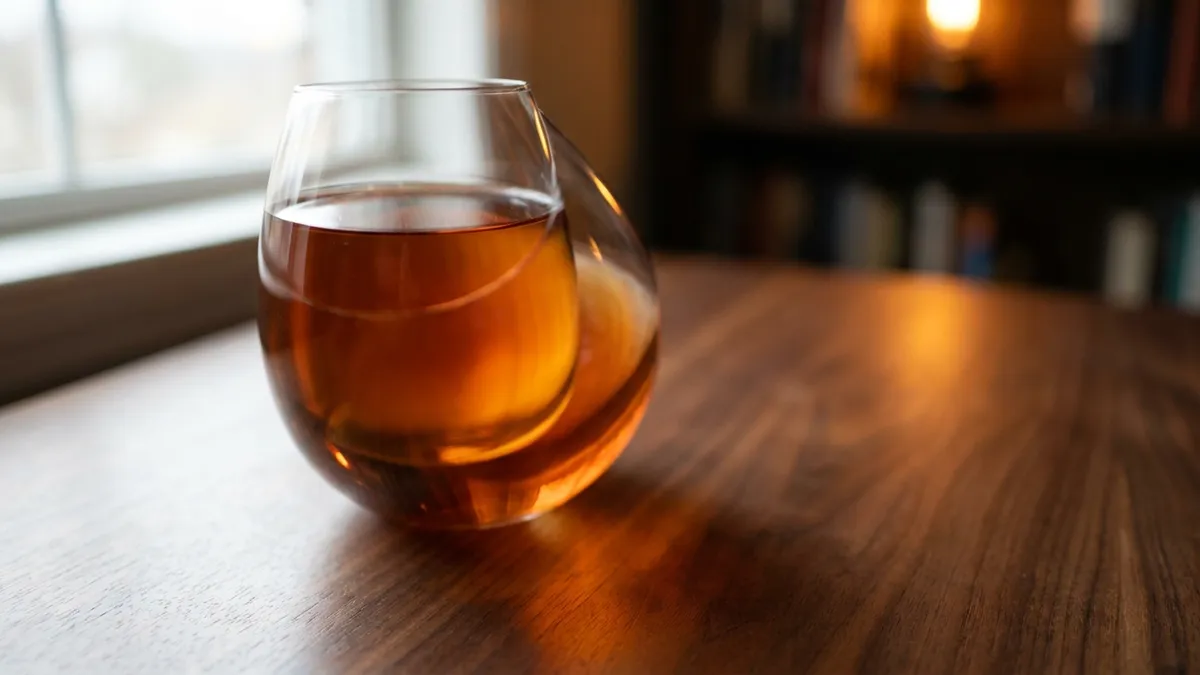
Where to Find Umami in Wine, by Style
Some styles are reliably savory. Knowing where to look saves time and bottles.
Old World reds with age
The most consistent path to savory wine flavors runs through aged Old World reds. Bordeaux at 15+ years, Burgundy at 10+, Barolo and Barbaresco at 12+, traditional Rioja Gran Reserva, aged Châteauneuf-du-Pape, mature Brunello — all develop deep tertiary umami. The combination of careful winemaking, bottle age, and grape varieties prone to layered savor produces the strongest examples.
Read tasting young versus aged wine for a side-by-side framework that highlights the umami shift directly.
Lees-aged whites and sparkling wines
Vintage Champagne aged on lees for 5+ years before disgorgement is a benchmark for bread, biscuit, brioche, and miso notes that read as umami. Muscadet sur lie offers a more affordable entry point — its yeasty, briny character comes from the same autolysis process. Aged white Burgundy with extensive lees stirring (bâtonnage) shows similar savor.
Sherry and oxidative wines
Sherry is umami in liquid form. Fino and Manzanilla, aged under flor, deliver salty, almondy, broth-like savor. Amontillado adds nutty oxidation. Oloroso doubles down on dried fruit and aged meat character. For deeper context, see how to taste fortified wine.
Indigenous Italian grapes
Some grape varieties carry savor naturally, even when young. Nebbiolo brings tar, rose, and dried cherry; Sangiovese delivers sour cherry, leather, and tomato leaf; Aglianico layers blackberry over smoke and ash. Italy's regional grapes lean savory by tradition rather than accident.
Whole-cluster and natural reds
Whole-cluster (stem-inclusion) fermentation in Pinot Noir, Syrah, and Grenache adds herbal, twiggy, savory character. Natural winemaking with minimal sulfur often pushes wines toward earthier, more savory profiles. The trade-off is variability — some bottles thrill, others wobble.
Volcanic-soil wines
Wines from volcanic terroirs — Etna in Sicily, Santorini in Greece, parts of Soave — often show ash, smoke, and brine that read as savory. The connection between soil and flavor is contested in the literature, but the empirical pattern is robust enough that volcanic origin is a useful shortcut to savor.
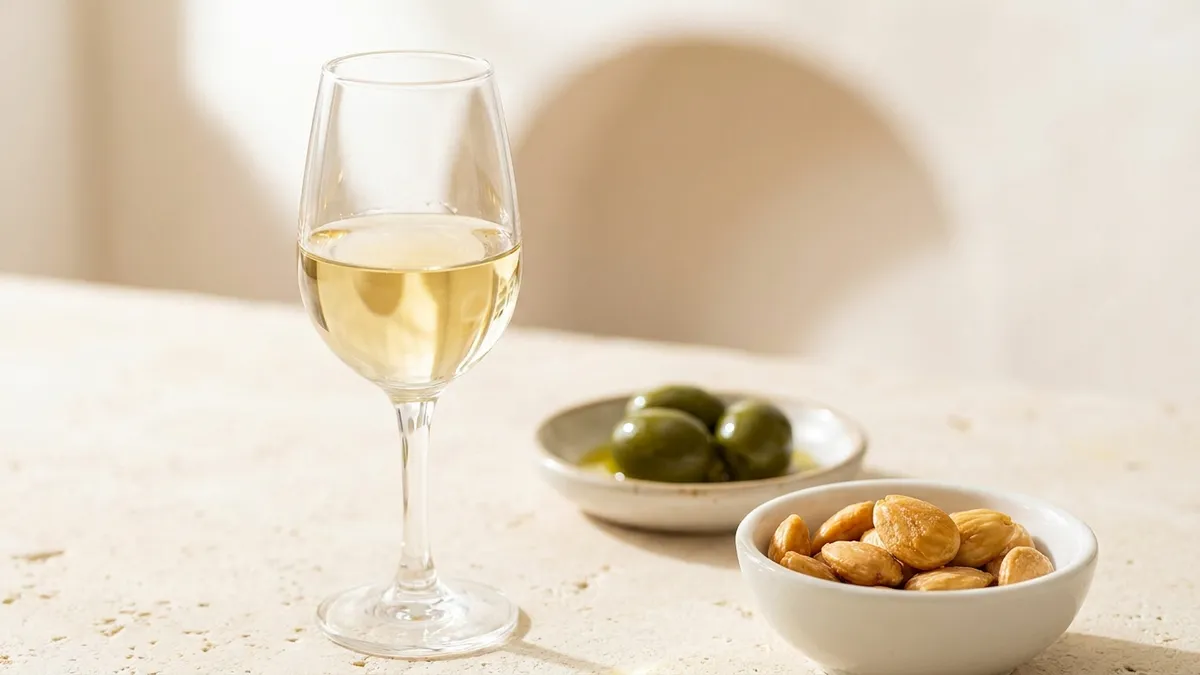
How to Taste for Umami in Wine
Umami hides under fruit. To find it, you need a quiet palate and a method.
Step 1: Slow the first sip
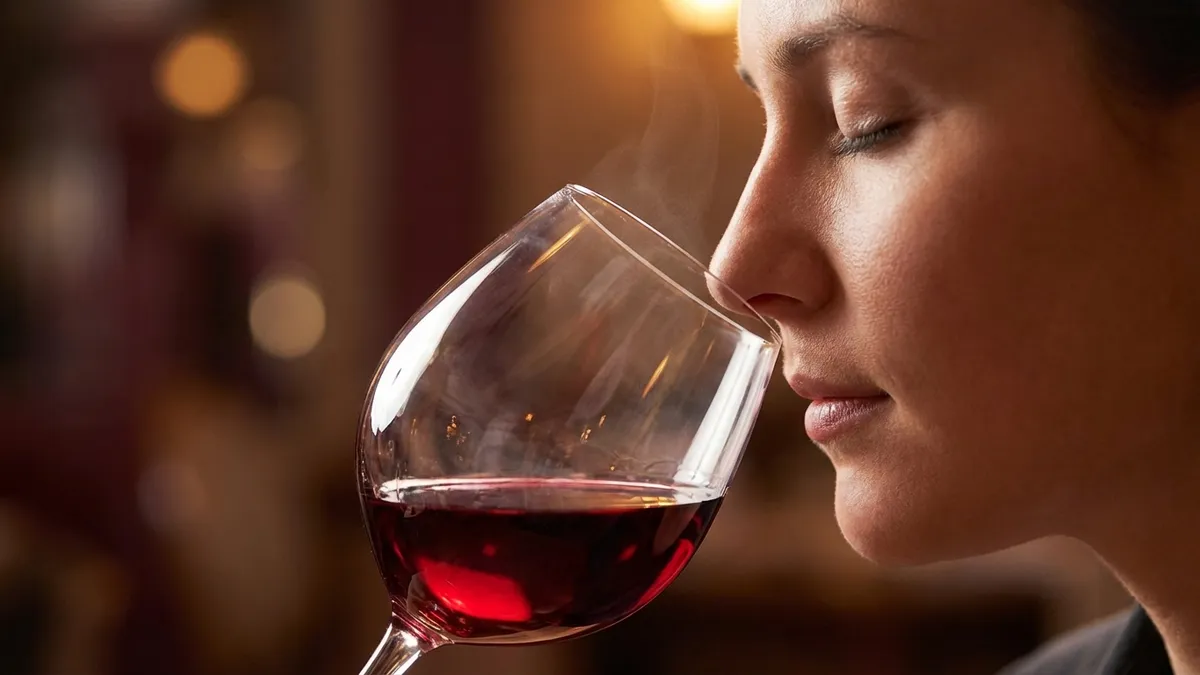
Pour a small amount. Smell, then sip. Hold the wine on your mid-palate for three seconds. Look past the fruit. Is there mushroom underneath? Broth? Soy? The savory layer often shows on the mid-palate and finish, not the attack.
Step 2: Pay attention to mouth-feel
Umami creates a salivating, mouth-filling sensation that fruit alone rarely produces. If you finish a sip and your mouth feels coated rather than rinsed, you are likely tasting umami. The technical term is mouth-coating glycerol-and-amino-acid character — but you can just call it savory.
Step 3: Taste in waves
Sip, swallow, exhale through your nose, and wait five seconds. The retronasal aromas that surface after the wine is gone often carry the strongest savor. Aged Burgundy can read as fruit on the front and broth on the finish in the same sip. See retronasal smell in wine for the mechanics.
Step 4: Use the food-pairing test
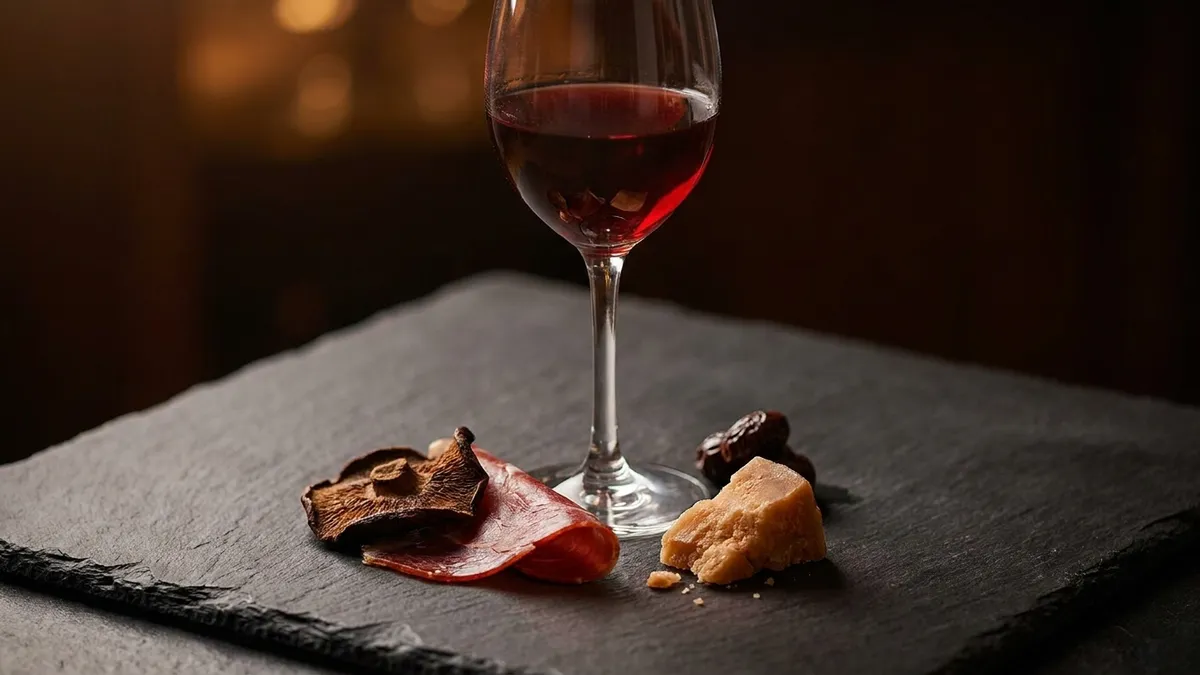
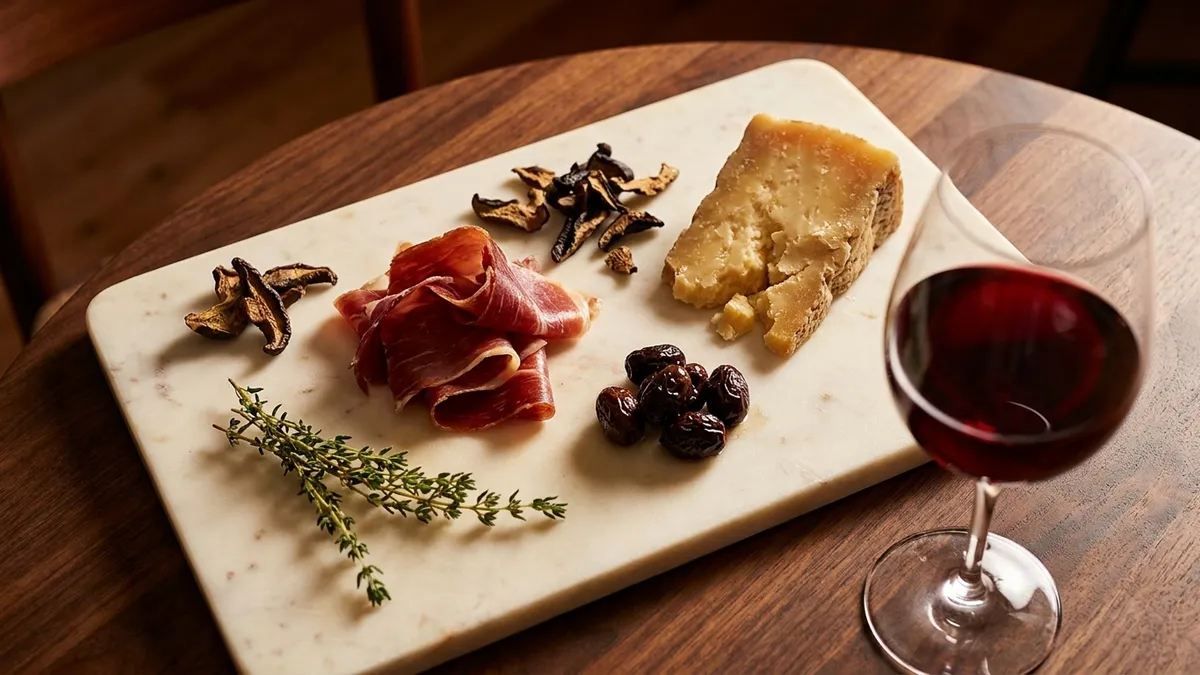
Pair the wine with an explicitly umami food — parmesan, dried mushrooms, miso soup, a piece of aged jamón. If the pairing harmonizes rather than clashes, the wine is carrying real umami. Fruit-forward wines often go flat against umami foods. Savory wines lift them.
Step 5: Compare against a fruit-driven control
Pour a young, fruity New World red alongside an aged Old World red. Taste both within five minutes. The contrast makes umami unmistakable — the New World wine shows ripe black fruit; the Old World shows mushroom, leather, and broth on top of fading fruit.
The Sommy app guides this exact comparison through structured aroma identification, prompting you to check savor categories alongside fruit categories until the recognition becomes automatic.
Pairing Savory Wine with Food
Umami in wine pairs predictably well with umami in food. The principle is simple: match savor to savor.
Classic harmony pairings
- Aged Burgundy + mushroom risotto — earth meets earth. More dish-by-dish picks are in wine with mushrooms.
- Vintage Champagne + aged hard cheese — yeast meets aged dairy umami.
- Fino Sherry + jamón ibérico — salt and broth meet cured meat.
- Barolo + braised beef cheek — tar and dried cherry meet long-cooked meat.
- Aged Riesling + miso-glazed salmon — slow-developing savor meets fermented umami.
Pairings that fight
- Light fruit-forward wines + miso or soy-heavy dishes — the wine reads as hollow, which is why wine with ramen leans on savoury, nutty whites for miso broth.
- Sweet wines + heavy umami foods — the sweetness amplifies any saltiness in the dish.
- Big oaky New World reds + delicate mushroom dishes — the wine overpowers the umami it should support.
For deeper food strategy, see wine and cheese pairing and the broader wine food pairing framework.
Common Mistakes When Tasting for Umami
Mistaking oak for savor
Toasted oak adds vanilla, smoke, and sometimes char. These are aromatic effects layered onto a wine, not glutamate-driven umami. A heavily oaked New World Cabernet may smell smoky without being genuinely savory. Real umami arrives on the palate and finish, not just the nose.
Stopping at the fruit layer
Most beginners report what hits first — usually fruit. Umami rewards patience. Linger past the attack, exhale through your nose, and check for the savory layer underneath.
Confusing umami with fault
Some savory descriptors — dried mushroom, leather, soy — can resemble flaws to a fruit-trained palate. They are not flaws. Brettanomyces, oxidation, and TCA contamination produce different, less pleasant signals. See how to identify wine faults by smell and how to tell if wine is corked to keep the distinction clean.
Expecting umami in young, fruit-forward styles
A bright young Beaujolais, a fresh Sauvignon Blanc, or a fruit-driven Malbec is unlikely to show much umami. That does not mean the wine is poorly made — it means savor is not what the wine is built to deliver. Match expectations to style.
Building Your Savory Palate Over Time
Recognizing umami in wine is a trainable skill. The mental references you need are mostly food-based:
- Cook with umami ingredients — dashi, miso paste, tomato paste, anchovy, dried mushrooms, parmesan. Pay attention while you cook.
- Smell raw umami ingredients — open a jar of soy sauce, smell dried porcini, taste aged hard cheese. Build the reference library.
- Taste young vs aged — same grape, different ages, side by side. The savory shift becomes obvious.
- Take comparative notes — write what you taste at minute 1, minute 15, minute 45. Savory layers often emerge with air.
Within a few months of intentional practice, savory wine flavors stop hiding. You start to detect mushroom, broth, and miso as readily as you detect cherry, lemon, or pear.
For a structured route, the Sommy app's guided tasting flow asks you to log savory categories alongside fruit categories on every wine — building the habit until it becomes second nature. Pair that with the primary, secondary, and tertiary aromas framework and the savory quadrant of the wine aroma wheel for the most direct path forward.
The Bottom Line
Umami in wine is the savory, broth-driven dimension that lives alongside fruit. It comes from yeast autolysis, bottle age, oxidative winemaking, indigenous grape character, and stem inclusion — and it shows up as mushroom, miso, soy, leather, smoke, olive, and cured meat on the palate.
Spotting it changes how you taste. Wines stop reading as "fruity" or "not fruity" and start to read in two dimensions — fruit and savor. Old World classics suddenly make sense. Pairings become more reliable. Aged wines stop seeming weird and start seeming layered. The savory quadrant is where wine gets serious — and once you can taste it, you stop drinking the same wine twice.
Frequently Asked Questions
What does umami taste like in wine?
Umami in wine reads as savory and mouth-filling rather than sweet or fruity. Common descriptors include dried mushroom, beef broth, soy sauce, miso, parmesan rind, cured meat, and dashi. It often arrives on the mid-palate and finish, leaving a salivating, almost meaty sensation that sits opposite the bright fruit you find in young wines.
Which wines have the most umami flavor?
Aged Burgundy, Barolo, Brunello, traditional Rioja, vintage Champagne, Muscadet sur lie, oxidative Sherry, and orange wines tend to lead on umami. Old World reds with bottle age and lees-aged whites consistently show savory character. New World wines made with whole-cluster fermentation or extended aging on yeast also build clear umami depth in the glass.
Where does umami in wine come from?
Umami comes from glutamate-like compounds released during yeast autolysis (lees aging), bottle age, oxidative handling, and stem inclusion. As yeast cells break down they release amino acids that read as savory. Bottle age also breaks proteins into shorter peptides that taste broth-like. Flor yeast in Sherry produces the same effect more intensely.
Is umami the same as savory in wine?
They overlap but are not identical. Umami is one of the five basic tastes — glutamate-driven and broth-like. Savory is a wider sensory umbrella that includes umami plus herbal, smoky, meaty, and earthy notes that come from aroma rather than taste. Most wines described as savory show both: real umami plus aromatic complexity that supports it.
How do I train myself to notice umami in wine?
Start with food references — dashi, parmesan, dried mushrooms, soy sauce, miso, anchovy. Smell and taste each one slowly. Then taste a young fruit-driven wine alongside an aged Old World red and look for the contrast. Repeat the comparison weekly. Most tasters notice umami clearly after four or five paired sessions.
Does umami in wine pair better with savory food?
Yes. Umami in wine plus umami in food creates harmony rather than clash, which is why aged Burgundy works with mushroom risotto and Sherry works with aged cheese or cured ham. Pairing a savory wine with light, fruit-forward dishes can make the wine seem hollow. Match savory to savory and the meal lifts both.
Why do older wines taste more savory?
Bottle age slowly converts primary fruit aromas into tertiary character. Proteins fragment into amino acids that read as broth and miso. Color pigments combine with tannins to soften and add leather-like notes. Volatile compounds from fermentation evolve into truffle, forest floor, and dried meat. The result is less fruit, more savor — a hallmark of mature wine.
Sommy Team
LinkedInFounder & Wine Educator
The Sommy Team is building the world's most approachable wine education app, helping beginners develop real tasting skills through structured courses and AI-guided practice.