How to Taste Fortified Wine: Port, Sherry, and Madeira

By the Sommy Team — AI-assisted, human-edited.
Updated Apr 29, 2026

Contents (8)
TL;DR
Fortified wine is grape wine with grape spirit added during or after fermentation, landing at 15-22% alcohol. Tasting it well means smaller pours, more swirling to release alcohol heat, and reading two extra dimensions table wine rarely shows — sweetness across a wide range and oxidative complexity from rancio, walnut, and bruised apple notes.
Why Fortified Wine Needs Its Own Tasting Method
Tasting fortified wine uses the same skeleton you already know for table wine — sight, smell, palate, finish — but the higher alcohol, the wider sweetness range, and the role of oxidative aging change how you actually use that skeleton. A method tuned for a 13% Pinot Noir will leave you exhausted and confused by the third glass of a fortified flight, with most of the interesting detail buried under alcohol heat.
Learning how to taste fortified wine is mostly about adjusting four things: the size of the pour, how aggressively you swirl, what you expect to find on the nose, and how you read the long, often savory finish.
This guide covers the full fortified family — Port, Sherry, Madeira, Vin Doux Naturel, Marsala, and Vermouth — and walks through a tasting method that works across all of them. For style-specific deep dives, the Port wine guide and Sherry wine guide cover production and ageing in detail. This article is the tasting playbook that sits underneath both.
What Counts as Fortified Wine, in 90 Words
A fortified wine is grape wine with a neutral grape spirit added at some point in production. That single step pushes alcohol from a typical 12-14% to a finished range of 15-22%. The spirit can be added mid-fermentation, which kills the yeast and locks in residual sugar (the Port path), or after fermentation finishes, on a wine that is already dry (the Sherry path). The two paths are compared on sweetness, alcohol and serving temperature in port vs sherry. The major families are Port, Sherry, Madeira, Vin Doux Naturel from southern France, Marsala from Sicily, and aromatised wines like Vermouth. Style — sweet, dry, oxidative, fresh — is independent of the fortification step itself.
The Two Dimensions Table Wine Rarely Shows
Most table wine sits inside a fairly narrow band: dry to off-dry, with little or no deliberate oxidative character. Fortified wine breaks both of those defaults wide open, and a tasting method that does not account for them will miss most of what makes the category interesting.
Sweetness Across the Full Range
Fortified wine spans the entire residual sugar scale (the unfermented sugar left in the finished wine, measured in grams per liter). On the dry end, Fino Sherry and most Amontillado have essentially zero residual sugar. White Port and Sercial Madeira sit in the off-dry zone. Tawny and Ruby Port land in clearly sweet territory, around 90-110 g/L. Pedro Ximenez Sherry and Malmsey Madeira can climb past 400 g/L — denser than maple syrup.
For a wider mental map of sweetness across all wine, the wine sweetness scale covers how to read sugar levels on a label and what they actually feel like in the mouth.
The practical lesson: when you taste a fortified wine, do not assume sweetness from color. A pale Fino looks similar to a dry white, and a tawny amber wine could be either a dry Amontillado or a sweet ten-year Tawny Port. Let the palate tell you, not the glass.
Oxidative Complexity and Rancio
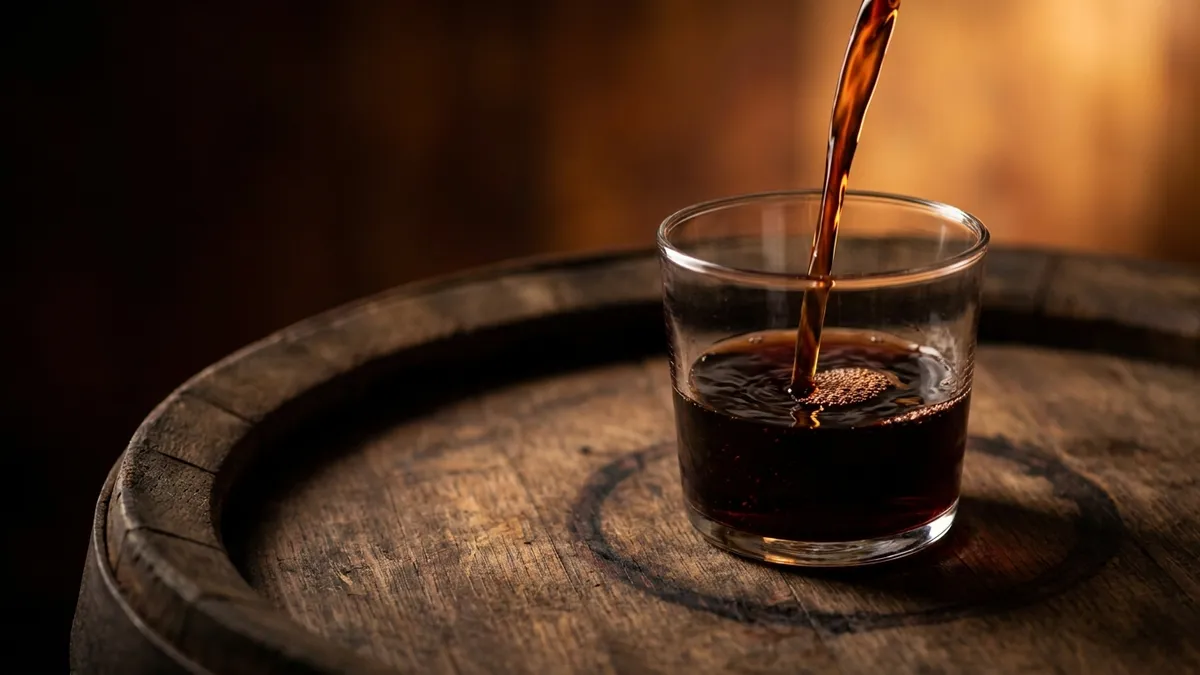
The other dimension is oxidative aging — long, slow barrel rest with deliberate oxygen exposure. The wine browns, loses primary fruit, and gains a layered, savory complexity that fresh wines simply cannot reach. Look for these signature aromas:
- Bruised apple and dried fig — the first oxidative markers
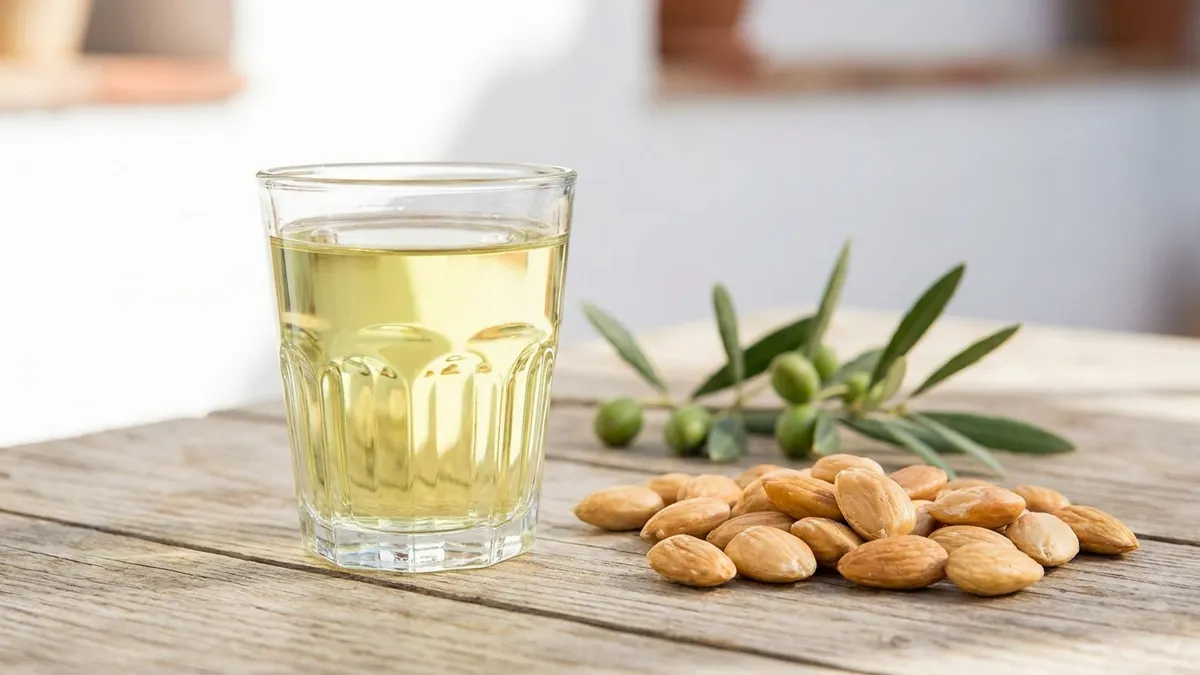
- Walnut, almond, and hazelnut — from extended barrel time
- Caramel and toffee — sugar plus oxidation plus heat
- Leather, tobacco, and mushroom — the savoury edge of rancio, the umami-driven complexity prized in old Tawny, Oloroso, and Madeira
- Salty, briny notes — particularly in Sherry aged near the Atlantic
Wines made under flor — Fino and Manzanilla — sit on a different track. Instead of rancio they show biological aging markers: bread dough, fresh almond, green apple skin, sea spray. Same fortified family, opposite end of the aroma spectrum.
The full taxonomy of how aromas evolve from fruit to development is covered in primary, secondary, and tertiary aromas. Fortified wines are one of the few categories where tertiary character is the main event, not a finishing touch.
How to Taste Fortified Wine, Step by Step
The structure mirrors the how to taste wine framework, with adjustments at every step.
1. Pour Small
Aim for 60-90ml — about a third of a typical table wine pour. A smaller pour gives you enough surface area to swirl and smell, leaves headroom in the glass to capture aromas, and saves your palate for the next sample. For a flight of four or five fortified wines, this is the difference between tasting properly and feeling the alcohol by the second glass.
A small copita or sherry tulip works better than a Bordeaux glass. Concentrated aromas, controlled pour, easier to assess color against a white surface.
2. Look
Hold the glass against a white background and read the color carefully — it tells you a lot about age and aging style.
- Pale lemon to straw — Fino, Manzanilla, dry white Port, Sercial Madeira
- Amber to mahogany — biologically aged Sherry that drifted oxidative, ten-year Tawny Port, Bual or Verdelho Madeira
- Deep purple-ruby — young Ruby and Vintage Port, before oxidative time has set in
- Olive-tinged or brown — fully oxidative styles like Oloroso, old Tawny, and aged Madeira
The wine color meaning guide covers how color shifts with age and exposure for both reds and whites — useful background for reading a fortified flight.
3. Swirl Harder Than You Think
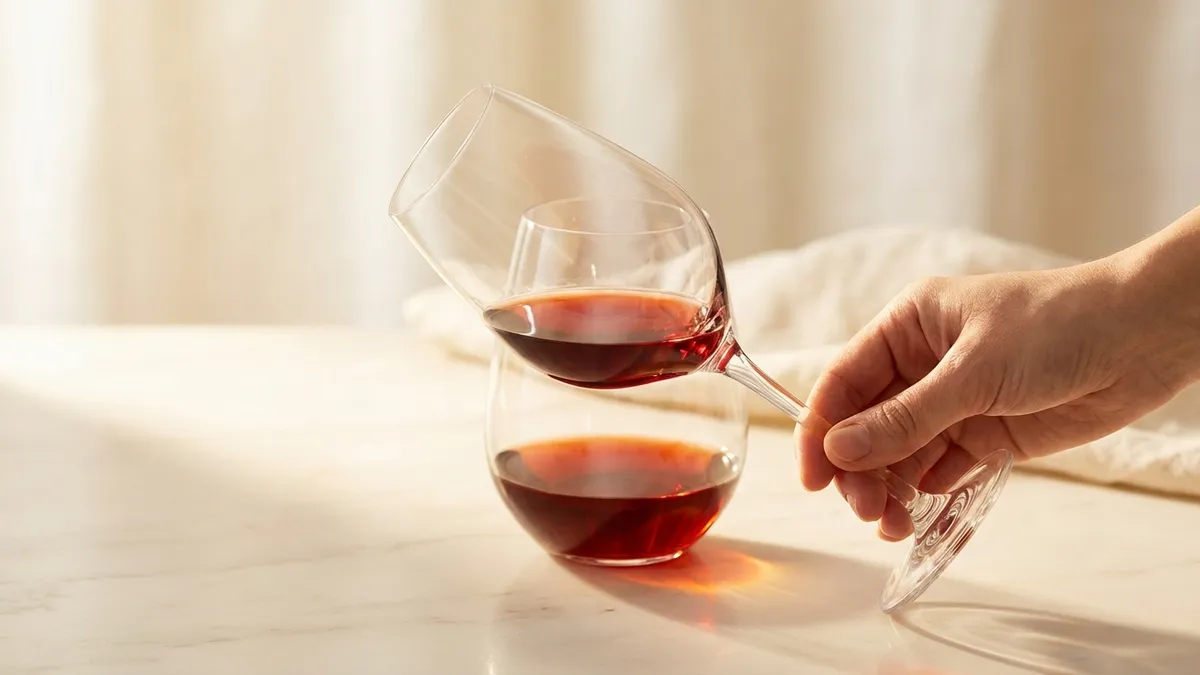
Higher alcohol traps aromatic compounds more tightly than lower-alcohol wine. Swirl longer and more vigorously than you would with a table wine — five to ten full revolutions, not the gentle two-second turn you might give a Riesling. Then let the glass sit for a moment before smelling. The volatile compounds need a beat to release once they are airborne.
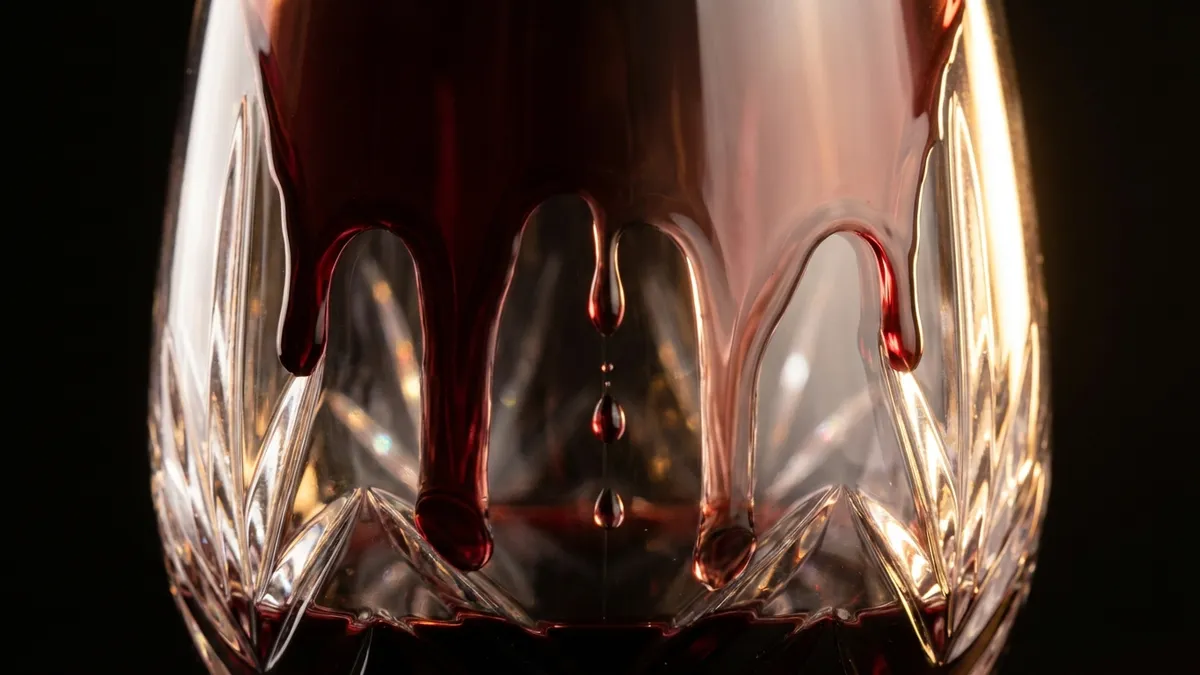
You will see thick, slow wine legs (the alcohol-driven streaks running down the glass after a swirl). The wine legs meaning guide covers what they actually tell you, and why pronounced legs in a fortified wine confirm the alcohol level rather than predicting quality.
4. Smell in Two Passes
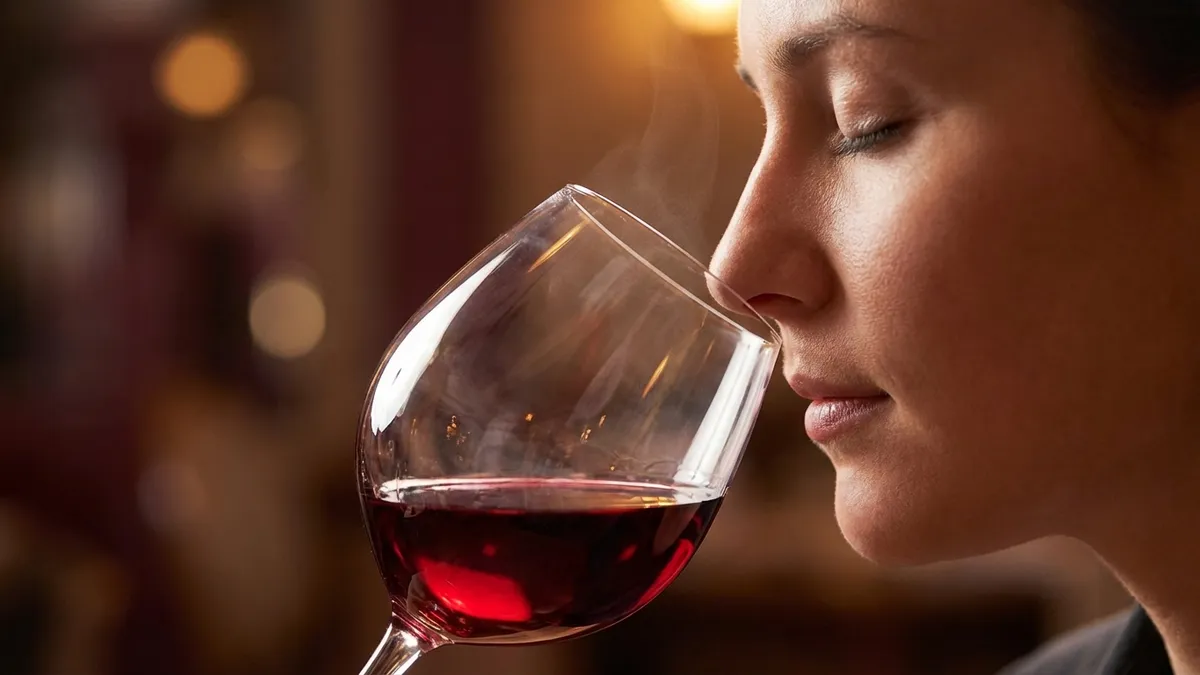
The first sniff lands on alcohol. Pull back, breathe, and come in for a second pass with your nose closer to the rim. The second pass is where the structured aromas live.
Categorize what you find by track:
- Fruit-forward, fresh — young Ruby Port, white Port, basic Marsala
- Biological, saline, yeasty — Fino, Manzanilla
- Oxidative, nutty, caramelised — Tawny Port, Oloroso, Amontillado, most Madeira
- Concentrated, raisin-driven, syrupy — Pedro Ximenez, Malmsey Madeira, Vin Doux Naturel from Banyuls or Maury
If you want a longer reference of aromas to anchor against, the wine aroma wheel guide breaks the major families into a structured grid. The Sommy app uses a curated subset of about 50 aromas with emoji prompts to keep the choice tractable while you learn what each cue smells like.
5. Sip Small
Take a smaller sip than usual — half a teaspoon is plenty. Roll it across your tongue, then let it sit. Read four things:
- Sweetness — does the front of the tongue light up with sugar, stay neutral, or feel bone-dry?
- Acidity — does the wine feel fresh and lifted, or rich and broad? Acidity is what stops a sweet PX from feeling cloying.
- Alcohol heat — a warming sensation in the throat and chest. In a balanced fortified wine it should integrate, not burn.
- Body and texture — viscous and coating, or fresh and cutting?
For tasting flights with several fortifieds, how to spit wine tasting covers the technique — non-negotiable above three samples at this alcohol level.
6. Read the Finish
Fortified wines have some of the longest finishes in the wine world, often running 30 seconds or more. Watch what evolves after you swallow or spit:
- A sweet wine that turns savory and nutty on the finish is showing oxidative complexity, not just sugar
- A dry Fino that lingers as saline and bread-like is signaling proper flor character
- A young Ruby Port should leave fresh fruit, not heat — heat-dominant finish is a fortification balance issue
The wine finish meaning guide covers what a long, integrated finish tells you about quality and aging.

Reading the Major Families
A short cheat sheet to anchor what you taste against.
Port
Fortification mid-fermentation locks in sweetness. Vintage Port is fruit-driven, dense, and reductively aged in bottle — fresh blackberry, plum, and floral lift, with grippy tannin. Tawny Port is oxidatively aged in small barrels — caramel, walnut, dried fig, and mellower tannin. Ruby and Reserve Ruby sit between the two, simpler and fruitier. White Port can be dry, off-dry, or sweet, often with citrus and almond.
Serve Vintage Port at 16-18C, Tawny slightly cool at 12-14C, white Port well chilled.
Sherry
Most Sherry is fortified after fermentation completes, which is why the dry styles really are dry. Fino and Manzanilla are the biological track — pale, saline, yeasty, served properly cold. Amontillado starts under flor and finishes oxidative — bridging dry walnut and dried apple. Oloroso is fully oxidative — rich, dry, and savoury. Pedro Ximenez is its own world, made from sun-dried grapes and unmistakably syrupy. The Spanish wine regions guide covers Jerez in the wider Spanish context.
Madeira
The defining trick is estufagem — controlled heating of the wine for months, producing a cooked, oxidative profile that no other fortified wine matches. Sercial is dry and racy. Verdelho is medium-dry. Bual is medium-sweet. Malmsey is fully sweet. All four share burnt sugar, dried orange peel, and an electric acidity that keeps even the sweetest version feeling balanced rather than heavy. The Madeira wine guide covers the grapes, the age categories, and why an open bottle lasts for months.
Vin Doux Naturel, Marsala, Vermouth
Vin Doux Naturel from southern France (Banyuls, Maury, Rivesaltes, Beaumes-de-Venise) is fortified mid-fermentation like Port, often Grenache-based, ranging from fresh to deeply oxidative rancio styles. Marsala from Sicily comes dry, semi-sweet, or sweet, and runs from clean apéritif to fully cooked oxidative. Vermouth is fortified wine plus botanicals — a separate beast that rewards the same attention to bitterness and aromatic balance.
The dessert wine guide covers the sweet end of the fortified spectrum alongside non-fortified dessert wines like Sauternes and Tokaji, useful context if you are building a sweet-wine vocabulary.
Building a Practice Flight at Home
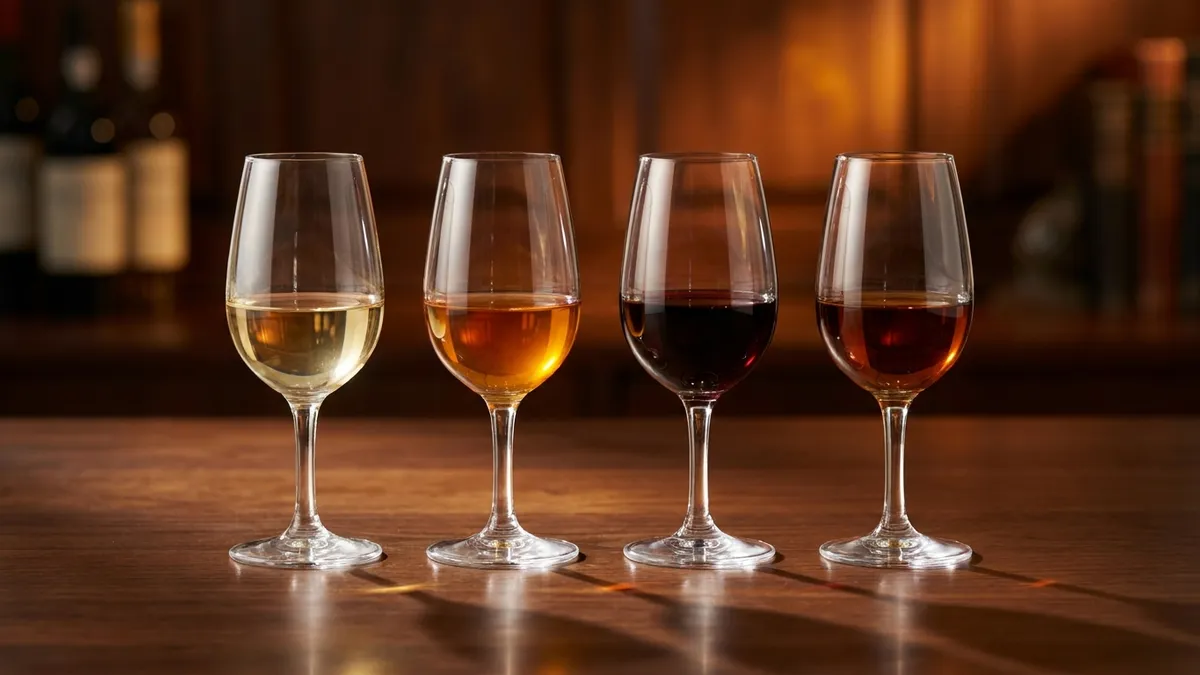
A balanced introduction flight covers the major axes of the category in four glasses:
- A bone-dry Fino or Manzanilla Sherry — biological, saline, properly cold
- A ten-year Tawny Port — oxidative, sweet, moderate complexity
- An Amontillado or Oloroso Sherry — dry oxidative, walnut and rancio
- A Madeira in any sweetness level — to anchor estufagem character
Pour 60-90ml of each, taste in that order (light dry to richer, sweet last), and write quick notes after each. The wine tasting notes template gives a structure that handles fortifieds well — sweetness, oxidative cues, and finish length are explicit fields.
To practice the deduction muscle once you know the basics, blind wine tasting tips covers how to work backward from cues like color, oxidative aroma, and alcohol heat to a category guess.
The Sommy app's tasting flow lets you log structured palate readings — sweetness, acidity, body, alcohol — on the same 1-5 scale used for table wines. Over a few sessions, your fortified palate calibrates against the rest of your tasting history, and patterns start to surface that no single tasting can show. Start a free practice session at https://sommy.wine/ to see your fortified notes alongside the rest of your tasting journal.
Common Mistakes When Tasting Fortified Wine
A short list of the recurring traps. The full version is in common wine tasting mistakes, but these are the fortified-specific ones:
- Pouring a full glass. Standard pour at 20% ABV is two and a half drinks. Fight the instinct.
- Serving too cold across the board. Cold flatters Fino. It mutes Tawny, Oloroso, and Madeira, where the oxidative complexity is the entire point.
- Confusing color with sweetness. A deep amber Amontillado is often bone-dry. A pale white Port can be off-dry.
- Skipping the second sniff. First pass is alcohol; the structured aromas only show on the second, calmer pass.
- Treating the finish as an afterthought. Half the quality signal in a great fortified wine lives in the 30 seconds after you swallow.
The Sommy app's guided tasting flow walks you through these pitfalls in real time, prompting you to log oxidative aroma cues, sweetness perception, and finish length as separate dimensions — so the structure of the wine builds up as a profile rather than a single overall impression.
Where to Go Next
Once the tasting method clicks, the natural next moves are deeper into single styles. The Port wine guide covers Vintage, LBV, Tawny, and Colheita in detail. The Sherry wine guide covers the solera system, flor, and the full range from Fino to PX. The dessert wine guide widens the lens to non-fortified sweet wines, useful for building a complete sweet-and-savory tasting vocabulary. For pairing experiments, wine and cheese pairing is a strong follow-up — fortified wines are some of the most cheese-friendly wines made.
Tasting fortified well is mostly a matter of giving the category the small adjustments it asks for: smaller pours, harder swirls, a more attentive nose, and patience with the long, savoury finish. Once those become reflex, the wines reward it.
Frequently Asked Questions
What does fortified mean in wine?
Fortified means a neutral grape spirit was added either during fermentation (to stop yeast and preserve sweetness, as in Port) or after fermentation finished (as in most Sherry). The added spirit pushes alcohol from a typical 12-14% up to 15-22%. The fortification step is what defines the category — not the sweetness, which varies enormously across styles.
How is tasting fortified wine different from regular wine?
The high alcohol changes the rules. Pour smaller servings, around 2-3 ounces. Swirl harder and longer to volatilize aromatics through the alcohol. Expect a wider sweetness range, from bone-dry Fino to syrupy PX. Look for oxidative cues — walnut, bruised apple, caramel, rancio — that table wines rarely show. Take small sips and pause longer between them.
Are all fortified wines sweet?
No. The category spans the full spectrum. Fino and Manzanilla Sherry are bone-dry. Amontillado and most Oloroso are dry. White Port can be dry or off-dry. Tawny and Ruby Port are sweet. Madeira ranges from dry Sercial to lusciously sweet Malmsey. Pedro Ximenez is among the sweetest wines made anywhere. Sweetness is a style choice, not a category rule.
What is oxidative aging in fortified wine?
Oxidative aging is deliberate exposure to small amounts of oxygen during long barrel rest. The wine slowly browns, develops nutty and dried-fruit aromas, and gains a savory complexity called rancio — leather, walnut, mushroom, caramel. Tawny Port, Oloroso Sherry, and most Madeira are oxidatively aged. Vintage Port and Fino Sherry are not, and they taste worlds apart as a result.
What temperature should fortified wine be served at?
Match the style. Fino and Manzanilla need to be properly cold, around 6-8C. Tawny Port and Amontillado are best slightly cool, 12-14C. Vintage Port and rich Oloroso are best at cool room temperature, around 16-18C. Madeira sits in the middle, 12-16C depending on sweetness. Cold mutes oxidative complexity, so do not over-chill richer styles.
What glassware works best for tasting fortified wine?
Use a smaller glass than for table wine — a copita or sherry tulip holds 150-200ml and concentrates aromatics without overwhelming the nose. Pour just enough to cover the bottom of the bowl, around 60-90ml. The smaller pour also helps you actually taste through a flight without alcohol fatigue setting in by the third glass.
Can you spit fortified wine when tasting a flight?
Yes, and you should for any serious tasting of more than two or three samples. At 18-22% alcohol, even small pours add up fast. Spitting lets you assess the finish without committing to a full ounce of high-alcohol liquid every time. Holding the wine in the mouth for five to ten seconds before spitting captures the structure and aftertaste cleanly.
Sommy Team
LinkedInFounder & Wine Educator
The Sommy Team is building the world's most approachable wine education app, helping beginners develop real tasting skills through structured courses and AI-guided practice.