Glera: The Grape Behind Every Glass of Prosecco

By the Sommy Team — AI-assisted, human-edited.
Updated Jun 17, 2026

Contents (9)
TL;DR
Glera is the white grape behind every bottle of Prosecco. Grown across Veneto and Friuli, it makes a fresh, floral sparkling wine using the tank-based Charmat method. It was renamed from Prosecco to Glera in 2009 so the place name could protect the wine.
What Is the Glera Grape?
Glera is the white grape behind every glass of Prosecco, Italy's most popular sparkling wine. Grown across Veneto and Friuli-Venezia Giulia in the country's northeast, the glera prosecco grape produces a light, frothy, floral wine using a tank-based fermentation rather than the bottle method used for Champagne. Glera ripens late, yields generously, and keeps high acidity, which is exactly why it makes such a refreshing fizz. By law, Prosecco must be at least 85% Glera, and most bottles are close to 100%. If you have ever raised a flute at a celebration, you have almost certainly tasted Glera.
The Grape Formerly Known as Prosecco
For most of its history, this grape was simply called Prosecco, named after a village near Trieste where it was thought to originate. That created a problem. Under European Union law, a grape name cannot be legally protected, but a geographic name can. As long as "Prosecco" was a grape, anyone anywhere in the world could plant it, label the result Prosecco, and sell it.
So in 2009, the Italian authorities did something clever. They officially renamed the grape Glera — reviving an old Friulian name for it — and turned Prosecco into a protected place name covering a defined zone in northeast Italy. From that moment on, only sparkling wine made from Glera grown in that zone could legally be called Prosecco.
The change was a defensive move, and it worked. It locked the word Prosecco to the region the way Champagne is locked to its corner of France. A grower in Australia can still plant Glera, but the bottle cannot say Prosecco on it.
Sommelier tip: When a wine is named after a place rather than a grape, the label is telling you the rules of the region matter as much as the variety. Prosecco, Champagne, and Chianti all work this way.
What Glera Tastes Like
Glera is what wine educators call a neutral-to-aromatic grape. It is not a powerhouse of scent the way Muscat or Gewürztraminer are, but it is more expressive than a truly blank canvas like Trebbiano. Its charm is lift and freshness rather than intensity, which is part of why it works so well as a sparkling wine.
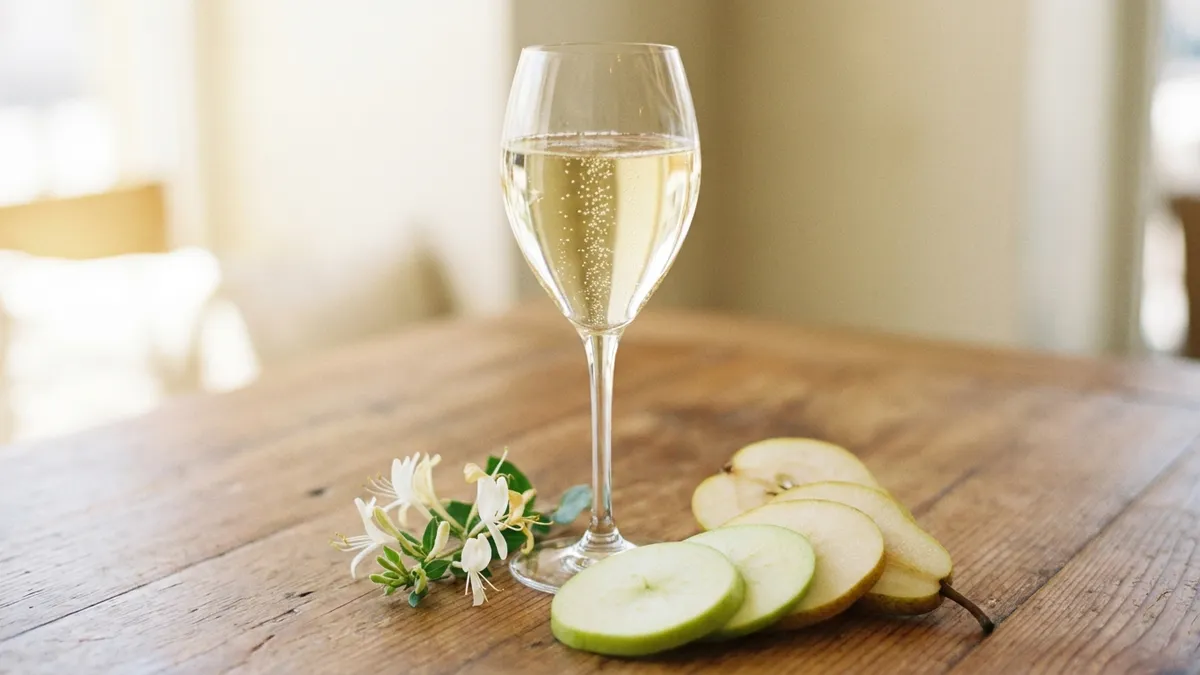
Typical aromas: green apple, white pear, honeysuckle, acacia blossom, white flowers, and a touch of ripe melon. Some bottles add a whisper of fresh herbs or a hint of citrus zest.
In structural terms, a typical Brut Prosecco shows:
- Sweetness: dry to off-dry (1–2 of 5, depending on the style on the label)
- Acidity: high (4/5), the backbone that keeps it crisp
- Body: light (2/5)
- Bubbles: soft and frothy rather than fine and persistent
That high acidity is the key to Glera. It keeps the wine bright and clean, stops the fruit from feeling flabby, and makes Prosecco one of the most refreshing things you can pour on a warm afternoon. If you want a refresher on how those numbers connect to what you actually feel in the glass, our guide to tannins, acidity, and body walks through each one.
How Sweet Is Prosecco?
One of the most useful things to learn about Prosecco is that the sweetness is printed right on the label. Glera's gentle fruit can carry a range of styles, and the Italian terms tell you exactly where a bottle sits:
- Brut Nature / Extra Brut — bone-dry, the leanest expressions of Glera
- Brut — dry, the most common modern style
- Extra Dry — confusingly, a touch sweeter than Brut; lightly off-dry
- Dry — noticeably sweet, despite the name
- Demi-Sec — clearly sweet, best with dessert
The naming is counterintuitive — Extra Dry is sweeter than Brut — which trips up almost every beginner. Reaching for Brut is the safest bet if you want a crisp, modern, dry style.
Veneto and Friuli: Where Glera Grows
Glera's home is the northeast of Italy, and the quality runs on a clear ladder from gentle plains up into steep hills.
Conegliano-Valdobbiadene DOCG
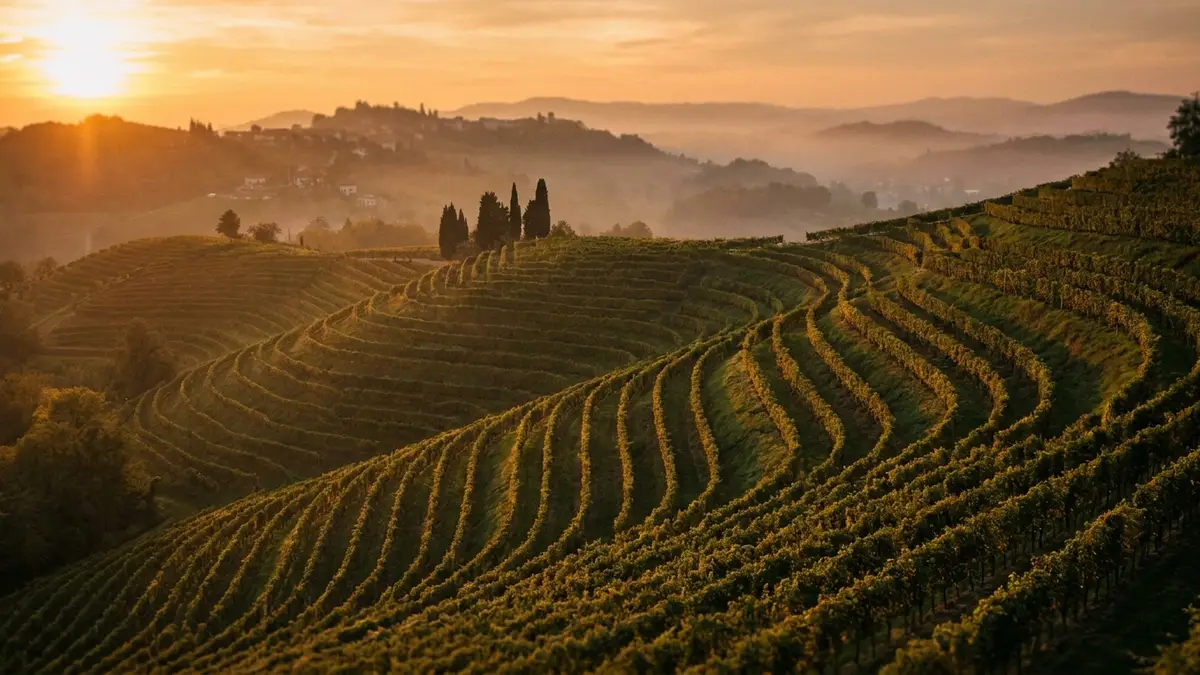
The historic heart of Prosecco is the hilly zone between the towns of Conegliano and Valdobbiadene in Veneto, elevated to DOCG status — Italy's top quality tier. The vineyards here climb dramatically steep slopes, so steep that much of the work is done by hand. The cooler hillside sites and well-drained soils give the grapes more concentration and a finer thread of acidity than the flatlands below.
Within this DOCG you will find two terms worth knowing:
- Rive — wine from a single named hillside commune, signaling more specific, site-driven character
- Cartizze — a tiny, prized 107-hectare hill widely considered the grand cru of Prosecco
Asolo DOCG
A second hillside zone, Asolo Prosecco DOCG, sits a little to the west and also produces concentrated, higher-quality fizz from elevated vineyards. Like Conegliano-Valdobbiadene, it represents the top end of what Glera can do.
Prosecco DOC
The broad Prosecco DOC covers a much larger area across Veneto and Friuli, including the flatter, more fertile plains. This is the everyday tier — the wine that fills most supermarket shelves and Aperol Spritzes. It is reliable, fruity, and made in enormous volume thanks to Glera's generous yields.
This regional ladder is a textbook example of how Italian wine law uses geography to signal quality. If you want to see how the same logic shapes reds and whites across the whole country, our Italian wine guide maps it out region by region.
The Charmat Method: Why Prosecco Stays Fresh
The single most important thing to understand about Prosecco is how the bubbles get in, because the method shapes the flavor as much as the grape does.
All quality sparkling wine gets its fizz from a second fermentation — a second round where yeast eats sugar and produces carbon dioxide, which is trapped as bubbles. The question is where that second fermentation happens.
- Champagne runs the second fermentation inside each individual bottle, then ages the wine on its spent yeast for years. That long contact builds autolytic flavors — bread, brioche, toast, biscuit — and a fine, persistent bead of tiny bubbles.
- Prosecco runs the second fermentation inside a large, pressurized stainless-steel tank, a process called the Charmat method (or tank method, or metodo Martinotti in Italy). The wine spends weeks, not years, on its yeast, then is bottled under pressure.
The tank method is the whole reason Glera tastes the way it does in the glass. Because the wine barely touches its yeast, none of those bready, toasty notes develop. Instead, you get the grape's fresh, primary character — green apple, pear, white flowers — preserved intact. The bubbles are softer and frothier rather than fine and aggressive. The process is also faster and cheaper, which is why Prosecco generally costs less than Champagne.
In short: the Charmat method is built to protect freshness, and freshness is exactly what Glera does best.
Why Prosecco Is Not Champagne
People use "Champagne" as a catch-all for any fizz, but Prosecco and Champagne are genuinely different wines for two concrete reasons: the grape and the method. Here is the comparison, point by point.
- Grape — Prosecco is made from Glera; Champagne is made from Chardonnay, Pinot Noir, and Pinot Meunier.
- Second fermentation — Prosecco ferments in a steel tank (Charmat method); Champagne ferments in the bottle (traditional method).
- Time on yeast — Prosecco spends weeks; Champagne spends years.
- Bubbles — Prosecco has soft, frothy bubbles; Champagne has a fine, persistent, fast-rising bead.
- Flavor — Prosecco leans fresh, fruity, and floral; Champagne leans bready, toasty, and complex.
- Body and acidity — Prosecco is light-bodied with crisp acidity; Champagne is fuller with racier acidity and more structure.
- Typical price — Prosecco is usually the more affordable option of the two.
Neither is "better." They are tools for different moments. Glera's bright, low-pressure charm makes Prosecco the easy, joyful pour, while Champagne's depth suits a slower, more contemplative glass. If you want the full three-way breakdown including Spain's contender, our Champagne vs Prosecco vs Cava comparison covers all three head to head.

Glera as a Grape: High Yields and a Light Touch
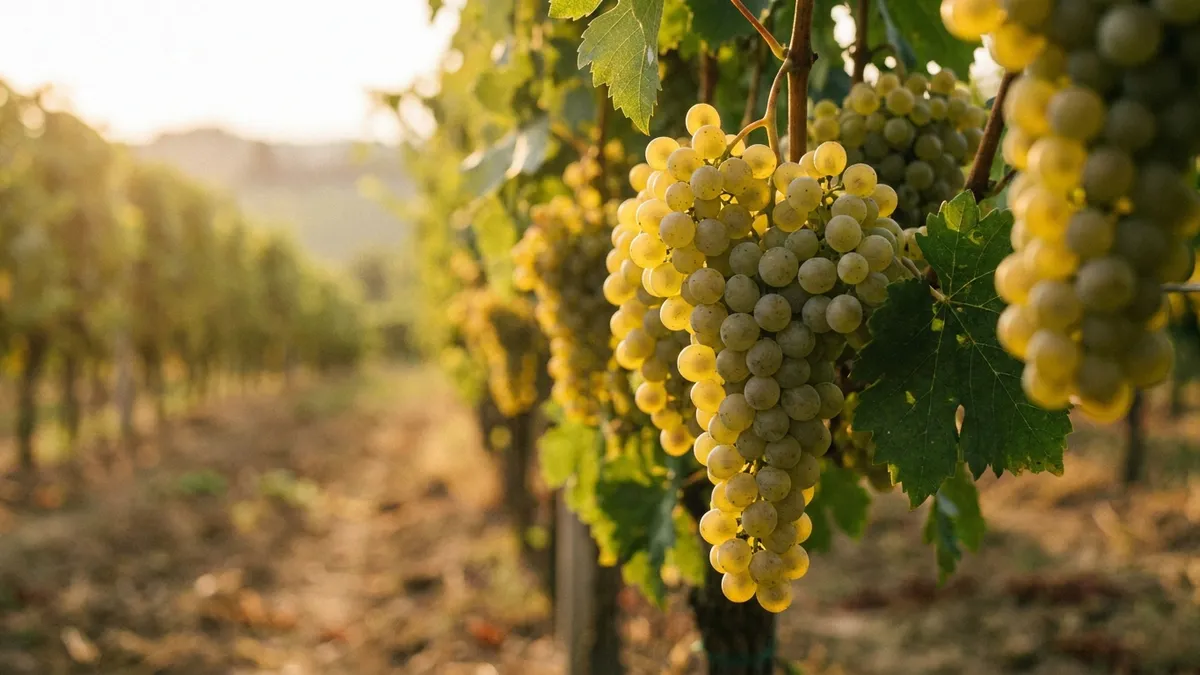
Beyond the wine in the glass, Glera has a few traits worth knowing as a grape variety. It is vigorous and high-yielding, producing large bunches of greenish-yellow berries. That productivity is a feature for sparkling wine, where volume and value matter, but it is also why Glera rarely makes a serious still wine — pushed for quantity, the grape stays light and simple.
Glera also ripens late and holds onto its acidity well into autumn, which is ideal for fizz. High natural acidity is the structural foundation every good sparkling wine needs, because the bubbles and the bracing freshness work together.
Compared with a grape like Chardonnay — a chameleon that takes on oak, lees, and malolactic softening — Glera is comparatively neutral. It does not transform much in the cellar. Its job is to deliver clean fruit and acidity, then let the Charmat method add the sparkle. If you are curious about where any grape sits on that scale, our guide to aromatic vs neutral grapes explains why some varieties shout and others whisper.
This is also why Glera does not appear among the noble grapes — the six benchmark varieties wine students learn first. It is a specialist, brilliant at one job rather than a master of many. To see how it fits alongside the other grapes that make the world's best bubbles, our sparkling wine grapes overview puts Glera in context.
How to Taste Glera Like You Mean It
Glera rewards a little attention. Because the flavors are delicate, slowing down helps you catch them.
- Look — Note the pale straw-gold color and watch the bubbles. Charmat-method bubbles are larger and softer than Champagne's fine bead.
- Smell — Reach past the fizz for green apple, pear, and white flowers. A gentle swirl releases the floral lift.
- Taste — Feel the high acidity on the sides of your tongue and check the sweetness against the label term (Brut, Extra Dry, and so on).
- Pair — Glera's crisp acidity loves salty, fried, and creamy foods: prosciutto, fried calamari, salty cheeses, and lighter pasta dishes. It also makes the classic base for an Aperol or Hugo Spritz.
The structured tasting steps in the Sommy app walk you through exactly this kind of guided practice, helping you put words to green apple, honeysuckle, and that bright streak of acidity one glass at a time. If you want the full framework first, our how to taste wine guide lays out the look-smell-taste method in detail.
Bringing It All Together
Glera is a grape that hides in plain sight. Almost everyone has tasted it, yet few people know its name — partly because it spent most of its life borrowing the name Prosecco, and only became Glera in 2009 so the region could protect its most famous export.
What makes Glera special is the partnership between grape and method. A vigorous, high-acid, gently floral grape meets the fresh-preserving Charmat method, and the result is a sparkling wine built for joy rather than ceremony. Once you can taste why Prosecco is light and fruity where Champagne is bready and deep, you understand something fundamental about how sparkling wine is made — and you can choose the right bottle for the right moment with confidence.
Sources
Frequently Asked Questions
What grape is Prosecco made from?
Prosecco is made primarily from Glera, a white grape grown across Veneto and Friuli in northeast Italy. By law, Prosecco DOC must contain at least 85 percent Glera, with small amounts of permitted grapes like Verdiso, Bianchetta, and Pinot Bianco allowed to fill the rest. Most everyday Prosecco is close to 100 percent Glera.
Why was the Prosecco grape renamed to Glera?
The grape was officially renamed from Prosecco to Glera in 2009 so that Prosecco could become a protected place name rather than a grape name. Under EU rules, only the geographic term can be legally protected, which stops producers outside the region from labeling their sparkling wine as Prosecco. Glera is the grape's old Friulian name, revived for the purpose.
What does Glera taste like?
Glera tastes of green apple, white pear, honeysuckle, white flowers, and a touch of ripe melon. It is light-bodied with high acidity, soft bubbles, and flavor that runs from bone-dry Brut to gently sweet. Glera is a fairly neutral grape, so its charm is freshness and floral lift rather than bold, complex aromatics.
How is Prosecco different from Champagne?
Two things separate them: grape and method. Champagne uses Chardonnay, Pinot Noir, and Pinot Meunier with a second fermentation inside the bottle, which builds bready, toasty depth. Prosecco uses Glera with a second fermentation in a steel tank, which preserves fresh fruit and flowers. The result is lighter, fruitier, and usually less expensive.
What is the Charmat method?
The Charmat method, also called the tank method, runs the bubble-making second fermentation inside a large pressurized steel tank rather than in each bottle. The wine spends weeks, not years, on its yeast, then is bottled under pressure. This keeps Glera's fresh apple and floral character intact and is the reason Prosecco tastes so bright and primary.
Is Glera grown anywhere outside Italy?
Glera is overwhelmingly an Italian grape, concentrated in Veneto and Friuli-Venezia Giulia. Small plantings exist in Australia and elsewhere, but those wines cannot be called Prosecco because the name is a protected European designation tied to the region. Outside Italy, the grape is simply labeled as Glera or as a generic sparkling wine.
What is the best Prosecco quality level to look for?
Conegliano-Valdobbiadene DOCG and Asolo DOCG sit at the top, with hillside fruit and more concentration. Prosecco DOC is the broad everyday tier. Within those, look for the Brut or Extra Brut sweetness level if you want a drier style, and Rive or Cartizze on a DOCG label for the most prized single-hill sites.
Sommy Team
LinkedInFounder & Wine Educator
The Sommy Team is building the world's most approachable wine education app, helping beginners develop real tasting skills through structured courses and AI-guided practice.