Which Grapes Make Sparkling Wine? Beyond Chardonnay

By the Sommy Team — AI-assisted, human-edited.
Updated Jun 16, 2026
Contents (9)
- Which Grapes Make Sparkling Wine?
- Grape First, Then Method: Why Both Matter
- The Champagne Trio: Three Grapes, One Region
- Blanc de Blancs vs Blanc de Noirs
- Beyond Champagne: The Grapes the Rest of the World Uses
- Sparkling Wine Grapes at a Glance
- How Grape and Method Combine
- Tasting the Grapes Behind the Bubbles
- Where to Start
TL;DR
Sparkling wine grapes go far beyond Chardonnay. Champagne uses Chardonnay, Pinot Noir, and Pinot Meunier. Prosecco relies on Glera, Cava on Macabeo, Parellada, and Xarel-lo, and sweet Asti on Muscat. The grape choice, combined with traditional or tank method, shapes whether bubbles taste toasty or fresh and fruity.
Which Grapes Make Sparkling Wine?
Most people can name one sparkling wine grape — Chardonnay — and stop there. The truth is wider and more interesting. Champagne alone uses three grapes (Chardonnay, Pinot Noir, and Pinot Meunier), and the rest of the sparkling world reaches for entirely different varieties: Glera for Prosecco, a Spanish trio of Macabeo, Parellada, and Xarel-lo for Cava, and aromatic Muscat for sweet Asti.
The grape sets the raw flavor. The production method — traditional (bottle) or tank — then either layers on toasty, bready complexity or keeps the fruit fresh and primary. Learning the grapes behind the bubbles is the fastest way to predict what is in your glass.
Grape First, Then Method: Why Both Matter
Before naming names, it helps to understand the two big levers behind every sparkling wine: the grape and the method.
The traditional method (also called the classic or Champagne method) runs a second fermentation inside the sealed bottle, then ages the wine on its spent yeast, the lees (the dead yeast cells left after fermentation). That contact gives toasty, biscuity, brioche-like flavors. The tank method (Charmat) runs the second fermentation in a large pressurized tank and bottles quickly, preserving the grape's fresh, primary fruit.
This is why grape choice and method are linked. Aromatic, fruit-driven grapes like Glera and Muscat shine in the tank method, where their fresh peach and pear character stays intact. Neutral, structured grapes like Chardonnay and Pinot Noir reward the traditional method, gaining complexity from long lees aging. If you want the deeper mechanics of each technique, our guide to sparkling wine types walks through the methods step by step.
The Champagne Trio: Three Grapes, One Region
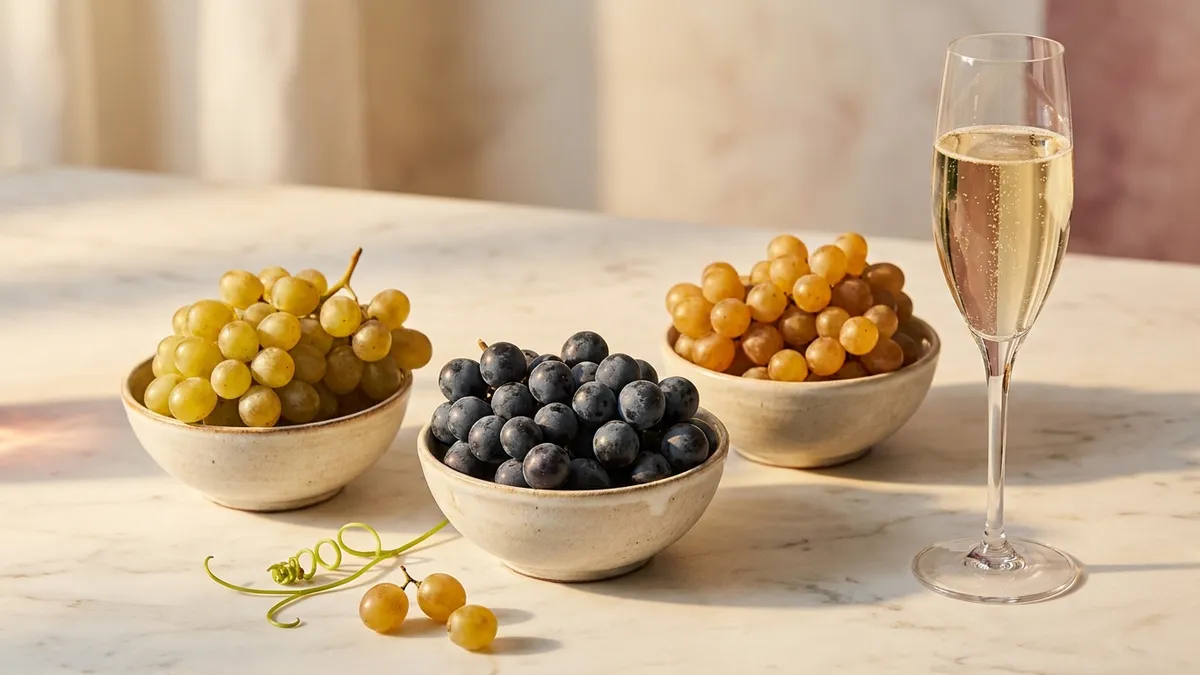
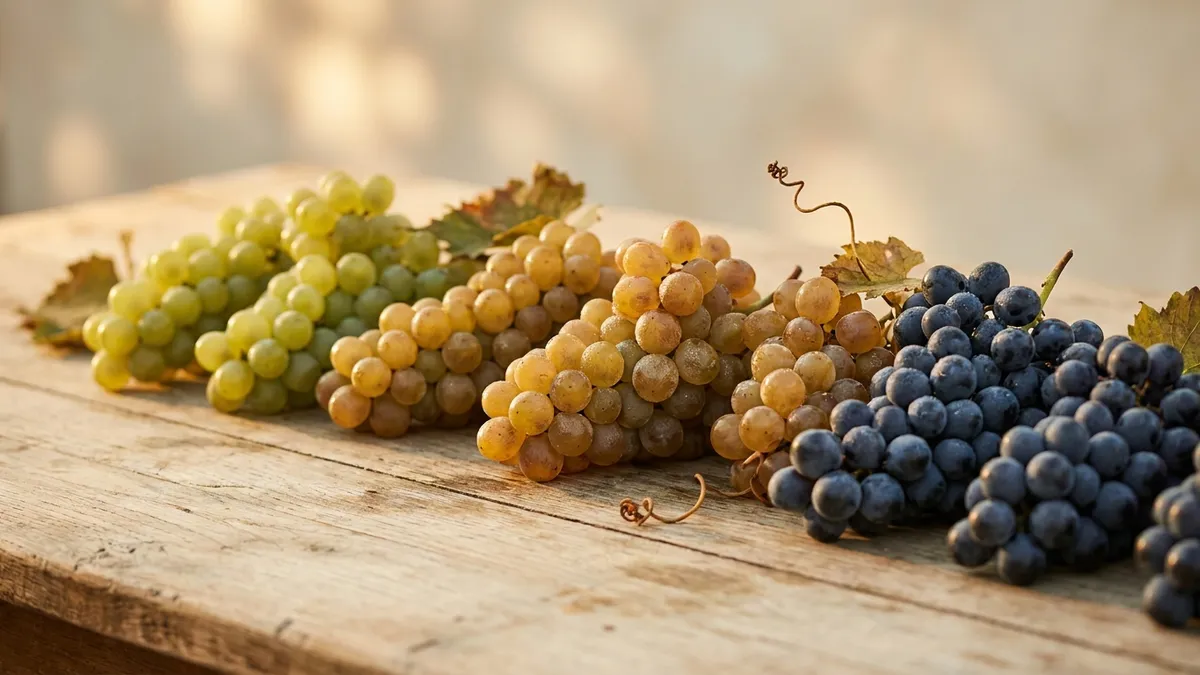
Champagne is legally limited to a short list of grapes, but in practice three dominate: Chardonnay, Pinot Noir, and Pinot Meunier. Most Champagne is a blend of all three, balanced by the cellar master to build a consistent house style year after year.
Chardonnay
Chardonnay is the white grape of the trio and the source of Champagne's finesse. It brings citrus, green apple, white flowers, and a mineral, chalky edge that ages gracefully. In Champagne's cool climate, Chardonnay keeps the racing acidity that sparkling wine needs. It is also the most versatile sparkling grape worldwide, appearing in Cava, Franciacorta, and English sparkling wine. For the full range of this grape in still wine too, see our Chardonnay wine guide.
Pinot Noir
Pinot Noir is a black grape, pressed gently so the clear juice runs off without picking up color from the skins. It gives Champagne its backbone — body, structure, and red-fruit depth like raspberry and red cherry. Pinot Noir is what makes a blend feel weighty and complete rather than merely crisp. Its still-wine personality, covered in our Pinot Noir guide, carries straight into the bubbles.
Pinot Meunier
Pinot Meunier is the trio's quiet workhorse, another black grape. It ripens earlier and more reliably than Pinot Noir, which protects growers against frost and weather swings. In the blend it adds soft, round fruit and immediate approachability, making young Champagne pleasant to drink before it has aged. Many drinkers have never heard its name, yet it often makes up a third of a classic blend.
Blanc de Blancs vs Blanc de Noirs
Two terms appear on traditional-method labels and confuse a lot of beginners. They are simply about which grapes went into the bottle.
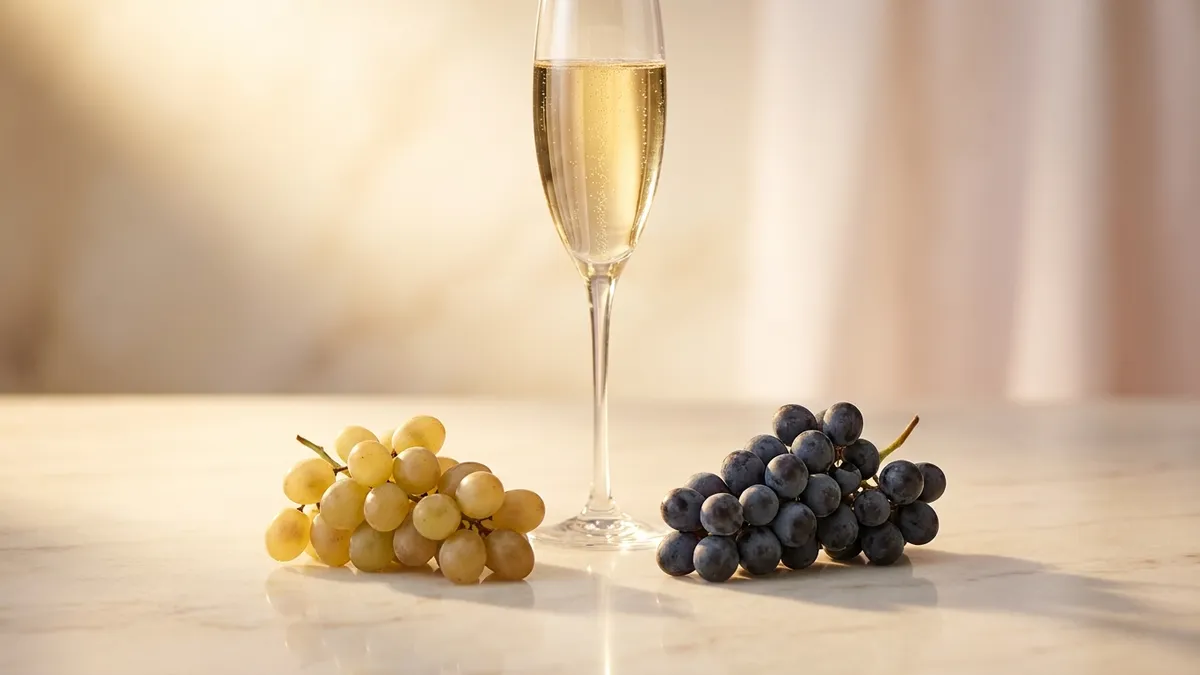
- Blanc de blancs — literally white from whites. The wine is made only from white grapes, almost always Chardonnay. Expect citrus, green apple, chalk, and a lean, elegant frame that ages beautifully.
- Blanc de noirs — literally white from blacks. The wine is a pale gold made from black grapes (Pinot Noir, Pinot Meunier) pressed for clear juice. Expect more body, riper red-apple and red-fruit notes, and a fuller texture.
Neither term tells you the sweetness — that is set by the dosage (a small sugar addition after the lees are removed). A blanc de noirs can still be bone-dry. The names describe color and grape source, not sugar level.
Beyond Champagne: The Grapes the Rest of the World Uses
Step outside Champagne and the grape list changes completely. Each region built its sparkling identity on the varieties that grow best at home.
Prosecco: Glera
Prosecco is made almost entirely from Glera, an Italian white grape from the Veneto and Friuli regions. Glera is light, floral, and fruit-forward, giving green apple, pear, white peach, and honeysuckle. Because Prosecco uses the tank method, Glera's fresh fruit stays front and center rather than turning toasty. That freshness is exactly why Prosecco became the world's best-selling sparkling category.
Cava: Macabeo, Parellada, and Xarel-lo
Cava is Spain's traditional-method sparkler, built on three native Catalan grapes. Macabeo (also called Viura) brings gentle apple and floral notes and forms the backbone. Parellada adds delicacy, citrus, and lift. Xarel-lo contributes structure plus a distinctive herbal, slightly earthy character that gives Cava its savory personality. Together they make a sparkling wine with citrus, almond, and toast — recognizably different from Champagne's brioche and stone fruit.
Lambrusco: Sparkling Red Grapes
Not all sparkling wine is white or pale. Lambrusco from Emilia-Romagna is a sparkling red made from a family of dark-skinned Lambrusco grapes (Lambrusco di Sorbara, Grasparossa, and Salamino among them), with the color left in. The wines range from bone-dry to sweet, showing blackberry, plum, and violet with a frothy, refreshing fizz. The best dry versions are genuinely food-friendly and prove that black grapes can shine as sparkling wine in their own right.
Asti and Moscato d'Asti: Muscat
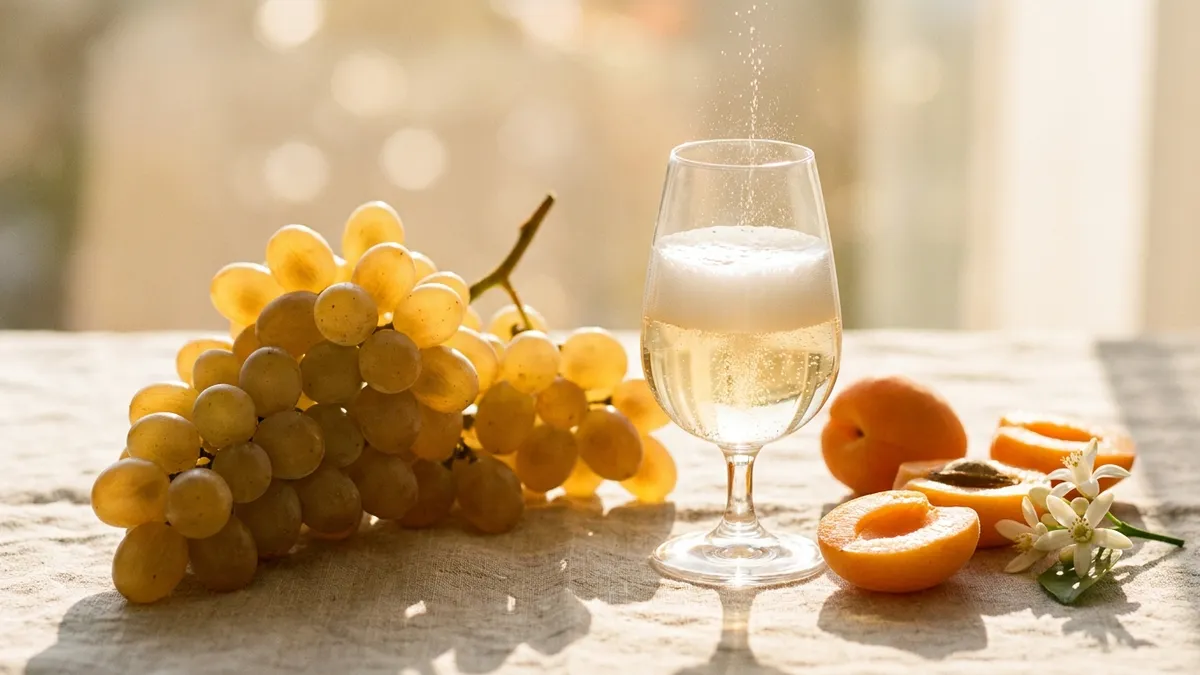
For sweet sparkling wine, the grape is Muscat (Moscato in Italian), grown in Piedmont. Muscat is one of the most aromatic grapes in the world, bursting with peach, apricot, orange blossom, and grape itself. Asti is fully sparkling; Moscato d'Asti is gently frizzante at just 5 to 6 percent alcohol. Both are deliberately off-dry to sweet, and their sweetness comes from the grape and unfinished fermentation rather than added dosage.
English Sparkling, Franciacorta, and Sekt
Three more categories round out the picture, and the grapes tell the story:
- English sparkling wine uses the exact Champagne trio — Chardonnay, Pinot Noir, and Pinot Meunier — on chalk soils geologically similar to Champagne's. The cool climate yields high acidity, citrus, green apple, and chalky minerality.
- Franciacorta, Italy's premium traditional-method sparkler from Lombardy, leans on Chardonnay, Pinot Noir, and Pinot Bianco, producing fine bubbles with stone fruit and brioche.
- Sekt, German sparkling wine, ranges widely. The best examples use Riesling, Pinot Blanc (Weissburgunder), or Pinot Noir by the traditional method, giving crisp orchard fruit and, with Riesling, a distinctive lime and floral lift.
Sparkling Wine Grapes at a Glance
This table maps the major sparkling styles to their key grapes, home country, and flavor signature — a quick reference for the next time you scan a wine list.
Major sparkling wine styles, their grapes, and what they taste like.
- Champagne — Key grapes: Chardonnay, Pinot Noir, Pinot Meunier · Country: France · Flavor: citrus, brioche, red apple, toast
- Prosecco — Key grape: Glera · Country: Italy · Flavor: green apple, pear, white peach, fresh
- Cava — Key grapes: Macabeo, Parellada, Xarel-lo · Country: Spain · Flavor: citrus, almond, herbal, savory toast
- Lambrusco — Key grapes: Lambrusco grape family · Country: Italy · Flavor: blackberry, plum, violet (sparkling red)
- Asti / Moscato d'Asti — Key grape: Muscat · Country: Italy · Flavor: peach, apricot, orange blossom, sweet
- English sparkling — Key grapes: Chardonnay, Pinot Noir, Pinot Meunier · Country: England · Flavor: high-acid citrus, green apple, chalk
- Franciacorta — Key grapes: Chardonnay, Pinot Noir, Pinot Bianco · Country: Italy · Flavor: stone fruit, brioche, fine bubbles
- Sekt — Key grapes: Riesling, Pinot Blanc, Pinot Noir · Country: Germany · Flavor: orchard fruit, lime, floral lift
How Grape and Method Combine
The same grape can taste different depending on the method, and that is the heart of understanding sparkling wine.
Take Chardonnay. In a tank-method wine it would show simple green apple and citrus. In the traditional method, after two or three years on the lees, that same Chardonnay gains brioche, toast, and a creamy texture. The grape is identical; the method rewrites the flavor.
Glera goes the other way. Its charm is bright, primary peach and pear, so producers use the tank method to lock that freshness in. Run Glera through long lees aging and you would mute the very thing that makes it appealing. The grape and the method are chosen together, on purpose.
Acidity ties it all together. High acidity is the structural backbone of every good sparkler — it keeps the wine refreshing and balances any sweetness from dosage. To understand how acidity, body, and structure work in any wine, our guide to tannins, acidity, and body lays out the framework you can apply to bubbles as readily as to still wine.
Tasting the Grapes Behind the Bubbles
The best way to learn sparkling wine grapes is to taste them side by side, the same way you would taste any wine methodically.
- Glera vs the Champagne trio. Pour a Prosecco next to a Champagne or Cremant. The Prosecco shows fresh pear and apple (Glera, tank method); the Champagne shows citrus plus toast (the trio, traditional method). One sip teaches the grape-and-method link instantly.
- Blanc de blancs vs blanc de noirs. Compare an all-Chardonnay sparkler with one made from black grapes. Notice the leaner citrus of the white-grape wine against the rounder red-fruit weight of the black-grape wine.
- Add Muscat. Finish with a Moscato d'Asti to feel how an aromatic grape changes everything — the orange blossom and peach are unmistakable and low in alcohol.
The Sommy app turns this into structured practice, prompting you to identify acidity, sweetness, and the grape's flavor signature so the differences stick. Building a mental library of grape profiles is what separates a confident sparkling-wine drinker from a guesser.
This guide focuses on the white and black grapes behind bubbles, but the same varieties anchor still wine too. Our overviews of white wine grapes, black wine grapes, and rose wine grapes show how Chardonnay, Pinot Noir, and their relatives behave across every color and style. The six noble grapes make a strong starting point, since three of them — Chardonnay, Pinot Noir, and Riesling — appear in sparkling wine.
Where to Start
If you want a single takeaway: sparkling wine grapes are far broader than Chardonnay, and matching the grape to the method explains nearly every difference in the glass. The Champagne trio builds toasty complexity, Glera keeps Prosecco fresh, the Spanish trio gives Cava its savory edge, and Muscat delivers sweet, aromatic Asti.
To go deeper on how these styles compare in price, occasion, and taste, read our Champagne vs Prosecco vs Cava comparison. And to build real tasting skill grape by grape, Sommy offers structured courses and guided practice that turn label-reading into genuine confidence.
Sources
- Understanding Wine: Sparkling Wine Production — WSET (Wine & Spirit Education Trust), 2023
- Comite Champagne — Champagne Grape Varieties — Comite Interprofessionnel du Vin de Champagne, 2024
- The Oxford Companion to Wine — Jancis Robinson (ed.), Oxford University Press, 2015
Frequently Asked Questions
What grapes make sparkling wine?
The main sparkling wine grapes are Chardonnay, Pinot Noir, and Pinot Meunier (Champagne), Glera (Prosecco), Macabeo, Parellada, and Xarel-lo (Cava), various Lambrusco grapes, and Muscat (Asti). Each grape brings a different flavor signature, from citrus and brioche to peach and orange blossom, and the production method amplifies those differences.
Is sparkling wine always made from white grapes?
No. Two of the three Champagne grapes — Pinot Noir and Pinot Meunier — are black grapes pressed gently for clear juice. Lambrusco is a sparkling red made from dark-skinned grapes with the color left in. Sparkling rose uses brief skin contact or a splash of red wine to add pink color, so black grapes are central to many sparklers.
What is the difference between blanc de blancs and blanc de noirs?
Blanc de blancs means white from whites — a sparkling wine made only from white grapes, usually Chardonnay, giving citrus and mineral elegance. Blanc de noirs means white from blacks — a pale wine made from black grapes like Pinot Noir pressed for clear juice, giving more body and red-fruit character. Both can be dry and crisp.
Which grape makes Prosecco?
Prosecco is made almost entirely from Glera, an Italian white grape grown in the Veneto and Friuli regions. Glera produces light, fruit-forward wine with green apple, pear, and white peach notes. Because Prosecco uses the tank method rather than bottle fermentation, Glera's fresh primary fruit is preserved instead of developing toasty, bready flavors.
Does the grape or the method matter more in sparkling wine?
Both matter, and they work together. The grape sets the raw flavor — Chardonnay's citrus, Glera's pear, Muscat's orange blossom. The method then transforms it: the traditional method adds toasty, brioche complexity through bottle aging, while the tank method keeps the grape's fresh fruit intact. Knowing both helps you predict how a sparkler will taste.
What grapes are used in English sparkling wine?
English sparkling wine uses the same three grapes as Champagne — Chardonnay, Pinot Noir, and Pinot Meunier — grown on the chalk soils of southern England that are geologically similar to Champagne's. Made by the traditional method, the cool climate produces high acidity, citrus, green apple, and a chalky minerality that has earned strong results in blind tastings.
Which sparkling wine grape is sweetest?
Muscat (Moscato) is the grape behind the sweetest popular sparklers, Asti and Moscato d'Asti from Piedmont. Muscat is intensely aromatic, with peach, apricot, and orange blossom, and the wines are deliberately made off-dry to sweet at low alcohol. Sweetness in other sparklers comes mainly from dosage rather than the grape itself.
Sommy Team
LinkedInFounder & Wine Educator
The Sommy Team is building the world's most approachable wine education app, helping beginners develop real tasting skills through structured courses and AI-guided practice.