Lambrusco Wine Guide: Italy's Sparkling Red, Reinvented

By the Sommy Team — AI-assisted, human-edited.
Updated Sep 24, 2026
Contents (9)
- What Is Lambrusco Wine, in One Paragraph?
- Is Lambrusco Sweet or Dry?
- What Are the Main Types of Lambrusco?
- What Food Goes With Lambrusco?
- How Cold Should You Serve Lambrusco?
- How Is Lambrusco Made?
- Where Does Lambrusco Come From?
- Why Did Lambrusco Get a Cheap-Wine Reputation?
- Which Lambrusco Should You Try First?
TL;DR
Lambrusco is a lightly sparkling red wine from Emilia-Romagna, made from a family of local grapes. The sweetness word on the label decides the style: secco is dry, dolce is sweet. Pale Sorbara is tart and floral, dark Grasparossa is grippy. Serve it cold, around 8 to 10°C, with salami and aged cheese.
What Is Lambrusco Wine, in One Paragraph?
Lambrusco wine is a lightly sparkling red from Emilia-Romagna in northern Italy, made from a family of local grapes that share the Lambrusco name. It is usually frizzante (gently fizzy) rather than fully sparkling, and it comes in four sweetness levels, from dry secco to sweet dolce. Colour runs from pale rosé in Sorbara to near-opaque purple in Grasparossa. Most bottles sit around 10 to 11.5% alcohol and get their bubbles in a sealed steel tank, which keeps the berry fruit fresh and the price low. The home region serves it cold with salami, cured ham and Parmigiano-Reggiano.
Is Lambrusco Sweet or Dry?
It can be either, and the label tells you which. The Lambrusco producers' consortium lists four sweetness levels for its wines: secco (dry), semisecco (semi-dry), amabile (semi-sweet) and dolce (sweet). Dry here means no sugar you can taste. The berry fruit can still smell sweet.
Secco is the style locals drink with meals. It tastes of strawberry and tart berries, finishes with a faintly bitter edge, and has enough acidity to make your mouth water. Amabile keeps the same fruit but adds a soft sweetness that rounds off the tart edges. Dolce is plainly sweet and closer to a dessert wine.
A few fully sparkling Lambruscos, called spumante, use the European sparkling-wine scale instead, where Brut is the common dry term. If the label says secco or Brut, expect a dry wine. If it says amabile or dolce, expect the sweetness to show. The wine sweetness scale puts these words next to the terms used on other wines.
| Label word | Tastes like | Food match | Serve at |
|---|---|---|---|
| Secco (dry) | Strawberry, tart berries, bitter-edged finish | Salami, cured ham, Parmigiano, pizza | 8–10°C |
| Semisecco (semi-dry) | Same fruit, edges softened | Mortadella, lasagne, barbecue pork | 8–10°C |
| Amabile (semi-sweet) | Ripe berries, noticeable sweetness | Spicy dishes, sweet-glazed ribs | 8°C, well chilled |
| Dolce (sweet) | Jammy berries, clearly sweet | Milk chocolate, fruit tarts | 8°C, well chilled |
What Are the Main Types of Lambrusco?
Lambrusco is a family of grapes, and each protected zone is built on a different one. The six most common are Grasparossa, Maestri, Marani, Montericco, Salamino and Sorbara, all native to Emilia. Each zone is a DOC, a protected place name with its own grape rules, and those rules explain most of the difference in the glass.
Two terms first. Acidity is the tartness that makes your mouth water. Tannin is the drying grip on your gums, and it comes from grape skins. The more skin colour a Lambrusco has, the more grip you feel.
| Zone (DOC) | Grape rule | Colour | Pick it when |
|---|---|---|---|
| Lambrusco di Sorbara | At least 60% Sorbara, up to 40% Salamino | Rosé to pale ruby | You want light, tart and floral |
| Lambrusco Salamino di Santa Croce | At least 85% Salamino | Intense ruby | You want raspberry fruit and medium weight |
| Lambrusco Grasparossa di Castelvetro | At least 85% Grasparossa | Deep ruby-purple | You want grip for sausages and rich meat |
| Reggiano | At least 85% from a blend of Lambrusco grapes | Red | You want a producer's own blend |
| Modena | At least 85% from Lambrusco grapes | Rosé to ruby | You want a spumante or rosé |
| Colli di Scandiano e di Canossa | At least 85% Lambrusco grapes | Red to rosé | You want a hillside version |
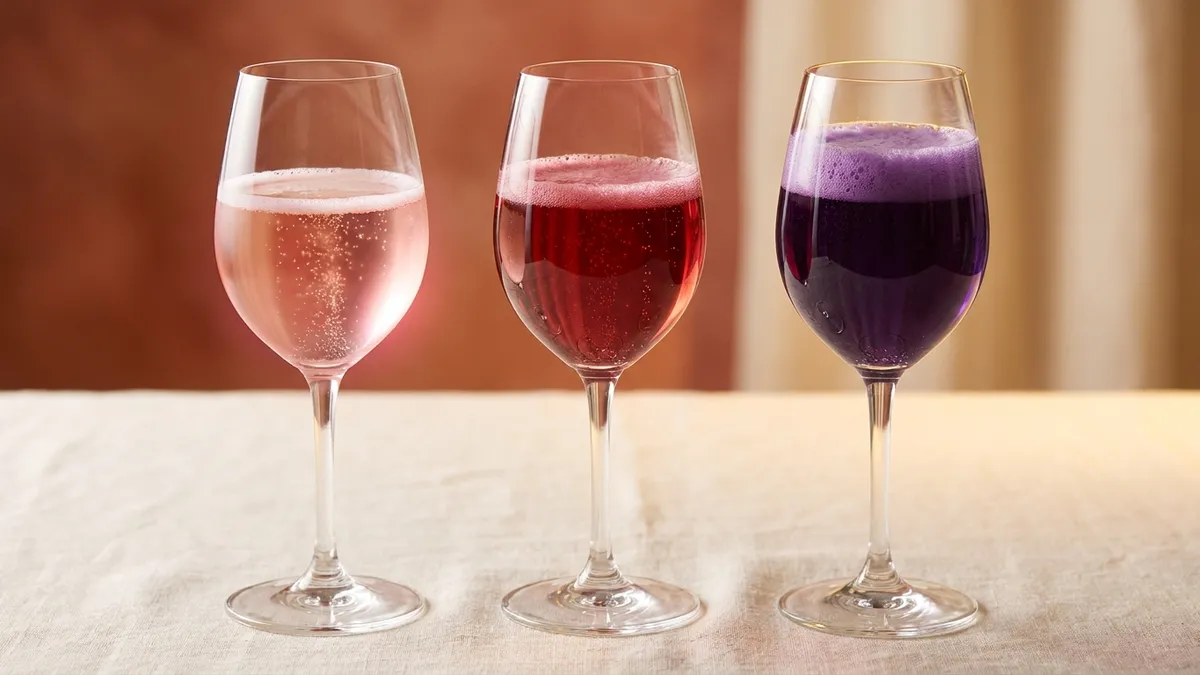
Sorbara is the palest. The consortium describes it as rosé to light ruby, with violet and red-fruit aromas and a delicate body. Its tannin is light and its acidity fresh, so it tastes crisp and light.
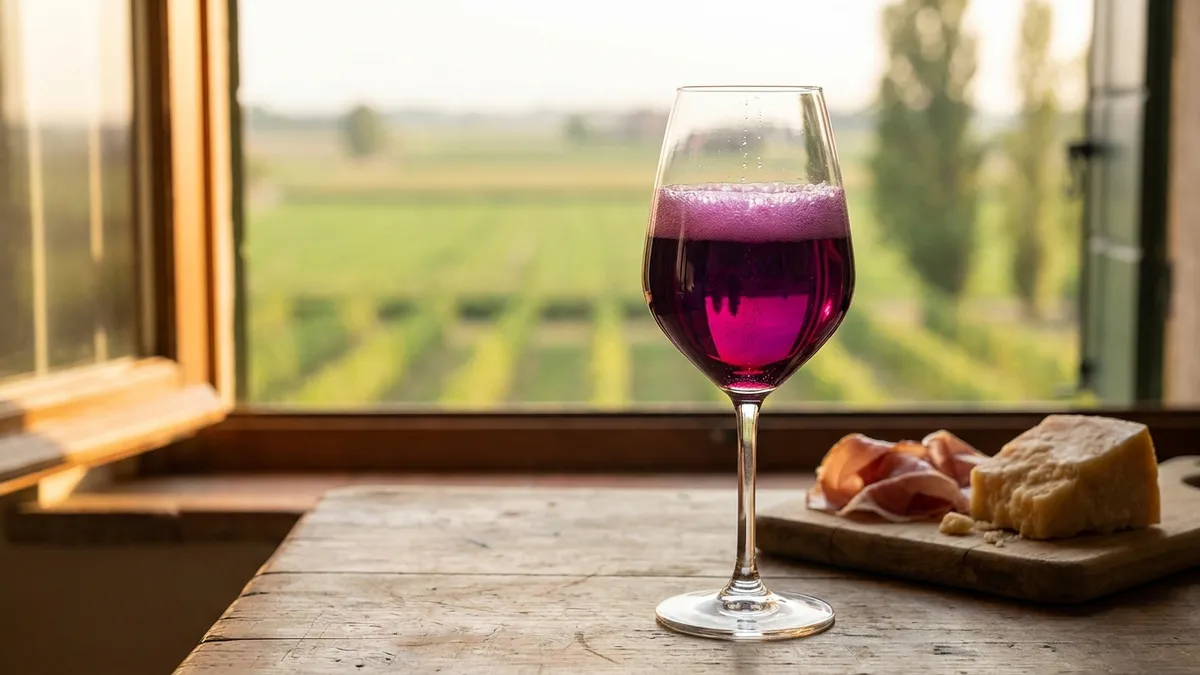
Grasparossa sits at the other end. Its skins give a deep purplish-red colour and the most tannin of the family, and it is at its most distinctive made dry. It is the one to open with sausages or a slow-cooked meat sauce.
Salamino lands between them, with raspberry and cherry fruit and medium body. The blended zones, Reggiano and Modena, mix several Lambrusco grapes and may add up to 15% of others, such as the deeply coloured Ancellotta. The rule for the shop is short. If you want light and tart, pick Sorbara. If you want grip for meat, pick Grasparossa. For how these grapes compare to Glera, Pinot Noir and Chardonnay, see our guide to sparkling wine grapes.
What Food Goes With Lambrusco?
Fatty, salty cured meat and aged cheese are what Lambrusco was made for. In its home region it arrives with salami, cured ham, Parmigiano-Reggiano and gnocco fritto, puffs of fried dough. The bubbles scrub fat off your tongue, and the acidity cuts through salt, so each bite tastes as fresh as the first.
That is why a sparkling red is no gimmick. Fat coats the mouth, and a still red with heavy tannin turns chalky against it. Lambrusco brings acidity and fizz with only light tannin, so it resets the palate without clashing with cheese.
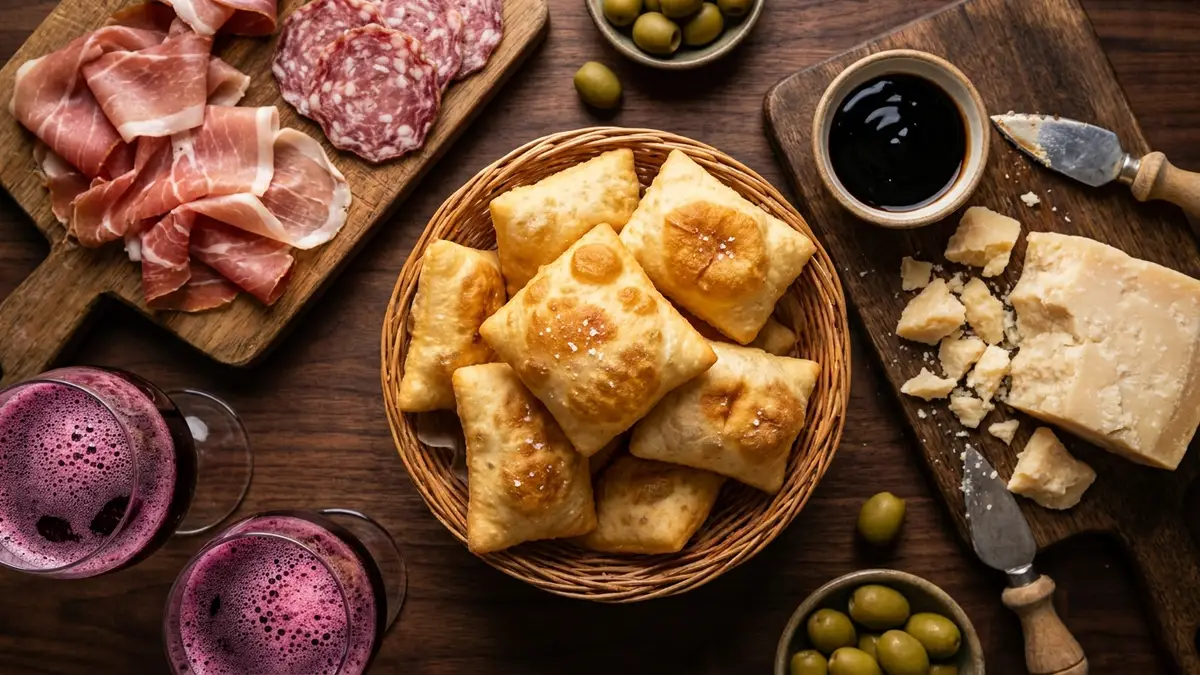
The match reaches well beyond the salumi board:
- Pizza: secco handles the tomato's acidity and the charred crust. The wine with pizza guide ranks it against Chianti and Barbera.
- Rich pasta: lasagne or tortellini in broth want Sorbara or Salamino, because their acidity cuts the butter and cheese.
- Grilled sausages and pork ribs: Grasparossa's grip stands up to char and fat.
- Hard cheese: aged Parmigiano with secco is a regional classic; the wine and cheese pairing guide explains why same-region pairs work.
- Chilli heat: amabile, because sugar softens the burn and the low alcohol does not inflame it.
- Chocolate: dolce with milk chocolate, since the wine must be at least as sweet as the dessert.
The rule for the table: if the plate is fatty and salty, pour secco. If it carries chilli heat or sugar, pour amabile or dolce. The wine with spicy food guide and the wine with chocolate guide cover those two cases in depth.
How Cold Should You Serve Lambrusco?
Serve Lambrusco cold, around 8 to 10°C, which the producers' consortium recommends. That is colder than any still red and close to a white. Wine Folly gives a slightly wider window of 7 to 12°C. At that temperature the bubbles stay fine, the acidity tastes fresh and the light tannin feels soft.
A warm Lambrusco foams hard when opened, loses its fizz fast, and its tannin turns rough. If the bottle has been in the fridge for a few hours, pour it straight away. If it is at room temperature, sink it in a bucket of ice and water before opening. An all-purpose wine glass works well; a narrow flute hides the aromas. Most bottles carry 10 to 11.5% alcohol, lighter than most still reds. The wine serving temperature chart lists the other reds that like a chill.
How Is Lambrusco Made?
Most Lambrusco gets its bubbles in a sealed steel tank, a technique called the Charmat method (also the tank method or metodo Italiano). The base wine goes into a pressure tank with sugar and yeast. Fermentation happens in a closed system, so the carbon dioxide cannot escape and dissolves into the wine.
When fermentation is done, the yeast is filtered out and the wine is bottled under pressure. The Italian winemaker Federico Martinotti patented the idea in 1895. The Frenchman Eugène Charmat improved it in 1907, and his name stuck.
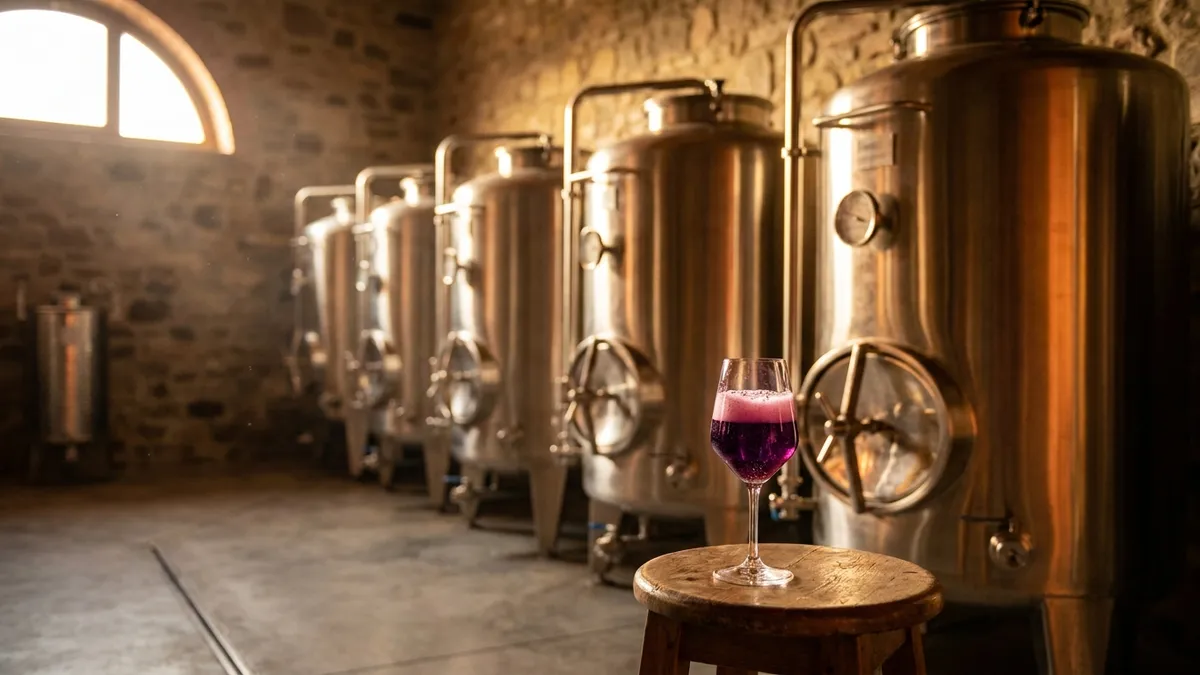
The tank explains three things about Lambrusco at once. It is cheap, because one tank replaces bottles handled one by one. It keeps the grape's fresh berry fruit and high acidity, because the wine goes from tank to bottle quickly. It also sets the quality ceiling: a longer fermentation in the tank keeps more aroma and gives finer, longer-lasting bubbles.
A small number of producers take an older route, the ancestral method. The wine is bottled before its first fermentation finishes, so the last of the sugar turns to fizz inside the sealed bottle. These wines are often cloudy with spent yeast and labelled col fondo ("with the sediment"). They are close cousins of pet-nat sparkling wine, and the bottle refermentation guide explains the process. A few producers also make Lambrusco by the Champagne method, but these are rare. For the three methods side by side, see the types of sparkling wine.
Where Does Lambrusco Come From?
Lambrusco comes mostly from the flat Po Valley plain around Modena, Reggio Emilia and Parma, with one zone across the border in Lombardy near Mantua. It is the same stretch of farm country that also makes Parmigiano-Reggiano, Parma ham and balsamic vinegar.
The vine is ancient here. Archaeologists have found evidence that the Etruscans grew it. In Roman times, Cato the Elder wrote that two-thirds of an acre of these vines could fill 300 amphoras, which shows how heavily they cropped even then.
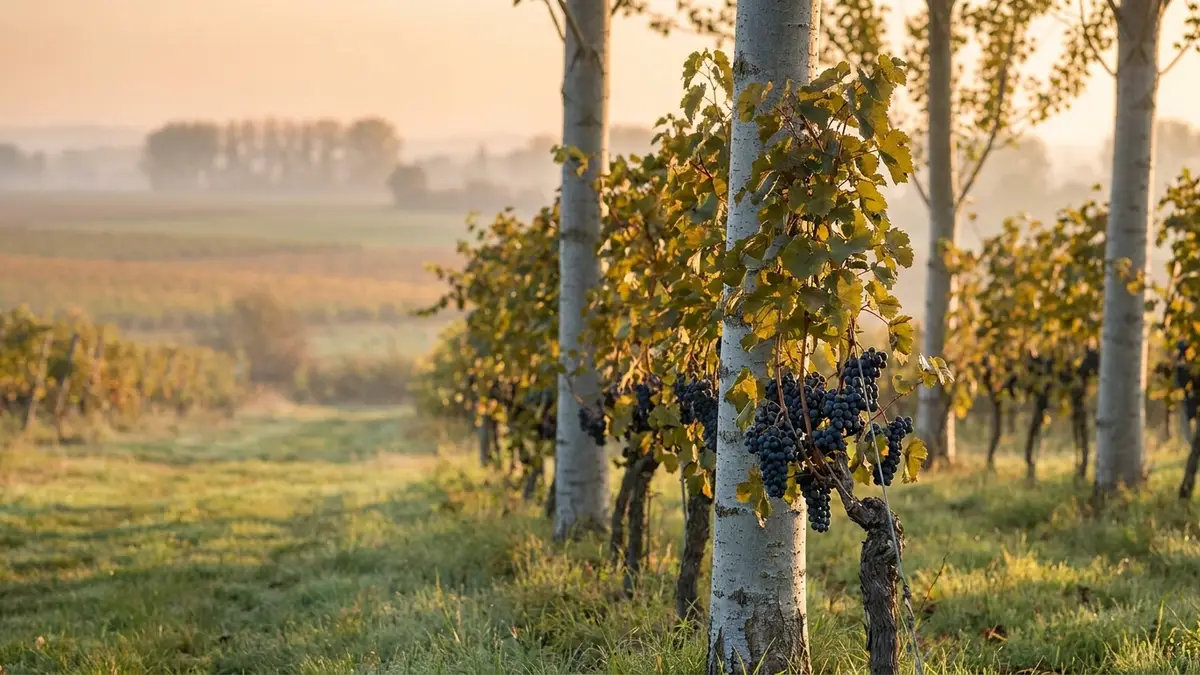
The damp plain also shaped the grape. The plain is damp, and vines were traditionally trained up poplar trees to lift the grapes away from the mildew that thrives near wet ground. High-cropping vines like these give juicy grapes with high acidity, which suit a light, fizzy wine better than a heavy still red. Emilia-Romagna sits between the better-known Italian wine regions of Piedmont, Veneto and Tuscany.
Why Did Lambrusco Get a Cheap-Wine Reputation?
A flood of sweet exports to the United States in the 1970s and 1980s set the image. Sweet Lambrusco became the best-selling imported wine in the US, and exports passed 13 million cases in 1985. Those wines were sweet and sold on price, and many drinkers assumed that was all Lambrusco could be.
The myth is that Lambrusco is sweet red soda. The truth is that the dry secco made for the home market is a different wine: tart, lightly tannic and built for the dinner table. The sweet style still exists and still has its uses with dessert and spice. But the bottle Emilia drinks with salami is secco.
If a bottle says amabile or dolce and names no zone, it is the export style. If it names a zone and says secco, it is the dry wine the region drinks. Prosecco is made by the same tank method; the Champagne vs Prosecco vs Cava comparison shows how the tank and the bottle methods taste side by side.
Which Lambrusco Should You Try First?
Start with a Lambrusco Grasparossa di Castelvetro labelled secco. It is the easiest style to recognise: deep purple and dry, with the tannin of a red and the fizz of a sparkling wine. If you liked it, try a Sorbara next. The pair shows both ends of the family, from dark and grippy to pale and floral.
Tasting two related wines side by side is the fastest way to learn what a grape adds. The how to taste sparkling wine guide covers bubbles and foam, and Sommy's regional course on Italy gives the wider picture. The wine styles hub maps where sparkling red fits among all the others, and the Sommy app guides a tasting of any label you photograph. Put a Grasparossa secco in the fridge tonight, slice some salami, and pour it cold.
Sources
Frequently Asked Questions
Is Lambrusco sweet or dry?
Both exist, and the label tells you which. Lambrusco comes in four sweetness levels: secco (dry), semisecco (semi-dry), amabile (semi-sweet) and dolce (sweet). Dry secco is what the home region drinks with dinner. The sweet versions are the ones that became famous in export markets. If the label carries no sweetness word at all, check the back label or pick a bottle that says secco.
What is the difference between Lambrusco and Prosecco?
Both are Italian sparkling wines usually made by the tank method, so both are fresh, fruity and affordable. The difference is colour and grape. Prosecco is a white sparkling wine from the Glera grape in the Veneto and Friuli. Lambrusco is a red or rosé sparkling wine from the Lambrusco grape family in Emilia-Romagna, with berry fruit and a light grip of tannin.
Should Lambrusco be served chilled?
Yes, and colder than any still red. The Lambrusco producers' consortium recommends 8 to 10°C, which is close to fridge temperature. Cold keeps the bubbles fine and makes the acidity taste fresh. It also stops the light tannin from feeling rough. Put the bottle in the fridge for a few hours, or in a bucket of ice and water if you are short on time.
What grapes are used to make Lambrusco?
Lambrusco is not one grape but a family. The six most common varieties are Lambrusco Grasparossa, Maestri, Marani, Montericco, Salamino and Sorbara, all native to Emilia. Each protected zone is built on one or more of them, and blends may include small amounts of other grapes such as Ancellotta. Sorbara gives the palest, most floral wines and Grasparossa the darkest, most tannic ones.
Is Lambrusco a cheap wine?
Most Lambrusco is inexpensive, and that is by design rather than a sign of poor quality. The tank method it uses costs far less than bottle fermentation. Good dry Lambrusco from a named zone such as Sorbara or Grasparossa di Castelvetro still sits at an everyday price. The cheap reputation comes from sweet mass-market exports in the 1970s and 1980s.
What food goes best with Lambrusco?
Fatty, salty cured meat and aged hard cheese are the classic match, because the fizz and acidity cut through the fat and salt. In Emilia-Romagna that means salami, cured ham, Parmigiano-Reggiano and fried dough called gnocco fritto. Dry Lambrusco also works with pizza and rich pasta. Sweeter amabile and dolce styles suit spicy dishes and chocolate desserts.
Sommy Team
LinkedInFounder & Wine Educator
The Sommy Team is building the world's most approachable wine education app, helping beginners develop real tasting skills through structured courses and AI-guided practice.