Pet-Nat Wine: A Beginner's Guide to Pétillant-Naturel

By the Sommy Team — AI-assisted, human-edited.
Updated Apr 29, 2026
Contents (14)
- What Is Pet-Nat Wine
- Pet-Nat Wine, in 90 Seconds
- How Pet-Nat Is Made: The Méthode Ancestrale
- Why Pet-Nat Is Often Cloudy
- What Pet-Nat Tastes Like
- Common Grapes and Where Pet-Nat Comes From
- Why Pet-Nat Took Off
- How to Choose Your First Pet-Nat
- Serving Pet-Nat at Home
- Food Pairing with Pet-Nat
- Comparing Pet-Nat to Other Sparkling Wines
- Storing Pet-Nat
- Building Your Pet-Nat Palate
- The Short Answer for First-Time Buyers
TL;DR
Pet-nat is short for pétillant-naturel, sparkling wine that finishes its single fermentation inside the bottle. Older than Champagne method, it traps natural CO2 with no added sugar or yeast. Expect a crown cap, gentle bubbles, hazy appearance, and yeasty fresh flavors. Most bottles run twenty to forty dollars.
What Is Pet-Nat Wine
Pet-nat wine is short for pétillant-naturel, French for "naturally sparkling." It is sparkling wine made by bottling while the first fermentation is still finishing, so the remaining sugar converts to alcohol inside the sealed bottle and the carbon dioxide gets trapped. One fermentation, no added sugar or yeast — just the bubbles nature was already making.
That single-fermentation rule sets pet-nat apart from every other sparkling wine you have probably tasted. Champagne, Cava, and most Crémant use the traditional method with two fermentations. Prosecco uses tank fermentation. Pet-nat is older than all of them.
The technique is called méthode ancestrale — the ancestral method — and it dates back to the 16th century in Limoux, a small wine region in the Languedoc. Limoux producers were making bubbly wines decades before Dom Pérignon was born.
Pet-Nat Wine, in 90 Seconds
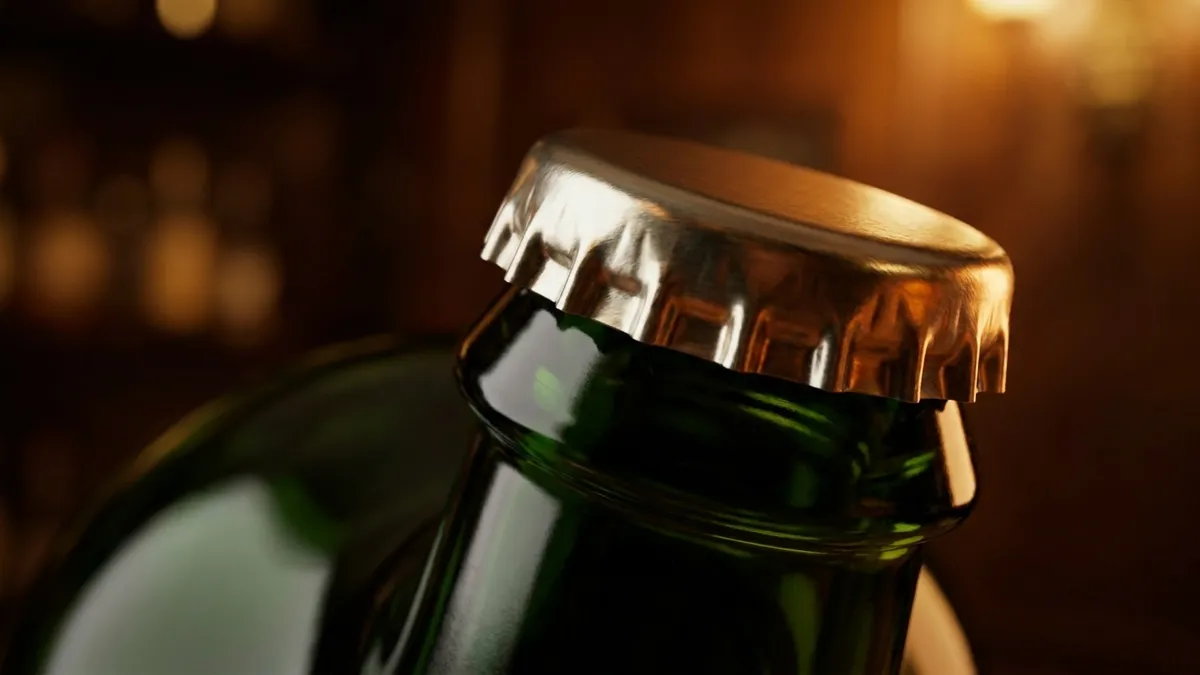
Pet-nat wine, also called pétillant-naturel, is sparkling wine made by sealing the bottle before fermentation finishes. The remaining sugar ferments inside the bottle, trapping natural carbon dioxide and producing roughly 2 to 4 atmospheres of pressure — about half a Champagne's 6 atm. Most pet-nat is sealed with a beer-style crown cap rather than a cork-and-cage. Bottles are usually unfiltered, so the wine looks cloudy and carries lees sediment at the bottom. Expect dry to off-dry styles, gentle bubbles, fresh acidity, and yeasty, sometimes cidery flavors. Common grapes include Chenin Blanc in the Loire, Mauzac in Limoux, Glera in Italy, and almost anything in the New World. Entry-level prices run roughly twenty to forty dollars.
How Pet-Nat Is Made: The Méthode Ancestrale
Conventional sparkling wine starts with a finished still wine, then triggers a separate second fermentation to add bubbles. Pet-nat skips that step. The grape juice begins fermenting in tank or barrel, and at a precise moment — when there is still a small amount of unfermented sugar left — the winemaker bottles the wine and seals it.
Inside the sealed bottle, the yeast eats the remaining sugar. Carbon dioxide is a byproduct of fermentation, and with nowhere to escape, it dissolves into the wine. The result is sparkling wine made from a single fermentation, with no additions of sugar or commercial yeast.
The timing is the hard part. Bottle too early and you get a still-fermenting time bomb with too much pressure. Bottle too late and the wine never gets fizzy enough. Skilled producers measure residual sugar carefully and bottle when the conversion math works out to gentle, food-friendly carbonation.
How It Differs from the Traditional Method
The traditional method (méthode traditionnelle) used for Champagne, Cava, and traditional-method Crémant adds a second fermentation deliberately. After the still base wine is finished, the winemaker adds a precise mixture of sugar and yeast called the liqueur de tirage, then seals the bottle for the bubbles to develop.
Pet-nat producers add nothing. The bubbles come from the original fermentation finishing in the bottle. That single difference changes everything downstream:
- Pet-nat sits at roughly 2 to 4 atmospheres of pressure versus Champagne's 6 atm — softer, gentler bubbles
- Pet-nat is often bottled unfiltered, with lees still inside. Traditional method wines are disgorged to remove the lees plug
- Pet-nat usually wears a crown cap — the same closure on a beer bottle. Traditional method wines wear cork-and-cage
- Pet-nat is meant to drink young, within a year or two; many traditional method wines are built to age
Why Pet-Nat Is Often Cloudy
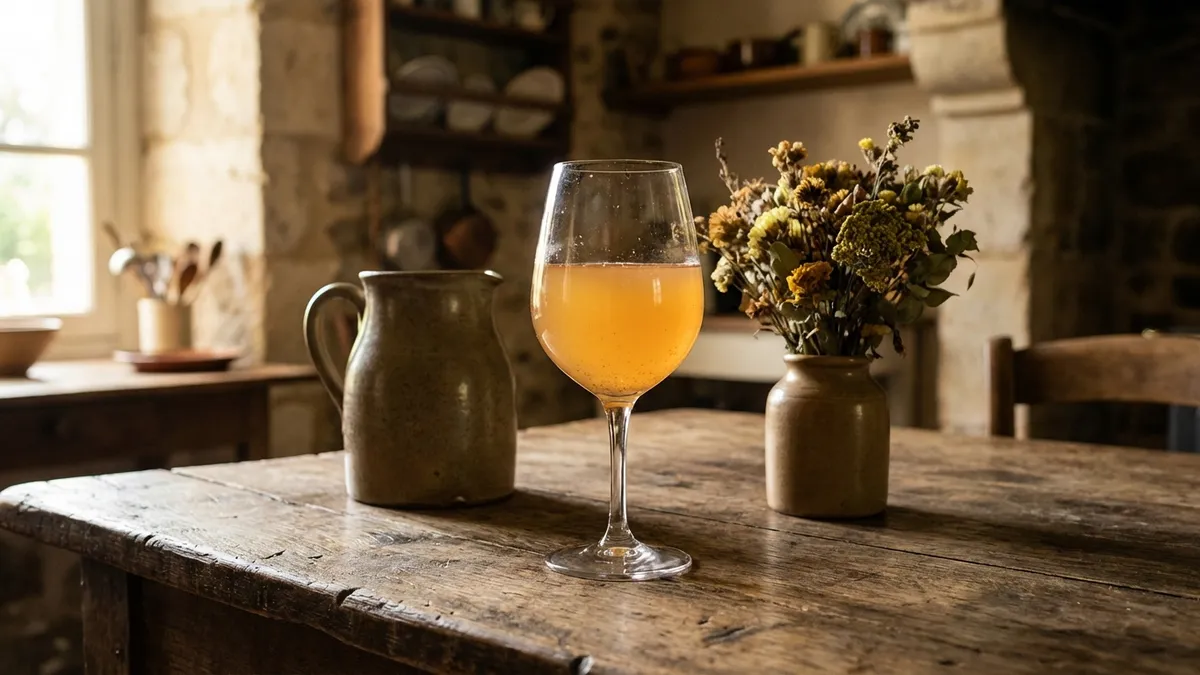
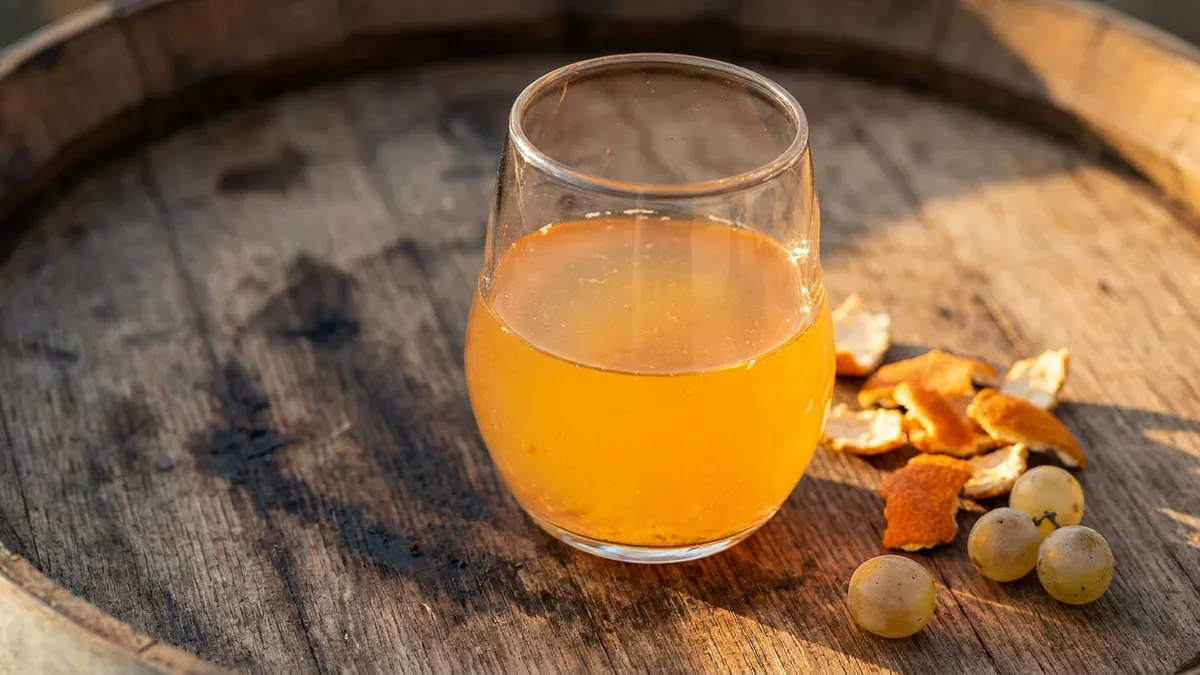
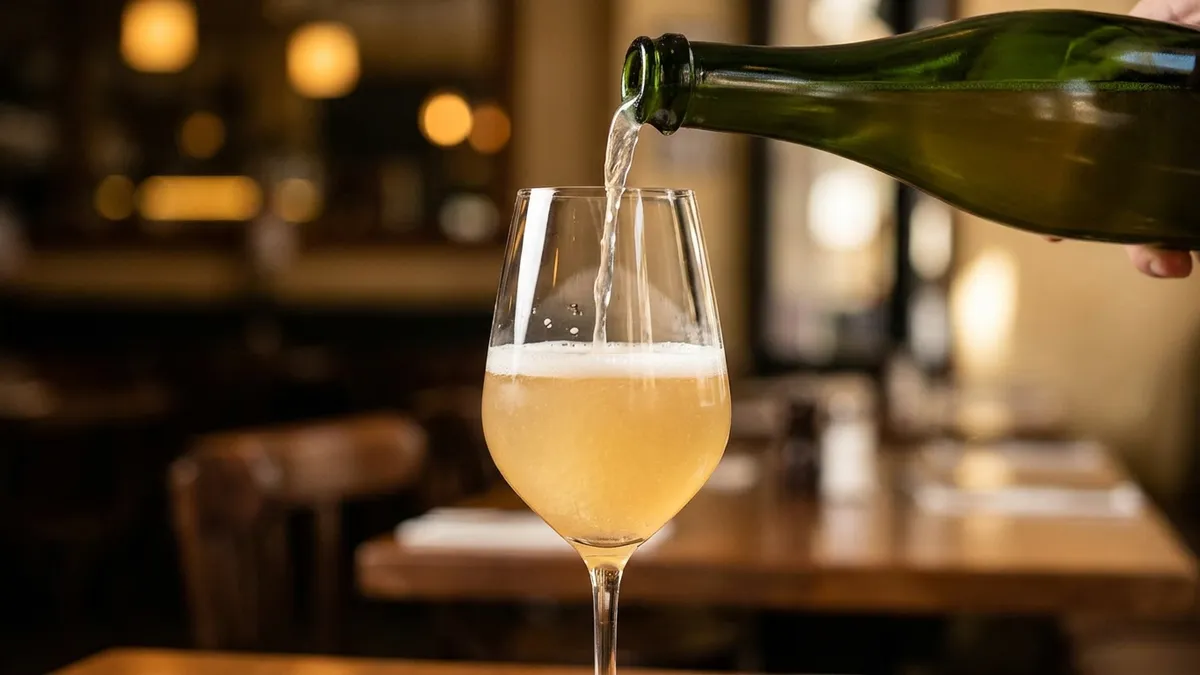
The cloudiness is the single most surprising thing about pet-nat for first-time drinkers. White wine in a clear bottle should look clean and bright — that is the standard. Pet-nat is hazy, sometimes opaque, often with visible sediment swirling at the bottom of the glass.
Most pet-nat is unfiltered, meaning the spent yeast cells (the lees) stay in the bottle after fermentation finishes. Those yeast cells slowly settle at the bottom, creating a layer of sediment. Stir the bottle and the lees go back into suspension. Cloudiness is not a flaw — it is part of the style.
You have three options when serving:
- Drink the lees — pour the bottle as-is for extra texture and yeasty flavor
- Decant the lees off — stand the bottle upright in the fridge for 24 hours, then pour gently, stopping before the cloudy bottom enters the glass
- A bit of both — pour the first two-thirds clear, mix in the remaining cloudy wine for the final pours
The lees taste fine, harmless, and slightly bready. If you have ever drunk an unfiltered wheat beer, the principle is the same.
What Pet-Nat Tastes Like
Pet-nat covers a wide stylistic range, but most bottles share a recognizable profile. The flavors come from three places: the grape, the lees contact, and the wild fermentation that often accompanies the style.
Common Tasting Notes
- Fruit — green apple, lemon, pear, white peach, sometimes a slight cidery bruised-apple note
- Yeasty — bread dough, biscuit, sourdough, fresh brioche
- Floral and herbal — chamomile, hay, white flowers, occasionally a green herbal lift
- Funky — light savory, beer-like, or cheesy notes from wild yeast and extended lees contact
- Texture — soft bubbles, dry to off-dry finish, lower alcohol than most still wines
With only 2 to 4 atmospheres of pressure, pet-nat foams less aggressively than Champagne. The mousse is softer, the carbonation more fizz than sparkle. Some bottles are barely effervescent, with just a gentle prickle on the tongue.
If you are still building your sensory vocabulary, the wine tasting vocabulary cheat sheet has the descriptors that show up most often in pet-nat notes — yeasty, biscuity, cidery, grippy.
Sweetness Range
Most modern pet-nat is dry to off-dry, with around 2 to 8 grams per liter of residual sugar. A handful of styles are made noticeably sweet, particularly Italian examples that finish closer to a light dessert wine.
If a pet-nat tastes more like cidery beer than wine, that is normal. It is one of the easiest crossovers in wine for beer lovers, especially for fans of sour beer and saison. The combination of low alcohol, moderate carbonation, yeast contact, and a hint of residual sugar produces a profile that sits between still wine, Champagne, and cider.
Common Grapes and Where Pet-Nat Comes From
Pet-nat is a method, not a grape. Almost any variety can be used, and producers around the world have made the technique their own.
France
The Loire Valley is the heartland of modern pet-nat. Chenin Blanc from Vouvray, Anjou, and Saumur produces pet-nat with bright acidity, apple, and chalky minerality — the grape's natural high acid is exactly what the style wants. The full Chenin Blanc guide covers the variety in depth.
Limoux, the historic birthplace of méthode ancestrale, makes pet-nat from Mauzac — a local grape with apple-skin and cidery aromatics. The Loire also produces pet-nat from Gamay, Pineau d'Aunis, and Cabernet Franc for rosé and red versions. The broader Loire wine regions guide puts these grapes in context.
Italy and the New World
Glera, the grape behind Prosecco, also makes pet-nat in Conegliano-Valdobbiadene — funkier and less polished than tank-method Prosecco. Lambrusco, traditionally made by méthode ancestrale before the industry shifted to Charmat, is making a craft comeback. Friuli and Trentino-Alto Adige use local varieties like Ribolla Gialla and Schiava.
The United States, Australia, and New Zealand have embraced pet-nat with no rules to follow. American producers in Oregon, California's Mendocino and Sonoma, and the Finger Lakes have made pet-nat from Riesling, Pinot Noir, Cabernet Franc, Gewürztraminer, and almost anything else. This freedom is part of why pet-nat became popular — the category invites experimentation in a way that Champagne, with its rigid rules, does not.
Why Pet-Nat Took Off
Pet-nat moved from obscure French regional curiosity to global wine-bar staple over the last 15 years. A few overlapping reasons explain why.
The natural wine movement of the 2010s embraced pet-nat as a flagship style. Minimal intervention, native yeast, no additions — pet-nat fit the philosophy, and natural wine bars put it on every list. The same bars now pour piquette, a lighter fizz fermented from pressed grape skins and water.
It is also a democratic alternative to Champagne. Most pet-nat costs $20 to $40 for a quality bottle, while Champagne starts at $40 and climbs fast. The crown cap and cloudy pour signal something less formal, and the wine pairs with the food people actually eat — pizza, brunch, fried chicken, Korean barbecue — rather than only caviar and oysters.
How to Choose Your First Pet-Nat
Several phrases signal pet-nat on a label:
- Pétillant-Naturel or Pet-Nat — the most common terms
- Méthode Ancestrale or Méthode Rurale — the technical name for the technique
- Frizzante naturale — Italian language equivalent
- A crown cap instead of a cork-and-cage closure
- Cloudy or hazy appearance in a clear bottle
A few French regions have official rules around méthode ancestrale, including Bugey-Cerdon and Blanquette Méthode Ancestrale in Limoux. Outside those, pet-nat is a stylistic choice rather than a regulated category.
A Three-Bottle Intro Flight
If you want to learn pet-nat quickly, taste three contrasting bottles back to back:
- A Loire Chenin Blanc pet-nat for the bright, apple-forward, mineral baseline
- An Italian pet-nat — Glera, Lambrusco-style, or Friuli native variety — for a lighter, fruitier expression
- A New World pet-nat from the United States, Australia, or New Zealand for an experimental, less rule-bound profile
Tasting them side by side reveals how much variation the category contains. The same skill that powers a horizontal wine tasting — comparing similar wines to isolate differences — works perfectly here. The Sommy app's structured tasting exercises walk you through identifying yeasty character, residual sugar, and carbonation level using the same vocabulary sommeliers use.
Serving Pet-Nat at Home
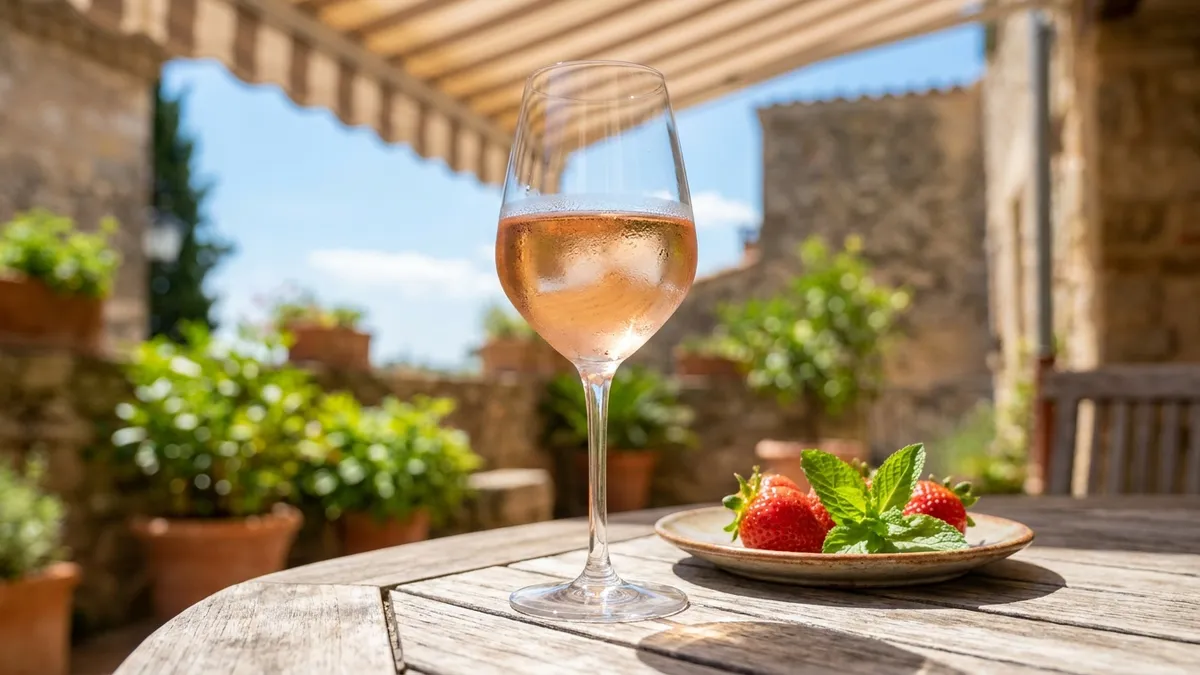
Serve pet-nat slightly cooler than Champagne — around 8 to 10 degrees Celsius (46 to 50 degrees Fahrenheit). Most home fridges run at this temperature, so a bottle straight from the fridge is usually right. Colder temperatures hold the bubbles together and tame any funky aromatics.
Skip the flute. Flutes were designed to show off persistent Champagne bubbles, but they trap aromas inside a narrow column. Use a white wine glass or a universal wine glass — the wider bowl lets the wine breathe and lifts the aromatics toward your nose. The same glassware that works for Chardonnay or Sauvignon Blanc works for pet-nat.
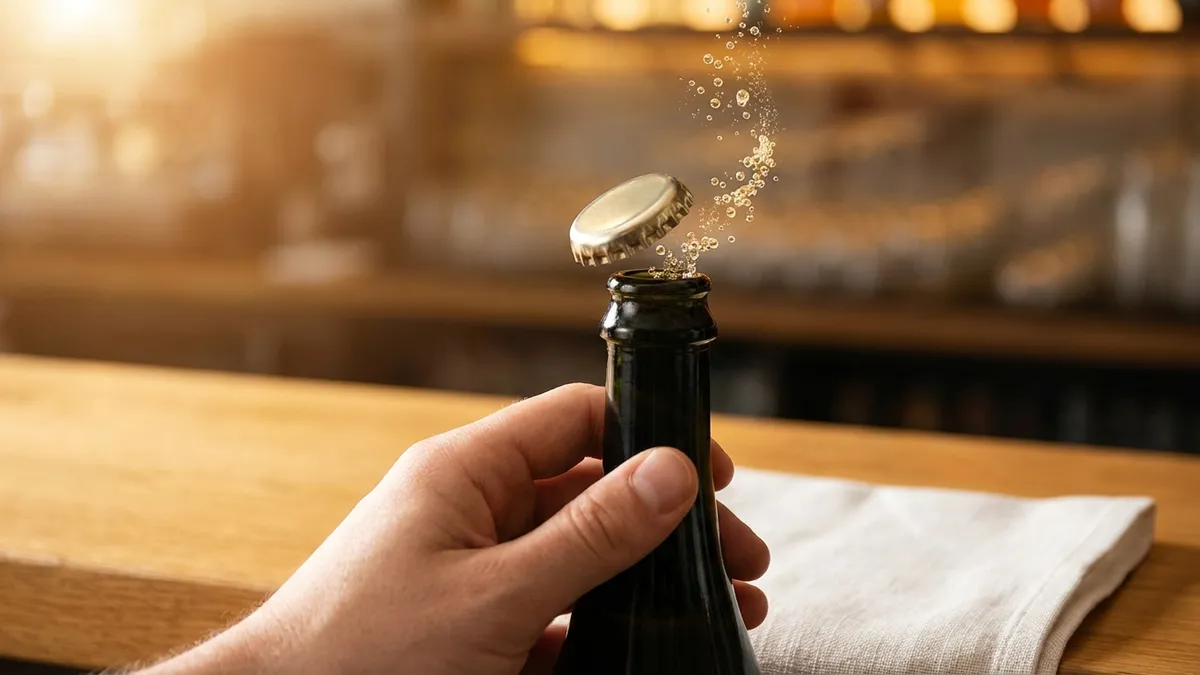
The crown cap requires a bottle opener, not a corkscrew. Open it slowly — pet-nat is under pressure, and rough handling can produce a foaming gusher. If the bottle has been jostled, let it sit upright in the fridge for an hour first. For visibly lees-heavy bottles, give them 24 hours of upright rest to let the sediment settle.
Food Pairing with Pet-Nat
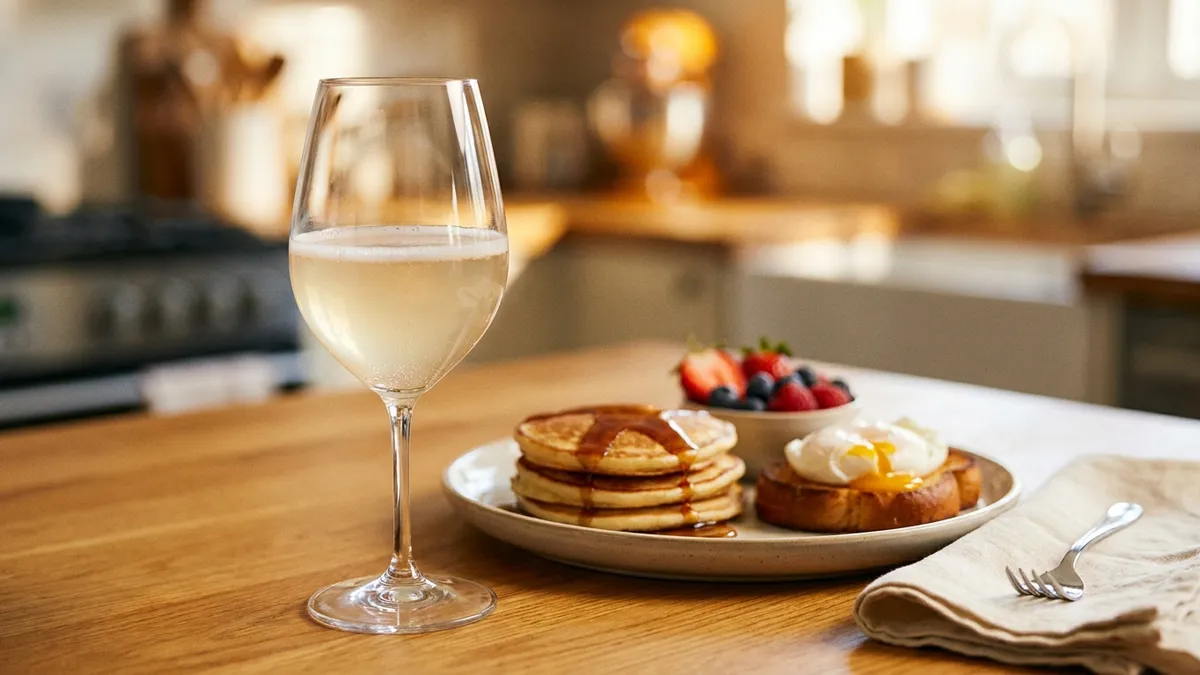
Pet-nat is one of the most versatile food wines available. The combination of bubbles, acidity, low alcohol, and slight yeastiness makes it work with a remarkable range of dishes.
Strong pairings include:
- Charcuterie and cheese boards — bubbles cut fat, yeast complements aged cheese
- Brunch foods — pancakes, eggs Benedict, smoked salmon, fruit salads
- Fried foods — the bubbles act as a palate scrubber
- Cured fish — smoked salmon, gravlax, anchovies
- Spicy Asian foods — Korean fried chicken, Thai larb, Vietnamese summer rolls
- Picnics and casual gatherings — fits the mood of the wine itself
The pairings to avoid are heavy reds-territory dishes — slow-braised meats, intensely fatty roasts, deeply caramelized sauces. Pet-nat is light and lifted; pair it with food that matches.
Sommelier tip: When in doubt, pair pet-nat with food that works alongside cider. The structural similarity transfers.
Comparing Pet-Nat to Other Sparkling Wines
If you already drink other sparkling styles, pet-nat fits onto a familiar map. The sparkling wine types overview covers the full picture, but here is the short version:
- vs Champagne — pet-nat is softer, cloudier, less complex, fresher, and roughly half the price
- vs Prosecco — pet-nat is yeastier, less fruity, more idiosyncratic, with smaller bubbles
- vs Cava — pet-nat is more rustic, lower pressure, higher in lees character
- vs Lambrusco — craft Lambrusco overlaps with pet-nat; traditional Lambrusco was originally méthode ancestrale
If you enjoy lighter sparkling styles like Vinho Verde, fresh Lambrusco, or unfiltered cider, pet-nat will likely land for you. If you only drink Champagne, the cloudiness and rustic edge may take a bottle or two to appreciate.
Storing Pet-Nat
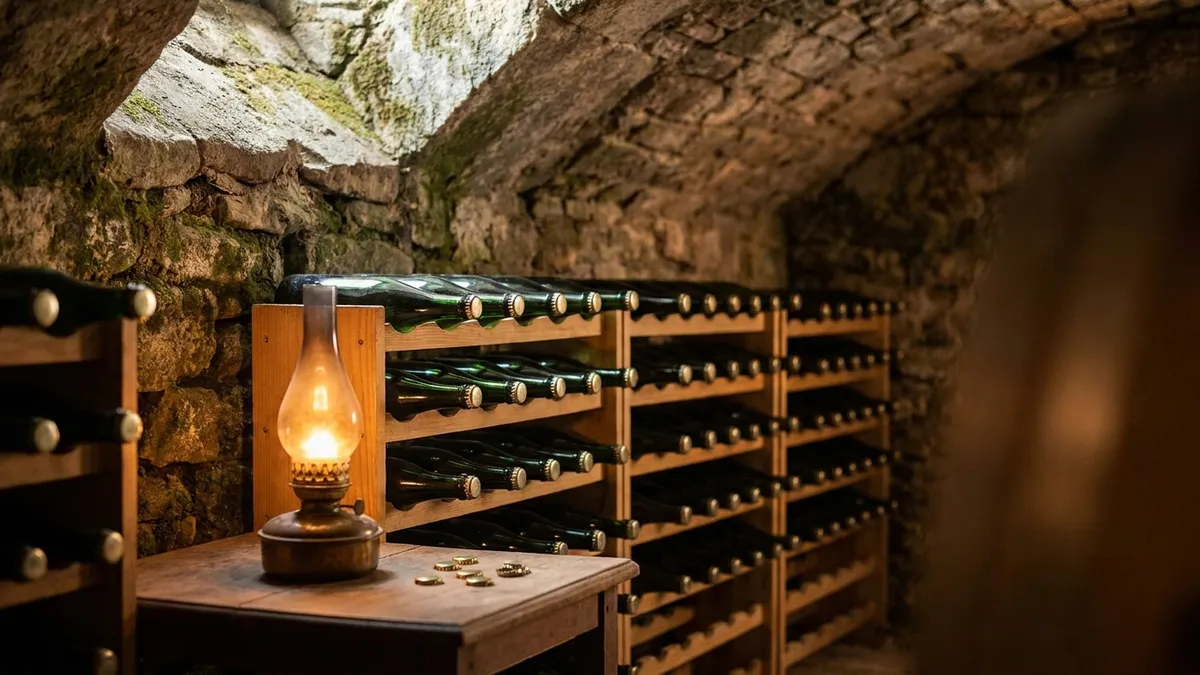
Pet-nat is built for early drinking, not cellaring. Most bottles are at their best within 12 to 18 months of release. After two years, the freshness fades and the lees character can become tired.
Store bottles cool — ideally below 14 degrees Celsius — either upright or lying flat. Crown caps do not dry out the way corks can, so storage is a little more forgiving than for traditional method sparkling wine. When you find a pet-nat you love, drink it that year rather than holding on for a future occasion.
Building Your Pet-Nat Palate
Tasting pet-nat is a useful exercise for any developing wine drinker. The category sits outside the standard reference points of Champagne, Prosecco, and Cava, which forces you to taste with fresh attention.
If you are working on developing your wine palate, pet-nat is a high-leverage style. Practicing the systematic sommelier tasting approach on a pet-nat — appearance, nose, palate, structure — reveals nuance that most casual drinkers miss.
The Sommy app builds these tasting habits one bottle at a time, with structured prompts and a flavor library that maps what you notice in your glass. For a broader view of where pet-nat fits among other sparkling categories, the wine styles learning hub maps out all the major styles in one place.
The Short Answer for First-Time Buyers
Pet-nat is sparkling wine made the old way — one fermentation, finished in the bottle, no additions. It is cloudy, gently fizzy, dry to off-dry, and meant to drink young. Bottles wear crown caps and run twenty to forty dollars.
If you are new to it, start with a Loire Chenin Blanc pet-nat for the cleanest expression of the style, then branch out into Italian Glera, Limoux Mauzac, or a New World experiment. Pet-nat varies more between producers than almost any other sparkling category, so one rough bottle is not a verdict.
A 16th-century technique, rediscovered, made affordable, and put on bistro lists everywhere. It is not better than Champagne — it is its own thing, and worth knowing.
Frequently Asked Questions
How is pet-nat different from Champagne?
Pet-nat finishes its first fermentation in the bottle, so the wine is fermented only once. Champagne goes through two fermentations — a still wine first, then a second one in the bottle with added sugar and yeast. Pet-nat has lower pressure, gentler bubbles, more cloudiness, and usually costs less than Champagne.
Why is pet-nat wine cloudy?
Pet-nat is usually unfiltered and bottled with its lees, the spent yeast cells from fermentation. Those lees stay in the bottle, creating a hazy or opaque appearance. Cloudiness is a feature of the style, not a flaw. You can drink the lees, decant them off, or let the bottle stand upright before opening.
How do you pronounce pétillant-naturel?
Most drinkers and shops shorten it to pet-nat, which rhymes with wet flat. The full French phrase is pronounced roughly pay-tee-yon natty-rell. Either pronunciation works. Saying pet-nat in a wine shop is perfectly normal and will not draw funny looks.
What does pet-nat taste like?
Expect fresh acidity, gentle bubbles, and yeasty flavors like bread dough or biscuit. Many examples lean toward apple, citrus, and a slight cidery quality. Some show funky, savory notes from extended lees contact. Most pet-nat is dry to off-dry, lighter in alcohol, and meant to drink chilled rather than aged.
How should you serve pet-nat?
Chill the bottle to about 8 to 10 degrees Celsius — slightly cooler than Champagne. Open the crown cap slowly to let pressure release without foaming over. Pour gently into a white wine glass or universal glass. Skip flutes — pet-nat's aromatics need a wider bowl to express themselves.
Is pet-nat the same as natural wine?
Pet-nat is closely tied to the natural wine movement but is not automatically natural wine. The technique itself only describes how the bubbles are made. Many pet-nat producers also farm organically and avoid additives, but some do not. Read the back label or ask the shop if minimal-intervention farming matters to you.
How long does pet-nat last in the cellar?
Pet-nat is meant to drink young — usually within one to two years of release. It is not built for long aging. The freshness, soft pressure, and yeasty aromatics are at their best soon after bottling. Keep bottles cool, lying flat or upright, and drink them before the next harvest if possible.
Sommy Team
LinkedInFounder & Wine Educator
The Sommy Team is building the world's most approachable wine education app, helping beginners develop real tasting skills through structured courses and AI-guided practice.