Wine with Lasagna: Meat, Vegetable and White Lasagna

By the Sommy Team — AI-assisted, human-edited.
Updated Oct 1, 2026
Contents (10)
- What Wine Goes With Lasagna, in One Paragraph?
- Which Wine Suits Which Lasagna?
- Why Does Tomato Change How Wine Tastes?
- What Wine Goes With Meat Lasagna?
- Does Chianti Really Go With Lasagna?
- Is Lambrusco the Best Wine for Lasagna?
- What Wine Goes With Vegetable Lasagna?
- What Wine Goes With White Lasagna?
- How Should You Serve Wine With Lasagna?
- Why Does the Original Bolognese Recipe Matter for the Wine?
TL;DR
Match the wine to the lasagna's loudest layer. Tomato ragù needs a high-acid red with moderate tannin, such as Sangiovese (Chianti) or Barbera. Dry Lambrusco cuts béchamel and Parmesan with acid and bubbles. Vegetable and white lasagna, with less meat and tomato, suit crisp whites or light reds.
The best wine with lasagna is the one that answers its loudest layer. In a meat lasagna that layer is tomato ragù, so you need a red with as much tartness as the sauce: Sangiovese, Barbera or a dry Lambrusco. When béchamel or vegetables take over, acid and bubbles matter more than a red wine's grip.
What Wine Goes With Lasagna, in One Paragraph?
For a classic meat lasagna, open a Sangiovese such as Chianti or a Barbera. Both have the high acidity to stand up to tomato and enough cherry fruit for the ragù. Dry Lambrusco, the sparkling red from Emilia, is the local answer: its bubbles cut through béchamel and Parmesan. Vegetable lasagna with spinach and ricotta suits a crisp white such as Soave or Vermentino. White lasagna, built on béchamel with no tomato, suits a fresh white or a sparkling wine. Skip heavy, tannic reds: tomato acid makes tannin taste harsh.
Which Wine Suits Which Lasagna?
Name the loudest layer first, then buy the wine that answers it. Tomato is sour and sweet at once, béchamel is fat and milk, cheese is salt and fat, and vegetables bring green, earthy flavours with little fat. If a dish has two loud layers, pick for the one you taste most in the first bite.
| Lasagna | Loudest layer | What the wine must do | Look for on the label |
|---|---|---|---|
| Meat (Bolognese ragù) | Tomato acid, meat fat | Match the acid, bring fruit, keep tannin moderate | Chianti, Chianti Classico, Barbera d'Asti or d'Alba |
| Rich meat with extra cheese | Butter, béchamel, Parmesan | Cut fat with acid and bubbles | Lambrusco secco |
| Vegetable with tomato sauce | Tomato acid, little fat | High acid, low tannin | Barbera |
| Spinach and ricotta | Green flavours, soft cheese | Crisp, light, unoaked | Soave, Vermentino |
| White (béchamel, no tomato) | Butter and milk | Freshness to clean the palate | Soave, a dry sparkling wine, Lambrusco secco |
| Mushroom and béchamel | Earthy, savoury | Light body, gentle tannin | Pinot Noir, Dolcetto |
Why Does Tomato Change How Wine Tastes?
Tomato is acidic, so a wine with less acid than the sauce tastes flat and thin beside it. Acidity (the tartness that makes your mouth water) is the first thing to check. A wine at least as tart as the sauce keeps tasting of fruit after each bite.
The common belief that lasagna needs the biggest red in the shop gets it backwards. Tannin (the drying grip on your gums) clashes with tomato acid and tastes rougher, while a ripe, low-acid red loses its fruit next to the sauce. The red that works is the opposite of a blockbuster: lively acid, moderate grip, fruit you can name. Tannin, acid and body are pulled apart in understanding tannins, acidity and body.
Fat changes the picture a little. Meat, butter and cheese coat your mouth and soften tannin, which is why a meat lasagna can carry a firmer red than a plain tomato pasta. The broader rules for sauces sit in our guide to wine with pasta, and how food changes wine taste explains why the same glass tastes different before and after a bite.
What Wine Goes With Meat Lasagna?
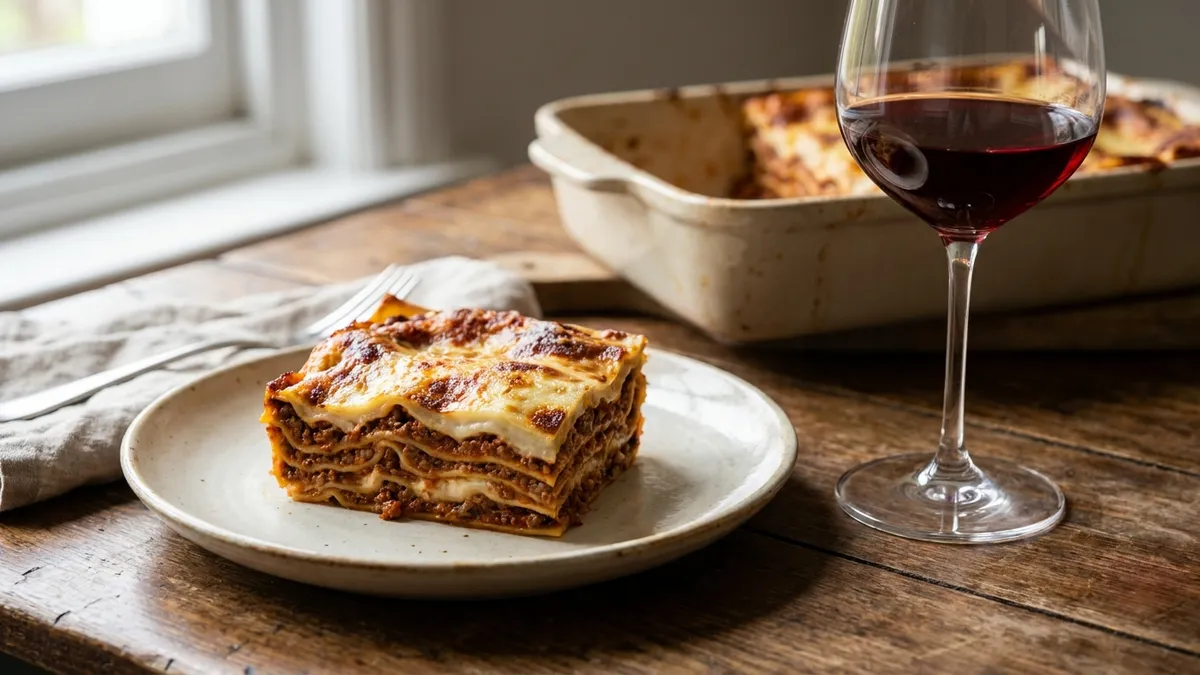
Meat lasagna wants a medium-bodied red with high acidity and moderate tannin, and Sangiovese is the classic answer. A Bolognese ragù cooks onion, carrot and celery with finely ground pork and beef, butter and tomato. The wine has to answer both the tomato's acid and the meat's fat.
Its body (the wine's weight, like skimmed versus whole milk) should sit in the middle so neither wine nor dish takes over.
Sangiovese has high acidity and medium-plus tannin. It smells of sour cherry, damp earth and dried tea leaf. That sour edge is what keeps it fresh against tomato, and the medium-plus tannin finds plenty of meat fat to soften against. The Sangiovese wine guide covers its Tuscan styles.
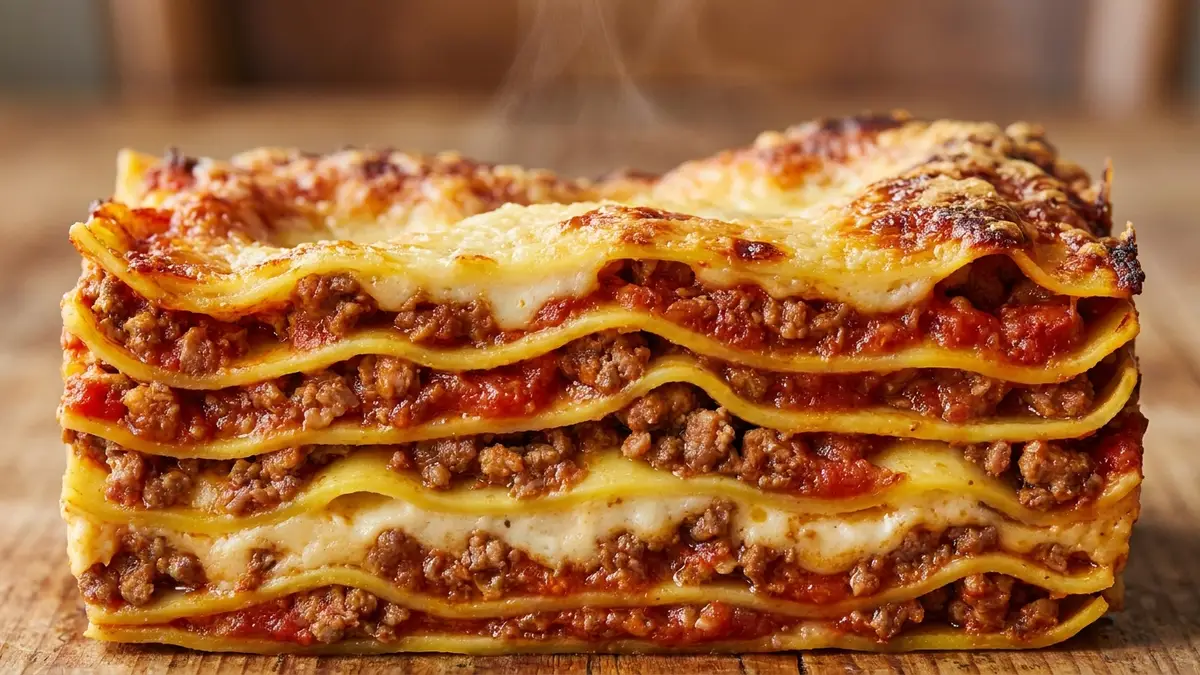
Barbera, from Piedmont, is the softer choice. It has a deep colour, full body, low tannin and high acidity, and young bottles smell of fresh cherry and blackberry. Low tannin means nothing turns rough against the sauce. On the label, look for Barbera d'Asti or Barbera d'Alba, both covered in the Barbera wine guide.
If the ragù is lean and tomato-heavy, pick Barbera. If it is rich with pork, butter and cheese, Sangiovese's extra grip has enough fat to work against.
Does Chianti Really Go With Lasagna?
Yes. Chianti is mostly Sangiovese, and Sangiovese with tomato pasta is one of the best-known pairings in Italy. Many people think Chianti is a grape, but it is a place in Tuscany: the rules require Sangiovese to lead the blend (at least 60% in Chianti, 80% in Chianti Classico), so the name on the label tells you the grape.
If a bottle says Chianti or Chianti Classico, expect a high-acid red that suits tomato. A young, simple Chianti is enough; the dish rewards fresh acidity more than age. The region's other reds are mapped in the Tuscany wine guide.
Is Lambrusco the Best Wine for Lasagna?
Dry Lambrusco is the local answer, and for a rich, cheesy lasagna it is often the best one. It is made mainly around Modena, Parma, Reggio Emilia and Mantua, next door to Bologna. It has high acidity and berry flavours.
Most Lambrusco is frizzante (lightly sparkling, with softer bubbles than Champagne). Those bubbles and that acid do a job tannin cannot: they lift butter, béchamel and Parmesan off your tongue, so each bite tastes as fresh as the first. The label decides the match. Lambrusco comes secco (dry), amabile (off-dry) or dolce (sweet). If it says secco, buy it for lasagna. If it says amabile or dolce, save it for dessert or spicy food, because sugar tastes odd next to a savoury ragù. The Lambrusco wine guide maps its grape types.

What Wine Goes With Vegetable Lasagna?
Vegetable lasagna usually wants a crisp white or a light red, because without meat there is less fat and protein to soften tannin. The sauce still decides. A vegetable lasagna in tomato sauce behaves like a lean meat one, so Barbera's low tannin and high acid work again.
Green versions are different. Spinach, courgette and ricotta are mild and a little bitter, and a tannic red makes them taste metallic. Italian cooks have their own green version: lasagne alla ferrarese uses pasta made green by mixing spinach into the dough.
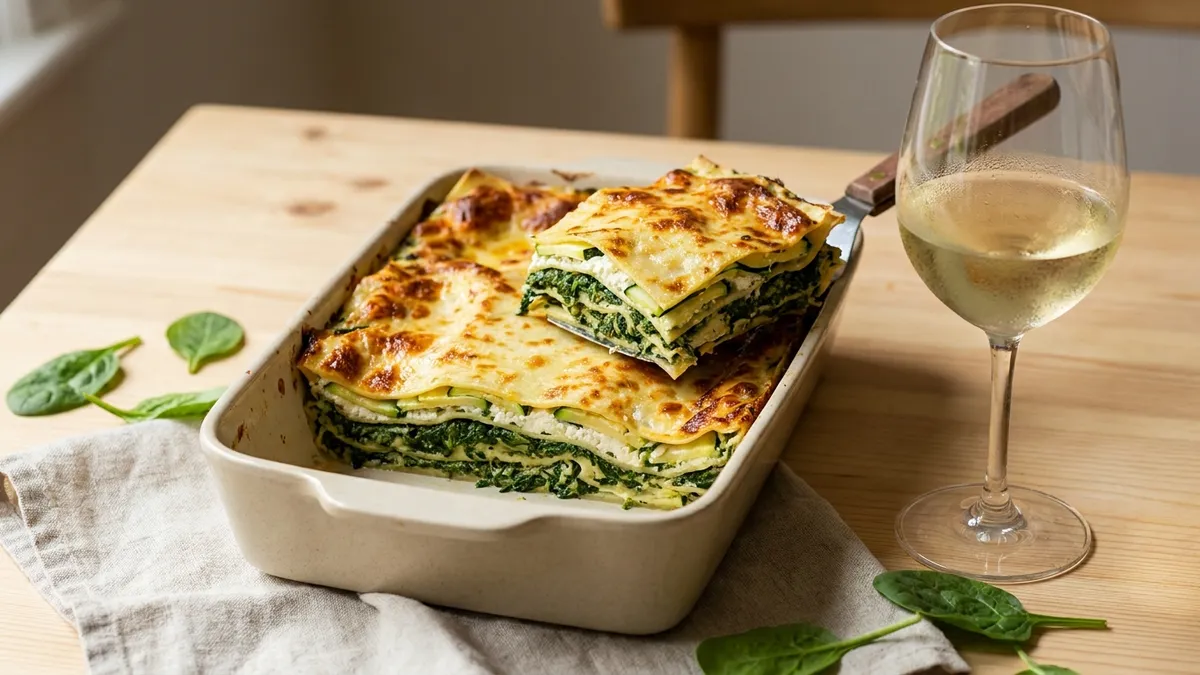
For those, pour a light, unoaked white. Soave is made mainly from Garganega and is light-bodied and straw-coloured, with fresh fruit; the Garganega wine guide explains the grape. Vermentino adds a herbal, citrus edge that suits spinach, and the Vermentino wine guide covers it.
If there is tomato sauce, keep the red. If it is green and creamy, switch to white. More vegetable rules sit in wine with vegetarian food.
What Wine Goes With White Lasagna?
White lasagna, with béchamel and no tomato, goes best with a fresh white or a sparkling wine that cuts the butter and cheese. Béchamel is a white sauce made from a roux of butter and flour cooked in milk or cream and seasoned with nutmeg.
With no tomato acid to match, the wine's job is to clean the palate between bites.
A crisp white does that with acidity. A dry sparkling wine or a Lambrusco secco does it with acidity and bubbles. A heavily oaked white tends to taste of butter and vanilla, which piles more richness onto a dish that already has plenty.
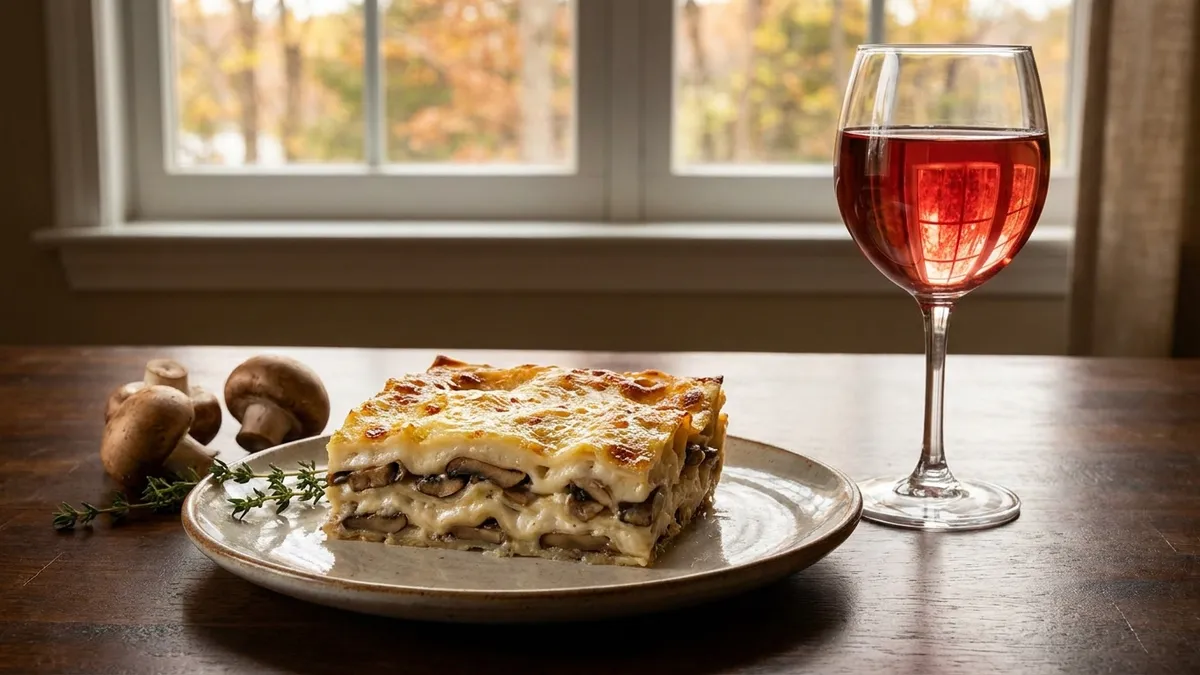
Mushrooms change the answer. Their earthy, savoury flavour suits a light red with gentle tannin, such as Pinot Noir or Dolcetto; the Dolcetto wine guide lists mushroom lasagna among its matches. If mushrooms lead, pour a light red. If it is only béchamel and cheese, pour a crisp white or something sparkling.
How Should You Serve Wine With Lasagna?
Serve the red slightly cool and the Lambrusco or white cold. A warm red tastes of alcohol and loses the fresh acid that makes it work with tomato. Lasagna needs to rest after it leaves the oven, and that wait is the moment to put the red in the fridge.
If the red smells hot and boozy when you pour it, it is too warm.
Lambrusco and whites go straight from the fridge. Pour Lambrusco gently into an ordinary wine glass so the foam settles without spilling. Exact ranges for each style are in our wine serving temperature chart.
Why Does the Original Bolognese Recipe Matter for the Wine?
Lasagna began in Italy in the Middle Ages, and the Bolognese version layers pasta with ragù, béchamel and Parmesan. So the wine has to handle fat as well as acid, which Lambrusco and Sangiovese both do. Tomato is only one ingredient in that ragù, cooked alongside pork, beef, butter, onion, carrot and celery.
The wider map of Italian reds and whites is in the Italian wine guide, and more pairing logic sits in the food pairing hub.
The Sommy app at sommy.wine has a bite-sized Italy course and an AI-guided tasting mode. Tonight, put the red in the fridge for 15 minutes while the lasagna rests, then taste it once before the first bite and once after.
Sources
Frequently Asked Questions
What is the best wine with lasagna?
For a classic meat lasagna, a Sangiovese such as Chianti or a Barbera from Piedmont. Both have high acidity, which keeps the wine tasting fresh against tomato, and neither has the heavy tannin that turns harsh with tomato acid. Dry Lambrusco is the local choice in Emilia, where the Bolognese version comes from.
Should you drink red or white wine with lasagna?
The sauce decides. Tomato and meat ragù call for red: Sangiovese, Barbera or dry Lambrusco. White lasagna made with béchamel and no tomato, or a spinach and ricotta version, goes better with a crisp white such as Soave or Vermentino, because there is little meat to soften red wine tannin.
Does Chianti go with lasagna?
Yes. Chianti is made mainly from Sangiovese (Chianti Classico requires at least 80%), a grape with high acidity and sour cherry flavours, and Sangiovese with tomato-based pasta is one of the best-known pairings in Italian food. Choose a basic Chianti or Chianti Classico rather than an expensive aged bottle; the dish rewards fresh acidity more than age.
What wine goes with vegetable lasagna?
Follow the sauce. A vegetable lasagna with tomato sauce still suits a high-acid, low-tannin red such as Barbera. A green version with spinach, courgette and ricotta suits a crisp, light white such as Soave, made mainly from Garganega, or Vermentino. A mushroom lasagna suits a light red such as Pinot Noir or Dolcetto.
Is Lambrusco good with lasagna?
Dry Lambrusco is one of the best matches, as long as the label says secco. It comes from the same part of northern Italy as lasagne alla bolognese, has high acidity and berry fruit, and is usually lightly sparkling. The bubbles and acid cut through butter, béchamel and Parmesan. Sweeter amabile and dolce styles clash with the savoury dish.
Can you drink a big Cabernet with lasagna?
You can, but it is rarely the best choice. Heavy tannin tastes harsher next to acidic tomato, and a very ripe, high-alcohol red can make the sauce taste sour. If you want a fuller red, pick one with lively acidity and moderate tannin, such as a Chianti Classico or a Barbera, which handle the tomato better.
Sommy Team
LinkedInFounder & Wine Educator
The Sommy Team is building the world's most approachable wine education app, helping beginners develop real tasting skills through structured courses and AI-guided practice.