Vermentino Wine Guide — Dry or Sweet, and How It Tastes

By the Sommy Team — AI-assisted, human-edited.
Updated Sep 10, 2026
Contents (11)
- What Is Vermentino, in 100 Words
- Is Vermentino Dry or Sweet?
- Vermentino vs Sauvignon Blanc vs Chardonnay
- What Is the Vermentino Grape?
- The Sensory Profile
- Vermentino by Region
- Vermentino Wine Pairing: Built for the Mediterranean Table
- Drink Young: The One Rule That Matters
- What Vermentino Costs
- How to Build Vermentino Confidence
- A Mediterranean Classic, Hiding in Plain Sight
TL;DR
Is Vermentino dry or sweet? Vermentino is almost always a dry white wine: crisp, medium-bodied, with medium-high acidity and a saline finish. It tastes like lemon, grapefruit, green almond, and bitter herbs. It grows along the western Mediterranean coast in Sardinia, Tuscany, Liguria, Corsica, and Provence, where it is called Rolle. Drink it young, with seafood.
What Is Vermentino, in 100 Words
Vermentino wine is a dry, coastal Mediterranean white made from the Vermentino grape, which the French call Rolle. The grape thrives in sun-soaked, sea-influenced vineyards across Sardinia, the Tuscan coast, Liguria, and southern France. Expect pale lemon-green color, medium-high acidity, and a saline, slightly bitter finish. Classic aromas include lemon, grapefruit, green almond, fresh herbs, and a faint jasmine lift. Alcohol typically sits between 12.5% and 13.5%. The flagship appellation is Vermentino di Gallura DOCG in northern Sardinia, the island's only DOCG. Drink young, within one to three years of the vintage, with seafood and Mediterranean cooking.
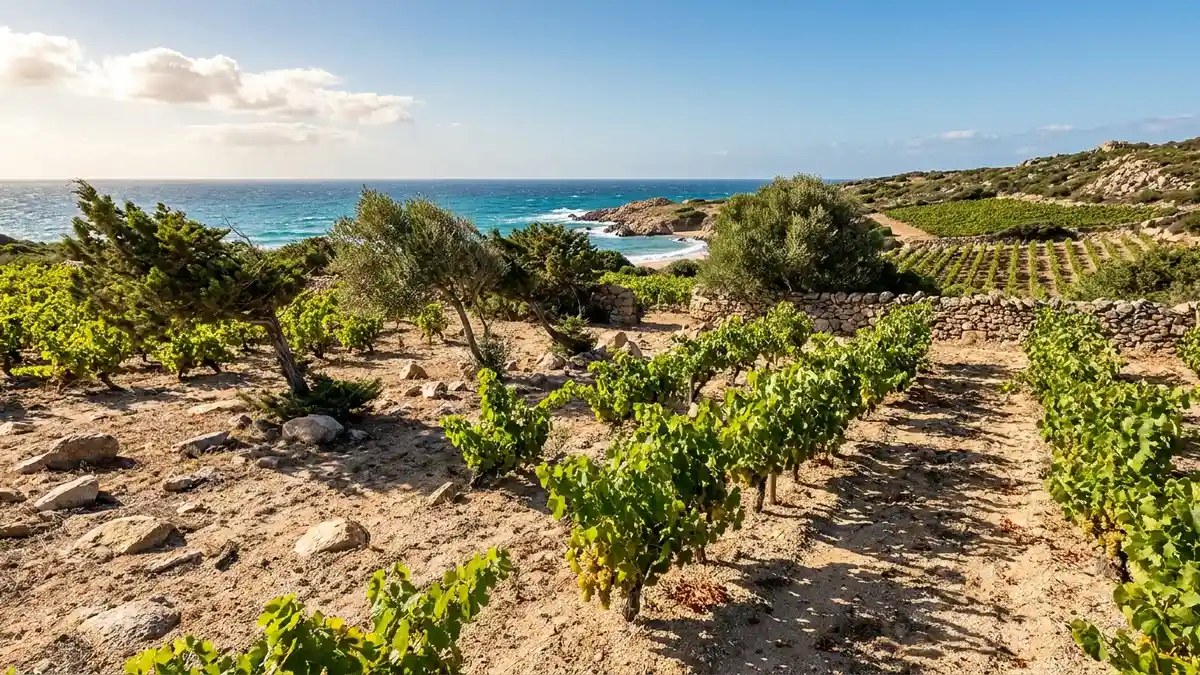
Is Vermentino Dry or Sweet?
Vermentino is a dry white wine. Nearly every bottle is fermented until no sugar remains, leaving crisp medium-high acidity, a medium body, and a saline, faintly bitter finish. Sweet Vermentino exists only as rare, clearly labeled passito or late-harvest wines. If the label does not say sweet, late harvest, or passito, the wine is dry.
The confusion is understandable. Vermentino smells ripe and sunny, with lemon, white flowers, and a whiff of stone fruit, and a fragrant nose can read as sweetness before the wine touches your tongue. On the palate, the acidity and that bitter-almond edge pull everything back to dry. Our explainer on what dry wine actually means separates aroma-sweetness from real residual sugar (the grape sugar left in a wine after fermentation stops).
Vermentino vs Sauvignon Blanc vs Chardonnay
Most people meet Vermentino after years of drinking one of the two big-name whites, so the fastest way to place it is side by side with both.
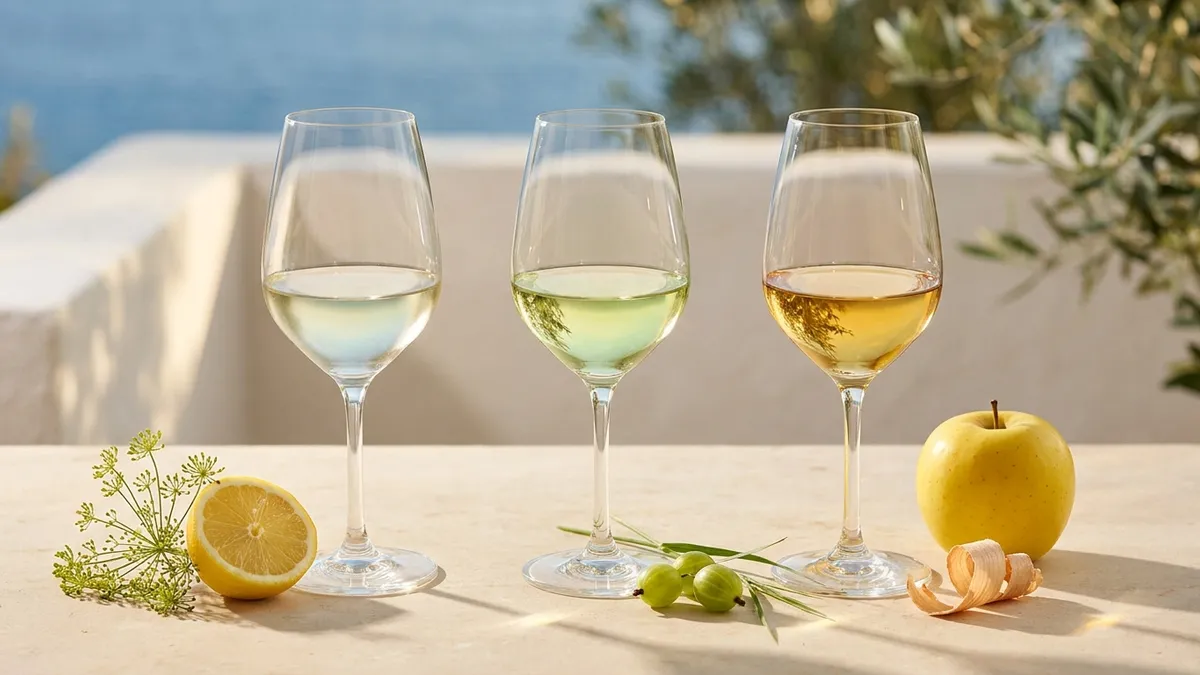
| Vermentino | Sauvignon Blanc | Chardonnay | |
|---|---|---|---|
| Dry or sweet | Dry | Dry | Dry |
| Body | Medium | Light to medium | Medium to full |
| Acidity | Medium-high | High | Medium to medium-high |
| Oak | Almost never | Rarely (Bordeaux-style exceptions) | Often, especially in warm regions |
| Signature flavors | Lemon, grapefruit, green almond, saline, bitter herbs | Gooseberry, grass, lime, passion fruit | Apple, pear, stone fruit; toast and butter if oaked |
| Typical alcohol | 12.5% to 13.5% | 12.5% to 13.5% | 13% to 14.5% |
| Drink within | 1 to 3 years | 1 to 3 years | 2 to 10 years depending on style |
| Best with | Shellfish, grilled fish, pesto, antipasti | Goat cheese, asparagus, herby salads | Roast chicken, cream sauces, lobster with butter |
Is Vermentino Similar to Sauvignon Blanc?
Vermentino is similar to Sauvignon Blanc in its dryness, high acidity, citrus fruit, and herbal edge, which is why fans of one usually enjoy the other. The difference is on the finish: Sauvignon Blanc leans green and grassy, while Vermentino turns salty and faintly bitter, with green almond in place of gooseberry.
Put them in two glasses and the split is clear within a sip. Sauvignon Blanc is louder on the nose, with pyrazines (the compounds behind its grassy, bell-pepper smell) and, in New Zealand, a burst of passion fruit. Vermentino is quieter and more textural, with the fruit sitting behind a stony, sea-salt impression. Our Sauvignon Blanc guide walks through that grape's regional styles.
Vermentino vs Chardonnay
Vermentino and Chardonnay sit at opposite ends of the white-wine spectrum. Vermentino is almost never oaked, stays lean and saline, and is built to drink young. Chardonnay is often barrel-fermented, fuller-bodied, and creamier, with apple and stone-fruit flavors that can gain toast and butter from oak. Choose Vermentino for seafood and salads, Chardonnay for roast chicken and cream sauces.
The exception that proves the rule is unoaked Chardonnay from a cool region such as Chablis, which can feel close to a Ligurian Vermentino in weight and minerality. Even then, Chardonnay shows green apple and a chalky finish where Vermentino shows grapefruit and salt. If the word oak is doing a lot of work here, our explainer on what oaked really means covers the flavors barrels add, and the Chardonnay guide maps the grape from lean to lavish.
Vermentino vs Sancerre
Sancerre is a Loire Valley appellation, not a grape, making Sauvignon Blanc in a restrained, mineral style with little tropical fruit. It's the closest famous-name neighbor Vermentino has: both are dry, taut, stony whites with citrus and a flinty or saline edge. The difference shows in the finish: Sancerre leans toward flint and gunsmoke, Vermentino toward sea spray and bitter almond.
What Is the Vermentino Grape?
The Vermentino grape is a white wine variety native to the western Mediterranean, grown mainly in Sardinia, Liguria, Tuscany, Corsica, and southern France. It goes by several names: Pigato in Liguria, Favorita in Piedmont, Rolle in Provence, and Vermentinu in Corsica. It ripens well on sun-drenched, sea-facing slopes and holds its acidity in hot, windy coastal vineyards.
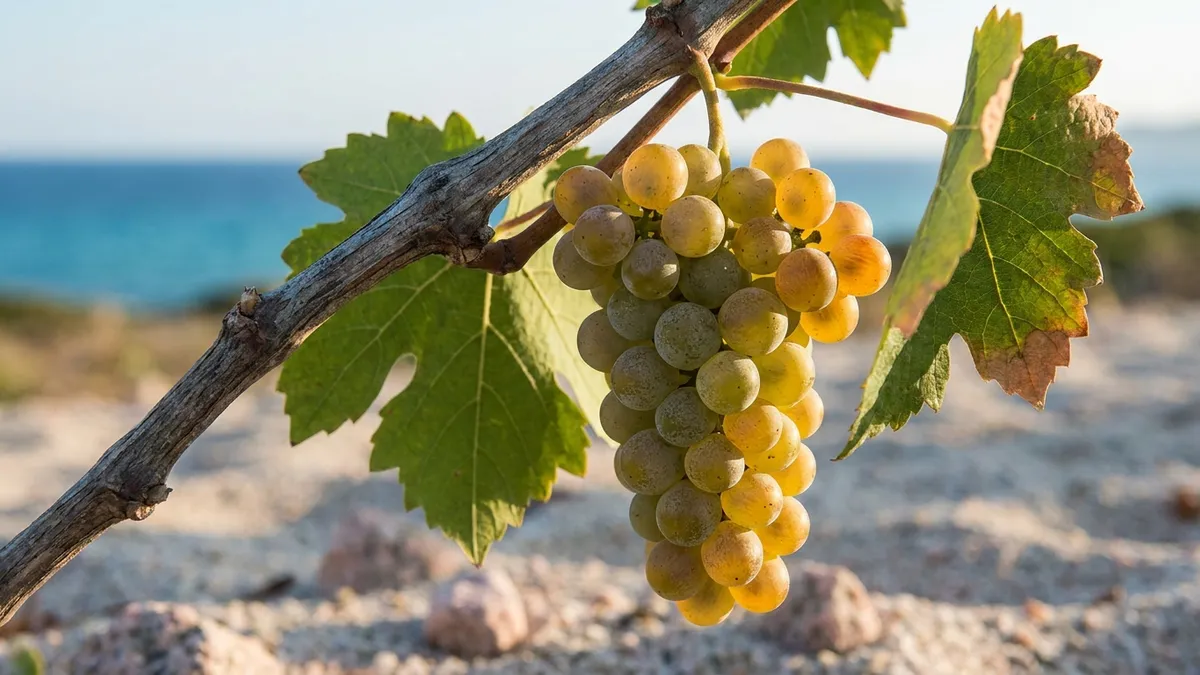
Its origin is murky. Several older hypotheses about where the vine came from have not held up, and the Vitis International Variety Catalogue now lists Italy as its origin. By the 19th century it was established along the whole coast, from Liguria and Tuscany across Sardinia and Corsica to Provence and Languedoc.
For a long time the trade also argued about whether these names were one grape or several close cousins. DNA typing settled the Italian side, confirming that Vermentino, Ligurian Pigato, and Piedmontese Favorita are the same variety. Rolle in Provence is grown, vinified, and sold as Vermentino by producers and regulators alike. The differences you taste between a Pigato and a Sardinian Vermentino come from clonal selection (small, stable variations within one variety that growers propagate for their traits), from the site, and from the cellar, not from separate genetics. Our piece on grape clones explained covers why one grape can look like several.
Two numbers show how concentrated its Italian heartland is. According to Italian Wine Central's denomination data, the Vermentino di Gallura DOCG zone covered 1,416 hectares in 2021, and the island-wide Vermentino di Sardegna DOC covered a further 1,527 hectares the same year. Sardinia alone farms close to 3,000 hectares of appellation-level Vermentino.
The Sensory Profile
What Does Vermentino Wine Taste Like?
Vermentino wine tastes like lemon zest, grapefruit, green almond, and fresh Mediterranean herbs, with a salty, faintly bitter finish that recalls sea air. It is dry and medium-bodied, with medium-high acidity and 12.5% to 13.5% alcohol. A quiet jasmine note often floats above the citrus, especially in warm-vintage Sardinian examples.
Color
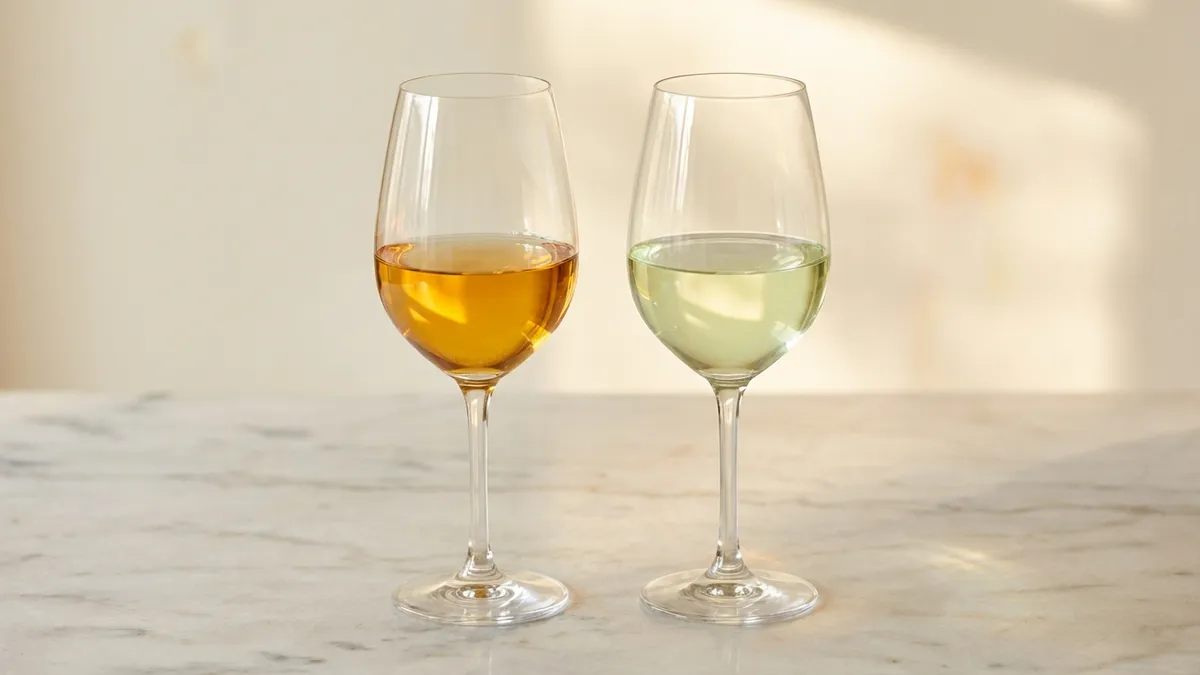
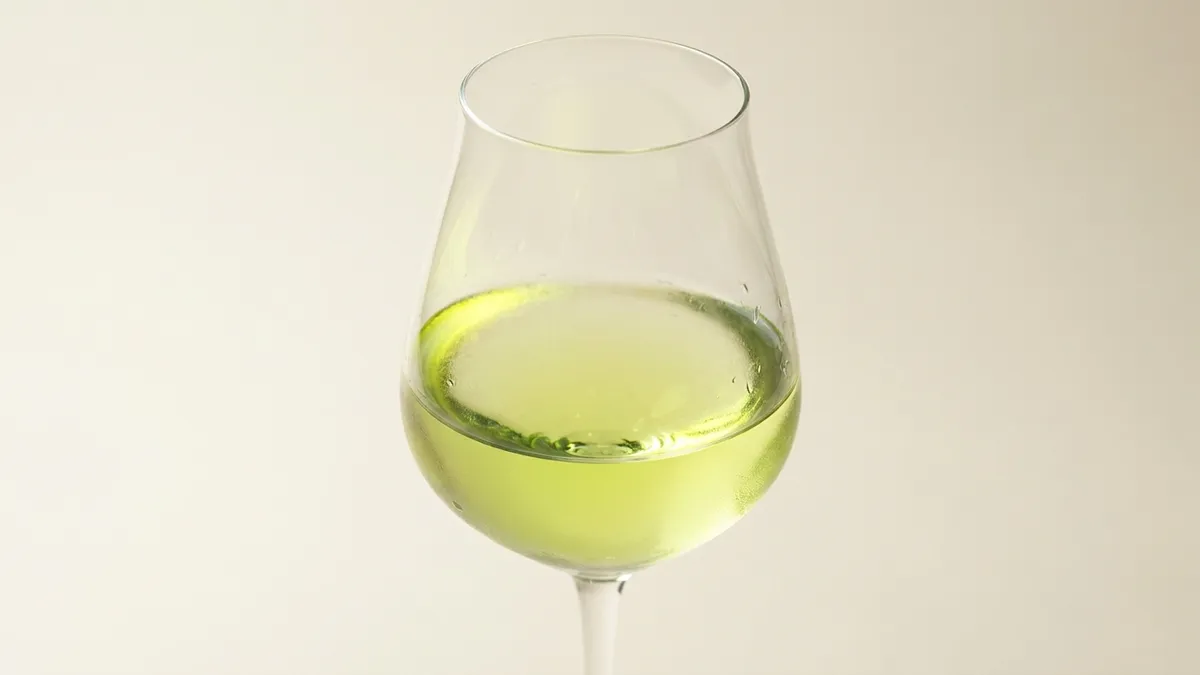
Pale lemon to lemon-green, often with a faint silvery cast. Color deepens slightly with age and warmer-climate fruit. If a Vermentino looks deep gold, it is either older than ideal or has seen unusual oak treatment — both are uncommon for the grape.
Aroma
Three aromatic layers usually appear:
- Citrus: lemon zest, grapefruit pith, sometimes a bright lime note in cooler vintages
- Herbal and nutty: green almond, fennel, fresh thyme, and a faint bitter herbal lift on the finish
- Floral: a quiet jasmine or white blossom note, more pronounced in warm-vintage Sardinian examples
Vermentino is not a tropical grape. If you are getting pineapple and mango, you are probably tasting Viognier or oaked Chardonnay. To learn how to separate citrus from tropical fruit consistently, our guide on wine flavor versus aroma walks through the framework professional tasters use.
Palate
Dry. Medium-bodied. Medium-high to high acidity. The signature element is a saline, almost briny minerality on the finish — what tasters often describe as minerality (the impression of stone, salt, or wet rock in a wine, often associated with coastal or volcanic vineyards).
Alcohol generally lands between 12.5% and 13.5%, with riper Tuscan and southern French examples reaching 14%. Vermentino is rarely oaked. The grape's character is so dependent on freshness that most producers ferment in stainless steel and bottle young to preserve aromatics.
A faint bitter twist on the finish — sometimes compared to bitter almond or quinine — is part of the grape's signature, not a flaw. If you are unsure whether you are tasting a fault, our guide on wine flaws versus faults explains how to tell normal grape character from real problems.
Vermentino Tasting Notes: Same Glass, Two Notes
The quickest way to see what a trained palate adds is to compare two notes on the same Sardinian Vermentino, one from a first-time taster and one from someone who has learned the grape.
A typical beginner note: "Light yellow. Smells like lemon and flowers. Tastes fresh and a bit sour, kind of salty at the end. Dry, I think. Would drink with fish."
A trained note: "Pale lemon-green, brilliant. Medium-intensity nose of lemon zest, grapefruit pith, green almond, and wild fennel, with a jasmine lift. Dry, medium body, medium-high acidity, no oak. Pronounced saline minerality and a bitter-almond twist on a medium-plus finish. Youthful, unoaked coastal white, consistent with Vermentino di Gallura. Drink now to three years."
The beginner got everything right. The trained note is not more correct, only more precise: it names the specific citrus, separates the herbal layer from the floral one, grades the structure, and turns "kind of salty" into a diagnostic clue that points at a coastal grape. Our guide to wine minerality unpacks that salty impression, and our primer on how to taste white wine walks through building a note like the second one, step by step.
Vermentino by Region
Climate and soil create real stylistic differences across the grape's home territory.
Sardinia: The Reference Point
Sardinia produces the most internationally recognized Vermentino. The island's granite-rich north is the heart of Vermentino di Gallura DOCG, Sardinia's only DOCG appellation. The wines here tend to be the most concentrated and structured, with intense saline minerality from coastal vineyards exposed to constant sea breeze.
The appellation's rules explain the style. According to the official production regulation published by the Consorzio di Tutela del Vermentino di Gallura DOCG, the wine must be at least 95% Vermentino, yields are capped at 10 tonnes of grapes per hectare (9 tonnes for the Superiore tier), and the finished wine must reach a minimum of 12% alcohol for the standard Bianco and 13% for Superiore. Gallura was promoted to DOCG in 1996, according to Italian Wine Central.
Beyond Gallura, the broader Vermentino di Sardegna DOC covers the entire island and produces the everyday Sardinian style — fresh, citrus-driven, easy to drink, and widely available at modest prices. Established in 1988 with a minimum of 85% Vermentino, it is the volume engine of the grape: Italian Wine Central puts its output at a five-year average of about 107,200 hectolitres a year, roughly 1.19 million cases. Sardinian Vermentino is the best starting point for anyone new to the grape, and our Sardinia wine guide sets it beside the island's reds.
Tuscany: Riper and Rounder
The Tuscan coast, particularly Bolgheri and the Maremma, makes a fuller, riper Vermentino than Sardinia. Warmer days and slightly more clay in the soil produce wines with more weight, more stone fruit alongside the citrus, and a slightly softer acid profile.
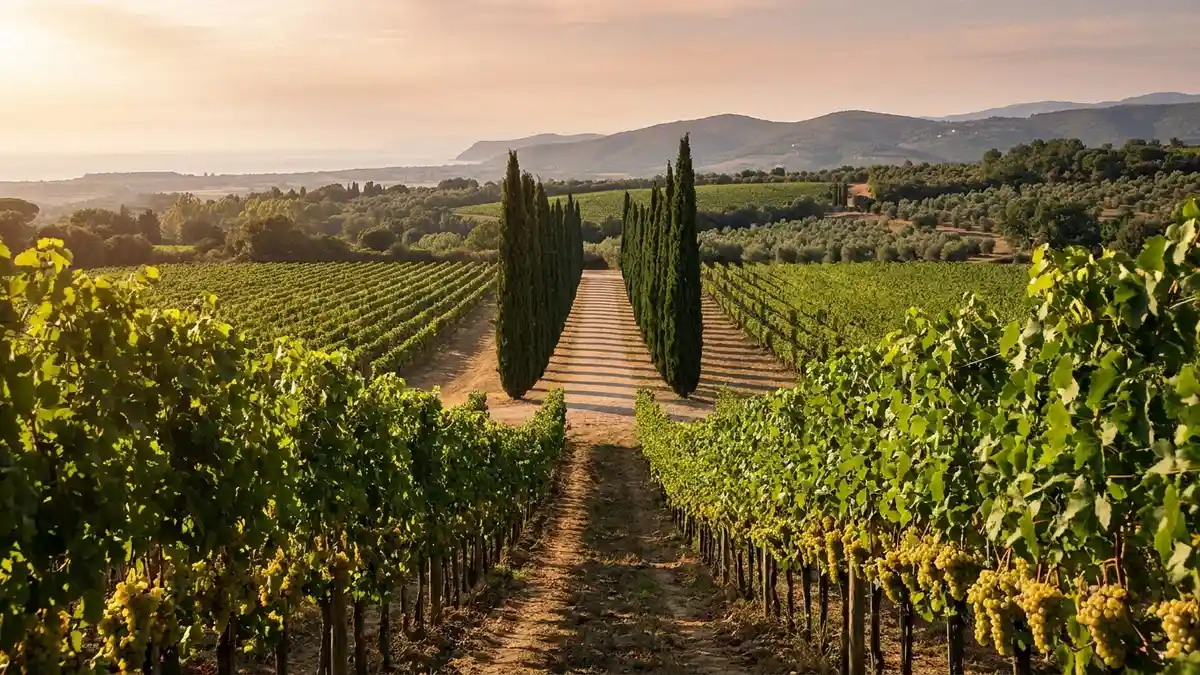
If your introduction to Italian wine was through Sangiovese reds, Tuscan Vermentino is the natural white companion at the same table. The wines pair beautifully with grilled fish, seafood pasta, and the herb-driven flavors of Tuscan coastal cooking. For the region's bigger picture, from Chianti to the coast, see our Tuscany wine guide.
Liguria: Lean and Mineral
Liguria, the narrow coastal strip wedged between the Maritime Alps and the sea, produces a leaner, more taut Vermentino. Vineyards are often terraced into cliffs, and the wines reflect that intensity — sharper acid, more pronounced minerality, and a wiry herbal edge.
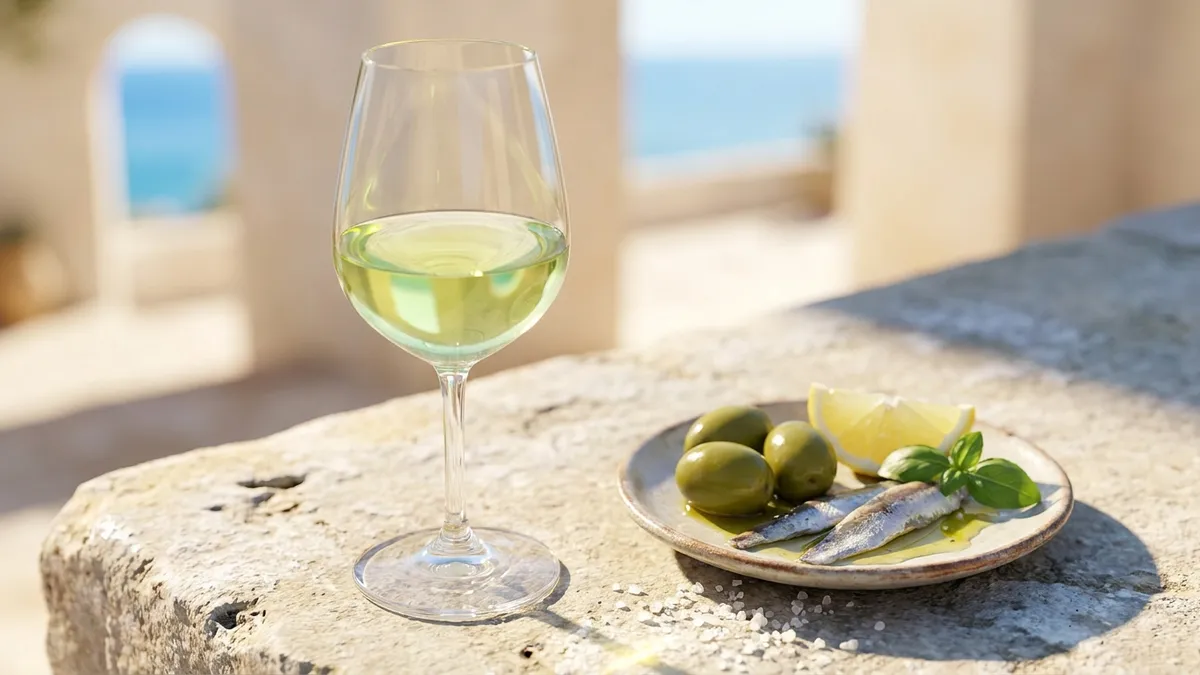
Liguria is also the home of Pigato, the local name for Vermentino, which tends to produce a slightly more aromatic, often herbaceous version of the same wine. On the Ligurian table, Vermentino is the natural partner to pesto, anchovies, and the region's famed seafood.
Provence: Rolle in the Blend
In Provence and across Languedoc-Roussillon, Vermentino goes by Rolle and plays a major role in two contexts: as a stand-alone varietal white and as a blending grape in the dry rosés that have made Provence famous.
In a Provençal white blend, Rolle adds citrus lift and saline freshness to grapes like Grenache Blanc and Clairette. In rosé, it helps preserve acidity and gives the wines a recognizable mineral spine. For a deeper look at how the region builds its wines, see our guide to rosé wine and the fuller Provence wine guide.
Corsica and Beyond
Corsica, where the grape is also called Vermentino or sometimes Vermentinu, produces some of the most distinctive examples — herbal, saline, and intensely Mediterranean. The island's Patrimonio appellation, its first AOC (granted in 1968), makes its white wines entirely from Vermentino. Smaller plantings exist in Australia, California, Texas, and a handful of warm-climate experiments around the world, but the grape remains predominantly a western Mediterranean specialty.
Vermentino Wine Pairing: Built for the Mediterranean Table
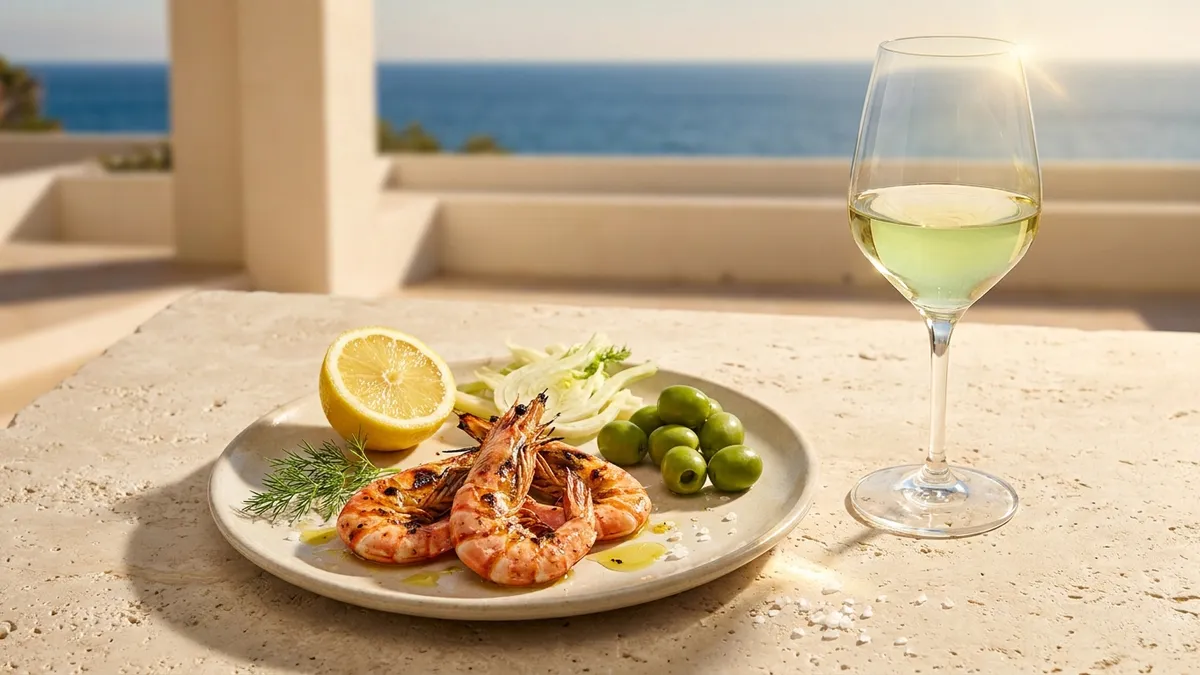
If you remember nothing else about pairing, remember this: Vermentino wine was made for sea, sun, and olive oil. The pairings practically write themselves.
Strong Pairings
- Grilled fish — sea bass, sole, branzino, sardines
- Shellfish — oysters, mussels, clams, shrimp, lobster in lighter preparations
- Lemony or herbal pasta — spaghetti with clams, lemon-and-pepper pasta, pesto
- Antipasti — anchovies, marinated artichokes, prosciutto with melon, marinated olives
- Goat cheese and feta — Vermentino's acid handles their tang without flattening
- Mediterranean salads — caprese, salade niçoise, grilled vegetable plates
The principle is regional and consistent — what grew or swam near the vines tends to taste right alongside the wine. For a deeper framework on this kind of pairing, our wine with seafood guide walks through the chemistry behind why coastal whites work so well with marine proteins.
Weaker Pairings
Vermentino is not a fan of heavy cream sauces, intensely sweet preparations, or red meat. It can also struggle with very spicy dishes — its bitter finish amplifies heat rather than cooling it. For spicy food, an off-dry Riesling or Gewürztraminer is a more forgiving choice.
Drink Young: The One Rule That Matters
Most Vermentino is best within one to three years of the vintage. The grape's defining traits — bright citrus, saline lift, and aromatic intensity — fade with time. By year five, an entry-level Vermentino has lost most of what made it distinctive.
The exceptions are a few premium Sardinian bottlings, particularly Vermentino di Gallura Superiore and lees-aged wines, which can hold up for five years or more. Unless you know a bottle was built to age, drink it sooner rather than later; our breakdown of tasting young versus aged wine covers which grapes age and which do not.
What Vermentino Costs
This is one of Vermentino's quiet strengths. Quality entry-level Sardinian and Tuscan bottles regularly land in the everyday-drinking price tier, far below the prices of comparable Chardonnay from prestige regions or top-shelf Sauvignon Blanc (our Chardonnay vs Sauvignon Blanc comparison weighs those two against each other). You can find a satisfying weekday Vermentino di Sardegna for the price of a movie ticket. Premium Bolgheri and top Sardinian estates climb higher, but rarely into trophy-bottle territory, and as a category Vermentino remains underpriced relative to what is in the glass.
How to Build Vermentino Confidence
Vermentino is a useful teaching grape. It shows the structure of a coastal Mediterranean white, high acid, no oak, mineral lift, clearly and without a top-shelf price. A simple three-bottle plan teaches it efficiently:
- One Vermentino di Sardegna DOC — the everyday Sardinian baseline
- One Vermentino di Gallura DOCG — the granite-driven flagship style
- One Tuscan Vermentino from Bolgheri or Maremma — the riper, fuller mainland version
Open all three on the same evening, ideally with a Mediterranean spread of grilled fish, lemony pasta, and fresh herbs. The differences between regions become obvious side by side.
For a structured approach to this kind of comparative tasting, the Sommy app walks you through guided sessions that train your palate to spot recurring regional signatures across grapes.
A Mediterranean Classic, Hiding in Plain Sight
Vermentino is not the loudest grape in the room, and that is part of its appeal: a quiet coastal white that rewards anyone who learns to read its finish.
The question this guide keeps returning to, dry or sweet, is also the easiest tasting skill to lock in. Pour a Vermentino next to a Sauvignon Blanc, taste them blind, and decide which is which from the finish alone. Sommy turns that kind of comparison into guided practice with your next bottle: naming the aromas, scoring the structure, and building the vocabulary to describe the salty, bitter-almond signature, so it stops being something you read about and becomes something you recognize.
Sources
Frequently Asked Questions
What does Vermentino wine taste like?
Vermentino tastes like lemon, grapefruit, green almond, and bitter herbs, with a saline finish that recalls sea air. It is dry, medium-bodied, and has medium-high acidity. Many examples carry a faint floral note, often jasmine or white blossom, layered over a slightly bitter herbal twist on the finish.
Is Vermentino dry or sweet?
Vermentino is almost always dry. The grape produces wines with crisp acidity, low to no residual sugar, and a slightly bitter herbal finish that reinforces the dry impression. Off-dry or sweet versions exist but are rare and usually labeled clearly. If a bottle does not specify, assume it is fully dry.
Is Vermentino similar to Sauvignon Blanc?
Yes, in structure. Both are dry, high-acid whites with citrus and herbal notes, so Sauvignon Blanc drinkers usually take to Vermentino quickly. The difference is the finish: Sauvignon Blanc reads green, grassy, and sometimes tropical, while Vermentino reads salty and faintly bitter, with green almond and jasmine in place of gooseberry and passion fruit.
Is Vermentino a light or full-bodied wine?
Vermentino is medium-bodied. It has more weight and texture than a light Pinot Grigio but far less than an oaked Chardonnay. Sardinian and Ligurian versions sit on the lighter, more mineral side, while Tuscan coastal and southern French examples are riper and rounder, sometimes reaching 14% alcohol. Stainless-steel fermentation keeps the texture clean rather than creamy.
Where does Vermentino wine come from?
Vermentino comes from the western Mediterranean coast. Sardinia is its reference point, home to Vermentino di Gallura DOCG and Vermentino di Sardegna DOC. It also grows in Liguria, on the Tuscan coast around Bolgheri and the Maremma, in Corsica, and across Provence and Languedoc-Roussillon, where it is called Rolle. Smaller plantings exist in California, Australia, and Texas.
What should I eat with Vermentino?
Vermentino is built for Mediterranean seafood. It shines with grilled fish, oysters, mussels, shrimp, lemony pasta, antipasti, fresh herbs, pesto, and goat cheese. The wine's saline edge mirrors the brine of shellfish, and its acidity cuts through olive oil and butter without flattening delicate flavors. Skip it with heavy cream sauces, red meat, and very spicy dishes.
Should Vermentino be aged?
Most Vermentino is made to drink young, ideally within one to three years of the vintage. Its appeal is freshness, citrus snap, and saline lift, all of which fade with age. A small number of premium Sardinian examples, often labeled Superiore or aged on lees, can develop nicely for five years or more, but these are the exception.
Is Vermentino the same as Rolle?
Rolle is the name used for Vermentino in Provence and Languedoc-Roussillon, for still whites and rosé blends alike, and the wine trade treats the two as one variety. DNA typing has confirmed that Vermentino is identical to Liguria's Pigato and Piedmont's Favorita. Style differs with climate and winemaking, but a Provençal Rolle and a Sardinian Vermentino are, for all practical purposes, the same grape.
Sommy Team
LinkedInFounder & Wine Educator
The Sommy Team is building the world's most approachable wine education app, helping beginners develop real tasting skills through structured courses and AI-guided practice.