Wine Pairing for Vegetarian Food — A Three-Question Rule

By the Sommy Team — AI-assisted, human-edited.
Updated Sep 25, 2026
Contents (12)
- Wine Pairing for Vegetarian Food, in One Paragraph
- Why Does Red Wine Taste Harsher With Some Vegetarian Dishes?
- Which Three Questions Pick the Wine for a Vegetarian Dish?
- What Wine Goes With Common Vegetarian Dishes?
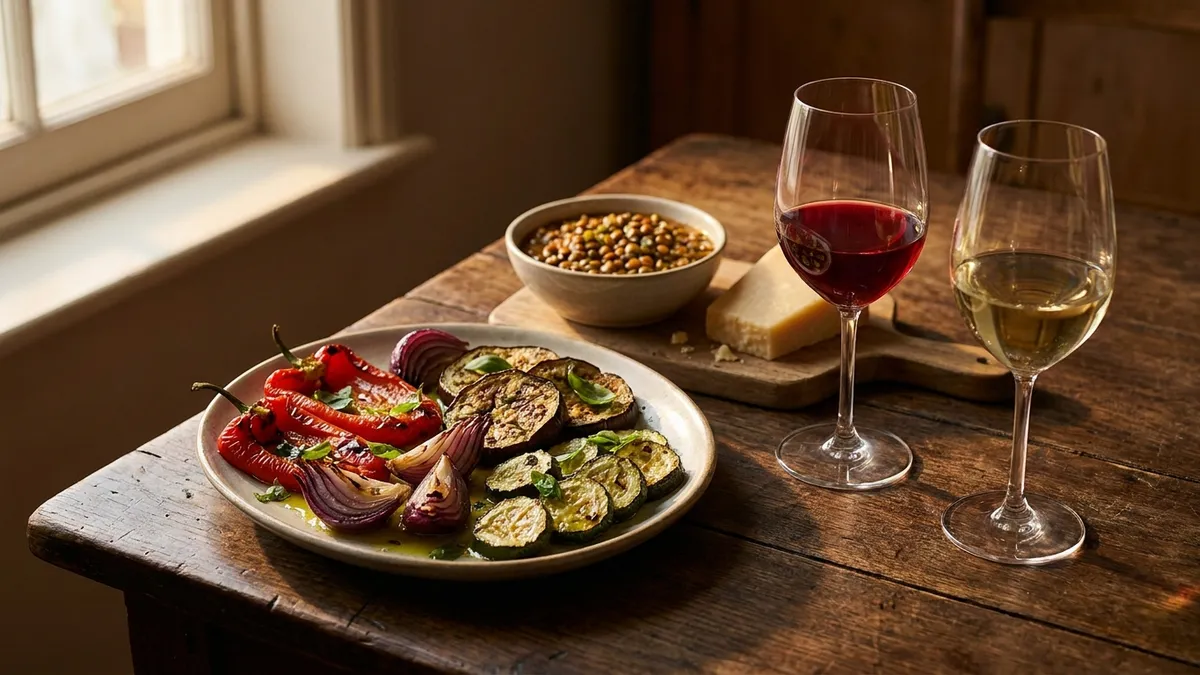
- What Wine Goes With Roasted or Grilled Vegetables?
- What Wine Pairs With Mushroom and Tomato Dishes?
- What Wine Goes With Beans, Lentils and Tofu?
- What Wine Goes With Cheesy or Creamy Vegetarian Dishes?
- Can You Pair Wine With Asparagus and Artichokes?
- What Wine Works With Spicy Vegetarian Food?
- Does Vegan Food Need a Different Approach?
- How Do You Test the Rule Tonight?
TL;DR
Vegetarian dishes pair by fat, protein and cooking method. Tannin in red wine binds to protein; with no meat or cheese on the plate it binds to your tongue instead and tastes drying. Cheesy, oily or charred dishes can take a red. Raw, sharp or lean ones want a high-acid white or a soft red.
A vegetarian plate pairs with wine by its fat, protein and cooking method, because tannin (the drying grip on your gums) needs something on the plate to grab. Get that one idea and wine pairing for vegetarian food stops being a list to memorise. Cheese, oil and char let a red work. A lean, raw dish sends the grip straight to your tongue.
Wine Pairing for Vegetarian Food, in One Paragraph
Wine pairing for vegetarian food comes down to three checks. First, fat and dairy: cheese, cream, eggs and olive oil soften red wine tannin, so a lasagne or an oily stew can take Sangiovese or Grenache. Second, sharpness: raw vegetables, vinaigrettes and tomato need a wine at least as tart as the food, such as Sauvignon Blanc or Barbera. Third, browning and savoury depth: charred vegetables and mushrooms suit a medium-bodied red with gentle tannin, such as Pinot Noir.
If the plate has cheese or oil, a red can work; if it is lean and raw, pour a white. Spicy dishes want off-dry Riesling. Asparagus and artichoke are manageable with a cooked, buttered preparation and a high-acid white. Vegan plates need extra fat or a softer red, because there is no dairy to help.
Why Does Red Wine Taste Harsher With Some Vegetarian Dishes?
Because tannin grabs protein, and a plate with no meat, cheese or much fat leaves it only the proteins on your tongue. Tannin comes mostly from grape skins and seeds, plus oak barrels. It gives red wine a gritty, chalky texture, and it works by binding to proteins, including those in saliva.
With a steak or a wedge of hard cheese, the tannin binds to the food's protein and fat, and the wine comes across as softer. Take those away and the tannin reacts with the proteins on your tongue and the sides of your mouth. Saliva loses its slippery feel, the astringency climbs and the wine tastes drier and harsher than it did on its own.
That is why vegetarian pairing feels harder. A young Cabernet Sauvignon beside a green salad has nothing to hold on to, so it tastes like over-brewed tea. The same wine with a cheese-heavy aubergine bake can taste rounder, because the cheese does the job the meat would have done. The guide to tannins shows where that grip comes from in more detail, and how food changes wine taste covers the other shifts that food makes.
Which Three Questions Pick the Wine for a Vegetarian Dish?
Ask whether the dish has fat or dairy, whether it is raw or sharp, and whether it is browned or savoury, in that order. The first answer decides how much tannin you can pour. The second decides how much acidity the wine needs. The third decides the wine's weight.
Fat or dairy. If the dish has cheese, cream, eggs, nuts or a real slick of olive oil, a red with noticeable tannin is fine. If it has almost none, choose a soft red or a white.
Raw or sharp. Here the tool is acidity (the tartness that makes your mouth water). You feel it as a prickle on the sides of the tongue and a mouth-watering finish. Most wines sit between pH 2.9 and 3.9, which is why all wine tastes a little tart. A wine with too little acid tastes flat and flabby, and next to a lemony dressing it tastes flatter still. If the food is sharp, the wine must be at least as sharp.
Browned or savoury. Roasting, grilling and savoury ingredients add depth, and depth needs body (weight in the mouth, like skimmed versus whole milk). If the dish is charred or rich, move up to a medium-bodied wine. If it is steamed or raw, stay light.
What Wine Goes With Common Vegetarian Dishes?
Pick the wine from the richest thing on the plate. A salad with warm goat cheese behaves more like a cheese dish than a salad, and a lentil stew with plenty of olive oil behaves more like a braise. If two rows of the table fit your dish, follow the richer ingredient.
| Dish | What drives it | Pour | Skip |
|---|---|---|---|
| Green salad with vinaigrette | Acid, raw leaves, little fat | Sauvignon Blanc, Grüner Veltliner, Albariño | Any tannic red |
| Roasted or grilled vegetables | Char, olive oil, sweetness from browning | Grenache, Barbera, Pinot Noir | Delicate, light whites |
| Mushroom risotto | Umami, butter, hard cheese | Pinot Noir, lightly oaked Chardonnay | Young Cabernet Sauvignon |
| Tomato pasta or pizza | Tomato acid and umami | Sangiovese, Barbera | Low-acid, oaky reds |
| Lentil or bean stew | Earthy legumes, oil, tomato | Grenache, Southern Rhône blend, Sangiovese | Light, tart whites |
| Cheesy bake or lasagne | Cheese fat and protein | Sangiovese, Merlot, Tempranillo | Very light reds |
| Creamy pasta or gratin | Cream and butter | Full Chardonnay, Chenin Blanc | Tannic reds |
| Vegetable curry or chilli stir-fry | Chilli heat, spice, sometimes sugar | Off-dry Riesling, dry rosé | High-alcohol reds |
The table works for dishes that are not on it, because every row answers the same three questions. Our wine food pairing guide applies the same logic to meat and fish, and the full set of principles sits in wine pairing rules.
What Wine Goes With Roasted or Grilled Vegetables?
Pour a medium-bodied, soft-tannin red such as Grenache, Barbera or Pinot Noir with roasted or grilled vegetables. Browning gives vegetables the savoury depth that a light white cannot match, and the oil used to roast them gives tannin a little fat to work against.
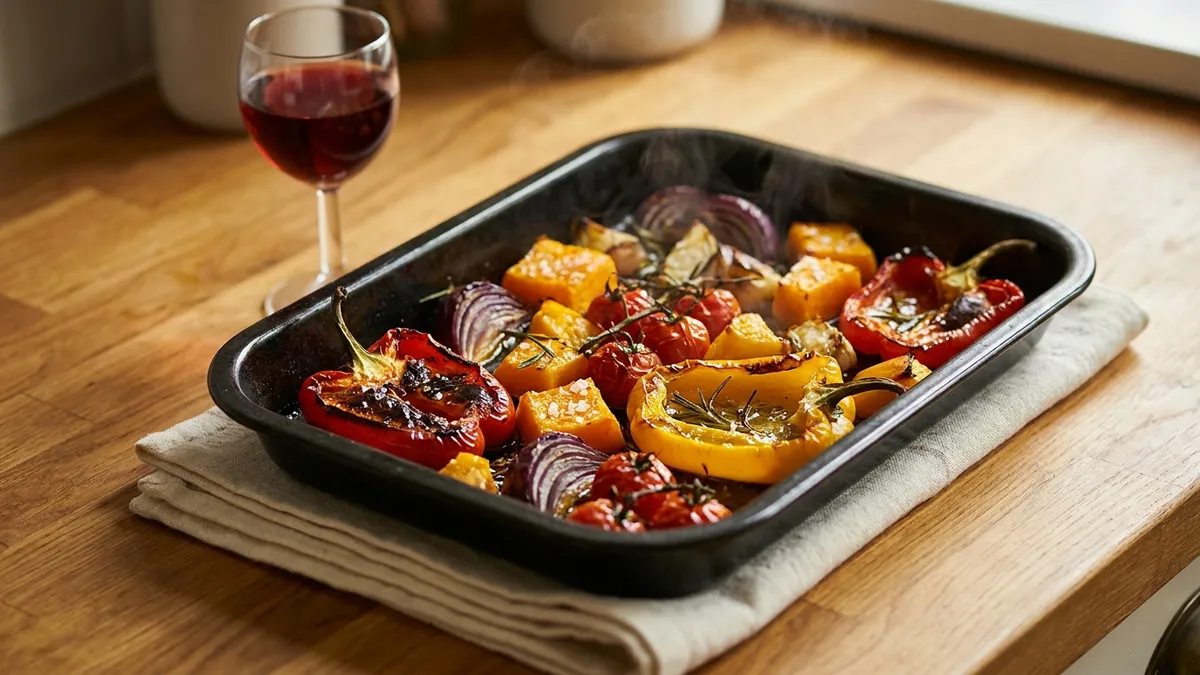
That browning is the Maillard reaction (the reaction between sugars and proteins that browns food). It runs fastest from about 140 to 165°C (280 to 330°F), so it happens in a hot oven or on a grill, not in a steamer. It produces hundreds of flavour compounds, depending on the food, the heat and the cooking time. The link to wine is a kitchen observation rather than lab science: roasted peppers and aubergine taste deeper and sweeter than steamed ones, and they stand up to a red.
Grenache fits because its tannin is soft and its strawberry fruit is ripe, from long warm seasons. Barbera brings high acidity and little tannin, which suits roasted tomatoes and peppers. If the edges are charred, go red; if the same vegetables are steamed, go white.
What Wine Pairs With Mushroom and Tomato Dishes?
Pour a red with high acidity and gentle tannin: Sangiovese or Barbera with tomato, Pinot Noir with mushrooms. Both foods are rich in umami (the savoury taste of broth, soy sauce and Parmesan), and savoury-heavy dishes are easiest with wines that lead on acid rather than grip.
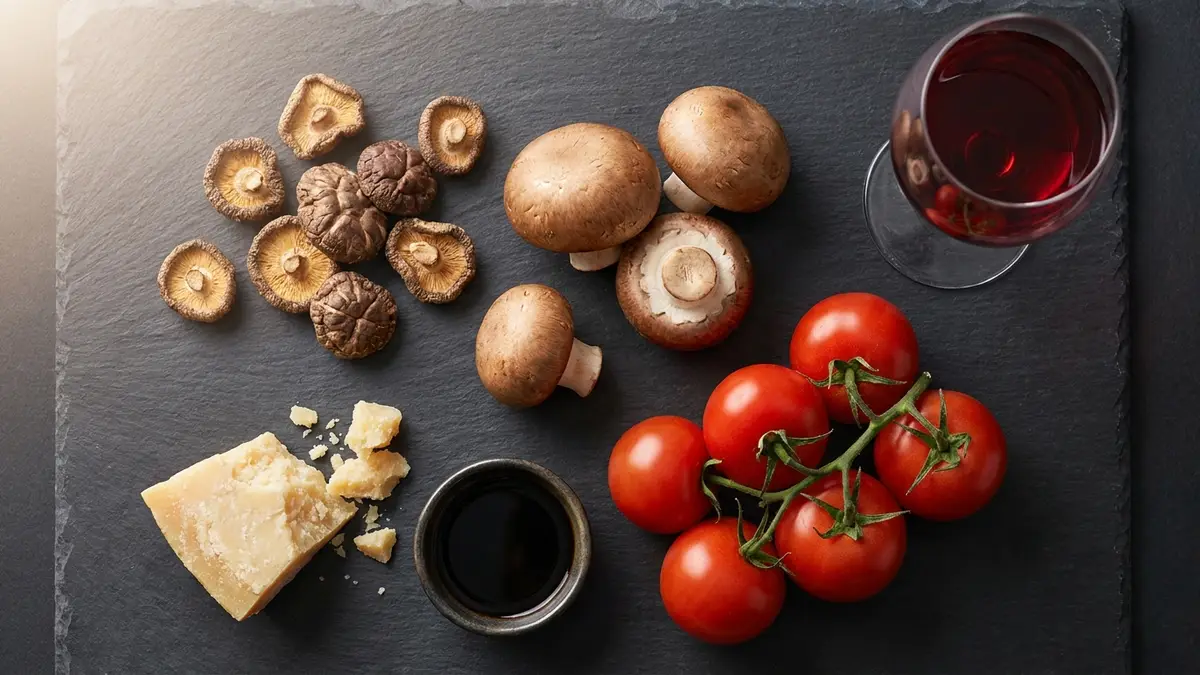
Umami is triggered by glutamates and nucleotides. The tomato has a strong umami flavour, and mushrooms, especially dried shiitake, are rich in guanylate, one of those nucleotides. Soy sauce and aged Parmesan add more. Tasters widely report that heavy umami makes a tannic red taste harsher, so treat it as a tasting effect to manage.
Tomato also brings acid. If the sauce is tomato, pick acid first: Sangiovese is the grape of Chianti, and its tart cherry fruit keeps pace with a ragù or a margherita. The wine with pasta and wine with pizza guides break this down by sauce. Mushrooms get a full treatment of their own in wine with mushrooms, and the savoury taste itself is explained in savoury and umami flavours in wine.
What Wine Goes With Beans, Lentils and Tofu?
Pair the sauce and the fat around them, then choose between a medium red and an off-dry white. Beans, lentils, chickpeas and soy products such as tofu and tempeh are the main plant protein sources. On the plate, they carry the flavour of whatever they are cooked in.
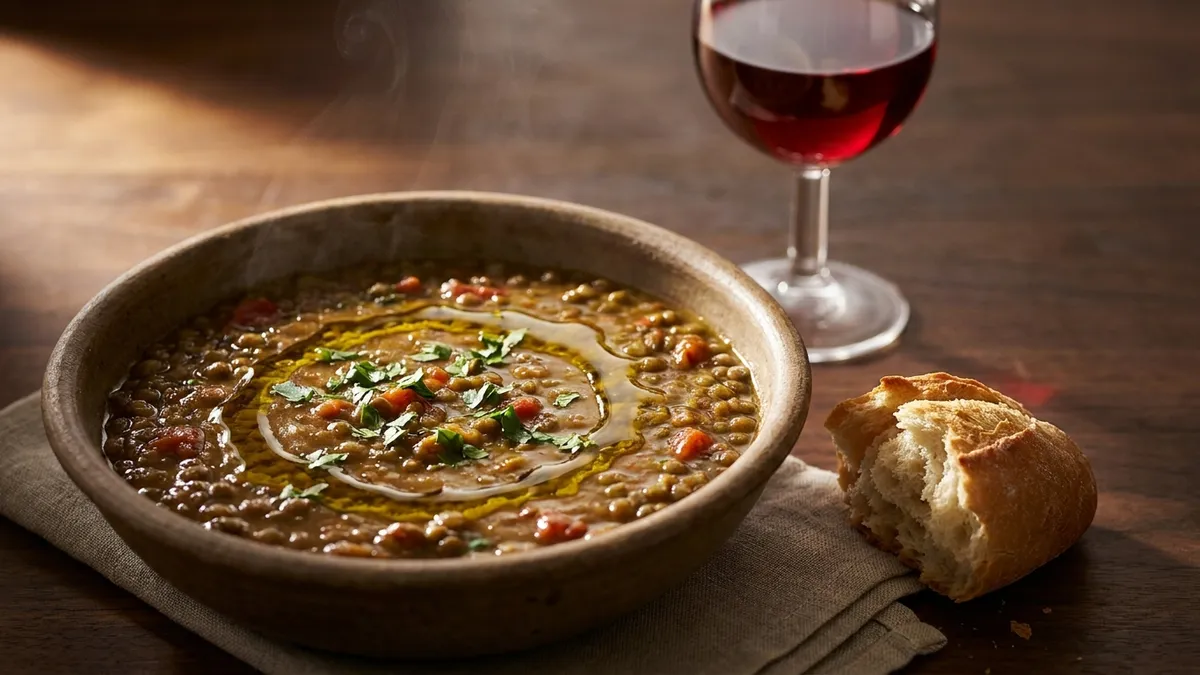
Legume stews are the most red-friendly vegetarian dishes after cheese. A lentil and tomato stew finished with olive oil has fat, earthiness and acid, so it handles a medium-bodied red such as Grenache or a Southern Rhône blend. Chickpeas in a spiced tomato sauce work the same way.
Plant-based burgers and sausages vary. Commercial meat substitutes are typically 50 to 80% water and 0 to 15% fat and oil, so a lean one gives tannin less to bind to than beef would. Check the pack for fat, and if it is low, choose a juicy, low-tannin red.
Tofu soaks up its sauce. If the sauce is soy, ginger or chilli, pour an off-dry white such as Riesling; if it is olive oil and herbs, a medium red works. The wine with Chinese food guide covers soy-based sauces in more depth.
What Wine Goes With Cheesy or Creamy Vegetarian Dishes?
This is where firm reds and full whites finally work, because dairy gives tannin the protein and fat it needs. Hard cheeses bind tannin the same way red meat does, which is why a baked aubergine parmigiana or a vegetable lasagne can carry Sangiovese, Merlot or Tempranillo.
Cream behaves differently. It is rich in fat with little tartness, so it needs a wine with acidity and some weight. If the dish is a cream sauce or gratin, pour full Chardonnay; if it is fresh goat cheese in a salad, pour Sauvignon Blanc, whose sharpness matches the cheese's tang. If the cheese is hard and aged, a firm red is safe. The wine and cheese pairing guide covers cheese by style.
Can You Pair Wine With Asparagus and Artichokes?
Yes, if you cook them with fat and pour a high-acid, unoaked white. These two vegetables are famous for "ruining" wine. That warning is repeated far more often than it is explained, and the chemistry is not settled in public research.
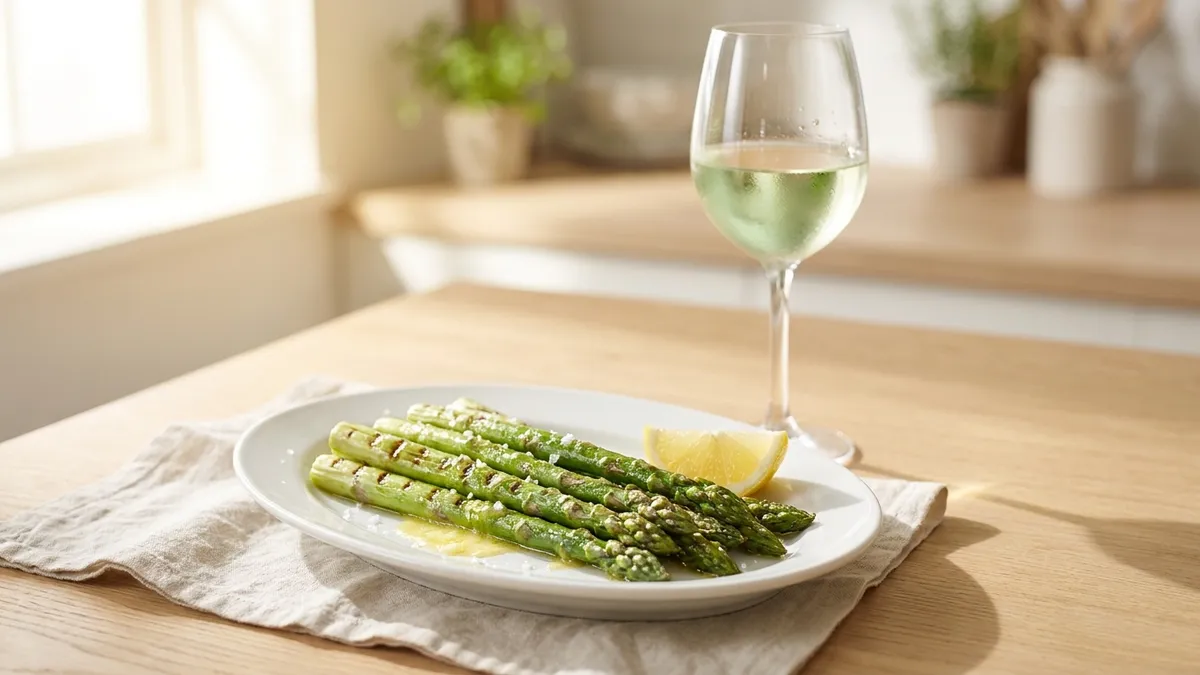
Asparagus does contain sulfur compounds, but the documented effect is the smell they give urine after eating. The idea that they clash with wine in the mouth is a trade convention, not verified chemistry. Artichoke contains cynarin and chlorogenic acid, which a 1972 study found can make water taste sweet afterwards. That is the likely root of the claim that it makes the next sip of wine taste sweet or odd.
The workaround is a wine that already tastes green. Sauvignon Blanc gets its grassy, green-pepper smell from methoxypyrazines (aroma compounds that smell of green pepper), and cool-climate examples, such as those from New Zealand, can smell of asparagus itself. Cool climates also keep the grape's acidity high. If the asparagus is raw or steamed, pour Sauvignon Blanc or Grüner Veltliner; if it is grilled and buttered or under hollandaise, a lightly oaked Chardonnay works too. Keep tannic reds away from both vegetables.
What Wine Works With Spicy Vegetarian Food?
Pour a lower-alcohol white with a touch of sweetness, such as off-dry (lightly sweet) Riesling. Chilli heat comes from capsaicin, and capsaicin is not a taste at all. It triggers the heat and pain receptor TRPV1, the same one that fires when you touch something hot.
Capsaicin dissolves in alcohol, and many tasters find that a strong, high-alcohol red makes the burn feel stronger. Treat that as a common tasting observation, since the solubility is proven but the effect in the mouth has not been measured. Milk is the standard remedy, because its water and fat carry capsaicin away as an emulsion, the same logic as serving yoghurt beside a hot curry.
If the burn is high, lower the alcohol and add a little sugar. Riesling in an off-dry style, dry rosé or a light, chilled red all work. The wine with spicy food guide covers heat levels, and wine with Indian food handles vegetable curries dish by dish.
Does Vegan Food Need a Different Approach?
Yes, lean harder on fat and acid, because vegan plates have no dairy or egg to soften tannin. The protein and fat that make firm reds work in a cheesy bake are missing, so a lean vegan stir-fry leaves tannin with little to bind to.
Add fat where you can: olive oil, nuts, tahini, avocado or coconut milk all give the wine something to meet. If the dish stays lean, choose a lower-tannin red such as Pinot Noir or Gamay, or a high-acid white. A tahini-dressed grain bowl or a cashew-cream pasta behaves much like its dairy version.
Whether the wine itself is vegan is a different question. Some wines are clarified with animal products such as egg white or gelatine. Vegan wine explained covers how to tell.
How Do You Test the Rule Tonight?
Taste one wine with the same dish twice: once as it is, and once with a spoon of olive oil or a little grated hard cheese stirred in. The second bite should make a red feel softer and a white feel rounder.
The bite-sized courses in the Sommy app teach the tannin, acidity and body behind these checks, and the AI-guided tasting mode lets you photograph a label and save notes on how the wine changed with the food. More pairing articles live in the food pairing hub. Pour one red tonight beside a vegetable cooked two ways, roasted and raw, and taste which plate softens the grip.
Sources
- Wikipedia: Wine and food matching (tannin, protein and astringency)
- Wikipedia: Acids in wine (pH range and how acidity is perceived)
- Wikipedia: Maillard reaction (browning temperature range)
- Wikipedia: Vegetarian cuisine (protein sources and meat substitute composition)
- Wikipedia: Capsaicin (TRPV1, alcohol solubility and milk)
- Bartoshuk et al., Science (1972): Sweet taste of water induced by artichoke
Frequently Asked Questions
What wine goes best with vegetarian food?
No single wine covers every vegetarian dish, so pick by the richest thing on the plate. Cheesy bakes and olive-oil stews can take a medium or full red such as Sangiovese or Grenache. Charred vegetables suit Barbera or Pinot Noir. Salads, raw vegetables and green dishes want a high-acid white such as Sauvignon Blanc or Grüner Veltliner. Spicy curries suit off-dry Riesling.
Is red or white wine better for vegetarian meals?
Either works, and the deciding factor is fat and protein. Red wine tannin needs something to bind to; cheese, cream and oil give it that, so the red tastes softer. A lean, raw or vinegary dish leaves tannin to bind to your tongue, which tastes dry and harsh. For those plates, choose a high-acid white or a light, low-tannin red.
Why does red wine taste bitter with some vegetable dishes?
Tannin binds to protein. When food supplies protein and fat, as meat and hard cheese do, tannin binds there and feels softer. Many vegetable dishes have little of either, so the tannin binds to proteins on your tongue and gums instead. That strengthens the dry, chalky grip, which reads as bitterness. Adding cheese or olive oil, or picking a softer red, fixes it.
What wine goes with lentils and beans?
Pair the sauce and the fat around the legumes. A lentil and tomato stew finished with olive oil suits a medium-bodied red with fresh acidity, such as Grenache, Sangiovese or a Southern Rhône blend. A spiced chickpea curry wants an off-dry white instead. Bean dishes with lime, coriander and chilli go well with dry rosé or a juicy, low-tannin red.
Can you drink wine with asparagus?
Yes. The idea that asparagus ruins wine is a trade rule of thumb rather than documented chemistry, and cooking changes a lot. Grill or roast the spears, add butter or hollandaise, and pour a high-acid, unoaked white such as cool-climate Sauvignon Blanc or Grüner Veltliner. Avoid tannic reds and heavily oaked whites, which taste harsher beside green vegetables.
Does vegan food need different wine than vegetarian food?
Often, yes. Vegetarian dishes can lean on cheese, cream and eggs to soften red wine tannin. Vegan dishes have no dairy or egg, so there is less protein and fat for tannin to bind to. Add fat through olive oil, nuts, tahini or avocado, or choose lower-tannin reds and high-acid whites. Whether the wine itself is vegan is a separate question about fining.
Sommy Team
LinkedInFounder & Wine Educator
The Sommy Team is building the world's most approachable wine education app, helping beginners develop real tasting skills through structured courses and AI-guided practice.