Wine with Mushrooms: From Risotto to Grilled Portobellos

By the Sommy Team — AI-assisted, human-edited.
Updated Sep 24, 2026
Contents (12)
- Wine with Mushrooms, in One Paragraph
- Why Is Wine with Mushrooms Tricky?
- Which Wine Goes with Which Mushroom Dish?
- What Wine Goes with Mushroom Risotto?
- Is Pinot Noir Good with Mushrooms?
- What Wine Goes with Grilled Portobello Mushrooms?
- Red or White with Creamy Mushroom Sauces and Soups?
- What Wine Goes with Porcini and Wild Mushrooms?
- What Wine Goes with Truffle?
- Can Sherry Go with Mushrooms?
- Three Mistakes to Avoid with Mushrooms
- What to Pour Tonight
TL;DR
Mushrooms are rich in umami, which makes tannic reds taste harsher, so the safest wine with mushrooms is a low-tannin red like Pinot Noir or a full white like Chardonnay. Grilled portobellos can take Sangiovese or Barbera, dried porcini suit older Nebbiolo, truffle follows the base dish, and dry Amontillado sherry works with nearly all of them.
Mushrooms are one of the strongest natural sources of umami, and that one fact decides the best wine with mushrooms. Umami-heavy food makes tannic reds taste harsher, so most mushroom dishes want a low-tannin red such as Pinot Noir or a white with body. A firmer red works only once char, fat and salt join the plate.
Wine with Mushrooms, in One Paragraph
The best wine with mushrooms is usually Pinot Noir, a light red with soft tannin (the drying grip on your gums) and enough acidity to cut butter. Full Chardonnay is the white equivalent for cream sauces and risotto. Grilled portobellos can take a medium-bodied Sangiovese or Barbera. Dried porcini and wild-mushroom stews suit an older Nebbiolo or Sangiovese whose tannin has softened with age. Fresh truffle follows the dish underneath it: mature Nebbiolo with white truffle, aged Pinot Noir with black. Dry Amontillado or Oloroso sherry works with almost all of them. Big, young, heavily oaked reds are the one style to keep away from delicate mushroom dishes.
Why Is Wine with Mushrooms Tricky?
Mushrooms are one of the richest natural sources of umami, the savoury taste of broth, Parmesan and soy sauce, and umami makes tannic red wine taste harsher. The chemist Kikunae Ikeda first identified umami in 1908, tracing the taste of kombu broth to glutamate. Mushrooms carry a related compound, guanylate, and dried shiitake are among the richest sources.
Tannin works differently. It binds to proteins, including the proteins in saliva, and that binding produces the dry, puckery feel of strong tea or a young red. Tasters widely report that umami-rich food pushes that grip further: the fruit in a tannic red drops away and a bitter, sometimes metallic edge takes its place. Food science has not pinned down a single reaction behind it, so treat it as a tasting effect to manage. The guide to tannins explains where that grip comes from.
Salt and fat are the two tools that manage it. Both soften how bitter and grippy a red tastes, so a buttery, well-salted mushroom dish is far kinder to red wine than plain steamed mushrooms. If the dish is lean and full of umami, choose low tannin; if it carries butter, oil, cheese or meat, a firmer red has a chance. The same push and pull shows up with other foods in how food changes wine taste.
Which Wine Goes with Which Mushroom Dish?
Match the wine to the cooking method and the sauce, because a raw button mushroom and a dried porcini stew are different flavour targets. If the mushrooms are the main event and the sauce is light, choose low tannin; if char, meat or cheese dominates, a firmer red can come in.
| Dish | What drives the flavour | Pour | Keep away from |
|---|---|---|---|
| Raw button mushroom salad | Mild, watery mushroom, lemony dressing | Crisp unoaked white: Chablis-style Chardonnay or Sauvignon Blanc | Oaky whites, any tannic red |
| Mushroom risotto | Butter, Parmesan, stock | Pinot Noir or lightly oaked Chardonnay | Young Cabernet Sauvignon |
| Creamy mushroom sauce or soup | Cream and butter | Full Chardonnay, or dry Amontillado sherry | Light, tart reds |
| Grilled portobello | Char, olive oil, salt | Sangiovese or Barbera | Light, delicate whites |
| Dried porcini or wild mushroom stew | Concentrated, nutty, meaty | Mature Nebbiolo, Sangiovese or Pinot Noir; dry Oloroso | Young Nebbiolo on its own |
| Fresh truffle over pasta or eggs | Aroma on a buttery base | Mature Nebbiolo (white truffle) or aged Pinot Noir (black) | Heavily oaked wines |
What Wine Goes with Mushroom Risotto?
Pour Pinot Noir or a full, lightly oaked Chardonnay with mushroom risotto. Both bring the acidity (the tartness that makes your mouth water) needed to cut through the butter and cheese stirred in at the end, and neither has much tannin.
Risotto is also a double dose of umami. Parmesan is rich in glutamate and mushrooms supply nucleotides such as guanylate. When those two groups meet, the savoury taste lands harder than the two would add up to alone. That boost explains why a wine that tastes fine beside mushrooms on toast can turn bitter against the risotto.
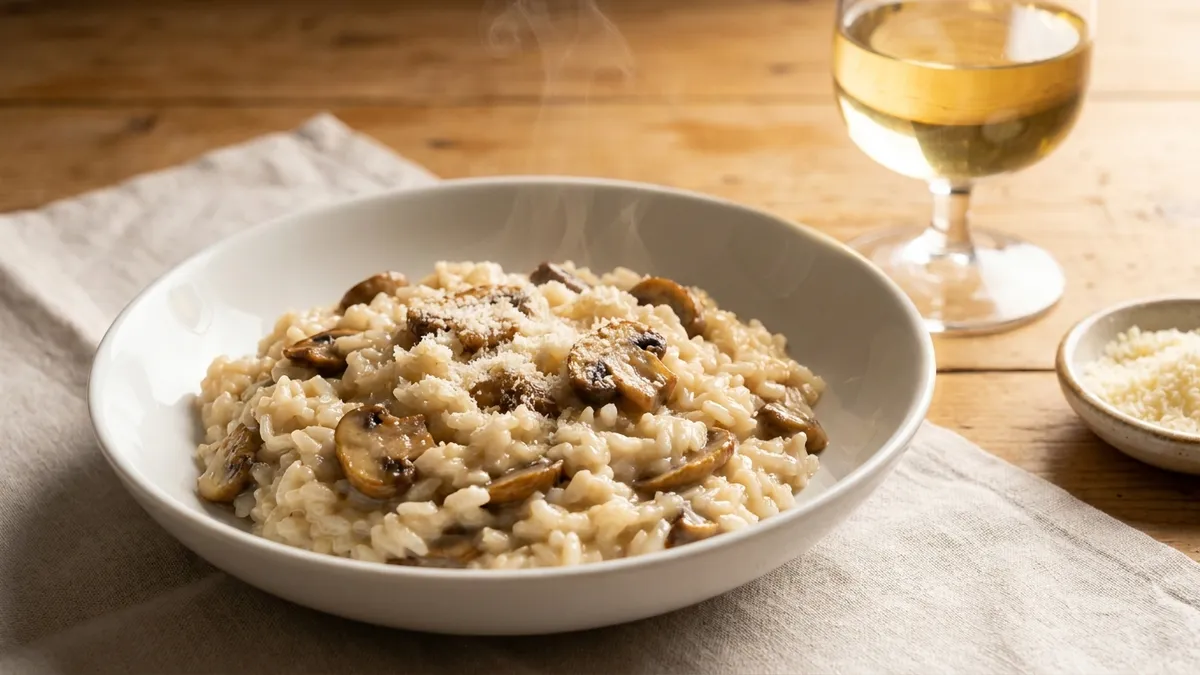
If the risotto is finished with butter and Parmesan and made with fresh cremini, pour Pinot Noir or Chardonnay. If it is built on soaked dried porcini and their dark soaking liquid, step up to an older Nebbiolo or Sangiovese, as in the porcini section below. A risotto finished with lemon zest and herbs leans white, so pick the Chardonnay.
Is Pinot Noir Good with Mushrooms?
Yes, Pinot Noir is the safest red with mushrooms. The grape has thin skins and low levels of the phenolic compounds that give red wine its tannin and colour, so it stays soft against umami instead of turning bitter. Its acidity is high enough to cut the butter and cheese in most mushroom dishes.
Its second advantage is smell. Pinot Noir from moderate climates is often described as smelling of strawberry, cherry and mushroom itself, and older bottles add damp leaves and a meaty edge. The earthy flavours in wine explainer shows how to pick out that mushroom smell in the glass.
If the label names a cool climate region (tarter, lighter wine) such as Burgundy or Oregon, expect a lighter, more savoury Pinot, the best fit for delicate sautéed mushrooms. If it comes from a warm region and tastes of cherry ripe to the point of jam, save it for grilled or stuffed mushrooms with more fat. The Pinot Noir guide maps the regions in detail.
What Wine Goes with Grilled Portobello Mushrooms?
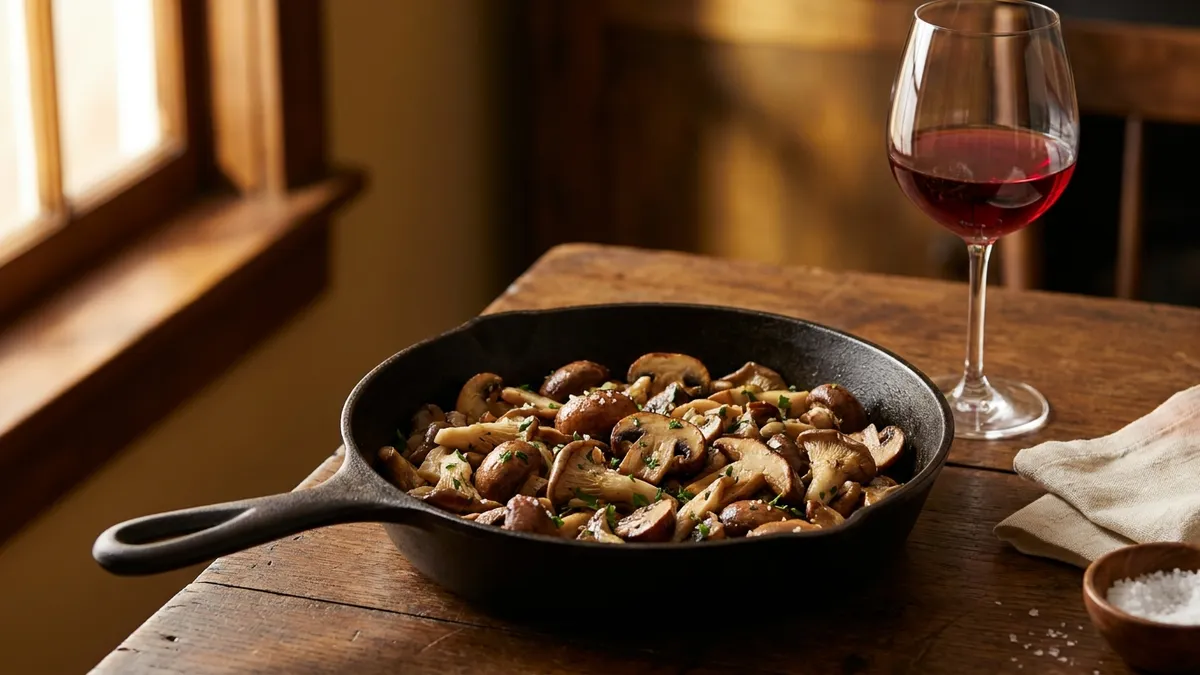
A grilled portobello can take a medium-bodied red with firmer tannin, such as Sangiovese or Barbera. Char, olive oil and salt give the cap enough fat and seasoning to soften tannin, which a plain sautéed button mushroom never has. A thick cap eaten like a steak can take a wine chosen like one.
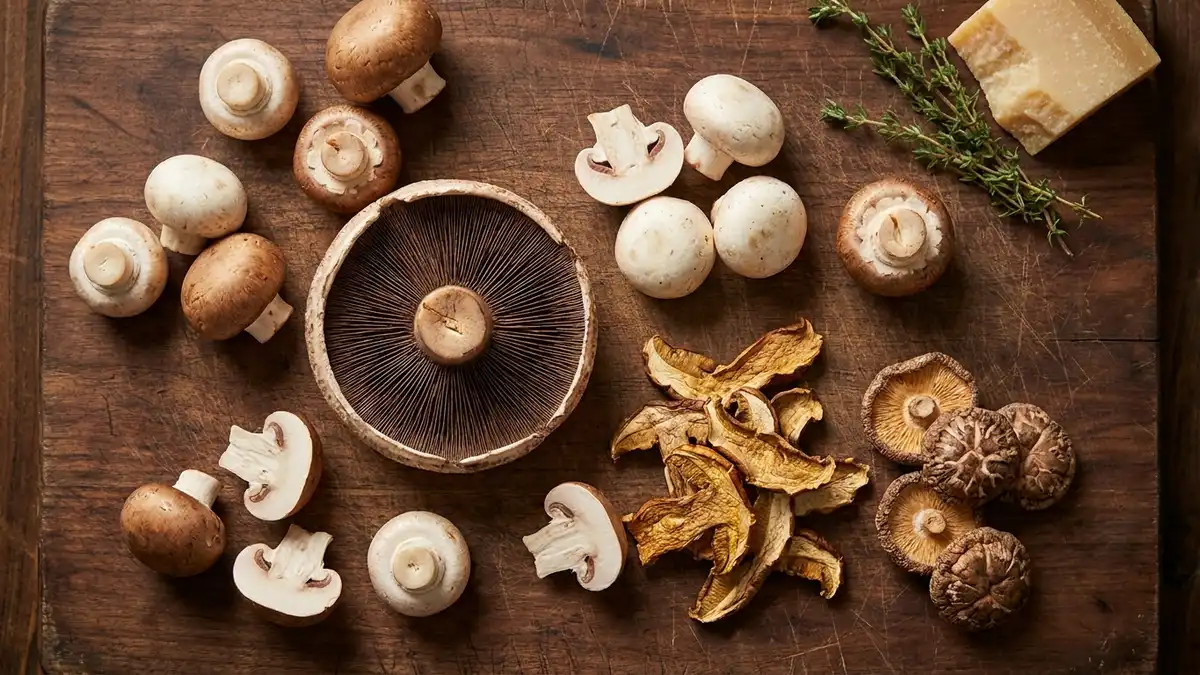
The portobello is the same species as the button mushroom. Agaricus bisporus is sold white and young as the button, brown and young as the cremini, and mature, with a cap 10 to 15 cm wide, as the portobello. Raw, the mushroom is about 92% water. A hot grill drives much of that out, which concentrates the flavour and browns the surface.
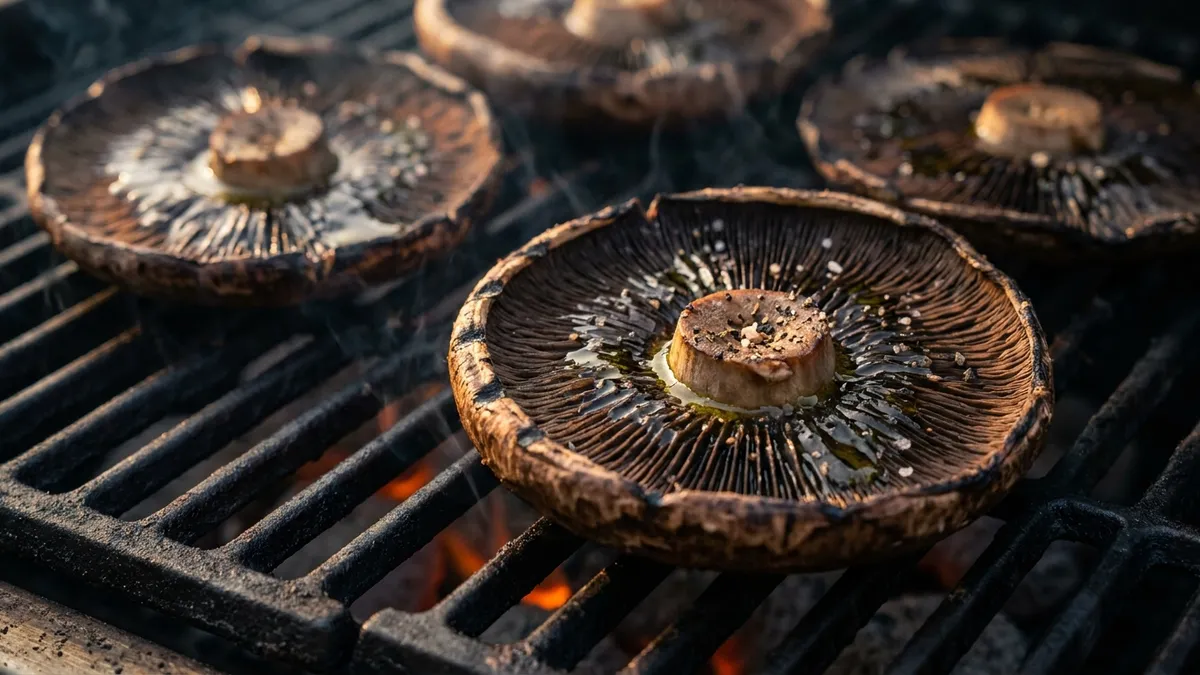
The old idea that big, tannic reds are the classic mushroom wine holds here, not in the risotto or the cream sauce. Match the body (weight in the mouth, like skimmed versus whole milk) to the meatiness of the cap. Sangiovese, the grape behind Chianti, brings high acidity and a savoury, herbal edge. Barbera brings high acidity with softer tannin.
If the portobello is charred, salted and eaten like a steak, pour the Sangiovese. If it is stuffed with melting cheese or served in a bun with mayonnaise, the fat takes over, and Pinot Noir or a full Chardonnay fits better.
Red or White with Creamy Mushroom Sauces and Soups?
Choose by the sauce: cream wants a white with body and enough acidity, and a red works only when the sauce is based on stock or wine. The colour rule of red for dark food breaks down here, since a brown mushroom in cream behaves like chicken in cream.
Oaked Chardonnay is the textbook choice for cream. Many full Chardonnays go through malolactic fermentation, a second fermentation that turns sharp malic acid into softer lactic acid and produces diacetyl, the compound that smells of butter. The wine ends up rounder and fuller. Barrel ageing in oak (barrels adding vanilla, toast or spice) adds weight too; see what "oaked" means.
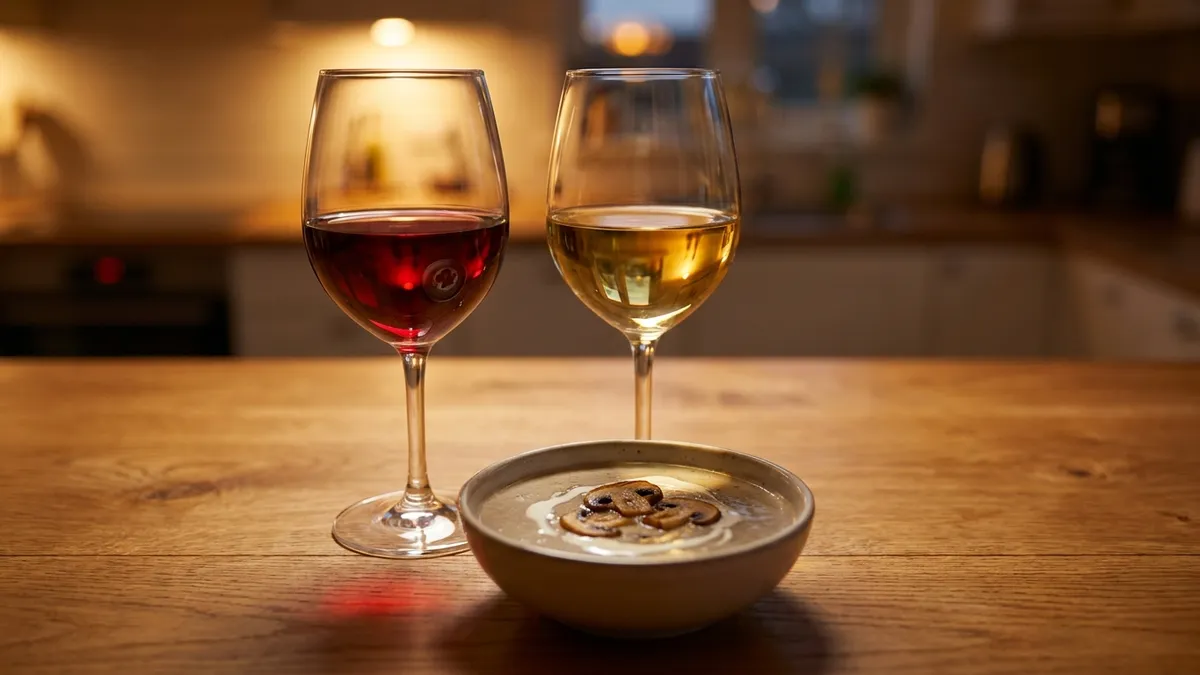
Too much butter in the glass can smother a delicate soup. Chablis, the northern Burgundy Chardonnay known for biting green-apple acidity, is the better pick for a thin, lemony mushroom soup. The rounder, buttery styles from further south in Burgundy suit a thick cream sauce over pasta or chicken.
If the sauce is cream and butter, pour a full Chardonnay. If it is thin and sharp with lemon, pour a Chablis-style white. If it is a dark sauce of stock and red wine, as in a mushroom ragù, pour a light red such as Pinot Noir or Gamay.
What Wine Goes with Porcini and Wild Mushrooms?
Dried porcini and wild mushrooms want an older, savoury red such as mature Nebbiolo, Sangiovese or Pinot Noir, or a dry Oloroso sherry. Their flavour is deeper and more concentrated than any cultivated button, so the wine needs more weight, with tannin already softened by age.
Porcini (Boletus edulis) owe their smell to around 100 aroma compounds. Raw, the most prominent is a compound called 1-octen-3-one; after drying, a family of roasty, nutty-smelling compounds called pyrazines increases. Porcini taste nutty and slightly meaty, with an aroma often compared to sourdough. Drying pushes them toward toast and meat, which is why a spoonful of soaked porcini darkens a stew.
Nebbiolo, the grape of Barolo and Barbaresco, smells of tar and roses and is highly tannic in youth. A young bottle is too harsh for a porcini risotto. With years of bottle age the tannin softens, and the wine sits comfortably beside porcini, braised beef and dried shiitake.
If the bottle is a young Nebbiolo, save it for a porcini stew with beef or lamb, where meat fat can take the tannin. If it is a mature bottle, it can go with the mushrooms alone.
What Wine Goes with Truffle?
Pair the dish under the truffle and keep the wine gentle: white truffle with mature Nebbiolo, black truffle with aged Pinot Noir or a full Chardonnay. Truffle is usually shaved raw as a finishing aroma over a buttery base, such as fresh pasta, eggs or risotto, and a heavily oaked or tannic wine would cover it.
The prized white truffle, Tuber magnatum, comes mainly from Piedmont around Alba, the same corner of Italy that grows Nebbiolo for Barolo and Barbaresco. The black Périgord truffle, Tuber melanosporum, is harvested in late autumn and winter. It suits the savoury, damp-leaf smell of older Pinot Noir from Burgundy.
If the truffle is white and shaved over buttered pasta, pour mature Nebbiolo. If it is black and folded into eggs or risotto, pour aged Pinot Noir, or Chardonnay when the dish is rich with cream.
Can Sherry Go with Mushrooms?
Yes, dry Amontillado and Oloroso are two of the best wines with mushrooms, and the least used. Both are fortified (spirit added, here to about 16 to 22% alcohol), dry, and full of the nutty, toasted flavours that browned and dried mushrooms share.
Amontillado is aged first under flor, a layer of yeast that floats on the wine and shields it from air, and then exposed to oxygen. The result is darker than Fino and lighter than Oloroso, at 16 to 22% alcohol. Oloroso is aged with oxygen for longer, reaching 17 to 22%, and tastes darker and richer. Any wine labelled sherry must come from the Jerez region of southern Spain, centred on the Sherry Triangle in Cádiz, covered in the Jerez region guide.
If the dish is mushroom soup, mushrooms on toast or a creamy mushroom tart, pour a small glass of lightly chilled Amontillado. If it is a dark stew of dried mushrooms, pour a dry Oloroso. Check the label for the word "dry", because sweetened Oloroso blends also exist and taste cloying next to savoury food; the sherry wine guide lists the styles.
Three Mistakes to Avoid with Mushrooms
The three common mistakes are too much tannin, too much oak, and too much weight for a light dish.
- A young, tannic red with a lean dish. A young Cabernet Sauvignon or Nebbiolo next to plain sautéed mushrooms tastes bitter and thin. Keep those wines for dishes with meat or char.
- A heavily oaked white with raw mushrooms. Oak barrels add their own tannin to wine, and toast and vanilla bury a raw button salad. Pick an unoaked white with high acidity.
- A heavy wine with a watery mushroom. Raw or lightly cooked button mushrooms are mild, and a full red or rich white covers them. A crisp Sauvignon Blanc or Chablis-style Chardonnay fits.
What to Pour Tonight
Cook one pan of mushrooms and taste two wines against it. Sauté sliced cremini in butter with a good pinch of salt, then open a Pinot Noir and a lightly oaked Chardonnay. Take a bite and sip the red, then take another bite and sip the white, and note which one keeps its fruit. For pairing beyond mushrooms, see the wine and food pairing guide, the food pairing hub and savoury, umami flavours in wine.
Sommy's bite-sized courses at sommy.wine, from Wine 101 to regional courses on Italy and France, teach the grapes on this list one at a time. Start tonight with the pan of cremini and the two glasses, and write down which wine you would pour again.
Sources
- Wikipedia: Umami (history, glutamate and guanylate, synergy)
- Wikipedia: Tannin (protein binding and astringency, oak tannin)
- Wikipedia: Agaricus bisporus (button, cremini and portobello; composition)
- Wikipedia: Boletus edulis (porcini aroma compounds and flavour)
- Wikipedia: Sherry (Amontillado and Oloroso styles, alcohol levels, origin)
- Consejo Regulador Jerez-Xérès-Sherry: Amontillado (16 to 22% vol, pairs with wild mushrooms)
Frequently Asked Questions
What wine goes best with mushroom risotto?
Pinot Noir is the most reliable red and a full, lightly oaked Chardonnay the most reliable white. Both have enough acidity to cut the butter and cheese without the heavy tannin that umami makes taste bitter. If the risotto is made with dried porcini and a dark stock, step up to an older Nebbiolo or Sangiovese, whose softened tannin can handle the deeper flavour.
Does red or white wine go with mushrooms?
Both work, and the sauce decides. Cream, butter and mild button mushrooms suit a white with body, such as Chardonnay. Stock, red-wine sauces, char and dried mushrooms suit a light or medium red, such as Pinot Noir or Sangiovese. The colour of the mushroom matters far less than the fat, salt and cooking method around it.
Why does red wine taste bitter with mushrooms?
Mushrooms are rich in umami, the savoury taste of broth, Parmesan and soy sauce. Tasters widely find that umami-heavy food makes tannic red wine taste harsher, more bitter and less fruity. Salt and fat soften that effect, which is why a well-seasoned, buttery mushroom dish is kinder to red wine than plain steamed mushrooms. Low-tannin reds avoid the problem.
Is Pinot Noir good with mushrooms?
Yes. Pinot Noir has thin skins and low levels of tannin-giving compounds, so it stays soft against umami, and its acidity cuts through butter and cheese. Pinot from moderate climates often smells of mushroom itself, which makes it an easy echo for risotto, sautéed wild mushrooms and truffle pasta. Choose a cool-climate bottle from Burgundy or Oregon for the most savoury style.
What wine goes with grilled portobello mushrooms?
A medium-bodied red with some grip, such as Sangiovese or Barbera. Grilling drives water out of the cap, concentrates its flavour and adds char, and olive oil and salt soften the effect of tannin. If the portobello is stuffed with cheese or served as a burger with melted cheese, Pinot Noir or a full Chardonnay handles the extra fat better.
What wine goes with mushroom soup?
Creamy mushroom soup suits a white with body and enough acidity, such as Chardonnay from a cooler region. A dry Amontillado sherry, served in a small glass, is the classic alternative, because its nutty, oxidative flavour echoes browned mushrooms. A clear, stock-based mushroom broth can take a light Pinot Noir instead, as long as the wine is low in tannin.
What wine goes with truffle pasta?
Pair the pasta and let the truffle sit on top. Fresh white truffle, a speciality of Piedmont, is traditionally matched with mature Nebbiolo from the same region. Black truffle over buttery pasta or eggs works with aged Pinot Noir or a full Chardonnay. Keep the wine gentle, because truffle aroma is delicate and a heavily oaked or tannic wine covers it.
Sommy Team
LinkedInFounder & Wine Educator
The Sommy Team is building the world's most approachable wine education app, helping beginners develop real tasting skills through structured courses and AI-guided practice.