Wine with Truffles: How to Match White and Black Truffle

By the Sommy Team — AI-assisted, human-edited.
Updated Sep 25, 2026
Contents (11)
- What Wine Goes with Truffles?
- Wine with Truffles, in One Paragraph
- White Truffle or Black Truffle: Does It Change the Wine?
- What Wine Goes with White Truffle?
- What Wine Goes with Black Truffle?
- Does Champagne Go with Truffles?
- Does the Dish Matter More Than the Truffle?
- What Wine Goes with Truffle Oil?
- What Are the Most Common Truffle Pairing Mistakes?
- When Are Truffles in Season, and Why Does It Matter for the Wine?
- How Do You Set Up a Truffle Dinner Tonight?
TL;DR
Pick wine with truffles by type. Shaved raw white truffle suits aged Barolo or Barbaresco, pure Nebbiolo from the same Alba hills, which smells of truffle itself. Black truffle is cooked into winter dishes, so the butter, cream or meat decides: aged Pinot Noir, full Chardonnay or older Nebbiolo. Older Champagne suits truffled eggs.
What Wine Goes with Truffles?
Aged Nebbiolo is the classic wine with truffles when the truffle is white and shaved raw, because old Barolo and Barbaresco smell of truffle themselves. Black truffle is different. It is cooked into the dish, so the butter, cream or meat underneath it picks the wine.
Wine with Truffles, in One Paragraph
Truffles come in two main kinds, and each wants a different glass. White truffle (Tuber magnatum) is shaved raw over buttered pasta, risotto or eggs in autumn. Pour a Barolo or Barbaresco with several years of age: both are 100% Nebbiolo from the hills around Alba, and aged Nebbiolo develops a truffle smell of its own. Black winter truffle (Tuber melanosporum) is harvested from November to March and usually cooked into the sauce. Choose for that sauce: aged Pinot Noir for risotto, full Chardonnay for cream, older Nebbiolo for red meat. Older Champagne suits truffled eggs. Truffle oil is usually synthetic, so pair the dish and keep the wine light.
White Truffle or Black Truffle: Does It Change the Wine?
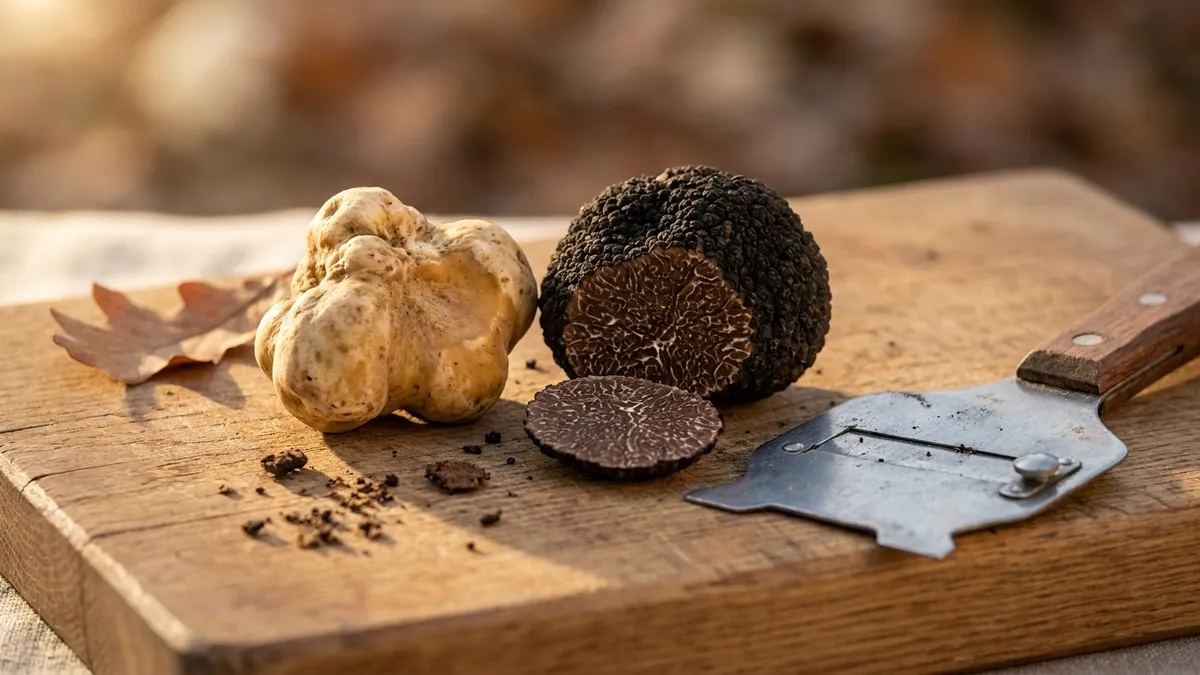
Yes. Truffle is two different ingredients, not one flavour. White truffle is served raw and its smell is sharp, garlicky and gassy. Black truffle is cooked and smells of damp soil, dried fruit and a little cocoa. The first wants a wine that echoes it; the second wants a wine that suits the dish around it.
The chemistry explains the split. Every truffle species carries sulfur compounds such as dimethyl sulfide, the compound that draws truffle dogs to the spot. White truffle leans hard on one of them, 2,4-dithiapentane, which gives its garlic-and-gas punch. Black truffle adds other compounds, such as 3-methylbutyraldehyde and isoamyl alcohol, which help give it a rounder, earthier smell.
| Truffle | Season | How it is served | Smells of | Pour this |
|---|---|---|---|---|
| White (Tuber magnatum) | Autumn, peak October to November | Shaved raw over the finished plate | Sharp garlic and sulfur | Barolo or Barbaresco with 8+ years of age; older Champagne with eggs |
| Black winter (Tuber melanosporum) | Harvested November to March | Sliced or grated into the dish, often cooked | Wet earth, undergrowth, dried fruit, cocoa | Aged Pinot Noir, full Chardonnay, or older Nebbiolo with red meat |
| Truffle oil or truffle salt | All year | Drizzled or sprinkled at the end | One loud garlicky, gassy note | Light Pinot Noir or unoaked white; save the Barolo |
What Wine Goes with White Truffle?
Aged Barolo or Barbaresco, both pure Nebbiolo from the hills around Alba, the same Piedmont towns most famous for white truffles. The white truffle grows mainly in the Langhe and Montferrat areas of northern Italy, so this match is also a local habit.
The deeper reason is smell. Young Nebbiolo smells of tar and roses. With age it gains violets, wild herbs, cherries, tobacco, prunes and, in the standard tasting vocabulary for the grape, truffles. Those are tertiary aromas, the smells a wine develops from years in barrel and bottle. The wine and the plate meet on the same damp, earthy note, so the truffle smell grows stronger.
Age also fixes the one problem with Nebbiolo. It has high tannin (the drying grip on your gums) and high acidity when young. Barolo must age at least 38 months from 1 November of the harvest year, 18 of them in wood, and a Riserva waits 62 months. Even then, the tannin needs more years in bottle to soften around a plate of plain buttered pasta.
If the truffle is white and shaved over buttered pasta or eggs, pour a Barolo or Barbaresco at least eight to ten years old. If only a young one is on hand, pour it into a jug an hour ahead and serve it with the richest dish of the night. The Nebbiolo wine guide explains the grape in more depth, and the Piedmont wine guide maps Barolo, Barbaresco and the lighter reds around them.
What Wine Goes with Black Truffle?
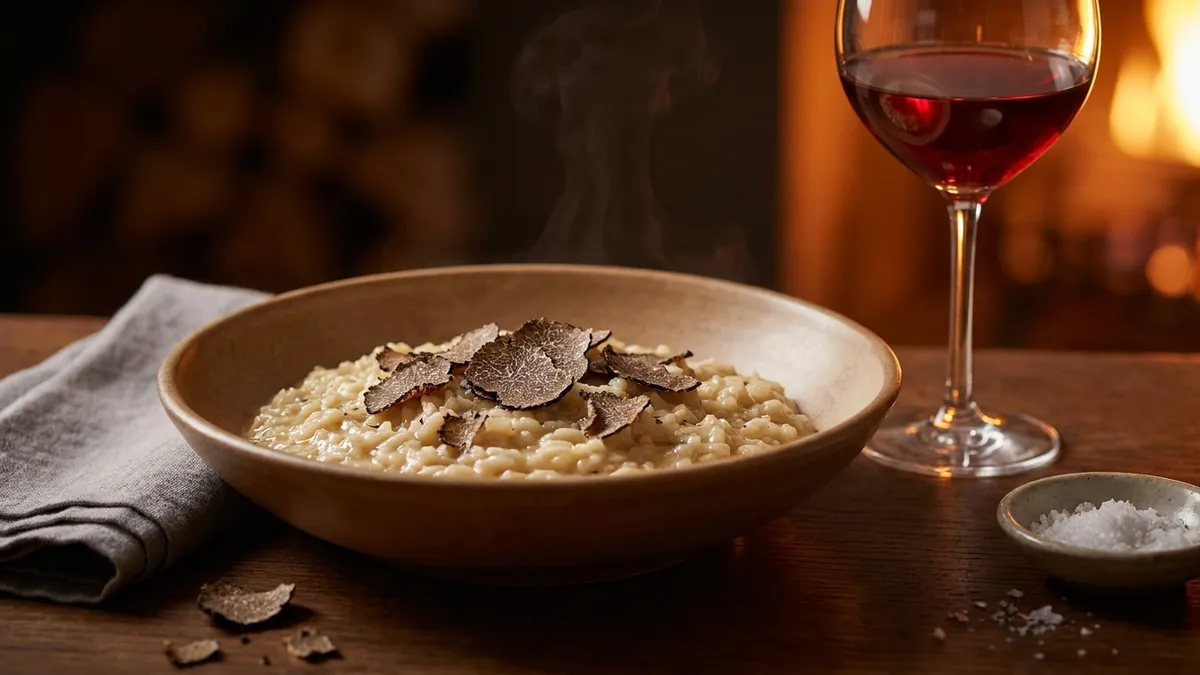
Pick for the dish first, then choose an older, savoury wine, because cooking spreads black truffle through the sauce. Black truffle smells of undergrowth, wet earth and dried fruit with a touch of cocoa. That rounder profile goes with more wine styles than white truffle does, as long as the wine is not young and oaky.
Three rules cover most plates:
- Butter, mushrooms or risotto: aged Pinot Noir. Its low tannin stays soft against the rice and cheese, and older Pinot smells of damp leaves and mushroom, the same register as the truffle.
- Cream sauces, chicken or potatoes: full Chardonnay with only light oak. Its body (weight: skimmed versus whole milk) matches the cream, and its acidity keeps it from tasting heavy.
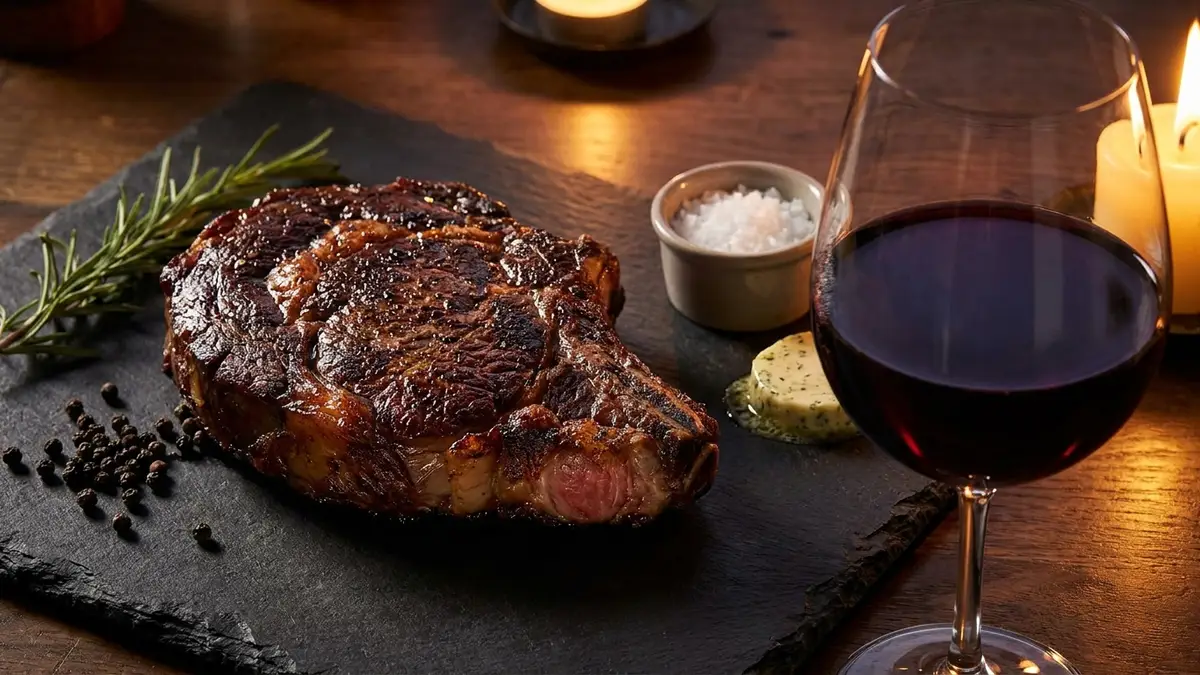
- Beef, game or a truffle sauce on steak: older Nebbiolo or another aged red with firm tannin, because the meat protein softens the grip.
If black truffle is folded into something rich and pale, reach for the aged Pinot Noir or the Chardonnay. If it sits on red meat, move up to aged Nebbiolo. The pinot noir guide and the Chardonnay wine guide show which regions make the savoury, lightly oaked styles.
Does Champagne Go with Truffles?
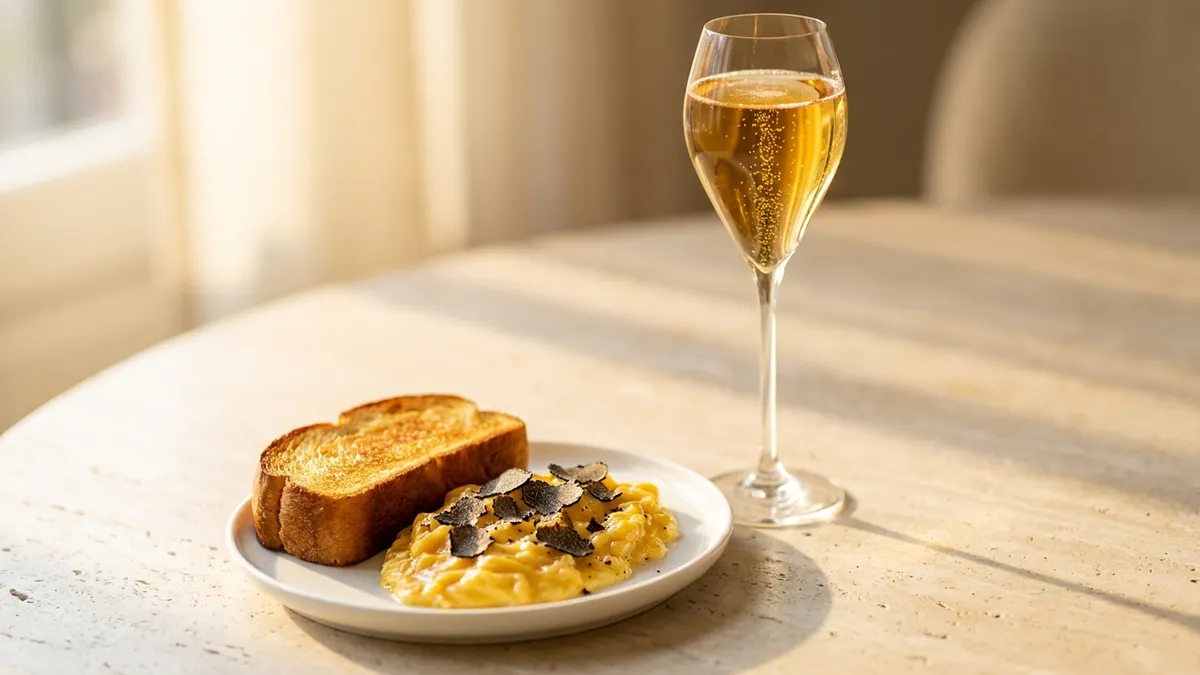
Yes, when it is an older bottle or one aged a long time on its lees (spent yeast, which gives bread and toasted-nut smells). Its bubbles and high acidity (the tartness that makes your mouth water) cut through butter and egg yolk. That makes Champagne the strongest choice for truffled scrambled eggs, cheese fondue or a truffle starter.
Two label words point to the right style. A blanc de noirs is made from black grapes, mainly Pinot Noir and Pinot Meunier, so it has more weight and a faint red-berry depth. That weight suits black truffle and cooked dishes. A vintage Champagne, from a single harvest year, has spent longer ageing before release, so it usually shows more toast and nut.
Young, very light sparkling wines are a weaker fit. Their green-apple freshness and fast bubbles run over a truffle's slow, earthy smell. If the dish is eggs, fondue or a buttery starter, pour an older Champagne or a blanc de noirs; if it is red meat, switch to aged Nebbiolo. The Champagne region guide explains how the grapes and ageing rules shape each style.
Does the Dish Matter More Than the Truffle?
Usually yes: the fat, protein and cheese under the truffle decide how much tannin and acidity the wine needs. The truffle sets the aroma, but the plate sets the structure. Tannin binds to food protein and feels softer beside meat. With nothing to grip, the same wine tastes drier and harsher against plain rice or pasta.
Match the base first:
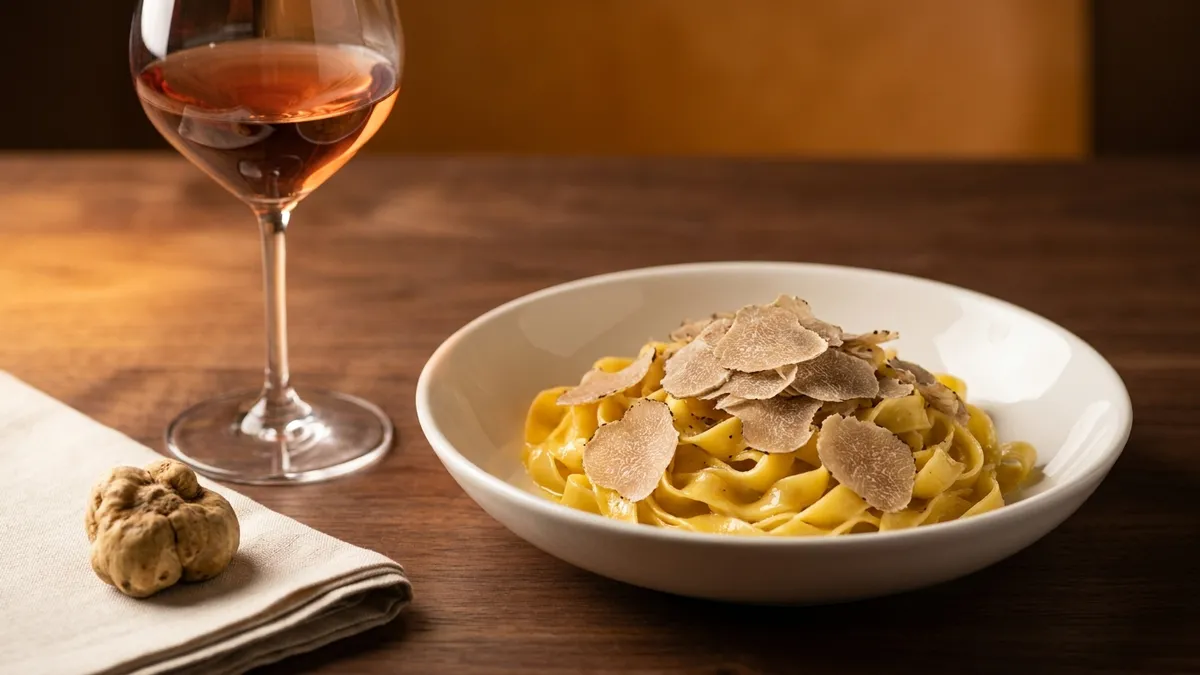
- Tajarin or fresh egg pasta with butter: aged Barbaresco or Barolo. The butter and egg yolk give the tannin something to soften against.
- Risotto with Parmesan: aged Pinot Noir or older Nebbiolo. The cheese adds salt and savouriness, so avoid anything sharp or very young.
- Scrambled or fried eggs: older Champagne. Egg coats the mouth, and bubbles clear it.
- Steak or roast beef with truffle butter: aged Nebbiolo or another mature, firm red, since the protein handles the tannin.
- Potato purée or gratin: full, lightly oaked Chardonnay, because cream and starch want body over grip.
If the dish is lean, keep the tannin low; if it is fatty and meaty, a firmer red works. The wine with pasta guide and wine with steak guide cover those bases without truffle. How food changes wine taste explains why protein and salt change a wine so much.
What Wine Goes with Truffle Oil?
Pair the dish and choose a lighter, fresher wine, because most truffle oil is flavoured with a lab-made aroma compound rather than truffle. That compound is synthetic 2,4-dithiapentane, the same molecule behind white truffle's garlicky punch. A real truffle carries it alongside many other sulfur and earthy compounds; the oil carries it alone.
The result is one loud note that sits on top of everything. An expensive aged Barolo gets flattened by it, and the money is wasted. A light Pinot Noir, a Barbera or an unoaked white with good acidity holds up better, because it cuts the oil and brings its own fruit.
If the menu says truffle oil, truffle salt or "truffle aroma", pour a lighter red or a crisp white. Save aged Nebbiolo for fresh truffle. Truffle fries and truffle pizza follow the same rule: pick for the fried potato or the cheese first.
What Are the Most Common Truffle Pairing Mistakes?
The big four are young tannic reds with no protein, heavy oak, treating truffle oil like fresh truffle, and sweet or spicy sides. Each one covers the truffle's aroma or makes the wine taste harsh. Fresh truffle smell also fades fast once shaved, so there is little time to fix a bad pour.
- A young, tannic red with plain pasta: without protein to bind to, tannin feels more drying. See what tannins are for why.
- Heavy oak: new barrels add vanilla, toast and coconut smells, which sit right on top of truffle and hide it.
- Truffle oil treated like fresh truffle: covered above; save the aged bottle.
- Sweet or spicy sides: sweetness and chilli heat make tannin taste more bitter, so keep glazes and chilli off a truffle plate.
- Serving the red too warm: in a warm room the alcohol smell rises and competes with the truffle. The wine serving temperature chart has the ranges.
If a pairing tastes harsh, take a bite of buttered pasta or cheese, then sip again before blaming the wine.
When Are Truffles in Season, and Why Does It Matter for the Wine?
White truffle is an autumn ingredient and black truffle a winter one, which is why autumn truffle menus lean on Nebbiolo. White truffle fruits in autumn, and the Alba market is busiest in October and November. The Alba International White Truffle Fair's 96th edition runs from 10 October to 6 December 2026.
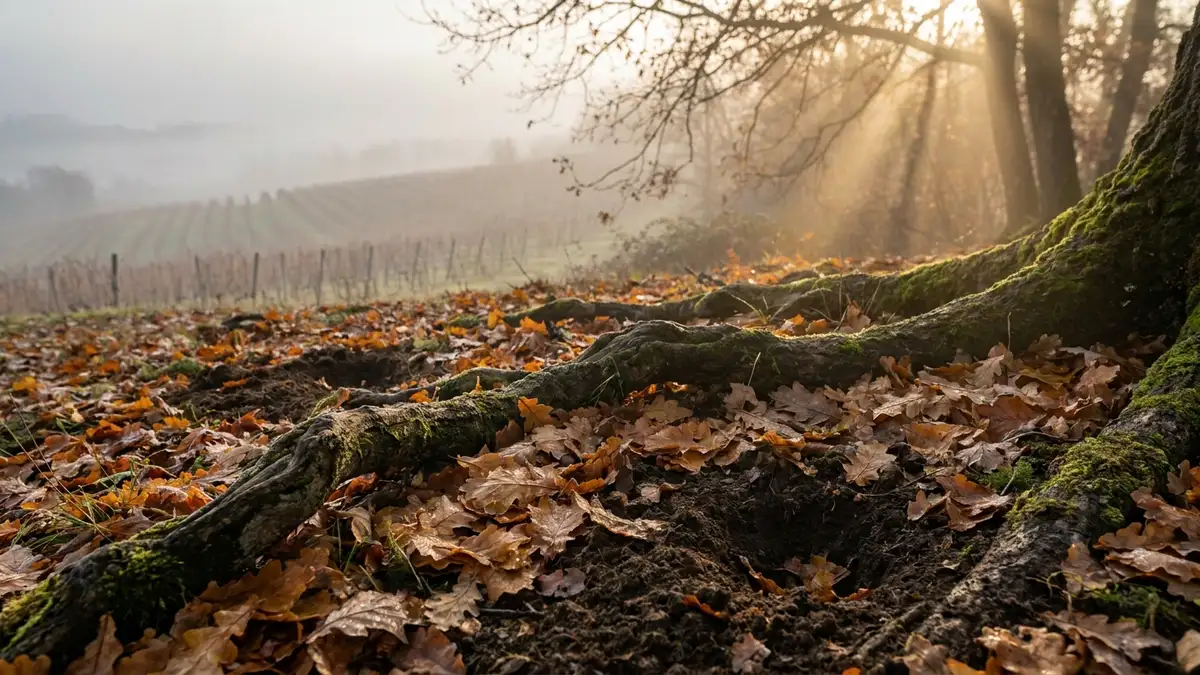
That timing lines up with Piedmont's wine calendar. Nebbiolo is picked in October, so white-truffle season is when local restaurants open their aged Barolo and Barbaresco. Black truffle is harvested from November to March, which puts it on winter menus: risotto, eggs, roast meat.
Price explains why the wine choice feels high-stakes. In December 2007 a 1.5 kg white truffle sold at auction for $330,000. Black truffle is cheaper but not cheap: in 2013 it cost 1,000 to 2,000 euros per kilogram. French production fell from about 1,000 tonnes in 1937 to around 20 tonnes a year in recent decades. With a few grams on a plate, a well-chosen mid-priced aged red is a better use of money than an expensive young one.
For a wider view of how earthy smells show up in wine, see earthy flavors in wine and wine with mushrooms, which covers porcini and other fungi. The general rules sit in the wine and food pairing guide and the food pairing hub.
How Do You Set Up a Truffle Dinner Tonight?
Pick one truffle, one plain buttery base and two glasses to compare. Fresh egg pasta tossed in butter is the best test plate, because it adds fat without competing aromas. Grate or shave the truffle at the table so none of the smell is lost before it reaches the plate.
Pour two glasses: an aged Barolo or Barbaresco, and an older Champagne or blanc de noirs. Smell the truffle, smell each wine, then taste each with a forkful of pasta. Notice which one makes the truffle smell stronger and which one cleans your mouth between bites.
Sommy's AI-guided tasting mode can walk you through look, smell and taste for each glass after you photograph the label, and save both notes in your tasting journal. The app at sommy.wine also has a regional course on Italy. Pour both glasses tonight, taste them beside the truffled pasta, and write down which one made the truffle smell louder.
Sources
- Wikipedia: Tuber magnatum (white truffle season, regions, Alba market, prices)
- Wikipedia: Tuber melanosporum (black truffle harvest, aroma, prices, French production)
- Wikipedia: Truffle (aroma compounds and truffle oil)
- Wikipedia: Barolo (Nebbiolo, ageing rules, tannin and food)
- Fiera Internazionale del Tartufo Bianco d'Alba (official site)
Frequently Asked Questions
What wine goes best with truffles?
Aged Nebbiolo, meaning Barolo or Barbaresco with several years in bottle, is the classic match for fresh white truffle. Aged Nebbiolo develops a smell of truffle, tar and dried cherry, so the wine echoes the ingredient. For black truffle cooked into a dish, choose for the dish: aged Pinot Noir with mushrooms and risotto, full Chardonnay with cream, older Nebbiolo with red meat.
Does Champagne go with truffles?
Yes, especially an older Champagne or one aged a long time on its lees, the spent yeast that gives bread and toasted-nut smells. Its high acidity cuts through the butter and egg yolk in classic truffle dishes such as scrambled eggs, fondue or buttered pasta. A blanc de noirs, made from black grapes, has the extra weight to stand up to black truffle.
Can you drink red wine with white truffle?
Yes. The traditional red with white truffle is aged Nebbiolo from Piedmont, the region most famous for white truffles. Choose a bottle with some age so the tannin has softened and the truffle-like aroma has developed. Avoid young, heavily oaked reds: their grip and vanilla cover the delicate white truffle aroma, which disappears quickly once shaved.
What wine goes with truffle pasta?
Match the sauce first. Fresh egg pasta with butter and shaved white truffle suits aged Barolo or Barbaresco. A creamy black-truffle pasta suits a full Chardonnay or aged Pinot Noir. If the pasta is dressed with truffle oil rather than fresh truffle, pour a lighter, fresher wine, because the synthetic aroma in most truffle oil is loud and one-note.
What wine goes with truffle oil?
Pair the dish, not the oil. Most commercial truffle oil is flavoured with a synthetic compound, 2,4-dithiapentane, rather than real truffle. It gives one strong garlicky, gassy note with none of the depth of a fresh truffle. A light red such as Pinot Noir or an unoaked white works better than an expensive aged Barolo, whose layered aromas the oil will flatten.
When is truffle season?
White truffle season runs through autumn, and the Alba market in Piedmont is busiest in October and November. Black winter truffle is harvested from November to March. That calendar is why white truffle dinners lean on Nebbiolo and autumn menus, while black truffle turns up in winter dishes like risotto, eggs and roast meats.
Sommy Team
LinkedInFounder & Wine Educator
The Sommy Team is building the world's most approachable wine education app, helping beginners develop real tasting skills through structured courses and AI-guided practice.