Wine with Risotto: Matching the Flavor, Not Just the Rice

By the Sommy Team — AI-assisted, human-edited.
Updated Oct 1, 2026
Contents (12)
- What Wine Goes with Risotto?
- Which Wine Fits Which Risotto?
- Should Risotto Get White or Red Wine?
- What Wine Goes with Mushroom or Truffle Risotto?
- What Wine Goes with Seafood or Spring Vegetable Risotto?
- What Wine Goes with Risotto alla Milanese?
- What Wine Goes with Sausage, Radicchio or Red-Wine Risotto?
- Can Sparkling Wine Work with Risotto?
- Why Does Parmesan Change the Pairing?
- Does the Type of Rice Change the Wine?
- Which Wine Should You Cook Risotto With?
- Where Do the Classic Risotto Wines Come From?
TL;DR
Risotto is rice, butter and Parmesan underneath, so the wine follows the add-in. A dry Italian white with high acidity, such as Gavi, Soave or Roero Arneis, suits seafood and spring vegetables. Mushroom and truffle risotto take Pinot Noir. Sausage and red-wine risotto take Barbera. Avoid tannic reds against the cheese.
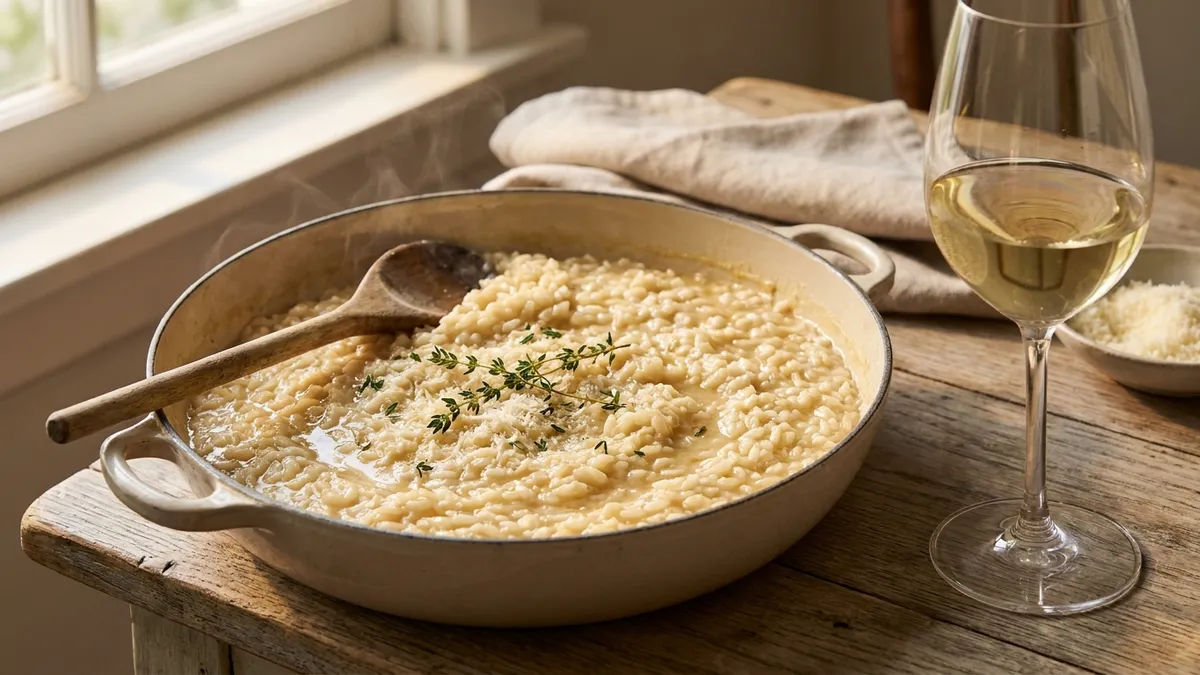
The wine with risotto that works is chosen for what you stirred into the pan. Underneath almost every risotto sits the same base: starchy rice, stock, then butter and Parmesan beaten in at the end. That base is rich, salty and savoury, so the wine needs fresh acidity and very little grip. The add-in then decides the colour.
What Wine Goes with Risotto?
The best wine with risotto is a dry white with good acidity (the tartness that makes your mouth water), such as Gavi, Soave or Roero Arneis. Its acidity cuts the butter and cheese stirred in at the end. Food writer Fiona Beckett makes the same call: the other ingredients set the pairing, and the rice does not. Low tannin (the drying grip on your gums) matters as much, because the savoury cheese finish makes tannic reds taste harsh. Mushroom, truffle, sausage and red-wine risottos can take a light red such as Pinot Noir or Barbera.
Which Wine Fits Which Risotto?
Find the main add-in in the left column and pour from the "Pour this" column; the rice, butter and cheese are much the same in every row. If the add-in is green or from the sea, pour white; if it is brown or red, pour a light red.
| Risotto | What dominates | Pour this | Avoid |
|---|---|---|---|
| Seafood (prawns, clams, squid) | Salt, sweetness of shellfish, butter | Gavi, Soave, Roero Arneis, dry prosecco | Oaked whites, tannic reds |
| Spring vegetable (peas, asparagus, lemon) | Green, grassy, sour notes | Gavi or Roero Arneis | Ripe, oaky Chardonnay |
| Mushroom | Umami from mushrooms and cheese | Pinot Noir or lightly oaked Chardonnay | Young Cabernet Sauvignon or Nebbiolo |
| Truffle | Aroma over a buttery base | Aged Pinot Noir or aged Nebbiolo | Heavy oak, young tannin |
| Alla milanese (saffron, marrow) | Butter, saffron, beef marrow | Lightly oaked Chardonnay or a fuller Soave | Light, neutral whites |
| Sausage or radicchio | Fat, salt, bitterness | Barbera or Dolcetto | High-tannin reds |
| Cooked with red wine | Fruit and acidity from the wine | The same light red, often Barbera | Big, oaky reds |
Should Risotto Get White or Red Wine?
White by default, red when the risotto is built on mushrooms, sausage, radicchio or red wine. Beckett's rule is that risotto generally suits white better than red, and the reason is structure: most risottos are delicate in flavour but rich in texture, and crisp whites have the acidity without any tannin.
The myth is that risotto always means white wine. A risotto of porcini and dark stock, or one cooked with a glass of red, has more flavour than most whites can carry. There the red is right, as long as it stays light in body (weight in the mouth, like skimmed versus whole milk) and low in tannin. If you can see red wine, sausage or radicchio in the pan, pick a red with soft tannin and fresh acidity, around 13% alcohol. Pinot Noir and Barbera both fit.
What Wine Goes with Mushroom or Truffle Risotto?
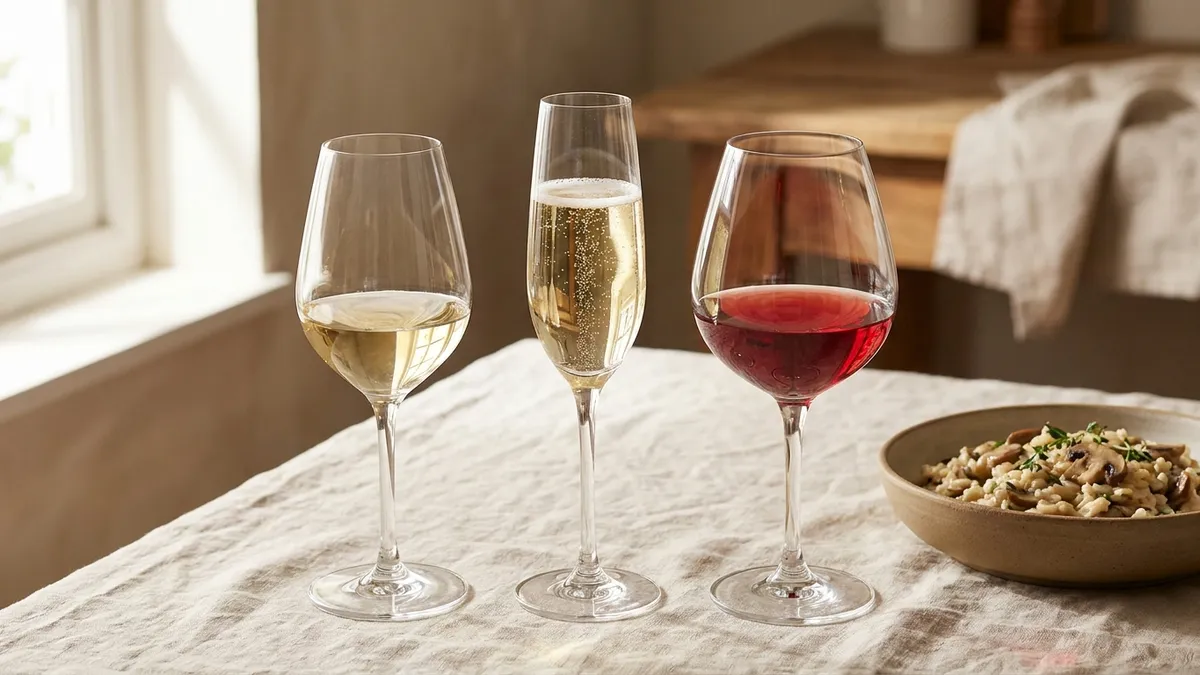
Pour Pinot Noir or a lightly oaked Chardonnay with mushroom risotto, and keep the same pair for truffle. Mushrooms, especially dried ones, bring guanylate and Parmesan brings glutamate, and together they taste more savoury than either alone. Both wines have acidity for the butter and too little tannin to turn bitter.
That boost is why a tannic red that seems fine beside mushrooms on toast turns bitter against the risotto. The full breakdown by mushroom and sauce is in wine with mushrooms.
Pinot Noir has thin skins and little tannin, and cool-climate Pinot often smells of mushroom and damp leaves itself. A Chardonnay with a light touch of oak adds a buttery roundness that matches the finish of the dish.
If the risotto is built on dried porcini and their dark soaking liquid, step up to an older Nebbiolo. Nebbiolo, the 100% grape of Barolo, has high tannin and acidity when young, but years in bottle soften the grip. With fresh button or cremini mushrooms, stay with Pinot Noir. Truffle works the same way: pair the buttery base underneath and keep the wine gentle, as set out in wine with truffles.
What Wine Goes with Seafood or Spring Vegetable Risotto?
Pour an unoaked Italian white with high acidity: Gavi, Soave or Roero Arneis. Their acidity lifts shellfish and green vegetables, and their light fruit leaves delicate prawns alone. Beckett names exactly these three, plus a dryish prosecco, for light spring vegetable and seafood risottos. Each comes from northern Italy and shows a different grape:
- Gavi is made from the Cortese grape in the province of Alessandria, in Piedmont. It tastes of lemon and green apple, with sharp acidity.
- Soave must be at least 70% Garganega, grown east of Verona. It is rounder, with pear, almond and a little more body. Our Garganega guide covers its range.
- Roero Arneis is made from Arneis, in the Roero hills across the river from Alba. It smells of pear and white flowers.
If the risotto carries lemon zest, asparagus or peas, pick Gavi or Arneis: their sharper acidity meets the green, sour notes. If it holds prawns and plenty of butter, pick Soave for its extra body. Oaked whites flatten delicate shellfish, and tannic reds can taste metallic beside it. More shellfish matches are in wine with seafood.
What Wine Goes with Risotto alla Milanese?
Pour a rounder white, such as a lightly oaked Chardonnay or a fuller Soave, because saffron, butter and beef marrow make this the richest classic risotto. A light, neutral white tastes thin beside it. Oak (barrels that add vanilla, toast or spice) is welcome here in small doses, since its creamy texture echoes the butter.
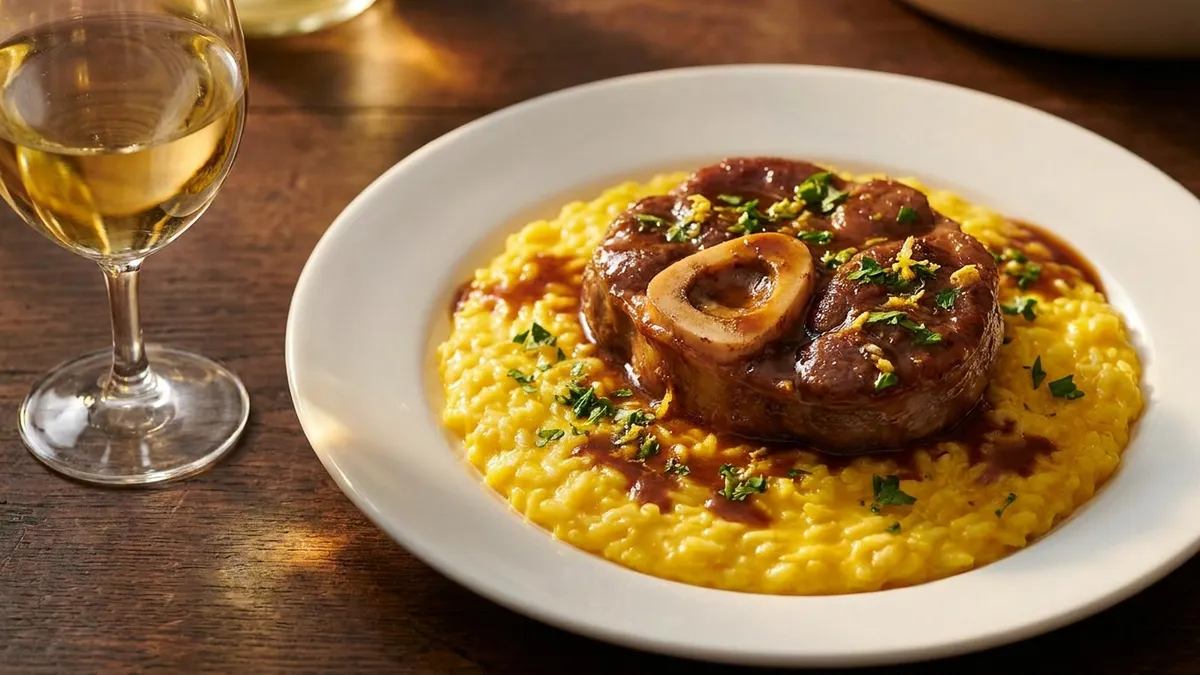
In Milan this risotto is often served with ossobuco, braised veal shank, as one course. If the ossobuco comes on the same plate, switch to a light red such as Barbera. Its high acidity and low tannin handle the braised meat and still cut the buttery rice.
What Wine Goes with Sausage, Radicchio or Red-Wine Risotto?
Pour a low-tannin, high-acid red such as Barbera, or a fruity Dolcetto. Sausage adds fat and salt, and radicchio adds bitterness. Tannin stacks on top of that bitterness and the cheese's savouriness, so the safest reds have little and plenty of acidity to cut the fat.
Barbera has bright acidity and soft tannin, and smells of sour cherry. Dolcetto is rounder, with lower acidity, a little more grip, dark plum and a slightly bitter almond finish. If the risotto is cooked with red wine, pour the same light red at the table; the dish already carries its fruit and acidity. If radicchio dominates, a sparkling red such as Lambrusco also works, because its bubbles and acidity cut both the fat and the bitter leaf.
Can Sparkling Wine Work with Risotto?
Yes. A dry sparkling wine cuts butter and cheese with acidity and bubbles, the same job a crisp white does. Beckett lists a dryish prosecco for light risottos. Its green apple and pear flavours suit asparagus, peas and seafood, and its low alcohol keeps it light.
For richer risotto, choose a traditional-method wine, where the second fermentation happens in the bottle. Franciacorta, from Lombardy, is the local example: the non-vintage wine must age at least 25 months after harvest, 18 of them on its lees (spent yeast that gives bread and brioche notes). That bready depth stands up to mushroom or saffron risotto. If the risotto is light, pour prosecco; if it is rich with cheese, pour Franciacorta. The styles are compared in Champagne vs prosecco vs cava.
Why Does Parmesan Change the Pairing?
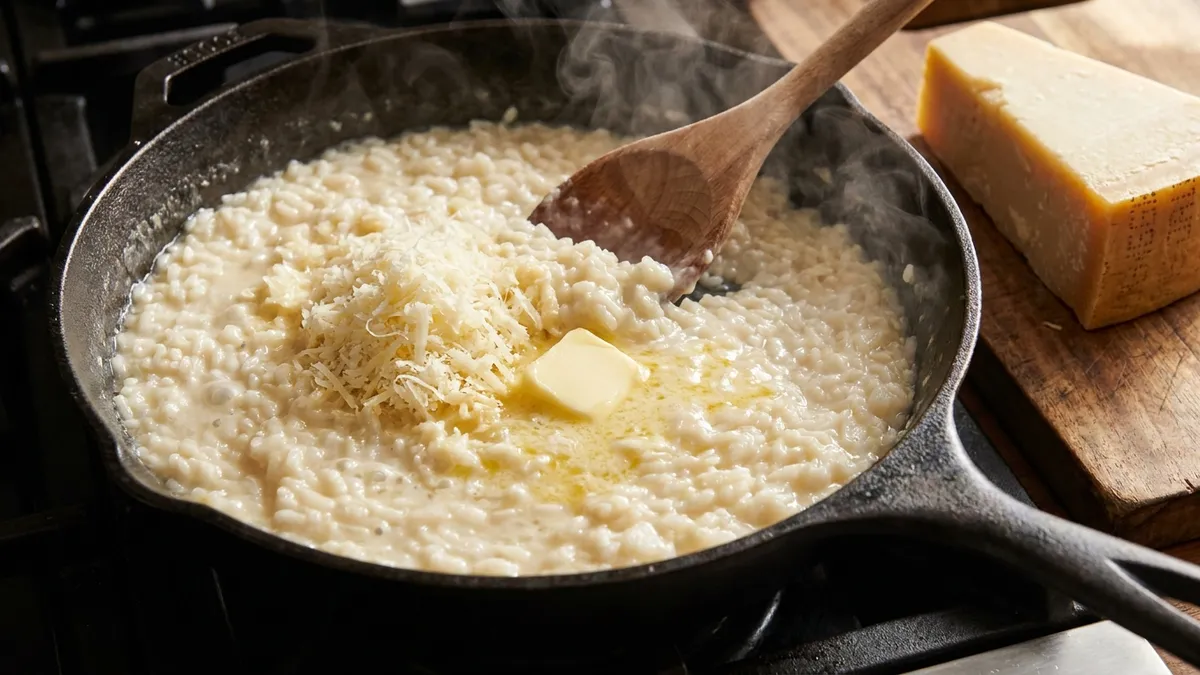
Parmesan adds fat, salt and a large dose of glutamate, which makes the dish savoury and makes tannin taste harsher. Most risottos end with the mantecatura: cold butter and grated Parmesan beaten into the rice off the heat. Before that, constant stirring rubs the grains together and releases starch, which turns the broth creamy.
Parmigiano Reggiano can contain as much as 1.2 grams of glutamate per 100 grams. Glutamate is the main source of umami (the savoury taste of broth and aged cheese). Tasters widely find that umami makes tannic reds taste more bitter and less fruity, and our guide to savoury and umami flavours in wine goes further into why.
Fat and protein work the other way: tannins bind to proteins and come across as softer. Risotto has plenty of fat but little protein unless meat is added, so tasters usually find the cheese sharpens tannin more than it softens it. Acidity does the useful work instead, cutting the fat and resetting the palate between forkfuls. More on grip itself is in what are tannins.
Does the Type of Rice Change the Wine?
No. Arborio, Carnaroli and Vialone Nano change the texture, not the flavour the wine meets. The grains differ in their starches, which decide how creamy or firm the dish ends up. Butter, cheese and the add-in set the taste, so pick from the table above whatever rice is in the pack.
Arborio, named after a town in Piedmont, has more amylopectin, the starch that makes a looser, creamier risotto. Carnaroli keeps its shape better. Vialone Nano, grown south of Verona, is high in amylose and absorbs a lot of liquid, which suits the soupy Venetian style. A creamier, looser risotto feels richer, so if you cook with Arborio and plenty of butter, lean toward the fuller whites in the table.
Which Wine Should You Cook Risotto With?
Cook with a dry, unoaked white you would drink, and pour the same style or a better bottle of it at the table. The wine goes in right after the rice is toasted and must be absorbed by the grains before the stock is added. It cooks down to acidity and aroma; only a small glass goes in.
If the bottle is sweet or heavily oaked, keep it out of the pan. Cooking concentrates sugar and turns oak flavours bitter in the rice. Use the rest of a bottle opened for dinner, or a cheaper dry Soave or Pinot Grigio. A red-wine risotto follows the same rule: a light red you would drink, never a big, tannic one.
Where Do the Classic Risotto Wines Come From?
From the same northern Italian regions where the rice grows: Piedmont, Lombardy and Veneto. Risotto is typical of the north rather than the south, especially Piedmont. The local wines are Gavi and Arneis from Piedmont, Franciacorta from Lombardy and Soave from Veneto.

If a wine list is unfamiliar, look for those three regions and choose white unless the dish is brown or red. The Piedmont wine guide and the Veneto wine guide map the bottles, and the Italian wine guide places them among Italy's twenty regions. More dish-by-dish rules sit in the food pairing hub.
The Sommy app has a bite-sized Italy course that covers Piedmont and Veneto. Make or order a risotto tonight, then pour the wine the table gives for its main add-in and taste it before and after a cheesy forkful.
Sources
Frequently Asked Questions
What wine goes best with risotto?
A dry Italian white with high acidity is the safest choice: Gavi, Soave or Roero Arneis. Acidity cuts the butter and Parmesan stirred in at the end. Then adjust for the add-in. Mushroom and truffle risotto take Pinot Noir, sausage or red-wine risotto take Barbera, and saffron risotto alla milanese takes a rounder, lightly oaked white.
Should you drink red or white wine with risotto?
White most of the time, because acidity matters more than anything else against butter and cheese, and most risottos are built on stock, greens or seafood. Choose red when the add-in is brown or red: mushrooms, sausage, radicchio or a risotto cooked with red wine. Keep that red light, with low tannin and fresh acidity, such as Pinot Noir or Barbera.
What wine goes with mushroom risotto?
Pinot Noir is the most reliable red and a lightly oaked Chardonnay the most reliable white. Both have the acidity to cut butter and cheese without heavy tannin. If the risotto is made with dried porcini and dark stock, an older Nebbiolo with softened tannin can handle the deeper savoury flavour. Avoid young, tannic reds, which turn bitter against the umami.
Is Pinot Grigio good with risotto?
It works with light risottos of lemon, peas, asparagus or white fish, where its crisp acidity and neutral flavour stay out of the way. It is often too thin for a risotto finished with plenty of butter and Parmesan. For those, choose a white with more body and flavour, such as Soave from Garganega or Roero Arneis, which hold their own against the cheese.
What wine goes with seafood risotto?
An unoaked Italian white with high acidity: Gavi from Cortese, Soave from Garganega, or Roero Arneis. Their acidity lifts the shellfish and cuts the butter, and their light fruit does not cover delicate prawns or clams. A dry prosecco also works with light seafood risotto. Skip oaked whites and tannic reds, which can make shellfish taste metallic or flat.
Can you drink the wine you cooked the risotto with?
Yes, and it is a sensible default. The wine goes in early and cooks down, so the pan needs only a small glass. Use a dry, unoaked white you would happily drink, then pour the same style at the table. Keep sweet and heavily oaked wines out of the pan, because cooking concentrates the sugar and the oak flavours into the rice.
Does sparkling wine go with risotto?
Yes. Bubbles and acidity scrub butter and cheese from the palate in the same way crisp whites do. A dry prosecco suits light spring vegetable and seafood risottos. A traditional-method sparkling wine such as Franciacorta, aged at least 18 months on its yeast, has the extra body and bready flavour for richer mushroom or saffron risotto.
Sommy Team
LinkedInFounder & Wine Educator
The Sommy Team is building the world's most approachable wine education app, helping beginners develop real tasting skills through structured courses and AI-guided practice.