Veneto Wine Guide: Prosecco, Soave, Valpolicella, and Amarone

By the Sommy Team — AI-assisted, human-edited.
Updated Jun 17, 2026
Contents (10)
- What Is Veneto Wine?
- The Veneto Wine Guide to Where It Is and How It Tastes
- Prosecco: The Veneto's Sparkling Calling Card
- Soave: The Veneto's Most Underrated White
- The Valpolicella Family: One Vineyard, Four Wines
- Appassimento: The Veneto's Signature Trick
- Bardolino and the Lighter Side of Lake Garda
- How the Veneto's Classifications Work
- What Makes the Veneto Distinctive
- How a Beginner Should Start with Veneto Wine
TL;DR
The Veneto is northeast Italy's production powerhouse, home to sparkling Prosecco, crisp Soave whites, and the Valpolicella family of reds. Its signature trick is appassimento, drying grapes to concentrate them into rich Amarone. This veneto wine guide shows beginners the grapes, styles, and where to start.
What Is Veneto Wine?
This veneto wine guide opens with the region's headline fact: the Veneto, in northeast Italy, makes more wine than almost anywhere else in the country, yet its fame rests on a handful of clear styles. Sparkling Prosecco comes from the Glera grape around Conegliano and Valdobbiadene. Crisp white Soave comes from Garganega. And the Valpolicella family of reds — from light Valpolicella to rich Amarone — is built on Corvina, Rondinella, and Molinara, with the region's signature drying technique called appassimento turning ordinary grapes into something extraordinary. Learn those few grapes and the one method, and the whole Veneto opens up.
The Veneto Wine Guide to Where It Is and How It Tastes
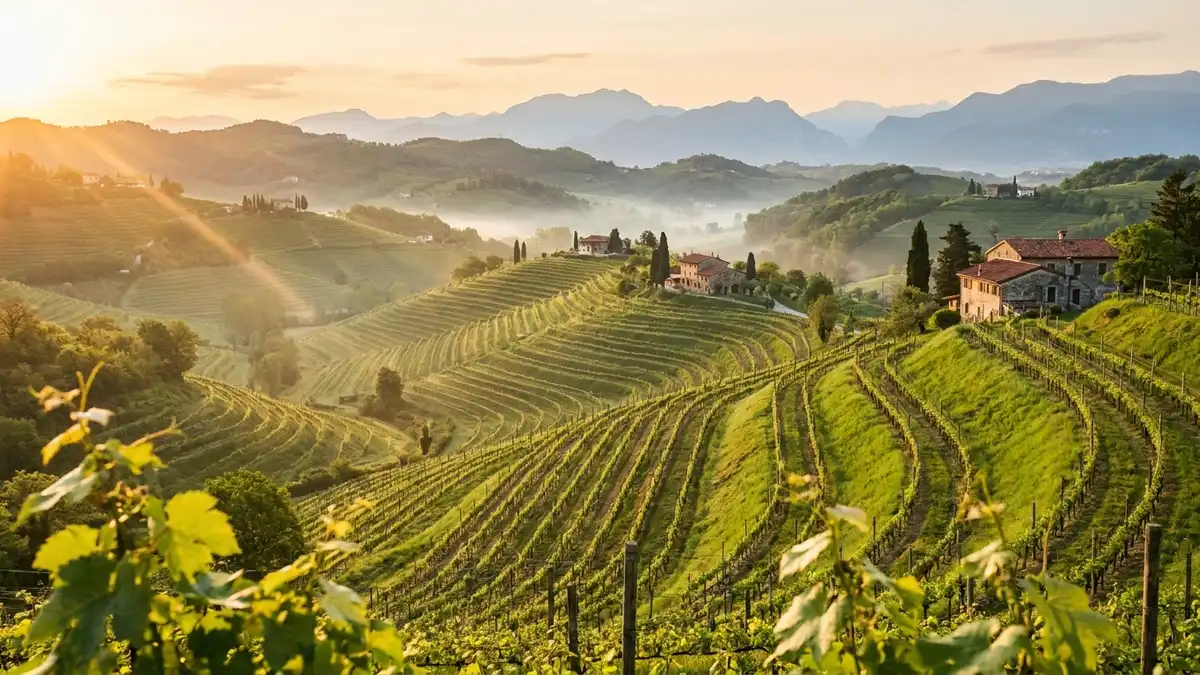
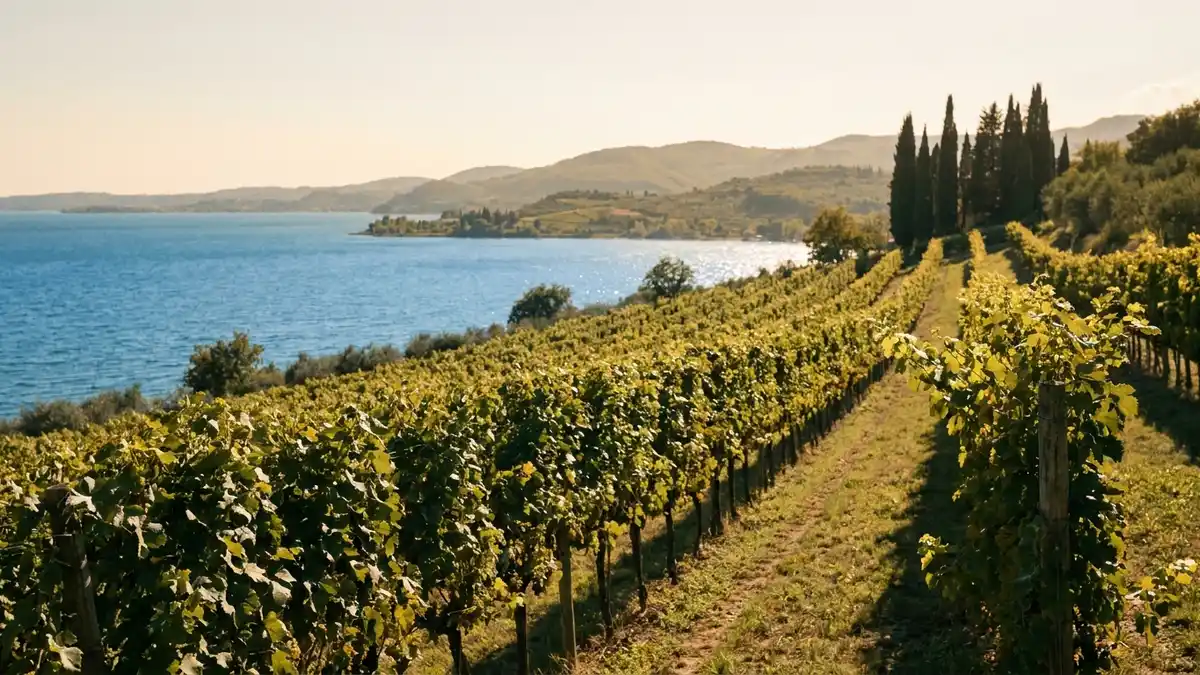
The Veneto sits in the far northeast of Italy, fanning out from the city of Verona toward Venice and up into the foothills of the Dolomites. Its vineyards run from the warm, breezy shores of Lake Garda in the west to the cooler, steeper hills near the mountains in the north. That spread of climates is why one region can make featherlight sparkling wine and one of Italy's most powerful reds.
The defining influences are water and altitude. Lake Garda moderates temperature and keeps the western vineyards mild, ideal for the light reds of Bardolino and the fuller Valpolicella zone just east of it. To the north, the Dolomites funnel cool mountain air down over the hills, giving the grapes wide swings between warm days and cool nights. That day-night gap, known as diurnal range, locks in acidity and aroma — the freshness behind Prosecco and Soave alike.
Prosecco: The Veneto's Sparkling Calling Card
For most of the world, the Veneto means bubbles. Prosecco is Italy's most popular sparkling wine, and it is made almost entirely from one grape, Glera — a high-acid white variety prized for its fresh apple, pear, and white-flower character. Unlike Champagne, the bubbles are produced in large pressurised tanks rather than individual bottles, which keeps the wine fruity, soft, and affordable.
Not all Prosecco is equal, and the labels tell you where it sits:
- Prosecco DOC: The broad everyday category, grown across a wide swathe of northeast Italy. Easy, fruity, and reliable — the bottles you meet most often.
- Conegliano Valdobbiadene Prosecco Superiore DOCG: The top tier, from steep hillside vineyards between the towns of Conegliano and Valdobbiadene. The hand-tended slopes give more complex, mineral, finely textured wines and earned UNESCO World Heritage status in 2019.
- Cartizze: A tiny, prized cru hill inside Valdobbiadene, widely seen as the pinnacle of Prosecco.
A quick way to read the bottle: DOCG on a Prosecco label points to the hillside heartland and a step up in quality, while DOC signals the wider, flatter-land category. If you want to understand the grape itself in depth, our guide to the Prosecco grape Glera covers how it behaves and why it sparkles the way it does, and our overview of sparkling wine grapes places it alongside the world's other bubbly varieties.
Typical aromas: green apple, pear, white peach, acacia blossom, fresh bread. Body: light (2/5) · Acidity: high (4/5) · sweetness ranges from bone-dry Brut through off-dry Extra Dry to gently sweet Dry.
Soave: The Veneto's Most Underrated White
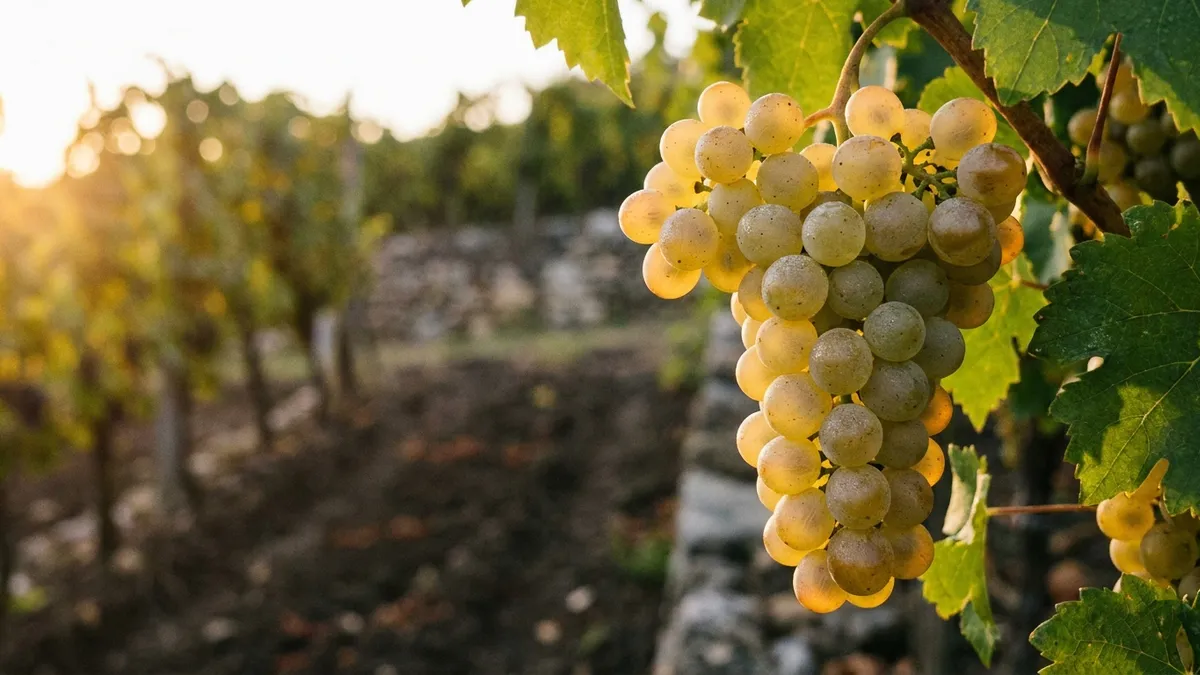
If Prosecco is the Veneto's celebrity, Soave is its quiet achiever. This dry white from the hills east of Verona is led by Garganega, a late-ripening grape that gives ripe lemon, white peach, almond, and a soft floral lift. For decades cheap, mass-produced Soave gave the name a thin reputation, but the best bottles are textured, savory, and capable of aging.
The label split mirrors Prosecco's quality ladder:
- Soave DOC: The wider zone, including flatter vineyards. Pleasant and citrusy, made for early drinking.
- Soave Classico: The original hillside heartland on volcanic and limestone soils. More concentration, a stony mineral edge, and that signature bitter-almond finish that marks serious Garganega.
- Recioto di Soave: A sweet white made by drying the grapes, the white-wine cousin of the red appassimento wines below.
Garganega is sometimes blended with a little Trebbiano di Soave or Chardonnay, but the best Classico bottlings let Garganega lead. To see where Garganega fits among the world's white varieties, our white grapes overview is a useful map.
The Valpolicella Family: One Vineyard, Four Wines
The Veneto's reds all flow from one set of grapes grown in the Valpolicella hills north of Verona, yet they range from a light lunchtime red to one of Italy's most concentrated wines. The shared blend is led by Corvina — the grape that gives sour-cherry fruit and brisk acidity — supported by Rondinella for color and Molinara for lift. Our dedicated Corvina wine guide digs into the lead grape on its own.
What separates the four wines is not the vineyard but the method — specifically how much the grapes are dried before or during winemaking. Here is the ladder from lightest to richest:
- Valpolicella: The base wine. Made from fresh grapes, it is light to medium bodied, bright, and built around tart red cherry. Body: light-to-medium (2-3/5) · Acidity: high (4/5) · Tannins: low-to-medium (2/5). The everyday face of the region.
- Valpolicella Ripasso: A clever middle step. Finished Valpolicella is re-fermented (the meaning of ripasso, "re-passed") on the leftover skins of the Amarone grapes, soaking up extra color, body, alcohol, and warmth. Often nicknamed baby Amarone. Body: medium-to-full (4/5) · richer, with dried-cherry and spice notes.
- Amarone della Valpolicella: The powerhouse. Made entirely from grapes dried for months by appassimento, then fermented dry. The result is full, warm, and intense — high alcohol (often 15-16%), with flavors of dried cherry, fig, chocolate, and leather. Body: full (5/5) · Tannins: medium-to-high (4/5). A serious, age-worthy red.
- Recioto della Valpolicella: The sweet ancestor of them all. Also made from dried grapes, but fermentation is stopped early to leave natural sweetness — a rich, port-like dessert red that predates Amarone by centuries.
The pattern to remember: the more the grapes are dried, the richer and more concentrated the wine. A single hillside, four very different bottles.
Appassimento: The Veneto's Signature Trick
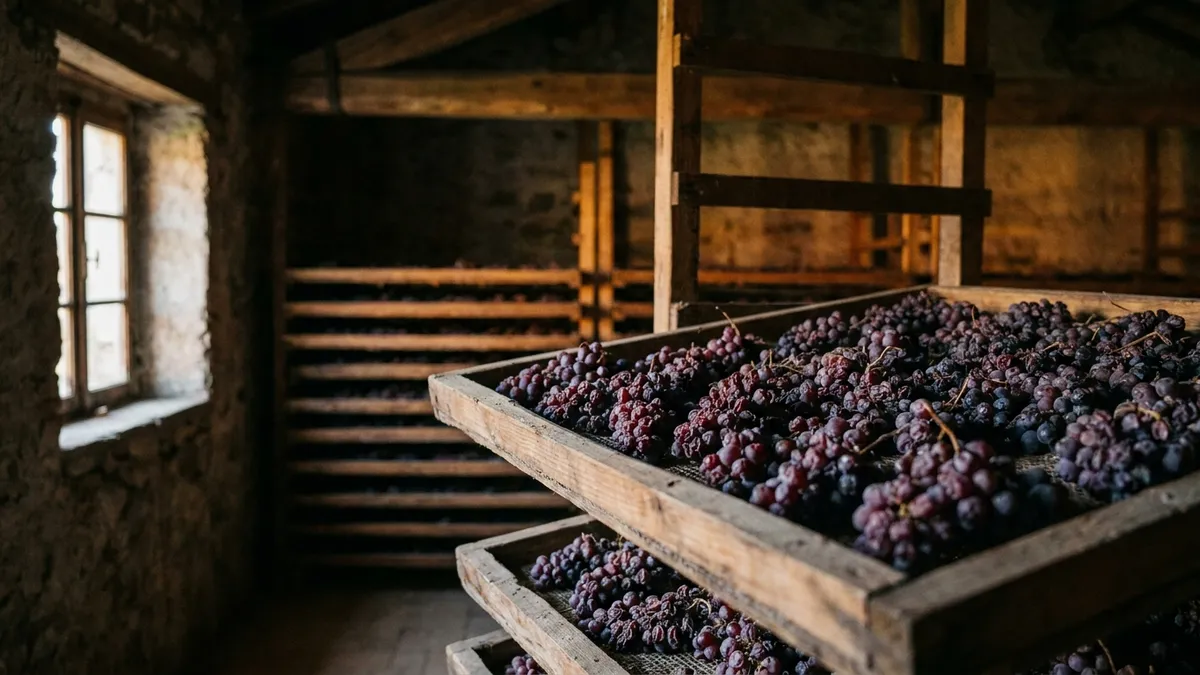
The technique behind Amarone, Ripasso, and Recioto deserves its own spotlight, because it is the most distinctive thing the Veneto does. Appassimento means drying harvested grapes before pressing them. After picking, the best bunches are laid out on racks or in ventilated lofts for anywhere from several weeks to a few months. As the grapes shrivel into half-raisins, they lose water and concentrate their sugar, color, tannin, and flavor.
That concentration is the whole point. A grape that would make a light, tart Valpolicella becomes, after drying, the raw material for a dense, powerful Amarone. Because so much water is lost, it takes far more grapes to make a bottle, which is part of why Amarone costs what it does.
The Veneto's genius is not a grape or a hill. It is the patience to let a grape become a raisin before it ever sees the press.
The same drying logic links the red and white sides of the region: Recioto di Soave is Garganega dried the same way, and Recioto della Valpolicella is the sweet red original. Once you grasp appassimento, half the Veneto's most famous wines suddenly share one idea. The Sommy app's Italian wine lessons walk through this drying step so the difference between a fresh red and a dried-grape red becomes something you can taste rather than just read.
Bardolino and the Lighter Side of Lake Garda
Not every Veneto red aims for power. On the eastern shore of Lake Garda, the Bardolino zone uses the same Corvina-led blend as Valpolicella but in a much lighter, fresher key. The lake's mild climate and sandy soils give pale, juicy reds full of red cherry and a faint almond bitterness — wines made for drinking young and slightly cool.
Bardolino comes in a few guises worth knowing:
- Bardolino: A light, bright red, low in tannin and easy to drink — the everyday counterpart to richer Valpolicella.
- Bardolino Chiaretto: A pale, crisp rosé from the same grapes, one of Italy's best-loved pink wines for summer.
- Bardolino Superiore DOCG: A slightly riper, more structured version from better vineyards.
Bardolino is a smart reminder that the same grapes can make wildly different wines depending on where and how they are grown — the lighter mirror image of Amarone's intensity.
How the Veneto's Classifications Work
Italy ranks its wines through a quality pyramid, and the Veneto uses it clearly. Reading these tiers on a label tells you roughly how serious the wine is meant to be:
- DOC (Denominazione di Origine Controllata): A controlled origin with defined grapes and rules. Most Valpolicella, Soave, and Bardolino sit here.
- DOCG (the "G" adds Garantita, guaranteed): The top legal tier, with stricter rules and tasting checks. Amarone della Valpolicella, Recioto, Conegliano Valdobbiadene Prosecco Superiore, and Bardolino Superiore carry this.
- Classico: A modifier, not a separate tier — it marks wine from the original historic heartland of a zone, usually the hillsides. Soave Classico and Valpolicella Classico come from the oldest, best-sited vineyards.
The single most useful habit: when you see Classico on a Soave or Valpolicella, expect a step up, because it points to the hill country rather than the flat valley floor. For the bigger picture of how these tiers fit across the country, our Italian wine guide maps the national system, and our look at French wine regions offers a useful comparison with France's appellation logic.
What Makes the Veneto Distinctive
Plenty of regions grow good grapes. The Veneto stands out for what it does after the harvest. The drying lofts of Valpolicella, the steep hand-worked Prosecco terraces near Valdobbiadene, and the volcanic Soave hills together show a region that turns simple varieties into a remarkable spread of styles through method and place rather than through any one prestigious grape.
That breadth is also why the Veneto is such a good teacher for a beginner. In one region you can taste a sparkling wine, a crisp white, a light red, a medium red, a powerhouse red, and two sweet wines — all from a short list of grapes. Few places let you learn so much variety with so little vocabulary. To ground the underlying grapes, our overview of the noble grapes and the international varieties that travel everywhere gives helpful context for how the Veneto's local stars compare.
How a Beginner Should Start with Veneto Wine
You do not need a special bottle or a big budget to understand the Veneto. The smartest path is to taste a few styles in a deliberate order so each one teaches you something the last did not. Here is a practical route:
- Start with Prosecco. A glass of Conegliano Valdobbiadene Superiore introduces Glera and the region's bright, apple-and-pear sparkling character. Note the softness against any Champagne you have tried.
- Move to Soave Classico. This is the cleanest way to meet Garganega — look for the lemon, almond, and gentle floral lift, and the savory texture that marks a hillside wine.
- Taste Valpolicella beside Ripasso. Open a basic Valpolicella and a Ripasso together. The Ripasso will feel rounder, warmer, and deeper — that is exactly what re-fermenting on the Amarone skins adds.
- Finish with Amarone. Save it for last so its dried-grape richness lands hardest against the lighter wines. This is appassimento made obvious in the glass.
- Build the tasting habit. Pay attention to acidity in the whites and to body and warmth in the reds. Our guide to how to taste wine gives you the step-by-step method to name what you sense.
Sommy turns these comparisons into guided exercises — naming the aromas, scoring the structure, and building the vocabulary to describe a wine from light Prosecco to dense Amarone. You can start practicing free at sommy.wine, then bring the method to your next Veneto bottle.
The Veneto rewards a learner who tastes in pairs. A fresh Valpolicella next to an Amarone, or a flat-land Soave next to a Classico, teaches more than any single famous bottle ever could. Start small, taste side by side, and let the region's one great idea — drying grapes to concentrate them — reveal itself one glass at a time.
Sources
Frequently Asked Questions
What wines is the Veneto famous for?
The Veneto is best known for four styles: sparkling Prosecco from the Glera grape, crisp white Soave from Garganega, the light-to-rich Valpolicella family of reds, and powerful Amarone. It is one of Italy's largest wine regions by volume, so it supplies both everyday bottles and serious, age-worthy reds.
What grapes are used in Veneto wine?
Prosecco is made from Glera. Soave is mostly Garganega. The Valpolicella reds — Valpolicella, Ripasso, Amarone, and Recioto — are blends led by Corvina with Rondinella and a splash of Molinara. Bardolino uses the same red grapes in a lighter style. Learning these few names unlocks almost every Veneto label.
What is appassimento and why does it matter?
Appassimento is the practice of drying harvested grapes for weeks or months before pressing, which shrivels them and concentrates their sugar, color, and flavor. In the Veneto it turns ordinary Corvina into powerful Amarone and sweet Recioto. The method is the region's signature and the reason its top reds taste so rich.
What is the difference between Valpolicella, Ripasso, and Amarone?
Valpolicella is a light, fresh red. Ripasso is Valpolicella re-fermented on the leftover Amarone grape skins, adding body and warmth — often called baby Amarone. Amarone is made entirely from dried grapes by appassimento, giving a dry, full, high-alcohol red. They form a clear ladder from easy-drinking to intense.
Is Prosecco the same as Champagne?
No. Prosecco is made in the Veneto and neighbouring areas from the Glera grape, with its bubbles created in large pressurised tanks. Champagne is from France and made by a slower bottle method using different grapes. Prosecco is typically lighter, fruitier, and softer, with apple, pear, and white-flower notes rather than Champagne's toasty depth.
What does Soave wine taste like?
Soave is a dry white led by the Garganega grape. Good examples show ripe lemon, white peach, almond, and a gentle floral lift, with medium body and fresh acidity. The best wines, often from the Soave Classico hillsides, gain a subtle savory, almondy texture and can age, far removed from the simple bottlings that gave Soave a thin reputation.
Where should a beginner start with Veneto wine?
Start with a glass of Prosecco to meet Glera, then a Soave Classico to learn Garganega. For reds, taste a basic Valpolicella beside a Ripasso so you feel what the dried-grape skins add. Save Amarone for last so its richness lands against that lighter backdrop, making the appassimento effect obvious.
Sommy Team
LinkedInFounder & Wine Educator
The Sommy Team is building the world's most approachable wine education app, helping beginners develop real tasting skills through structured courses and AI-guided practice.