Corvina: The Grape Behind Valpolicella and Amarone

By the Sommy Team — AI-assisted, human-edited.
Updated Apr 29, 2026
Contents (12)
- What Is Corvina, in 90 Words
- Why Corvina Matters
- Where Corvina Grows
- The Four Wines of Valpolicella
- How Appassimento Works
- Corvina in the Blend
- Food Pairings: Match the Style to the Plate
- Aging Trajectory: How Corvina Evolves
- How to Taste Corvina
- Corvina vs Other Italian Reds
- Building a Corvina Tasting at Home
- The Bottom Line
TL;DR
Corvina is the lead grape of Italy's Valpolicella region in Veneto, behind four wine styles: fresh Valpolicella Classico, richer Ripasso, intense Amarone della Valpolicella DOCG, and sweet Recioto. Often blended with Rondinella and Molinara, Corvina shows sour cherry, almond, and violet. The appassimento drying method transforms it into Amarone.
What Is Corvina, in 90 Words
Corvina is the lead grape of Valpolicella, a hilly red-wine zone in Veneto, northern Italy. It is the foundation of four distinct wine styles: light, juicy Valpolicella Classico; richer Valpolicella Ripasso, re-passed over Amarone lees for added body; intense Amarone della Valpolicella DOCG, made from dried grapes via the appassimento method, often reaching 14 to 16% alcohol; and sweet Recioto della Valpolicella DOCG. Corvina is typically blended with Rondinella and Molinara. Fresh examples show medium ruby color, sour cherry, almond, and violet, with low-medium tannin and bright acidity.
Why Corvina Matters
Corvina is one of the most versatile red grapes in the world. Few varieties can produce a light, refreshing pizza-night wine and a powerful, age-worthy showstopper from the same vineyard, but Corvina does both. The trick is the appassimento drying method, a centuries-old Veneto tradition that turns the same fruit into something almost unrecognizable.
Open a bottle of Amarone and the dried-cherry, fig-and-cocoa intensity is Corvina after months on drying racks. Pour a chilled Valpolicella with antipasti and the bright sour-cherry crunch is Corvina at the other end of its range. The grape is the connector — the appassimento is the lever.
For a broader view of Veneto and its sister regions, our Italian wine guide walks through every major Italian zone. This article focuses on what Corvina actually does in the glass.
Where Corvina Grows
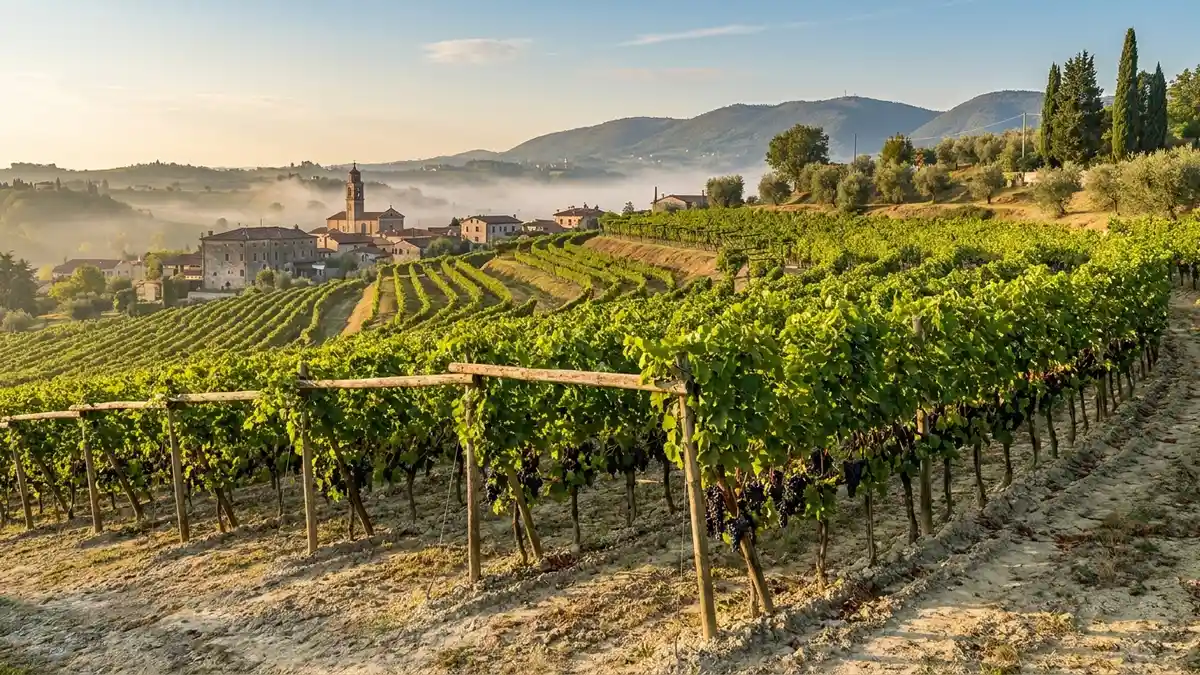
Corvina grows almost exclusively in the Valpolicella zone, a band of hills running northwest of the city of Verona in Veneto, northern Italy. The name Valpolicella roughly translates as "valley of many cellars" — a fair description of a place that has been making wine continuously since Roman times.
The zone splits into three tiers of quality and reputation:
- Valpolicella Classico — the original historic heartland, the oldest hillside vineyards. The Classico designation generally signals better fruit and more concentrated wines.
- Valpolicella Valpantena — a separate sub-zone with its own naming rights, often producing softer wines.
- Valpolicella DOC — the broader appellation covering newer flatland and hillside plantings.
Within the zone, soils range from limestone and clay on the hillsides to volcanic and alluvial in the valley floors. Altitude matters: the steepest, highest vineyards retain the acidity and aromatic lift that make Corvina worth aging.
Corvina has a thick skin and ripens late, which is one of the reasons it tolerates the appassimento drying process so well. The thick skin resists rot during the months of drying — a critical practical detail for any grape destined to spend months on racks in the open air.
The Four Wines of Valpolicella
This is where Corvina becomes interesting. Most grape varieties make one or two wine styles. Corvina makes four, each with a clear character and a clear purpose at the table.
1. Valpolicella Classico — Fresh and Juicy
The entry point. Valpolicella Classico is a light to medium-bodied red made from regular, undried Corvina-led grapes (typically blended with Rondinella, sometimes Molinara). The wine is medium ruby in color, low to medium in tannin, and high in acidity. Aromas lean sour cherry, dried strawberry, almond, and a delicate violet lift.
Think of fresh Valpolicella as the Italian answer to Beaujolais — a lighter red built for the table, not the cellar. It is meant to be drunk young, often within two to four years of vintage. Lightly chilling it (around 14°C / 57°F) brings out its juicy character. For a primer on serving reds at the right temperature, see our guide on how to taste red wine.
2. Valpolicella Ripasso — The Middle Path
Ripasso means "re-passed." After Amarone is made from dried grapes, the leftover skins and lees still contain unfermented sugar, color, and aromatic compounds. Producers take fresh Valpolicella and pump it back over those Amarone leftovers, triggering a second fermentation that adds body, alcohol, color, and a hint of the dried-fruit character that defines Amarone.
The result is sometimes called "Baby Amarone" — a richer, fuller red than basic Valpolicella but a fraction of the price of full Amarone. Ripasso typically lands around 13 to 14% alcohol, with darker fruit, gentle dried-cherry notes, and softer tannins than its Amarone parent.
Ripasso is one of the best-value reds in Italian wine. If you have only tried entry-level Valpolicella and the headline-grabbing Amarone, Ripasso is the missing middle step.
3. Amarone della Valpolicella DOCG — The Powerhouse
The headline act. Amarone della Valpolicella DOCG is made from Corvina-led grapes that have been dried for roughly three to four months after harvest, losing 30 to 40% of their water weight. The dried grapes are then pressed and fermented to dryness, producing a wine that typically clocks in at 14 to 16% alcohol with massive concentration.
Tasting notes shift dramatically:
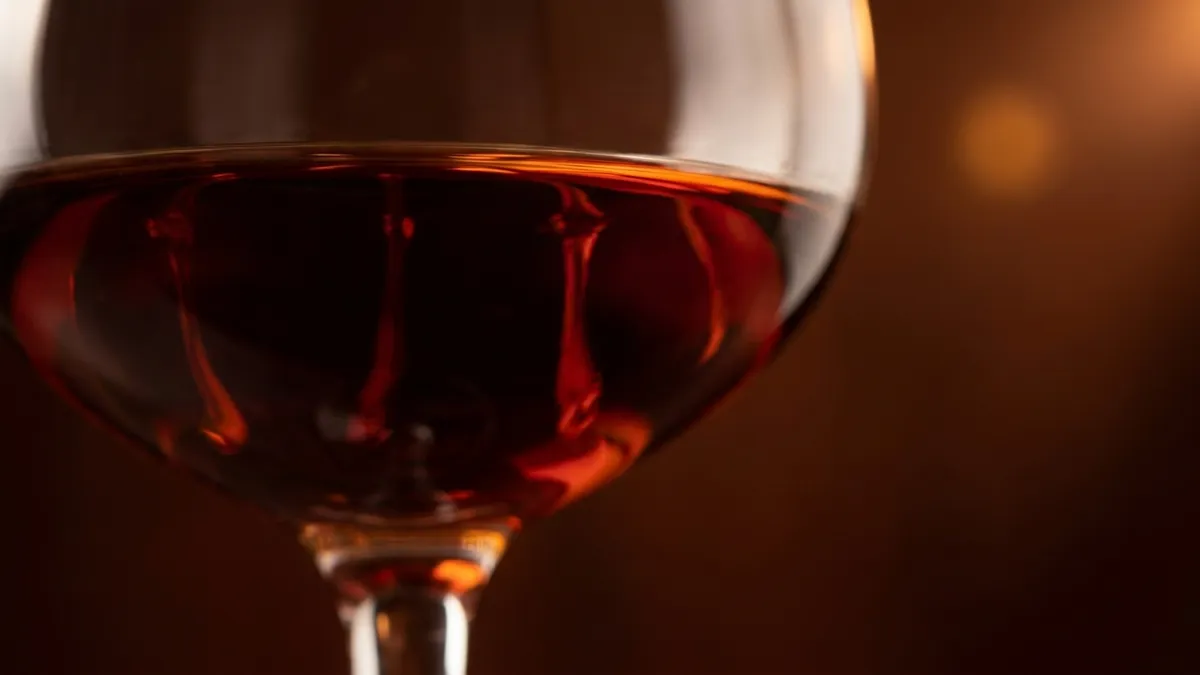
- Color: deep ruby to garnet
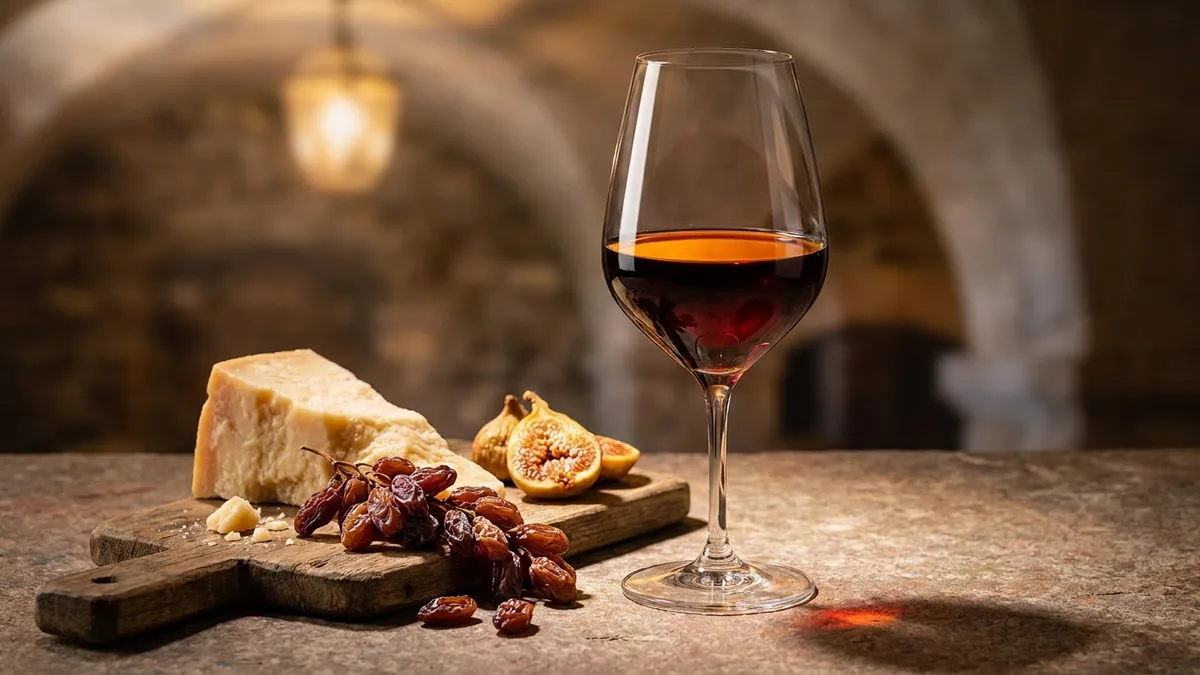
- Nose: dried cherry, fig, raisin, cocoa, leather, sweet tobacco, dried herbs
- Palate: full-bodied, rich, mouth-coating, with high alcohol carrying the dried-fruit concentration
- Finish: long, savory, often with a faint bittersweet note that lingers
Amarone is bone dry despite its dried-fruit intensity — the high sugar in the dried grapes ferments fully into alcohol. Minimum aging by law is two years before release, with Amarone Riserva requiring four. The full rulebook, from drying to the sugar cap that keeps it dry, is in our Amarone guide. The best examples can age 15 to 20 years or more.
Amarone is one of the few Italian reds that can stand toe to toe with Barolo and Brunello in concentration and aging potential. For comparison, see our deep dives on Nebbiolo and Sangiovese, the grapes behind those wines.
4. Recioto della Valpolicella DOCG — The Sweet Original
The oldest of the four styles. Recioto della Valpolicella DOCG uses the same appassimento drying as Amarone, but fermentation is stopped before all the sugar is converted to alcohol. The result is a sweet red wine with the same concentrated dried-fruit character — fig, raisin, dried cherry, cocoa — plus residual sweetness.
Recioto pre-dates Amarone by centuries. The story most often told is that Amarone was a Recioto fermentation that "went too far," producing a dry rather than sweet wine. The producer who made the mistake supposedly tasted it and said "amaro" (bitter) — and a new style was born, somewhere in the early-to-mid 20th century.
Recioto is rare today and typically served as a dessert wine, pairing well with chocolate, dried-fruit tarts, or aged blue cheese. Our dessert wine guide covers the broader category.
How Appassimento Works
The drying process is the lever that turns Corvina from a juicy table wine into a powerhouse. Here is what actually happens.
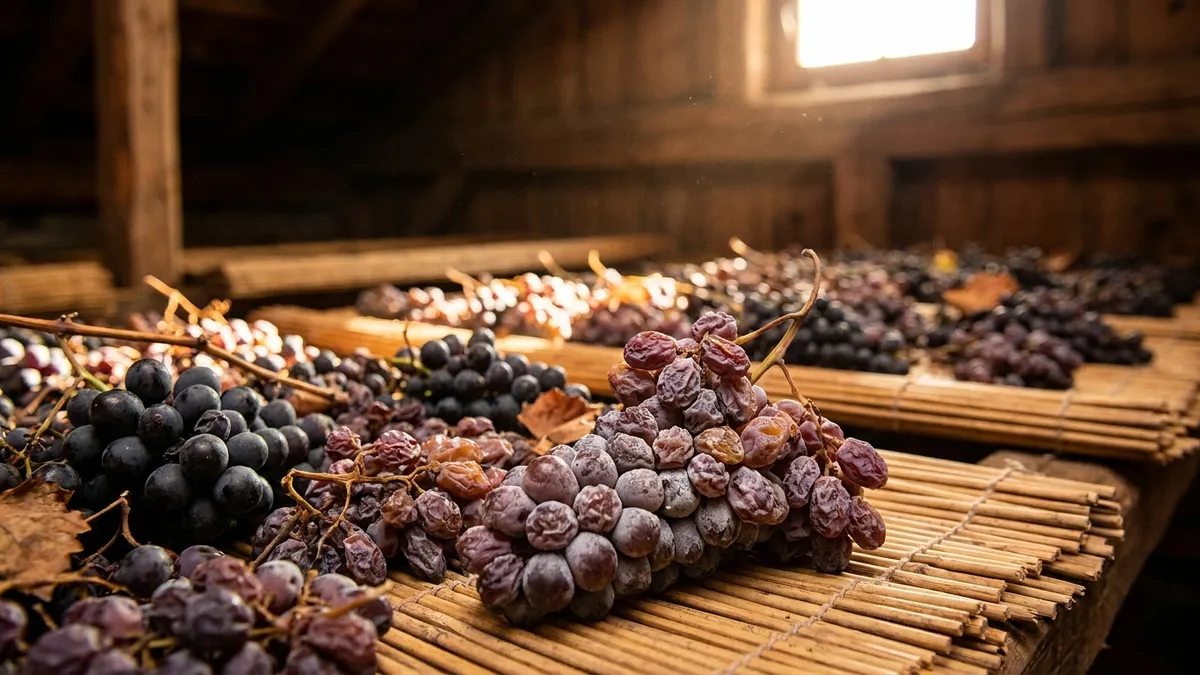
After harvest, the best Corvina bunches are laid out on bamboo racks (called graticci or arele) or in shallow plastic crates inside well-ventilated drying lofts called fruttai. Modern producers often use temperature-and-humidity-controlled chambers to manage rot risk and ripening curves more precisely.
Over three to four months, the grapes lose roughly 30 to 40% of their water through slow evaporation. The remaining juice becomes intensely concentrated:
- Sugar rises sharply, providing the fuel for higher alcohol
- Acidity stays high in absolute terms, balancing the richness
- Aromatic compounds concentrate, producing the dried-fruit, fig, and raisin character
- Tannins become more polymerized and softer-textured
The dried grapes are then crushed and fermented slowly in cool conditions, often taking 30 to 50 days. The wine then ages in oak (typically large Slavonian botti, sometimes smaller French barrels) for a minimum of two years before bottling.
Done well, appassimento produces wines of remarkable longevity and complexity. Done poorly, it produces wines that taste cooked, jammy, or porty. The gap between the two is wider than it is for almost any other style of red wine.
Corvina in the Blend
Corvina is rarely bottled alone. The traditional Valpolicella blend is:
- Corvina (45 to 95%) — the lead grape, providing color, sour cherry, structure, and aging potential
- Rondinella (5 to 30%) — adds floral lift, fresh fruit, and resistance to rot during drying
- Molinara (0 to 25%) — historically used for acidity, increasingly dropped in modern blends
- Corvinone (up to 50%) — a separate variety often confused with Corvina, sometimes used to replace part of the Corvina
Some producers now use up to 95% Corvina, particularly for top-tier Amarone, prizing the grape's depth over the historic blend's complexity. Others stick to the traditional ratios, arguing that Rondinella's floral character is essential to the wine's identity. Both camps make excellent wines. For more on how blending shapes wine character, see our wine blends explained article.
Food Pairings: Match the Style to the Plate
Corvina's range across four wine styles makes it one of the most flexible food-pairing grapes in Italy. The trick is to match the style to the dish.
Fresh Valpolicella Classico
- Pizza Margherita, simple tomato pastas, salumi platters
- Roast chicken with herbs
- Light cheeses like fresh mozzarella or young pecorino
- Slightly chilled, this works as a summer red
Valpolicella Ripasso
- Lasagna, mushroom risotto, sausage with polenta
- Roast pork or duck breast
- Aged Asiago or Grana Padano
Amarone della Valpolicella
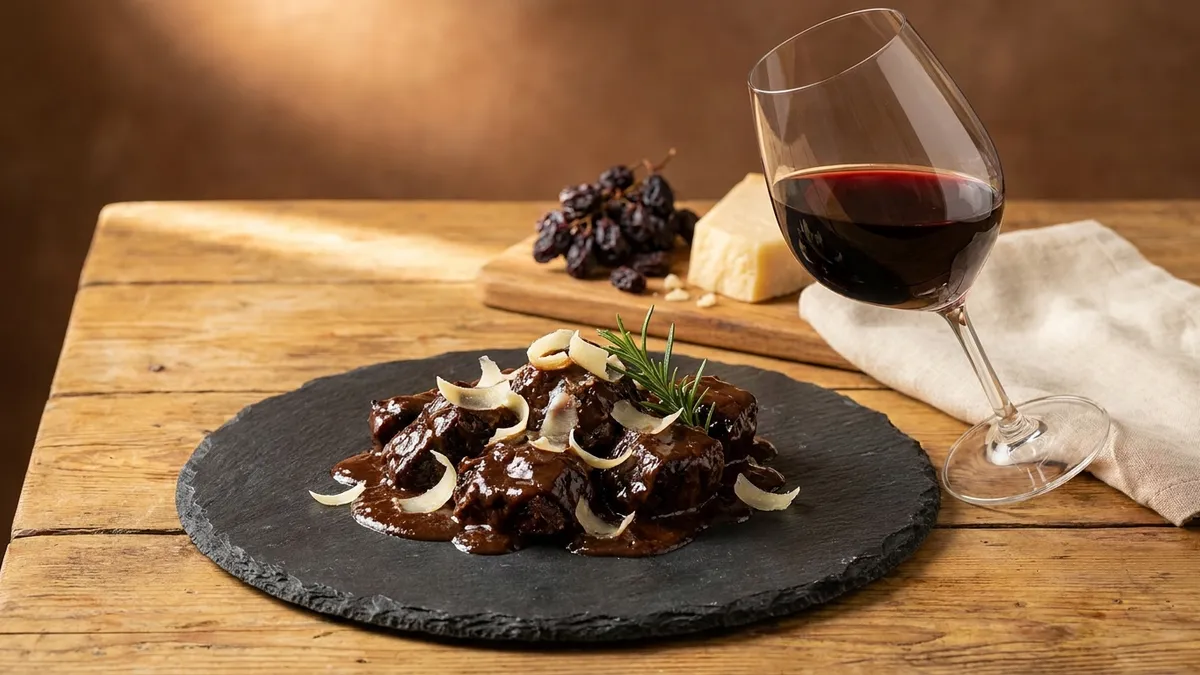
- Braised beef (brasato all'Amarone is a regional classic)
- Osso buco, lamb stew, venison and other game
- Aged Parmigiano-Reggiano, aged pecorino, hard cheeses
- Risotto all'Amarone made with the wine itself
Recioto della Valpolicella
- Dark chocolate desserts, dried-fruit cake, tiramisu
- Aged blue cheese
- A slow, contemplative end to a long meal
For a deeper framework on matching wines to food, our wine and food pairing guide covers the principles.
Aging Trajectory: How Corvina Evolves
Each Valpolicella style ages on a different curve.
- Valpolicella Classico — drink within 2 to 4 years. Older bottles lose their fresh sour-cherry lift and rarely improve.
- Valpolicella Ripasso — peak around 4 to 8 years. The added body from the Amarone re-pass extends the wine's life noticeably.
- Amarone della Valpolicella — drinkable on release but rewards 10 to 20+ years from a strong vintage. Tertiary notes of leather, tobacco, dried mushroom, and forest floor emerge slowly. The dried-fruit character mellows into something more savory and complex.
- Recioto — can hold for decades. The residual sweetness preserves the wine far longer than a dry red of equivalent structure.
If you taste a 15-year-old Amarone next to a fresh release, the comparison is striking. The young wine is loud and dried-fruit intense; the older wine is integrated, softer, and far more complex. This is one of the clearest demonstrations of what bottle age does to a structured red.
How to Taste Corvina
Corvina rewards a slow approach.
For fresh Valpolicella, serve at 14 to 16°C (57 to 61°F) — slightly cooler than most reds. The lower temperature highlights its juicy fruit and acidity. A light chill in the fridge for 15 minutes before serving usually does the trick.
For Amarone and Ripasso, serve at 16 to 18°C (61 to 64°F) and consider decanting. A young Amarone can be tightly wound; 30 to 60 minutes in a decanter opens up the dried-fruit aromatics and softens the alcohol perception.
When you taste, look for:
- Color: Valpolicella Classico is medium ruby; Amarone is deep ruby trending garnet with age
- Aromas: sour cherry on the fresh end, dried cherry and fig on the Amarone end, almond and violet across both
- Palate: bright acidity throughout the range, with tannin and body climbing as you move from Classico to Ripasso to Amarone
- Finish: a faint bittersweet almond note often shows up on the finish, especially in Amarone — a Corvina signature
The Sommy app's structured tasting flow walks you through each step, prompting you to log color, aroma intensity, palate structure, and finish — useful when you want to compare a fresh Valpolicella and an Amarone side by side and watch the same grape do completely different things.
Corvina vs Other Italian Reds
Where does Corvina fit alongside Italy's other major reds?
- Sangiovese (Tuscany) — higher tannin, brighter acidity, more savory-herbal. Better with tomato-based dishes.
- Nebbiolo (Piedmont) — even higher tannin and acidity, more austere, with rose and tar aromatics. Built for long aging.
- Nero d'Avola (Sicily) — rounder, fuller, with more dark fruit and chocolate. Lower acidity than Corvina.
- Aglianico (Campania) — dark, structured, tannic. Closer in concentration to Amarone but achieved without drying.
What sets Corvina apart is its range. No other major Italian red produces both a fresh table wine and a 15+ year ager from the same vineyard via two different production methods. The grape is essentially two grapes, depending on what the cellar does with it.
For a wider Veneto context, the white grape Garganega (the basis of Soave) is Corvina's white-wine counterpart in the same region. Our Garganega wine guide covers it.
Building a Corvina Tasting at Home
If you want to understand Corvina in one sitting, set up a vertical of styles rather than a vertical of vintages. Open four bottles, decanted appropriately, in this order:
- Valpolicella Classico — entry-level, current vintage
- Valpolicella Ripasso — mid-range, current vintage
- Amarone della Valpolicella — quality producer, 5 to 8 years old
- Recioto della Valpolicella (optional, served with dessert)
Use the same glass shape across all four — a medium-bowled red wine glass works well. Pour small servings (60 ml each) and taste in order from lightest to most concentrated. Take notes at 30 seconds and again at 10 minutes for each wine.
You will notice the throughline — sour cherry, almond, violet, the faint bittersweet note on the finish — present in every wine. You will also notice how dramatically appassimento changes everything else: weight, alcohol, dried-fruit character, depth of color. This kind of structured side-by-side comparison is one of the fastest ways to learn a grape, and it works particularly well for Corvina because the styles are so distinct.
The Bottom Line
Corvina is the connector grape of Veneto. One variety, four wines, and a drying method that does most of the heavy lifting between them. From a chilled Valpolicella with pizza on a Tuesday to a 15-year-old Amarone with braised beef on a special occasion, the grape covers more ground than almost any other red in Italy.
If you are new to Italian wine, Corvina is a rewarding place to start. The styles are distinct enough to teach you what production decisions do to a wine, and the prices range from everyday to occasional. Pour a Classico, then a Ripasso, then an Amarone over three nights, and you will understand more about how wine is made than most introductory courses teach in a chapter.
Frequently Asked Questions
What is Corvina wine?
Corvina is a red grape native to Veneto in northern Italy. It is the lead grape in the Valpolicella blend, producing four distinct styles ranging from light and fresh Valpolicella Classico to powerful Amarone della Valpolicella DOCG. Corvina typically shows sour cherry, almond, and violet, with medium body and bright acidity.
What is the difference between Valpolicella and Amarone?
Both are made from Corvina-led blends in the same region. Valpolicella is a fresh, light red made from regular grapes. Amarone is made from grapes dried for three to four months before pressing, a process called appassimento. The drying concentrates sugar and flavor, producing a wine of fourteen to sixteen percent alcohol with intense dried-fruit character.
What does Corvina taste like?
Fresh Corvina shows medium ruby color, bright sour cherry, almond, dried herbs, and violet on the nose. The palate is medium bodied with low to medium tannin and lifted acidity that makes it food friendly. In Amarone form, the dried-grape process pushes Corvina toward dried cherry, fig, raisin, cocoa, and warm spice with a richer, fuller body.
What is the appassimento method?
Appassimento is the traditional Veneto practice of drying freshly harvested grapes on bamboo racks or in temperature-controlled rooms for around three to four months. The grapes lose roughly thirty to forty percent of their water, concentrating sugar, acid, and flavor compounds. The dried grapes are then pressed and fermented to produce Amarone or sweet Recioto.
What food pairs with Amarone?
Amarone pairs with rich braised meats like osso buco, beef brasato, and game stews. Aged hard cheeses such as Parmigiano-Reggiano and aged pecorino also work well. The wine's high alcohol and dried-fruit intensity demand bold, slow-cooked dishes. Lighter Valpolicella Classico is the better choice for pasta, pizza, or charcuterie.
How long does Amarone age?
Quality Amarone della Valpolicella DOCG can age fifteen to twenty years or more from a strong vintage. The minimum legal aging is two years before release, with Riserva requiring four. Over time, the dried-fruit notes mellow into leather, tobacco, and forest floor, with tannins softening and the wine gaining complexity. Fresh Valpolicella, by contrast, is meant to be drunk young.
Is Corvina a noble grape?
Corvina is not on the classic list of international noble grapes, but it is widely considered Veneto's most important native red. Its versatility across four wine styles, its capacity to produce age-worthy Amarone, and its ancient roots in the Valpolicella hills give it a status closer to a regional noble grape than a workhorse variety.
Sommy Team
LinkedInFounder & Wine Educator
The Sommy Team is building the world's most approachable wine education app, helping beginners develop real tasting skills through structured courses and AI-guided practice.