How to Taste Red Wine: A Step-by-Step Method

By the Sommy Team — AI-assisted, human-edited.
Updated Apr 29, 2026
Contents (10)
- Why Red Wine Tasting Has Its Own Method
- The Five-Step Method, in One Paragraph
- Step One: Sight — Read the Rim and the Core
- Step Two: Swirl — Watch the Legs
- Step Three: Smell — Sort the Fruit Spectrum
- Step Four: Sip — Tannin First, Then Everything Else
- Step Five: Reflect — Length, Balance, Age Potential
- Practical Setup: Temperature, Glassware, Decanting
- Food Pairing in One Move
- Build the Habit
TL;DR
How to taste red wine in five steps — sight reads rim color for age and core opacity for grape style, swirl warms aromas, smell sorts red, black, and blue fruit plus oak and earth, sip assesses tannin grip first then acidity body and sweetness, and reflection scores length and balance.
Why Red Wine Tasting Has Its Own Method
Most tasting guides treat every wine the same way. Red, white, rose, sparkling — same four steps, same vocabulary. That works as a starting point, but it misses what makes red wine different. Learning how to taste red wine specifically means paying attention to the things that only matter for reds: the rim color that signals age, the opacity that hints at grape variety, the tannin grip that anchors structure, and the long evolution from primary fruit to tertiary leather and forest floor.
The five-step method below is built on the same foundation as the generic four-step wine tasting framework, specialized for red wine. You can use it on a young Pinot Noir, an aged Bordeaux, a fruit-forward Malbec, or anything in between. Each step takes about thirty seconds, so a complete tasting runs two to three minutes per glass — fast enough for a casual dinner, structured enough to build real palate skills.
The Five-Step Method, in One Paragraph
Here is how to taste red wine in roughly two minutes. Sight comes first — tilt the glass over a white background, read the rim color (purple equals young, orange equals aged), and judge core opacity (translucent suggests a thin-skinned grape like Pinot Noir, opaque points to Cabernet, Syrah, or Malbec). Swirl to coat the bowl and watch the legs — warm-climate reds throw thicker, slower legs from higher alcohol. Smell in three passes, sorting red fruit, black fruit, and blue fruit, then oak spice, and finally earth or savory tertiary notes. Sip small, hold the wine on the tongue, and assess tannin grip first, then acidity, body, sweetness, and alcohol heat. Reflect on length, balance, and whether the wine is ready or needs more cellaring.
Step One: Sight — Read the Rim and the Core
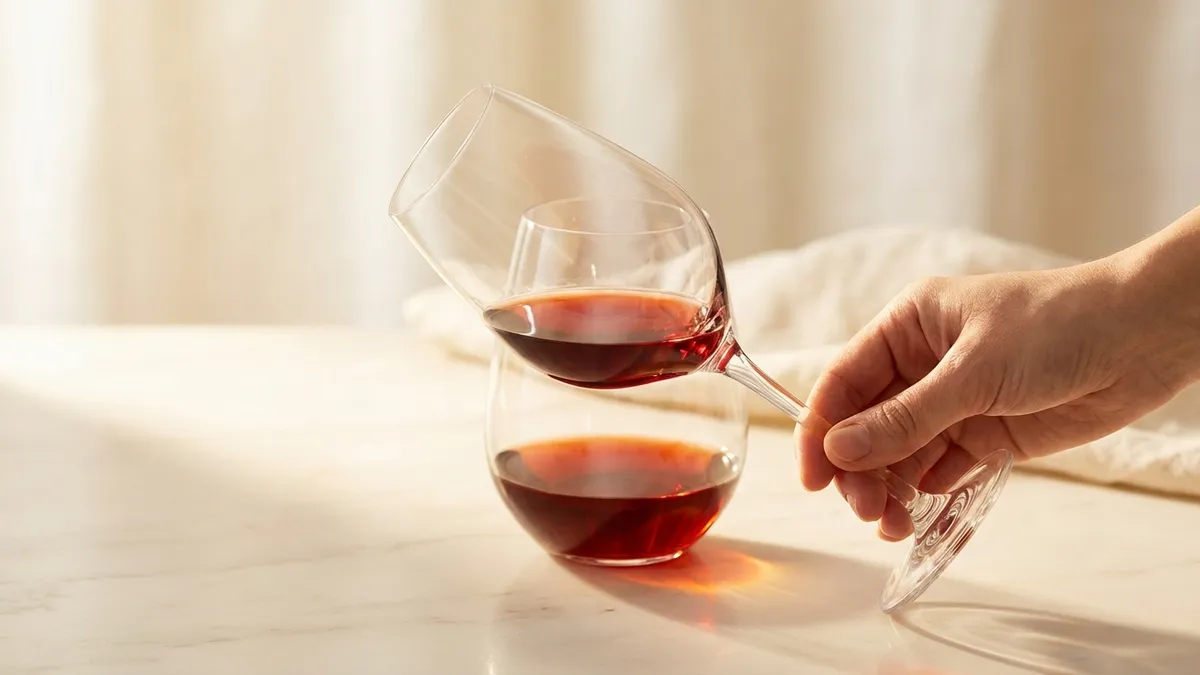
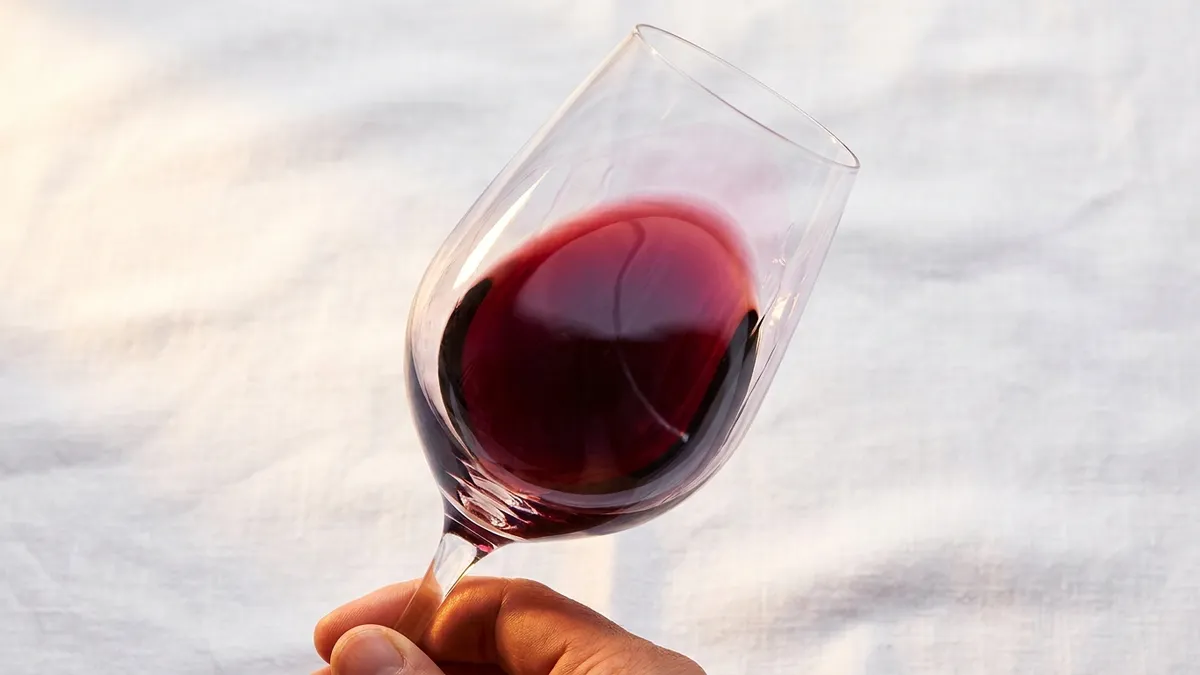
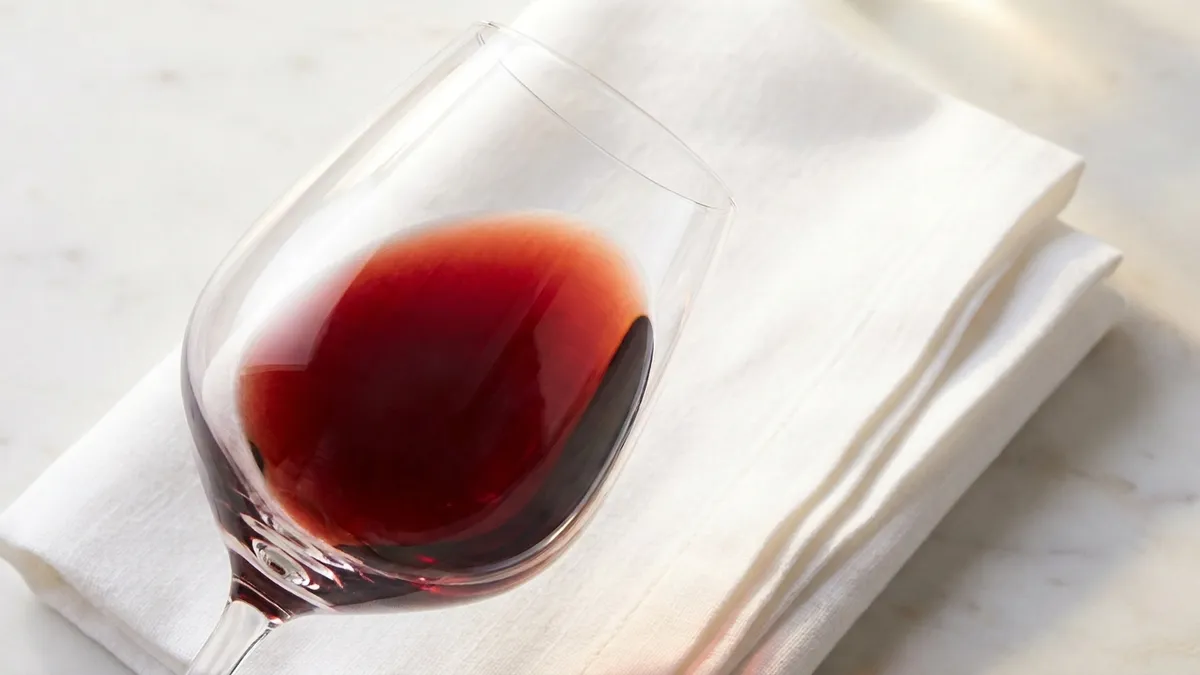
Sight tells you more about red wine than about white. Pour about two ounces, tilt the glass to a forty-five-degree angle over a white napkin or sheet of paper, and look down through the bowl, then across through the side.
Rim Color Signals Age
The rim is the outer edge where wine meets the glass. In reds it ages on a predictable trajectory:
- Purple or violet rim — under three years old. Anthocyanins, the pigment compounds in young red wine, are blue-purple at low pH and dominate young wines.
- Ruby rim — three to seven years, the early prime for most quality reds.
- Garnet with orange tint — seven to fifteen years, classic mature red wine territory.
- Brick or tawny rim — fifteen years or more, deeply mature wine where pigment has polymerized and dropped out.
The rim variation — the width of the color transition between rim and core — also widens with age. A young wine looks uniform from edge to center. An older wine fades from a watery, almost colorless rim into a deeper core.
Core Opacity Hints at Grape Style
Look down through the wine. Can you see your fingers through the glass? Translucent reds — where you can clearly read text behind the bowl — usually come from thin-skinned grapes: Pinot Noir, Gamay, Nebbiolo, Grenache. Opaque reds where the core looks nearly black point to thick-skinned grapes: Cabernet Sauvignon, Syrah, Malbec, Tannat. Medium-opacity reds sit in the middle: Sangiovese, Tempranillo, Merlot.
This is a starting hypothesis, not a verdict. Winemaking choices like extended maceration or saignee can darken any red. But pairing rim color with core opacity gives you a reasonable first guess at age and grape before you ever bring the glass to your nose. For a deeper look at how color decodes wine style, see the guide to wine color meaning.
Clarity and Sediment
Most modern reds are brilliant — crystal clear. Cloudiness in an unfiltered natural red is intentional; cloudiness in a conventional red can flag a fault. Older bottles often throw sediment at the bottom — harmless polymerized tannin and pigment that signals long bottle age, not a defect.
Step Two: Swirl — Watch the Legs
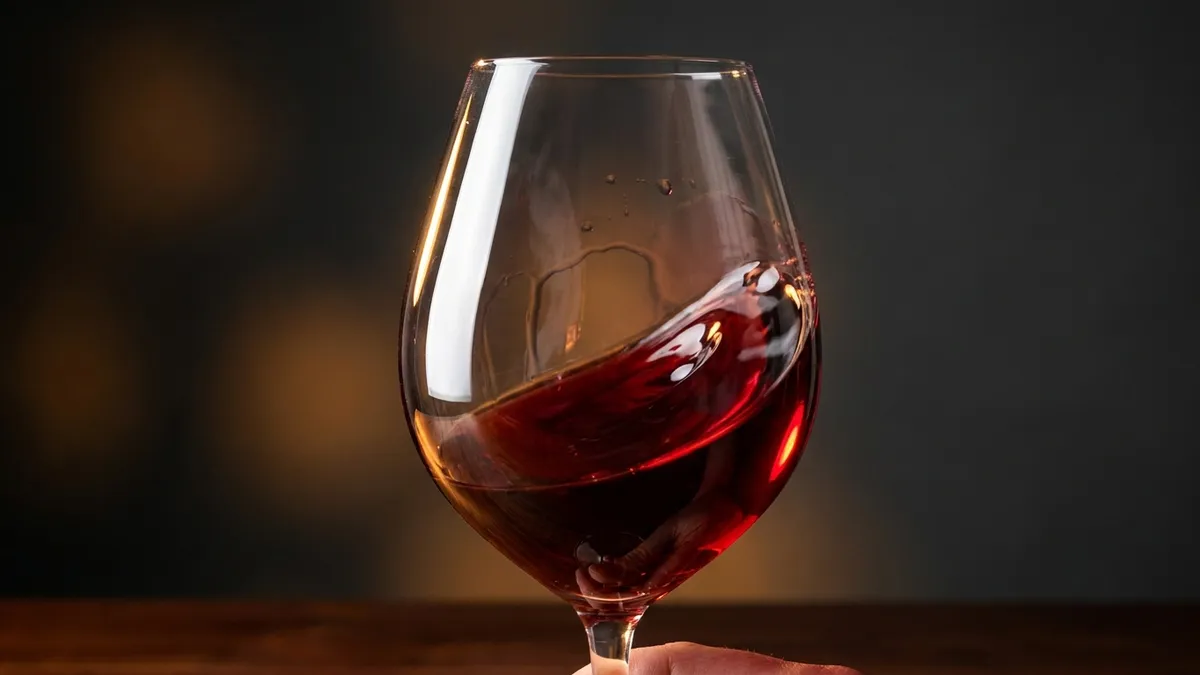
Hold the base of the glass on the table and rotate it in small circles for about five seconds. The motion exposes the wine to oxygen and volatilizes aroma compounds, opening the nose dramatically.
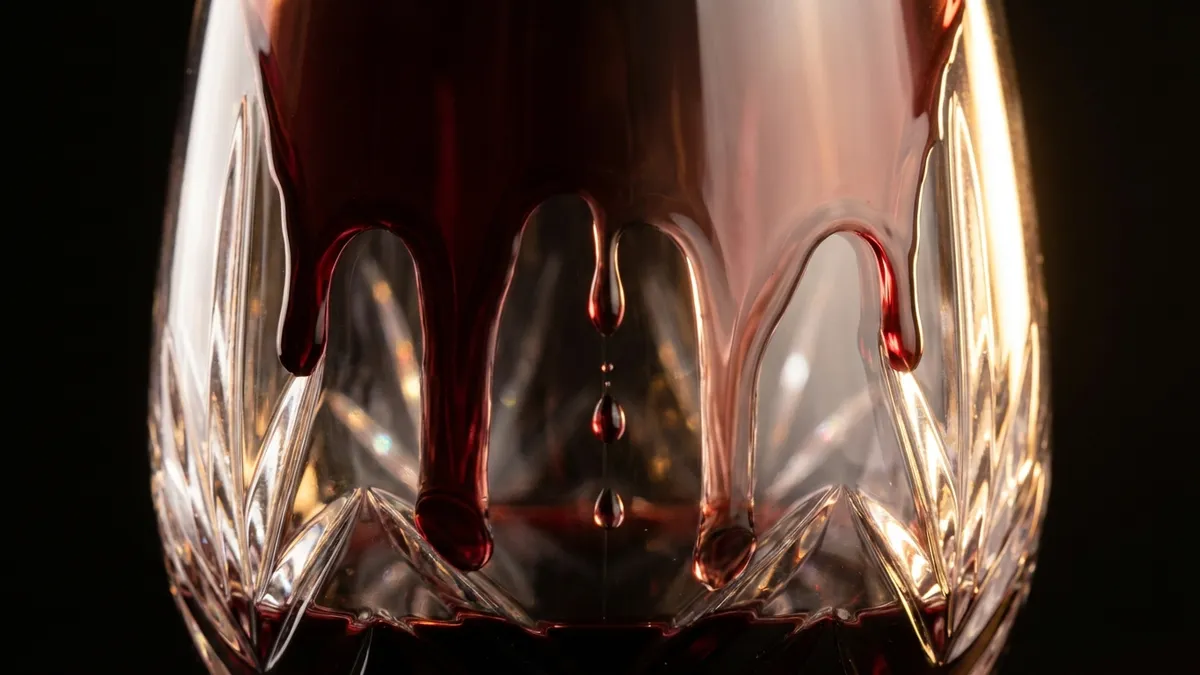
After swirling, observe the legs — the droplets running down the inside of the bowl. Thick, slow legs point to higher alcohol or residual sweetness, both common in warm-climate reds like Australian Shiraz or California Zinfandel. Thin, fast legs suggest a leaner, cooler-climate red. Legs are not a quality indicator, but they preview what your palate is about to confirm. The full physics behind this trick lives in the guide to wine legs meaning.
Step Three: Smell — Sort the Fruit Spectrum
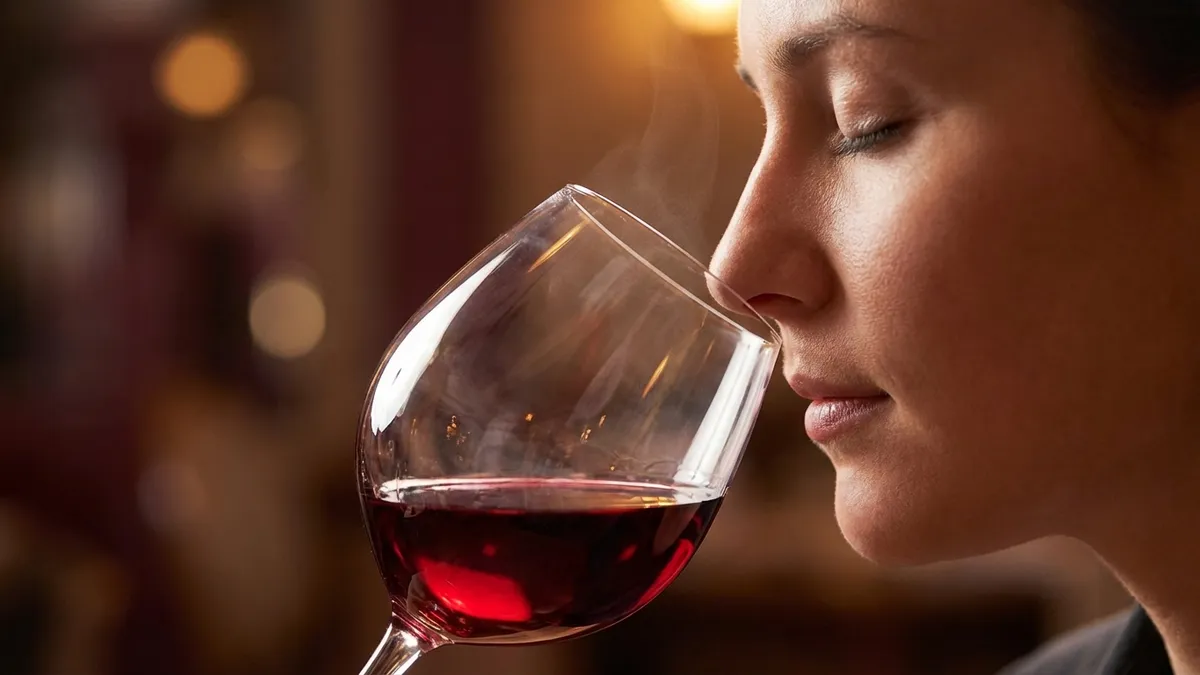
Bring the glass to your nose and take three or four short sniffs rather than one long inhale. Olfactory receptors fatigue fast, so quick passes work better than deep ones. Red wine aromas sort into three families that overlap in any given bottle.
Red Fruit, Black Fruit, Blue Fruit
The fruit spectrum is the defining aromatic axis of red wine.
- Red fruit — strawberry, red cherry, raspberry, cranberry, red plum, pomegranate. Common in Pinot Noir, Gamay, Sangiovese, lighter Tempranillo, and cool-climate Grenache.
- Black fruit — blackberry, black cherry, black plum, black currant. Typical of Cabernet Sauvignon, Merlot, Syrah, Malbec, and warm-climate Tempranillo.
- Blue fruit — blueberry, boysenberry. The signature of Syrah, some Malbec, and certain Zinfandels.
Identifying which fruit family dominates is the single fastest way to narrow grape variety. The full primary, secondary, and tertiary aromas framework explains why these scents come from the grape itself.
Oak, Spice, and Earth
After fruit, scan for winemaking and aging signatures:
- Oak influence — vanilla, toast, coconut, baking spice, cedar, smoke. American oak leans toward vanilla and dill; French oak leans toward toast and cigar box.
- Spice — black pepper (a Syrah signature), white pepper, clove, cinnamon, licorice, anise.
- Earth and savory — wet stone, mushroom, forest floor, leather, tobacco, dried herbs, cured meat. These are tertiary aromas that emerge with bottle age and are far more common in red than white wine.
If the wine smells dominantly of fresh fruit with little oak or earth, it is probably young and meant for immediate drinking. If you find leather, tobacco, mushroom, or dried fruit, the wine has serious bottle age or comes from a traditional winemaking style. For more on the difference, the tasting young vs aged wine guide breaks down what each phase looks like in the glass.
Step Four: Sip — Tannin First, Then Everything Else
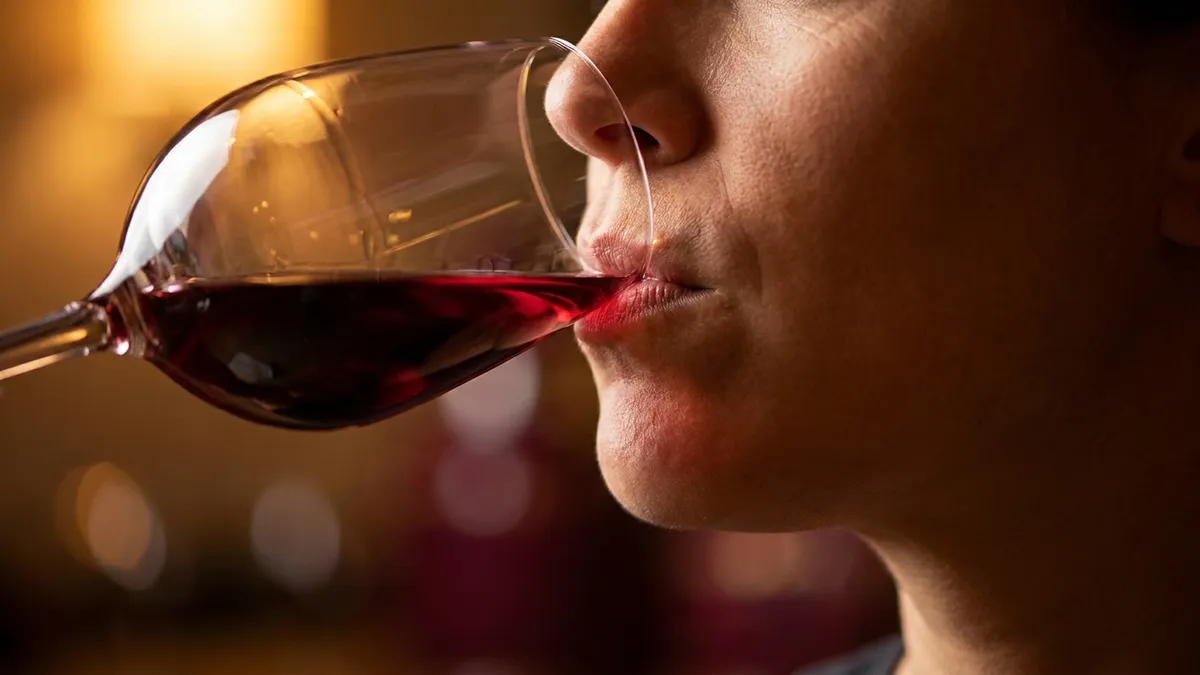
Take a small sip — enough to coat your mouth without filling it. Hold the wine for three to five seconds, move it across your tongue, and take a small breath through the wine. That last move pushes aromatics up the back of the throat to your olfactory receptors, a phenomenon called retronasal olfaction. It is why taste is mostly smell. The full mechanism is covered in retronasal smell wine.
For red wine, evaluate the structural elements in this specific order.
Tannin Grip Comes First
Tannins are the polyphenols extracted from grape skins, seeds, stems, and oak that bind to salivary proteins and create a drying, gripping sensation across your gums, tongue, and the inside of your cheeks. They are the defining feature of red wine and the first thing to assess.
Use a five-point scale:
- Low — barely perceptible drying. Pinot Noir, Gamay, Schiava.
- Medium-low — gentle grip that fades quickly. Barbera, lighter Merlot.
- Medium — clear drying sensation across the mouth. Sangiovese, Tempranillo, Grenache.
- Medium-high — firm grip that holds for several seconds. Cabernet Sauvignon, Syrah, Malbec.
- High — aggressive, mouth-coating tannin. Young Nebbiolo, Tannat, Mourvedre.
Tannin quality matters as much as quantity. Fine, silky tannins coat the mouth gently. Firm tannins grip without biting. Grippy or chewy tannins really take hold. Rough or harsh tannins feel abrasive — usually a sign of underripe grapes or over-extraction. Resolved tannins blend seamlessly into the wine and are the hallmark of well-aged reds. The full breakdown is in what are tannins.
Acidity, Body, Sweetness, Alcohol
After tannin, run through the rest:
- Acidity — felt as salivation along the sides of the tongue. High in Sangiovese, Nebbiolo, Pinot Noir; lower in warm-climate Merlot and Zinfandel.
- Body — the overall weight from light (Pinot Noir) to medium (Merlot, Sangiovese) to full (Cabernet, Syrah, Malbec, Amarone).
- Sweetness — almost all red table wine is dry, but ripe-fruit wines from warm climates can taste off-dry even at zero residual sugar.
- Alcohol — sensed as warmth in the throat and chest. Most reds run 12.5 to 15 percent. Above 14.5 percent, alcohol heat starts to dominate if other elements are not balanced.
The companion guide to understanding tannins, acidity, and body goes deeper on how these three pillars interact.
Step Five: Reflect — Length, Balance, Age Potential
Once you swallow or spit, the tasting is not over. The final thirty seconds reveal the most about quality.
The Finish
The finish, also called length, is how long flavor persists after the wine leaves your mouth. A short finish under five seconds suggests a simple wine made for immediate drinking. A medium finish of ten to twenty seconds is typical of well-made everyday reds. A long finish — thirty seconds or more, especially when new flavors emerge as it fades — is a hallmark of concentrated, complex, age-worthy wine.
Balance
A wine is balanced when no single element dominates. Tannin matches fruit. Acidity matches body. Alcohol does not stick out. Out-of-balance wines feel hot, hollow, harsh, or flabby. With practice, balance becomes the most useful single judgment you make about a red wine.
Age Potential
Red wines built for aging share three structural traits: high tannin, high acidity, and concentrated fruit. The tannin softens, the fruit evolves into dried-fruit and savory notes, and acidity preserves freshness. A young Barolo, Bordeaux, or Brunello may taste forbidding at release and gorgeous at fifteen years. A light-bodied, low-tannin red is built for the next twelve months — drink it now.
Practical Setup: Temperature, Glassware, Decanting
The same wine tastes radically different depending on how you serve it. Three setup details matter most for red wine.
Serving Temperature
Most reds taste best between 15 and 18 degrees Celsius (59 to 64 Fahrenheit), cooler than typical room temperature. Lighter reds prefer the cooler end around 14 to 16 degrees. Full-bodied reds show best near 17 to 18 degrees. Above 20 degrees, alcohol dominates and tannin feels harsher. Below 12 degrees, fruit shuts down and tannin feels rougher. The complete temperature breakdown lives in the wine serving temperature chart and how temperature affects wine taste.
A practical rule — pull most reds out of room-temperature storage and chill for fifteen minutes in the fridge before pouring.
Glassware
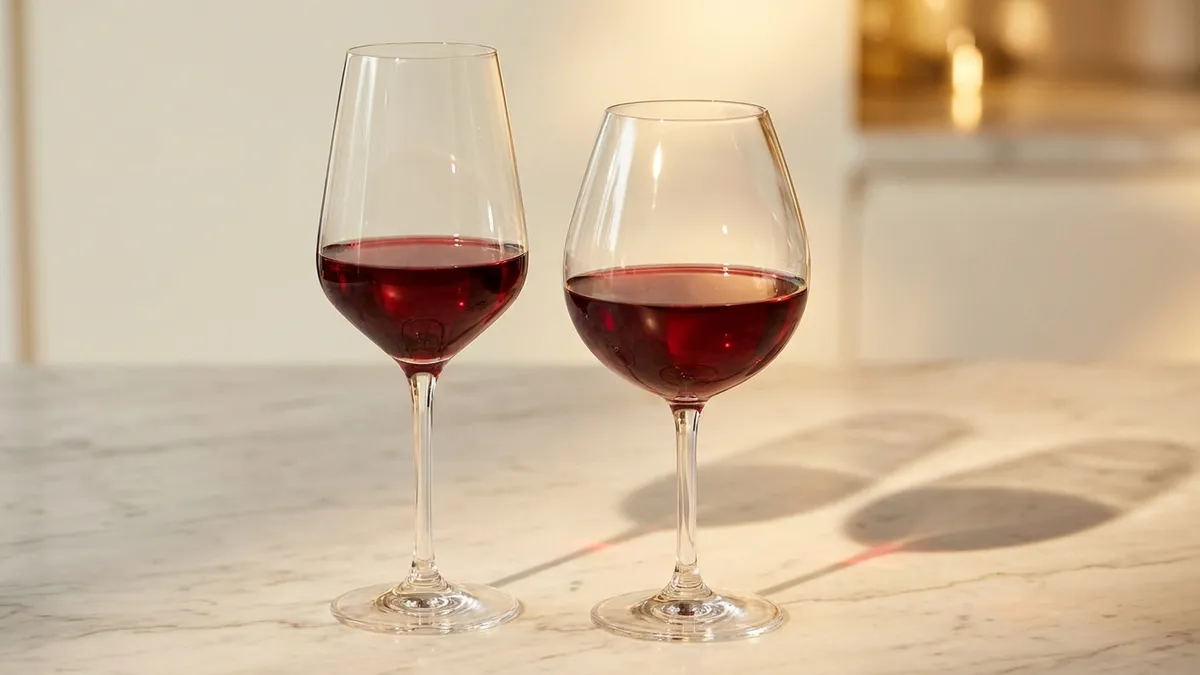
Use a stemmed tulip-shaped glass with a wide bowl. Two shapes matter for reds:
- Bordeaux glass — taller, narrower bowl. Directs full-bodied wine to the back of the palate, suiting Cabernet Sauvignon, Syrah, Malbec, and Bordeaux blends.
- Burgundy glass — rounder, wider bowl. Amplifies delicate aromatics, suiting Pinot Noir, Nebbiolo, and other lighter, aromatic reds.
You do not need expensive crystal — affordable stemmed glasses work fine — but glass shape genuinely changes perception. The deep-dive lives in does wine glass shape affect taste.
Decanting
Decanting — pouring wine out of the bottle into a wide-bowled vessel — does two different things for red wine:
- Young tannic reds — thirty to sixty minutes of decanting opens aromas and softens tannin grip. Useful for young Cabernet, Syrah, Nebbiolo, Bordeaux blends.
- Older bottles with sediment — a careful pour separates clear wine from sediment, then a brief rest of fifteen to thirty minutes reveals tertiary complexity without driving off the delicate aromas of mature wine.
Most everyday reds need only the swirl in the glass. Decanting is not a quality signal in itself — it is a tool you reach for when the wine specifically benefits.
Food Pairing in One Move
The guiding principle for pairing red wine is structural — match tannin to protein and fat, match body to weight. Tannic reds like Cabernet and Syrah pair best with grilled red meat, aged hard cheese, and braised dishes because protein and fat bind to the tannins and soften them. Light-bodied reds like Pinot Noir and Gamay pair with poultry, mushroom-based dishes, salmon, and charcuterie. Medium-bodied reds like Sangiovese and Tempranillo are workhorse pairings for tomato-based pasta, pizza, and roasted vegetables. The full system is in wine food pairing.
Build the Habit
Reading a method is not the same as tasting through it. The fastest way to internalize this five-step approach is to taste two reds side by side once a week — Cabernet next to Pinot Noir, young Sangiovese next to a ten-year-old version, oaked next to unoaked. Comparison turns abstract terms like grippy tannin and ruby rim into concrete sensations you can recognize anywhere.
The Sommy app guides you through structured red-wine tasting with on-screen prompts for each step, an aroma reference matched to the glass in front of you, and AI feedback on your notes. It is the same five-step framework, with a coach in your pocket. You can start a guided tasting at sommy.wine.
A final reminder — preference is not the same as quality. You may love a fruit-forward Malbec and find a tannic Barolo punishing. Both can be excellent wines. The point of a structured method is not to override your taste; it is to give you the language and the awareness to know what you are tasting and why. Once you have that, every glass of red wine becomes a small experiment, and every tasting builds on the last.
Frequently Asked Questions
What is the right way to taste red wine step by step?
Use five steps. Sight reads rim color and core opacity for age and grape style. Swirl warms volatile compounds. Smell sorts red, black, and blue fruit, oak, and earth. Sip assesses tannin grip first, then acidity, body, sweetness, and alcohol. Reflection judges length, balance, and age potential.
What temperature should red wine be served at for tasting?
Most reds taste best between 15 and 18 degrees Celsius, which is cooler than typical room temperature. Lighter reds like Pinot Noir prefer the cooler end around 14 to 16 degrees. Full-bodied reds like Cabernet Sauvignon and Syrah show best near 17 to 18 degrees. Warmer than 20 degrees and alcohol dominates.
How do you tell the age of a red wine from its color?
Look at the rim where the wine meets the glass. A purple or violet rim signals youth, often under three years. A clean ruby rim suggests the early prime. An orange or brown rim with a wide color transition between rim and core points to a wine with significant bottle age, usually five years or more.
Should you decant red wine before tasting?
Decanting helps young tannic reds and older bottles with sediment. For young reds it softens grip and opens aromas after about thirty to sixty minutes. For older reds it separates clear wine from sediment, but only briefly because tertiary aromas fade with too much air. Most everyday reds need only the swirl in the glass.
Why do tannins matter most when tasting red wine?
Tannins are the structural backbone of red wine and the element that makes red tasting different from white tasting. They create a drying, gripping sensation on gums and cheeks that signals grape variety, ripeness, oak influence, and aging potential. Assessing tannin grip first anchors the rest of your palate evaluation.
What kind of glass is best for tasting red wine?
Use a tulip-shaped stemmed glass with a wide bowl. Bordeaux glasses with taller, narrower bowls suit full-bodied reds like Cabernet Sauvignon and Syrah by directing wine to the back of the palate. Burgundy glasses with rounder, wider bowls suit lighter reds like Pinot Noir by amplifying delicate aromas.
How long should red wine linger on the finish?
A short finish fades within five seconds and points to a simple wine. A medium finish lasts ten to twenty seconds and is typical of well-made everyday reds. A long finish that holds flavor for thirty seconds or more, especially with evolving notes, signals concentration, complexity, and quality.
Sommy Team
LinkedInFounder & Wine Educator
The Sommy Team is building the world's most approachable wine education app, helping beginners develop real tasting skills through structured courses and AI-guided practice.