Burgundy Wine Guide: Understanding the Most Complex Region on Earth

By the Sommy Team — AI-assisted, human-edited.
Updated Jul 21, 2026
Contents (12)
- What Is Burgundy Wine?
- The Two Grapes That Define Burgundy
- The Terroir Philosophy: Climat and the Cult of Place
- The Burgundy Wine Guide to the Four-Tier Classification
- The Sub-Regions of Burgundy
- Négociant vs Domaine: Who Actually Made the Bottle
- Why Burgundy Is So Confusing
- Vintage, Aging, and What Burgundy Costs
- Food Pairings That Work
- How a Beginner Should Start with Burgundy
- Burgundy Beyond Pinot and Chardonnay
- The Reward of Learning Burgundy
TL;DR
Burgundy makes red wine from Pinot Noir and white wine from Chardonnay, ranked across four tiers from Regional to Grand Cru. The region is confusing because it sells the vineyard, not the producer, and splits land into thousands of tiny plots. This burgundy wine guide shows beginners where to start.
What Is Burgundy Wine?
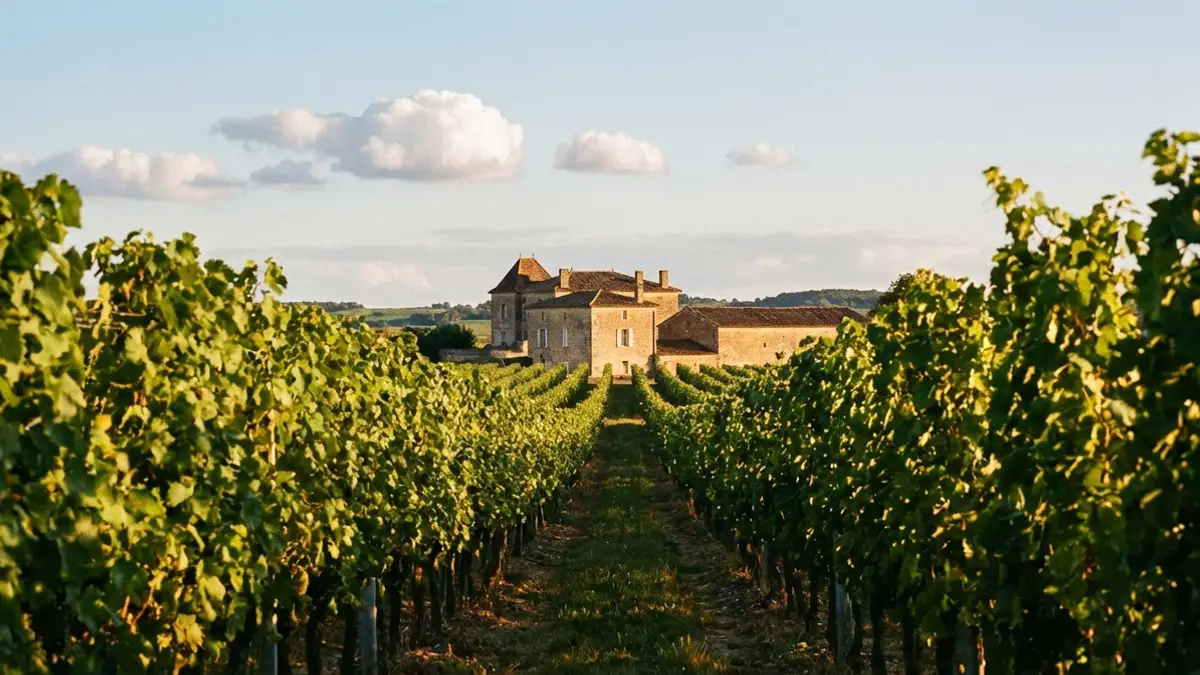
This burgundy wine guide starts with a reassuring fact: for all its reputation as the most complex wine region on earth, Burgundy (Bourgogne in French) makes its great wines from just two grapes. Red Burgundy is Pinot Noir and white Burgundy is Chardonnay. The difficulty is not the grapes — it is the map. Burgundy is a narrow strip in eastern France carved into thousands of tiny vineyard plots, each ranked across four quality tiers, and the label tells you the place rather than the grape. Learn the two grapes and the four tiers, and most of the confusion in this region falls away, leaving wines of remarkable elegance and a sense of place that no other region matches.
The Two Grapes That Define Burgundy
Most regions chase variety. Burgundy chases focus. Nearly every serious bottle is one grape: Pinot Noir for reds, Chardonnay for whites. There are minor exceptions — Aligoté makes a crisp everyday white, and Gamay rules the Beaujolais area at the southern edge — but the two noble grapes carry the region's fame.
This single-grape discipline is the whole point. Because the grape never changes, every difference you taste between two red Burgundies comes from somewhere else: the soil, the slope, the sunlight, the hand of the grower. Burgundy is the clearest classroom in the world for understanding terroir — the idea that the same grape grown a few hundred meters apart can taste meaningfully different.
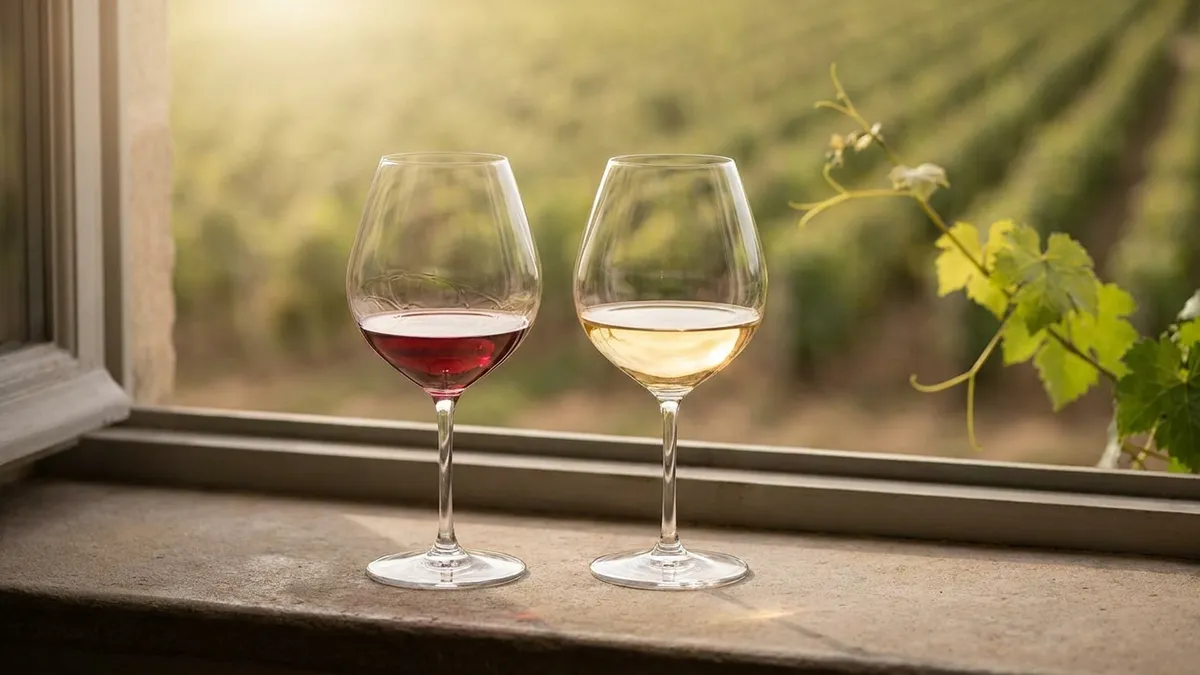
Red Burgundy (Pinot Noir) is pale to medium ruby, perfumed, and savory. Typical aromas: red cherry, raspberry, rose, forest floor, mushroom. On the palate it is light to medium bodied with high acidity and fine, silky tannins. Body: light-to-medium (2-3/5) · Acidity: high (4/5) · Tannins: low-to-medium (2/5). If you want the full picture of this grape beyond Burgundy, our Pinot Noir guide covers how it behaves around the world.
White Burgundy (Chardonnay) spans a wide range. In the cool north it is lean and citrusy; further south it turns to ripe apple, hazelnut, and a rounder, sometimes buttery texture from oak and malolactic fermentation (a secondary fermentation that softens sharp acidity into a creamier feel). For the grape's global expressions, see our Chardonnay wine guide. Both grapes also feature in our overview of the noble grapes every learner should know first.
The Terroir Philosophy: Climat and the Cult of Place
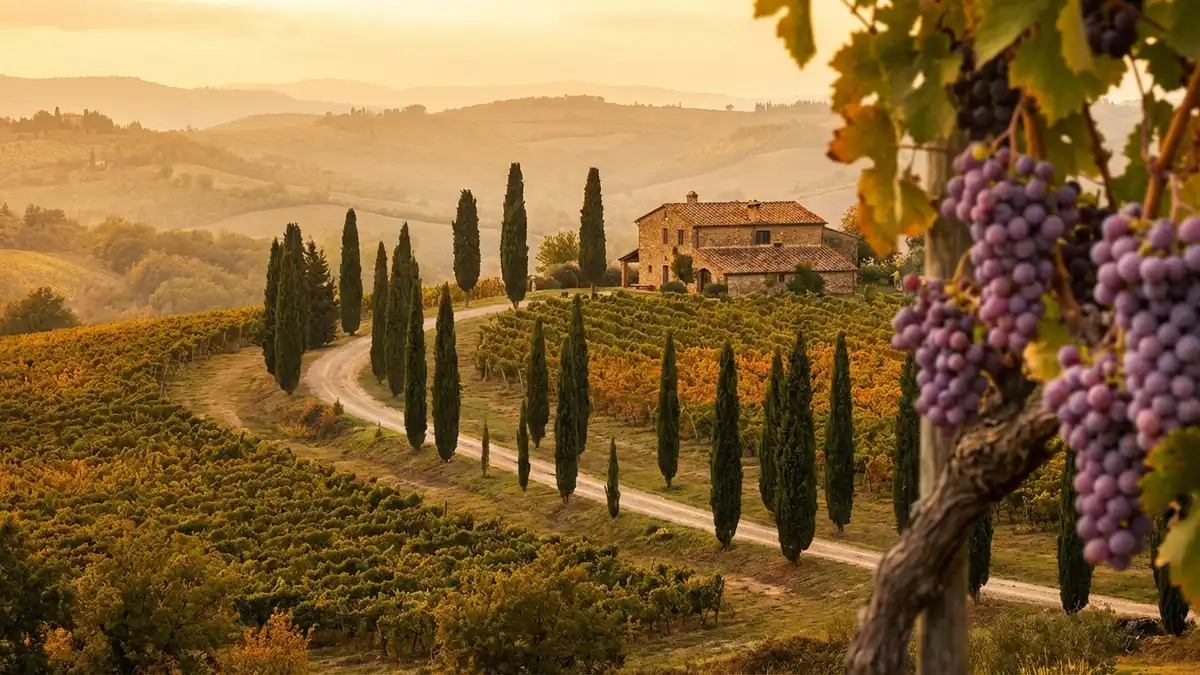
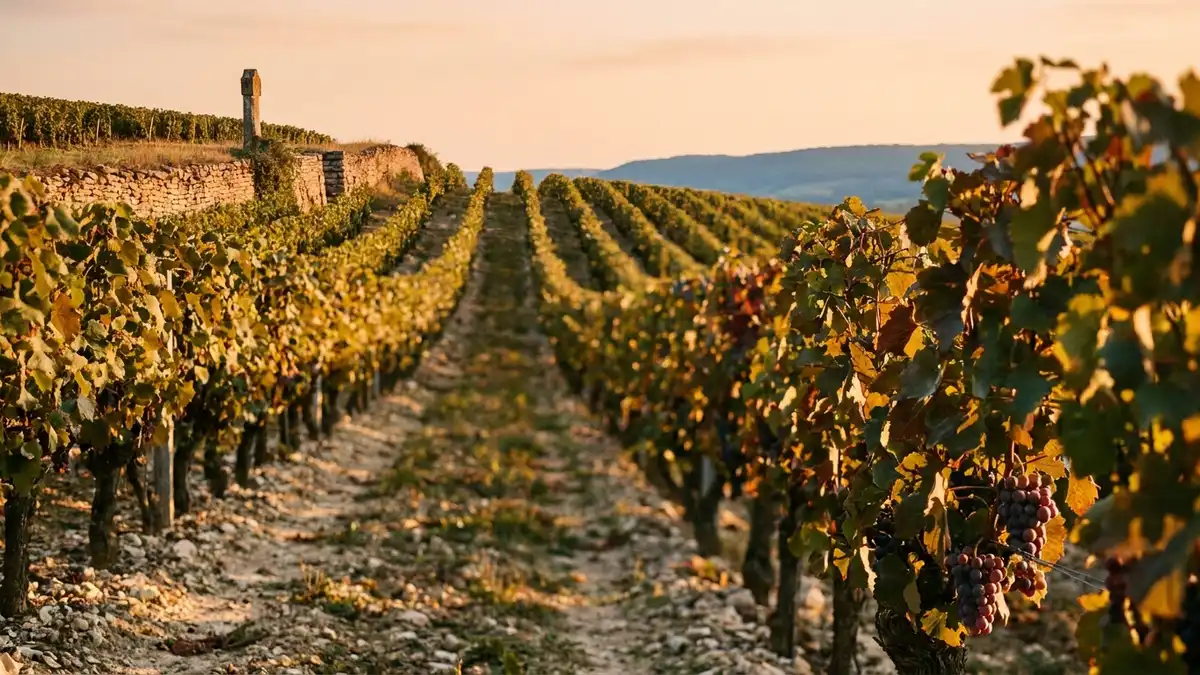
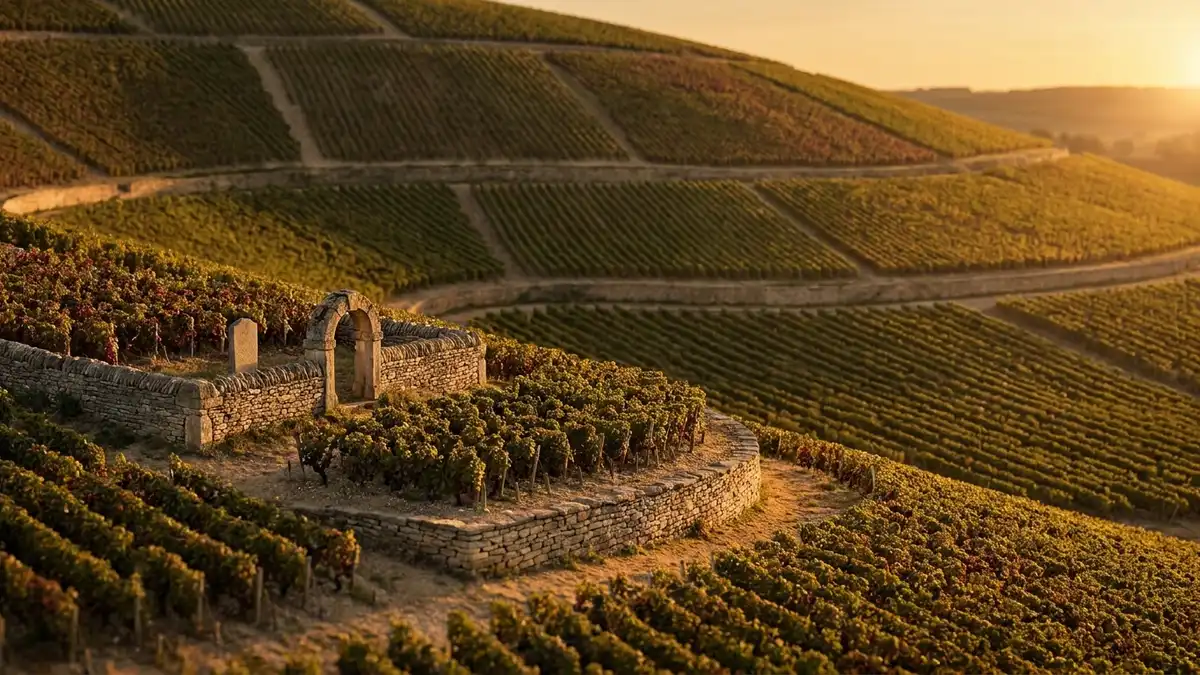
To understand Burgundy you have to understand one French word: climat. A climat is a specific, named, legally defined parcel of vineyard with its own soil, exposure, and microclimate. Burgundy has more than 1,200 of them, and in 2015 they earned UNESCO World Heritage status as a living cultural site. The boundaries were not drawn by marketers — they were observed by monks over centuries who noticed that wine from one slope consistently tasted different from the slope beside it.
That observation is the soul of the region. Burgundy's belief is that the vineyard, not the winemaker and not even the grape, is the star. The job of a good Burgundy producer is to get out of the way and let the climat speak. It is why two bottles of Pinot Noir from neighbouring plots, made the same way in the same year, can taste like cousins rather than twins.
This philosophy is the opposite of the château model in Bordeaux, where a single estate owns a contiguous property and sells a branded wine. In Burgundy, the place comes first and the producer second. That flips how you read a label — and it is the root of nearly everything that makes the region hard.
The Burgundian believes the wine is already in the ground. The winemaker's job is simply not to ruin it.
The Burgundy Wine Guide to the Four-Tier Classification
Every Burgundy wine sits in one of four quality tiers, ranked by the vineyard it comes from rather than the brand on the bottle. This pyramid is the single most useful thing to learn, because it appears on every label and predicts both style and price. From broadest to most exclusive:
- Regional (Bourgogne): The base of the pyramid and roughly half of all Burgundy. Grapes can come from anywhere across the region, blended together. Labelled simply "Bourgogne Rouge" or "Bourgogne Blanc." Approachable, fairly priced, and the smartest place for a beginner to meet the region's house style.
- Village: Wine from a single named commune, such as Gevrey-Chambertin, Meursault, or Pommard. The label carries the village name. These wines show clear local character and are the heart of everyday fine Burgundy — more specific and more expressive than Regional, without the steep price jump of the top tiers.
- Premier Cru (1er Cru): A superior, named vineyard within a village, identified over generations as consistently better. The label reads village plus vineyard, like "Volnay 1er Cru Les Caillerets." There are around 640 Premier Cru climats. This is where serious complexity and ageability begin.
- Grand Cru: The tiny summit of the pyramid — the single greatest vineyards, so renowned they drop the village name and stand on their own. There are just 33 Grand Cru vineyards in all of Burgundy. They make up barely 1-2% of production yet command the highest prices of any wine on earth.
The pattern to remember: the more specific the place named on the label, the higher the tier. A wide regional name sits at the bottom; a single famous vineyard standing alone sits at the top. If the terms trip you up, our guide to what cru means explains Premier Cru and Grand Cru and why they shift meaning from Burgundy to Bordeaux to Champagne. The Sommy app's French wine course walks through real labels so you can place any bottle in this pyramid at a glance.
The Sub-Regions of Burgundy
Burgundy runs north to south as a long, thin ribbon, and each stretch has its own climate and personality. Knowing the five core areas — plus the Gamay outlier — turns a baffling map into a story you can follow.
- Chablis (far north): Cool, almost on the doorstep of Champagne, and exclusively white from Chardonnay. The style is lean, taut, and citrus-and-green-apple fresh, with a flinty mineral edge from ancient Kimmeridgian limestone (fossilized oyster-shell soils). Often unoaked, it is the steeliest face of Chardonnay anywhere.
- Côte de Nuits (northern Côte d'Or): The grand cradle of red Burgundy. This is Pinot Noir country, home to most of the region's red Grand Crus and villages like Gevrey-Chambertin and Vosne-Romanée. The reds are structured, deep, and built to age for decades.
- Côte de Beaune (southern Côte d'Or): Makes both colors but is celebrated for the world's greatest dry Chardonnays, from villages such as Meursault and Puligny-Montrachet. Its reds, from villages like Pommard and Volnay, are generally softer and earlier-drinking than those of the Côte de Nuits.
- Côte Chalonnaise (south of the Côte d'Or): A less famous, better-value middle ground producing both Pinot Noir and Chardonnay, plus crisp Aligoté. Villages like Mercurey and Rully offer honest Burgundy character at fairer prices.
- Mâconnais (deep south): Warmer and sunnier, focused on Chardonnay. The wines are riper, rounder, and friendlier on the wallet — Mâcon-Villages is one of the best entry points to white Burgundy.
- Beaujolais (southernmost, often counted separately): Technically the tail of Burgundy but its own world, planted to Gamay rather than Pinot Noir. The reds are light, juicy, and fruit-forward — a useful contrast that shows just how singular Pinot Noir is everywhere to the north.
Négociant vs Domaine: Who Actually Made the Bottle
Two words on a Burgundy label tell you a lot about how the wine came to be. Sorting them out is half the battle of shopping the region.
- Domaine: A producer that grows its own grapes and bottles wine only from vineyards it owns or farms itself. A domaine bottling is the most site-specific expression you can get — one grower, one piece of land, one voice. Look for the word "Domaine" on the label.
- Négociant: A merchant house that buys grapes, juice, or finished wine from many small growers, then blends, ages, and bottles it under its own name. Négociants exist because Burgundy's plots are so tiny that countless growers make too little wine to sell alone. They offer reliability, availability, and a consistent house style — often the easiest way for a beginner to taste a famous village without hunting down a rare domaine.
Neither is automatically better. A great négociant can outshine a careless domaine. But the distinction explains why the same vineyard name shows up on many different bottles: dozens of growers and merchants may all own or buy a slice of the same climat.
Why Burgundy Is So Confusing
If Burgundy makes only two grapes, why does it have a reputation as the hardest region to learn? The confusion is real, and it comes from how the land is owned and labelled rather than from the wine itself.
Fragmented Plots and Shared Vineyards
The root cause is fragmentation. French inheritance law has split vineyards among heirs for over two centuries, so a single famous vineyard is rarely owned by one person. The Grand Cru Clos de Vougeot, for example, covers about 50 hectares shared among roughly 80 different owners — each making their own wine and putting the same vineyard name on the label. So one prestigious name can appear on dozens of different bottles of wildly different quality. The vineyard name alone does not guarantee the wine; the producer behind it matters just as much. In fact, the counterintuitive rule seasoned buyers learn first is that a great producer working a Village-level vineyard will usually outperform a careless one working a Grand Cru — the label tells you the geography, but the producer decides what is actually in the bottle.
No Château Model to Anchor On
In Bordeaux, you can learn a handful of estates and feel oriented. Burgundy gives you no such handrail. There is no château model — no single property selling one branded wine. Instead you must hold three moving parts in your head at once: the grape (easy — two options), the tier (Regional to Grand Cru), and the producer (domaine or négociant). The label puts the place front and center, assuming you already know which grape that place grows and who made the bottle. Decoding a French wine label is a skill in itself, and our guide to French wine regions shows how Burgundy's logic compares with the rest of the country.
The payoff for learning all this is that Burgundy rewards attention like no other region. Once the system clicks, a label stops being a wall of unfamiliar names and becomes a precise description of exactly what is in the glass.
Vintage, Aging, and What Burgundy Costs
Burgundy's continental climate makes vintage matter more here than almost anywhere else. Spring frost can erase part of a harvest, summer hail can destroy one vineyard while sparing its neighbour, and the same producer can release an ethereal wine one year and a dense, structured one the next. Recent years tell the story: 2018 warm and generous, 2019 classically balanced and built to age, 2020 opulent with low yields, 2022 a heat-wave year of riper styles. Climate change is compounding the trend — harvests keep moving earlier and alcohol has crept up roughly a full point over a generation, which is why cooler, higher parcels are increasingly prized.
Aging windows follow the classification ladder: drink Regional Bourgogne within 3-7 years, Village wines at 5-15, Premier Cru at 8-20, and Grand Cru reds from strong vintages anywhere up to 50. Whites typically run 8-25 years, with Chablis peaking earlier than richer Meursault-style wines.
Prices climb the same ladder — roughly $25-35 for Regional and basic Mâconnais bottles, $50-100 for Village wines, $100-300 for Premier Cru, and $300 and up (often far more) for Grand Cru. The honest advice: avoid Burgundy under $20, where the wines almost never deliver on the region's reputation. A Village-level Mâconnais white or a Côte Chalonnaise red like Mercurey is where real value starts.
Food Pairings That Work
Red Burgundy's high acid and silky tannin make it a natural with roasted poultry, mushroom dishes, and the definitional match, beef bourguignon; aged Comté mirrors old Pinot's nutty, earthy notes. Rich Côte de Beaune whites handle scallops, lobster, and roast chicken with butter sauce, while lean Chablis is the seafood specialist — oysters are the textbook pairing, salinity meeting salinity. For the underlying logic, see our wine and food pairing guide.
How a Beginner Should Start with Burgundy
You do not need a Grand Cru or a big budget to understand Burgundy. The smartest path is to taste deliberately at the accessible tiers and pay attention to what changes. Here is a practical order:
- Begin at Village level. Pick a single Village red, like Gevrey-Chambertin or Marsannay, and a Village white, like a Saint-Aubin or Mâcon-Villages. This is where Burgundy's character is clear and the price is still sane.
- Use Chablis to meet white Burgundy. A basic Chablis is the cleanest possible introduction to unoaked Chardonnay — bright, mineral, and unmistakably Burgundian. Compare it later with a richer Mâconnais white to feel the north-south difference.
- Taste two villages side by side. Open a Côte de Nuits red and a Côte de Beaune red together. The Nuits wine will feel firmer and deeper; the Beaune wine softer and earlier. Same grape, different place — terroir made obvious.
- Lean on a trusted négociant first. A reliable merchant bottling lets you taste a famous village without tracking down a tiny domaine. Move to single-domaine wines once your palate has a baseline.
- Build the tasting habit. Note the color, the high acidity, and the savory, earthy edge that sets Pinot Noir apart from fruit-driven New World reds. Our guide to how to taste wine gives you the step-by-step method, and understanding tannins, acidity, and body explains the structure that defines these elegant wines.
Sommy turns these comparisons into guided exercises — naming the aromas, scoring the structure, and building the vocabulary to describe what you sense. You can start practicing free at sommy.wine, then bring the method to your next bottle of Bourgogne.
Burgundy also teaches a wider lesson that pays off across all wine: that two glasses of the same grape can taste entirely different. If that idea fascinates you, our piece on why grapes that look the same can taste different carries the thread well beyond France.
Burgundy Beyond Pinot and Chardonnay
The minor grapes are worth a mention because they show the edges of the region. Aligoté makes a sharp, lemony white traditionally splashed into a Kir cocktail with crème de cassis — an everyday wine that locals drink without ceremony. Gamay, in Beaujolais, makes the light, gulpable reds that are Burgundy's cheerful cousin. Neither carries the prestige of the two noble grapes, but both round out an understanding of the region.
It is also worth knowing how Burgundy's grapes connect to other regions you may already enjoy. Pinot Noir's love of cool climates links it to sparkling wines and to crisp whites like Muscadet's Melon de Bourgogne — a grape whose very name nods to Burgundy. And if you have explored sparkling styles such as Prosecco's Glera grape, Burgundy offers a useful contrast in how seriously a region can take a single variety.
The Reward of Learning Burgundy
Burgundy asks more of a learner than almost any other region, and it gives more back. The fragmented plots, the four tiers, the choice between domaine and négociant — none of it is decoration. It is a precise system for telling you exactly where a wine came from and roughly how good it should be. Once you can read it, a Burgundy label becomes one of the most informative things in wine.
Start small, taste in pairs, and let the climats reveal themselves one glass at a time. The Sommy app is built to make that habit stick — turning each bottle into a short, guided lesson so the next Bourgogne you open is a little clearer than the last.
Sources
Frequently Asked Questions
What grapes does Burgundy wine use?
Almost everything is one of two grapes. Red Burgundy is Pinot Noir and white Burgundy is Chardonnay, with rare exceptions like Aligoté for whites and Gamay in the Beaujolais area to the south. Because the label names the place rather than the grape, knowing this pairing tells you what is in nearly every bottle.
How does the Burgundy classification system work?
Burgundy ranks wine in four tiers by vineyard quality, not by producer. Regional (Bourgogne) is the base, Village names a single commune, Premier Cru names a superior plot within a village, and Grand Cru is the tiny top tier of the most prized vineyards. Quality and price climb at each step.
Why is Burgundy wine so confusing?
Burgundy splits its vineyards into thousands of tiny plots, and a single famous vineyard can be shared among dozens of owners who each make their own wine. There is no single château or brand to anchor on, so the same vineyard name appears on many different bottles of varying quality. The label names the place, not the grape.
What is the difference between a négociant and a domaine?
A domaine grows its own grapes and bottles wine only from vineyards it owns or farms. A négociant buys grapes, juice, or finished wine from other growers and blends or bottles it under the négociant's own name. Domaine bottlings are usually more site-specific, while négociants offer reliable, widely available regional wines.
Where should a beginner start with Burgundy?
Start at the Village tier from a single commune, or a well-made Regional Bourgogne, rather than chasing Grand Cru. A Village-level red or a Chablis white gives you authentic Burgundy character at a fairer price. Taste a few side by side so the differences in fruit, earth, and acidity become clear.
Is Chablis a Burgundy wine?
Yes. Chablis sits in the cool far north of Burgundy and makes only white wine from Chardonnay. Its style is lean, mineral, and citrus-driven, very different from the richer Chardonnays of the Côte de Beaune further south. Chablis has its own Village, Premier Cru, and Grand Cru tiers within the wider Burgundy system.
What does Burgundy wine taste like?
Red Burgundy from Pinot Noir tends toward red cherry, raspberry, forest floor, and mushroom, with light-to-medium body, high acidity, and silky tannins. White Burgundy from Chardonnay ranges from steely citrus in Chablis to richer apple, hazelnut, and butter further south. Both styles prize freshness and an earthy, savory character over heavy fruit.
Why is Burgundy wine so expensive?
Burgundy is small — about 30,000 hectares versus Bordeaux's 110,000 — and yields are kept deliberately low. The four-tier classification concentrates prestige in tiny vineyards, global demand for the top sites far exceeds supply, and spring frost and hail regularly shrink harvests. Add collector demand and prices climb fast, which is why value hunting starts in the Mâconnais and Côte Chalonnaise.
Sommy Team
LinkedInFounder & Wine Educator
The Sommy Team is building the world's most approachable wine education app, helping beginners develop real tasting skills through structured courses and AI-guided practice.