What Is Cru in Wine? Grand Cru, Premier Cru, and Cru Explained

By the Sommy Team — AI-assisted, human-edited.
Updated Jul 23, 2026
Contents (10)
- What Is Cru in Wine?
- The Cru Wine Meaning: Why the Word Means Growth
- Cru in Burgundy: Ranking the Vineyard
- Premier Cru vs Grand Cru: The Key Distinction
- Cru in Bordeaux: Ranking the Estate
- Cru in Champagne: Ranking the Village
- Cru in Alsace, Italy, and Beyond
- Does Cru Actually Mean Better Wine?
- How Cru Fits Into Reading a Label
- The One-Line Version
TL;DR
Cru is French for growth and refers to a specific vineyard or place, not a grape or a producer. Grand Cru sits at the top and Premier Cru just below. Burgundy ranks vineyards, Bordeaux ranks estates, and Champagne ranks whole villages, so cru means different things depending on the region printed on the label.
Few wine words look more intimidating on a label than cru, and few are more useful once they click. You will see it on a bottle of Burgundy, on Champagne, on Bordeaux, and it seems to promise something important — but nobody tells you what. The cru wine meaning is simpler than the mystique suggests: cru is French for growth, and it points to a specific piece of land judged to grow better grapes than its neighbours. This guide unpacks Grand Cru and Premier Cru, shows why the word shifts meaning from region to region, and explains how to read it without a sommelier at your elbow.
What Is Cru in Wine?
Cru (pronounced croo) is French for growth, and in wine it labels a specific vineyard, village, or estate that has been officially recognised for the quality of what it grows. The core of the cru wine meaning is place: a cru is not a grape, not a brand, and not a producer — it is a plot of earth with a reputation. Grand Cru (great growth) marks the top tier and Premier Cru (first growth, often written 1er Cru) sits just below it. The confusing part is that the unit being ranked changes by region — a vineyard in Burgundy, an estate in Bordeaux, a village in Champagne — so the same word carries three different meanings depending on where the wine is from.
The Cru Wine Meaning: Why the Word Means Growth
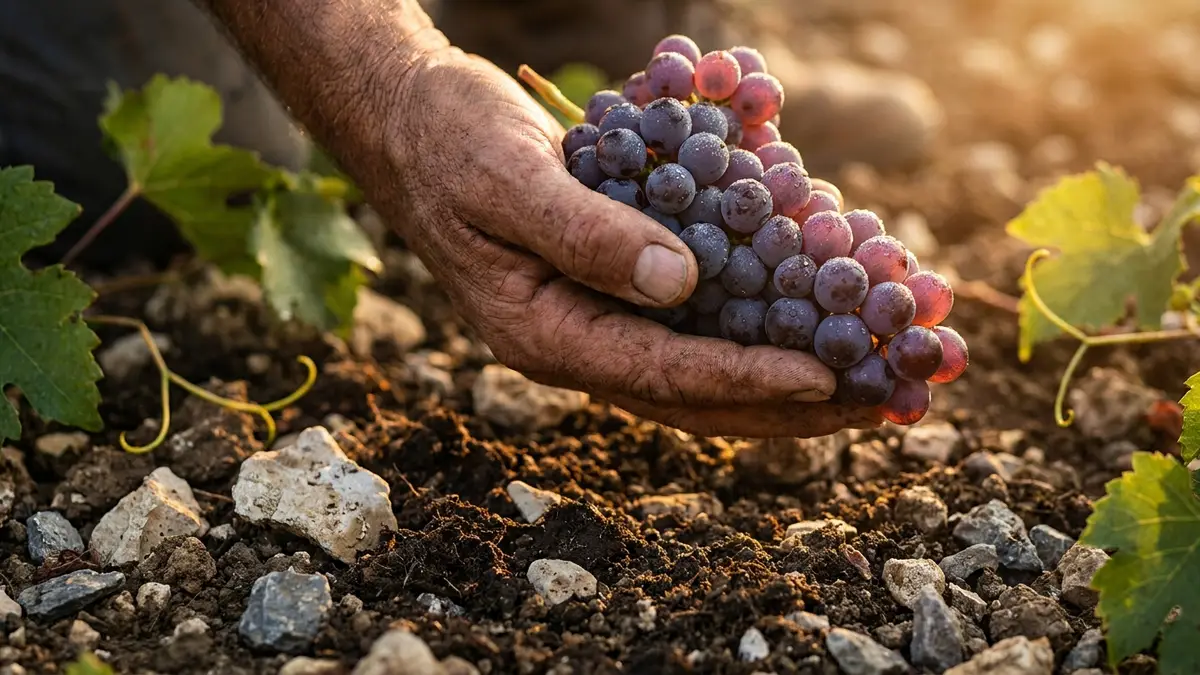
The word comes from the French verb croître, to grow, and its past participle crû. Centuries ago, a cru simply meant the produce of a particular place — the growth of that hillside, that slope, that walled plot. Over time it hardened into a formal idea: certain sites reliably grow superior grapes, year after year, and deserve a name of their own.
That history matters because it explains the one thing beginners get wrong. Cru is not a style, a sweetness level, or a maker's private label. It is a judgement about terroir — the full environment where grapes grow, including soil, slope, sunlight, and drainage. If you want the deeper story of why place shapes flavour, our guide to terroir covers it, but the short version is that a cru is a place the wine world has decided to trust.
Cru in Burgundy: Ranking the Vineyard
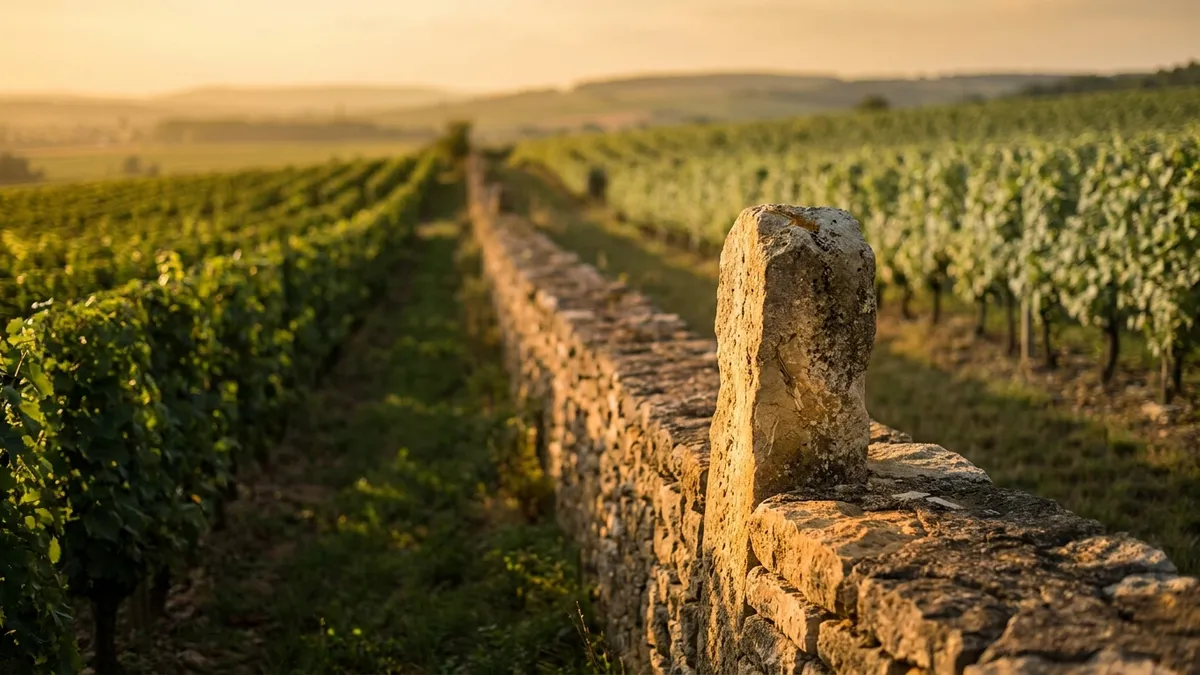
Burgundy is where cru is most precise, and it is the model most people picture. Here, cru ranks the vineyard itself — often a plot of just a few hectares, its boundaries drawn over centuries of watching which rows ripen best. Burgundy stacks its wines into four tiers, from broadest to narrowest.
- Régionale — the base, labelled simply Bourgogne, with grapes from anywhere in the region
- Village — grapes from a single named commune, such as Meursault or Gevrey-Chambertin
- Premier Cru — a named, classified vineyard one step below the summit, written as village plus 1er Cru plus the vineyard name
- Grand Cru — one of a small elite of top vineyards, so revered the vineyard name often stands alone on the label
The numbers show how rare the top gets. Burgundy has just 33 Grands Crus, and they account for only about 1% of the region's production. Premier Cru is broader but still selective — roughly 640 classified climats making up around 10% of output. The remaining nine bottles in ten are village or régionale wine. A climat, in Burgundy, is a single named vineyard plot with its own defined boundaries and history.
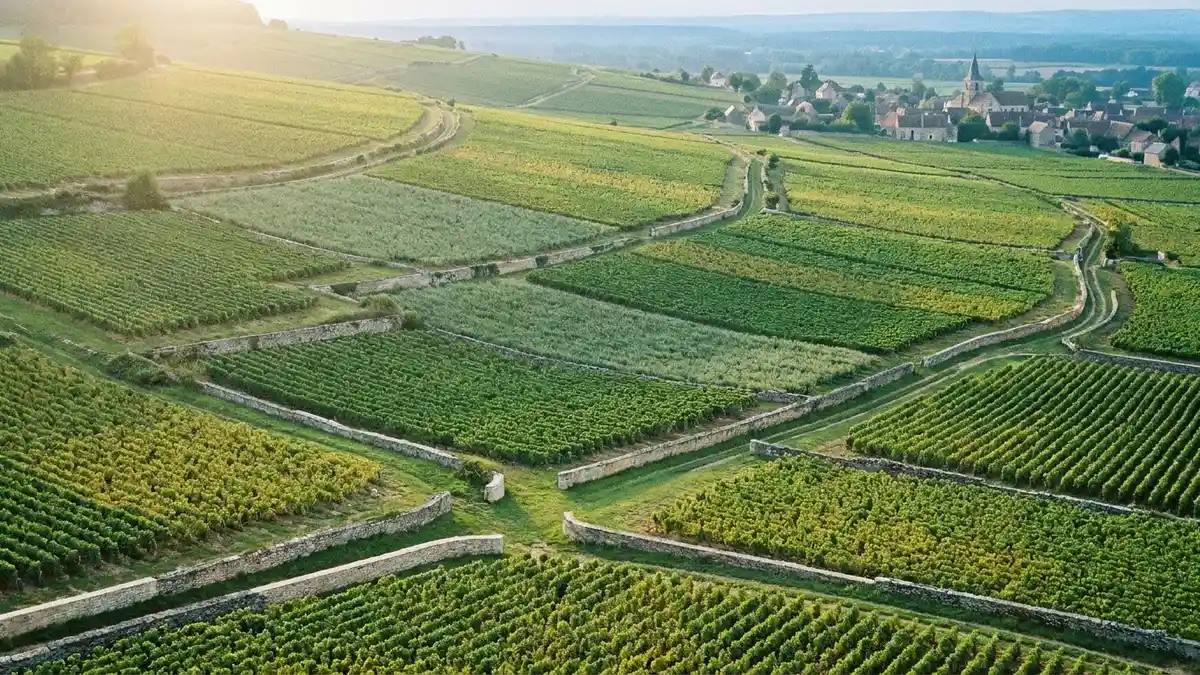
Because the top vineyards are their own legal appellations here, cru and appellation overlap in Burgundy in a way they do not elsewhere. A wine labelled Chambertin is naming a Grand Cru vineyard and its appellation in a single word. Our Burgundy wine guide maps this hierarchy vineyard by vineyard if you want to go deeper.
Premier Cru vs Grand Cru: The Key Distinction
For most drinkers, the practical question is the gap between the two top rungs. Here is the comparison in the Burgundian sense, where both terms label vineyards.
| Feature | Premier Cru (1er Cru) | Grand Cru |
|---|---|---|
| Rank | Second-highest tier | Highest tier |
| What it labels | A named classified vineyard | A small elite of top vineyards |
| Share of Burgundy | About 10% of production | About 1% of production |
| On the label | Village + 1er Cru + vineyard name | Vineyard name, often alone |
| Rarity and price | Uncommon, premium | Rare, usually the most expensive |
The trap is assuming the ladder works identically everywhere. It does not. In Champagne, as you will see, Premier Cru and Grand Cru rank villages, not plots, and a Premier Cru grower can out-drink a lazy Grand Cru neighbour. The tiers describe the raw material's potential, not the skill that turns it into wine.
Cru in Bordeaux: Ranking the Estate
Cross to Bordeaux and the word pivots. Here, cru — usually in the phrase cru classé (classified growth) — ranks the estate, the château, rather than a single vineyard. A Bordeaux property blends fruit from across its own larger holdings, so the reputation attaches to the producer's brand and land together, not to one marked-off plot.
The famous benchmark is the 1855 Classification, commissioned by Napoleon III for that year's Paris world fair and ranked, at the time, by the prices the wines fetched. It sorts 61 châteaux of the Médoc into five bands, from Premier Cru (first growth) down to Cinquième Cru (fifth growth), with just five estates at the summit. Remarkably, that list has barely changed in over a century and a half.
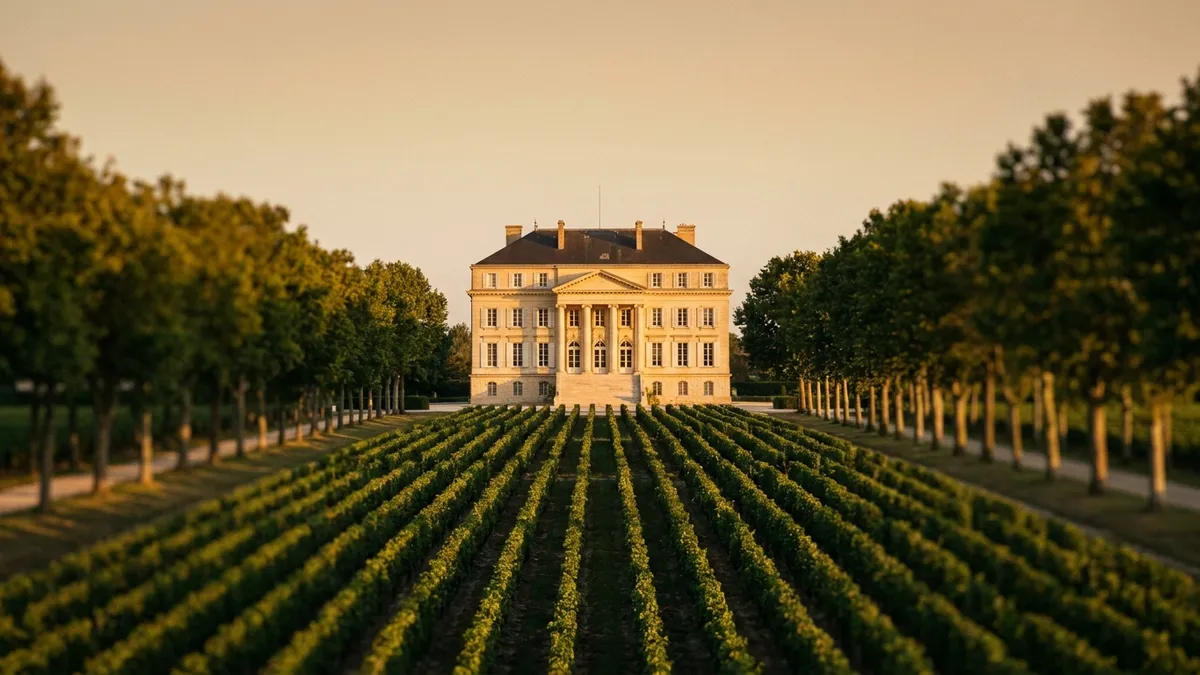
Bordeaux then complicates things with parallel systems. Saint-Émilion runs its own classification, created in 1955 and — unlike the frozen 1855 list — revised roughly every ten years. Its 2022 edition ranks 85 properties, topped by two Premiers Grands Crus Classés A, then a tier of Premiers Grands Crus Classés, then Grands Crus Classés. Lower down sits Cru Bourgeois, a separate, more affordable tier for solid Médoc estates below the 1855 grandees. The takeaway: in Bordeaux, cru grades the house, and you have to know which classification a label is quoting. Our Bordeaux wine guide and our walkthrough of how to read a wine label both help untangle it.
In Burgundy cru ranks the ground. In Bordeaux it ranks the house. In Champagne it ranks the whole village.
Cru in Champagne: Ranking the Village
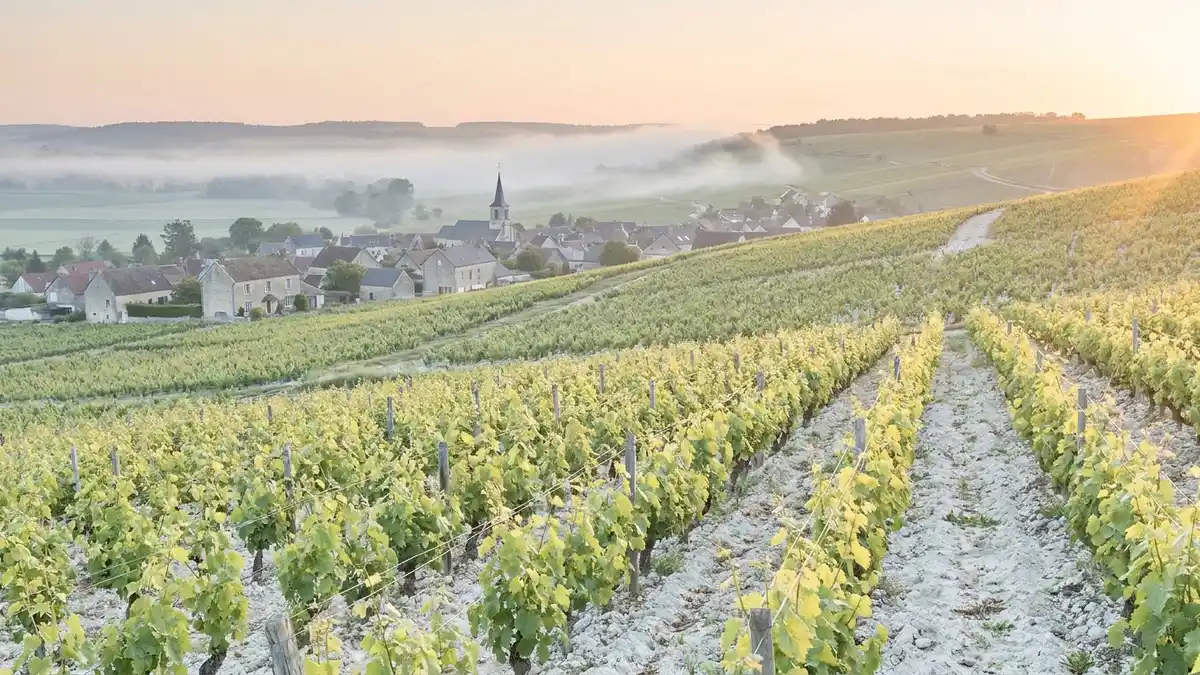
Champagne moves the goalposts again. Its cru system, the historic Échelle des Crus (ladder of growths, established around 1919), ranks entire villages rather than vineyards or estates. Every grape-growing commune was rated on a percentage scale from 80% to 100%, a figure that once set the price growers were paid for their fruit.
- Grand Cru — the 17 villages rated at the full 100%
- Premier Cru — a broader band of villages rated 90% to 99%
- Other crus — communes rated 80% to 89%
So a Champagne labelled Grand Cru means every grape came from one of those 17 top-rated villages — a statement about geography, not about a single hallowed plot. Because most Champagne is a blend across many parcels, the village-level system fits how the region actually buys and makes wine. If you want the lay of the land, our Champagne region guide covers the villages and styles in detail.
Cru in Alsace, Italy, and Beyond
Two more regions round out the picture, and they show how far the idea travels.
Alsace, on France's eastern edge, keeps things vineyard-based like Burgundy but with a single top rung. It recognises 51 Grand Cru vineyards, each an appellation in its own right, generally reserved for four grapes: Riesling, Muscat, Pinot Gris, and Gewurztraminer. There is no Premier Cru tier in official Alsace law, though one has long been discussed. Our Alsace wine guide has the full list of what these sites do best.
Beyond France, cru becomes looser and often unofficial. In Italy, producers borrow the word to flag a single-vineyard bottling — Barolo's official menzioni geografiche aggiuntive (additional geographic mentions) are cru sites in all but name, and Tuscan and Piedmont makers print cru informally. Confusingly, in Beaujolais the ten Crus are not ranked vineyards at all but ten named villages, such as Morgon and Fleurie, allowed to put their own name on the label. Same word, yet another unit.
France's tiered logic is not the only way to grade wine, either. Germany, for instance, historically classified by grape ripeness rather than place — a completely different axis — as our guide to Prädikat wine classification explains.
Does Cru Actually Mean Better Wine?
This is where beginners either over-trust cru or dismiss it. The honest answer sits in between: a cru is a quality floor, not a ceiling. Centuries of observation went into ranking these sites, so a Grand Cru vineyard genuinely stacks the odds toward concentration, balance, and ageing potential. That is real, bankable information.
But a classification ranks the land, not the winemaking. A distracted producer on a Grand Cru plot can turn out a dull wine, while a meticulous one on a village site can make something thrilling. In Bordeaux especially, the 1855 list is frozen in 1855 prices, and some estates have risen or slipped since. Read cru as strong evidence to weigh alongside the producer, the vintage, and the appellation — not a verdict on its own. If you want a repeatable way to judge what is in the glass, our guide to how to evaluate wine quality gives you a framework.
How Cru Fits Into Reading a Label
Put it together and cru stops being intimidating. When you spot Grand Cru or Premier Cru on a bottle, run three quick checks: which region is this, so I know whether cru means a vineyard, village, or estate; where does that rank in the region's ladder; and who made it, because the producer still decides how good the wine actually is. Those three questions turn a mysterious French word into a genuinely useful signal.
The fastest way to make it stick is to taste across the ladder — a village wine beside a Premier Cru from the same area, for instance — and feel the jump in concentration and length yourself. That side-by-side is exactly the kind of structured practice the Sommy app is built around, guiding you through what to notice so the vocabulary becomes second nature. Even without matched bottles, simply reading the cru on your next label with these questions in mind will teach you more than memorising a list ever could.
The One-Line Version
Cru means growth, and it ranks a place the wine world has learned to trust. Grand Cru sits at the top, Premier Cru just below, and the thing being ranked — vineyard, estate, or village — shifts with the region on the label. Learn to ask what is being ranked, and cru turns from a gatekeeping word into one of the most informative on any bottle. Regions and grapes make more sense once you can read it, and Sommy's courses are designed to build exactly that kind of confident, structured reading one glass at a time.
Sources
- Burgundy Wines: Appellations and Climats — BIVB / Bourgogne Wines
- The 1855 Wine Classifications — Bordeaux.com (CIVB)
- Classification of Champagne vineyards — Wikipedia
- AOC Alsace Grands Crus — Vins d'Alsace (CIVA)
Frequently Asked Questions
What does cru mean on a wine label?
Cru is French for growth and refers to a specific place where grapes are grown — usually a named vineyard, and sometimes a whole village or estate. On a label it signals that the wine comes from a site officially judged to produce distinctive quality. The exact meaning depends on the region: in Burgundy it ranks a vineyard, in Champagne it ranks a village, and in Bordeaux it ranks an estate.
What is the difference between Grand Cru and Premier Cru?
Grand Cru is the top tier and Premier Cru (also written 1er Cru) is the level just below it. In Burgundy, both label a specific classified vineyard, with Grand Cru reserved for a small group of the very best sites. In Champagne, they rank entire villages instead. Grand Cru wines are rarer and usually more expensive, but the ranking describes the vineyard, not any single bottle.
Does cru mean the wine is better?
A cru classification tells you the site has a long track record of quality, so it raises the floor of what to expect. It is not a guarantee. A cru is a quality floor, not a ceiling — a careless producer on a Grand Cru vineyard can make worse wine than a skilled one on a humble plot. Treat cru as strong evidence, not a promise.
Is cru the same as appellation?
No. An appellation is the legally defined region a wine comes from, like Chablis or Saint-Émilion. A cru is a quality ranking of a specific site within that world — a vineyard, village, or estate judged to be a cut above. In Burgundy the two overlap, because top vineyards are their own appellations, but the ideas are distinct: appellation answers where, cru answers how highly the site is rated.
Why does cru mean different things in different regions?
Each French region built its own classification at a different time to solve its own problem. Burgundy ranks individual vineyards because its patchwork of tiny plots varies plot by plot. Bordeaux ranks estates because its châteaux blend across larger properties. Champagne ranks whole villages because grapes were historically bought by the village. Same word, three different units of measurement.
How do you pronounce cru?
Cru is pronounced roughly like croo, a single short syllable rhyming with the English word crew. Grand Cru sounds like grahn-croo and Premier Cru like prem-yay-croo. The word is both singular and, in French, becomes crus in the plural, though the final s stays silent, so crus sounds the same as cru.
Sommy Team
LinkedInFounder & Wine Educator
The Sommy Team is building the world's most approachable wine education app, helping beginners develop real tasting skills through structured courses and AI-guided practice.