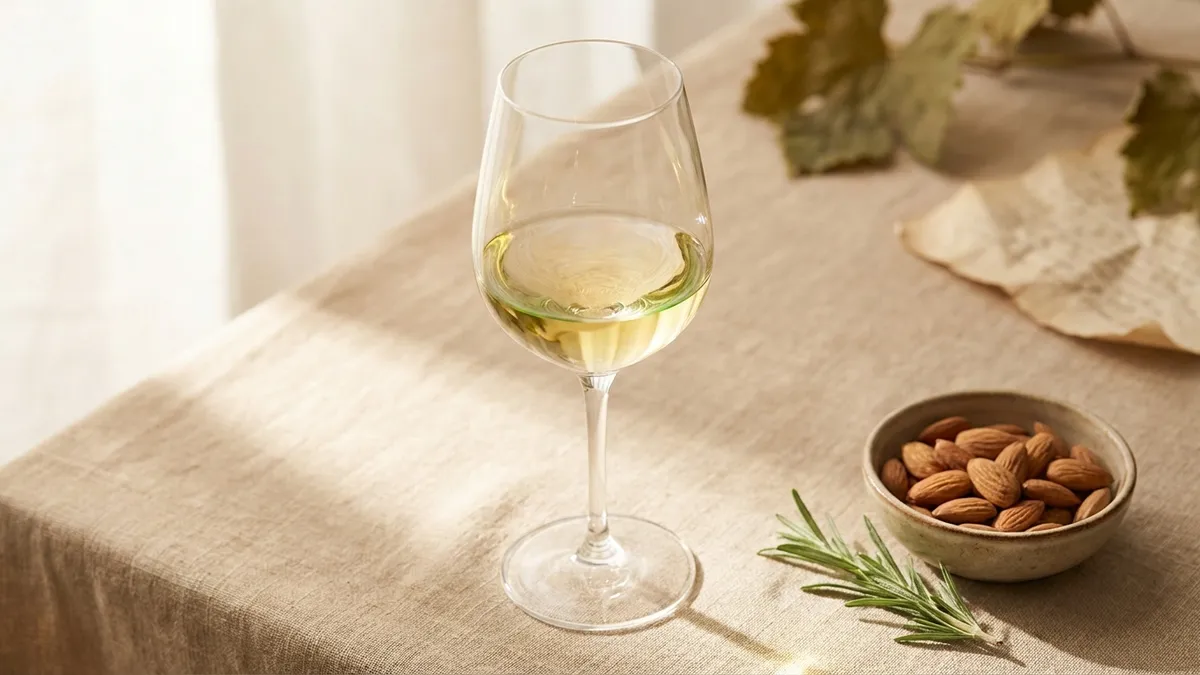
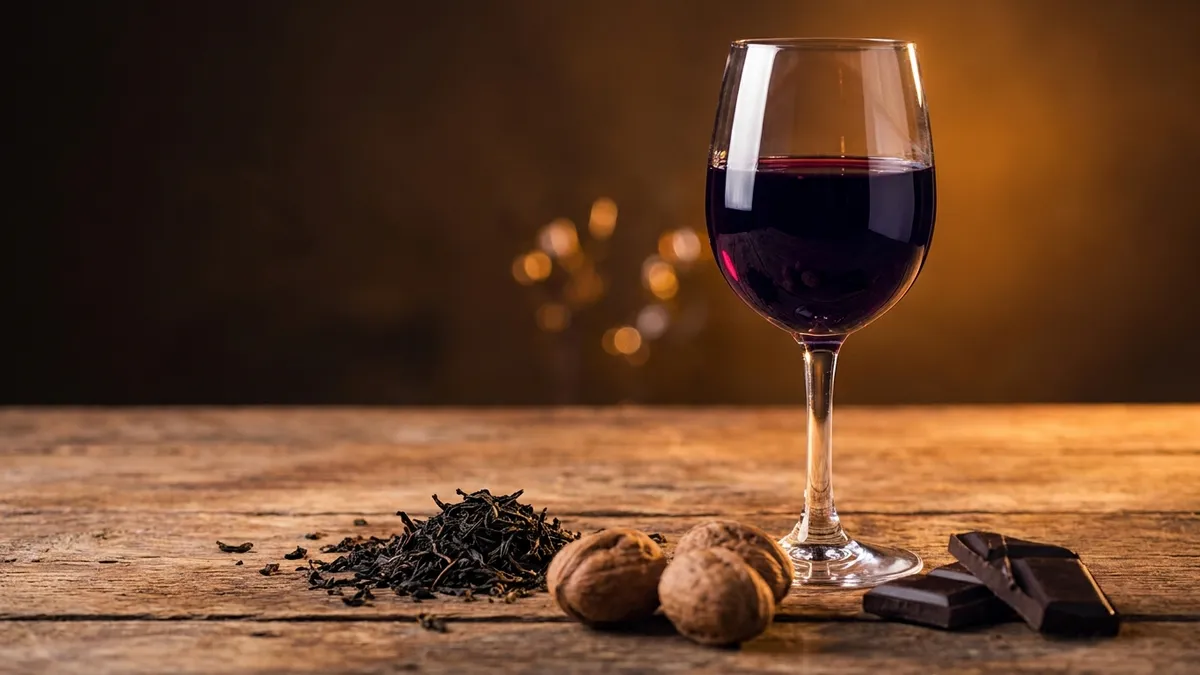
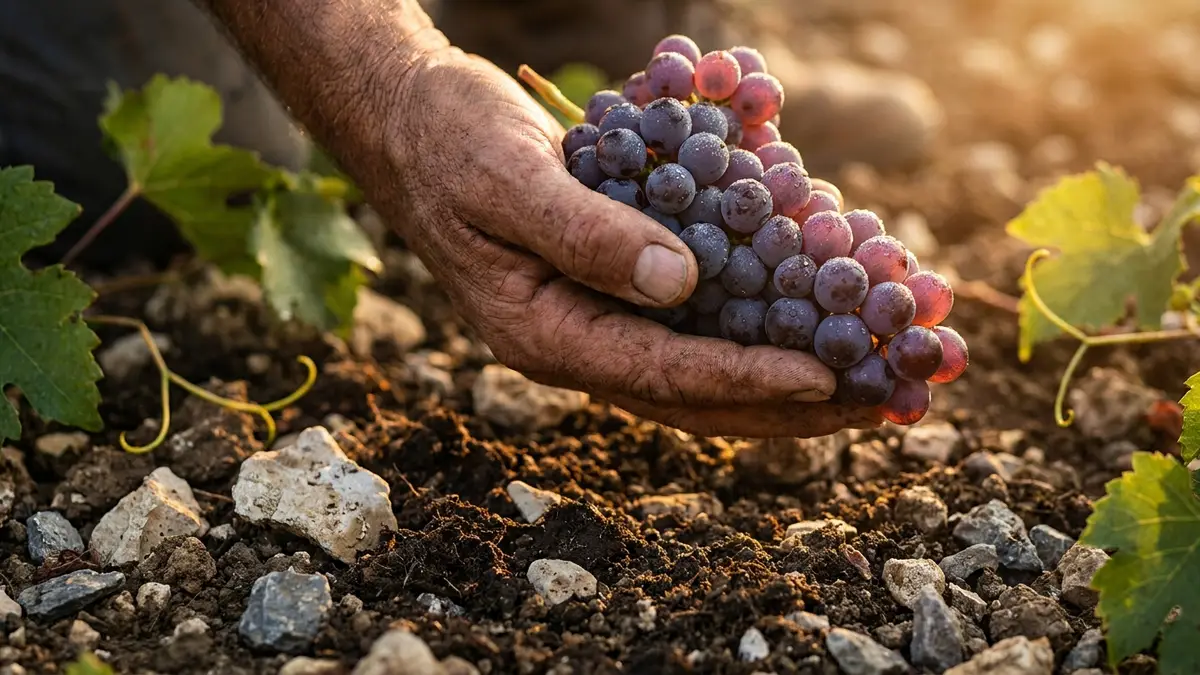
Prädikat Wine Classification: A Guide to German Riesling Levels

By the Sommy Team — AI-assisted, human-edited.
Updated Apr 29, 2026
Contents (14)
- Prädikat Wine Classification, in 90 Seconds
- How Oechsle Works
- Kabinett: The Lightest, Most Refreshing Tier
- Spätlese: Late Harvest, More Concentration
- Auslese: Selected Harvest
- Beerenauslese: Berry-by-Berry Selection
- Trockenbeerenauslese: The Pinnacle
- Eiswein: Concentrated by Cold, Not Rot
- Where Prädikat Wines Come From
- How to Read a Prädikat Label
- Approximate Pricing by Tier
- Aging Each Tier
- A Practical Intro Flight
- Why Prädikat Still Matters
TL;DR
The Prädikat wine classification is Germany's top-tier system for grading wine by grape ripeness at harvest, measured in Oechsle. Six ascending levels — Kabinett, Spätlese, Auslese, Beerenauslese, Trockenbeerenauslese, and Eiswein — describe how ripe the grapes were when picked, not how sweet the finished wine tastes. Producers decide that part.
The Prädikat wine classification is Germany's top-tier quality system, and once you understand it, German Riesling labels stop feeling like a secret code. Prädikat does one specific job: it tells you how ripe the grapes were when they were picked. Everything else about the wine in the bottle — how dry, how sweet, how alcoholic — flows from that starting point and a series of decisions the producer makes after harvest.
This guide walks through all six Prädikat levels from lightest to richest, explains the Oechsle scale that measures grape ripeness, decodes what each tier actually tastes like, and shows how to read a label without falling into the most common trap: assuming higher ripeness automatically means sweeter wine.
Prädikat Wine Classification, in 90 Seconds
The full name is Qualitätswein mit Prädikat (literally, quality wine with distinction), often shortened to Prädikatswein. It sits at the top of Germany's wine pyramid, above Qualitätswein and ordinary table wine.
The system grades wine by must weight — the sugar concentration of the unfermented grape juice — measured on the Oechsle scale. Six ascending levels describe how ripe the grapes were at harvest: Kabinett, Spätlese, Auslese, Beerenauslese, Trockenbeerenauslese, and Eiswein.
Crucially, Prädikat is a ripeness ladder, not a sweetness ladder. Up to Auslese, the producer can choose to ferment dry or leave residual sugar. From Beerenauslese onward, the grapes are so concentrated that the finished wine is reliably sweet. Riesling is the most famous Prädikat grape, but the system applies to all varieties grown in Germany's wine regions.
How Oechsle Works
Oechsle (pronounced "urks-luh") is the German measurement of must weight. It corresponds roughly to the density of grape juice compared to water. A higher Oechsle reading means more dissolved sugar, which means riper grapes and higher potential alcohol if the wine is fermented dry.
Each Prädikat level has a minimum Oechsle threshold, which varies slightly by region and grape variety. For Mosel Riesling — the benchmark for the system — the rough minimums are:
- Kabinett — 70 to 73° Oechsle
- Spätlese — 76 to 85° Oechsle
- Auslese — 83 to 100° Oechsle
- Beerenauslese — 110 to 128° Oechsle
- Eiswein — 110 to 128° Oechsle (Beerenauslese ripeness, plus frozen on the vine)
- Trockenbeerenauslese — 150 to 154° Oechsle
The jumps between levels are not evenly spaced. Going from Kabinett to Spätlese is about a 10 percent ripeness increase. Going from Auslese to Beerenauslese means waiting for noble rot to shrivel the grapes and concentrate them dramatically. The top tiers are physical achievements, not just calendar entries.

Quick check
One question on what you just read
A German label says Spätlese. What does that word tell you?
Tap an answer to see how you did.
Kabinett: The Lightest, Most Refreshing Tier
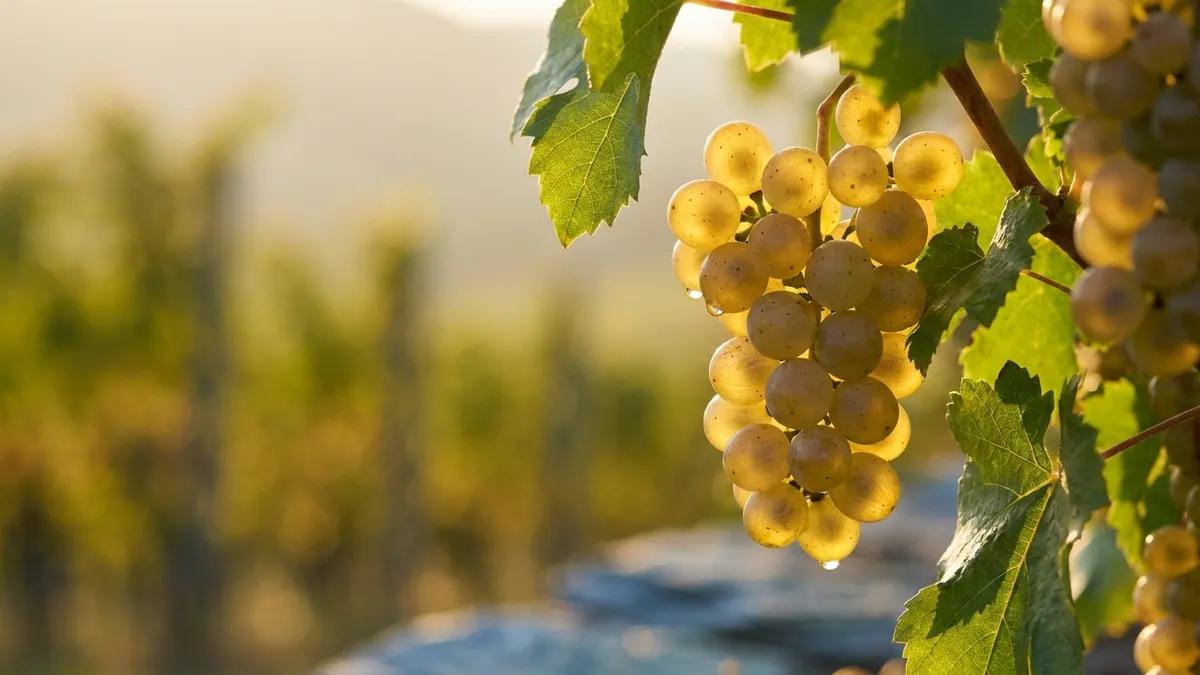
Kabinett is the lowest Prädikat level and, paradoxically, one of the hardest styles to make well. The grapes are picked at the earliest legal ripeness for Prädikat status, so the winemaker has very little margin for error. Get it right and you have one of the most refreshing wines on Earth.
A classic Mosel Kabinett shows lime, green apple, white peach, and a faint slate minerality. Alcohol typically sits between 7 and 10 percent — astonishingly low by global standards. The style is often slightly off-dry, with around 20 to 40 grams per liter of residual sugar balanced by mouth-watering acidity that keeps the wine feeling almost weightless on the palate.
The trocken versions go fully dry and finish around 11 to 12 percent alcohol. They taste closer to a structured, mineral Chablis than to a typical fruity white. Kabinett at this level often costs 20 to 35 dollars and represents some of the best value in the wine world. Sommy's tasting modules use Kabinett as a reference point for low-alcohol whites because the structure is so cleanly readable.
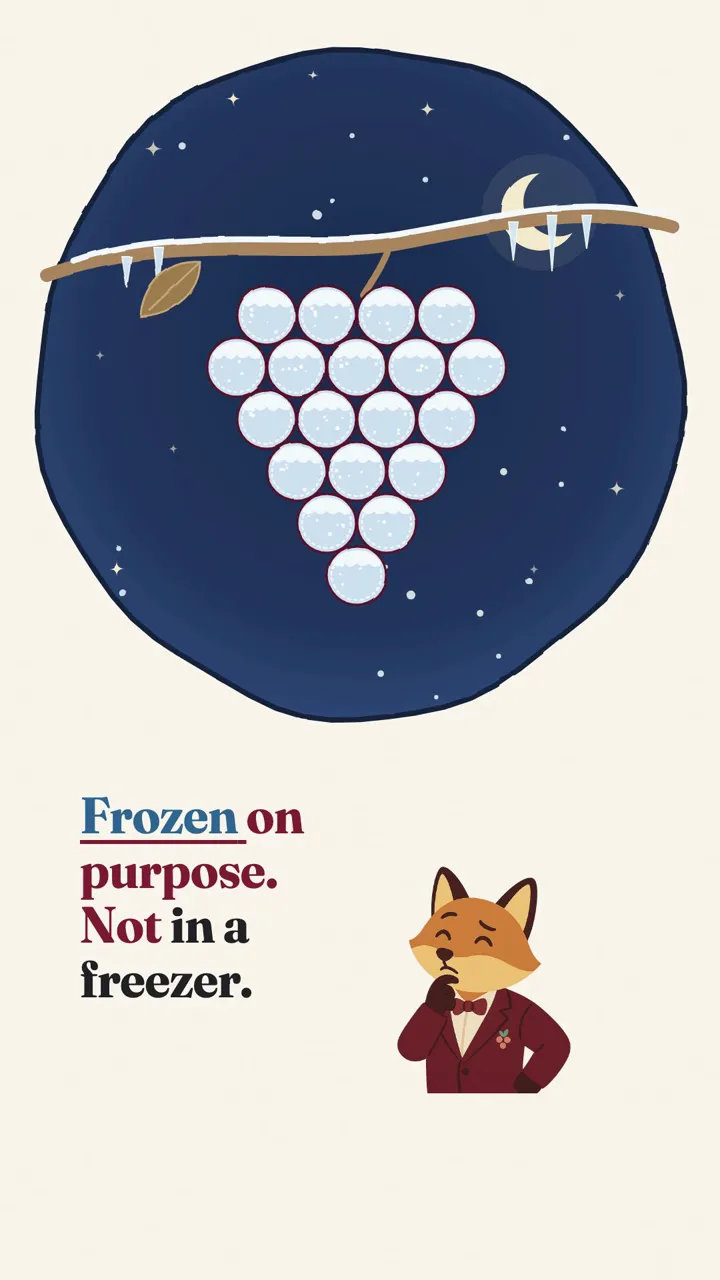
Frozen on purpose. Not in a freezer.
Sommy's voice is made with AI.
Read the script
Frozen on purpose. Not in a freezer. Press them frozen, and the water stays behind as ice. Only the sweet juice runs out. Use a freezer, and it can't be called ice wine. Send this to the friend who would use the freezer. Try it: half-thaw frozen apple juice and taste the first drips. So... would you wait for the frost?
Spätlese: Late Harvest, More Concentration
Spätlese translates literally as "late harvest." The grapes hang on the vine longer than Kabinett, accumulating more sugar and developing more complex flavors. By law, Spätlese must be picked at least seven days after the start of the regular harvest in that region.
The result is a richer, more concentrated wine with more body and aromatic depth. Where Kabinett shows lime and green apple, Spätlese moves toward white peach, apricot, honey, and a more pronounced mineral core. Alcohol depends on style: a sweet Spätlese will sit around 8 to 9 percent with significant residual sugar; a trocken Spätlese pushes 12 to 13 percent, fully dry.
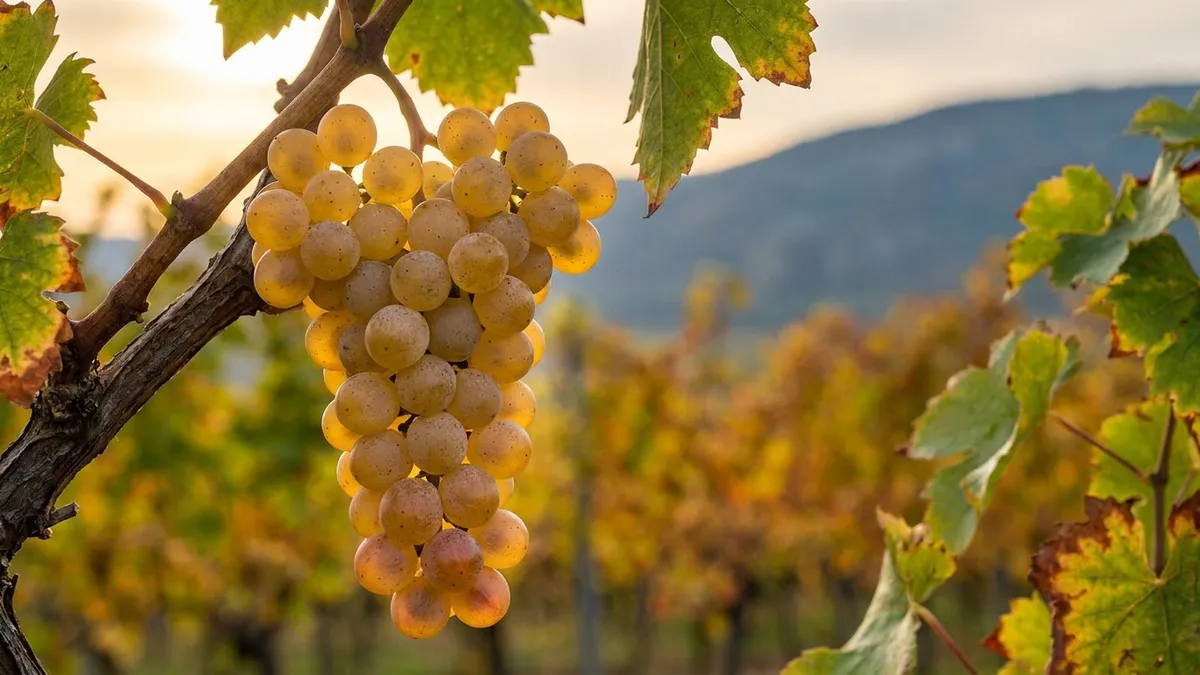
This is the level where the "Prädikat is not sweetness" rule becomes critical. Two bottles labeled Spätlese can taste totally different — one bone dry and powerful, one off-dry and floral — depending on whether the producer fermented all the sugar or stopped early. Read the label for trocken (dry), halbtrocken (off-dry, around 9 to 18 grams per liter residual sugar), or feinherb (a slightly looser off-dry style). No designation usually means at least medium-dry to sweet.
Auslese: Selected Harvest
Auslese means "selected harvest." The vineyard team goes through the rows and picks only the ripest bunches, often discarding under-ripe fruit and pulling individual berries with early signs of noble rot. The minimum Oechsle is significantly higher than Spätlese, so the wines have noticeably more concentration and weight.
A typical Auslese Riesling shows ripe stone fruit, tropical hints (mango, pineapple), honey, and the first whispers of a botrytis character — that distinctive marmalade-and-saffron edge that comes from grapes touched by noble rot (the beneficial Botrytis cinerea fungus that shrivels berries and adds honeyed, apricot, ginger flavors).
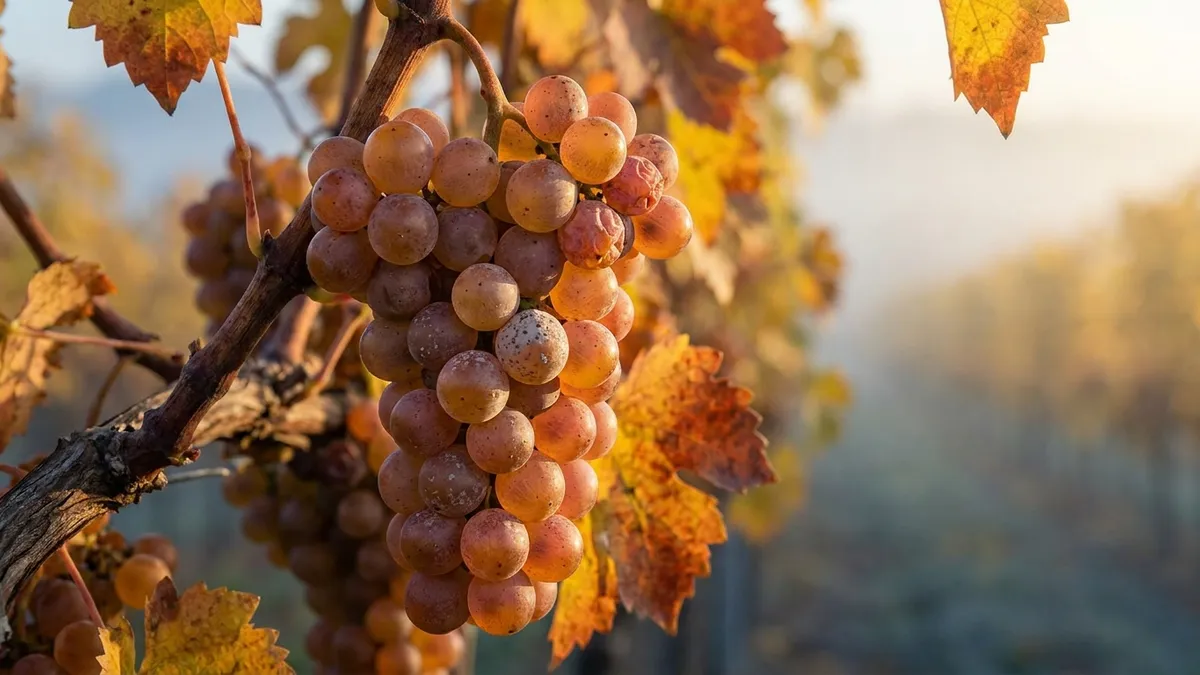
Most Auslese is finished off-dry to clearly sweet, in the 80 to 150 grams per liter residual sugar range, with alcohol around 7 to 9 percent. A small number of producers make trocken Auslese — full-bodied dry wines around 13 percent alcohol — but these are an acquired taste. Sweet Auslese is the gateway to dessert Riesling: rich enough to pair with dessert wine territory like roast duck, foie gras, blue cheese, or fruit tarts, but still light enough on the palate to drink with the meal rather than only at the end.
Beerenauslese: Berry-by-Berry Selection
Beerenauslese (often abbreviated BA) means "selected berries." This is where the harvest stops being a normal vineyard operation and becomes painstaking handwork. The pickers go through the vineyard one bunch at a time, and within each bunch they pick only individual berries shriveled by noble rot. A team that picks several tons of Spätlese in a day might collect 50 to 100 kilograms of BA-quality fruit.
The resulting wine is intensely sweet, concentrated, and unctuous. Aromas of dried apricot, candied orange peel, honey, beeswax, and saffron dominate the nose. Acidity remains high — that is what saves the wine from feeling syrupy — and alcohol stays low, often 6 to 8 percent. Residual sugar runs from 150 to 250 grams per liter.

Beerenauslese is sold almost exclusively in half bottles (375 ml). Pricing typically starts around 80 dollars and climbs from there for top sites and great vintages. The wine pairs with strong, salty cheeses (Roquefort, Stilton), foie gras, fruit-based desserts, or simply on its own as the final pour of the evening. Storage is forgiving — these wines age effortlessly for 30 years and often improve well beyond that.
Trockenbeerenauslese: The Pinnacle
Trockenbeerenauslese (TBA) is the highest Prädikat level by ripeness and one of the rarest wines in the world. The literal translation is "dry berry selection" — but "dry" here refers to the grapes, not the wine. By the time TBA grapes are picked, noble rot has shriveled them into raisins. Crushing them yields almost no juice, and what does come out is so sweet that yeast struggle to ferment it.
The wines are syrupy in the best sense: thick texture, intense honey-and-apricot concentration, layered tertiary aromas of caramel, walnut, dried fig, and a vibrant acidic backbone that prevents any sense of cloying. Residual sugar regularly exceeds 250 grams per liter and can climb past 300. Alcohol stays around 6 to 8 percent.
A great TBA from the Mosel or Rheingau will set you back 150 to 500 dollars or more for a half bottle, and prices for top producers and historic vintages run into the thousands. The wine ages for a century. Bottles from the 1800s opened in tasting rooms have been documented as still vibrant — the sugar and acid combine to make the wine essentially indestructible. There is no specific food pairing required: a TBA is its own course.
Eiswein: Concentrated by Cold, Not Rot
Eiswein (German for ice wine) is a special case in the Prädikat system. The grapes must reach Beerenauslese ripeness, but instead of shriveling on the vine through noble rot, they freeze. By law, the temperature must drop to at least minus 7 degrees Celsius (19 degrees Fahrenheit) and the grapes must be picked and pressed while still frozen.
When frozen grapes go through the press, the water stays behind as ice and only the concentrated sugary juice runs off. That juice ferments into a wine that is intensely sweet but distinctively fresh — without the marmalade-and-saffron botrytis flavors that mark BA and TBA. Instead, Eiswein shows pure, vivid stone fruit and citrus: white peach, lime zest, candied lemon, mango, plus a steely mineral spine.
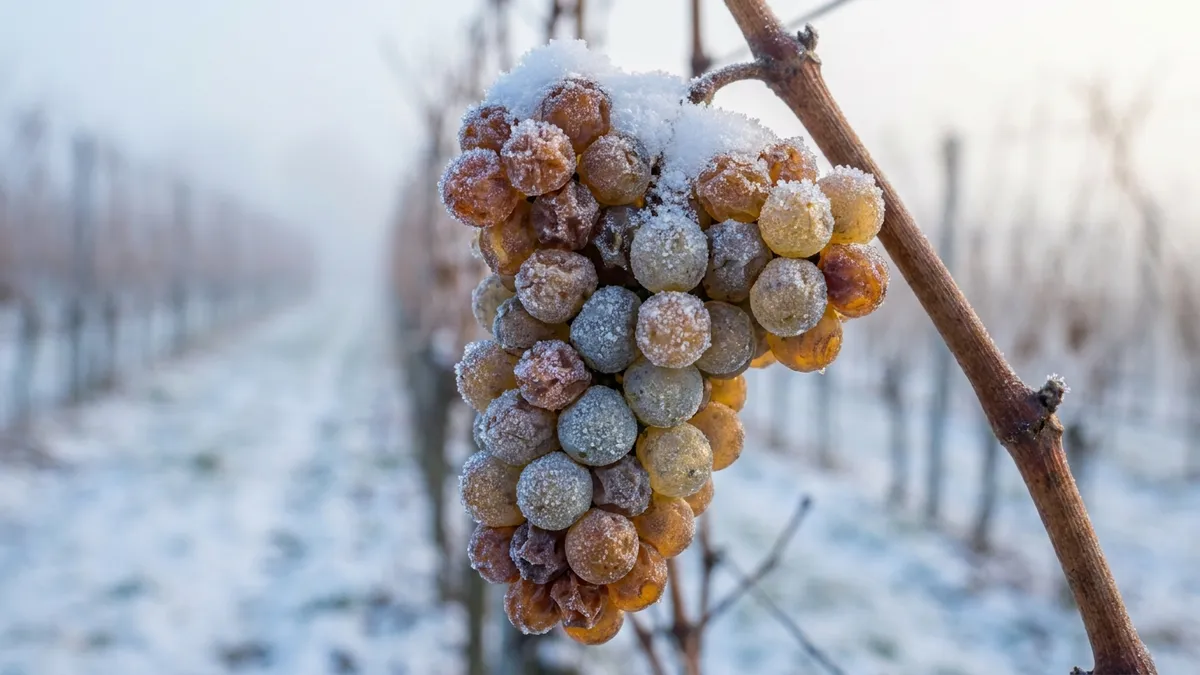
Eiswein has razor-sharp acidity that gives it a longer, more linear finish than other dessert Rieslings. It pairs best with bright fruit desserts (poached pears, lemon tart) rather than rich, custardy ones. For a deeper look at how Eiswein is made and tasted, see the dedicated Eiswein guide. The catch: a truly cold winter is required, and climate change has made qualifying nights increasingly rare in classic regions like the Rheingau.
Where Prädikat Wines Come From
Almost every region in Germany makes Prädikat-level wine, but four stand out for the depth and consistency of what they produce.
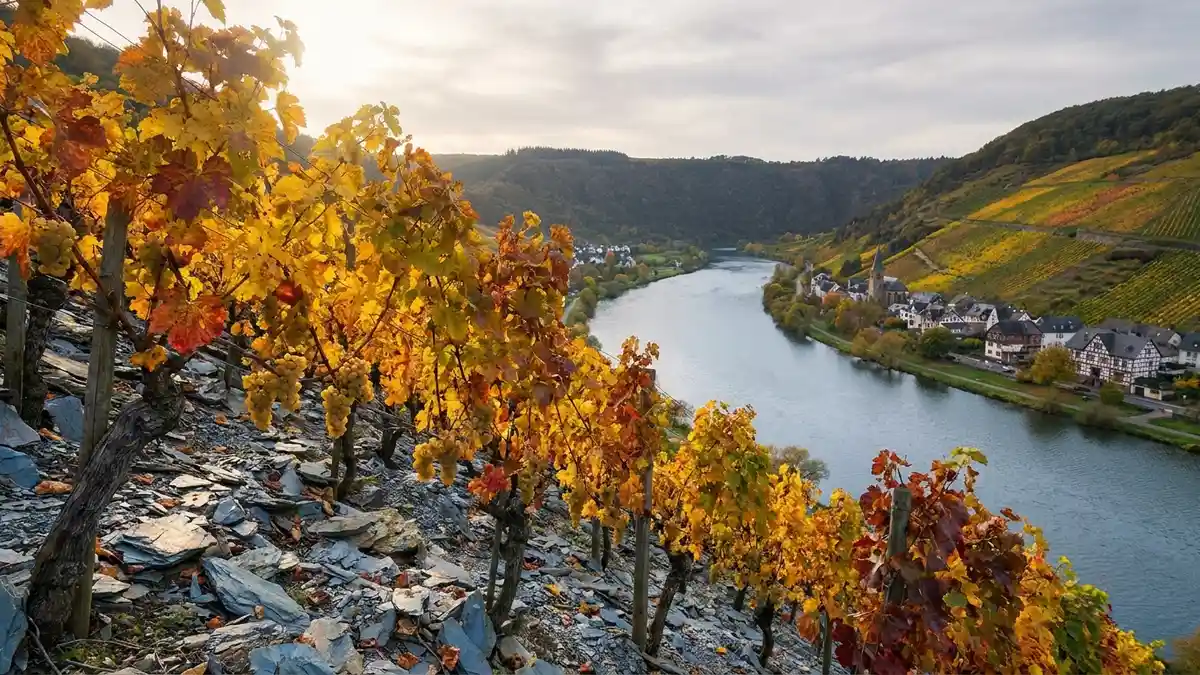
The Mosel is the spiritual home of Kabinett and Spätlese. Cool climate, Devonian slate soils, and dramatically steep hillsides produce some of the most ethereal Riesling on Earth — light-bodied, intensely flavored, almost weightless on the palate.
The Rheingau is a more powerful, structured style. South-facing slopes along the Rhine deliver fuller-bodied dry Spätlese and Auslese, often labeled as Grosses Gewächs.
The Pfalz is warmer than either Mosel or Rheingau. Ripeness is easier to achieve, so producers can pick at Spätlese or Auslese levels in most vintages and produce both stunning trocken wines and extraordinary BA and TBA in the right years.
Rheinhessen is the largest German region by volume and the source of much of the country's everyday Kabinett, but its top producers also make world-class Spätlese and Auslese from limestone-rich vineyards. To dive deeper into how these regions express the same grape differently, the Riesling wine guide has a regional breakdown.
How to Read a Prädikat Label
Once you know the system, a German label gives you a remarkable amount of information. Here is the typical anatomy from top to bottom:
- Producer name — the estate
- Vintage — year of harvest
- Village name and vineyard — for example, "Wehlener Sonnenuhr" (sundial vineyard in Wehlen)
- Grape variety — most often Riesling
- Prädikat level — Kabinett, Spätlese, Auslese, etc.
- Sweetness designation — trocken, halbtrocken, feinherb, or unspecified (often sweet)
- A.P. number — official quality control number proving the wine was tasted and approved
A sample label might read: "Wehlener Sonnenuhr Riesling Spätlese trocken." That tells you a dry wine from the Sundial vineyard in Wehlen, made from grapes picked at Spätlese ripeness — likely full-bodied, about 12 percent alcohol, no residual sweetness. For a fuller breakdown, see the wine label guide which covers the visual conventions across Germany, France, and the New World.
Approximate Pricing by Tier
Pricing varies wildly by producer and vintage, but Mosel Riesling provides a useful benchmark for what to expect at retail:
- Kabinett — 20 to 35 dollars
- Spätlese — 30 to 60 dollars
- Auslese — 40 to 100 dollars
- Beerenauslese — 80 to 200 dollars (375 ml)
- Trockenbeerenauslese — 150 to 500-plus dollars (375 ml)
- Eiswein — 50 to 300-plus dollars (375 ml)
Knowing the Prädikat level tells you the rough price floor, the likely sweetness range, and the drinking window before you have read anything else on the label. That is why this classification has stayed central to German wine for nearly a century.
Aging Each Tier
Prädikat wines are some of the longest-lived bottles you can buy. A rough guide to aging windows:
- Trocken Kabinett or Spätlese — drink within 5 to 15 years
- Off-dry to sweet Spätlese — peaks at 10 to 30 years
- Auslese — 30 years and often longer
- Beerenauslese, Trockenbeerenauslese, Eiswein — 30 to 100-plus years
As Prädikat Riesling ages, primary fruit aromas of lime and peach give way to honey, dried apricot, lanolin, marmalade, and the famous petrol note from a compound called TDN. The transformation is dramatic and one of the great pleasures of cellaring white wine. Building a sense of which tier matches your palate is exactly the kind of skill that benefits from focused practice, which is what the structured tasting modules in Sommy are designed to support.
A Practical Intro Flight
If you want to taste the system end to end, line up a four-bottle flight in this order over a single evening or weekend:
- A dry Kabinett (look for trocken on the label)
- An off-dry Kabinett or Spätlese (no dry designation)
- A sweet Spätlese for richer fruit and clear residual sugar
- An Auslese for the first kiss of botrytis
Pour each in a generous tulip glass, taste the wines side by side, and pay attention to how the fruit profile, body, and sweetness shift. The transitions between tiers will reveal themselves more clearly than any reading could explain. For technique tips on what to focus on, the palate-building guide breaks down the mental anchors that make blind tasting flights stick. Vocabulary you might want to brush up on first lives in the Sommy glossary.
Why Prädikat Still Matters
A few classifications dominate the global wine world — French AOC, Italian DOCG, and Germany's Prädikat. What makes Prädikat distinctive is that it is built entirely around the grapes themselves rather than the vineyard or appellation. The system says: tell us how ripe the fruit was at harvest, and let the wine speak for itself.
That philosophy produces wines of remarkable transparency. A Spätlese should taste like Spätlese-ripeness fruit, faithfully delivered. A Beerenauslese should taste like noble rot at full intensity. The producer's job is not to mask the raw material but to express it. That is why these wines age so well, pair so flexibly, and reward attention so reliably.
Once the Prädikat ladder makes intuitive sense, the rest of German wine — and a surprising amount of European wine logic — falls into place. It is one of the highest-leverage wine concepts a beginner can learn. Pour a Kabinett, taste it carefully, and you have already started.
Frequently Asked Questions
What does Prädikat mean on a German wine label?
Prädikat means 'distinction' or 'special attribute' and refers to Germany's top-tier classification for quality wine. The full name is Qualitätswein mit Prädikat, or Prädikatswein. It grades wine by the natural ripeness of the grapes at harvest, measured on the Oechsle scale. There are six ascending levels: Kabinett, Spätlese, Auslese, Beerenauslese, Trockenbeerenauslese, and Eiswein.
Does a higher Prädikat level mean a sweeter wine?
Not always. Prädikat tells you the ripeness of the grapes at harvest, not the sweetness of the bottled wine. A Spätlese marked trocken was harvested at Spätlese ripeness but fermented fully dry to around 12 percent alcohol. The producer decides whether to ferment all the sugar or stop early. From Beerenauslese upward the wines are reliably sweet, but at the Kabinett, Spätlese, and Auslese levels you have to read the label carefully.
What is the Oechsle scale?
Oechsle (pronounced 'urks-luh') is the German measurement of must weight — the sugar concentration in unfermented grape juice. Each Prädikat level has a minimum Oechsle requirement that varies slightly by grape variety and region. For Mosel Riesling, Kabinett starts around 70 degrees Oechsle and Trockenbeerenauslese requires at least 150. Higher Oechsle means riper grapes and higher potential alcohol or residual sweetness.
What is the difference between Eiswein and Trockenbeerenauslese?
Both are intensely sweet dessert wines, but they are concentrated by different methods. Trockenbeerenauslese uses noble rot — the Botrytis fungus that shrivels grapes on the vine and adds honeyed, apricot character. Eiswein uses cold instead: the grapes must freeze on the vine at minus 7 degrees Celsius or lower, and they are pressed while still frozen. The water stays as ice; only the concentrated sugary juice runs off. Eiswein typically has zippier, fresher acidity and no botrytis flavors.
What is the difference between Prädikatswein and Qualitätswein?
Qualitätswein bestimmter Anbaugebiete (QbA) is the tier directly below Prädikatswein. QbA wines come from one of Germany's 13 designated regions but allow chaptalization — the addition of sugar before fermentation to increase alcohol. Prädikatswein cannot be chaptalized: the grape ripeness and sweetness must come from the vineyard alone. This is why Prädikat is treated as the higher quality tier.
What does Grosses Gewächs mean and how does it relate to Prädikat?
Grosses Gewächs (often abbreviated GG) is a modern designation from the VDP — the German association of top producers — for the finest dry wines from classified vineyards. A GG is usually picked at Spätlese or Auslese ripeness and fermented dry. It exists outside the official Prädikat system but represents the same quality philosophy: top-site grapes at full ripeness, finished as a serious dry wine.
How long can Prädikat wines age?
Top Prädikat wines are among the longest-lived in the world. A dry trocken Kabinett or Spätlese can develop for 5 to 15 years. A sweet Spätlese can age 10 to 30 years. Auslese, Beerenauslese, and Trockenbeerenauslese routinely age for 30 years and beyond, with TBAs from great vintages still drinking beautifully after a century. Eiswein also ages for decades thanks to its searing acidity.
Which Prädikat level should a beginner try first?
Start with a Mosel Kabinett. These wines are light, low in alcohol (around 8 to 10 percent), affordable (typically 20 to 35 dollars), and beautifully balanced between fruit, sweetness, and acidity. They are easy to drink without any wine training and reveal more layers as your palate develops. From there, try a Spätlese for more concentration, then an Auslese to taste the first hint of botrytis.
Sommy Team
LinkedInFounder & Wine Educator
The Sommy Team is building the world's most approachable wine education app, helping beginners develop real tasting skills through structured courses and AI-guided practice.