Alsace Wine Guide: France's Most Germanic Wine Region

By the Sommy Team — AI-assisted, human-edited.
Updated Jun 17, 2026
Contents (11)
- What Is Alsace Wine?
- Where Alsace Sits: The German Border and the Vosges Rain Shadow
- Varietal Labeling: Why Alsace Names the Grape
- The Four Noble Grapes of Alsace
- Dry to Lusciously Sweet: The Style Spectrum
- The Alsace Grand Cru System
- Crémant d'Alsace: France's Quiet Sparkling Star
- The Most Germanic Region in France
- Food Pairing: Why Alsace Loves the Table
- How a Beginner Should Start with Alsace
- The Reward of Learning Alsace
TL;DR
Alsace sits in northeast France on the German border and labels its wines by grape, which is rare for France. Its four noble grapes are Riesling, Gewürztraminer, Pinot Gris, and Muscat. Styles run from bone dry to lusciously sweet, and this Alsace wine guide shows beginners where to start.
What Is Alsace Wine?
This Alsace wine guide begins with the quirk that makes the region a beginner's gift: unlike almost everywhere else in France, Alsace labels its wines by grape variety. Tucked into the far northeast of France on the German border, between the Vosges mountains and the Rhine, Alsace makes mostly aromatic white wine from four noble grapes — Riesling, Gewürztraminer, Pinot Gris, and Muscat — and prints the grape right on the front label. Styles run from bone dry through off-dry to the lusciously sweet late-harvest categories Vendanges Tardives and Sélection de Grains Nobles. Add a 51-vineyard Grand Cru system and a fine sparkling wine, Crémant d'Alsace, and you have one of France's clearest and most rewarding regions to learn.
Where Alsace Sits: The German Border and the Vosges Rain Shadow
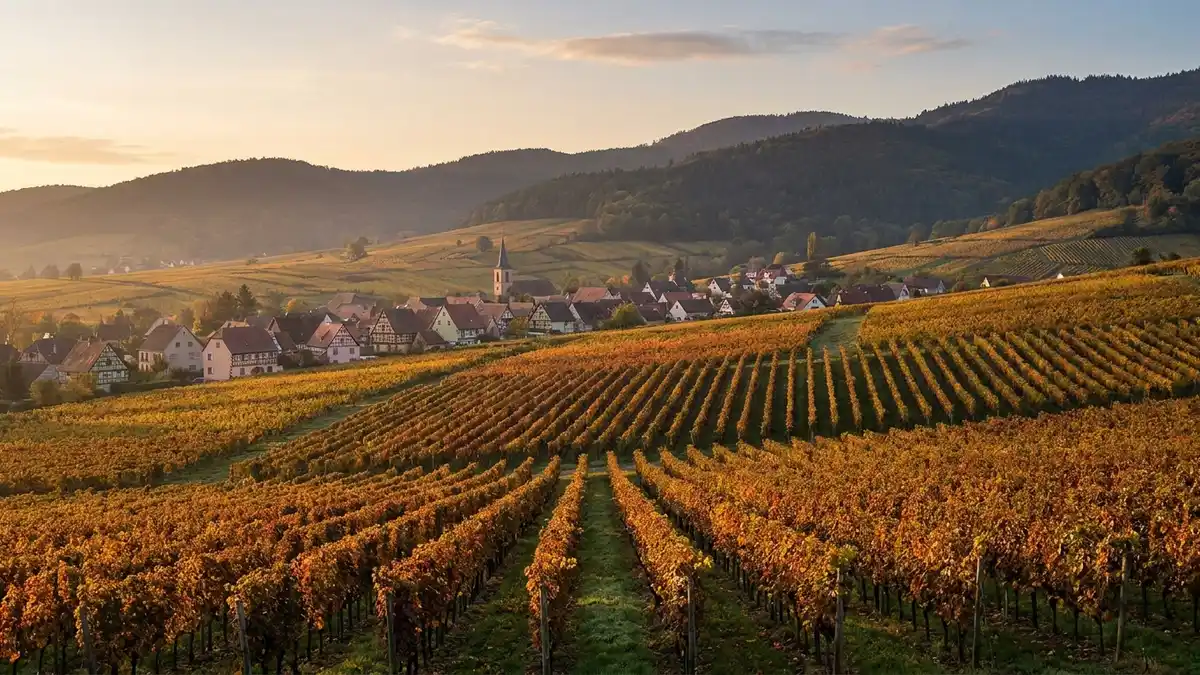
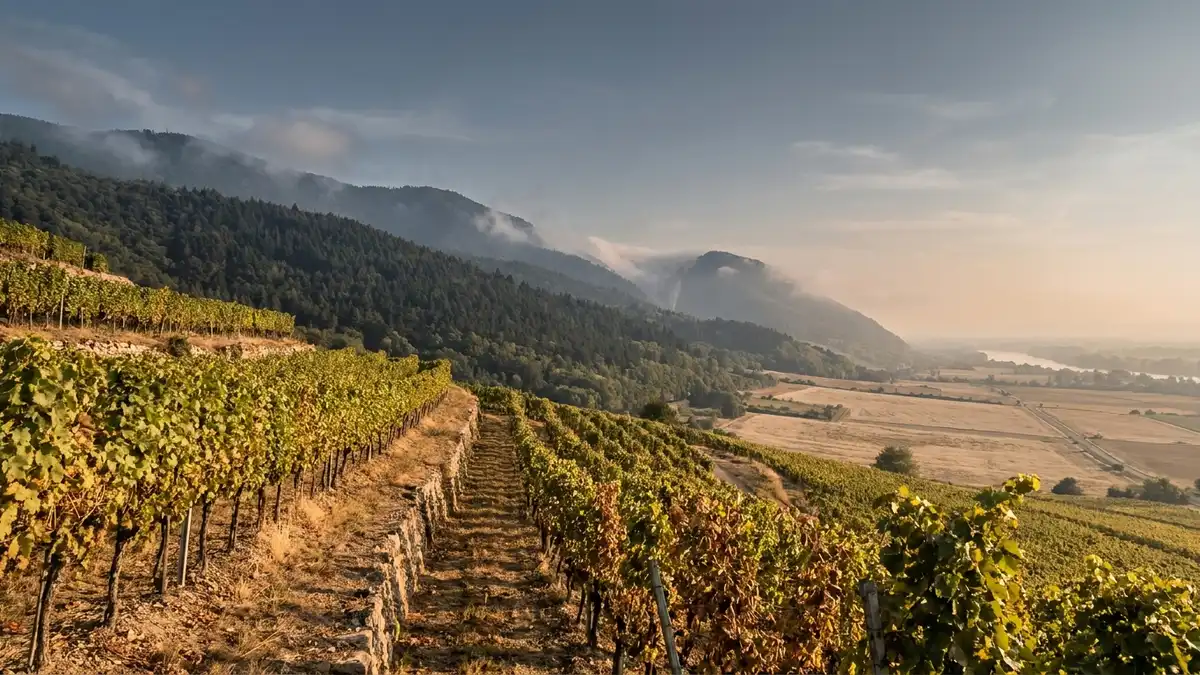
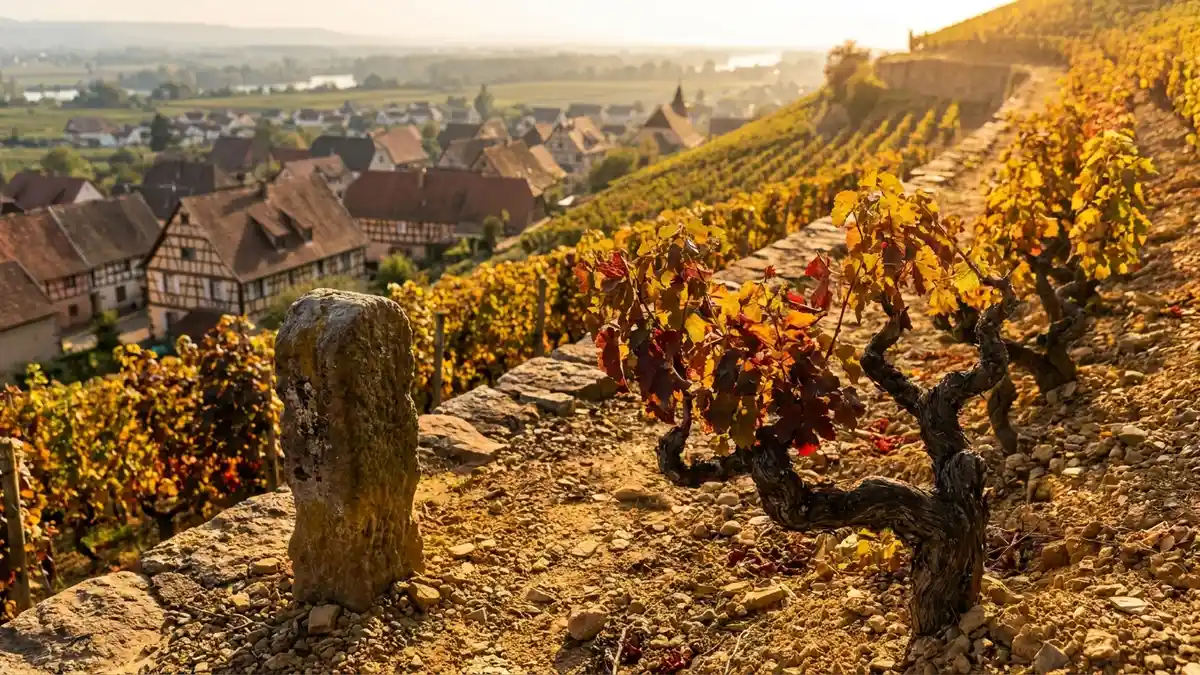
Alsace is a thin north-south strip pressed against the Rhine, with Germany directly across the river. For centuries the region passed back and forth between French and German rule, and that history shaped everything from the half-timbered villages to the grapes in the ground. The result is the most Germanic corner of French wine: German grape names, tall flute-shaped bottles, and a culture built around precise, aromatic whites rather than the reds of Burgundy or Bordeaux.
The reason Alsace can ripen these grapes so well is the Vosges mountains to the west. Weather systems roll in from the Atlantic, hit the Vosges, and drop their rain on the far side. By the time the air reaches the vineyards on the eastern slopes, it is dry and warm — a classic rain shadow. Colmar, in the heart of the region, is one of the driest cities in all of France.
That dryness matters. A northern latitude usually means cool, marginal ripening, but the rain shadow gives Alsace long, sunny, low-disease autumns. Grapes hang late, building aroma and sugar while keeping their acidity (the tart, mouthwatering freshness that keeps a wine lively). That balance of ripeness and freshness is exactly what aromatic white grapes need.
Varietal Labeling: Why Alsace Names the Grape
In Burgundy and Bordeaux, the label names a place and assumes you already know which grape that place grows. Alsace flips that. Here, the grape is the headline. A bottle says Riesling or Gewürztraminer in large letters, with the Alsace appellation and the producer below. This varietal labeling is unusual for France and is a direct echo of the region's German heritage, where naming the grape has long been the norm.
For a beginner, this is a genuine head start. You do not need to memorize a map or decode a cru hierarchy before you can shop. The bottle tells you the grape, and the grape tells you roughly what to expect. The Sommy app uses Alsace labels exactly this way — as a clean, low-stress place to connect a grape name to a flavor you can actually taste.
A few labeling points worth knowing:
- A single named grape means the wine is made entirely (or almost entirely) from that variety.
- Edelzwicker or Gentil are blended whites, mixing several permitted grapes — honest, everyday wine without a single grape's name.
- Sweetness is often unstated. A Riesling can be dry or off-dry with no clear word on the label, so the producer's house style matters. More estates now add a dry-to-sweet scale on the back to help.
The Four Noble Grapes of Alsace
Alsace recognizes four noble grapes as its finest — the only varieties normally allowed to carry a Grand Cru name. Learning these four is the core of this Alsace wine guide, because together they cover the whole spectrum from steely to perfumed. They are all aromatic grapes, meaning their character comes from intense, recognizable scents rather than subtle restraint. If that distinction is new, our guide to aromatic versus neutral grapes explains why some varieties shout and others whisper.
- Riesling: The region's noble flagship. In Alsace it is usually dry, with high acidity, taut citrus and green apple, stony minerality, and a famous petrol-like note as it ages. Compared with its German cousins it is drier and fuller. For the grape's full global story, see our Riesling wine guide.
- Gewürztraminer: The most flamboyant of the four. Typical aromas: lychee, rose petal, ginger, and a warm spice (the German "Gewürz" literally means spice). It is full-bodied, low in acidity, often slightly off-dry, and unmistakable once you have met it. Our Gewürztraminer wine guide goes deep on this singular grape.
- Pinot Gris: The same grape as Italy's Pinot Grigio, but a different beast in Alsace — richer, rounder, and weightier, with ripe pear, honey, smoke, and sometimes a touch of sweetness. It bridges the gap between Riesling's nerve and Gewürztraminer's exuberance.
- Muscat: The least planted noble grape and the most simply aromatic. It smells like fresh grapes themselves — floral, grapey, and pure. In Alsace it is made dry, which makes it a surprising, delicate apéritif rather than the sweet Muscat found elsewhere.
Beyond the Noble Four
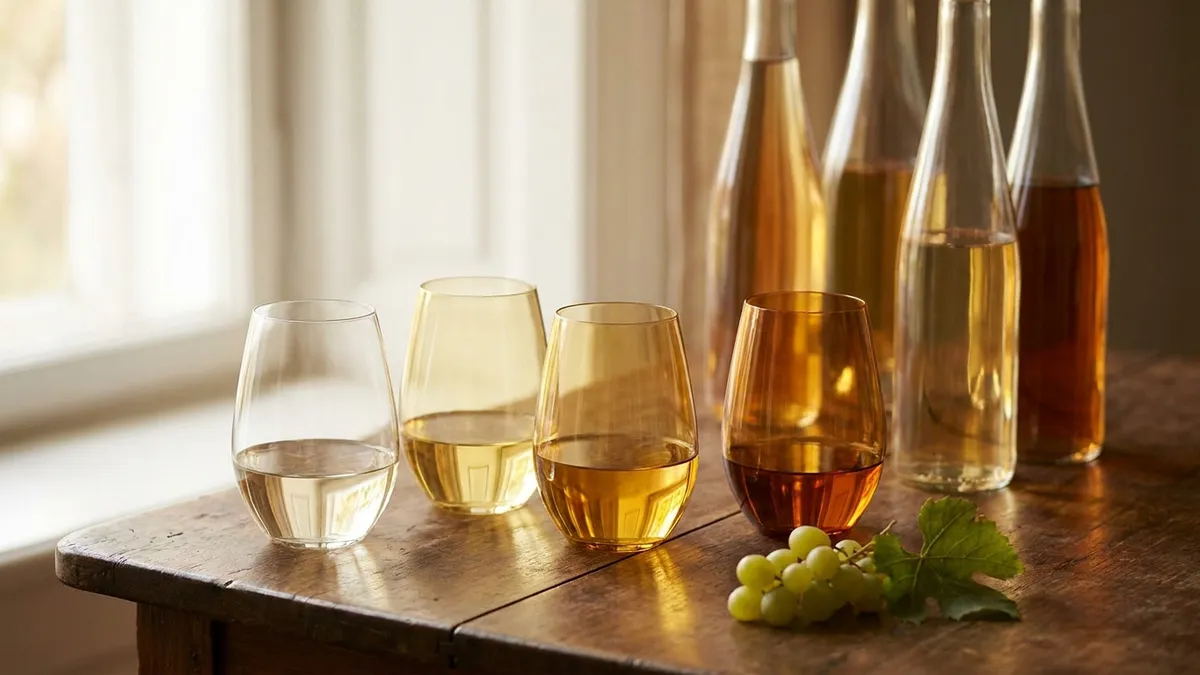
Alsace grows more than its headline grapes. Pinot Blanc and Auxerrois make soft, gentle, everyday whites and form the backbone of much sparkling wine. Sylvaner is light, fresh, and lemony — a humble crowd-pleaser. Pinot Noir is the region's only significant red, light-bodied and increasingly serious as the climate warms. For the wider family of white grapes these belong to, our white grapes overview sets them in context.
Dry to Lusciously Sweet: The Style Spectrum
One of the most useful things to grasp about Alsace is that the same grape can appear in radically different sweetness levels. Most Alsace wine is dry to off-dry, but two special late-harvest categories sit at the sweet end, both strictly regulated by minimum sugar levels at harvest.
- Standard Alsace: Mostly dry to off-dry, especially Riesling and Muscat. Pinot Gris and Gewürztraminer often carry a little more residual sugar, which softens their power.
- Vendanges Tardives (VT): "Late harvest." Grapes are picked extra ripe and concentrated, giving a richer, often medium-sweet wine with intense flavor and still-balancing acidity. Only the four noble grapes qualify.
- Sélection de Grains Nobles (SGN): The pinnacle of sweetness. Made from individually selected berries affected by noble rot (botrytis, a benevolent fungus that shrivels grapes and concentrates their sugars). The result is lusciously sweet, honeyed, and rare — a dessert wine of great depth. Again, noble grapes only.
The key beginner lesson: do not assume an Alsace white is dry just because most French whites are. Check the back label or the producer, and treat VT and SGN as their own sweet category, closer to a dessert wine than a dinner white.
In Alsace, the same grape can be a crisp apéritif or a honeyed dessert. The label names the grape; the producer decides the sweetness.
The Alsace Grand Cru System
Like the rest of France, Alsace ranks its best sites — but it does so in a way that fits its grape-first culture. The Alsace Grand Cru designation covers 51 named single vineyards, each judged over time to deliver the highest quality thanks to superior soil, slope, and exposure. The system was built up from 1975 onward and is far younger than Burgundy's centuries-old hierarchy.
The rules are strict. A Grand Cru wine must normally come from one of the four noble grapes, meet lower maximum yields, and reach higher ripeness than basic Alsace. The label shows both the grape and the vineyard name — for example, a Riesling from a specific Grand Cru site — so you read the place and the variety together.
Below Grand Cru sits the broad Alsace AOC (the regional appellation covering the vast majority of wine) and the separate Crémant d'Alsace AOC for sparkling. There is no Premier Cru tier as in Burgundy, which keeps the structure refreshingly simple: regional Alsace, the sparkling appellation, and the 51 Grand Cru vineyards at the top. For how this compares with the rest of the country, our guide to French wine regions places Alsace alongside Burgundy, Bordeaux, and the Loire.
Crémant d'Alsace: France's Quiet Sparkling Star
Alsace is one of the largest producers of traditional-method sparkling wine in France outside Champagne. Crémant d'Alsace is made by the same method as Champagne — a second fermentation in the bottle that traps fine bubbles — but from Alsace grapes and at a far friendlier price.
The base is usually Pinot Blanc, often with Pinot Gris, Pinot Noir, Riesling, or Auxerrois in the blend. A rosé version comes purely from Pinot Noir. The style is crisp, dry, and delicately fizzy, with green apple, citrus, and a soft brioche note from time on the lees (the spent yeast that adds bready depth in bottle-fermented sparkling wine).
For anyone exploring bubbles, Crémant is a smart pivot point. It shows that the traditional method is not unique to Champagne, and it pairs beautifully with food. Our overview of sparkling wine types places Crémant among the world's sparkling families, and how to taste sparkling wine walks through reading bubbles, mousse, and freshness in the glass.
The Most Germanic Region in France
Alsace earns its "most Germanic" reputation on more than the map. The grape names are German — Gewürztraminer, Riesling, Sylvaner. The bottle is the tall, slender flûte d'Alsace, the same shape used across the Rhine. Even the food leans German: choucroute (sauerkraut with sausages and pork), onion tart, and Munster cheese. Yet the wines themselves are distinctly French in their drier, more structured style.
This dual identity is the region's signature. Alsace took the German love of aromatic, grape-named whites and gave it a French sense of dryness and place. If you have explored the German wine regions, Alsace makes a fascinating mirror — the same grapes, the same northern light, but a different philosophy about sweetness and labeling.
Food Pairing: Why Alsace Loves the Table
Alsace wines are built for food, and their range makes them some of the most versatile whites in France. The high acidity of dry Riesling and the perfume of Gewürztraminer give you a tool for almost any plate.
- Dry Riesling: Its bright acidity cuts through fat and salt. Pairs with seafood, choucroute, roast chicken, and creamy sauces.
- Gewürztraminer: Its spice and richness stand up to bold, fragrant food. A classic match for spicy Thai and Indian dishes and for pungent Munster cheese. Our guide to wine with spicy food explains why an off-dry aromatic white tames chili heat.
- Pinot Gris: Its weight and smoke suit roast pork, mushrooms, and rich poultry — a white with the body to handle dishes you might reach for a red.
- Muscat: Its delicate grapey freshness shines as an apéritif and pairs gently with asparagus, a notoriously tricky vegetable for wine.
- Vendanges Tardives and SGN: Serve these sweet styles with foie gras, blue cheese, or fruit desserts, where their honeyed concentration meets richness head-on.
For the underlying logic of any pairing, our wine and food pairing guide gives you the method rather than a memorized list, and Sommy turns those principles into quick, guided practice you can use with your next bottle.
How a Beginner Should Start with Alsace
Because Alsace names the grape, it is one of the easiest French regions to explore deliberately. The smartest path is to taste the noble grapes against each other and let their differences teach you what "aromatic" really means. A practical order:
- Begin with dry Riesling. It is the region's noble benchmark — high acidity, citrus, and stony minerality. This is the steely, structured end of the spectrum.
- Add a Gewürztraminer beside it. The contrast is dramatic: lychee, rose, and spice instead of lemon and stone. Tasting the two together makes the idea of grape character click instantly.
- Bring in a Pinot Gris. Notice the extra weight and smoke. It sits between Riesling's nerve and Gewürztraminer's flamboyance, showing how texture changes a white.
- Try a Crémant d'Alsace. Meet the region's sparkling side, and feel how the traditional method shapes bubbles and freshness.
- Finish with a sweet VT or SGN if you can. One small glass of a late-harvest wine reveals the full range — from bone dry to honeyed — that a single region can deliver.
As you taste, name what you smell, note the acidity, and decide for each wine whether it reads dry or off-dry. That habit — observe, name, score — is the whole skill. You can start practicing free at sommy.wine, then bring the method to your next bottle. Our step-by-step guide to how to taste wine gives you the framework, and the noble grapes overview shows how Alsace's four fit into the wider cast of great wine grapes.
The Reward of Learning Alsace
Alsace asks less of a beginner than almost any other French region and gives back a great deal. There is no place name to decode, no producer hierarchy to memorize before you can shop — just the grape, the sweetness, and the occasional Grand Cru vineyard at the top. That clarity makes it the ideal classroom for training your nose on aromatic whites.
Learn the four noble grapes here, taste them side by side, and you build a vocabulary that travels everywhere. The Sommy app is built to make that habit stick, turning each bottle of Alsace into a short, guided lesson so the next one you open is a little clearer than the last.
Sources
Frequently Asked Questions
What grapes are used in Alsace wine?
Alsace is built on four noble grapes: Riesling, Gewürztraminer, Pinot Gris, and Muscat. These four can carry a Grand Cru name and define the region's reputation for aromatic whites. Beyond them, you will find Pinot Blanc, Sylvaner, and the only widely planted red, Pinot Noir, plus Auxerrois used in blends and sparkling wine.
Why does Alsace label wine by grape variety?
Most French regions name the place and expect you to know the grape, but Alsace prints the grape on the front label — Riesling, Gewürztraminer, and so on. This varietal labeling reflects the region's German cultural roots and makes Alsace unusually easy for beginners, because the bottle tells you exactly which grape is inside before you taste it.
Is Alsace wine sweet or dry?
Both. Standard Alsace wines are mostly dry to off-dry, while two special late-harvest categories are sweet: Vendanges Tardives is rich and concentrated, and Sélection de Grains Nobles is lusciously sweet from nobly rotted grapes. Sweetness is not always stated on the label, so the same grape can range from crisp to honeyed depending on the producer's style.
What is the Alsace Grand Cru system?
Alsace Grand Cru is a set of 51 named single vineyards judged to give the highest quality. Only the four noble grapes — Riesling, Gewürztraminer, Pinot Gris, and Muscat — may normally carry a Grand Cru name, with stricter yield and ripeness rules. The label shows both the grape and the vineyard, such as Riesling from a specific Grand Cru site.
What is Crémant d'Alsace?
Crémant d'Alsace is the region's traditional-method sparkling wine, made the same way as Champagne with a second fermentation in the bottle. It is usually based on Pinot Blanc, Pinot Gris, Pinot Noir, Riesling, or Auxerrois, and is crisp, fine-bubbled, and affordable. It is one of France's most popular sparkling wines outside Champagne itself.
What makes Alsace climate good for white wine?
Alsace sits in the rain shadow of the Vosges mountains, which block weather coming from the west and leave the region unusually dry and sunny for its northern latitude. This long, gentle ripening season lets grapes build aroma and sugar while keeping acidity, which is exactly what aromatic white grapes need to taste both ripe and fresh.
How should a beginner start with Alsace wine?
Start with a dry Alsace Riesling and a Gewürztraminer side by side so you feel the difference between a steely, citrusy grape and a perfumed, spicy one. Both name the grape on the label, so there is no decoding to do. Add a Pinot Gris for texture, then try a Crémant d'Alsace to meet the region's sparkling style.
Sommy Team
LinkedInFounder & Wine Educator
The Sommy Team is building the world's most approachable wine education app, helping beginners develop real tasting skills through structured courses and AI-guided practice.