How to Evaluate Wine Quality: Beyond "I Like It"

By the Sommy Team — AI-assisted, human-edited.
Updated Apr 29, 2026

Contents (14)
- TLDR
- How to Evaluate Wine Quality, in 100 Words
- Why "I Like It" Is Not Enough
- Dimension One: Balance
- Dimension Two: Length
- Dimension Three: Intensity
- Dimension Four: Complexity
- Dimension Five: Typicity
- The Quality Tier Scale
- Common Mistakes When Evaluating Wine Quality
- How to Combine the Five Into One Judgment
- Quality Versus Preference Is Forever
- FAQ
- The Bottom Line
TL;DR
Wine quality is judged on five dimensions — balance, length, intensity, complexity, and typicity. A high-quality wine shows harmony between components, a finish lasting twelve seconds or more, concentrated flavor, multiple layers evolving in the glass, and faithfulness to its grape and region. Preference is separate from quality and both are valid.
TLDR
Wine quality is judged on five dimensions — balance, length, intensity, complexity, and typicity. A high-quality wine shows harmony between components, a finish lasting twelve seconds or more, concentrated flavor, multiple layers evolving in the glass, and faithfulness to its grape and region. Preference is separate from quality and both are valid.
How to Evaluate Wine Quality, in 100 Words
To evaluate wine quality, score five dimensions on every pour: balance (no single component dominates — acid, tannin, alcohol, and sweetness sit in proportion), length (the flavor lingers twelve seconds or more after swallowing for high quality), intensity (concentrated aroma and flavor, not watered down), complexity (multiple distinct aromas and flavors evolving in the glass over time), and typicity (faithfulness to grape and region). The WSET tier scale runs faulty, poor, acceptable, good, very good, outstanding. "I like it" measures preference. Quality measures craftsmanship and structure regardless of personal taste — both judgments are real and both are useful.
Why "I Like It" Is Not Enough
"This wine is good" and "I like this wine" feel like the same sentence. They are not.
Liking a wine is a preference judgment. It depends on mood, occasion, what you ate two hours ago, the temperature of the room, and the palate you have built over the years. It is real, it is yours, and no one can argue with it.
Quality is a different question. Quality asks whether the wine is well-made — whether the structure holds together, whether the flavor reaches the back of the palate and stays there, whether the wine reflects its grape and place. A wine can be high quality and not your style. A wine can be low quality and still bring you joy at a Tuesday dinner. Both are valid verdicts, and conflating them is the most common mistake new tasters make.
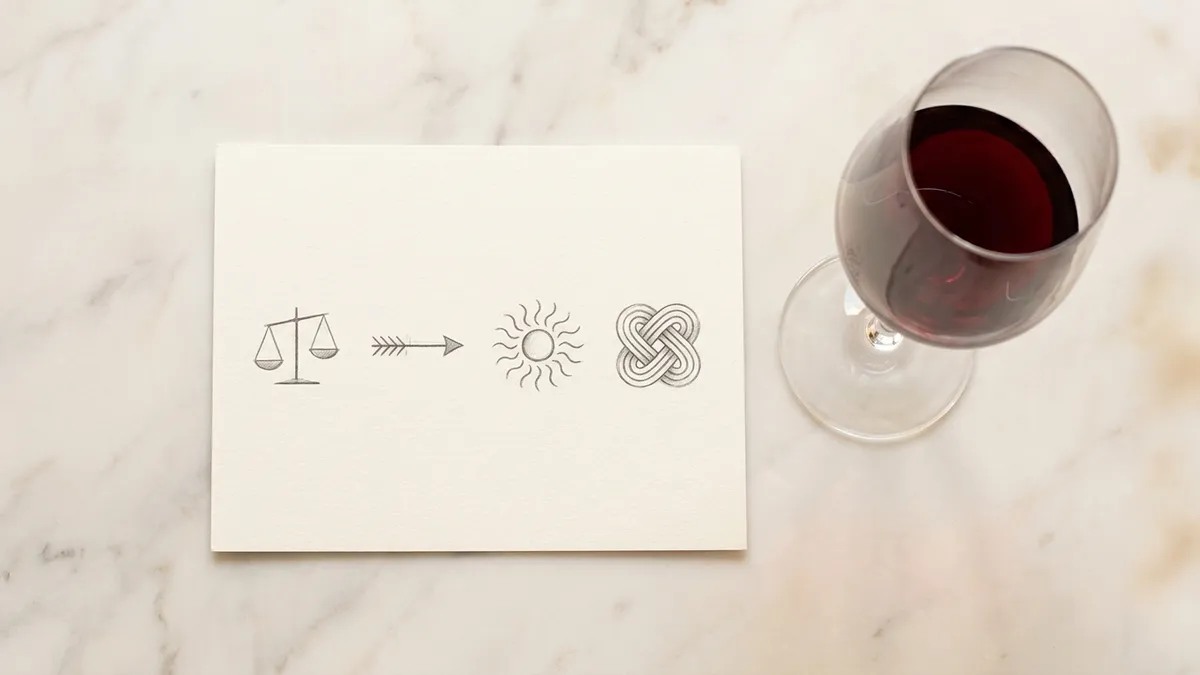
This is why sommeliers use a shared rubric. The framework lets two people who disagree on preference still agree on whether a wine is competent, good, very good, or outstanding. The rubric most working professionals use is built on five dimensions, often abbreviated as BLIC — balance, length, intensity, complexity — plus typicity as a fifth check.
Dimension One: Balance
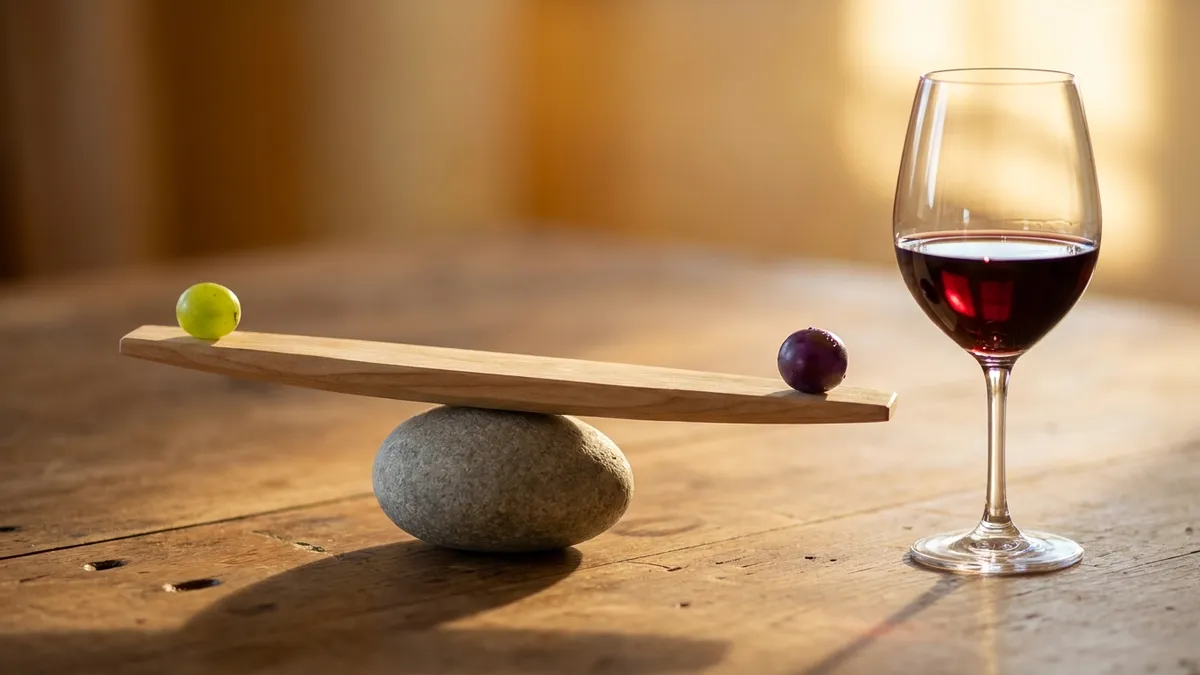
Balance is the proportional agreement of acidity, tannin, alcohol, sweetness, and fruit. No single element dominates. No single element disappears. A balanced wine reads as a whole before you notice any individual component.
How to measure it: rate each structural element on a 1-to-5 scale. Then ask, is anything a 5 while the rest are 2s? That is a balance red flag. A balanced red has tannin matched by fruit intensity, acidity supporting rather than cutting through the fruit, and alcohol proportional to everything else. A balanced white has acidity in agreement with the fruit concentration and alcohol that does not burn through the texture.
Imbalance has four common modes: too hot (alcohol burns), too acidic (thin and sour), too tannic (gums feel scoured), too flabby (low acidity, dull and formless). If any of these jump out before the wine as a whole hits you, balance is failing.
Balance is the single most weighted dimension on most professional rubrics. Our wine balance explained guide goes deeper into the five elements and how they interact across styles. Our understanding tannins, acidity, and body article covers each component individually.
Dimension Two: Length
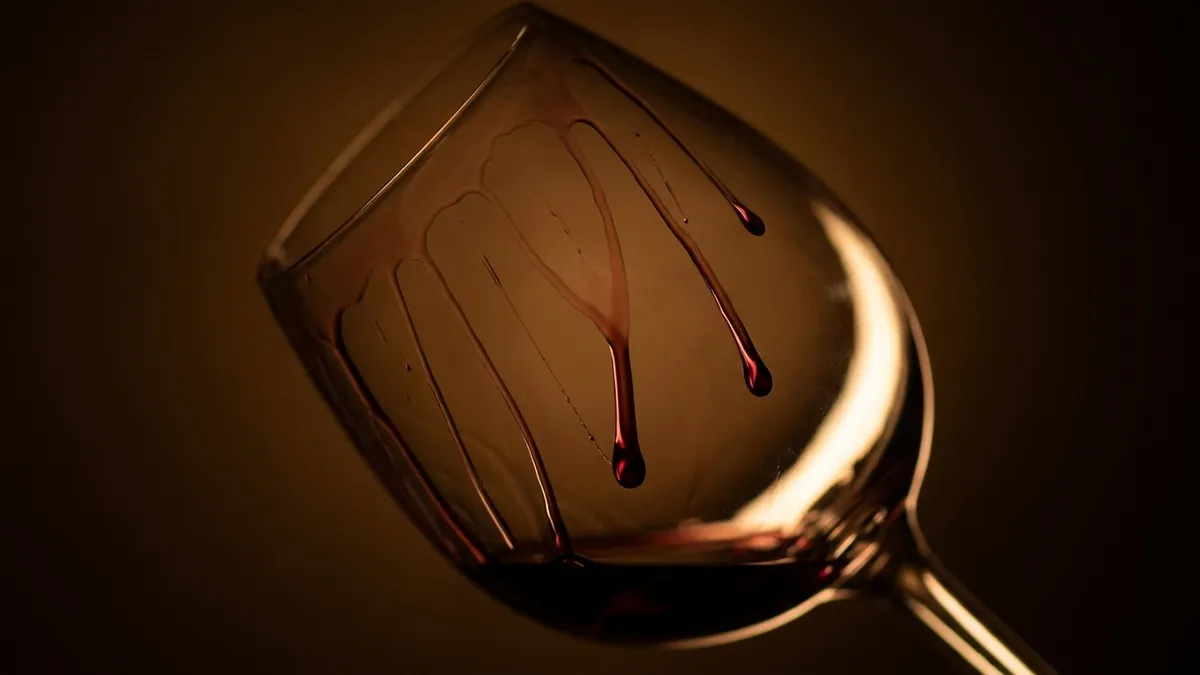
Length is how long the flavor and structural impression linger after you swallow. It is also called persistence or the finish.
How to measure it: take a sip, swallow, and silently count seconds until the flavor fades to nothing. Use a watch the first few times until you can feel the seconds without timing them.
The rough scale most professionals use:
- Short — under five seconds. Flavor disappears almost immediately. Indicates lower quality.
- Medium — eight to twelve seconds. Workhorse range for acceptable to good wines.
- Long — twelve to twenty seconds or more, evolving as it fades. Baseline for very good and outstanding wines.
Length matters because making a wine that lingers requires concentrated fruit, ripe phenolics, and skilled winemaking. Watered-down or industrially produced wines almost never have a long finish. The finish is also where you notice imbalance most clearly — if alcohol or acidity dominates the tail, balance is failing even if the attack felt clean.
A long finish that ends on a single note is good. A long finish that evolves while it lingers — moving from fruit to spice to mineral over fifteen seconds — is outstanding. Our wine finish meaning guide breaks the finish down into attack, mid-palate, and tail with examples.
Dimension Three: Intensity
Intensity is how concentrated the aroma and flavor are, both on the nose and on the palate. A high-intensity wine fills the glass and the mouth. A low-intensity wine reads as faded, watery, or distant.
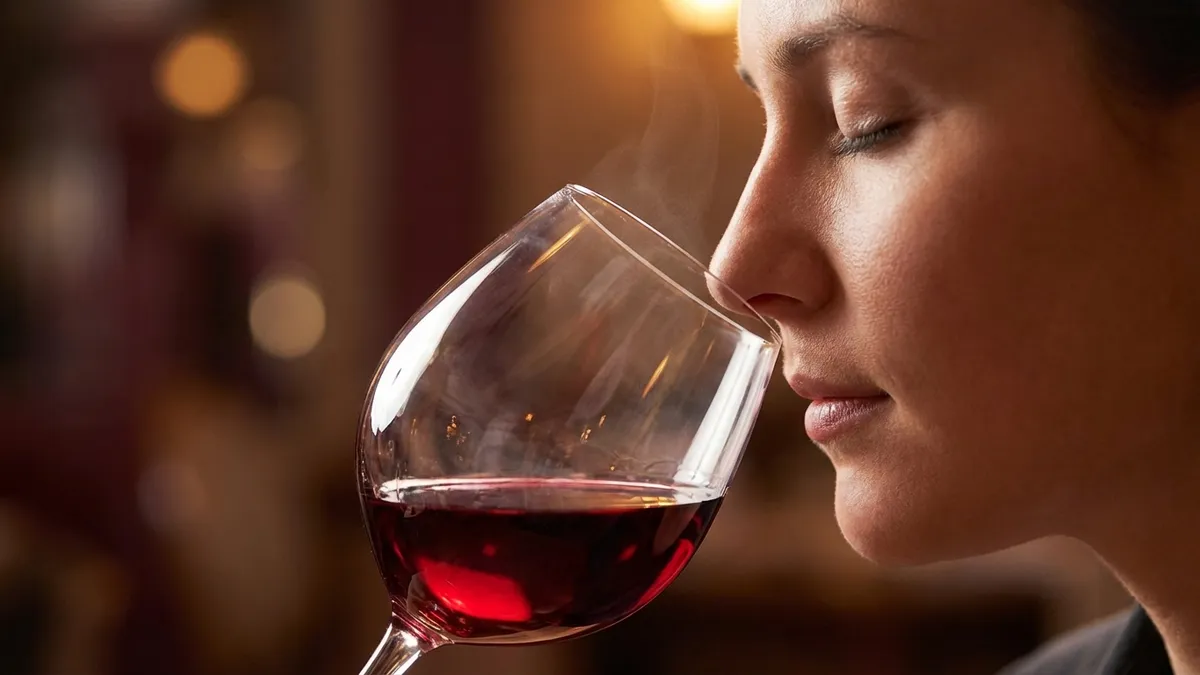
How to measure intensity: smell the wine at arm's length first. If you can pick up clear aromas without putting your nose in the glass, intensity is high. Then sip and ask whether the flavor is concentrated or thin. The 1-to-5 scale most tasting frameworks use ranges from light (1) to pronounced (5).
Intensity can be assessed separately on the nose and the palate. A wine can be loud on the nose and thin on the palate — usually a sign of overdone aromatic extraction without ripe fruit. A wine can also be subtle on the nose but concentrated on the palate, which is common in serious mineral whites.
Important caveat: intensity is not the same as quality. A delicate Mosel Riesling at intensity 3 can be a higher quality wine than a 15.5% blockbuster Zinfandel at intensity 5. Volume is one ingredient in quality, not the verdict. This is one of the most common mistakes — confusing power for quality. A wine evaluator who only rewards intensity will keep buying overripe, oaky bottles and missing the elegant ones.
Dimension Four: Complexity
Complexity is the coexistence of multiple distinct aroma and flavor layers in the same glass, plus the way they evolve over time.
How to measure complexity:
- Pour the wine and write down every aroma you find in the first 30 seconds.
- Wait 15 minutes. Smell again. Note any new aromas.
- Wait another 30 minutes. Smell again. Note again.
A simple wine produces the same notes at every checkpoint. A complex wine reveals different aromas at each pass — fruit might give way to spice, then to earth, then to a floral lift you missed at the start. The number and distinctness of those layers is your complexity score.
Complexity also lives in the relationship between primary fruit, secondary winemaking notes (oak, yeast, malolactic creaminess), and tertiary aging notes (leather, truffle, dried fruit). A complex wine has at least two of these categories visible at once. An outstanding wine has all three. Our wine complexity explained guide unpacks each layer in detail. Our primary, secondary, and tertiary aromas article walks through how to recognize each category.
A simple wine is not a bad wine — a crisp, clean Pinot Grigio with just lemon and green apple is perfectly well-made for the style. It is simple because the style is simple. The gap between "simple" and "complex" only matters when the wine is reaching for greater quality. A complex wine that achieves the layering it is reaching for scores higher.
Dimension Five: Typicity
Typicity is how faithfully a wine reflects its grape variety, region, and style category. A Sancerre that tastes like Loire Sauvignon Blanc — flinty, herbaceous, mouth-watering — has high typicity. A Sancerre that tastes like a tropical New Zealand version does not.
Typicity matters because it tells you the winemaker honored the source rather than chasing a generic crowd-pleasing profile. It is a baseline marker on every formal quality rubric. A wine can score high on the other four BLIC dimensions and still feel hollow if it does not taste like anywhere — that hollowness is a typicity failure.
How to measure typicity: build a reference memory for major grapes and regions, then ask whether the wine in your glass matches that memory. Tasting representative bottles from each canonical region is the fastest path. Our what is wine typicity guide is the deep dive on the concept. Our new world vs old world tasting style article covers the broadest typicity divide most beginners encounter, and what is terroir explains the climate-and-place factors that produce typicity in the first place.
Sommelier note: typicity is the dimension that breaks blind tasting wide open. If a wine smells right for its region and grape, the rest of the BLIC checks tend to confirm. If typicity feels off, something deeper is usually wrong with the wine — picking too late, generic oak, or a winemaker chasing scores instead of place.
The Quality Tier Scale
The WSET tasting grid teaches a six-tier scale that most professionals use as shorthand:
- Faulty — has a recognizable defect (cork taint, oxidation, brett, volatile acidity). Auto-fail regardless of other dimensions. Our how to tell if wine is corked guide covers the most common faults.
- Poor — no recognizable fault, but lacks balance or has obvious imbalance. Hot, thin, flabby, or simple in unhelpful ways.
- Acceptable — technically correct, balanced, but unmemorable. Pleasant once, forgettable two hours later.
- Good — balanced with clear varietal and regional character. Medium length. Pleasant to drink and recognizable.
- Very good — adds length and complexity to the good baseline. Layers evolve in the glass. Finish lingers twelve seconds or more. Memorable.
- Outstanding — all five dimensions firing at once. Balance is seamless. Finish lasts twenty seconds and evolves. Intensity is concentrated without being heavy. Complexity reveals itself across nose, palate, and finish. Typicity is textbook. A reference expression of its style.
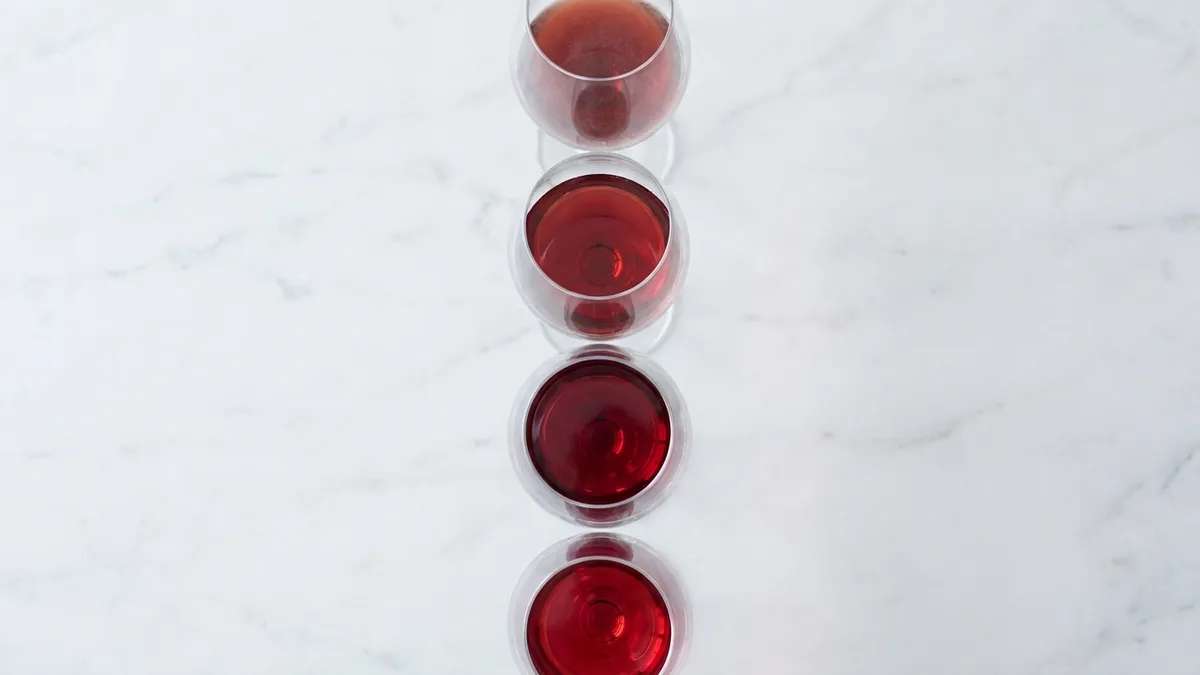
The tiers compress a lot of information. A wine at "very good" can still divide drinkers on preference. A wine at "outstanding" rarely does — outstanding wines win over even tasters who do not gravitate to the style.
Common Mistakes When Evaluating Wine Quality
Three failure modes show up over and over with new evaluators.
Confusing power for quality
A 15.5% alcohol Zinfandel with concentrated jammy fruit feels intense, and intensity is one of the BLIC dimensions. But intensity without balance, complexity, length, and typicity is just volume. A heavily extracted wine can still score as merely acceptable if balance is failing and complexity is one-note. Our common wine tasting mistakes guide covers this trap and several others.
Confusing smooth for quality
"Smooth" usually means low tannin, low acidity, and round texture. A smooth wine is easy to drink, which is great for casual sipping. But smoothness is not a quality marker on any professional rubric. Many smooth wines lack the structural tension that produces length and complexity. Some of the highest quality wines are decidedly not smooth — they grip, they cut, they linger.
Letting price decide
Expensive wines are statistically more often balanced and complex, but plenty of mid-priced bottles beat luxury wines on blind evaluation. Price correlates with quality without determining it; our guide to wine price vs quality shows what the blind-tasting data actually says. The fastest way to break the price-equals-quality habit is to taste a thirty-dollar wine and a hundred-and-fifty-dollar wine blind, evaluate both with the BLIC framework, and see which one wins on its own merits.
How to Combine the Five Into One Judgment
Once you have rated balance, length, intensity, complexity, and typicity individually, the combined verdict is straightforward.
Use the lowest dimension as a ceiling. A wine with outstanding balance, length, complexity, and typicity but only acceptable intensity will land at "good" or "very good" overall — the weak dimension limits the ceiling. The exception is faulty, which trumps everything else; a recognizable defect drops the wine to faulty regardless of how strong the other dimensions are.
A practical workflow:
- Smell and rate intensity on the nose.
- Sip and rate balance.
- Swallow, count seconds, rate length.
- Wait fifteen minutes, smell and sip again, rate complexity based on what changed.
- Compare against your memory of the grape and region for typicity.
- Take the lowest of the five (excluding any faulty result) and that is your tier.
Logging this rating consistently is the fastest way to develop quality judgment. The Sommy app captures balance elements on independent 1-to-5 scales after every tasting, and pairs them with the aroma, flavor, and finish notes you record — so over a month of pours you build a structured fingerprint for every wine you taste, which is the foundation for spotting quality patterns across grapes and regions. Our wine tasting notes template and wine judging criteria guides walk through the underlying note-taking framework Sommy is built on.
Quality Versus Preference Is Forever
You can evaluate a wine as outstanding and still not enjoy it that night. You can evaluate a wine as merely acceptable and have a wonderful time drinking it with friends. Both judgments are honest, and skilled tasters hold them in parallel without confusing one for the other.
The point of the BLIC plus typicity framework is not to override your preference. It is to give you a second axis of judgment — one that travels with you across styles, prices, and regions, and that lets you compare a Mosel Riesling and a Napa Cabernet on the same page.
Master that second axis and you stop being at the mercy of marketing, price tags, and other people's opinions. The wine in your glass is judged by what it actually delivers, not by what the bottle promises.
FAQ
Can I evaluate wine quality without formal training?
Yes. The BLIC plus typicity framework is learnable in a few weeks of consistent tasting. The hardest part is calibration — knowing what "long" feels like, what "complex" looks like, what typicity sounds like for each major grape. That comes from tasting representative bottles side by side and writing notes you can compare later. Formal training accelerates this, but does not gatekeep it.
How many wines do I need to taste before I can judge quality reliably?
Roughly 100 to 200 wines tasted with structured notes is enough to evaluate wines from major styles with reasonable confidence. Tasting fewer than 50 makes calibration shaky. Tasting 500 or more across regions gets you near professional-level confidence. Quality is volume plus structure of practice, not just years of casual drinking.
What if I disagree with a wine critic's score?
Disagreement on quality is normal and often legitimate. Critics use slightly different rubrics, weight different dimensions, and have palate biases. The framework above lets you articulate where you disagree — for instance, "the wine is balanced and long but the typicity is off, which is why I scored it lower than the published critic." Specific disagreement is useful. Vague disagreement is not.
Does the same wine have the same quality every time?
The wine itself is consistent, but your perception is not. Palate fatigue, food eaten earlier, glass shape, serving temperature, and even the order in a flight all shift how the wine reads. This is why professional rubrics include retasting after a break and standardize the conditions. Tasting a wine three times across different evenings gives a more reliable quality verdict than one snapshot.
Are sweet wines harder to evaluate?
Sweet wines need a sixth dimension — sweetness must be balanced by acidity. A great Sauternes or Mosel Auslese has high residual sugar matched by high acidity, and the result feels lively rather than cloying. Apply the BLIC plus typicity framework and add a balance check specifically for sweetness. Our dessert wine guide and wine sweetness scale guides cover this dimension in detail.
How does aging change quality scores?
Aging shifts all five dimensions. Balance can improve (tannin softens) or decline (fruit fades faster than acidity). Length usually grows with bottle age in well-built wines. Complexity climbs sharply as tertiary aromas develop. Typicity can be either intensified or muddied. A wine that scored "very good" young can land at "outstanding" at fifteen years, or it can drop to "good" if it was not built to age. Our tasting young vs aged wine guide unpacks the trajectory.
Can a wine be high quality and still taste bad to me?
Absolutely. A perfectly evaluated outstanding skin-contact white can taste challenging if your palate prefers crisp modern whites. Quality means the wine is well-made for its category. Whether you like the category is your preference, and that does not change the quality verdict. Honoring both axes lets you respect a wine without forcing yourself to drink it.
The Bottom Line
To evaluate wine quality, score balance, length, intensity, complexity, and typicity — the BLIC plus typicity framework — and place the wine on the WSET tier scale from faulty to outstanding. Keep that judgment separate from whether you personally enjoy the wine, because both questions matter and both are real.
The framework is portable. It works on a six-dollar everyday red and a six-hundred-dollar Burgundy. It works on red, white, rosé, sparkling, and dessert wines. With consistent practice — short, regular tastings with structured notes — quality judgment stops being a sommelier mystery and starts being something you do automatically every time you raise a glass.
Frequently Asked Questions
How do you evaluate the quality of a wine?
You assess five dimensions in sequence — balance, length, intensity, complexity, and typicity. Check whether the structural elements harmonize without one dominating, time how long the flavor lingers after swallowing, gauge how concentrated the aromas are, count the distinct layers that evolve in the glass, and ask whether the wine tastes like its grape and region. The combined judgment is the quality verdict.
What is the difference between liking a wine and a wine being good quality?
Liking a wine is preference, a personal reaction shaped by mood, occasion, and palate history. Quality is craftsmanship and structure, judged on dimensions that hold across drinkers. A bone-dry skin-contact white can be outstanding quality even if you find it challenging, and a fruit-forward supermarket red can taste pleasant while scoring as merely acceptable on a quality rubric. Both verdicts can coexist.
What is the BLIC method in wine tasting?
BLIC stands for balance, length, intensity, and complexity, the four palate-side dimensions WSET uses to assess quality. Many tasters add typicity as a fifth dimension to capture how faithful the wine is to its grape and region. Each dimension is scored on a tier scale from poor to outstanding, and the combined picture decides the overall quality level.
How long should a wine's finish last for it to be considered high quality?
A short finish disappears within five seconds and signals lower quality. A medium finish lingers eight to twelve seconds and is the workhorse range for acceptable to good wines. A long finish lasts twelve to twenty seconds or more, evolves while it lingers, and is the baseline for very good and outstanding bottles. Time the seconds with a watch a few times to calibrate.
Can a powerful wine be low quality?
Yes, and confusing power for quality is one of the most common evaluation mistakes. A heavily extracted, high-alcohol red with concentrated fruit can still be unbalanced, short on the finish, simple in layering, and atypical for its region. Power is one ingredient in intensity, but intensity alone does not equal quality without balance, length, complexity, and typicity supporting it.
What is wine typicity and why does it matter for quality?
Typicity is how faithfully a wine reflects its grape variety, region, and style category. A Sancerre that tastes like Sauvignon Blanc from the Loire shows high typicity, while one that tastes like a tropical New Zealand version does not. Typicity matters because it tells you the winemaker honored the place rather than chasing a generic crowd-pleasing profile, and it is a baseline marker on every formal quality rubric.
Are expensive wines always higher quality than cheap wines?
Not always. Price correlates with quality but does not guarantee it. Many wines in the twenty-to-forty dollar range outperform three-figure bottles on blind quality assessment, especially from less famous regions. Expensive wines are more often well-balanced and complex, but plenty of mid-priced wines beat a meaningful share of luxury bottles when the label is hidden and the BLIC framework is applied honestly.
What is the WSET wine quality scale?
The WSET tier scale runs faulty, poor, acceptable, good, very good, and outstanding. Faulty means a recognizable defect like cork taint or oxidation. Poor lacks balance or has obvious flaws. Acceptable is technically correct but unmemorable. Good is balanced and shows clear varietal character. Very good adds length and complexity. Outstanding nails all five BLIC plus typicity dimensions and stands as a benchmark expression of its style.
Sommy Team
LinkedInFounder & Wine Educator
The Sommy Team is building the world's most approachable wine education app, helping beginners develop real tasting skills through structured courses and AI-guided practice.