What Is Typicity in Wine? Recognizing a Grape's True Character

By the Sommy Team — AI-assisted, human-edited.
Updated Apr 29, 2026
Contents (11)
TL;DR
Wine typicity is how faithfully a wine expresses the expected character of its grape variety and home region. A textbook Sancerre Sauvignon Blanc shows pale lemon, gooseberry, grass, wet stone, high acid, and light body. Judges and blind tasters use typicity to score wines. Learning typicity means learning what each grape should taste like in its classic place.
What Is Wine Typicity
Wine typicity is how faithfully a wine expresses the expected character of its grape variety and the region it comes from. The word comes from the French typicité, and it shows up in judging rubrics, sommelier exams, and blind tasting notes everywhere wine is taken seriously.
The plain version: every grape, grown in a specific classic region, has a recognizable signature. Sauvignon Blanc from Sancerre smells like cut grass, gooseberry, lemon, and wet stone. Riesling from the Mosel is electric with acidity and tastes of green apple, peach, and slate. Nebbiolo from Barolo is pale-ish red, fragrant with rose and tar, gripping in tannin. Those signatures are the textbook for those grape-and-place pairings. A wine that hits the markers is high in typicity. One that drifts away is atypical.
Typicity is not a moral judgment. It is a tasting observation — a measurement of how recognizable a wine is as itself.
Wine Typicity Meaning, in 100 Words
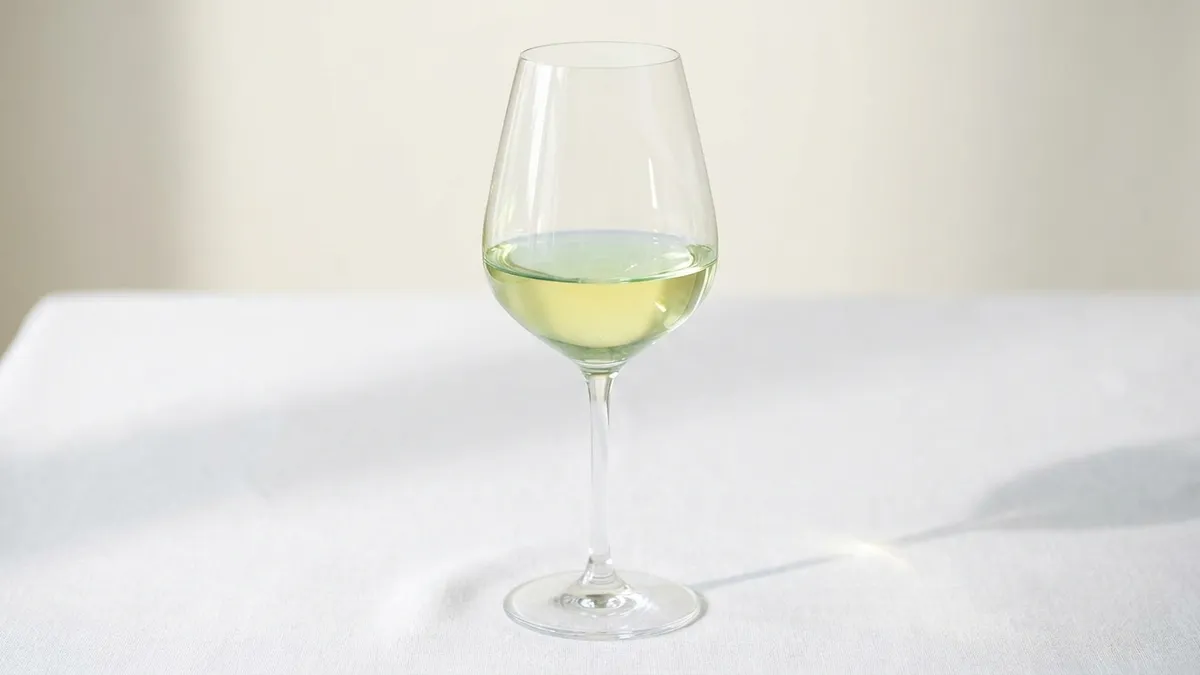
The wine typicity meaning judges, sommeliers, and serious blind tasters share is simple. Typicity equals how true a wine is to the expected character of its grape variety and region. A textbook Sancerre Sauvignon Blanc shows pale lemon color, gooseberry and grass aromas, wet-stone minerality, high acid, low body, and no oak. A non-typical version might smell tropical, feel oaky-creamy, or carry ripe stone fruit. Both can be technically clean. Only one delivers the regional signature. Modern winemaking trends — earlier picking, less new oak, native yeast — generally push wines toward higher typicity, not away from it.
Why Typicity Matters
For wine judges
Open any reputable scoring rubric and typicity has a line. The OIV 100-point scale used by major international competitions assigns up to 11 points to "overall harmony and typicity." The WSET Systematic Approach to Tasting asks the taster to conclude whether a wine is a faithful example of its category. A wine can be clean, balanced, and technically pristine and still lose points for not reading as its grape and region.
Our guide to wine judging criteria covers the full breakdown of how panels weight quality, balance, and typicity in a flight.
For blind tasting
If you cannot identify a grape and region from the glass, you cannot pass a senior sommelier exam. Blind tasting is essentially typicity in reverse — the taster reads the markers in the glass and works backward to a grape and place. Without consistent regional templates, blind tasting would be impossible. The whole discipline depends on the assumption that wines from the same grape-and-place share enough character to be reliably identified.
The deductive wine tasting method walks through how a trained taster narrows from "high acid white wine" all the way to a specific appellation using typicity markers.
For your buying decisions
Typicity is also the most useful concept on a wine shelf. Once you know what a textbook Mosel Riesling tastes like, you can read a label, see "Mosel Riesling Kabinett," and predict — with high accuracy — what is in the bottle. That predictability is what makes regional wine labels meaningful in the first place.
If you reject the typicity model and try every wine cold, you are left buying by price and producer reputation, neither of which tells you much about flavor.
Typicity vs Terroir
These two concepts get confused constantly because they describe related things from opposite directions.
Terroir is the cause. It is the physical environment where the grapes grew — soil, climate, altitude, slope, rainfall, and tradition. See our what is terroir guide for the full breakdown.
Typicity is the effect a taster can detect in the glass. It is the recognizable expression of that environment in the finished wine.
Terroir exists whether or not anyone notices it. Typicity is a tasting judgment — you can only measure it in the glass, against an internalized template of what the region should taste like.
A good way to keep them straight: terroir is geography, typicity is recognition.
How to Learn Typicity for a Grape
The fastest way to learn typicity is structured side-by-side tasting. The recipe is consistent across every grape in the world.
The four-bottle method
Pick one grape variety. Pick one classic region for that grape. Buy four wines from that region at roughly the same price tier and similar style.
For example:
- Sauvignon Blanc — four Sancerre village wines
- Pinot Noir — four village-level red Burgundies (Gevrey-Chambertin, Volnay, Vosne-Romanée, Chambolle-Musigny)
- Riesling — four Mosel Kabinetts from different villages
- Chardonnay — four Chablis village wines
- Sangiovese — four Chianti Classico Annata wines
- Tempranillo — four Rioja Crianzas
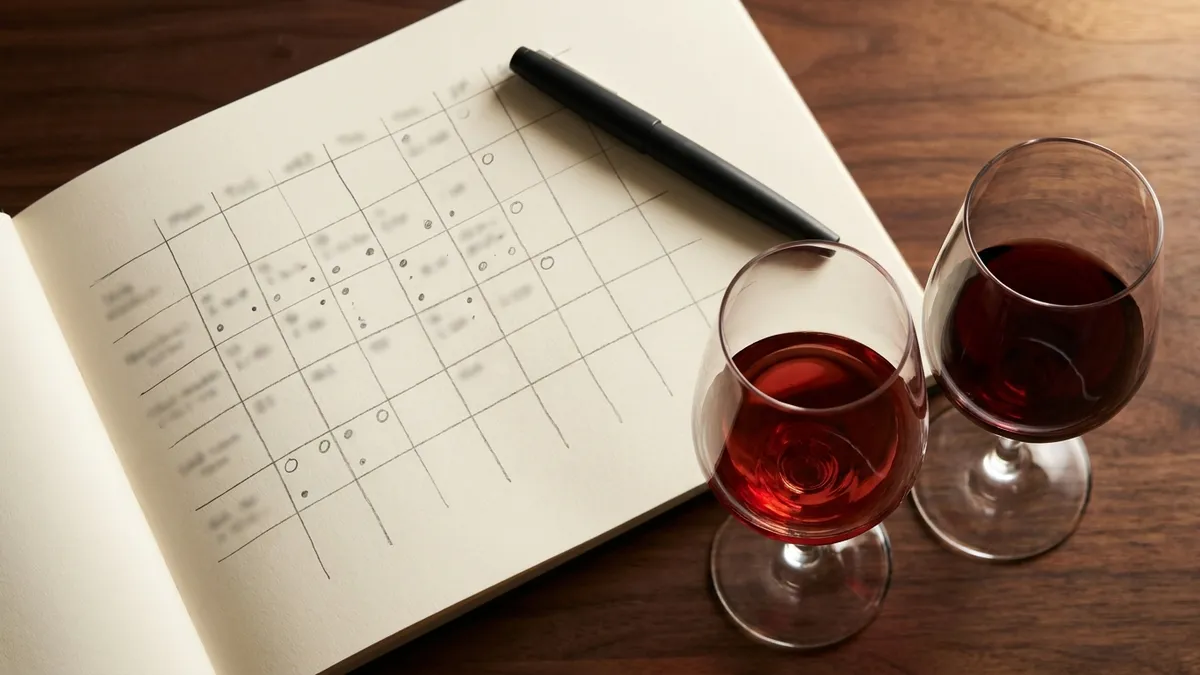
Open all four, pour 60 ml in clear glasses, and taste through. Take notes on what they share, not what makes them different.
What you are looking for
The shared traits across all four wines are the typicity signature. Common elements:
- Color — the typical hue and intensity for the grape and region
- Aroma family — which fruit, floral, herb, mineral, and oak notes recur
- Acidity — does every wine show similar acid level
- Body — light, medium, full
- Tannin (for reds) — fine, medium, gripping
- Finish length — short, medium, long
After three or four such flights, you will recognize that grape from that region with about 80% accuracy in a blind setting. Two or three more comparison sessions and you can do it consistently.
The Sommy app's comparative tasting flow walks you through this exact two-glass and four-glass approach with structured prompts that build the typicity template lesson by lesson.
Regional Benchmarks: What Textbook Looks Like
These are some of the most useful classic templates to memorize. Each is intentionally tight — typicity gets fuzzier the broader the region you choose.
Textbook Sancerre Sauvignon Blanc
- Color — pale lemon
- Nose — gooseberry, lemon zest, cut grass, blackcurrant leaf, wet stone, no oak
- Palate — high acid, low body, dry, no oak influence, medium-plus finish
- Signature — flinty minerality from chalk and flint soils
Textbook Mosel Riesling Kabinett
- Color — pale lemon-green
- Nose — green apple, lime, white peach, slate, beeswax in older examples
- Palate — off-dry, very high acid, very low alcohol (around 8 to 9%), light body
- Signature — slate-driven minerality and a delicate balance between sweetness and acid
Textbook Barolo Nebbiolo
- Color — pale to medium garnet, often with a brick rim even when young
- Nose — rose petal, sour cherry, tar, leather, dried herbs, truffle in mature examples
- Palate — high acid, high tannin, full body, drying finish, no excess fruit
- Signature — the Barolo paradox — pale color but ferocious structure
Textbook Chablis Chardonnay
- Color — pale lemon, often with a green tinge
- Nose — green apple, lemon zest, oyster shell, chalk, no obvious oak
- Palate — high acid, light to medium body, dry, lean, mineral, long finish
- Signature — the Kimmeridgian limestone signature — saline, almost sea-spray-like
Textbook Burgundy Pinot Noir (village level)
- Color — pale to medium ruby
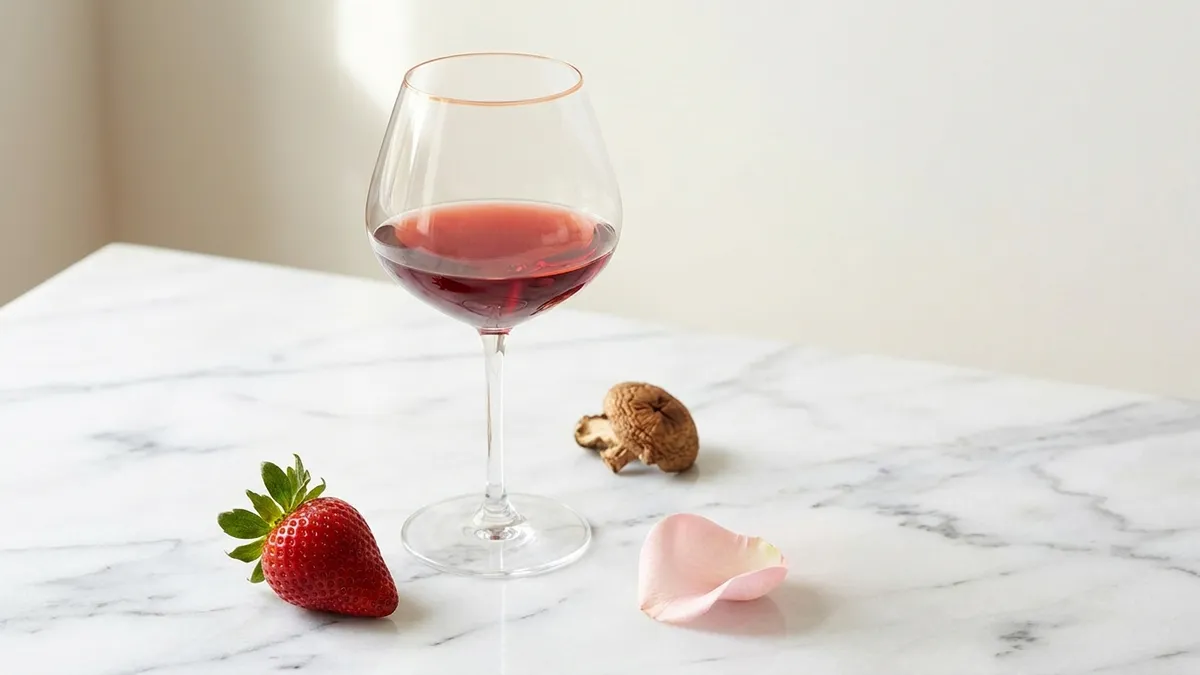
- Nose — red cherry, raspberry, forest floor, mushroom, subtle oak
- Palate — medium body, high acid, fine medium tannin, savory finish
- Signature — earthiness — the Burgundian "forest floor" character
Textbook Mendoza Malbec
- Color — deep ruby to purple
- Nose — black plum, blueberry, violet, cocoa, often vanilla from oak
- Palate — full body, medium-plus tannin, medium acid, ripe fruit
- Signature — high-altitude ripeness with floral lift — see our Malbec wine guide for more
If you can hold five or six of these templates in your head, you can place most wines you encounter into a category before you even read the label.
Modern Atypical Styles
Typicity is not a fixed law. It evolves. And many modern wines deliberately move outside the regional template — sometimes for excellent reasons, sometimes not.
Counterfeit-style winemaking
The most criticized form of atypicality is when a producer makes a wine that pretends to be from one region while using grapes or methods from another. A New-World wine engineered to mimic Burgundy by buying Burgundian oak, using Burgundian yeast strains, and over-extracting fruit can taste impressive in isolation but loses what made the original distinctive. It tastes like an imitation, and trained tasters notice quickly.
Over-extraction
In the late 1990s and early 2000s, a wave of producers across multiple regions chased high scores by extracting more color, tannin, and concentration than the grape naturally provides. The result was wines that felt heavy, jammy, and homogeneous. Many traditional regions — Barolo, Bordeaux, parts of the Rhône — have since moved back toward lighter, more transparent styles that show their grape and place more clearly.
Over-oaking
New oak adds vanilla, baking spice, and toast. Used carefully, it complements wines that can carry the weight. Used heavily on a delicate grape, it covers everything underneath. A heavily oaked Sauvignon Blanc can taste good in isolation but smells nothing like the textbook regional expression — the grass, the stone, the citrus all get buried under wood.
The Sommy app's lessons on what does oaked mean cover how to recognize oak influence and decide when it serves the wine versus when it masks the grape.
Climate change
This one is not a stylistic choice. As average growing-season temperatures rise, traditionally cool regions are producing riper, fuller wines than they did fifty years ago. The Mosel is producing more dry Riesling than ever. Burgundy harvests are weeks earlier than in the 1980s. Some textbook templates are quietly shifting because the underlying climate is shifting.
A 2024 textbook Mosel Riesling is rounder and slightly less acidic than a 1990 textbook example. Both are typical for their era — typicity is partly a moving target.
Are Atypical Wines Worse?
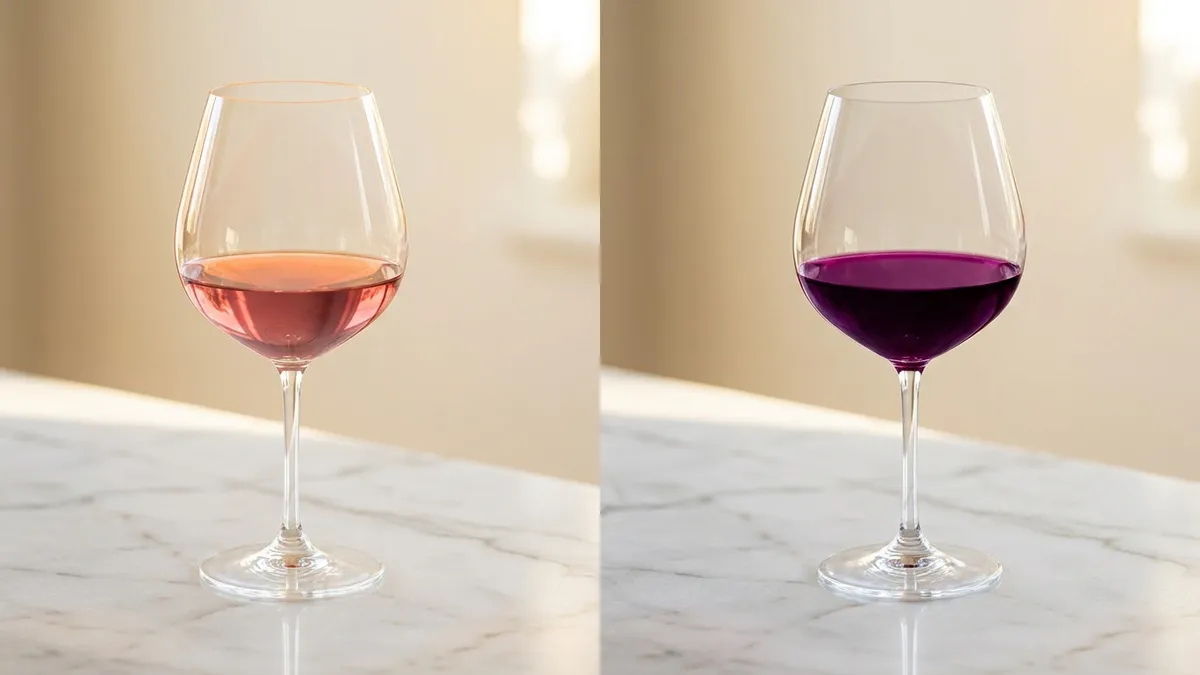
Not necessarily. The point of typicity is descriptive, not prescriptive. A wine being atypical only means it breaks from the expected template. The honest question is whether the result is intentional and excellent, or whether it reflects shortcuts and faults.
Some of the most exciting modern wines deliberately push beyond regional convention — orange wines from regions that traditionally made white, natural wines that intentionally show texture and funk, ultra-low-intervention bottlings that taste nothing like commercial neighbors. These are atypical and often wonderful.
Other atypical wines reflect carelessness, faults, or marketing copies of styles that do not belong in the bottle. Knowing typicity helps you tell the difference. A trained taster can recognize that a wine is atypical, then ask the second question: is the deviation intentional and good, or accidental and bad?
That second question is harder than it sounds. Our wine flaws vs faults guide covers how to tell deliberate stylistic choices from genuine winemaking faults — a critical distinction when judging atypical bottlings.
How Modern Trends Increase Typicity
Many of the biggest shifts in winemaking over the past two decades have moved wines toward, not away from, typicity. The reason is simple: lower-intervention winemaking lets the grape and place speak more clearly.
- Cooler picking dates — less ripe fruit, more acidity, more regional character preserved
- Native yeast fermentation — local yeast strains contribute regional aroma signatures
- Less new oak — the grape comes through more clearly
- Reduced extraction — wines feel less bulldozed, more transparent
- No filtration or fining — texture and aromatic complexity stay intact
- Single-vineyard bottlings — narrower terroir produces sharper typicity
This is one reason "natural wine" producers often score well in blind tastings against traditional benchmarks — the modern minimalist approach often hits regional templates more cleanly than a bigger, oakier interpretation.
Practicing Typicity at Home
Building a personal library of typicity templates is the single highest-leverage move in wine education. Once you have ten or fifteen grape-and-region pairings memorized, the entire wine world opens up. Every label tells you something specific.
A simple practice plan:
- Month 1 — Sauvignon Blanc from Sancerre or Marlborough
- Month 2 — Pinot Noir from Burgundy or Oregon
- Month 3 — Riesling from Mosel or Alsace
- Month 4 — Chardonnay from Chablis and Napa, side by side
- Month 5 — Sangiovese from Chianti Classico
- Month 6 — Tempranillo from Rioja
For each month, run one four-bottle flight, take notes on shared traits, and write a one-paragraph regional template. By the end of six months you will have six benchmark templates locked in.
The Sommy app builds these flights into structured tasting modules — same grape, classic region, four-bottle template, and a guided note-taking flow. The app then quizzes you on the templates over time so the patterns stick rather than fading.
Sommelier note: A typicity template is not a list of flavors to memorize. It is a felt sense of what the wine should taste like. The fastest way to build it is by tasting four examples in one sitting, not reading flavor charts.
The Bottom Line
Wine typicity is one of the most useful tasting concepts you can learn. It gives you a language for talking about whether a wine reads as itself, a structure for blind tasting, and a way to make sense of regional wine labels. It is not snobbery — it is the recognition that grapes grown in classic places produce wines with shared signatures, and that those signatures are worth learning.
Modern winemaking is, on balance, increasing typicity rather than eroding it. Lower extraction, less new oak, native yeasts, and earlier picking all push wines toward clearer expressions of their grape and place. The textbook is moving, but it is moving toward more transparency, not less.
Start with one grape, four bottles, one region. Take notes. Repeat. After six grapes, the wine wall stops looking random and starts looking like a map.
Frequently Asked Questions
What does typicity mean in wine?
Typicity is the degree to which a wine expresses the expected character of its grape variety and region. A typical Mosel Riesling shows low alcohol, high acidity, citrus, peach, and a flinty mineral note. A wine that hits those markers is high in typicity. One that smells tropical and feels heavy is atypical, even if it is well-made.
Is typicity the same as terroir?
No, but they are related. Terroir is the physical environment a wine comes from — soil, climate, altitude, tradition. Typicity is how recognizably a finished wine expresses that origin. Terroir is the cause; typicity is the effect a taster can detect in the glass.
Why does typicity matter for wine judging?
Most major scoring systems including OIV 100 and WSET SAT include a typicity or category score. Judges ask whether the wine reads as its grape and appellation. A perfectly clean wine that does not taste like its category will lose points, because the judging panel rewards faithful expression of origin alongside technical quality.
How do I learn typicity for a specific grape?
Pick one classic region for that grape and taste four wines from it side by side. For Sauvignon Blanc, taste four Sancerres. For Pinot Noir, taste four village-level red Burgundies. The shared traits across the four are typicity. After three or four such flights you will recognize the grape blind in eight glasses out of ten.
Can a wine be high quality but low in typicity?
Yes, and it happens often. A heavily oaked New-World Sauvignon Blanc can be technically beautiful, balanced, and clean while smelling nothing like Sancerre. Quality and typicity are separate axes. A great wine can score 95 points for quality and still get marked down for category in a blind judging context that expects regional faithfulness.
Are atypical wines bad?
Not necessarily. Some of the most interesting wines today deliberately push beyond the regional template. Atypical only means the wine breaks from the expected style. The question is whether the result is intentional and excellent, or whether it reflects faults like over-extraction, over-oaking, or counterfeit blending. Context decides.
Has typicity changed over time?
Yes. Many regions have shifted what counts as textbook. Cooler picking dates, less new oak, native yeast fermentation, and lower extraction have moved benchmark styles toward fresher, more transparent expressions. A modern textbook Barolo is more approachable than a 1985 textbook Barolo, even though the grape and place are the same.
Sommy Team
LinkedInFounder & Wine Educator
The Sommy Team is building the world's most approachable wine education app, helping beginners develop real tasting skills through structured courses and AI-guided practice.