Wine Judging Criteria — How Wine Judges Score a Glass

By the Sommy Team — AI-assisted, human-edited.
Updated Sep 10, 2026
Contents (11)
- Wine Judging Criteria, in One Paragraph
- The 100-Point Scale
- The OIV 100-Point Scale
- The WSET Systematic Approach to Tasting
- How Do the Three Scoring Frameworks Compare?
- Blind Tasting Protocol
- Who Are Wine Judges, and How Do You Become One?
- Palate Management
- What a Medal Actually Tells You
- The Limits of Judging
- How to Judge a Wine Yourself
TL;DR
Wine judges score wine blind on appearance, nose, palate, finish, and overall quality, using a rubric such as the 100-point scale, the OIV 100-point sheet, or the WSET Systematic Approach to Tasting. Wines are tasted in flights of like styles, judges spit every sample, and a medal means the panel agreed the wine was well-made for its category.
Wine Judging Criteria, in One Paragraph
Wine judging criteria are the checks a competition judge makes on every glass. The wine must be clean (no faults such as cork taint or oxidation), true to its grape, region and style, balanced, and long on the finish. Judges work blind, on coded glasses grouped into flights of like wines. They record the verdict on a rubric (the 100-point scale, the OIV 100-point sheet or the WSET Systematic Approach to Tasting), and medals go by score band.
Each wine is scored against its own category, so a 92-point Cabernet and a 92-point Riesling say different things about what is in the bottle.
The 100-Point Scale
Robert Parker popularized the 100-point scale in the 1980s. Most major publications now use it, including Wine Spectator, Wine Enthusiast, Decanter and James Suckling, along with many regional competitions.
The scale runs from 50 to 100, and scores below 80 are rarely published.
- 95 to 100: classic, a world-class example of its style
- 90 to 94: outstanding, superior character
- 85 to 89: very good, a solid everyday wine
- 80 to 84: above average, no faults, uninspiring
- Below 80: faulty, flawed, or poorly balanced
Perfect 100s are rare: top publications award perhaps a dozen a year across thousands of wines reviewed. A 4-point spread is almost invisible in a blind flight, so two competent judges can score the same wine 89 and 92. Averaged over a panel of five, those differences even out.
How the 100-point score is built
- Appearance: up to 5 points
- Aroma (nose): up to 15 points
- Palate: up to 20 points
- Quality and true-to-style character: up to 10 points
- Baseline: 50 points for any drinkable wine
The split varies by publication, but nose and palate always carry the most weight. One widely cited weighting, recorded in Wikipedia's entry on wine tasting, puts appearance at 15 percent, nose at 35 percent and palate at 50 percent. Europe and parts of Australasia more often score out of 20, with half marks, while the United States scores out of 100. To score your own glass, see the 100-point wine scale explained.
The OIV 100-Point Scale
The International Organisation of Vine and Wine (OIV) is the intergovernmental body that sets wine standards. Its sheet is the most common one at international competitions such as Concours Mondial de Bruxelles and Challenge International du Vin. It splits 100 points four ways:
- Visual: limpidity (5) and colour and nuances (5), up to 10 points
- Smell: purity, intensity, and complexity, 10 points each, up to 30 points
- Taste: purity, intensity of flavours, structure and complexity, and persistence, 10 points each, up to 40 points
- Overall impression: balance and harmony (10) and general appreciation (10), up to 20 points
This is the still-wine sheet in the 2025 revision of the OIV competition standard (Resolution OIV-OENO 671A-2025), which replaced the older 15/30/44/11 split. Many major shows use its medal thresholds:
- Grand Gold: 93 points or more
- Gold: 89 to 92
- Silver: 85 to 88
The OIV dropped its bronze medal in 2024 (Resolution OIV-OENO 671C-2024) and caps medals at 30 percent of entries. Shows outside the OIV system may still award bronze.
The WSET Systematic Approach to Tasting
The Wine & Spirit Education Trust's Systematic Approach to Tasting (SAT) is the blind-tasting grid taught to most trained sommeliers and buyers in the English-speaking world. It gives no number, but many competitions use it as the structure under a score:
- Appearance: clarity, intensity, color
- Nose: condition, intensity, aroma characteristics, development
- Palate: sweetness, acidity, tannin, alcohol, body, flavor intensity, flavor characteristics, finish
- Conclusions: quality level, readiness for drinking, potential for aging
The quality conclusion is a six-rung ladder: Faulty, Poor, Acceptable, Good, Very Good, Outstanding. How to taste wine covers a beginner version of the four steps, and the WSET Systematic Approach to Tasting goes through the full grid rung by rung.
How Do the Three Scoring Frameworks Compare?
The three frameworks ask the same questions about cleanliness, true-to-style character, balance and length. They differ in who uses them and how the points are split. Compare scores only within one framework: a 90 from a magazine critic and an OIV Gold are both good signs, and neither ranks above the other.
| Framework | Scale | How points are split | Who uses it |
|---|---|---|---|
| 100-point (Parker style) | 50 to 100 | Appearance, aroma, flavor and finish, overall quality; ~50-point baseline for any drinkable wine | Critics and publications, many US and regional competitions |
| OIV 100-point | 0 to 100 | Visual 10, smell 30, taste 40, overall impression 20 (2025 sheet) | OIV-supervised international competitions and many national shows |
| WSET SAT | Six-rung ladder, Faulty to Outstanding | Structured grid: appearance, nose, palate, conclusions; no numeric total | Trained sommeliers, buyers, and educators; used as the structure under many scored panels |
| 20-point | 0 to 20, often with half marks | Varies by show; judges may score against their own criteria | Traditional in Europe and parts of Australasia; used at the 1976 Judgment of Paris |
Blind Tasting Protocol
Competition judging is always blind, because seeing the label, price or country of origin bends the score. Our guide to blind versus sighted tasting covers the research.
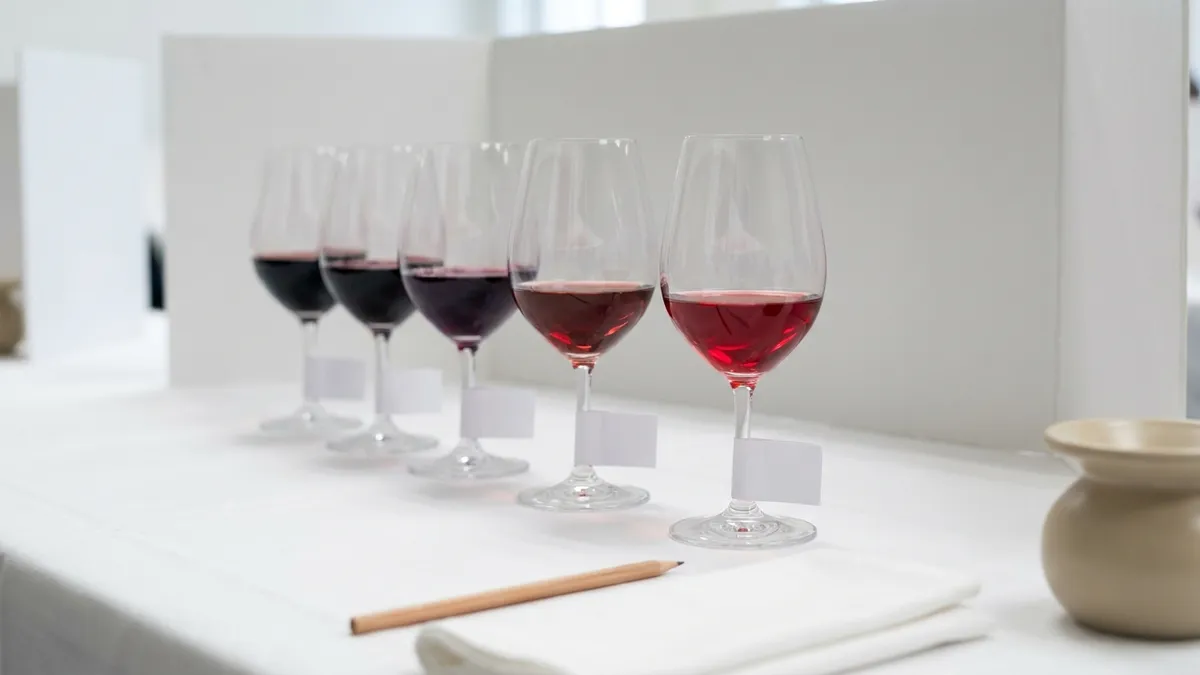
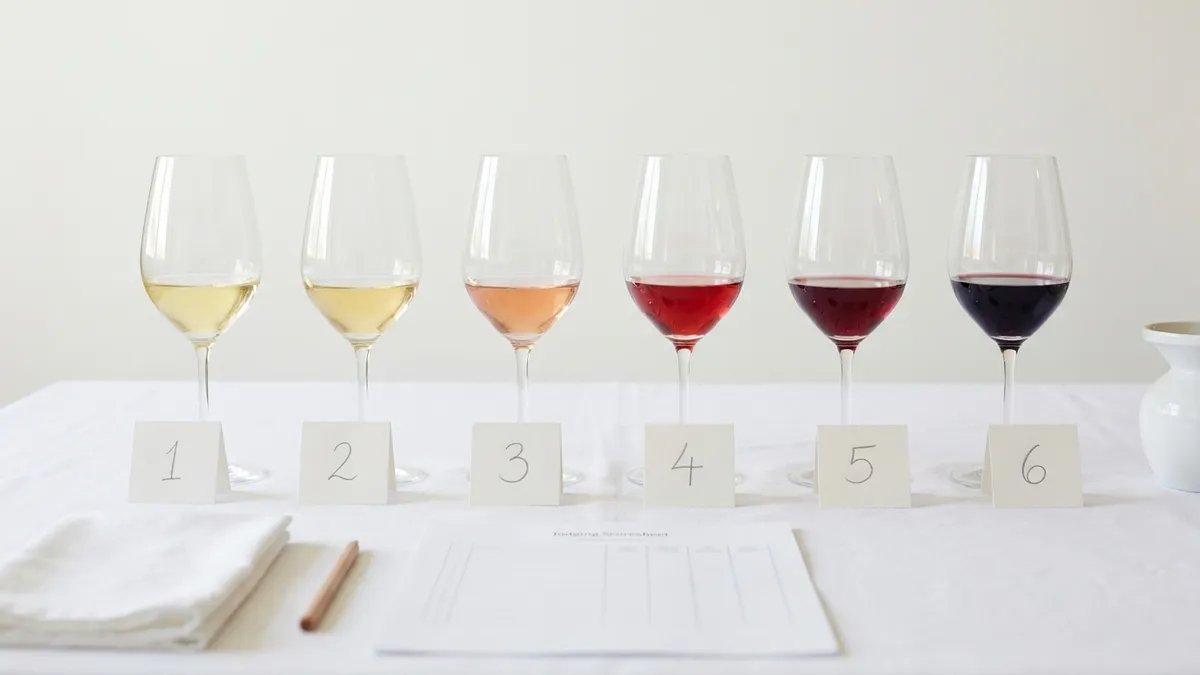
- Bottles go to a neutral pourer, who removes foil and cork behind a screen.
- Wines are poured into numbered or coded glasses that give no clue to origin.
- Glasses are arranged in flights, usually of 10 to 12, by category (varietal, region, price band, or vintage), so like is compared to like.
- Judges score each glass alone, with no discussion until all flights are scored. A wine that fails a baseline check (corked, volatile, oxidized) is set aside with a note but still recorded.
- A panel chair aggregates the scores and flags any wine with a large judge-to-judge disagreement for a re-taste.
Under the OIV standard the result is the jury average, and individual scores more than seven points from it are usually discarded. The jury president can call a second tasting, by another jury or from a fresh bottle if the first showed a defect.
Judges are usually told the style so they can judge against it. In double-blind tasting even the category is hidden, which is rare in competitions and more common in academic research.
The best-known blind result is the 1976 Judgment of Paris. According to Wikipedia's account, the judges tasted 20 wines blind, 10 red and 10 white, and scored each out of 20 points with no fixed grading framework. California wines finished first in both categories against celebrated French benchmarks. Our blind wine tasting guide covers running the same protocol at home.
Who Are Wine Judges, and How Do You Become One?
Wine judges are trained tasters, usually winemakers, buyers, sommeliers, educators or wine journalists, invited by a competition to score its entries. Most senior judges hold a WSET Diploma, Master of Wine or Master Sommelier credential. There is no single license.
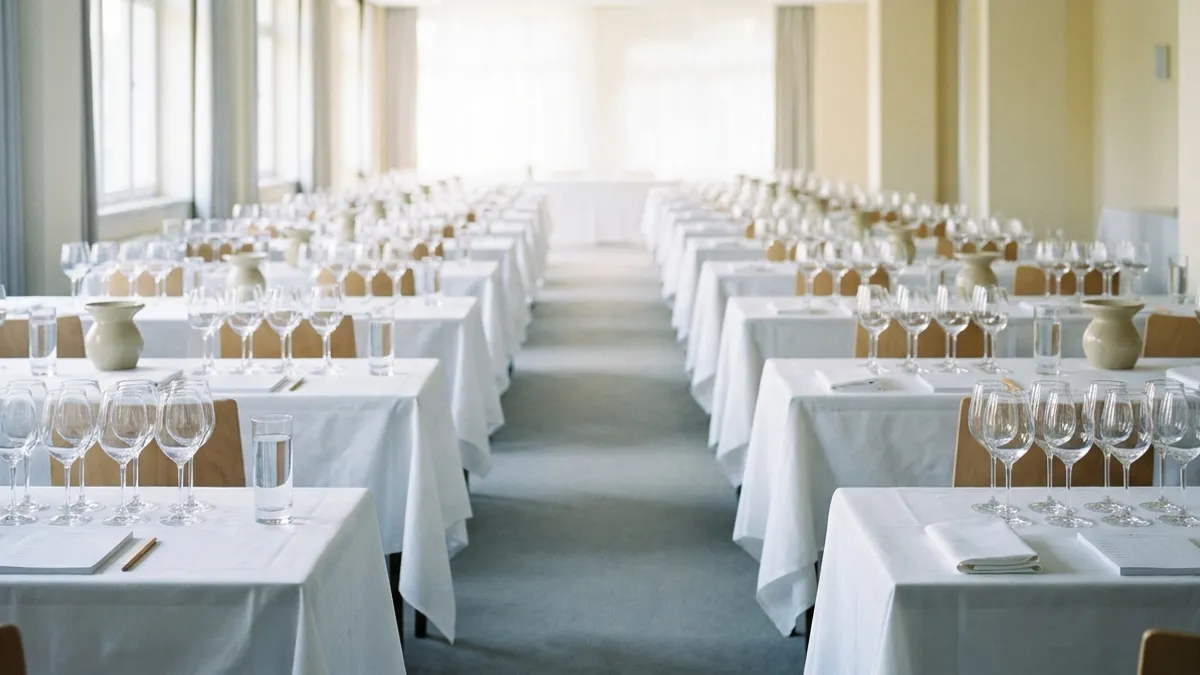
Large shows recruit hundreds of judges. Wikipedia's entry on wine competitions notes that the Decanter World Wine Awards brings together more than 200 experts, including dozens of Masters of Wine.
The route in starts with a recognized qualification (the sommelier and WSET pathways are the two usual doors) and written notes on every glass. Next come associate or trainee judge slots at regional competitions, under an experienced chair. The chair looks for consistency: the same score for the same wine twice.
Palate Management
Competitions build in defenses against palate fatigue:
- Palate cleansers: still water and plain bread or unsalted crackers between wines
- Spitting: every sample, because alcohol dulls judgment over a long flight. Even spitting tasters can feel the effect after 20 to 25 samples, since some alcohol is absorbed in the mouth (Wikipedia, Wine tasting)
- Time caps: 90 seconds to 3 minutes per wine, then move on
- Break structure: a 10-minute break every 12 to 15 wines
- Flight ordering: whites before reds, dry before sweet, light before heavy
The OIV standard caps each juror at 45 samples a day, in three sessions of about 15, or 50 if the show discloses it in its rules. Other shows set their own limits and schedule high-prestige categories early, before acuity drops. Fatigue blurs the judging of a wine's finish, often the difference between silver and gold. See wine finish meaning for why, and wine palate fatigue for a mid-session reset.
Judges do not aerate: every wine is poured straight from the bottle so each gets identical treatment. Our wine aerator guide tests what swirling and decanting change.
What a Medal Actually Tells You
- A Grand Gold or a Double Gold is rare and marks the wine as outstanding within its category. A Double Gold, at many US shows, is a gold vote from every judge.
- A Gold medal means the panel scored the wine strongly on quality, true-to-style character and balance.
- A Silver medal means the wine was well-made, clean and true to category.
- A Bronze medal, at shows that still award one, means the wine was competent.
A medal never says whether the wine suits your palate. A gold-medal Sauternes is world-class dessert wine and will still taste wrong to someone who wants a bone-dry white. If you shop by medal, use it as a quality filter inside a style you already like; our guide to wine awards and medals shows how to read the sticker at the shelf.
The Limits of Judging
Bottle variation
Natural corks add bottle-to-bottle variation. Industry estimates in Wikipedia's entry on cork taint put affected bottles at 1 to 5 percent. A 2005 tasting of 2,800 bottles at Wine Spectator's blind-tasting facility in Napa found 7 percent tainted. Competitions re-pour suspect bottles, but some variation slips through.
Are wine judges consistent?
Less than the medals suggest. Robert Hodgson, a California vintner and retired oceanographer, had the California State Fair competition serve judges samples from the same bottle three times without their knowledge. His results, published in the Journal of Wine Economics in 2008 and 2009, showed top professional palates scoring the identical wine differently. Across competitions, the medals looked as if they had been handed out at random. Our piece on why experts disagree about wine covers the critic's side.
Stylistic bias
Judges tend to reward the styles their training expects. A New-World Chardonnay with obvious oak may outscore an equally well-made unoaked Chablis-style one at a California show. Mixed international panels reduce this bias but never remove it.
How to Judge a Wine Yourself
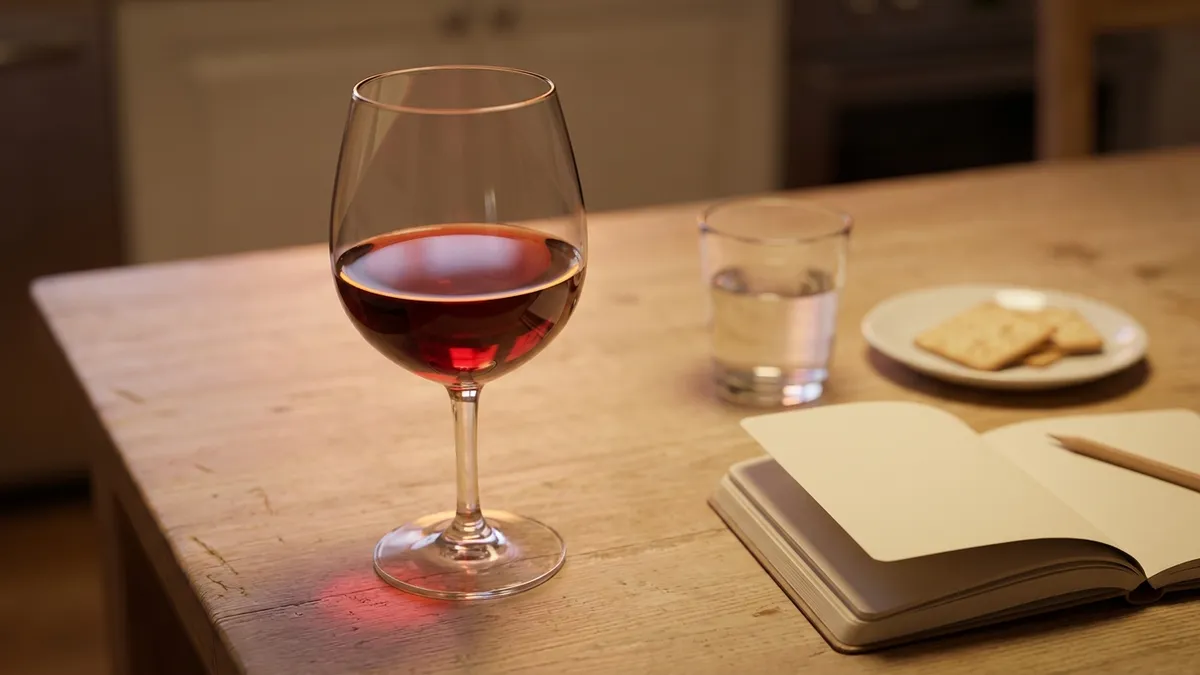
Use the judge's order and one line per step, scored on a 1 to 5 ladder. Taste before you see the price or label.
- Appearance: color, intensity, clarity
- Nose: three specific aromas and an intensity rating (low, medium, high)
- Palate: sweetness, acidity, tannin, body, alcohol, each on a 1 to 5 scale
- Finish: short, medium, or long; pleasant or abrupt
- Overall: would you buy it again, and why
Five lines take under ten minutes. After a month the structure is automatic, and your scores track published reviews more closely. Our wine tasting journal tips show how to lay out the lines so they stay comparable across bottles. The Sommy tasting journal has the appearance, aroma and palate steps built in, with palate structure on 1 to 5 ladders plus a personal rating.
Pour one wine tonight, cover the label, and score it the way a panel would, one line per step.
Sources
- Wine tasting — Wikipedia
- Robert M. Parker Jr. — Wikipedia
- Judgment of Paris (wine) — Wikipedia
- Blind taste test (Robert Hodgson's wine competition studies) — Wikipedia
- Cork taint — Wikipedia
- Wine competition — Wikipedia
- Resolution OIV-OENO 671A-2025 — OIV Standard for International Wine and Spirituous Beverages Competitions — OIV
- WSET Systematic Approach to Tasting (SAT) — WSET Global
Frequently Asked Questions
What are the criteria for judging wine?
Most wine judging criteria cover five things: appearance (clarity, color, intensity), nose (cleanliness, intensity, complexity), palate (balance of sweetness, acidity, tannin, alcohol, and body), finish (how long the flavor persists), and an overall quality judgment that asks whether the wine is typical of its category. Faults such as cork taint or oxidation disqualify a wine before quality is even scored.
How do wine judges score wine?
Judges taste blind, in flights of similar wines, and fill in a rubric for each glass. On the 100-point scale, 95-100 is classic, 90-94 outstanding, 85-89 very good, 80-84 above average, and below 80 faulty. On the OIV sheet, points are split across visual, smell, taste, and overall-impression categories. Each judge scores independently and the panel's scores are averaged.
What qualifications do wine judges need?
There is no single license. Most senior competition judges hold a WSET Diploma, Master of Wine, or Master Sommelier credential, or bring decades of experience as winemakers, buyers, or wine journalists. Reputable shows set a minimum qualification, recruit mixed international panels, and start newcomers as associate or trainee judges under an experienced panel chair.
Why do wine judges taste blind?
Because knowing the label changes the score. Judges are shown coded glasses with no producer, price, or region visible, so they can only respond to what is in the glass. The 1976 Judgment of Paris showed how powerful this is: tasted blind on a 20-point scale, California wines placed first in both the red and white categories against celebrated French benchmarks.
What is the 100-point wine scale?
The 100-point scale was popularized by Robert Parker in the 1980s and, according to his Wikipedia entry, actually runs from 50 to 100 rather than 0 to 100. It builds a score from color and appearance, aroma and bouquet, flavor and finish, and overall quality or potential. Most major publications now use a version of it, and anything below 80 is rarely published.
How many judges score a wine at a competition?
Panels are small. The OIV competition standard requires at least five jurors per jury and recommends seven, with no single country holding a majority; shows outside the OIV system often seat three to five. Large international shows recruit hundreds of judges and split them into many panels. A wine's result is the jury average, and under the OIV standard individual scores more than seven points from that average are usually discarded.
Are wine judges consistent?
Less than most people assume. Research published in the Journal of Wine Economics in 2008 and 2009 by Robert Hodgson, who served the same wine to California State Fair judges three times without telling them, found that even expert panels scored the identical wine differently and that medals across competitions looked close to random. Panels, blind protocols, and re-pours exist to limit that noise.
How many wines can a judge taste in a single day?
The OIV competition standard caps each juror at 45 samples a day, tasted in three sessions of about 15, and allows up to 50 only if the show discloses it in its rules; competitions outside the OIV system set their own, sometimes higher, limits. Judges spit every sample because alcohol dulls judgment over a long flight; even spitting tasters can feel the effect after 20 to 25 samples, since some alcohol is absorbed in the mouth.
Sommy Team
LinkedInFounder & Wine Educator
The Sommy Team is building the world's most approachable wine education app, helping beginners develop real tasting skills through structured courses and AI-guided practice.