The Deductive Tasting Method: A Step-by-Step Framework

By the Sommy Team — AI-assisted, human-edited.
Updated Apr 28, 2026
Contents (12)
- TLDR
- What the Deductive Tasting Method Is
- Why a Method Beats Instinct
- The Four Stages of the Deductive Tasting Method
- The Assess, Describe, Conclude Loop
- How the Method Narrows a Blind Wine
- Why the Order Matters
- How to Practice the Deductive Method
- Common Mistakes That Break the Method
- When to Use the Full Method and When to Streamline
- The Short Version
- The Bottom Line
TL;DR
The deductive tasting method is a fixed four-stage framework — sight, smell, palate, conclusions — used by sommeliers to evaluate any wine in a repeatable way. Each stage runs an assess, describe, conclude loop, layering structural evidence before naming a grape, region, age, or quality level. Procedure first, palate second.
TLDR
The deductive tasting method wine professionals use is a fixed four-stage framework — sight, smell, palate, conclusions — that turns a glass of wine into a defensible call on grape, region, age, and quality. Each stage runs an assess, describe, conclude loop. Copy the procedure first, the palate catches up over weeks of practice.
What the Deductive Tasting Method Is
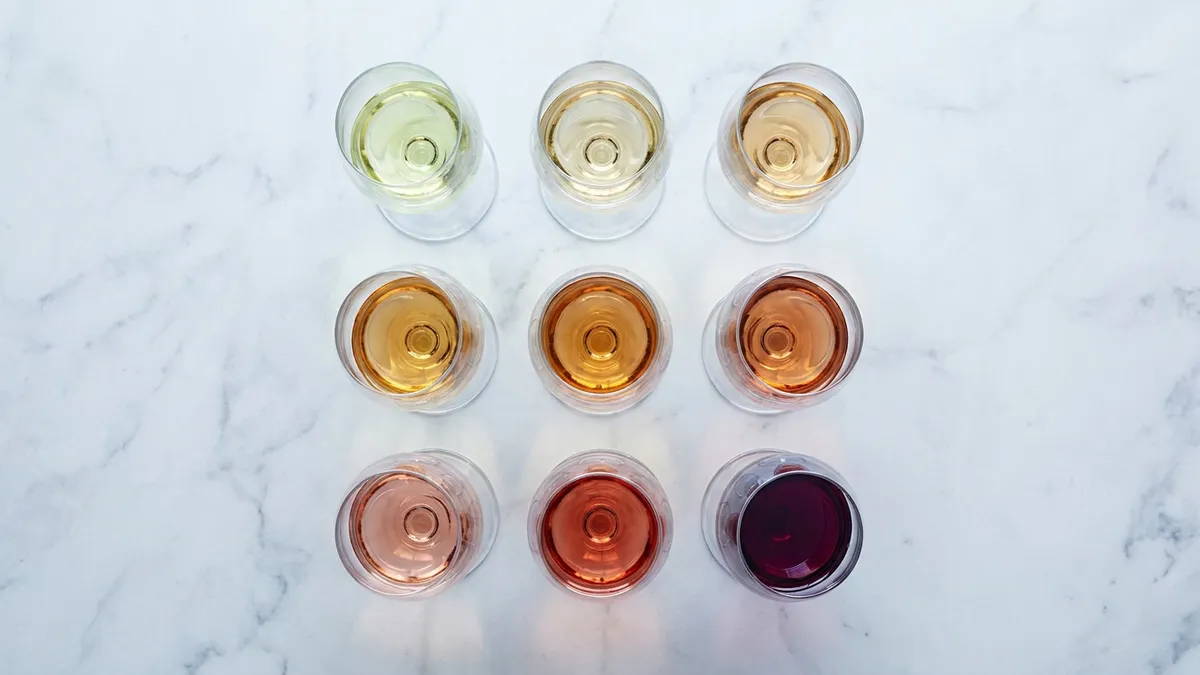
The deductive tasting method is a structured procedure for evaluating a wine in a repeatable way. It is the same framework used by the Court of Master Sommeliers, the Wine and Spirit Education Trust, and the Institute of Masters of Wine — different score sheets, identical logic. The taster moves through four fixed stages in order: sight, smell, palate, and conclusions. Inside each stage, a small loop runs three times — assess the evidence, describe it in standard vocabulary, conclude with a narrowing call. By the end of the four stages, the taster has converted a glass of liquid into a written verdict on grape variety, region of origin, vintage range, and quality level. The method exists because instinct alone is unreliable. Procedure is what separates a guess from a call.
Why a Method Beats Instinct
A trained taster and an enthusiastic amateur can be standing in front of the same glass and arrive at completely different conclusions. The amateur leads with a vibe — "this smells like Bordeaux" — and works backward from that initial guess. The trained taster runs the procedure in the prescribed order and only allows themselves a conclusion at the end.
The difference is order, not ability. The amateur skips evidence. The pro forces evidence in.
A useful rule of thumb: the more confidently a beginner names the wine in the first thirty seconds, the more likely they are to be wrong. Confidence in tasting comes from process discipline, not pattern flashes. The deductive method is the process discipline written down.
For a deeper look at the broader sommelier procedure, see the step-by-step sommelier tasting method.
The Four Stages of the Deductive Tasting Method
Every version of the grid — WSET's Systematic Approach to Tasting, CMS, MW — agrees on these four stages, in this order. Skipping a stage or running them out of order collapses the inference chain.
Stage 1 — Sight
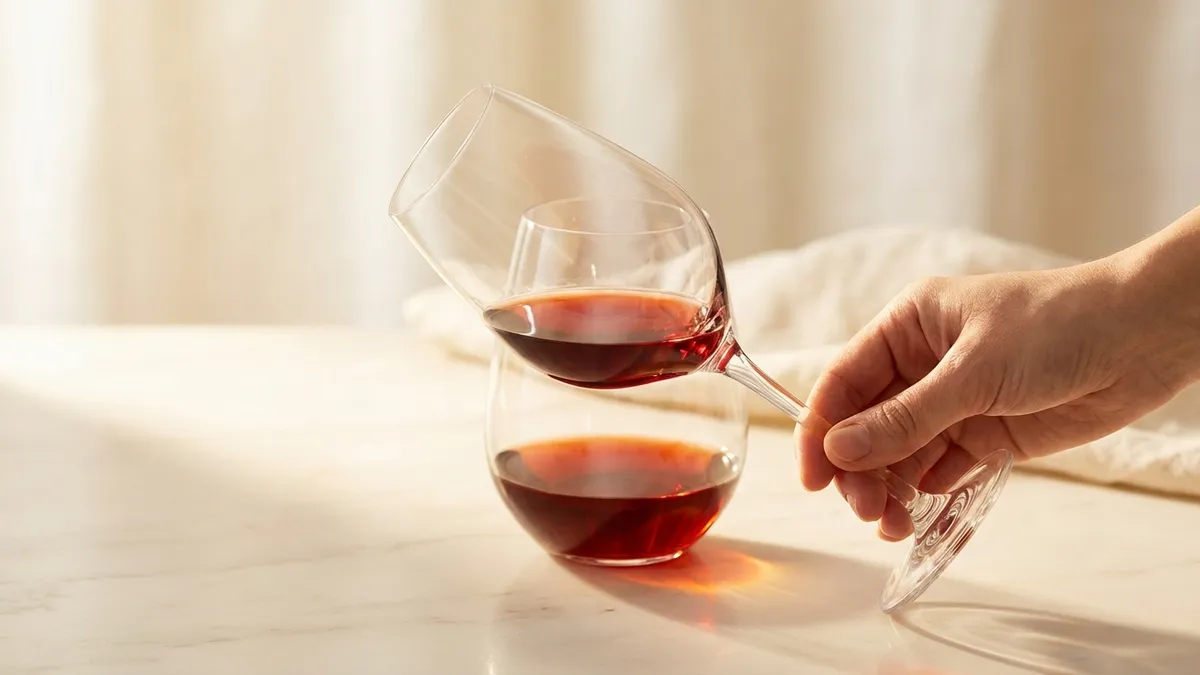
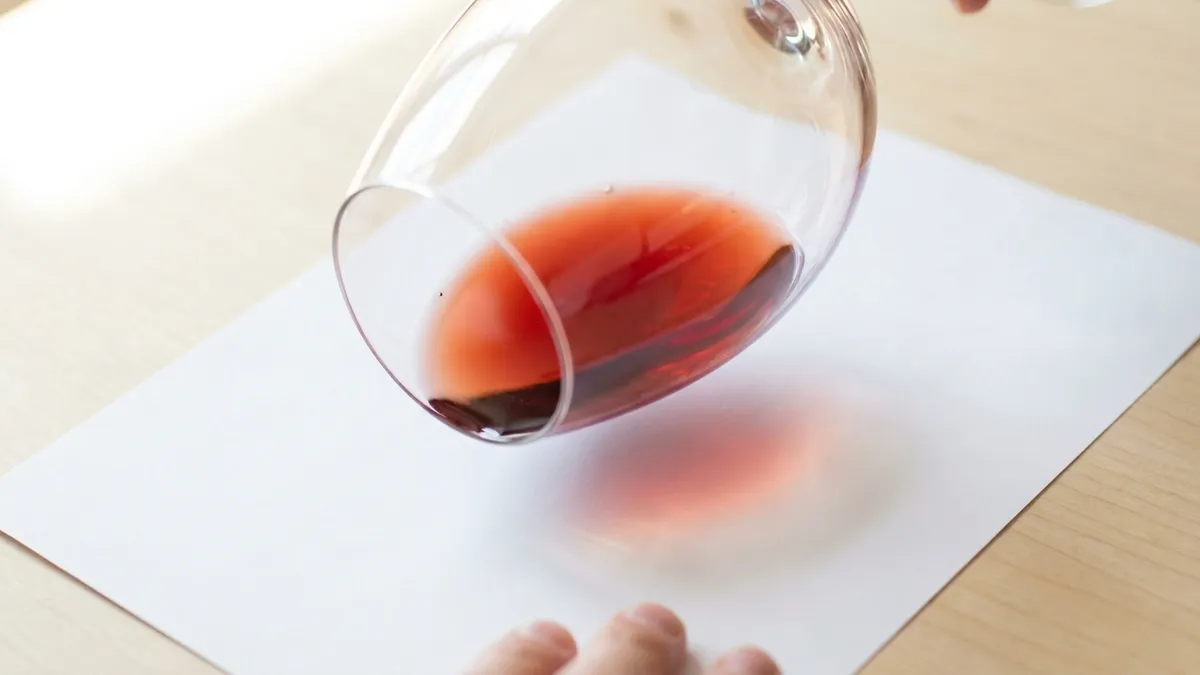
Hold the glass at a 45-degree angle against a white background, look down through the bowl, and note four things in roughly 15 seconds.
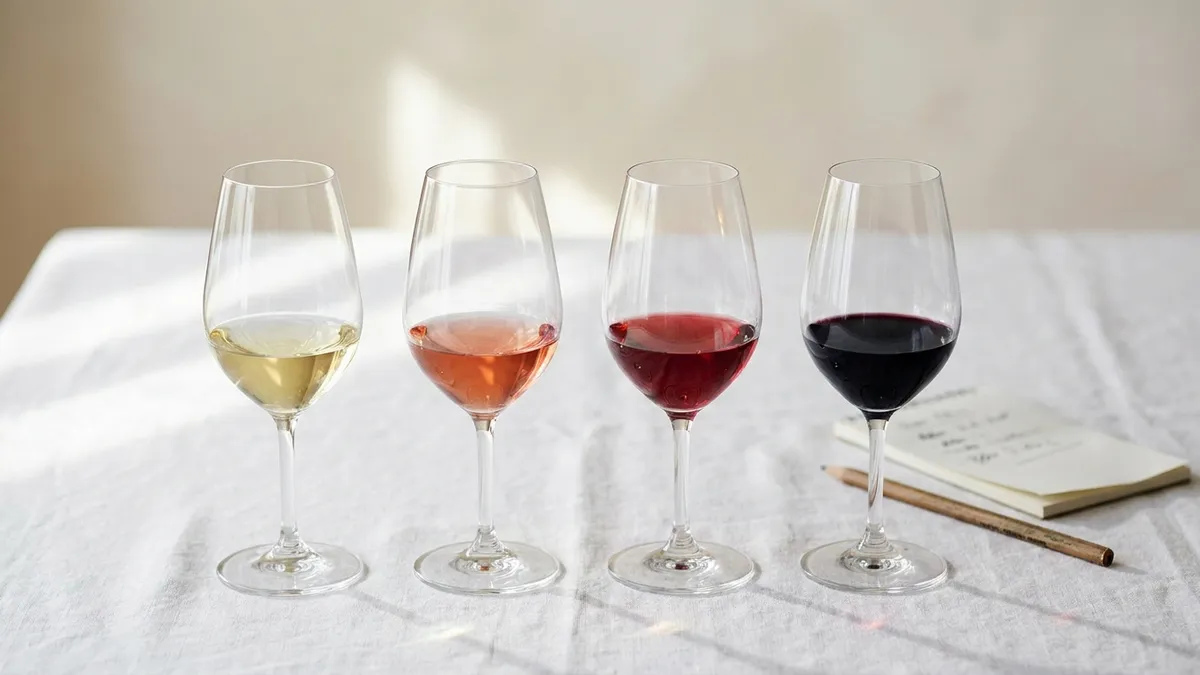
- Color — specific name, not just "red" or "white" (lemon, gold, amber, ruby, garnet, brick, tawny)
- Intensity — pale, medium, deep
- Clarity — brilliant, clear, hazy
- Rim variation — the color band where the wine meets the glass edge
The rim is the most diagnostic detail amateurs skip. A pale ruby with a clear orange rim hints at age. An inky purple wine with a vivid violet rim hints at youth. A greenish-gold rim on a white suggests cool climate; a deep yellow-gold rim suggests warmth, oxidation, or oak.
A pro's sight read produces three or four hypotheses before they ever lift the glass to their nose. Each hypothesis is later confirmed or rejected by the next stage.
Stage 2 — Smell
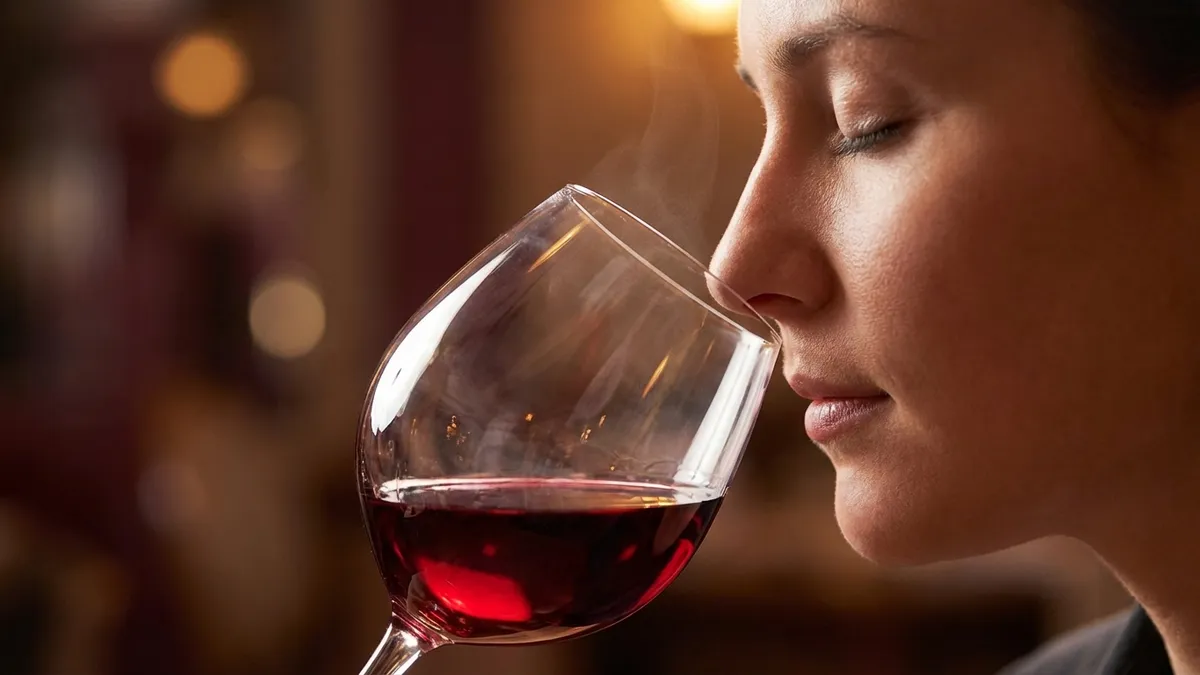
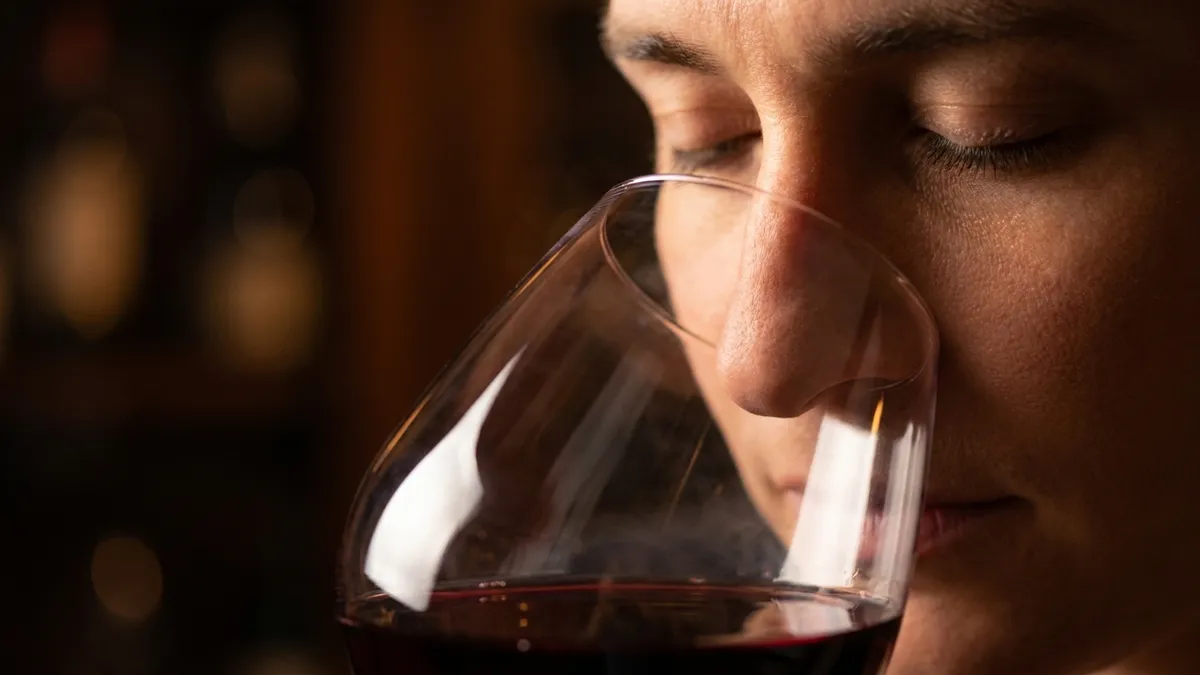
Swirl once, deliberately, with the base on the table. Three to five rotations. Then bring the nose to the bowl.
A pro runs two passes on the nose:
- First pass — broad recognition. Two short inhales of one to two seconds each. Pause. Name a single dominant category in one word: fruit, floral, earth, oak, spice.
- Second pass — specific identification. After a 10-second rest to avoid smell fatigue, return to the glass and search inside the dominant category for three specific aromas. Red cherry. Violet. Forest floor. Three is a useful cap.
The aromas are then sorted into three clusters that tell different stories.
Primary, secondary, and tertiary aromas
- Primary — from the grape itself: fruit, floral, herbal, spice notes baked into the variety
- Secondary — from winemaking choices: yeast, lees, oak, malolactic fermentation
- Tertiary — from age: leather, dried fruit, mushroom, forest floor, petrol
This split is the most useful diagnostic the nose offers. Primary alone usually means the wine is young. Heavy tertiary signals age. A balance of all three suggests a complex, mature wine. Our primary, secondary, and tertiary aromas guide goes deeper into the cluster system.
Stage 3 — Palate
Take a small, deliberate sip — about half a teaspoon, enough to coat the entire tongue. The palate stage measures structure first, flavor second. This order is non-negotiable in the method.
Five structural variables, each rated on a low / medium / high scale, or a 1-to-5 scale:
- Sweetness — dry, off-dry, medium, sweet, luscious
- Acidity — how much your mouth waters after swallowing
- Tannin (reds only) — the drying, gripping sensation on the gums and inside of the cheeks
- Body — how the wine weighs on the tongue; light, medium, full
- Alcohol — warmth that travels from the tongue to the back of the throat
After structure, two perception readings:
- Flavor intensity — light, medium, pronounced
- Finish — short, medium, long, and the character of what lingers
Structure is the most reliable narrowing data the wine offers. A wine with high acidity, high tannin, moderate alcohol, medium body, and a long finish belongs to a specific family of grape-and-climate combinations — and the taster does not need to name a single fruit to start placing it. For a deeper structural breakdown, see understanding tannins, acidity, and body.
Stage 4 — Conclusions
The conclusion stage is the last stage for a reason. A pro does not allow themselves a guess until the structural evidence is fully on the page.
Four conclusions, in order:
- Quality assessment — faulty, acceptable, good, very good, outstanding
- Grape variety — single grape or likely blend
- Region or country of origin — old-world or new-world first, then climate, then specific region
- Vintage range — youthful, mid-life, mature
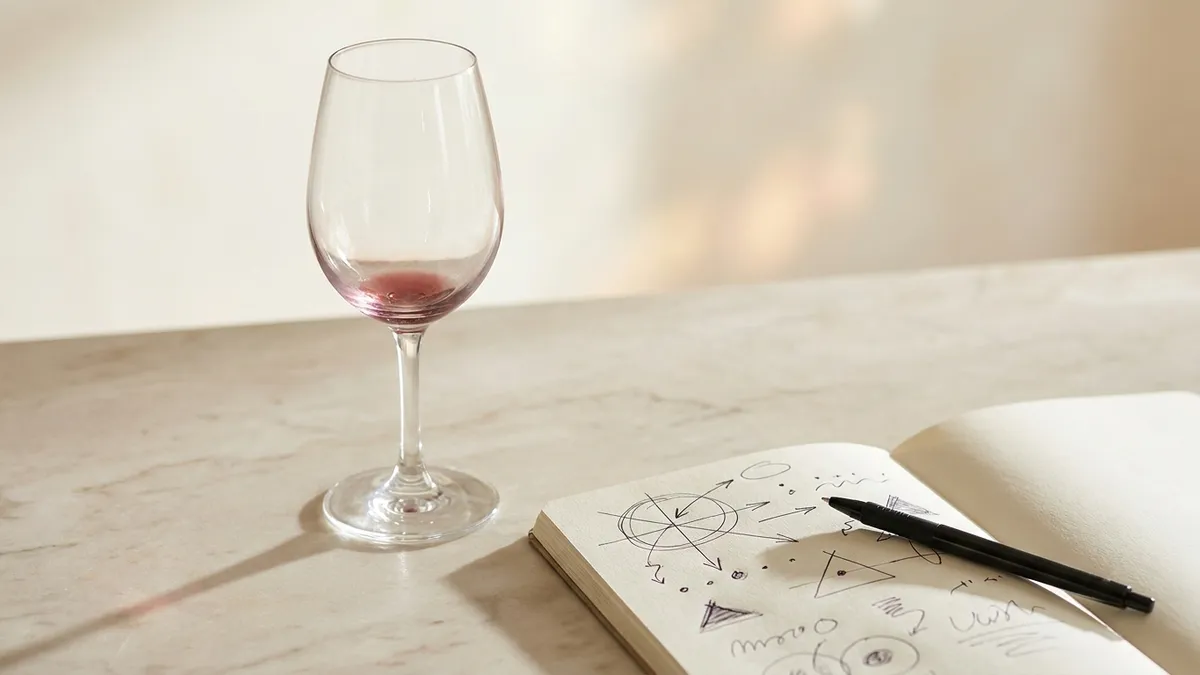
Quality is mandatory. The other three are optional, depending on whether the tasting is blind or informed. Each conclusion is written in a notebook or entered in a structured tasting log immediately, before the next sip and long before any reveal.
The Assess, Describe, Conclude Loop
Inside every stage, the procedure runs the same three-step loop.
Assess
Look at the raw evidence in the glass. No interpretation yet. On the palate stage, this is the moment of "is my mouth watering or not." On the sight stage, it is the moment of "is the rim purple or orange." Assess is the unfiltered observation.
Describe
Translate the observation into standard vocabulary so a second taster could repeat the call. "Acidity is medium-plus" is a description. "It feels zippy" is not. The deductive method only works because the vocabulary is shared.
Conclude
Make a narrowing inference from the description. Medium-plus acidity narrows toward cool-climate grapes. Pale ruby narrows toward Pinot Noir, Gamay, or Grenache. Each conclusion shrinks the universe of possible wines.
The loop runs four times across the full method — once per stage. By stage four, the taster has stacked enough conclusions to land within a few correct calls of the wine's identity.
How the Method Narrows a Blind Wine
When the method is run on a blind pour, each stage's conclusion feeds the next. The sight conclusion narrows the candidate pool. The smell conclusion narrows it again. The palate structure narrows it a third time. By the time the conclusions stage runs, the taster is choosing between a small set of options, not the entire wine world.
A worked example, simplified:
- Sight — pale ruby, low intensity, clear orange rim. Conclusion: light-bodied red, possibly aged.
- Smell — primary red cherry, secondary subtle oak, tertiary forest floor. Conclusion: Pinot family, mid-life.
- Palate — high acidity, low-to-medium tannin, medium alcohol, medium body, long finish. Conclusion: cool-climate Pinot Noir, four to seven years old.
- Conclusions — Pinot Noir, old-world, Burgundy or cool New Zealand, very good quality, drink now.
Each level cuts the candidate pool by roughly half. The method's elegance is in the multiplication of small narrowing decisions, not in any single brilliant guess.
For a fuller worked walkthrough on a blind pour, see our guide to blind wine tasting tips.
Why the Order Matters
The four stages are not interchangeable. The order of sight, smell, palate, conclusions is the most load-bearing rule in the deductive method.
Sight runs first because color and rim are the easiest to read and the most stable evidence the wine offers. Smell runs second because aromatic compounds are most volatile right after the swirl — wait too long and they dissipate. Palate runs third because the mouth needs to be neutral when the wine arrives; sniffing primes the brain but does not change the tongue. Conclusions run last because every conclusion drawn earlier biases the next stage if voiced too soon.
A taster who jumps to "this is Cabernet" during the sight stage will then retroactively look for Cabernet evidence on the nose. The method's power comes from withholding the verdict until all four stages have run. Discipline is the whole game.
How to Practice the Deductive Method
A daily five-minute practice with a single wine is enough to internalize the procedure inside three months.
Day-one routine
Pick one wine. Pour a small amount into a tulip-shaped glass. Run the four stages out loud, narrating each step to no one. Write a single line for every step in a notebook or in a tasting log. Total time: under twenty minutes for the first wine, under ten minutes by the third.
Weekly comparison
Once a week, pour two wines of the same grape from different regions side by side. Run the full method on both. Compare the structure readings. The single fastest accelerator of structural fluency is two-glass comparison, repeated over months.
Monthly blind pour
Once a month, have a friend pour you a wine blind. Run the full method, write a conclusion, then reveal. Wrong calls teach more than right ones — every miss recalibrates a structural reference point that was previously fuzzy.
The Sommy app's tasting flow captures each of the four stages as a separate field, walks you through the structural rating as a 1-to-5 scale, and saves the conclusion next to a searchable history of every wine you have ever logged. The app turns the deductive method into a habit rather than a once-a-month exercise.
Common Mistakes That Break the Method
Even tasters who know the four stages routinely undermine the procedure with small errors.
- Voicing the conclusion early. "I think this is Syrah" said during stage two contaminates stage three. Hold the verdict.
- Skipping the rim on sight. The rim is the single highest-value visual detail and is the most often skipped.
- Naming flavors before structure. "Tastes like cherry" is not a palate read. Structure first, flavor second.
- Over-swirling. More than five rotations dissipates volatile aromatic compounds.
- Writing one paragraph instead of four sections. A paragraph blends the stages and erases the diagnostic value of each.
- Treating the method as performance. The grid is a tool for sharper tasting, not a ritual to perform in front of guests. Run the full version when studying; run the streamlined mental version on casual evenings.
For more on the most common errors that derail home tasters, see our breakdown of common wine tasting mistakes.
When to Use the Full Method and When to Streamline
The full deductive method takes ten to twelve minutes per glass. That is appropriate for serious study, exam preparation, and structured weekly practice. It is not appropriate for a Tuesday-night pizza dinner.
For casual drinking, a streamlined two-minute version captures most of the value:
- A 5-second sight glance against any pale background
- A single pass on the nose with one dominant-family call
- A three-second sip with a quick structure read on acidity, tannin, and body
- A one-line mental verdict on quality and likely grape
Pros run the streamlined version automatically every time they pour a glass, regardless of context. The streamlining is not a shortcut — it is the same method compressed by months of practice into a near-instant routine.
The Short Version
If only the four stages stick:
Sight, smell, palate, conclusions.
Run them in that order, every time, with the assess-describe-conclude loop inside each one. Procedure produces the call. The palate catches up.
The Bottom Line
The deductive tasting method wine professionals use is not a gift. It is a procedure — four stages, twelve minutes, the same order every time, with the assess-describe-conclude loop inside each stage. The method exists to keep guesswork out of the call and force evidence into the note. Beginners who copy the procedure outpace experienced drinkers who rely on instinct, because the method does the heavy lifting that instinct skips. Five minutes of daily practice with a single glass turns the four-stage grid into instinct inside three months — and from there, every wine you pour starts telling you a story you can actually hear.
Frequently Asked Questions
What is the deductive tasting method?
The deductive tasting method is a structured framework sommeliers use to evaluate a wine in four fixed stages — sight, smell, palate, and conclusions. Each stage assesses the evidence in the glass, describes it in standard vocabulary, and concludes with a narrowing call. The method removes guesswork by forcing the taster to name structure before naming origin or quality.
Who created the deductive tasting method?
Modern versions trace back to the Court of Master Sommeliers, the Wine and Spirit Education Trust, and the Institute of Masters of Wine, each of which codified a slightly different grid in the second half of the twentieth century. All three share the same core logic: appearance first, nose second, palate third, conclusions last. The names and the score sheets differ; the underlying decision tree does not.
How is the deductive method different from blind tasting?
Blind tasting is a format — a wine poured without label visibility. The deductive method is the procedure used inside that format. You can taste blind without using any method, and you can use the deductive method on a labelled wine for practice. Pros use both together, but they are not the same thing.
Do I need to use the full grid every time I drink wine?
No. The full grid takes ten to twelve minutes per glass and is meant for serious study sessions, exams, and structured practice. For casual evenings, a shortened mental version — quick sight check, two-pass nose, structure read, single conclusion — takes about two minutes and captures most of the value. Save the full procedure for once or twice a week.
What does the assess, describe, conclude loop mean?
Inside each of the four stages, you run a small three-step loop. You assess the raw evidence in the glass, describe it in standard vocabulary so the next taster could repeat your call, and conclude with a narrowing inference. For example, on the palate you assess acidity, describe it as medium-plus, and conclude that the wine is likely from a cooler climate.
How long does it take to learn the deductive method?
The grid itself is learnable in a single afternoon. Reading and copying a worked example out loud gets most beginners through their first wine in under twenty minutes. Real fluency, where the procedure becomes instinct rather than checklist, takes six to twelve weeks of daily five-minute practice. Exam-grade recognition of specific regions takes years, not weeks.
Can beginners learn the deductive tasting method?
Yes, and they often learn it faster than people expect. The method is a script, not a talent. Beginners who follow the four stages in order tend to outperform experienced drinkers who rely on instinct, because the procedure forces evidence into the note instead of jumping to a guess. The bottleneck is daily practice, not natural ability.
What tools do I need to practice the deductive method at home?
A tulip-shaped wine glass, a white napkin or sheet of paper, a notebook or tasting app, and one wine. Optional extras include a pen, a glass of still water, plain crackers as a palate cleanser, and a spittoon if you are running more than three wines. The procedure travels well — no specialist equipment is required to start.
Sommy Team
LinkedInFounder & Wine Educator
The Sommy Team is building the world's most approachable wine education app, helping beginners develop real tasting skills through structured courses and AI-guided practice.