Single Vineyard Wine: What It Means and When It's Worth It

By the Sommy Team — AI-assisted, human-edited.
Updated Oct 1, 2026
Contents (9)
- What Is Single Vineyard Wine, in One Paragraph?
- What Does "Single Vineyard" Mean on a Wine Label?
- Is a Named Vineyard the Same as "Single Vineyard"?
- Why Do Single Vineyards Taste Different?
- How Should You Shop for a Single Vineyard Wine?
- Is Single Vineyard Wine Better Than a Blend?
- Why Does Single Vineyard Wine Cost More?
- How Big Is a Single Vineyard, and Who Owns It?
- Are Grand Cru, Grosse Lage and Grosslage Single Vineyards?
TL;DR
Single vineyard wine comes from grapes grown on one named vineyard. In the US a vineyard name needs 95% of the wine from that site, and South Africa requires a registered unit. It shows one place's soil and climate, which can be wonderful or plain, so the producer matters as much as the site.
Single vineyard wine is a promise about where the grapes grew, not about how good the wine is. The words tell you one named plot supplied the fruit, and the strictness of that promise changes with the country on the label. Read them right and they point you to a wine with a clear identity, or warn you off paying extra for a name.
What Is Single Vineyard Wine, in One Paragraph?
Single vineyard wine is made from grapes grown on one named, mapped vineyard rather than blended from several sites. In the United States, federal rules let a vineyard name appear on a label only when 95% of the wine came from that vineyard. South Africa only allows the term for wine from one unit registered for single vineyard wine. Burgundy ranks its best sites as premier cru or grand cru. Bottling one site alone keeps its soil, slope and weather in the glass. The price premium pays for scarcity and reputation, which is why the producer matters as much as the site.
What Does "Single Vineyard" Mean on a Wine Label?
It means the grapes came from one defined vineyard, but each country decides how strict "one" is and whether the phrase is defined at all. South Africa registers the vineyard itself, while the US regulates the vineyard name and Germany registers named sites.
| Where | What the words promise | What to check on the label |
|---|---|---|
| United States | A named vineyard: 95% of the wine from that site. "Single vineyard" wording: 100%. | Whether it says "single vineyard" or only names a vineyard |
| South Africa | Grapes only from one unit registered for single vineyard wine | The words "single vineyard" are a legal term here, so trust them |
| Germany | An Einzellage is one registered site; a Grosslage is a group of sites | VDP Grosse Lage or Erste Lage, or a producer you know |
| Burgundy | A classified site (premier or grand cru), usually shared by many owners | The producer's name, since many make wine from the same site |
South Africa's rule is the most literal. The wine must come only from grapes harvested on one unit registered for single vineyard wine. If that unit grows several varieties, they must be picked at the same time and crushed and fermented together. Any added sweetening products may not exceed 5% of the wine's volume. So a South African single vineyard wine can be a blend of grapes, but never a blend of places. The country's styles and regions are mapped in the South African wine guide.
Is a Named Vineyard the Same as "Single Vineyard"?
Not always. In the US a vineyard name on the label needs 95% of the wine from that vineyard, while the phrase "single vineyard" has been held to 100%, as Wine Spectator reported on TTB policy. A bottle that names a vineyard can legally hold 5% wine from somewhere else.
That 5% rarely changes the taste, but it changes what the label promises. If the label says "single vineyard" in words, expect all the fruit from that site. If it only prints a vineyard name, expect at least 95%.
Estate bottled is a different claim again, about who grew and bottled the grapes. An estate can own ten vineyards and blend them. The guide to reading a wine label shows where each of these words sits on the front and back.
Why Do Single Vineyards Taste Different?
Because one vineyard has one set of growing conditions, and bottling it alone keeps those differences instead of averaging them out. Terroir (the soil, slope, sun and weather a vine grows in) works at three scales: a large region, a smaller subsection, and the microclimate of an individual vineyard.
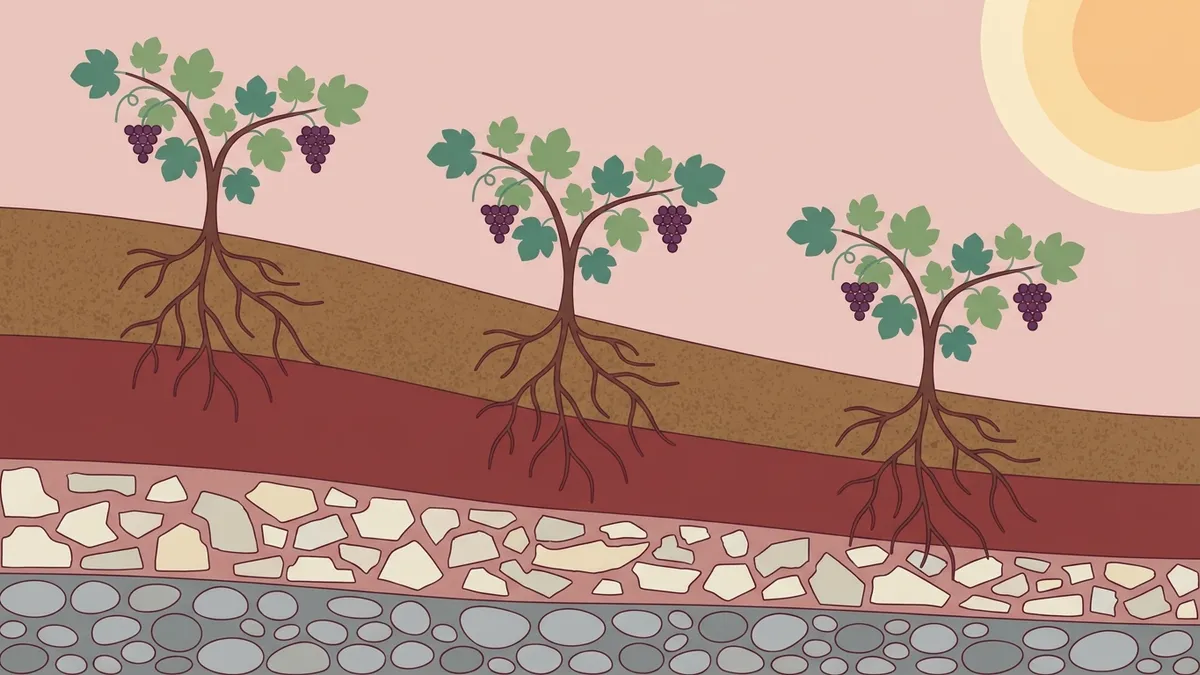
The vineyard scale is where single vineyard wine lives. A slope facing the afternoon sun ripens grapes further than the flat land below it, so its wine often has more body and alcohol. A cooler, windier plot keeps more acidity (the tartness that makes your mouth water). Clay holds water, while stony ground drains fast and stresses the vine. A blend of several sites smooths these traits into a steadier house style. A single site leaves them in. Our guide to what terroir is explains each factor, and what terroir tastes like turns them into things to look for in the glass.
The same logic explains vintage swings. In a hailstorm or a cold spring, a blender can lean on other sites. A single vineyard wine takes whatever that one plot gave, so the gap between good and bad years is wider.
How Should You Shop for a Single Vineyard Wine?
Read the claim wording first, then the producer, then ask what the price premium buys. The site name tells you where the grapes grew. Only the producer's name tells you how well that site was farmed and how carefully the wine was made.
- The wording. If a US label prints only a vineyard name, at least 95% came from it; if it says "single vineyard", all of it did.
- The producer. If two bottles carry the same famous vineyard name, choose by producer, because each owns different rows and works them differently.
- The ladder. If a producer makes both a regional wine and single vineyard wines, buy the regional one first. If you like it, the single vineyard wines are the same hands on a narrower patch.
- The premium. If a single vineyard bottle costs little more than the producer's regional wine, buy it: you get the site for free.
A single site rewards the grapes that show place most clearly. Pinot Noir and Riesling are the classic single vineyard grapes, because growers and critics find they show differences between sites most clearly. The Pinot Noir guide and the Riesling guide cover the styles to expect.
Is Single Vineyard Wine Better Than a Blend?
No. "Single vineyard" is a place claim, not a quality claim, and a mediocre plot bottled alone is still a mediocre plot. A skilled blend of several good sites can be more balanced than any one of them, because a warm site's ripeness can fill out a cool site's sharpness.
What a single vineyard does offer is identity. A wine from one great site tastes of that site, year after year, through the vintage changes. Blends aim for a house style that tastes the same each year. If you want the same wine every year, buy the blend. If you want to taste one place and how each year treated it, buy the single vineyard. The case for blending is set out in wine blends explained.
Why Does Single Vineyard Wine Cost More?
Single vineyard wine costs more because one plot's harvest caps the supply and famous sites carry a reputation premium. In Burgundy, grand cru vineyards make about 2% of the region's wine and premier cru about 12%, at lower yields than ordinary village wine.
Separate handling adds cost too. Each site needs its own picking, tanks and barrels, and a small parcel fills only a few of them. The reputation part is the one to question. If a single vineyard bottle costs more than twice the producer's regional wine, much of the extra is likely paying for the name, so taste the regional wine first. An unknown single vineyard from a modest region may cost only a little more than the regional wine. A grand cru name can multiply the price, whoever made the wine. The wider link between price and taste is covered in wine price vs quality.
How Big Is a Single Vineyard, and Who Owns It?
Anything from a small plot to a large walled site, and the famous ones are often shared. Clos de Vougeot, a grand cru in Burgundy's Côte de Nuits, covers 50.6 hectares. Cistercian monks walled it in 1336, and it stayed under single ownership until 1889.
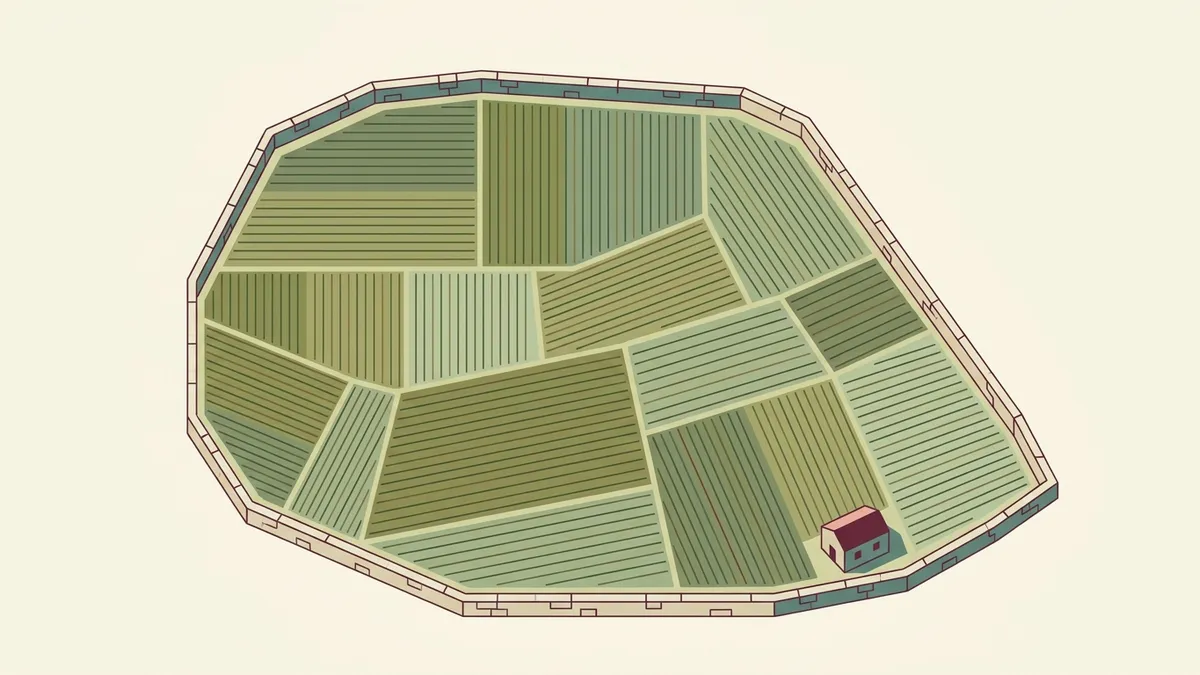
By the early 2000s it was split among more than 80 owners. French inheritance law, which divides land among heirs, kept subdividing Burgundy's best vineyards. That is why one single vineyard name can appear on dozens of different wines, each from its owner's own rows: one might sit high on the slope, another on the wetter ground by the road. The Burgundy wine guide maps the villages and their classified sites.
Are Grand Cru, Grosse Lage and Grosslage Single Vineyards?
Some are single vineyards and some only look like one. A Burgundy grand cru is one classified vineyard, the top tier of a ranking built on individual sites. A German Grosslage is a group of vineyards sharing one name. What cru wine means explains how the Burgundy tiers work.
Germany is where labels mislead. The 1971 wine law created the Einzellage (a single registered vineyard) and the Grosslage (a collective name covering many vineyards). Germany has about 2,600 Einzellagen grouped into about 170 Grosslagen, and on labels up to the 2025 vintage both appear as a village name plus a site name. From the 2026 vintage the law puts the word "Region" before a Grosslage name. A Grosslage wine can come from vineyards spread across several villages.
The VDP, a private association of German growers, runs its own ladder on top. Its Grosse Lage is a top single site and its Erste Lage the next tier, both with tighter yield limits than the law asks. These are the association's rules rather than national law. If a German label shows Grosse Lage or Erste Lage, the wine comes from one site. The German wine regions guide places the best-known sites, and the wider idea of protected place names is covered in what an appellation is.
Single vineyard reds and whites sit alongside the other styles in the wine styles hub. The Sommy app has bite-sized regional courses on France, Italy, Spain and California. Tonight, pick up a bottle you already own and find any vineyard name on the label. Then check it against the table above: one site, a group of sites, or no promise at all.
Sources
Frequently Asked Questions
What does single vineyard mean on a wine label?
It means the grapes came from one named vineyard instead of being blended from several sites. How strict that is depends on the country. In the US a vineyard name needs 95% of the wine from that vineyard. South Africa only allows the term for wine from a single unit registered for single vineyard wine. Burgundy and Germany use their own site names and classifications.
Is single vineyard wine better than a blend?
Not automatically. Single vineyard describes where the grapes grew, not how well the wine was made. A great site in skilled hands can make a wine with a clear identity that a blend cannot copy. A blend of several sites can be more balanced and more consistent from year to year. The producer's skill and the site's reputation decide the quality, not the words.
Why is single vineyard wine more expensive?
Supply is capped by one plot's harvest, and the best-known sites carry a reputation premium. In Burgundy, grand cru vineyards make about 2% of the region's wine and premier cru about 12%, so the most famous single sites are scarce by design. Lower yields and separate handling in the cellar add cost too. A small unknown site is priced closer to the producer's regular wine.
What is the difference between single vineyard and estate bottled?
Single vineyard is about one site. Estate bottled is about who grew and bottled the grapes, and an estate can own many vineyards and blend them. A wine can be both, either, or neither. If the label names one vineyard and says estate bottled, the producer grew the grapes on that site and made and bottled the wine at its own winery.
Can a single vineyard wine contain more than one grape variety?
Yes. Single vineyard is a claim about the site, not the grape. South Africa's rules allow several varieties from one registered single vineyard unit, as long as they are harvested at the same time and crushed and fermented together. Old mixed plantings in California and Europe are also bottled as single vineyard wines made from several grapes.
How big is a single vineyard?
There is no global size. A single vineyard can be a small plot or a large walled site. Clos de Vougeot in Burgundy covers 50.6 hectares and was split among more than 80 owners in the early 2000s, so dozens of producers bottle wine under the same single vineyard name, each from their own rows.
Is a Grand Cru the same as a single vineyard?
In Burgundy a grand cru is a classified vineyard, so it is a single site, but it is usually shared by many producers, each making a different wine from their own parcel. In Germany the VDP's Grosse Lage is a top single site within a private growers' classification. A German Grosslage, despite the similar name, is a collective name for many vineyards.
Sommy Team
LinkedInFounder & Wine Educator
The Sommy Team is building the world's most approachable wine education app, helping beginners develop real tasting skills through structured courses and AI-guided practice.