Wine Price vs Quality: Does Expensive Wine Taste Better?

By the Sommy Team — AI-assisted, human-edited.
Updated Sep 23, 2026
Contents (9)
- Wine Price vs Quality, in One Paragraph
- Does Expensive Wine Actually Taste Better?
- Why Does a Higher Price Feel Like Better Wine?
- Can Experts Reliably Tell Good From Great?
- What Makes a Bottle of Wine Cost More to Make?
- Where Does Your Money Go in a Bottle of Wine?
- What Does Each Extra Dollar Buy?
- How Do You Find Better Wine Without Paying More?
- So, Is Expensive Wine Worth It?
TL;DR
Blind, most drinkers do not enjoy pricier wine more: across 6,000-plus blind tastings the price-enjoyment link was slightly negative for untrained tasters and non-negative for trained ones. Yet a stated price does change how wine tastes to your brain. This guide explains what actually drives cost, where each dollar goes, and how to buy smarter.
Ask ten people about wine price vs quality and most will say expensive wine tastes better, then admit they have never checked. The evidence is more interesting than either "you get what you pay for" or "it is all marketing". Some of the money in a bottle buys real quality. Some buys a story your brain then tastes. And a surprising share buys glass, tax and trucking.
Wine Price vs Quality, in One Paragraph
When the label is hidden, price is a weak guide to enjoyment. Goldstein and colleagues analyzed more than 6,000 blind tastings and found a small, negative correlation between price and rating for untrained drinkers, and a non-negative one for trained tasters. When the price is known, it changes the experience: in a 20-person brain-imaging study, the same wine rated more pleasant under a higher stated price. Real quality does cost more to make (famous-region grapes can run about $6.71 per bottle against a $1.21 state average, oak adds $2 to $4), but distribution and duty stack on top, so the mid-priced shelf is where extra money buys the most wine.
Does Expensive Wine Actually Taste Better?
Not for most people, once the label is out of sight. A large blind-tasting study on the question found a small, negative correlation between price and how much untrained drinkers liked a wine. Trained tasters showed a non-negative relationship, so training matters. But nobody in the data was reliably rewarded for spending more.
The study is Do More Expensive Wines Taste Better? Evidence from a Large Sample of Blind Tastings, published by Robin Goldstein and colleagues in the Journal of Wine Economics in 2008. Its sample was more than 6,000 blind tastings, with wines poured unlabeled and prices concealed.
Two details keep it honest. First, the negative correlation for non-experts is small: cheaper wines did not win by a mile, they simply did not lose. Second, for people with wine training the authors found a non-negative, possibly positive, link between price and enjoyment. That is not "experts cannot tell" and it is not "experts always prefer the pricey bottle". It is: training moves you from slightly preferring cheaper wines toward, at most, slightly preferring dearer ones.
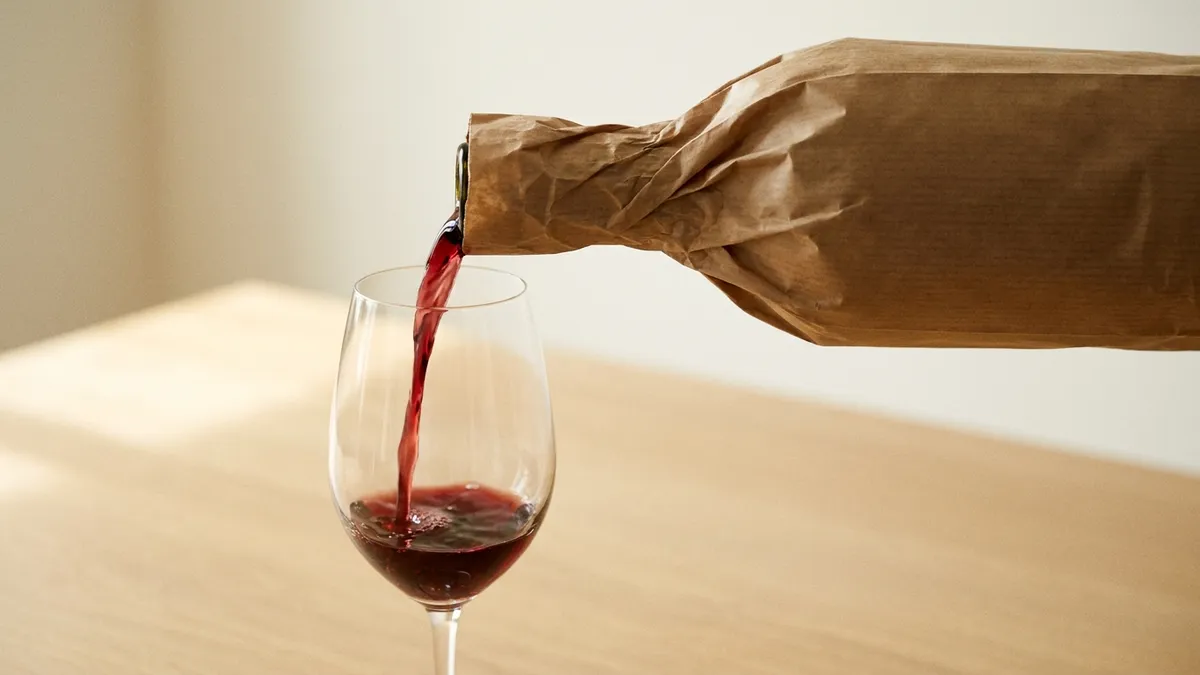
Why would an untrained palate lean cheaper? Inexpensive wines are built to be soft, fruity and easy on the first sip. Pricier wines often carry more tannin (the drying, gripping sensation in red wine), more acidity (the mouth-watering tartness) and more oak, all of which take getting used to. Our guide to how to evaluate wine quality explains what trained tasters reward in those wines, and our blind wine tasting tips show how to run the same experiment at home.
Why Does a Higher Price Feel Like Better Wine?
Because expectation is part of flavor, not a layer on top of it. In a 2008 study, 20 people tasted what they believed were five different Cabernet Sauvignons while lying in an fMRI scanner. There were only three wines. The same wine served at a higher stated price was rated more pleasant, and a pleasure-coding region of the brain became more active.
That study is Plassmann and colleagues' Marketing actions can modulate neural representations of experienced pleasantness, published in PNAS. Two wines were each served twice: one at $5 and $45, the other at $10 and $90. Across the group, reported pleasantness tracked the stated price (a correlation of 0.59), and activity in the medial orbitofrontal cortex, a brain region that encodes how pleasant an experience feels, rose with the price shown.
A 2017 follow-up in Scientific Reports with 30 participants repeated the finding: the "more expensive" wine tasted better, even though it was identical.
It is easy to blur this with the Goldstein result, so keep them separate:
- Goldstein (blind, 6,000-plus tastings): when nobody knows the price, price barely predicts enjoyment.
- Plassmann (price shown, 20 people): when the price is known, it changes the enjoyment itself.
Together they explain the everyday puzzle: the pricey bottle really did taste better at dinner, and it might not have in a paper bag. The label is one of the ingredients, which is why tasting blind versus sighted gives such different results.
Can Experts Reliably Tell Good From Great?
Less reliably than a medal implies. Robert Hodgson analyzed judging at a major US wine competition from 2005 to 2008. Each panel of four expert judges tasted flights of 30 wines that secretly contained the same wine three times. Only about 10 percent of judges scored those repeats within a single medal band.
The details, from the paper's abstract in the Journal of Wine Economics: 65 to 70 judges were tested each year; another 10 percent, on occasion, scored the same wine anywhere from Bronze to Gold; judges were more consistent about what they disliked than what they liked; and only about half of all panels awarded medals in a way explained by wine quality alone.
The wrong lesson is "wine quality is imaginary": judges were more consistent about the wines they disliked, and trained palates in the Goldstein data did track price better than untrained ones. The right lesson is narrower. A single score or medal carries more noise than the number suggests, and shelf prices often rest on exactly those signals. Our guide to wine ratings explained shows how to read a score without over-trusting it.
What Makes a Bottle of Wine Cost More to Make?
Land, grape variety, oak, time and scarcity. Each raises the winery's cost before any tax or markup, and each can be worth paying for. The figures below come from published California grape and barrel prices: a scale, not an invoice.
- Where the grapes grow. In 2014, Napa Valley grapes averaged $4,065 per ton, about $6.71 per bottle, against a California-wide average of $734 per ton, about $1.21 per bottle. Famous dirt is the single biggest lever. It is also the one terroir (the whole growing environment: soil, slope, climate) argument that shows up on the invoice; our explainer on what terroir is covers the rest.
- Which grape. In the 2010 Napa vintage, Merlot grapes cost about $1,300 per ton ($1.80 per bottle) while Cabernet Sauvignon cost about $4,000 per ton ($5.60 per bottle). Same valley, different demand.
- Oak. A French oak barrel costs roughly $1,200 against about $400 for American oak, and an 80-year-old tree yields only two barrels. Aging in barrel adds an estimated $2 to $4 per bottle. What that buys in the glass is covered in what "oaked" means.
- Time. Every year a wine sits in a cellar before sale costs roughly $1 per bottle in storage and tied-up money.
- Scarcity. Tiny yields from a struggling hillside can add $5 or more per bottle to the cost base before anyone has added a margin.
Add these up and the gap between a basic bottle and a serious one is real: perhaps $1 of grapes, no oak and no aging on one side, against $6 to $7 of grapes, $3 of oak and $2 of cellar time on the other. That $10-plus difference is genuine. It is also far smaller than the gap you see on the shelf.
Where Does Your Money Go in a Bottle of Wine?
A large share goes to people who never touched the grapes. In the United States, wine passes through a three-tier system (producer, distributor, retailer), and the industry explainer from VinePair puts the producer-to-distributor step at roughly a 50 percent increase and the total markup to the consumer at 150 percent or more. In the UK, a flat duty is charged before any of that.
That flat duty is worth seeing in numbers, because it is the same whether the wine is basic or brilliant. HM Revenue and Customs charges £30.62 per litre of pure alcohol on still wine between 8.5 and 22 percent ABV (rate effective 1 February 2026). A 75cl bottle at 12.5 percent ABV therefore carries about £2.87 of duty; at 14.5 percent it rises to about £3.33. On a £6 bottle that is nearly half the shelf price. On a £30 bottle it is under a tenth.
Glass, cork, cardboard and shipping work the same way: they cost about the same for every bottle, so they swallow a bigger share of a cheap one. Here is what that does to two bottles on a US shelf, using the 150 percent total markup as the yardstick (shelf price is roughly 2.5 times what the winery was paid).
| Cost layer | A $12 shelf bottle | A $30 shelf bottle |
|---|---|---|
| Distributor plus retailer share (150% markup) | About $7.20 | About $18 |
| What the winery actually received | About $4.80 | About $12 |
| Grapes (California average vs Napa average) | About $1.21 | About $6.71 |
| Oak barrel aging | Usually none | About $2 to $4 |
| Cellar time before release | Usually none | About $1 per year |
| Glass, closure, packaging, labor, winery margin | The remaining $3.60 or so | Whatever is left, at most about $2 |
Notice the $12 bottle: roughly $7 goes to the middle tiers, much of the rest to the package, and the grapes may have cost a little over a dollar. That is not a scandal, it is arithmetic. It does mean a jump from $12 to $20 buys proportionally far more actual wine than a jump from $30 to $50, because the fixed costs have already been paid.
What Does Each Extra Dollar Buy?
More wine at the bottom of the shelf, more rarity at the top. The cheapest tier is mostly paying for packaging, tax and transport. The middle tier is where extra money most often turns into better fruit, riper grapes and more careful winemaking. Beyond that, price increasingly reflects scarcity, reputation and how long the wine can age.
The table below is a buyer's map, not a scoring system. Prices are US shelf ranges and every region has exceptions.
| Shelf price | What the extra money typically buys | What it usually does not buy |
|---|---|---|
| Under $10 | Clean, correct, fruit-forward wine from high-yield vineyards; blends built for softness; screwcap or basic closure | Oak aging, cellar time, single-vineyard fruit |
| $10 to $20 | The biggest jump in the glass: better vineyard sites, riper and more selective fruit, some oak, clearer regional character | Scarcity or a famous name; the bottle still carries a large fixed-cost share |
| $20 to $40 | Named sub-regions and single vineyards, lower yields, longer barrel and bottle aging, more complexity and structure | A dramatic pleasure jump for an untrained palate; blind, it may not beat the tier below |
| $40 and up | Scarcity, prestige, old vines, extended aging, wines built to improve for a decade or more | A proportional gain in everyday drinking pleasure; much of the price is reputation and rarity |
If you drink wine young, with dinner, on a Tuesday, the middle tiers are where your money works hardest. If you want a wine that gains complexity over years in a cellar, you are paying for structure and pedigree that only show with time, and that is a fair thing to pay for. Our wine shop guide covers how to ask for either.
How Do You Find Better Wine Without Paying More?
Buy for the wine, not the signals that inflate its price. Famous regions, celebrated grapes and heavy bottles all cost extra before a drop is poured. Less fashionable regions, the neighbouring grape and the second wine from a good area deliver the same craft with less of the premium attached.
- Go one region sideways. The valley next to the famous one often shares climate and skill without the land price. The Napa-versus-California grape gap above is the whole argument in one number.
- Try the less famous grape. In that Napa vintage, Merlot grapes cost less than half what Cabernet did. Most regions have a headline grape and a quieter sibling.
- Skip the packaging premium. Heavy glass tells you nothing about the wine. Read the label for region, grape and vintage instead; our guide on how to read a wine label shows what matters.
- Treat a score as a starting point, not a verdict, given how noisy single scores are.
- Compare two bottles side by side. The fastest way to learn what an extra $10 buys is to taste both blind. Our walkthrough on how to compare two wines gives you the method.
For a concrete shopping list of styles and regions that over-deliver at the value end, see good wine under $20, and if you are new to all of this, start with our best wines for beginners.
Sommy's short courses, from Wine 101 to regional courses on Spain, Italy, France and California, teach the structure words that explain why you preferred one glass, the skill that turns a lucky find into a repeatable one. Start at sommy.wine.
So, Is Expensive Wine Worth It?
Sometimes, for reasons that are not mainly about taste. An expensive bottle usually contains more real wine value: better land, lower yields, oak, time. Blind, that value shows up as at most a modest edge for trained palates and no edge for untrained ones. Sighted, the price itself adds pleasure your brain can measure.
So the honest answer has three parts. Pay for the middle of the shelf when you want the best wine per dollar tonight. Pay more when you want scarcity, age-worthiness or the story, knowing the story is part of what you taste. And train your palate, because in the blind-tasting data above, that is the one thing that made price and pleasure line up.
Our beginners' buying guides cover shops, labels, ratings and value styles, and developing your wine palate shows how to build that training.
Sources
- Goldstein et al. (2008), Do More Expensive Wines Taste Better? Evidence from a Large Sample of Blind Tastings, Journal of Wine Economics 3(1)
- Plassmann et al. (2008), Marketing actions can modulate neural representations of experienced pleasantness, PNAS
- Hodgson (2008), An Examination of Judge Reliability at a major U.S. Wine Competition, Journal of Wine Economics 3(2)
- HM Revenue and Customs, Alcohol Duty rates (effective 1 February 2026)
- VinePair, The Three-Tier System, Explained
- Wine Folly, Is Expensive Wine Worth It? (Napa vs California grape prices, oak barrel costs)
- Wine Folly, The Truth About Cheap vs. Expensive Wine (variety, oak, aging and terroir costs)
Frequently Asked Questions
Does expensive wine actually taste better?
Not reliably, once the label is hidden. In a 2008 study of more than 6,000 blind tastings, untrained drinkers enjoyed pricier wines slightly less on average, while trained tasters showed a non-negative link between price and enjoyment. Price tracks scarcity, land, oak and distribution far more tightly than it tracks how much you will like the glass.
Why does wine taste better when you know it is expensive?
Because expectation is part of flavor. In a 2008 brain-imaging study of 20 people, the same wine served under a higher stated price was rated more pleasant, and the brain region that encodes pleasantness became more active. The wine had not changed; the price tag had. Knowing this helps you taste the wine rather than the number.
What makes a bottle of wine expensive?
Mostly land, grapes, oak, time and the number of hands it passes through. Grapes from a famous region can cost five times the state average per bottle, a French oak barrel costs two to three times an American one, and each year of aging adds carrying cost. Then duty, distributor and retailer markups stack on top before it reaches the shelf.
What is a good price to pay for a decent bottle of wine?
Many buyers and reviewers converge on the middle of the shelf, where a bottle has cleared the fixed costs of glass, duty and distribution and the extra money starts buying better fruit and more care. Above that, spending buys scarcity, prestige and age-worthiness more than a bigger jump in everyday drinking pleasure.
Do wine experts agree on which wines are best?
Less than most shoppers assume. A study of a major US competition from 2005 to 2008 poured the same wine three times within a flight; only about 10 percent of judges scored it within a single medal band each time, and another 10 percent ranged from Bronze to Gold. Any single score carries more noise than the number suggests.
Is there a price where wine quality stops improving?
Quality keeps rising, but the rate slows. Cheap tiers pay mostly for packaging, tax and shipping. The mid tier buys the biggest real jump: better vineyards, riper fruit, some oak. Beyond that, each extra dollar buys smaller gains in the glass and larger gains in rarity, reputation and how long the wine can age.
Is a $50 bottle five times better than a $10 one?
No. A large part of any bottle's price is fixed: the glass, the cork, duty, shipping and each layer of markup cost about the same whether the wine inside is basic or brilliant. So the $50 bottle carries far more actual wine value, but not five times the pleasure. Blind tastings consistently find the gap in enjoyment is much smaller than the gap in price.
Sommy Team
LinkedInFounder & Wine Educator
The Sommy Team is building the world's most approachable wine education app, helping beginners develop real tasting skills through structured courses and AI-guided practice.