What Makes Wine Expensive? The Factors Behind the Price Tag

By the Sommy Team — AI-assisted, human-edited.
Updated Sep 24, 2026
Contents (9)
- What Actually Goes Into the Price of a Bottle of Wine?
- Why Does Vineyard Land Cost So Much?
- How Do Legal Yield Limits Push Prices Up?
- Why Does Oak Barrel Aging Add to the Cost?
- How Much of the Price Is Tax, Distribution, and Retail Markup?
- Does an Expensive Wine Actually Taste Better?
- Why Are Regions Like Burgundy and Napa So Much Pricier Than Others?
- Is There a Point Where Paying More Stops Buying Better Wine?
- How Can You Tell If a Price Reflects Quality or Just Scarcity and Branding?
TL;DR
What makes wine expensive comes down to six stacked costs: scarce vineyard land, legal yield limits that spread fixed costs over fewer grapes, oak barrel aging, tax, layered distribution markup, and a scarcity or brand premium on top. Land alone can vary 30-fold between regions, and research shows price predicts taste only loosely, especially for untrained tasters.
What makes wine expensive comes down to a short list of real costs stacked on top of each other. They are the land the grapes grow on, legal limits on how many grapes a vineyard can produce, oak barrels and aging time, tax, and several layers of markup between the winery and your glass. Each layer can be put in numbers, and land varies the most.
What Actually Goes Into the Price of a Bottle of Wine?
Six things set a bottle's price: vineyard land, legal yield limits, oak barrels and aging time, government tax, distribution and retail markup, and a scarcity or brand premium on top. The first two are agricultural. The next two are production and government costs. The last two are what economics calls market dynamics: what buyers will pay once the wine is made.
None of the six proves better taste on its own. If two bottles of the same grape sit far apart on the shelf, then most of the gap is land, yield caps, markup and reputation, and only part of it is in the glass.
Why Does Vineyard Land Cost So Much?
Vineyard land in a famous region costs far more than nearby farmland because so little of it exists and so many buyers want it. In Napa Valley, appraised vineyard values showed the smallest parcels, one to ten acres, averaging roughly $632,600 per acre.
Parcels of 40 to 100 acres in the same valley averaged around $145,700 per acre. The value per acre keeps falling as the parcel gets bigger.
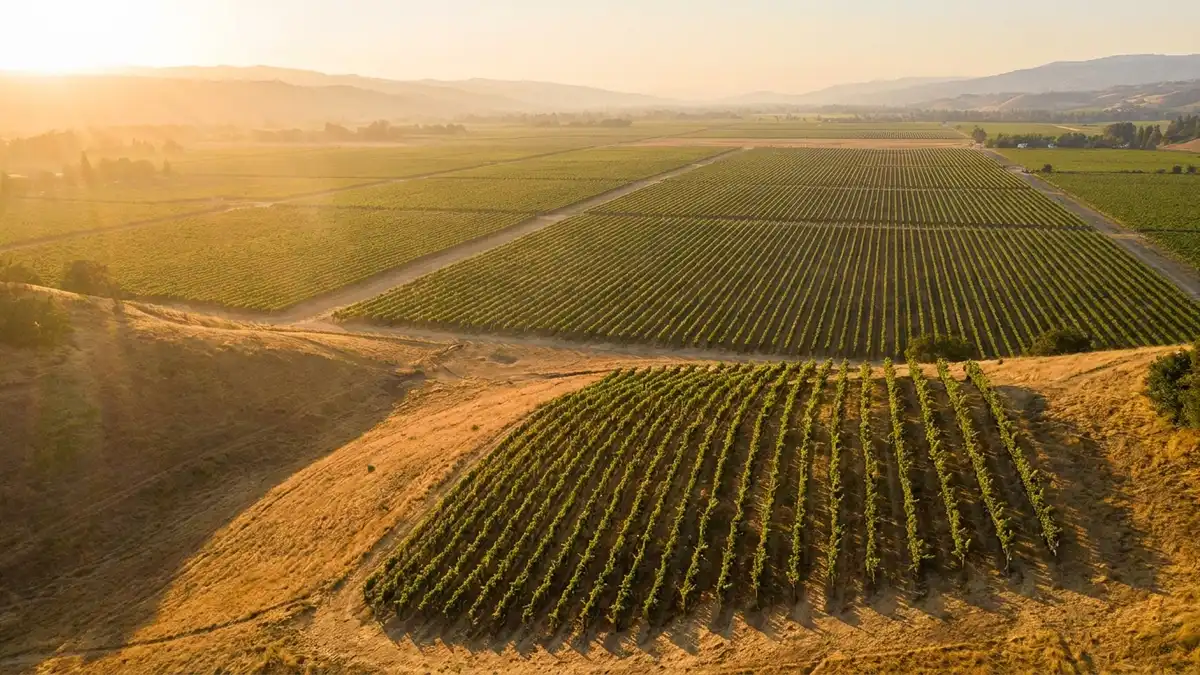
That scale effect is scarcity showing up in the numbers. A small plot in a prestige zone is a rare, almost collectible asset, while a large parcel is priced more like ordinary farmland.
Burgundy shows the same pattern at a much larger scale. In 2025, a hectare of premier cru Chardonnay vines in the Côte-d'Or averaged around €2.7 million. A comparable premier cru Pinot Noir benchmark sat near €1.15 million per hectare. Bordeaux, despite its global fame, priced lower that same year. Pauillac, home to three of Bordeaux's five First Growth estates, averaged about €1.7 million per hectare, and Margaux around €800,000. The region as a whole averaged only about €85,600 per hectare, because most of it sits far outside the famous communes.
| Region | Approx. price | Why |
|---|---|---|
| Napa Valley, 1-10 acre parcels | ~$632,600 per acre | Smallest, most prestige-driven plots in the valley |
| Napa Valley, 40-100 acre parcels | ~$145,700 per acre | Larger parcels priced closer to ordinary farmland |
| Burgundy, Côte-d'Or premier cru Chardonnay | ~€2.7 million per hectare | A famously tiny region split into small family-owned plots |
| Bordeaux, Pauillac | ~€1.7 million per hectare | Home to three of Bordeaux's five First Growths |
| Bordeaux, region-wide average | ~€85,600 per hectare | Most Bordeaux vineyards sit outside the famous communes |
Most of that premium is not about growing better grapes than a similar plot ten miles away. This land has a name, a legal boundary, and a long track record, and the market pays for that combination. If a label names a famous commune such as Pauillac, then a large share of its price is paying for land. Napa Valley and Burgundy differ in more than price, and what terroir is covers the growing-environment side.
Land is not the only fixed cost that varies by region. Growers in tightly regulated areas also pay each year just to keep farming legally. A 2026 Cal Poly study found Napa growers pay roughly $1,700 per acre a year in regulatory compliance costs for large operations. Small operations pay about $1,100 per acre. That burden is reported to run twice as high as similar crops face in Oregon. One of the agribusiness professors who led the study put regulatory costs alone at 8 to 12 percent of total production costs. That share is built into the bottle price before a single grape is picked.
How Do Legal Yield Limits Push Prices Up?
In much of Europe, the law caps how many grapes a vineyard can pick. A lower cap spreads the same land and labor cost across fewer bottles. Bordeaux's basic rules cap red wine at 60 hectoliters per hectare.
That limit comes from the region's AOC (Appellation d'Origine Contrôlée, a French legal designation that ties a wine's name to a defined place and rules). In generous vintages growers may pick a little more, up to a fixed legal ceiling called the rendement butoir: 64 to 68 hectoliters per hectare for Bordeaux reds. The cap still binds.
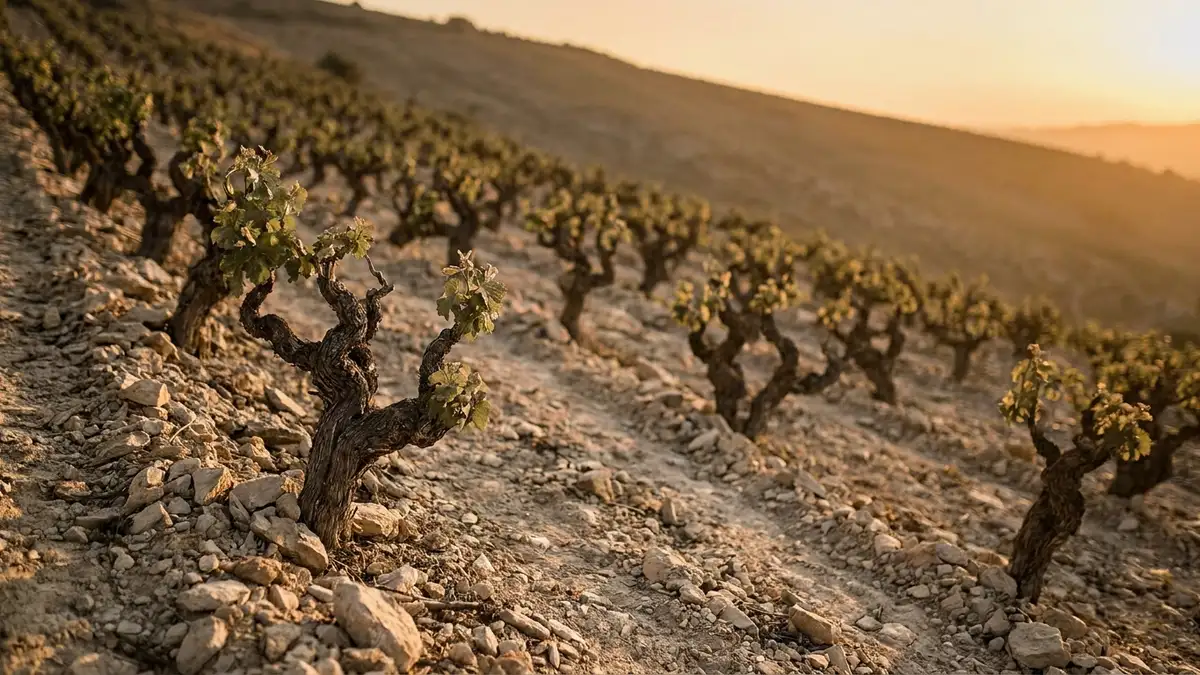
The cost effect is plain arithmetic. A vineyard costs a fixed amount to farm and produces a fixed amount of value from its harvest. Cap the harvest low enough and the cost per bottle rises, even if nothing about the wine itself changes. Traditionalists in French winemaking add a quality argument on top. They hold that great red wine becomes nearly impossible to make once yields climb much past 50 hectoliters per hectare, because overloaded vines can't ripen their fruit properly.
Those two effects are separate. A capped yield reliably raises cost. It does not automatically raise quality, because low yields can also come from vine stress, disease, or a bad year. Scarcity and quality often travel together in a famous appellation. Even so, a legally capped vineyard is not guaranteed to make better wine than an uncapped one nearby.
Why Does Oak Barrel Aging Add to the Cost?
Oak barrels are a recurring cost. Most wineries replace a meaningful share of their barrels every few vintages, because a barrel's flavor contribution fades with age. French oak costs more than American oak, in large part because of how the wood is cut.
French cooperage tradition splits the wood along the grain instead of sawing it, which wastes far more of each tree. That waste, plus the years of outdoor seasoning the staves typically need, shows up directly in what a winery pays.
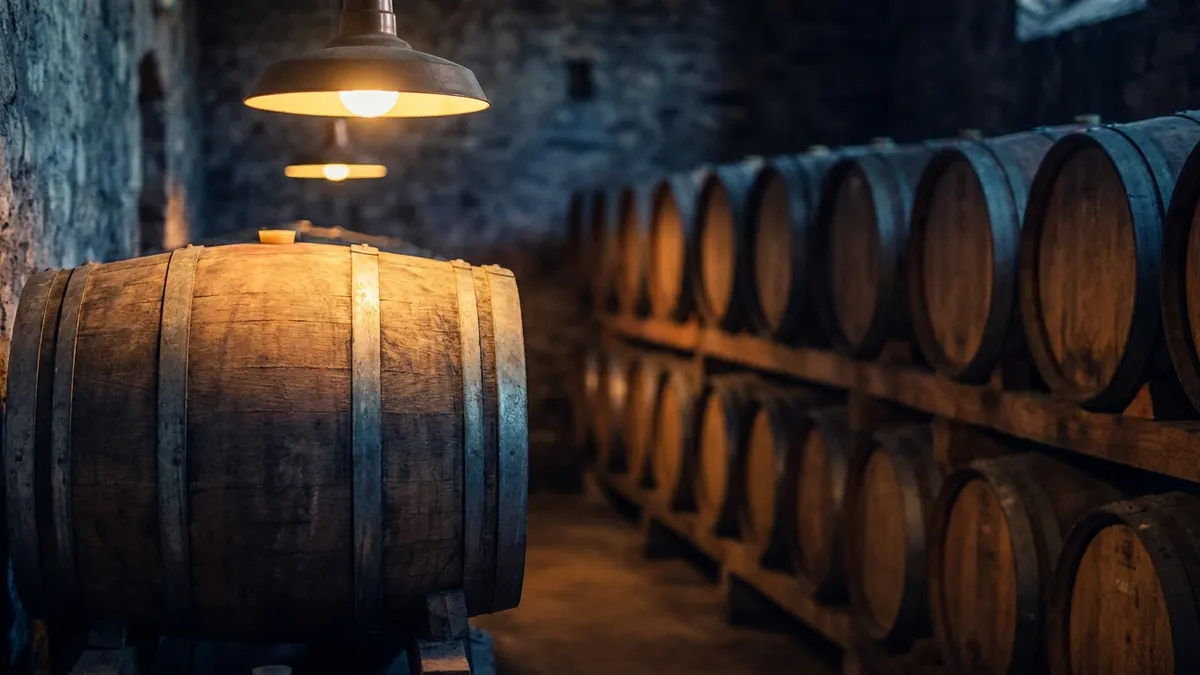
Aging time is a cost even before the barrel is counted. Every month a wine sits in a cellar, the winery's money is tied up in unsold inventory instead of being reinvested. Longer-aged wines also usually come from the more careful end of a producer's harvest. That often means more selective picking and sorting, sometimes still done by hand. Hand work is slower and costs more in labor than mechanized harvesting, and the most painstakingly made wines lean on it more heavily.
Oak, time, and hand labor are all forms of paying for attention. If a label mentions oak or barrel aging, then part of the price pays for barrels and cellar time. Learn what "oaked" means for flavor before deciding that time is worth paying for on a given bottle.
How Much of the Price Is Tax, Distribution, and Retail Markup?
In the US, government tax is usually the smallest of the six layers. The bigger jump comes from the hands a bottle passes through before it reaches you. In most of the United States, the law requires wine to move through a three-tier system.
A winery or importer sells to a distributor, the distributor sells to a retailer or restaurant, and only then does the wine reach a shelf or a wine list. Each tier adds its own markup on top of what it paid.
| Tier | Role | Effect on the price you pay |
|---|---|---|
| Winery or importer | Grows or makes the wine and sets a base price covering land, farming, and production | The starting point every later markup builds on |
| Distributor | Buys in bulk, warehouses the wine, and sells it on to retailers and restaurants | Adds a markup to cover logistics, sales staff, and its own margin |
| Retailer or restaurant | Sells the final bottle or glass to the customer | Adds its own markup; restaurant service, glassware, and staffing usually make this the largest single jump |
That is why the same bottle can cost noticeably more on a restaurant wine list than at a nearby shop. A restaurant sits in the same final tier as a shop, but it also prices in service, glassware, spoilage, and staff on top of what it paid a distributor. If a familiar label looks expensive on a menu, then that markup is most of the reason. A few tactics for ordering wine at a restaurant work around it.
Excise tax, by contrast, is a small, fixed per-volume amount that barely moves with a bottle's quality. It weighs proportionally less on an expensive bottle and more on a cheap one. On either bottle, it is a much smaller share of the final price than distribution and retail markup.
Does an Expensive Wine Actually Taste Better?
Only loosely, and mostly for people with training. A widely cited 2008 study published in the Journal of Wine Economics analyzed more than 6,000 blind tastings. For untrained drinkers, the correlation between price and overall enjoyment was small and slightly negative. With the label hidden, they enjoyed pricier wines a little less on average.
Among wine-trained tasters, the same study found only indications of a non-negative relationship between price and enjoyment.
Price reliably tracks land cost, legal scarcity, oak, labor, and brand reputation. It does not reliably track how much an untrained palate will enjoy the wine in the glass, which is why blind tasting is a useful skill to build. If you want to know whether a pricier bottle is worth it to you, then taste it blind next to a cheaper one. Use wine price versus quality to turn this research into smarter buying.
Why Are Regions Like Burgundy and Napa So Much Pricier Than Others?
Because prestige and legal scarcity compound each other in a handful of famous places. Burgundy and Napa both combine three things that push land prices far above what farming alone would justify. The first is a fixed, legally defined boundary that cannot expand.
The second is a long track record of well-reviewed wine. The third, in Burgundy's case, is land split into very small parcels passed down through families for generations, which keeps supply permanently tight.
An appellation is a legally defined wine-growing region with its own rules on grapes, yields, and winemaking (the full rules are in what is an appellation). It is the legal mechanism that makes this scarcity official and permanent. Once a boundary is fixed and its yield capped by law, no amount of demand can expand the land inside that line. That fixed supply against rising demand is most of what separates a Burgundy grand cru's price from an equally well-farmed vineyard just outside it.
Is There a Point Where Paying More Stops Buying Better Wine?
For most drinkers, yes, and it arrives earlier than the top shelves suggest. The clearest jump in the glass tends to happen in the lower-to-middle price range. There, extra money buys riper, more carefully selected fruit and a bit of oak aging, instead of covering little more than glass, packaging, and markup.
Above that range, extra spending buys more land scarcity, brand prestige, and long aging potential than everyday drinking pleasure.
Expensive wine is still no scam. Real costs sit behind higher prices: better vineyard sites, lower yields, longer aging, and more selective picking. A wine that costs ten times more rarely delivers ten times the enjoyment. It more often delivers a smaller, real improvement, plus scarcity and reputation that do not change what is in the glass. If your budget is limited, then spend it in the lower-to-middle range, where extra money still buys better fruit.
How Can You Tell If a Price Reflects Quality or Just Scarcity and Branding?
Read what the label names before you look at the number on the shelf tag. A specific vineyard, a low-yield appellation, or a longer stated aging period points toward real production cost. If the label shows only a famous regional name with no further detail, then scarcity and brand are doing more of the pricing.
The same holds for a price that jumped sharply from last vintage with no change in how the wine was made.
The most reliable way to build that judgment is to taste more wine deliberately and compare notes across price points. Sommy's regional courses cover Spain, Italy, France, and California alongside a foundational Wine 101 course. They build that comparative vocabulary in structured bites instead of by trial and error, so start at sommy.wine for a guided route. Then take the beginner's guide to choosing wine and the wider beginner's buying guides with you on your next trip to the shelf.
Sources
- Wine Business Journal: Why Are Small Vineyards More Expensive Per Acre? Evidence From Napa Valley
- Wine Industry Advisor: New Study Finds Napa Wine Grape Growers Face Up to $1,700 Per Acre in Regulatory Costs
- En Primeur Club: Burgundy Vineyard Prices 2025 - New Records as Bordeaux Falls
- INAO: Cahier des charges de l'AOC Bordeaux (yield rules)
- Wikipedia: Yield (wine)
- Journal of Wine Economics (Goldstein et al.): Do More Expensive Wines Taste Better? Evidence From a Large Sample of Blind Tastings
Frequently Asked Questions
What makes wine so expensive?
A stack of real costs: scarce, prestigious vineyard land can cost 30 times more per hectare in one region than another; legal yield limits spread the same fixed farming costs over fewer grapes; oak barrels and aging time add ongoing cost; and distribution, retail, and restaurant markups each add a layer before the bottle reaches you. Scarcity and brand reputation sit on top of all of it.
Is expensive wine actually better quality?
Only loosely. A 2008 study of more than 6,000 blind tastings found the link between price and enjoyment was small and slightly negative for untrained drinkers, and only non-negative for wine-trained tasters. Price tracks land, yield limits, and scarcity far more reliably than it tracks how much an average person will enjoy the glass.
Why does wine aged in oak barrels cost more?
Oak barrels are a real, recurring cost: a winery buys new ones every few vintages, and French oak costs more than American oak partly because the wood must be split along the grain rather than sawn, which wastes far more of each tree. Aging also ties up cellar space and money for months or years before the wine can be sold.
Why is Burgundy wine so expensive?
Mostly land scarcity. Burgundy's best vineyards are split into small plots the size of a large garden, shared among many family owners, inside a region with almost no room to expand. In 2025, a hectare of premier cru Chardonnay vines in the Côte-d'Or averaged around €2.7 million, dozens of times the price of an average regional vineyard.
How much of a wine's price is tax and markup?
In the US, tax is usually the smallest layer; distribution and retail markup matter far more. In most of the United States, a bottle passes through a winery or importer, a distributor, and a retailer or restaurant by law, and each tier adds its own markup on top of what the wine cost to make, which is why the same bottle costs noticeably more on a restaurant list than on a store shelf.
Is there a point where paying more for wine stops being worth it?
For most drinkers, yes, well before the top of the shelf. The clearest jump in what you taste happens in the low-to-mid price range, where extra money buys riper fruit and better vineyard sites. Past a certain point, additional cost increasingly buys scarcity, prestige, and long aging potential rather than a proportional jump in everyday enjoyment.
What's the difference between a $15 and a $150 bottle of wine?
Rarely a tenfold difference in what is actually in the glass. Part of the gap is real: better fruit, more careful farming, oak aging, and longer cellar time all cost money. But a large part of the $150 bottle's price reflects scarce land, a capped yield, and brand reputation, which raise price without raising enjoyment by the same multiple.
Sommy Team
LinkedInFounder & Wine Educator
The Sommy Team is building the world's most approachable wine education app, helping beginners develop real tasting skills through structured courses and AI-guided practice.